An Outrageous Fantasy [David’s blog on Flawed Wednesday]

To fuel our escape fantasy of a thru-hike on the Pacific Crest Trail, we periodically wander around REI and fake-shop for backpacks and sleeping bags. We test shoes and ask questions about sun shirts. We scrutinize hiker stoves and sporks and water filtration options. We discuss the merits of tents. And, since we have no actual knowledge about any of it, we laugh at our made-up opinions. We delight in pretending.

I’m updating one of my favorite Horatio observations. He’s said (and I’ve oft-quoted) that the tension in these un-United States is between those who espouse an “every man for himself” philosophy and those who maintain that “I am my brother’s/sister’s keeper”. My update? The every-man-for himself crowd is actually, more accurately, believers that some-people-are-better-than-others. The tension as revealed in our present day is between those who believe in equality and those who do not. We are witness to the struggle between those who think government should work for everyone (brother’s/sister’s keeper) and those who believe government need work only for the superior few.

Consider the full-court-press now underway to demonize and eliminate DEI and the lifting of federal building bans on segregation. Consider the inundation of legislation aimed at inhibiting a woman’s right to vote. Witness the explicit dismantling of social programs and the social safety net in order to provide massive tax cuts to the wealthiest citizens. The whitewashing of history. The ugly and empty rhetoric about restoring “merit-based” hiring, implying that all people of color, all women, advance and have advanced not because of their skill or talent but because of their skin color or gender. In other words, an agenda firmly rooted in advancing the mythos of white male superiority.

The privileged few pushing down the many in order to elevate themselves. It’s Ayn Randian nonsense. Pushing others down is the first action of a drowning man. It’s an arrogant fantasy, laughable, like trickle-down-economics, shackling the majority to uplift the make-believe-white-superiority of the corrupt few. My long-ago colleague, Ana, called it “vampiring”.

It’s white fragility.

At REI we inevitably wander over to the section beneath the corrugated sign, “EAT”. We discuss eating dehydrated meals. Eventually we conclude that on the trail we’ll require a chef to drone in our meals each day. A basket will arrive in the morning with baked goods, scrambled eggs, and hot coffee. There will also be a sack lunch in the morning delivery. It would be too much to ask the chef to make three deliveries a day. At night, a hot meal arrives – with wine, of course – since the chef can accurately track our location.

We laugh at our outrageous fantasy since we know it is an outrageous fantasy.

We wonder why the red-hat crowd remains blind to their outrageous maga-fantasy. They’re laughing as their heads are being systemically – and obviously – pushed beneath the water by an oligarch and a weak flim-flam-man. Vampires, both. How long before the red-hat-crowd realize that they are being sucked dry, that their outrageous fantasy is not laughable, that the not-so-funny joke is on them, too?

read Kerri’s blogpost about EAT
likesharecommentsupportsubscribe…thankyou

A Legacy of Hope [David’s blog on DR Thursday]

Tom was concerned with what would become of the ranch after he was gone. His concern was not the land so much as the family legacy. He felt as if he was the last, the keeper of the history. Who might carry the story forward? Who will re-member the steps walked by his ancestors?

I was moved to tears when the Balinese explained to me that, according to their belief, every child born was an ancestor returned. After seven generations, the ancestor comes back wearing the funny new face of the infant descendant. The important point is this: A community makes fundamentally different choices when they understand that the earth they leave behind is the earth that they will also inherit. The ancestor attends to the descendant because the descendant is the ancestor.

Through a translator, the Chinese master-acupuncturist explained to the students that the challenge he perceived in them was that they were rootless. The U.S. culture too easily plows under the sacred to erect a mall. We have very little connection to, understanding of, or respect for the past. He explained that eyes blinded by the shiny-new or obsessed with the algorithm will never access the ancient art of healing a human being. The whole being. With so little concern for what came before there is little awareness or care of the tracks made by marching forward. How is it possible to help balance the health of others when the healer is rootless and unaware of the impact of their actions?

“But what do we do?” It is the ubiquitous question asked by those who reject the malice and indecency that recently swept into power in the USA. The question thrust me back into the single challenge I faced as a DEI consultant: my clients were protected against the very thing that might help them. They wanted a solution – a fix – and saw no value in attending to relationships. The gods of efficiency and effectiveness had no time to waste. Eyes would roll when we suggested that they cease trying to fix problems. They’d panic when we proffered that a to-do list would never create the better culture they envisioned. In fact, it would prevent it. Cultivating “the space between,” paying attention to the quality of the relationships, would bring about the transformation they desired: a culture of mutual support grown from a history of ugly division.

This morning I was struggling to articulate my thought and Kerri stopped my mind-wander with this encapsulation: “What you are trying to say is that It’s not solution-based. It’s process-based.” Yes. Exactly.

“Solution-based” focuses exclusively on what-we-do. It is transactional and, after all, isn’t that the epicenter of what ails us as a nation? If the prevailing philosophy is the-ends-are-worth-the-means, then lying, cheating, grifting, demeaning, debasing, bullying are acceptable behaviors. We are currently witness to the amorality of attainment-of-power-by-any-means. It doesn’t matter who gets hurt or why. No one in power cares about the legacy, the traces left behind. Rootless. Unethical. Out of balance.

“Process-based” is concerned with who-we-are. Together. The opposite of transactional is transformational. Mutual support. Reinforcing connection. Paying attention to the growth of the whole as a means of attending to the growth of the individual. It’s a radically different philosophy in which the ends-are-the-means. Actions matter. Words matter. Choices matter. Roots matter. The legacy, the tracks we leave behind, matters.

And so we ask the question, “But what do we do?” We speak out. We use our voices for good. We begin by looking to the legacy of hope those who came before us left for us to follow. Perhaps we begin by linking arms, focusing on the space between, and continuing a legacy of hope and courage for future generations to follow.

from the archives: Doves

go here to visit my gallery site

read Kerri’s blogpost about THE TRACES WE LEAVE

likesharemattercommentmattersupportattendsubscribe…thankyou.

The Whole Of It [David’s blog on KS Friday]

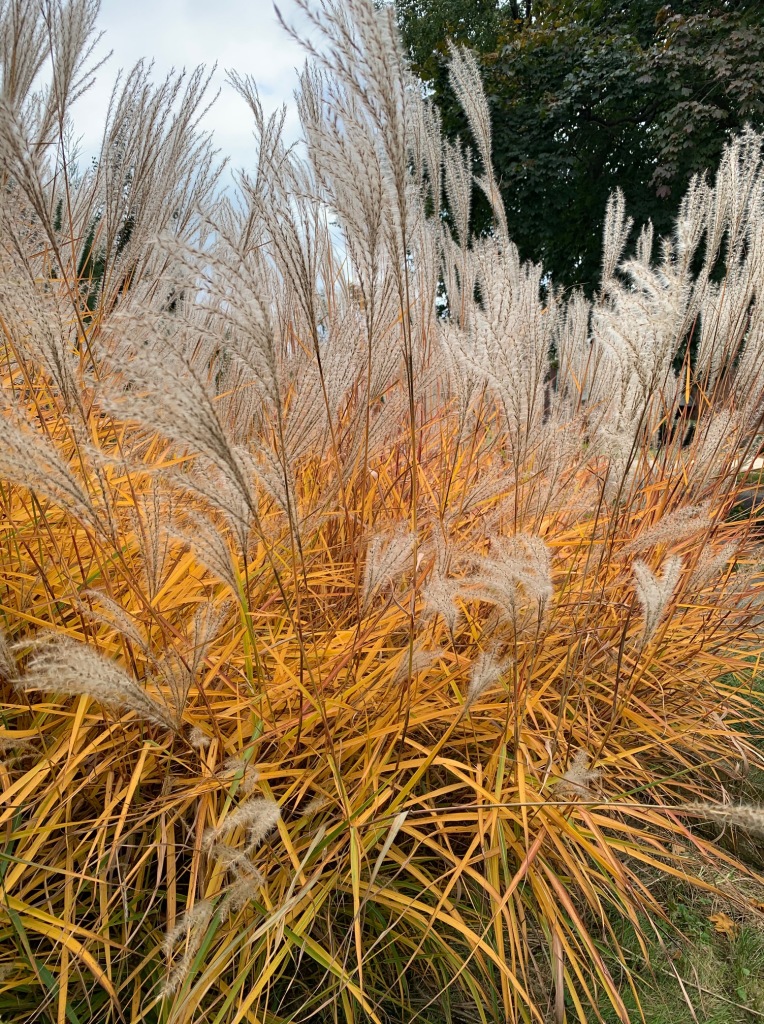
Rather than cut back our ornamental grasses in the fall, we opt to leave them untouched until later in the spring. Not only do they provide shelter for the critters through the cold months, they are also visually stunning and, as an artist, to be stunned visually is high on my priority list. Raw sienna and ochre slow-dance against the cold ice blue of the snow. My favorite is the sunset playing through the waving winter plumes, orange, pink and purple.

The chipmunks have a highway that runs behind the grasses on the side of the yard. It stretches from their sanctuary, Barney-the-piano, all the way to Kerri’s potting bench just off the deck. Lately, a tiger striped kitty visits in the night and stays close-in to the grasses. Dogga has surprised it a time or two and it beats a hasty retreat. I know where the kitty has been during the night because Dogga starts his day by tracking the kitty-path, sniffing along the grasses.

Between the birds, squirrels, bunnies, chippies, the kitty and dogga…there is an entire world, a vibrant life story thriving in and among the winter grasses. They are more than ornamental.

I’m reading about initiation rituals. I came upon this sentence and read it a few times: “…we boys realized that every human being’s goal in the village was the eventual admission into the pursuit and maintenance of the sacred.” [Martin Prechtel, Long Life Honey in the Heart] Pursuit of the sacred is eventual. Admission into the pursuit of the sacred comes with living a bit of life, navigating hardship, peeling off layers of self-importance and fully grasping the reality of mortality. Developing eyes that can see the sacred. Nurturing a heart that opens and appreciates the smallest-as-the-grandest of moments. My favorite word in the sentiment is “maintenance” – it suggests participation as well as responsibility. The sacred is connective tissue to the future and the past and disappears without tending. The maintenance of the sacred is a relationship: attend to the sacred and it will attend to you.

Actions with service intention. Living with attention.

In my reading I’ve learned of the fate of the uninitiated, those who know no responsibility to the village. They are destined to be adolescents forever, void of any greater perspective or sense of communal responsibility. Never capable of approaching their responsibility to maintaining the sacred since, to them, nothing is sacred. Self-serving. A life that collapses into dull inattention and usury.

It is one way of understanding the incoming administration and comprehending the sad, sad confirmation hearings: we are captive to the uninitiated. The uninitiated enabling the uninitiated. Thuggery is the inevitable aim and refuge of the perpetually adolescent. In this cadre, clearly, nothing is sacred. Nothing disqualifies.

The eventual admission into the pursuit and maintenance of the sacred. Every human being’s goal – if they mature into well-rounded human beings. It’s not a given. It’s a realization that comes from an orientation: a sense of greater responsibility to the village: the village – not only a place, but a relationship of people to a place, to ancestry, to tradition, to each other, to a dedication for the soul-health of all, now and into the future.

These days I feel grateful to those elders who felt a responsibility toward me, to steward my growth. To those who took time and care to orient me onto a life-path pointing toward the eventual admission and maintenance of the sacred. To those who helped nurture in me eyes capable of seeing beyond the ornament, capable of seeing the vibrant colors in winter grasses, capable of relishing the abundant life taking shelter, playing chase, enjoying safe passage…the whole of it a sanctuary.

GRACE on the album RIGHT NOW © 2010 Kerri Sherwood

Kerri’s albums are available on iTunes and streaming on Pandora

read Kerri’s blogpost about WINTER GRASSES

sharesharesharelikesupportlikelikecommentdanceseethrive…thankyou.

No Comparison [David’s blog on Not So Flawed Wednesday]

“So as long as the mind is comparing, there is no love, and the mind is always judging, comparing, weighing, looking to find out where the weakness is. So where there is comparison, there is no love.”
Jiddu Krishnamurti, On Love and Loneliness

The snow was nested in the pine needles when the wind blew the bundle from the safety of the branch. Together, snow and fascicle landed far below on the well-worn path. I would not have seen it had she not suddenly knelt, pulled her glove from her hand with her teeth and braved the bitter wind to snap an up-close photograph.

Many days later, while choosing photographs for our next Melange, she asks, “Which do you like better?” She shows me the snow-and-pine-needle-embrace among many other photographs. I rarely have a coherent answer to the better-or-worse question. Her photos are always beautiful or curious or interesting – they are certainly moments-in-the-world that I would have missed had she not stopped to capture the image. While she gazes at the beauty on the trail I am generally lost in my thought. It is generally impossible for me to compare the worth of one photograph over another.

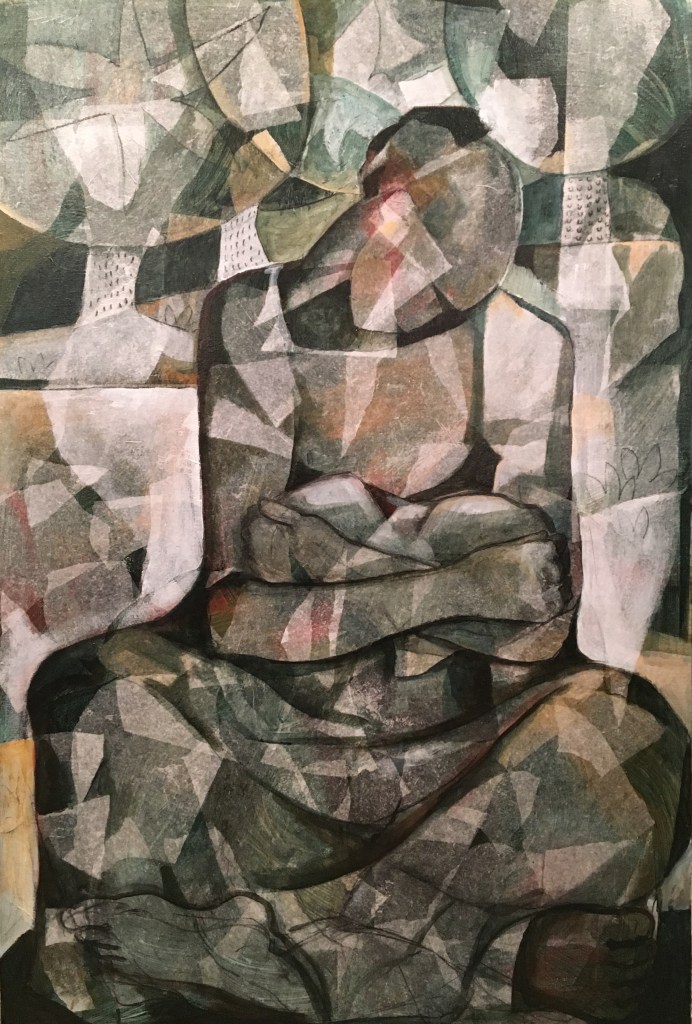
I am working on a painting and have given myself full permission to make a mess. It’s harder than you might imagine to turn off the inner-critic, the one who demands better work, the one that compares me with others. In comparison, I always lose.

I am employing a strategy to silence my inner voice of comparison: when the critic roars I pick up a rag or wide-tool incapable of nuance and I smear. I am afraid that I don’t know what I am doing – so I make certain that I don’t; I dive head-long into not knowing. In splodging paint, I guarantee that there can be no comparison to others or to any version of my past-artist-self.

“When you are comparing, you are really not looking at the sunset which is there, but you are looking at it in order to compare it with something else. So comparison prevents you from looking fully.”
― Jiddu Krishnamurti, On Love and Loneliness

In the moment she kneels on a bitter cold day to capture the embrace of snow and pine needles, there is no comparison. She is looking fully. What I see when she shows me the photograph is a moment of seeing, a moment of beauty recognized. Love realized. It’s the same reason I stand at an easel and wipe away my trepidation. To see, subject and object undifferentiated. For a moment, no comparison. One.

read Kerri’s blogpost about SNOW AND PINE NEEDLES

likesharecommentsupportsubscribe…thankyou.

No Faith Necessary [David’s blog on DR Thursday]

“And don’t think the garden loses its ecstasy in winter. It’s quiet, but the roots are down there riotous.” ~ Rumi

The fog is dense this morning. It feels otherworldly. Quiet.

I am delighted for the fog. The quiet is welcome.

When I opened the door this morning to let Dogga out, I expected to hear the mournful call of the foghorn. Instead I was met with a sweet bird song. A single singer. A lover of fog. I listened for a few moments, closed my eyes.

What a surprise to expect the distant dour call of the foghorn and instead be greeted by genuinely lighthearted chirping!

A day ago – one single day – the coneflower sculpture was covered in snow. We marveled at it as the snow transformed it, a fancy white umbrella. It has reemerged as a coneflower and, on this foggy, foggy morning, seemed to be listening. I imagined it was holding a vigil. Perhaps it was keeping watch for the spring. “Keep the faith,” I whispered.

“No faith necessary,” replied the coneflower. Or so I imagined. Saucy flower!

I remembered my first experience scuba diving. There was an entire world of color and vital life not visible on the surface. I was giddy with my discovery. Had I never learned to dive I would not know of the vibrant universe that existed beneath the waves, just out of my sight.

“No faith necessary,” I repeated as I closed the backdoor. Turning my attention to making coffee, I pondered what other wonders were bubbling all around me that I simply cannot see.

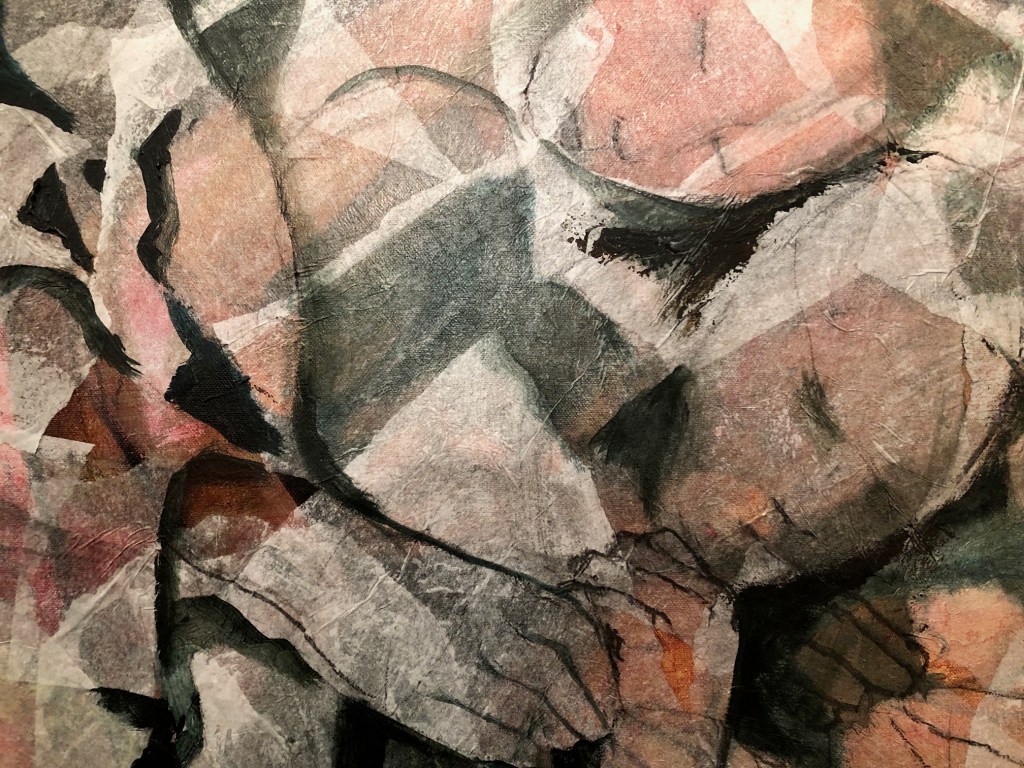
detail of a work in progress

read Kerri’s blogpost about FOG

likesharecommentsupportsubscribe…thankyou.

Our Real Riches [David’s blog on Two Artists Tuesday]

Since rarely in life have we had excess, we’ve become experts of austerity and yet we seldom feel wanton or that we are lacking in any way. Quite the opposite! We usually walk in rich abundance – the kind that is not connected to possession or attainment or access. We appreciate to our core the gift of being alive, our time together, the plenty that comes from our friendships, the affluence of our artistry. There is no end to the ideas we chase or the moments we cherish. For us, each walk on the trail is extraordinary. We never take it for granted.

The gift of our strict no-spending orientation is that, when we do afford ourselves a treat, the pleasure is amplified; a tiny moment elevated to the exceptional. For instance, yesterday while shopping for gifts we did something that we rarely allow ourselves to do: we stopped at a bakery, bought a pastry and a cup of coffee. We were giddy with excitement. We savored every bite. We cherished sitting in the warm cafe on a cold wet day and sipping a hot, bold cup of coffee. A seasonal sensual pleasure. We promised each other that someday we would do it again.

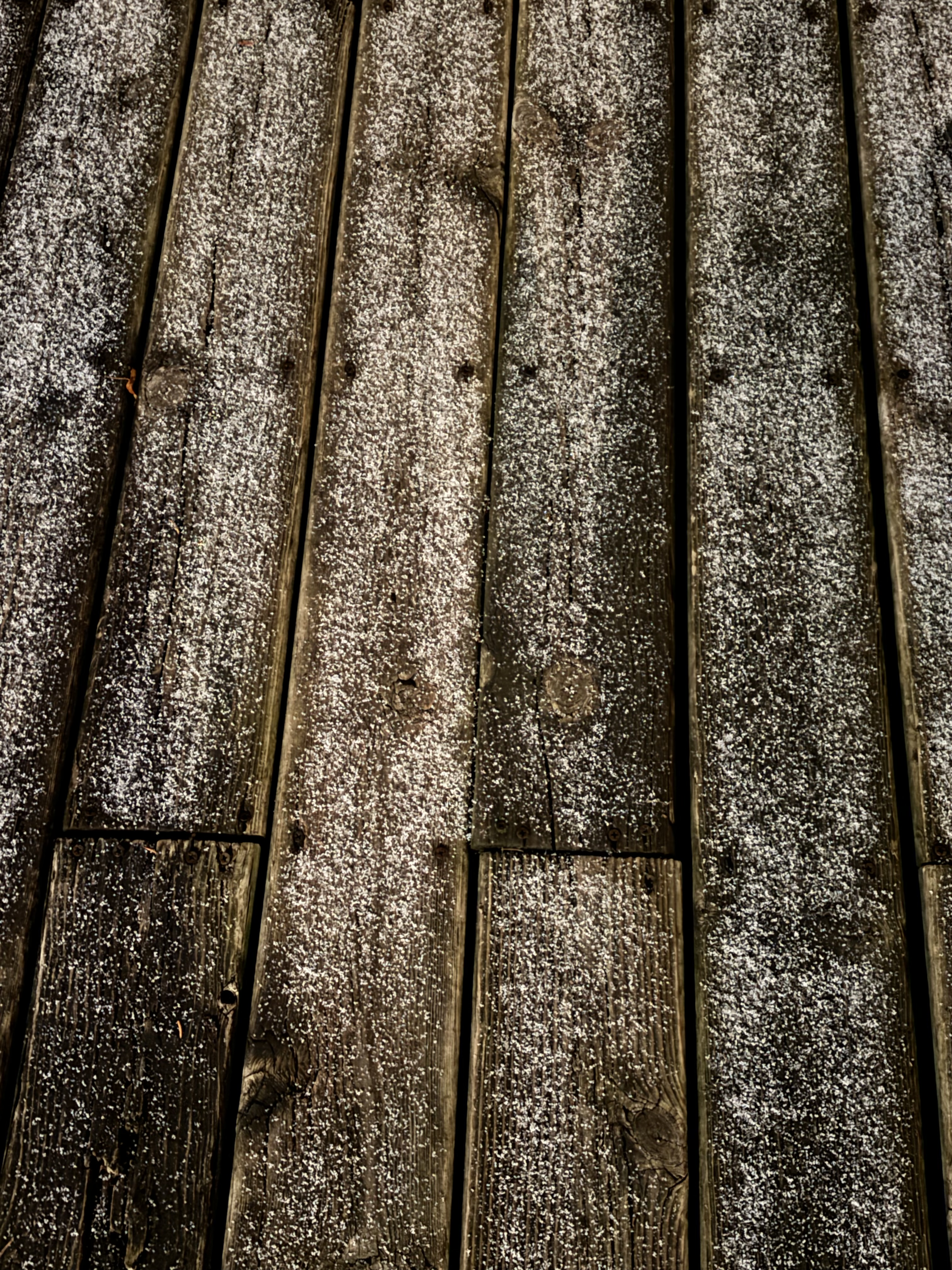
Our real riches are in our eyes, our seeing. Kerri’s eyes see beauty in everything. At the first dusting of snow she dashed outside to capture the textures and color on the deck. “Lookit!” she said, showing me her discovery, nose red from the cold.

My eyes see movement and connectivity. Busy streets often appear to me as a dance. In a past life I adored teaching because I could see ideas ripple and discoveries flow through the class. I adored watching audiences join in what I came to understand as a single heart beat. Perhaps that was what called me to the theatre. I am only now beginning to understand what calls me to paint.

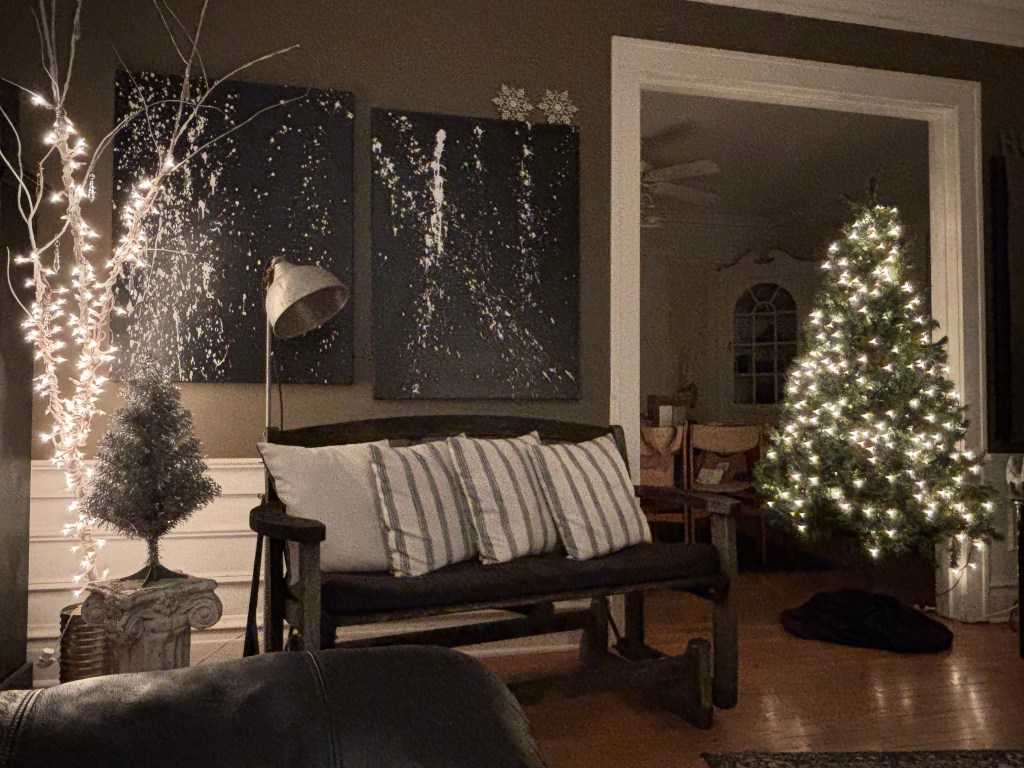
We moved our old wooden glider, deck furniture, into our living room. A well-used, very old studio lamp, a treasure found at an antique sale for five dollars, serves as a reading lamp. Next to the glider is a tall branch, painted white, wrapped in happy lights and adorned with holiday crystals. It’s become a favorite place to sit. Our happy hour has migrated from the kitchen table to the living room glider where we can appreciate our holiday decorations and watch the world pass by outside the front window.

‘I love it here,” she says, giving Dogga a nibble of cracker. Me, too. I love it here.

***

After writing my post, while waiting for Kerri to finish hers, I opened my email and read the latest of Maria Popova’s The Marginalian:

“The destination, rather than a place, is a state of being — the recompense of paying everything in our path the gratitude and reverence it is due for merely existing. For we forget, too, that dignity — this deepest reverence for being — is not something we can ever have for ourselves unless we accord it to everything and everyone else.”

read Kerri’s blogpost about APPRECIATION

likesharesupportcommentsubscribe…thank you.

A Happy Spirit [David’s blog on DR Thursday]

“I would rather walk with a friend in the dark, than alone in the light.” ~ Helen Keller

We bought the chandelier a few years ago. It was meant to hang over Barney, our disintegrating backyard piano, but it wasn’t the right fit. For a single summer it lived just outside our backdoor. It’s a solar chandelier so it jumped to life for a few hours after the sunset. It never held a charge for very long.

It migrated into our sunroom, suspended just beneath the plant table. It tickled us that we had a low chandelier that nearly touched the floor. It didn’t get a ton of sunlight from its place beneath the table so it sprang to life for only a few minutes each night after we turned out the lights.

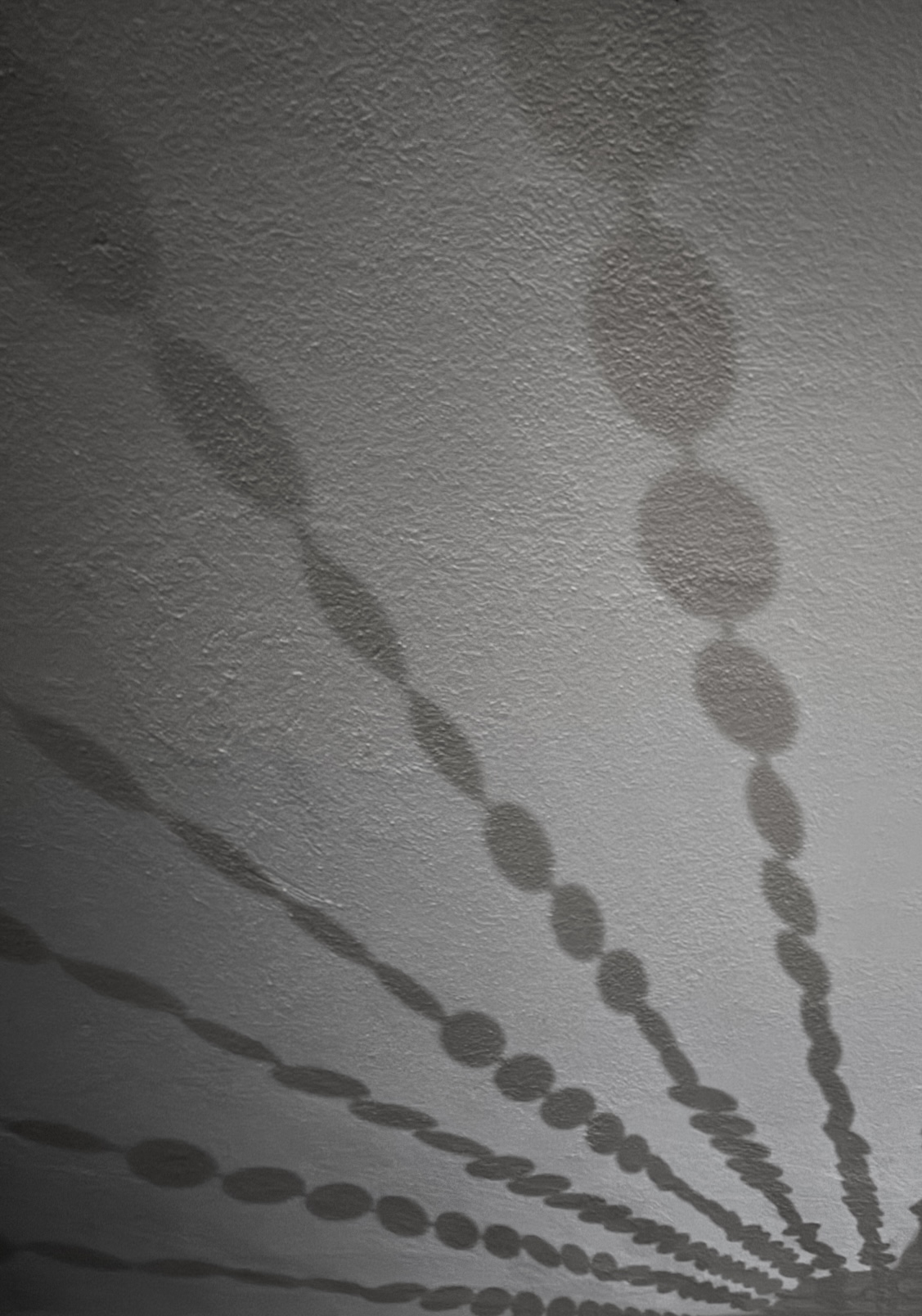
As part of the recent whirling-dervish-clean-fest, the chandelier has been elevated to a new position. Now, instead of dangling beneath the plant table, it proudly hangs above it in a prime position receiving plenty of light. Now, when the lights go out and the chandelier springs into life, it casts glorious shadows across the ceiling.

As part of my evening ritual of closing up the house, I move room-to-room pulling the plug on our many happy lights, saving the sunroom for the last. I like watching the chandelier illuminate, fulfill its purpose and cast its shadow. It both amuses me and I find it oddly comforting.

Last night, knowing that it had only a few minutes of charge since the day had been dark and cloudy, I stood and watched the shadow change as the little chandelier waxed and then slowly waned. A lifespan of a few moments, a complete arc, as the vibrant jeweled octopus stretched across the ceiling and then almost immediately faded into nothingness. The quick visit of a happy spirit. It sent me to bed with a smile and the promise of another visit in the morrow.

a work in progress

read Kerri’s blogpost about THE CHANDELIER SHADOW

likesupportsharesubscribecomment…thank you.

Not Bad [David’s blog on Merely A Thought Monday]

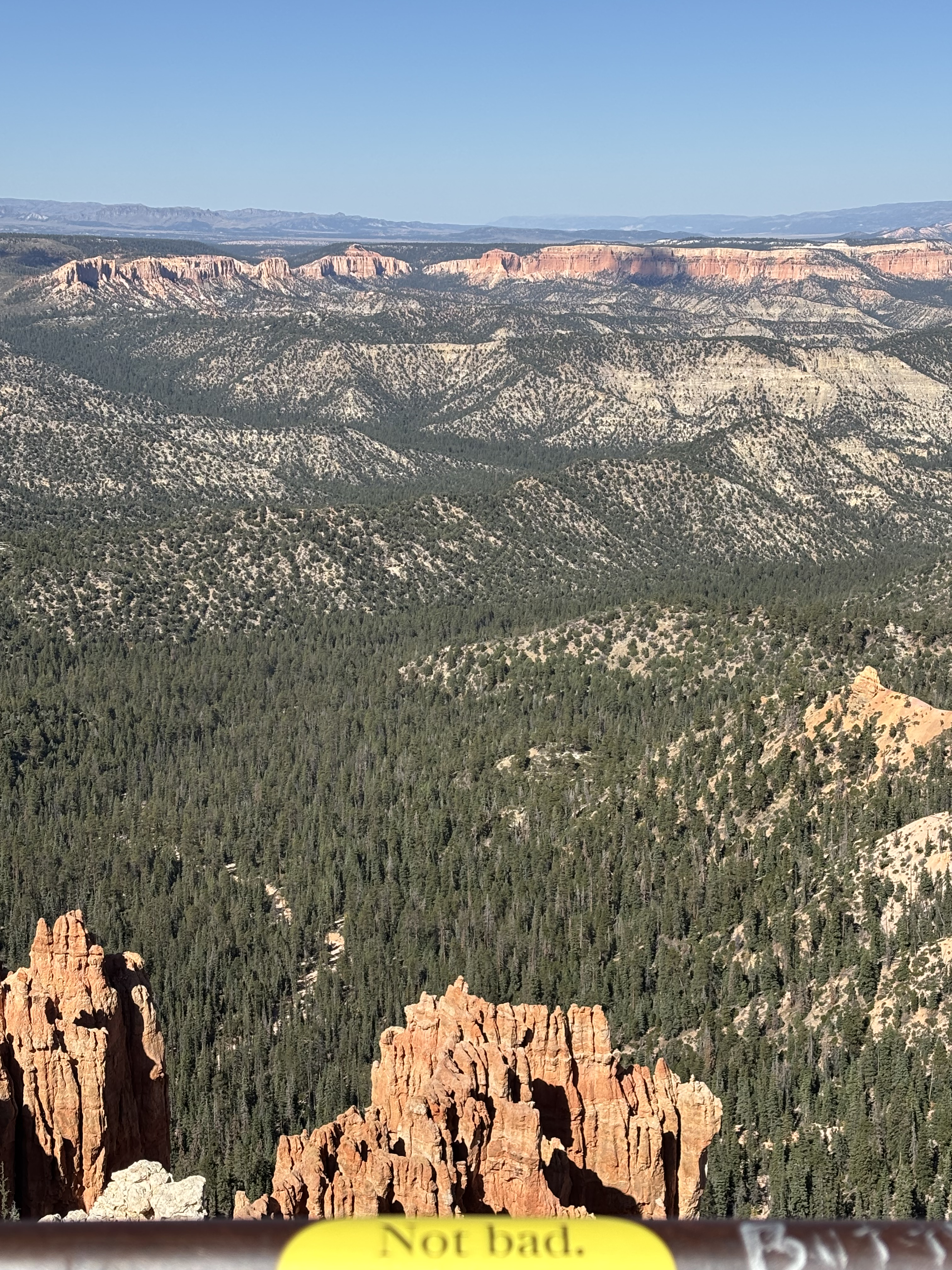
In a fit of understatement, someone placed a yellow sticker on the railing overlooking the sweeping view of Bryce Canyon. It read, “Not bad”. The awe is visceral, “I feel it in the pit of my stomach,” Kerri said. Standing at the edge, as is often the case, words fall short. “Not bad” is as good a phrase of wonderment as any other.

For a moment Gay was overwhelmed. With tears in her eyes she said, “And I get to be here to see it.” There were moments in the past few years that she had every reason to believe that she would not be here.

I was struck by her acknowledgement. It is something that I hope to express every day for the rest of my life. Deep appreciation. “And I get to be here to see it.” Like most people, I let far too many days of this life slip by without realizing or recognizing the astonishing gift of being here to see it.

Every day is as awesome as a peek into Bryce Canyon. Not Bad.

read Kerri’s blogpost about NOT BAD

like. share. subscribe. support. comment…thank you.

The Reward Of Slow Walking [David’s blog on DR Thursday]

Living so close to the lake our soil is sandy so ornamental grasses thrive in our yard. Each year, rounding the corner into fall, the grasses produce gorgeous plumes. The plumes catch the light. Amber and gold, purple and crimson. The plumes catch the wind, waving and dancing. The plumes capture my attention. I am each day mesmerized by the color and sway of the grasses.

Beyond their enthrall, I have another, perhaps more important appreciation for the ornamental grasses. They have become teachers of patience. They are reminders of right process.

Several years ago we transplanted grasses from our front yard to the back. The sandy soil and constant sun made it difficult for flowers and other plants to grow along our eastern fence line so we decided to give the grasses a try. We didn’t have the resources to buy new varieties so we split the grasses in our front yard.

The result was not good. I thought I’d stunted the grasses in the front. The first year after splitting, their usual exuberance was gone. To personify them, they seemed disheartened. The newly planted grasses in the backyard were gasping. The second year was not much better. I thought, rather than watch their slow demise, it would be better to pull them and start anew. I was mortified. I didn’t know what I was doing and it seemed I’d made everything worse.

Kerri told me to wait, to give them one more season.

In the third year, both front and back, the grasses exploded into life. Ebullient. Buoyant. Each day I’d stand in the middle of the yard and mutter, “I can’t believe it.”

Kerri watched my daily mystification and asked, “Aren’t you glad that you didn’t pull them?

Now, many years later, they are huge, thriving. Little volunteers have sprouted and prosper around the pond. In fact, I now work to keep the ornamental-grass-colonies from taking over the yard.

The grasses have fostered an environment of abundance: they have become safe haven for rabbits, DeeNCee Lullabaloo (the frog-in-residence) spends more time in the grass kingdom than in the pond. The chippies have established a protected highway running through and behind the grass-cover.

And I sit and marvel at their luminance and wind-choreography. Each year I await the coming of the plumes. They fill me with life. They remind me to allow for natural growth rather than push for a result. I hope that I’ve learned their humble lesson. No matter; they fill me with awe, the reward of slow walking, the gift of patience.

read Kerri’s blogpost about GRASSES

like. share. support. subscribe. comment…thank you.

Witness The Impossible [David’s blog on DR Thursday]

We heard, in some locations this summer, people experienced a veritable plague of cicadas. They shoveled them off of their driveways like so much snow. Not here. We finally heard their song late in the season. We found a few empty shells floating in the pond or attached to fence, evidence that they’d emerged and transformed. They were present in vibrational rhythmic sound. They remained invisible to our eyes.

Sitting quietly on the deck one evening in August, enjoying the cicada symphony, Kerri said, “It’s not summer until I hear the cicadas.” Markers of our passage around the sun. Symbols of the cycle. The first color on the leaves. First snow. The first dandelion of spring. The first turtle emerging from the muddy river. Cicada song.

Last week we talked about stew and soups rather than watermelon and burgers on the grill. In this way, in old and new recipes, we chase the coming season. Anticipation and imagination.

We found the cicada on the driveway. It was in its last minutes of life. Crawling like a drunken sailor, it could no longer fly; one wing undamaged but seemingly useless. “It’s so sad,” she said as she knelt to take a photo.

Reverence overcame the sadness. “Look at the color! How beautiful!” she whispered, showing me the photo. We knelt again to witness the dying cicada.

Appreciation. Sometimes I think our only purpose on this earth is to cherish its treasures, to recognize something so small and impossibly grand as the movement of life.

read Kerri’s blogpost about THE CICADA

like. share. support. subscribe. comment…thank you.