When I first met Kerri I was still pitching ideas to Yaki, a conductor/artistic director of symphonies. We’d created a few projects together. Yaki is a visionary, one of my favorite past-collaborators. He knows that symphonies, like all performing art forms, must reinvent themselves to attract the next generation audiences. Our projects were rooted in both new and traditional compositions. They were multimedia story-tellings, explorations of arts crossing disciplines.
So much of Kerri’s work lends itself to a symphony. Listen to the strings in PEACE! There is a cello line that breaks my heart every time I hear it. I sent PEACE to Yaki with two statements and a question: Listen. Imagine the possibilities. What could we do?
It was a different time then, or, perhaps, it is a different time now. Have we ever needed peace more than now? And so, on KS Friday, I send you this PEACE with the same two questions I asked Yaki but with a much greater imperative: Listen. Imagine the possibilities. What could we do?
PEACE on the album AS IT IS available on iTunes & CDBaby
Earlier this week I wrote about our visit to Arches National Park and the paradox of presence: it is only when we recognize how very small we are that we are capable of standing in the immensity of this moment, the present. I called it a joining. In her song, In A Split Second, Kerri calls it, “walking that thin line.”
It is possible to put down the list of to-dos. It is possible to stop dragging along that big bag of the past. It is possible to be here, where you are, in the immensity of this moment of life. Give yourself a gift, be where you are, and let Kerri help you walk that thin line.
IN A SPLIT SECOND on the album AS SURE AS THE SUN, available in iTunes & CDBaby
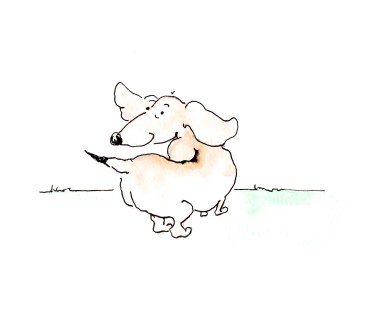
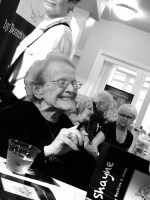
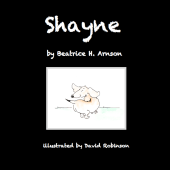
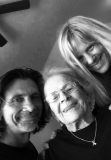
Just before she passed away, Kerri and I rushed to illustrate and publish a trilogy of children’s books that Beaky had written years earlier. Beaky saw the first of her books published, Shayne. We held a release party and author reading of the first book. She was a rock star. Her first sale was to someone in The Netherlands and I teased her about being an international author. Beaky was both thrilled and ever humble. She died 18 days later while we were racing to lay out the pages of the second book in the trilogy. We published it, Shayne & The Yellow Dragon, soon after, for what would have been her 94th birthday.
the author
It’s been three years. Today would have been Beaky’s 97th birthday and we are certain she is tapping her foot wondering what is taking so long. So, we decided that it was time to complete the trilogy. The illustrations and scans are back on the table. In short order, someday very soon, we look forward to announcing the publication of Beaky’s third book, Shayne & The New Baby.
A Chicken Nugget from studio melange for the start of a new week.
Wearing her yellow flower girl dress, fresh from her triumph as flower girl at her cousin’s wedding, my niece Tory sat on my lap and told me a story. It was a deluge of imagination. A breathless tale that took me through magical meadows and soaring to great heights, like Virgil she guided me through worlds, forests, oceans and space where I met amazing creatures, tasted foods both “yummy” and “yucky” and shape-shifted to meet the necessities of the planets we visited. There was a beginning to her story but there was no end. Even after her mother came to retrieve her, Tory’s story stream gushed on, now transferred to her new audience. Her imagination, like all little humans, was boundless.
Imagination is boundless. And, it doesn’t go away. We may learn to put brakes on it or filter its color. We may fear it and drive it underground, misdirect it or malign it, but it gushes on and on. Fear the future? That’s imagination at work. Regret the past? Yep. Imagination at play. Meaning making, making meaning. The story-making-imagination is a rushing river. How often have you said or heard said, “I can’t imagine…!” Not true.
Imagining is what we humans do, regardless of age. The proof is all around you. Stand still and look. Everything you see, if it was constructed, was first imagined by someone trying to make life better. Lights, cell phones, automobiles, pencil sharpeners (pencils), purses, personal computers,…, were imagined and are, at this moment, being re-imagined. Look in the mirror. What you see is an expression of imagination. Imagination is, after all, a team sport.
Look at the cool new wall murals from society6.com
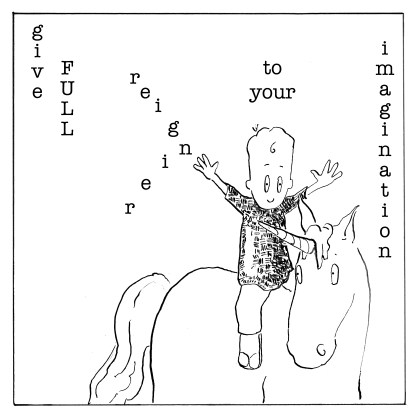
There isn’t a moment of the day that our imaginations aren’t running apace or bursting at the gate trying to get out of the doubt-corral. Give it full reign. Give it full rein and like Tory, let it take you – and me – to new and surprising worlds.
From studio melange, a giggle to lift you over the hump and share with pals.
our flawed homage to winter and its passing
Tripper Dog-Dog-Dog dreams. Late at night I hear his paws flicking the floor of his crate, the echo of his dream-bark breaks the surface as a yip. I imagine he is dreaming of chasing squirrels or racing after birds, two of his favorite real-life activities. But what if…. Maybe he dreams of having opposable thumbs, of scooping kibble from the bin whenever he wants to! Maybe he dreams of taking me on walks, and yanking my leash when I pull to greet other humans! “Sit!” he barks. “Look at me!” he commands. Perhaps he dreams of tossing me a cookie when I am good, or making me do tricks to earn my cookie!!!
Posted on October 11, 2017 by davidrobinsoncreative
When I first met Kerri I told her that she needed to know two things about me: I don’t sing and I don’t pray. I imagine that was bracing news for a woman whose life has been about composing and performing music. I imagine it was especially disconcerting for a woman who stands firmly in a greater spirituality. I thought she needed to know.
A few short months later we were driving through the hills of Georgia en route to North Carolina, windows rolled down, a James Taylor and Carole King concert blaring through the sound system. James Taylor’s song, Something In The Way She Moves, began to play and I sang along. Kerri pulled the car over and began to weep. It turns out I sing after all. And I like it, too. That song became our song (one of them). Jim sang it at our wedding.
We have a dvd of the James Taylor and Carole King concert – at the Troubadour in Los Angeles. We watched it a few weeks ago for the first time. James Taylor told the audience that his song, our song, Something InThe Way She Moves, was the song that popped open his career. He said it was like that song was the doorway to the rest of his life. I knew exactly what he meant. A song. A door pops open. Life.
Yesterday was our second anniversary. Two years ago, Kerri recorded a song she wrote for me, for us. It’s called And Now. Amidst the chaos of our wedding week she somehow recorded it so I might enter the church, enter our wedding ceremony, to the song she wrote and sang, her song for me, our song. As I walked down the aisle that day, her song became the doorway to the rest of my life. In a moment, with a song, my life popped open.
Yesterday, after watching the sunrise we came home, made more coffee and sat on our bed (we call it the raft) with DogDog and BabyCat and told stories of our wedding week. It was the wedding equivalent of a barn raising. Our stories are the stories of all the amazing people who cooked, baked, carried, hauled, comforted, soothed, celebrated and helped us through the doorway. Amidst the stories, we reread our vows. We listened to the songs that to which we processed into the church, Gabriel’s Oboe for Kerri. And Now for me.
Listening, remembering, I sat on the raft and found myself weeping. I understood, perhaps for the first time, that on the other side of the doorway I routinely defined myself by what I was not: not a pray-er, not a singer. On this side of the doorway, there is life, rich, uncontrollable, vast, ever moving, no-need-for-nots or brakes or resistances. Just now. And Now.
Today, I believe the single greatest obstacle we throw in our way, the single greatest disservice we plant in our children, the unfortunate self-imposed exile many seniors adopt, the great source of interruption to all creative dreams and dreamers, is this: the ridiculous notion that one must know “how” to do anything before starting to do it.
Knowing “how” comes second.
The opportunity to look back and see “how” comes (necessarily) at the end of the process, not at the beginning. To learn, one must begin by not knowing “how.” Not-knowing-how is the basic assumption of lively, active, creative beings.
The second assumption: no one does this walk alone. No one knows all things. To successfully not-know-how invites the opportunity to ask questions of others. Hold hands and step.
I find myself once again standing at an intersection of seemingly unrelated conversations and experiences and am in awe of the common thread.
Yesterday was Ash Wednesday. The imposition of the ashes is a reminder of mortality: we came from dust and to dust we will return. Last night I watched the ritual from the choir loft. It is new to me and beautiful – a lifelong fascination of mine – to witness the power of people gathering to participate in their rites of transformation. Life made vibrant through the realization of its limits.
After a long hiatus, this week I picked up my art discussions with Horatio. He is wise and I have sorely missed my conversations with him. During my Seattle years we often met downtown for coffee and talked about all things artistic. We’d compare notes, challenge assumptions, share inspirations, complain about obstacles, wax poetic, and laugh at the fears and foibles of life on an artist’s path. A few days ago we scheduled a call and picked up our chat as if no time had elapsed. He is an accomplished visual artist and filmmaker and told me that finishing a drawing (or film) always feels insignificant, anti-climactic. “There is no such thing as completion,” he said. “The product always feels empty. Doing the work is vibrant and alive. The life is in the process!” Horatio told me that he disappears when he goes into the studio. I know that feeling well. It is not an experience of losing your self, it is the experience of transcending your self. It is a ritual of transformation
This morning I read in our local newspaper that the University of Wisconsin, Parkside (the campus in our town) launched an initiative to inspire peace through the arts called “PeaceWorks.” They were inspired by this quote from Eleanor Roosevelt: “It isn’t enough to talk about peace. One must believe in it. And, it isn’t enough to believe in it, one must work at it.” I read that there will be over 20 artistic events from all disciplines that deal in one way or another with peace – or the absence of peace. Peace is likely to be found when a community gathers to participate (not just witness) in the transcendence of self. There are few things like the arts that can facilitate that.
One of the latest paintings from my Yoga Series
The ride is limited. The achievements of this life are of little importance if the process (the moment) is missed. Peace, inner or outer, like all high ideals, begins with an intention and is usually possible when, looping back to the beginning, we realize that this ride of life is finite and precious.
Posted on January 21, 2017 by davidrobinsoncreative
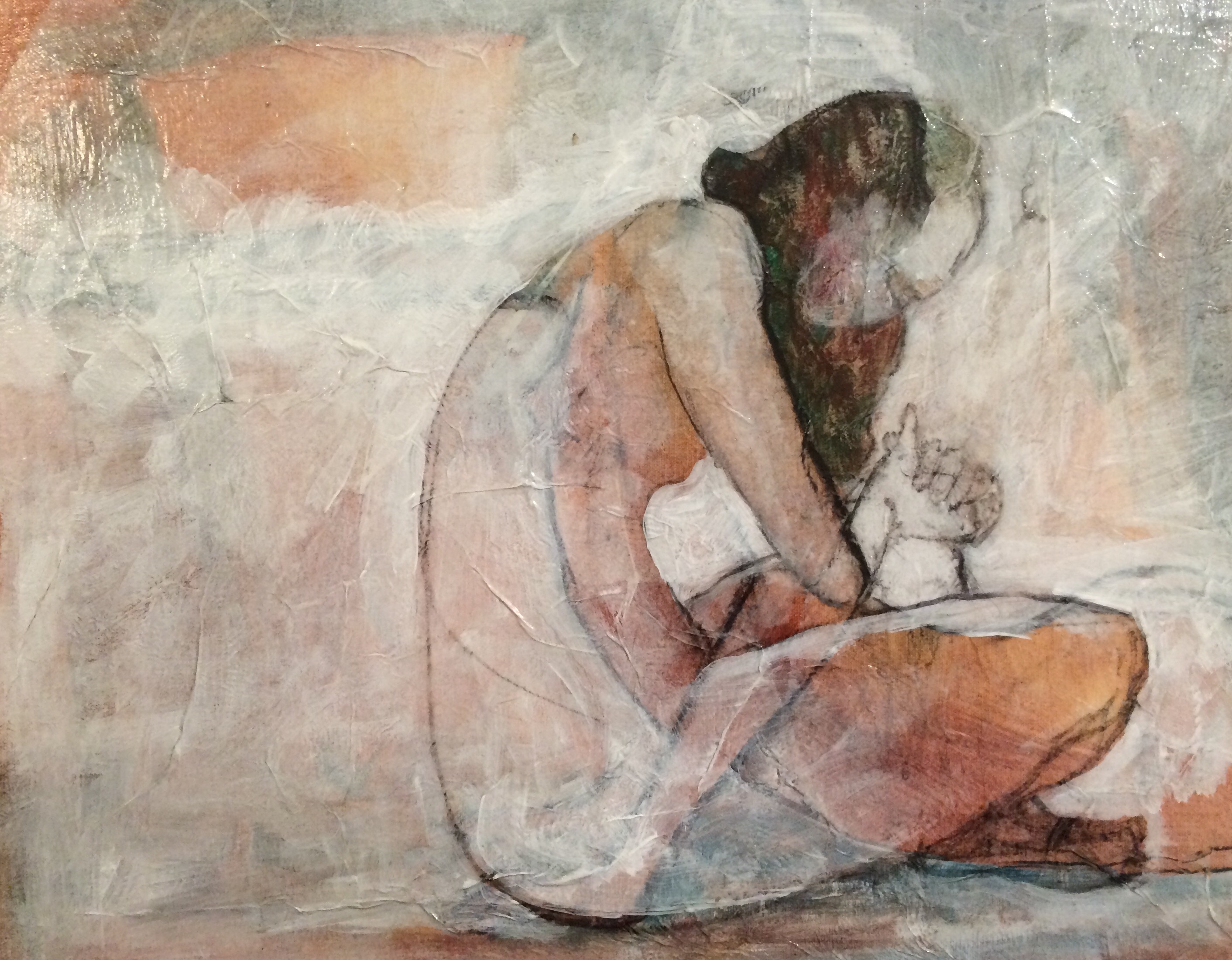
a detail of my painting And Now
Months ago Steve told me that he’d read my book. “I liked it,” he said, “But the only thing I don’t get is the first chapter. What do you mean when you say that we don’t have problems, we have patterns?” Since we were in the middle of a rehearsal we didn’t have the chance to discuss it. I forgot about that conversation until yesterday. I was digging through some old notes and found my original note, the first time I told a group that they didn’t have a problem, they had a pattern. I was facilitating a very dysfunctional group and having a great time untying their collective dedication to misery. Afterwards, I wrote extensive notes because the day’s conversation spun my dials. In rereading these notes I find them more relevant today than ever. Here’s what I recorded:
On the road to power the path splits: one path leads to power-with-others. The other road leads to power-over-others. The fork in the road is determined by where you seek your worth. It is, when all else is stripped away, a matter of focus placement. Where do you seek your worth?
1) If you seek your worth from others, you will take the path to power-over others.
2) If you seek your worth within yourself, you will take the fork that leads to power creation with others.
If you seek to glean your worth from others you are essentially trying to control the uncontrollable (what other people think, feel, see,…is out of your control). Control is a fear path and requires protection, shielding, etc..
When people stop trying to control what they cannot control, when they place their energy and focus not on what others think of them but on what they think of themselves, they open. They become safe in the world primarily because their safety is not located in what others think (it is located in themselves).
To pay attention to the self brought from the group an assumption that they would become self-absorbed; they would ignore or disconnect from others. I asked them to imagine this: make the basic assumption that they were loved, that they were already worthy beyond measure. A healthy self-worth does not require self-absorption but its opposite. Respect for others is not possible in the absence of self-respect. Given the imagined assumption of self worth, what might be possible? It all depends upon where they place their focus (where they aimed their focus). Focus placement is a learned pattern.
I have always been interested in comparative religions and have often been confounded by the split that runs through the three primary western faiths (Judaism, Christianity, and Islam – all people of the book sharing a common root). To stir my pot Linda and Bill loaned me a book that speaks to the split in the Christian tradition entitled If Grace Is Trueby Philip Gulley. The essence of its message: what you see (and therefore, what you believe) depends upon where you place your focus. You can focus on the god of righteousness and retribution or you can focus on the god of grace. If your focus is on righteousness and retribution, you will necessarily believe in a chosen people, an us-and-them paradigm, and fear will be your driver (power-over). This god will send hurricanes to punish. If, however, you focus on the god of grace, then there can be no divisions. Grace is for everyone. This god does not send disasters nor takes sides with who wins wars because division is made-up by humans seeking power. Grace creates power-with.
Our nation, at this moment, is in a heated debate about where to place its focus. Standing at the fork it is embroiled in a dispute about which path to take. The danger on the path of power-over is that it invariably and inevitably eats itself. Fear is a potent driver for a little while. Pushing others down to elevate your self might feel good for a time but will always blow back on itself. Diminishing others is a lousy path to (dare I say it?) true power.
For a short time in the 80’s I did work at a school in Los Angeles that served children in gangs. We played a lot. We laughed as a way of loosening the grips of fear-seeing. The epicenter of our work together always came down to this truth: any idiot with a trigger finger can take a life. It is easy to push others down. It takes a heart and a mind (and a community) to give life. The real work of courage is to lift others up; that is what using your gifts in service to the world is all about. And, in the end of the day, the only difference is which path you choose, where you decide to place your focus, and which pattern you decide to reinforce.
Posted on February 12, 2016 by davidrobinsoncreative
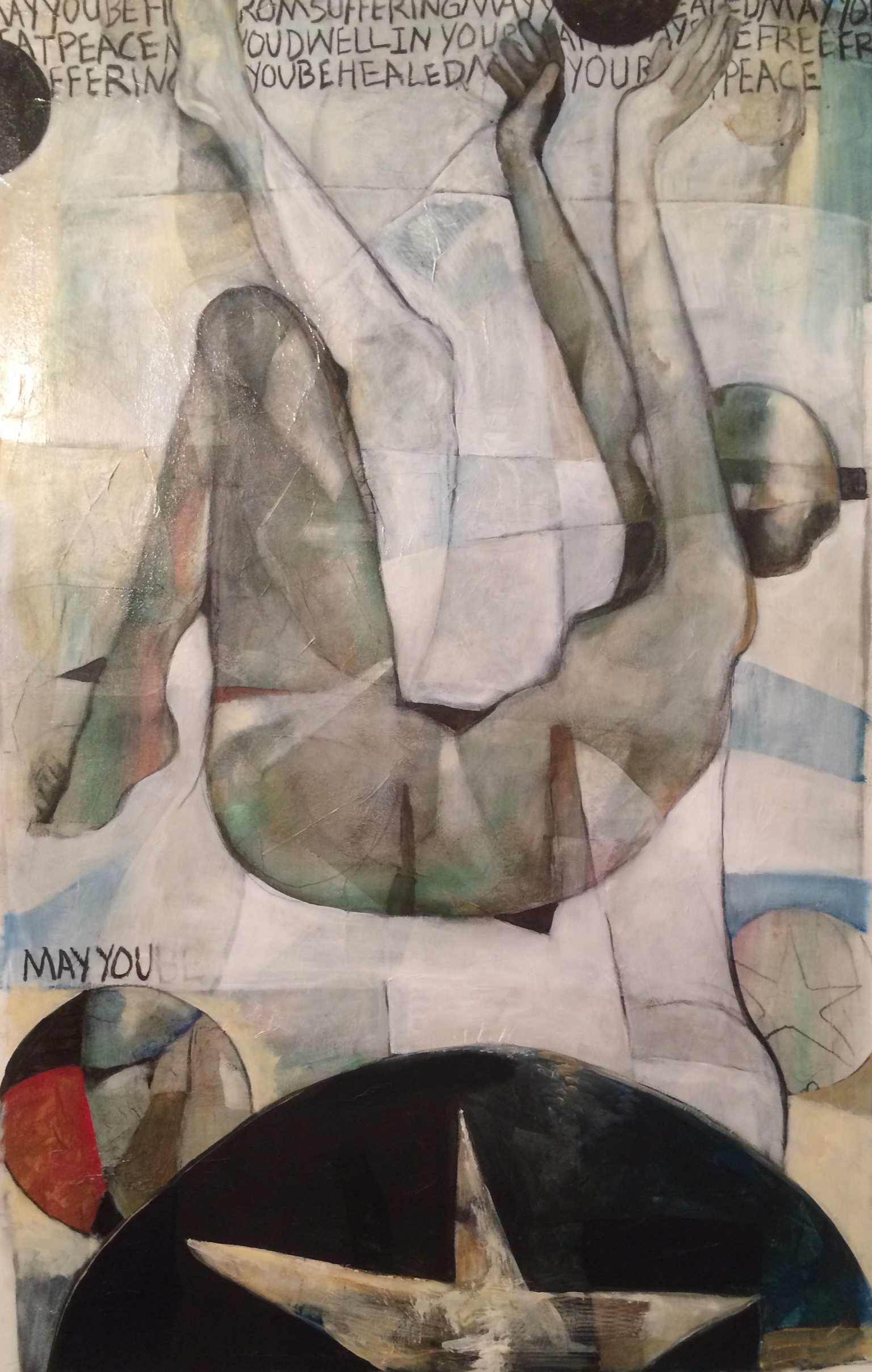
a detail of my painting, May You Be.
Clumsy (klum’ ze) adj. 1. lacking dexterity, grace or skill; awkward. 2. ungracefully shaped or made; unwieldy. 3. awkwardly or unskillfully said or done, ill-contrived.
“We don’t allow ourselves to be clumsy,” Kerri said. “Life is clumsy.”
Many years ago I read a commentary that suggested we moderns have a harder time of feeling good about ourselves than people of ages past. The argument went something like this: we have an impossibly high standard to meet and it is mostly illusory. For instance, our predecessors compared themselves and their successes against a relatively small village populace. We are swimming in pool that stretches around the earth. The athletes in our ancestral villages ran against their neighbors, the artists created for a specific purpose that served a tangible need in their community. Our young runners know to the hundreth-of-a-second what greatness requires. They run against the world. Our artists rarely know outside of their own inner imperative why they are creating. With no outer limit they spend a great deal of time wondering if their work has any impact or greater significance. With no outer limit it has no defined audience or community. Stephen, a gifted and prolific artist, used to ask, “Why don’t people recognize the value of art?”
The argument is largely a question of access. Our predecessors had limited and very abstract access to the news of the day, to the happenings beyond their region. We have a 24-hour global news cycle that comes to us on multiple devices that are designed to grab and keep our attention. It is not passive. On our multiple devices we are bombarded with images and messages of what we should look and feel like. Yet, almost all of the images populating our personal measuring stick are constructed. They are manipulated, retouched, powdered and Photoshopped. Legs are stretched. Wrinkles are removed. Sunsets are filtered. We measure ourselves against illusions.
Thus, intermediaries are everywhere. Interpreters abound. I rarely go into a gallery without a curator telling me why the work on the walls is important. The news of the day makes us the rope in a tug-of-war of interpretation.
Art, like life, like deep spirituality, requires direct engagement. It is made rich in the rough draft and the mistake. The broken road is interesting, vital. Learning is a process that takes time. It is messy. It is clumsy. It is not straight, paved, and has no road signs. And, it cannot be walked alone.
There is no forgiveness (of self or other) on the path of perfection; forgiveness is in short supply when the standard is both impossible to attain and an illusion. On the clumsy path, on the messy and muddy road, lives grace, generosity of spirit and deep forgiveness.