Draw [on DR Thursday]

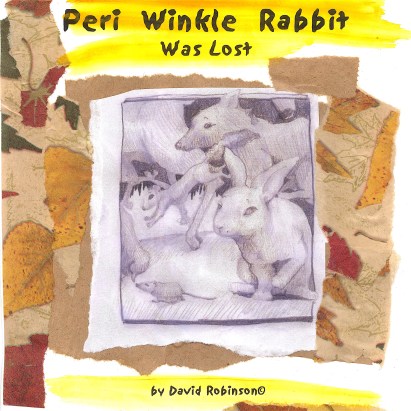
Peri Winkle Square copy

Sue’s request was clear: write a story that is hopeful but does not pretend that everything will be easy or rosy in the end.

In 2005, while Sue Eskridge was teaching a course on children’s literature at The University of the Pacific, Hurricane Katrina devastated the Gulf Coast of America. Sue had an idea. She refocused her class to help children who were displaced or had lost their parents in the storm. Her class approached several artists and children’s book authors and asked them to write and illustrate a story, to make single-copy-books. The books would be bundled with other supplies and through service organizations would go to children that needed them. “We want to give them hope but not false hope,” she said when she asked if I would “quick do a book.”

What do you do when the forest fire comes? The hurricane? The pandemic? Run. Hide. But then what? People pull together. People pull apart. The disaster invokes the best in us. The disaster invokes the worst in us. Ultimately, we realize that we are in it together and our togetherness can be defined through selflessness or through selfishness.

What defines us? I lived in Los Angeles during the riots and martial law. People turned on each other. I also saw the same community, just two years later during the Northridge earthquake, pull together. 9/11. AIDS. Our rhetoric does not define us. Our actions do.

I did as Sue asked. I quick did a book, Peri Winkle Rabbit Was Lost. I only had a few days and managed to write the story and smack out 16 illustrations. A story of personal gifts brought to communal need in the aftermath of a fire. When I bundled the original and sent it off to Sue I promised myself that I would someday go back into the story and draw all the pictures, fill in the 10 or so illustrations that I did not have time to realize.

This week, we retreated into our home, this pandemic hot and frightening and eerily invisible, except for the growing and incomprehensible numbers on the screen. The unreal reality. The hurricane that cannot yet be grasped.  I asked myself what might be a worthwhile project to do while isolating?  And then I remembered my promise to Peri Winkle Rabbit.

Draw. And perhaps a new story? One that deals with the hot fire now raging through our divided world? Two narratives. One pandemic. What are the odds that this crisis will burn off our national division and clear our eyes so that we are capable of stepping into a single story. I will ask Peri Winkle Rabbit.


read Kerri’s blog post on PERI WINKLE RABBIT


their palettes website box copy


Touch The Chair [on Merely A Thought Monday]

healing copy

I am reading books slowly these days. Meditating on words. Sometimes it takes me months to read what I used to blow through in a few days. I am often pleasantly surprised and taken aback by how the words I read on this morning – words written months or years ago – line up exactly with the events of my day. All the time I catch myself thinking, “How did they know I needed to hear that today?”

“There was an altar upon which we could place a photo of someone who had died. Kim chose to put a picture of his “old” self; I found one of him rowing his peapod looking so happy, so strong. Beautiful. We both grieve the loss of that Kim while getting to know and love this new one.” ~ Judy Friesem, Summoned By A Stroke.

Grieve the loss. This is the fourth time in my life that world circumstance/events have drawn a hard line between ‘what was’ and ‘who-knows-what-will-become.’ What was normal and true last week will never again be the same. Social distancing. Pandemic. Disruption is scary and confusing.

I’ve many times heard the story of immigrants, preparing to leave their homes forever for some distant and unknown shore, just before leaving, circle the rooms, touching walls, running their fingers along the arm of a well-loved chair. One last look. This is who I was. Who will I become? It is necessary to mourn what is known before making space for the unknown.

In the midst of spinning change, hanging on too long to the way things-ought-to-be or used-to-be is destructive. More than once I’ve stood with a group in full denial of their new circumstance insisting that “This is the way we’ve always done it!”  Perhaps. What is comfortable today was at one time new and uncomfortable. Someday, what is now new and uncomfortable will be a well worn path. The first step: one last look. This is who we were.

“No person is a finished thing, regardless of how frozen or paralysed their self image might be. Each one of us is in a state of perennial formation. Carried within the flow of time, you are coming to be who you are in every new emergent moment.” ~John O’Donohue, Beauty

Imagination lives in the midst of “It happened to me.” One of our greatest super-powers is the capacity to imagine ourselves different, more expansive. It is what we call dreaming. We “see” ourselves” writing the book or scaling the mountain or being a better parent or working at the soup kitchen or losing the weight or…becoming the more perfect union.

Imagination requires leaving. Leaving requires imagination.

“Fate has a way of handing us what we need in order to become whole…” ~ Judy Friesem, Summoned By A Stroke


read Kerri’s blog post about HEALING


moon website box copy


Pull The Curtain [on KS Friday]

and the saga continues copy

I once heard an author speak of the impossibility of writing a farce about The United States of America. He said that before the last chapter was written, the farce will have actually occurred. The bar of absurdity drops quickly from sea to shining sea.

Today we are watching the collapse of the American mythology “The best health care in the world.” In the face of a public health emergency we are seeing with greater clarity how fractured and incapable our system is of delivering even the most basic of services. That statement, sadly, is a daily fact in the USA for many of its citizens (more on that in a moment) but the pandemic has pulled the curtain on the wizard. Oz is not what it seems.

In the past 24 hours I’ve heard it reported multiple times: the difference between our inept response – beyond the absence of coherent leadership – and other nations, is the system itself. In a single payer system no one is confused about what to do or where to go and no one is reticent to seek medical care because of the costs. The necessary tests are available because profit is not the primary motive; public health is.

Our system is a shattered mess of profiteering and, I believe, intentional obfuscation.  Even the people within the system can’t get a straight answer so they can’t provide a lucid response to even the most basic of questions. Yesterday, our question was, “How much does it cost?”  A mere 24 hours ago, Kerri had her first occupational therapy session for her broken wrists. We called our insurance provider to check to see if we were covered. The OT facility also called and we both received two opposing stories. A third call was placed and a third answer was given. So, a fourth call to the insurance provider was made and, yes, a fourth story, a competing answer was proffered.

Four calls. Four stories. The policy itself is ambiguous. We asked the intake receptionist how much the therapy would cost if we decided to pay out of pocket. Her answer, “It depends.” Can we pay the bill we will most certainly receive or should we forgo the therapy altogether? [note: my wife makes her living playing the piano so this is no small or insignificant question]. Kerri started to cry. Standing within the pages of this farce, I started to laugh. No one (outside of the USA) would believe it if I wrote it.

Within 24 hours, our personal farce went nationwide. Anthony Fauci, the director of the NIAID, said it best of our national travesty-of-a-system “It’s failing. Let’s admit it.”

The lucrative business of health care has blinded us for decades to the real needs of public health. We are, by any measure, an increasingly unhealthy society (check obesity rates, infant mortality, teen suicides, etc. if you doubt me). It seems to me that the point of health care should be the health of the public and not profit margins. The conversations coming from the White House are about whether or not our tests and treatments for a pandemic will be covered or not. It’s penny wise and pound foolish. It’s also obscene.

Kerri and I pay nearly half of our combined incomes for “healthcare” that is null and void if we cross the state line. And, now that we are attempting to use the policy that is pushing us into poverty, we are flush with competing stories about the costs but remain empty of even the most basic answer to the simplest of questions.

In the meantime, Senegal is doing a better job testing and protecting its citizens. The farce: our stubborn insistence that this sham of a system, the most expensive yet least effective, is the best in the world.


read Kerri’s blog post about THE SAGA


ks website header copy


windyHHwebsite box copy


Knit A Better Structure [on Not So Flawed Wednesday]

impact 2 copy

“…the test of a civilization is how it cares for its helpless members.” ~ Pearl Buck

As a nation, we are currently enamored with tests, and it is not a stretch to say that we’d receive a failing grade on this test of civilization. The helpless members do not fare well.

As Horatio pointed out, much is lost between the cracks of the quintessential conundrum built into the DNA of these United States: the dueling philosophies of every-man-for himself versus I-am-my-brother’s-keeper. Republicans versus Democrats. Corporate greed versus social need. Black and white thinking that leaves gaping voids into which the helpless members disappear. There is no both/and to be found. Division has been a useful tool of control since the inception of the American experiment. The ideological cleaver is sharper than ever these days.

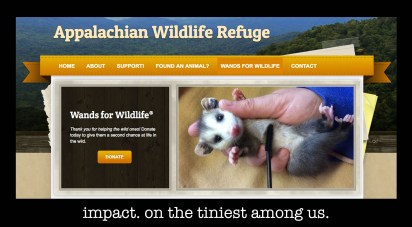
Yet, there is hope that reveals another side to our character.  Kerri said, “Look at this!” The Appalachian Wildlife Refuge put out a call for used mascara brushes. They are a useful tool in saving small critters and returning them to health. They received so many brushes, the response was so great, that they had to put limits on when they would accept new brush donations. It’s my bet that people of all political stripes and social strata sent their used mascara brushes to the Refuge. It’s my bet that the critters and the caregivers were grateful in every case.

When tragedy strikes, we rush to meet the need. When a photo moves us, we respond. Something pierces the superficial divide and reaches into our communal heart.

Robert Fritz teaches that behavior is like water, it follows the path of least resistance. If you want to change behavior, you must first change the underlying structure of the land. What might it take for us to challenge this superficial concocted divide, to reach deep  into our DNA and knit a better structure of the land – something more useful and more profound than perpetually dueling philosophies? What might it take for us to put down our cleaver and pick up our mascara brushes? What might we imagine and create together that would help history give us a better grade on our test?


read Kerri’s blog post about IMPACT


bonfire website box copy

Bother to Ask A Question [on Flawed Wednesday]

think before you share copy

All of us know this tale: A farmer loses his ax. He saw the neighbor boy playing in his field so he suspects the boy took his ax. He tells his wife the neighbor boy is a thief. The wife goes to town shopping and tells everyone she meets the story of the neighbor boy stealing her husband’s ax. People share the story and the story magnifies. An ax is now the least of the boy’s crimes! They tell other people and when things go missing or worse, the boy is their suspect. If he could steal an ax he could also steal a shirt off the line. He’ll take your horse when you’re not looking! He’s a chronic thief! The boy is shunned. His family is ostracized. The farmer feels satisfaction until the day he finds his ax resting on the tree – right where he’d left it.

Narratives are very, very powerful.

Yesterday I listened to a speaker from SelahFreedom present on the growing “industry” of sex trafficking. It was horrifying. One of the slides on the speaker’s Powerpoint was from a pimp’s notebook, instructions about how to keep his women under his control. Drugs help but the narrative weave is all. It could have been notes taken from the commandant at a concentration camp or a cult leader’s handbook. Paranoia tactics. Isolationist, us-versus-them strategies. Lies and distortions repeated to the point that it is impossible, once inside the narrative, once hooked in the story, to distinguish between reality and the distortion.

We live in the age of information and misinformation. We now inhabit the era of hyper-magnified distortion. A single post, a tweet, can reach millions in an instant. The boy stole the ax! They are trying to make us all socialists! The judge was biased! Don’t believe what you see! Witch hunt! Hoax! Believe what I say not what I do.

When was the last time you checked the veracity of your news sources? When was the last time you bothered to fact check or research something that alarmed you in your stream?

Fear is a great brain scrambler. Robert Sapolsky, researcher of stress in animals, has shown that zebras are capable of shaking off their stress after the lion gives up the chase. People, on the other hand, whip up and maintain their stress by repeating the story over and over to all who will listen. And, more to the point, there need not be a real lion chasing us, just someone who knows how to manufacture a lion and get us to spread the terror, to share without question.

It’s the pimp’s strategy. Stoke fear. Discourage thinking.  Threaten. Sow doubt. Play on insecurity. Keep them hooked. Encourage thoughtless sharing of an empty narrative. It validates the perspective of the pimp and the farmer who couldn’t possibly have lost his ax all by himself.

Despite what they tell you, the pimp is never protecting your interests. The pimp is only concerned with his own interests and needs a deep state of delusion running rampant through his stable, to control the narrative.

Imagine what might have been possible if anyone in the ax chain had thought to ask a question, had stepped back to think about what they were hearing before they hit the easy button to share.


read Kerri’s blog post about THINK BEFORE YOU SHARE


shadow bristol woods website copy


Tickle Open The Closed [on Merely A Thought Monday]

eleanor roosevelt copy

It used to be one of my favorite exercises to facilitate. Ask one person in a small group to tell a story of blame. Ask the rest of the group to invest in the story. In no time the small groups would be indignant, talking over each other in disgruntlement. A klatch of agitated victims, howling.  They’d laugh in their aggravated frenzy. They’d devise clever revenge or ways to torment the object of their blame story. They’d grow a monster.

Blame stories are like sugar. They are easy to eat and highly addictive. There’s rarely any real substance, so much gossip-cotton-candy, but there is an odd pleasure in playing the role of  “the injured party.” The groups would always reflect that the exercise was fun. So much so that they’d often forget it was an exercise. Commiseration and validation, after all, are the point of a blame story. That, and making someone else responsible for how we feel.

Ask the same groups to tell a story of choice or opportunity and most times, after only a minute or two, they’d sit in silence. Their, “Great. That’s really great,” support would dwindle. Feeding an idea is not nearly as easy as feeding a story of blame.

Quinn used to tell me that creativity is not for the faint of heart.

The groups were always shocked to discover how much of their lives were spent chewing the gristle of discontent, of feeding the notion that someone else was to blame for their choices or their circumstance. They’d generally comment on how easy it was to commiserate and how difficult it is to question, challenge or stop the blame-game. Mostly, they were shocked to discover how little of their time they dedicated to feeding ideas, theirs or another persons.

Blame stories are easy because they are reductive. They engender tight little balls of closed minds and closed circles. They close hearts. They take almost no energy at all to spark but, once burning, like a wildfire, they are capable of consuming entire forests.

Idea exploration is expansive. Seeing possibilities requires eyes that look up and out.  It takes much more energy to imagine, to question, to ponder. To try. To experiment. To ask. To challenge what you think you know. Opening minds, opening circles and hearts requires a deep sense of self-responsibility. It requires an even deeper sense of responsibility to others.

One of the purposes of the artist is to open closed circles, to tickle open closed minds. To help their community see anew and entertain never-before-imagined possibilities.

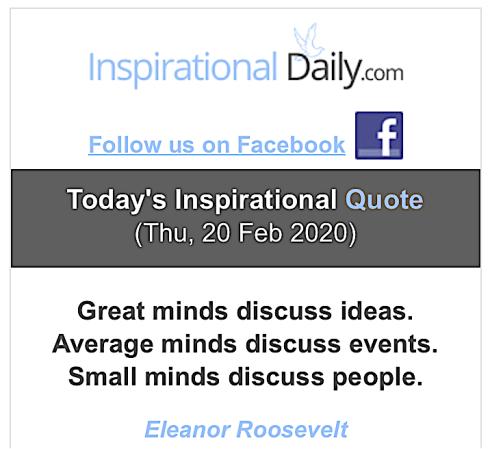
It takes more effort and courage to sail to the edges of the known world than it does to hang out around the water cooler and complain about others. Great minds do not have more capacity than any other mind, but they do require a very different focus.


read Kerri’s blog post about GREAT MINDS & IDEAS


k&dbw backs website box_ copy


FaceTheRain

feel the rain, mixed media, 2019

Snap Your Fingers [on Merely A Thought Monday]

we should be wide awake billboard copy

When I was roaming the world working with corporate types, tilting at windmills, I would tell my be-suited crowd that words matter. I’d relay a story I heard from Don Miguel Ruiz. He told his audience that people in the United States completely misunderstood the word, “spell.” He said, “You think to put a spell on someone is magic, like hocus-pocus. But, that is not it at all. Tell a little girl that she is fat and you will have spelled her forever.”

She will hate her body. That is a powerful spell.

Words matter. Tell the nation that the “Democrats are vicious” or that the news is “the enemy of the people” and the enchantment is undeniable, angry.  Push the spell through a propaganda machine and it magnifies in intensity. Like a ritual drum, the thump-thump whips the glassy eyed adherents into a red frenzy. Insist that long debunked conspiracies are real or that the deep state is out to get us all and the spellbound will see demons threatening everywhere.

The nation body splits and just like the little girl looks with hatred at the other part of itself. A powerful spell.

‘Hoax’ thump-thumped in the face of undeniable fact and the mesmerized fall into line, repeating what they are told to repeat. “Cluck like a chicken!” the hypnotist suggests and the sleepers dutifully cluck. Common sense surrenders to the spell.

Teachers of consciousness use different techniques but are in general agreement about how to awake from a nasty spell. Step back. Doubt what you think. See what is there and not what you think is there. Detach from your attachment to what you want to believe, to what you are being told. The salesman always wants you to buy the car. He is not your friend. He does not have your best interest in mind. He will use his words tell you anything. Despite what you are told, this car will not make you happy, it will not solve all of your problems. It will not make you sexy or powerful or complete. Uncouple from the words, the spell being woven, and see.

If she is lucky, the little girl one day wakes up and realizes that the hatred she experiences is not her own; it was planted in her with a word. The hatred she wields against herself and turns on to others is not of her creation. She learns that she must snap her own fingers and call herself awake. The hypnotist, she understands, only has authority if she continues to cluck and sleep.


read Kerri’s blog post about WAKING UP


luminaria website box copy


Value It [on DR Thursday]

DawsonDetail copy 2

“Creativity is a dance where the flow of the eternal gleams through the brittleness of time and the distance of space.” ~ John O’Donohue, Beauty

The arts are so often seen as unnecessary. They don’t pencil out. Hard to make money, yada yada. The budget just submitted by the current administration once again is attempting to cut the funding for and kill the National Endowment for the Arts. “A waste of money,” they say.

No way to measure it. Can’t be reduced to a spreadsheet.

Kerri was recently asked by her employer to calculate how many hours per week she spent working on her music. “What constitutes working on it?” she asked, “I think about it all the time. I’m constantly listening for and searching out good music. Does it qualify as working on it when I sit to play, to compose, to noodle on an idea?” She sighed the sigh that all artists sigh when asked to reduce their artistry to a number. “Maybe 125 hours a week? Does a lifetime playing, composing, conceptualizing, conducting, rehearsing and leading choirs count in my working on it” she quipped. They didn’t smile. The committee got together and determined her value based on their spreadsheet.

We know that when a society disappears from earth it leaves behind art and artifact. We discover what was important to the society by the arts they produced.  The architecture, the pottery, the scribbles on a cave wall. Their values expressed. Their arts – like ours – are the eternal gleam pressed into specific forms.

The arts are nothing less than the glue that keeps a society together. The common story is, after all, a story, and it is told through literature and theatre and dance and music and painting.

One of the necessary first acts of every dictator, after identifying a scapegoat, is to eliminate the artists, the thinkers, and the educators. It is a control strategy: rend the common story. Split the people. Then, make questioning and expressing a crime. Diminish reason. Eliminate the voice of imagination and reflection. Vilify the voice of dissension. Appeal to the reptile brain [that part of your brain that deals with the basic functions but has no reach into higher order thought].

Asking the question “why” and challenging the group-think is the artist’s and academic’s job. To discern between truth and lie. To open eyes. To open hearts. To open minds. Value beyond measure in a free society if the society values its freedom.

Yada yada.


read Kerri’s blog post about NEW MOTHER


bonfire website box copy


new mother ©️ 2017 david robinson


Get Off The List [on Merely A Thought Monday]

indecency copy

“Are we even aware of our biases anymore?  ~Shawn Langlois, 2018 Marketwatch. Check out the chart.

“What we all feared has happened. Trump has been normalized.” ~ Bill Maher

“I think they’ve been unleashed.” ~ J after listening to the poolside conversations at the YMCA

It was an accident of timing that I was directing a production of the docu-drama, GOD’S COUNTRY, with college students in Santa Fe, NM when George W. Bush was up for re-election. The play chronicles the rise of a white supremacist group and the man they murdered, Allan Berg, a Denver-based talk show radio host. Much of the dialogue is drawn from court documents from the trials of the white supremacists and the transcripts of Allan Berg’s shows. It’s chilling.

The students and I studied hate groups. We studied division. We read studies about how easily a person or community can be slowly drawn into a mindset of hate. It’s a prescription, like slowly boiling a frog. Angry people are an easy mark to be led down the hate path.

One of the studies that stayed with me was Lawrence Britt’s The 14 Characteristics of Fascism (at that time, the USA exhibited many of the characteristics on the list). The list was chilling in 2004 during the production. It is horrifying now that we’ve waded into the swampy waters of #14: Fraudulent Elections. Last week in the USA  an entire political party (with one exception), despite overwhelming evidence, lined up and gave explicit permission to their leader to allow a foreign power to manipulate our elections.

David Neiwert wrote a book, called In God’s Country: The Patriot Movement and The Pacific Northwest. In it are eye-opening tales recounting how a community becomes complicit with its haters. “Boys will be boys.” “Oh, that’s just who they are.” “They didn’t mean any harm by it.” “Turn a blind eye.” Hate crimes rapidly multiply when a community is willing to let it slide. Explain it away. Normalize it. “That’s just who he is.”

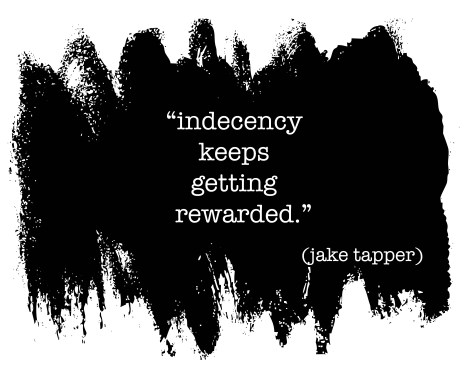
And what happens when the enemy, the latest scapegoat that unifies the party-in-lock-step (#3 on the list), is the other half of us, the other party? What happens when indecency is rewarded and ignorance applauded? What happens when fear is the reason the lock-steppers cover their ears and claim that they see no evil? Low-information comes with a very high price.

As they say, history repeats itself. And, somehow, we find ourselves – at least half of our nation – embracing the list.


read Kerri’s blog post about INDECENCY


seagull in fog website box copy


Sit Together [on DR Thursday]

AtTheDoor1 jpg copy 2

Our cartoon, At The Door, lives in the category of ideas-that-we-knew-would-never-fly-but-wanted-to-do-anyway. In other words, we knew we’d make the submission and the syndicate would reward our good efforts with silence. And, they did just as we predicted!

If conflict is the epicenter/driver of story, then At The Door has a premise filled with great story potential. The dog wants to go out exploring the unknown. The cat wants to stay in his comfort zone. His bowl is the center of his cat-world and he is rarely found far from the bowl. The dog is an idealist, a dreamer. The cat is a realist. A conservative. He enjoys raining on the dog’s parade.

You’d be surprised how much material you can write with such a simple premise. We laughed heartily in the writing of it, especially because we drew our inspiration directly from our crazy Aussie and enormous cat. They share space. Together, they stare out of the door or window, their desires are wildly apparent. Each following their star. Each honest in their pursuit.

In versus Out. Cats-and-dogs-living-together. Oh, my!

Truth? I’d forgotten about At The Door. And, then, watching the news of the day combined with the wave of contention swirling around us, I remembered. I sought the cartoon file more for solace than anything.  I wanted to revisit my belief [my experience] that division need not be ugly. Division need not be disingenuous. Division provides the ripe necessity for collaboration. Two points are a mathematical requirement for the third point to become possible; it’s called ‘perspective.’ Creative tension can be a positive force for forward movement and new ideas if the division serves an honest intention.

If the division is the intention, sitting at the door together becomes, as we’ve seen, altogether impossible.


read Kerri’s blog post about AT THE DOOR


drc website header copy


dogdog babycat paws touchingwebsite box copy