Experience The Miracle

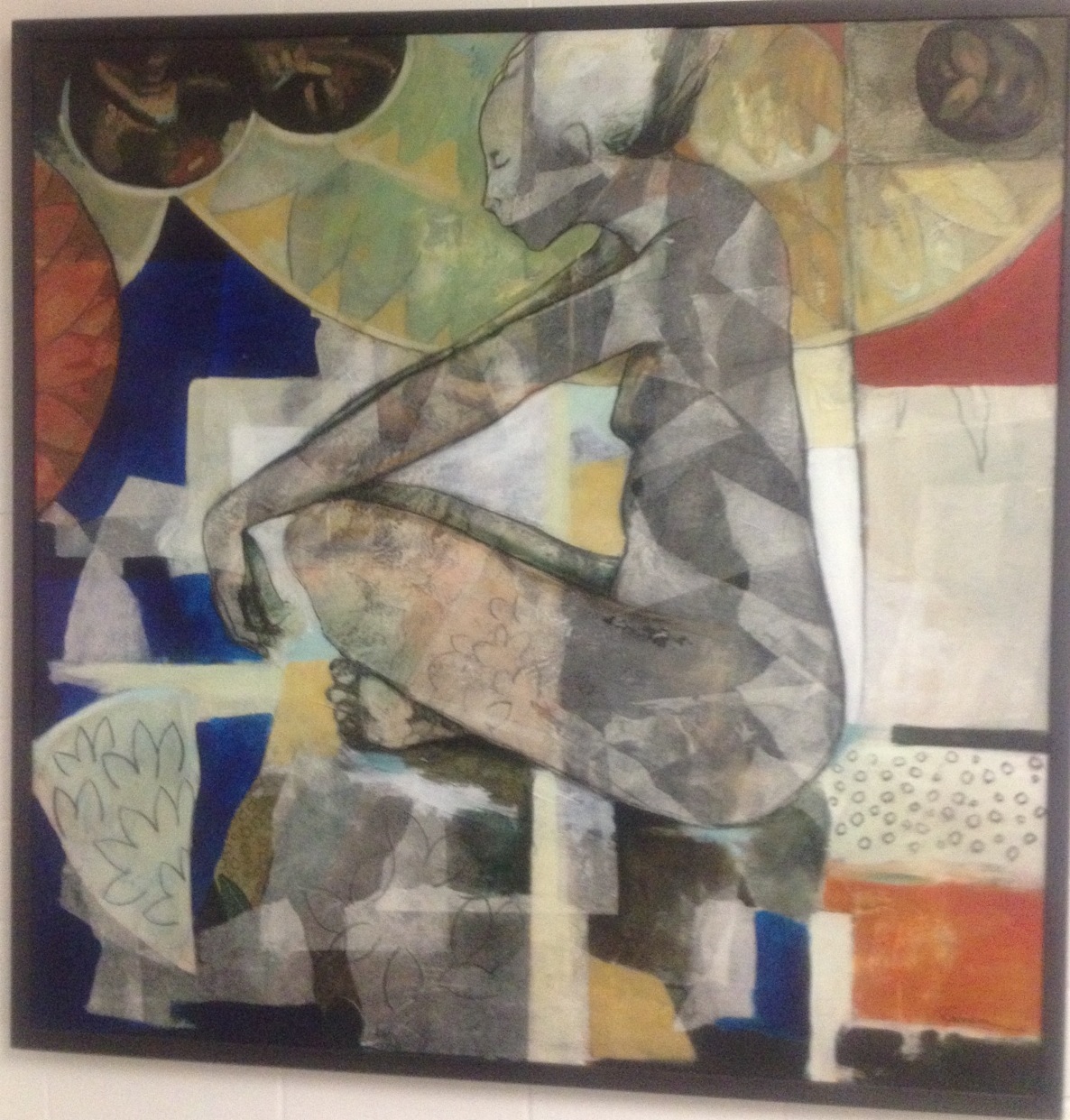
From the archives: Pidgeon Pier. This painting is about paying attention

From the archives: Pidgeon Pier. This painting is about paying attention

“It has become my view–my faith–that all elements of nature have that power to produce peace. It is surely why so many are drawn away from their urban lives and back to natural places. But those places need not be grand scenic vistas. The same peace can be found in the dandelion growing in the nearest vacant city lot.

It is, in the end, a choice either to “shut up and listen” to these sources of strength–no matter how great or humble or where we encounter them–or to hurry on by.”

~Master Jim Marsh in a comment about my post, Sit By The River

There was a cool breeze off the lake this morning that slowed the mounting humidity. We were a mile into our usual morning walk, rounding the path to the rocky lakeshore, when we entered the storm of dragonflies. There were hundreds of them, hovering just above our heads, occupying a narrow band that stretched as far as the eye could see!

I gasped and stopped! Never in my life had I seen so many dragonflies. Kerri said, “They come out when the weather has been hot and without rain.” Before continuing on our way, we stood for a few moments appreciating the hovering, the methodical zigging-and-zagging. Until our path deviated from the coast, they were with us, green and purple spirits, riding the air-line where earth meets water. For me it was pure magic.

Many years ago, as a way of ending our relationship, a woman told me that it was too hard to be with a mystic. I’d never before (or since) thought of myself as a mystic so I looked it up to make sure I understood why a mystic might not be easy to live with:

Mystic (noun): a follower of mysticism.
Mysticism (noun):
1. Belief in intuitive spiritual revelation,
2. Spiritual system,
3. Confused and vague ideas.

I laughed aloud when I read the three definitions of mysticism; the third definition applied to the previous two! I left my dictionary with two beliefs:

  1. All human beings are mystics if they simply slow down and pay attention. There’s no trick to it. And, that was certainly the problem in my relationship: I have always liked walking slowly in a world drunk on racing to the next big thing. That is hard to live with!
  2. The line between a spiritual revelation, a cathartic experience, a scientific eureka, or an artistic visit from the muse, seems to me, to be semantic. In our age of the intellect we generally run from the word intuition unless we apply a label like “gut instinct” (transforming a feminine energy to a masculine gut) or “I just knew it!” (transforming the scary clarity of an intuitive feeling into a safe clarity of an intellectual experience). It’s all wordplay.

Hearts know. Thoughts babble. And the only way to sort it all out is to stand still, stop the babbling, and see the miracle.

Make It So

Pasta. Meat sauce. Warm Bread. Wine.

Pasta. Arugula salad. Wine.

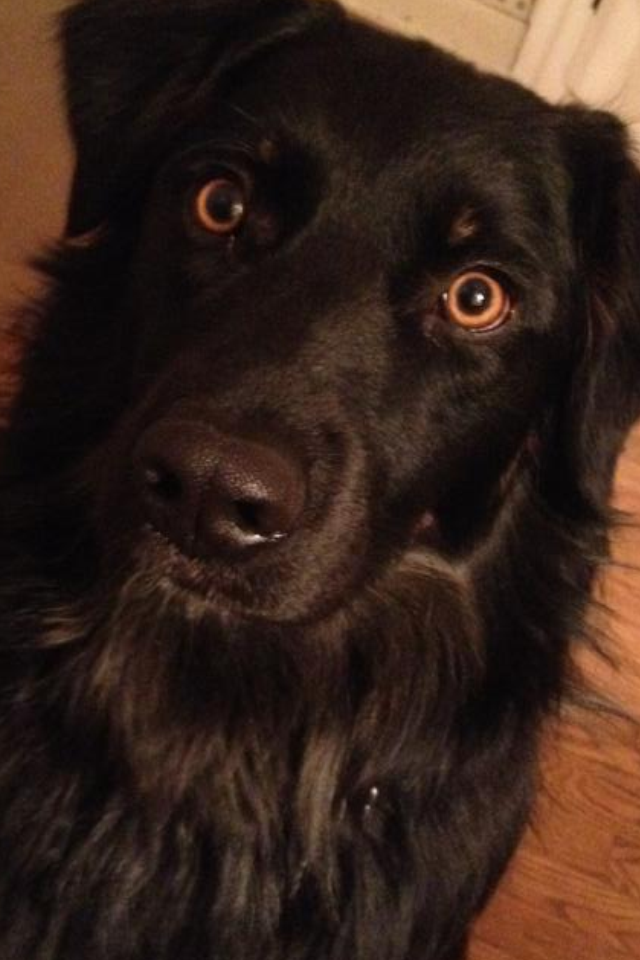
Tripper Dog-Dog-Dog knows the world through his nose. He sniffs everything. It is not uncommon after we finish a meal to come face-to-muzzle with a scent-curious Dog-Dog. Lately, as the objects of his sniffer, we’re given to staring into his amber eyes and offering the menu, saying something like, “Pasta. Arugula salad. Red wine,” or “English muffin. Peanut butter with black cherry jam. Banana. Coffee.” Satisfied with our description, he moves on to the next smell-enticing investigation.

I delight in our Dog-Dog food reports. They’ve become commonplace and matter of fact; “Chocolate chip cookie. Espresso.” Our reports never contain qualifiers, so, for instance, we never say, “A great chocolate chip cookie. Delicious espresso.” We provide the minimum, the noun.

Our Dog-Dog reports have rekindled an age-old fascination of mine: the power of words, specifically, the enormous power of the labels we attach to our experiences.

Language is a sword that cuts both ways. It can liberate and it can imprison. The difference is in how it is used. Language is the primary tool we use to make meaning. Big magic happens the day a person realizes that meaning is not something that is found, rather, it is something that is given and it is given the moment we apply a word-label to an experience. Nothing is good/bad, hard/easy until our label makes it so.

Applying a label to an experience is an act of creation. It is not passive. Take note of the word-judgments you apply to yourself or to others. For a week make a game of flipping them over and applying the label “beautiful” to where you usually apply a judgment. So, for instance, instead of, “I am fat,” why not say to your self, “I am beautiful.” Both are labels. One imprisons while the other liberates. The difference is a single word.

The label determines the possibilities we see (or don’t see). In a past life I used to facilitate organizational change and I came understand that my role was to help my clients ask better questions (use different language). They always came to the table with a “how” question: how do we change without feeling any discomfort? Response: what might you see if you stopped pre-labeling what you might feel as “discomfort?”

The mantra: have the experience first, make meaning second. And then, recognize the great capacity and opportunity you have to make meaning. Why not make a better meaning? Why not take a step and let it be a step merely?

Try this: do the Dog-Dog and, for one week, eliminate the qualifiers so that nothing is good or bad or right or wrong. It just is because you choose to make it so.

Step Into The Field

photo-5[continued from “Jump!]

I wrote this phrase: “The one facilitates the journey for the many.” And, today, I would add: the one facilitates the journey for the many so that the many can experience the one. This little phrase is the point and the purpose of the theatre.

I’ve come to believe, at this stage in my artist life, that all processes of art-making are actually exercises in presence. And, presence, for me, has come to mean transcending any experience of separation. For instance, when I am fully engaged with painting a painting, “I” am nowhere to be found. Time disappears. There is only rolling creation. To use a cliché: something comes through me. Language is incapable of grasping what really happens and all we are left with is “something comes through” – a statement of separation.

A week ago today we were preparing to perform the closing of The Lost Boy. This play is unique in my experience for many reasons (it would require a book or two to explain the many layers of this cake), one of which was that we only had two performances: an opening and a closing. We hit our stride on the closing – and by that I mean we let go of thinking, preparing, adjusting…, and entered presence. We stepped onto the stage with no thought of “what’s first” and “what’s next.” The play happened with no effort. The Chili Boys played like never before. We were, to use another cliché, in the flow. I have never felt more alive, more connected, more present. It was fun!

50 minutes before stepping onto the stage

50 minutes before stepping onto the stage

Years ago, I had the opportunity to assist Jim Edmondson in a series of plays and I riddled him with questions. He introduced me to the notion that the art of acting was the art of presence (though he used a different language). He taught me that words like “focus” and “intention” are merely tools for cultivating the capacity to be present. Presence is the portal and the actors’ (artists’) job is to step into presence so the audience can join them. Literally, join with them in the field of the present, the place of common story. To be. Together, in a single story. And, although he did not say it this way, he taught me that “to be” is infinitely more powerful than “to become.” “To be” is not an arrival platform; it is an experience of the many recognizing itself as the one [could you ask for a better definition of art!].

Mike, our stage manager extraordinaire, came down from the booth and told us that our performances were different than the first night. We were more potent; we found nuance and greater depth. He was right. We were finally able to surrender to the work, get out of our own way, and step into the field of shared story.

Hear The Voices

photo-2This is the most unusual rehearsal process I’ve ever navigated.

First, I wrote the play and in preparing to perform it, I’m discovering it anew as if someone else wrote it. There have been brilliant and funny moments when I ask myself, I wonder why he wrote that? The good news is that I remember whom to ask.

Second, the play was originally meant for Tom to perform and since the story is Tom’s family narrative, I wanted the language and syntax to be Tom’s. In development, I recorded hours of conversation with him. Much of the first draft was a transcription so that I might capture word-for-word his language choices and speech patterns. Those structures survived the several rewrites that happened after Tom’s death. In preparing to perform the play I’m wrestling with the language. I’m wrestling with his language. It is almost as if I am discovering my own speech patterns and syntax – in telling Tom’s story I’m finding it necessary to tell it my way, not his. Essentially, as is true in all good storytelling, I am finding myself, my voice, through his story.

Tom and me a long time ago.

Tom and me a long time ago.

Finally, the music is a character in the play and the musicians, Mom’s Chili Boys, are madly rehearsing in California while the actors (Kerri and I) are rehearsing in Wisconsin. The internet is a beautiful thing as, each day, we pass notes, record voices, email questions; we will only be together in the same room 3 days before the first performance. We’re essentially workshopping the play from two locations. It is akin to rehearsing a symphony in parts and the parts only come together in the final day. They get to experience the whole symphony, the fullness of their music as played through all of the voices, only in the final hour. And that will be true of this play.

Each day I rehearse and I hear Tom’s voice in my head, telling me the stories that comprise the play. I am reminded that, whether artist or audience, art is a living thing. It is a relationship and ultimately that relationship is with your self.

title_pageGo here to buy hard copies (and Kindle) of my latest book: The Seer: The Mind of the Entrepreneur, Artist, Visionary, Innovator, Seeker, Learner, Leader, Creator,…You.

For all digital versions, go here (Leanpub)

Untitled by David Robinson

Untitled by David Robinson

Go here for fine art prints of my paintings.

Move Your Words

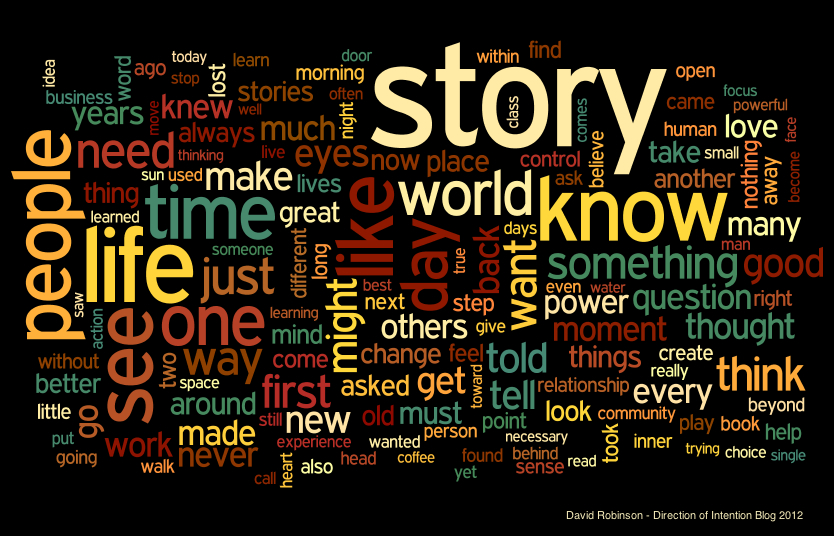
My friend, Mark, made this Wordle of my blog

My friend, Mark, made this Wordle of my blog

I am working with words again today but in another aspect entirely. Now that The Lost Boy has the minimum funding necessary for a production I am working on the play in earnest. Tripper Dog-Dog-Dog cocks his head and wrinkles his brow in wonderment as I talk to myself or dance the words. Sometimes he confuses my work method as an invitation to play and he leaps, catching the cuff of my shirt and pulls me to the ground. “Not now!” I cry out as Dog-Dog stretches my sleeve so that it might fit a giant (a side note: Dog-Dog has altered all of my shirts – he regularly mistakes my work for play. If I do not roll them, my shirt sleeves look as if I am small child wearing an adult extra-large).

I am a kinesthetic learner and realized years ago that working on a script was easier and more productive if I moved or danced the words as I worked with them. To borrow a phrase from a lost friend, my years at school were “fresh hell” because sitting in a desk was painful, it hampered my learning. If I want to have an insight or gain an understanding of something, the best thing for me to do is take a walk. If I move it, I can break down a script in no time. I can memorize anything if I can physicalize the intentions. For me, language, word use, and sense-making are a physical affair.

It is a physical affair for everyone. Try to speak without breathing (an impossibility); breath is movement. Speech is physical. For a real laugh, try to communicate without gesturing. Limit your movements and you will inhibit your capacity to communicate. For more fun, Google the latest statistic about how much of our communication is really non-verbal (we primarily read body language; listening to what is being said is a distant second). The deep mastery of a storyteller is found, not in the words, but the punctuation of a moment: the turn of the head, the intake of breath, the smallest of gesture, the connection made through the eyes; the fire of imagination is fanned when the storyteller, no matter how subtle, dances the story.

Last night I was reminded again of the power of language – the real kinesthetic of it. B is disturbed by the violence and darkness she sees in the world and asked, “How do we push back on it.” I challenged her verb. When we choose our language we also choose a “metaphor path”. Language choices come with images and images are not passive. They define what we see. They define the available options. They are a root for movement. To push back is a verb of resistance. It is counter force, a choice of aggression. “Why push against what you don’t want?” I asked. “Why not put your energy, effort, and imagination into creating what you actually want?”

To push. To create. Which verb will move you?

title_pageGo here to buy hard copies (and Kindle) of my latest book: The Seer: The Mind of the Entrepreneur, Artist, Visionary, Innovator, Seeker, Learner, Leader, Creator,…You.

The PoetFor fine art prints of my paintings, go here.

Follow The Thread

My work in progress.

My work in progress.

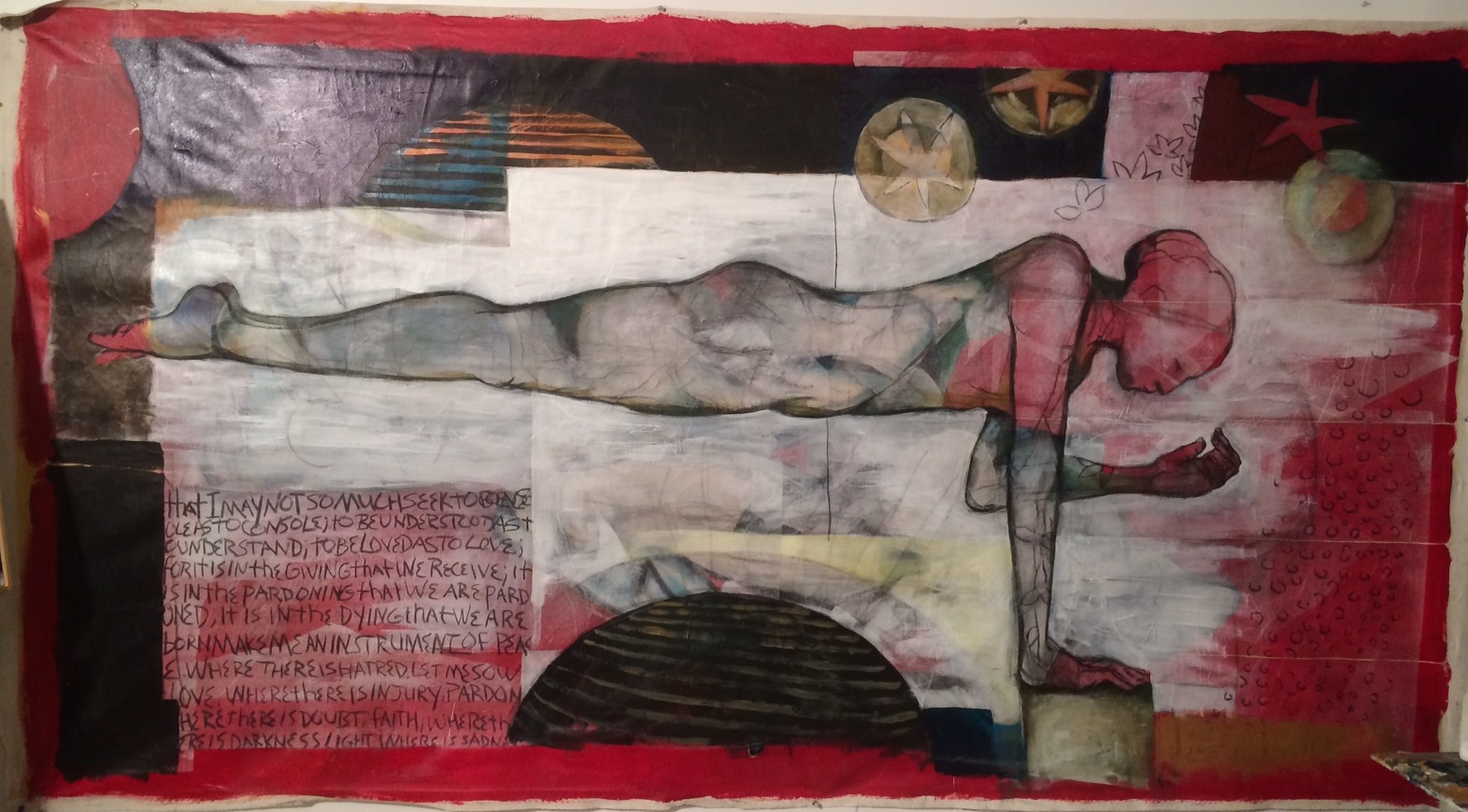
I spent the morning in the studio fanning the flame of a painting I started weeks ago. It’s hard for me to leave a painting once I start it. Once started, there is a thread that I must follow through the maze of developing imagery that will eventually bring me to completion. If I drop the thread, I lose my way. When I find myself thinking too much I know I’ve lost the thread and it is best to do nothing. It is best to sit in the maze and be lost. Moving from the intellect alone will always create mud or worse, it will kill the painting. The thread, to be useful, is intuitive, a guide of feeling. I’ve learned that sitting still is a necessary and useful skill.

To return to the painting requires finding a wholly new thread. It requires sitting with the existing image until the new thread appears. Sometimes the new thread presents itself when I stare at the painting. Sometimes the new thread jumps me in an alley or while having coffee with a friend. That’s what happened with this painting.

The new thread mugged me. I was miles from the studio and heard someone recite a portion of The Prayer of Saint Francis; the painting was suddenly smacking my inner eye. I knew exactly what I needed to do. It felt right. It felt vital. It would not leave me alone – and that’s how I know I’ve found the thread again. The prayer wanted to be in the painting. This thread would not lead to the same outcome. This thread would lead to a completely different painting.

More and more, words are showing up in my paintings. As I walk deeper into specific symbolism, I’m discovering the word as image. Using words as design elements, shaping a word as I shape a drawing, letters as visual symbol (they are symbols referential to sound). These words that do so much to shape our perception and either put locks on our experiences or set us free – they are calling to me as pure visual forms. Letters are simple lines and shapes sequenced and given meaning as words. Just so, words are lovely shapes sequenced and given meaning as sentences. The meaning is not carried in the words (the symbols) but in the reader. The shapes are visual statements before they are infused with symbolic meaning. Open a book written in a language that you do not read and you’ll see what I mean. You can’t make meaning of the symbols but you can appreciate the visual – in fact, once your brain ceases attempting to assign meaning to the symbols you can actually see the pure form (this is a good rule of thumb for cultivating presence, too).

Here’s the prayer in its symbol form for you to interpret and an image of how it currently exists in the painting:

Lord, make me an instrument of Your peace. Where there is hatred, let me sow love; where there is injury, pardon; where there is doubt, faith; where there is despair, hope; where there is darkness, light; where there is sadness, joy.

A detail of the prayer.

A detail of the prayer.

O’ Divine Master, grant that I may not so much seek to be consoled as to console; to be understood as to understand; to be loved as to love. For it is in giving that we receive; it is in pardoning that we are pardoned; it is in dying that we are born again to eternal life.


title_pageGo here to buy hard copies (and Kindle) of my latest book: The Seer: The Mind of the Entrepreneur, Artist, Visionary, Innovator, Seeker, Learner, Leader, Creator,…You.


Possess It

An untitled  watercolor I did years ago

An untitled watercolor I did years ago

Last night P-Tom said, “This is the time of year that everyone is telling us what we need and where we can go to buy it.”

Yesterday I worked on website language. After a year-long hiatus I’m re-visioning what was once a coaching practice. All day I was aware that words like “potential” and “purpose” are abstractions; they are marketing terms. Many years ago, when I was first establishing a coaching practice, I read articles and listened to recordings full of advice about “how to start a coaching business;” the recommendation was unanimous: host free calls, help people see their problem, and end the call. Leave them standing in the mud so they will need you. Create lack (isn’t that a great definition for marketing?).

What does it really mean to fulfill your potential? What does it mean to “find your purpose?” Look to the layer beneath. To fulfill, to find…, these are terms from the canon of outcome and result. No one willingly seeks his or her endpoint. If there is a universal problem it is that we see our existence as something with a bottom line and hire coaches and therapists to help us do the accounting.

(Insert mantra: nothing is broken. You do not need to be fixed).

Good coaches, teachers, mentors, and therapists get you out of the spreadsheet and into the moment. Looking for the fullness of life is usually a process that requires the cessation of looking so we might see what is right in front of us. Stop the search and you will be found. As the old saying goes, life is the thing that is happening while you are running around looking for it.

I’m a world-class note taker and always take notes when I work with people. For me it’s like mapping verbal terrain, capturing inner geography. Lately I’ve been reviewing the maps before I destroy them and I find not seekers of potential and purpose, but people overwhelmed by the experience of 1) feeling lost, 2) feeling that something is missing or they are missing something, 3) feeling that they are pushing on a door that won’t open, or 4) a yearning for a different way of being. These are questions of feeling. These are questions of orientation to life (experiences of life). “Potential” and “purpose” are words of doing. These are questions of being.

What if meaning, value, purpose,… in life was not something found or bought but something that is already possessed?

Go here to buy hard copies (and Kindle) of my latest book: The Seer: The Mind of the Entrepreneur, Artist, Visionary, Innovator, Seeker, Learner, Leader, Creator,…You.


Step Into Your Sanctuary

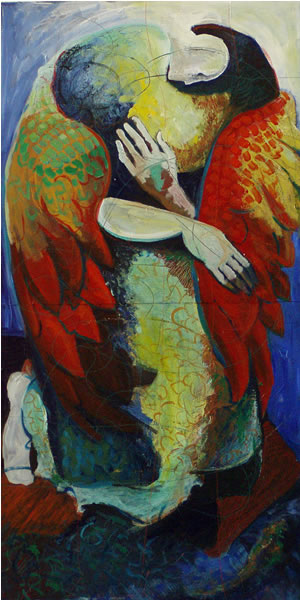
An oldie simply called ANGEL

An oldie simply called ANGEL

It is night and I am hanging out in the sanctuary while Kerri attends a meeting. I never in my life thought I’d hang out in a sanctuary but I quite like it. It is quiet and I am by myself. It is a good place to meditate or just get still. I am sitting with my stain glass window wondering if there is a conversation in the offing. I’ve spent many nights in my life sitting alone in dark empty theatres and always felt the same sense of peace that I feel at this moment.

I like the word “sanctuary.” It implies a safe place, a resting place. If all the world is my studio then it is also my aspiration to live as if all the world is my sanctuary. I’ve always understood my studio to be a holy place, a place of creation and presence. Going to my studio has always been a step into a safe space. It is where I rejuvenate. Tonight, sitting here, it occurs to me that “studio” and “sanctuary” are very similar words. They are very similar places just as “theatre” and “church” have, for me, been mostly interchangeable: where we go to affirm the stories that identify and transform us; where we go to find our community. My sister finds her community in a church. I have, until lately, found mine in the theatre.

This rambling path begs the question, “What is sacred and what is not?” Yesterday Diane told me that she is a spiritual teacher and I believe that is true. This morning while walking I remembered her words and wondered if we are all spiritual teachers to each other. Some of my greatest teachers had no idea that they were teaching me.They had no intention of teaching me. One great teacher was sweeping a floor and had no idea that I was watching him. He was one of the happiest people I have ever seen. He was shining. He was doing a job that most people would deplore. Everyone who saw him smiled, myself included. He was not his job. He was not his body. He was…connected and alive in his moment. He was living in his sanctuary and helped me know that all the world can be a holy place. He helped crack my understanding of what is possible.

These lines we draw between the sacred and profane are mostly imagined. They are convenient and sometimes useful but they are illusions that I am beginning to understand as destructive. Us and them. A divided house begins in a belief of divisions – a need for division. I’ve often told the story of the executive, red in the face, pounding the table with his fist, shouting, “I know how to compartmentalize my reason from my emotions!” I remember thinking, why would any one want to cut off their emotions from their reason? A better question might have been, who, in their right mind, willingly cleaves themselves into pieces? What delusion is necessary to entertain the notion that reason and emotions are distinct and separate? Separations are generally an indication of not-right-mindedness and a dedication to controlling the uncontrollable.

The angry executive was also a great spiritual teacher for me, too. He taught me to check my assumptions and step over the lines of false distinction that I draw. I can connect the dots directly from his table pounding exclamation to my desire to define my studio as all the world; to live consciously in my sanctuary all of my days.

title_pageGo here to buy hard copies (and Kindle) of my latest book: The Seer: The Mind of the Entrepreneur, Artist, Visionary, Innovator, Seeker, Learner, Leader, Creator,…You.

Or, go here for all digital forms of The Seer.

Go here for fine art prints of my paintingsEmbrace

Choose Your Label

title_pageThe second recognition in The Seer is that your language matters. It is a curiosity to me that of the nine recognitions in the book, this recognition is the one that causes the most conversation and generates the most questions. My latest theory is the notion that the moment we tack a word onto an experience we are defining the experience; we are making a choice. Owning that we have the power to define our experiences through the way we think and talk about them means taking responsibility for our lives. Ownership of your happiness and power and thought might seem overwhelming or, as someone once said to me, “That’s pie in the sky!”

As the storyteller of your life, the language you use to tell your story matters. Try this exercise for a single day: express gratitude for everything – even if you don’t feel gratitude. Tell yourself in the middle of the traffic jam that you are grateful for the jam. And, if you are really bold and brave, take the next step and assign a reason for your gratitude: the traffic is slowing you down so you can breathe a bit amidst an otherwise hectic day. Express gratitude for everything: the meeting you will attend, waiting in the doctors office, the dishes you wash. By the end of the day, if you have been diligent in telling the story of gratitude, you might just feel it. You will certainly have no more doubt that you live life labeling your experiences. It is only a short hop from knowing you have the power to label your life to choosing the label.

Go here to buy hard copies (and Kindle) of my latest book: The Seer: The Mind of the Entrepreneur, Artist, Visionary, Innovator, Seeker, Learner, Leader, Creator,…You.

Go here for all digital forms of The Seer.

And, for fine art prints of my paintings, go hereYoga.Meditation

Speak Your Truth

old photo of an old watercolor. I did this painting sometime in the 1980's

old photo of an old watercolor. I did this painting sometime in the 1980’s

Words hook me and lately I’ve been paying attention to the difference in the phrases:

  • Speak the truth, and
  • Speak your truth

One word makes a world of difference! Literally, an entire world of differentiation is made in one little word. “The” truth or “your” truth?

Outside of every courthouse in America is Lady Truth wearing a blindfold and holding a tipping scale. The idea is that truth is objective and fact based. Truth, so the symbol implies, is blind to any personal consideration and justice is equal to all who enter the marble courthouse. It’s a concept that was firmly ensconced in the age of reason with roots running back to the Greeks: truth is something neutral, measurable, concrete, fixed, and external. In such a construct, inner truth is suspect because it is subjective and, at best, fluid.

I’ve sat on a few juries and was reinforced in the notion that the lawyer who told the better story always wins. Truth in the courthouse was as malleable as truth outside the courthouse. The point of the whole exercise, a prosecution and a defense telling opposing stories to a captive group of citizens, is an exercise in subjectivity. Whose version of truth do the captive citizens embrace? Truth, in the courthouse, is an agreement.

Also, there are a myriad of forces at play in the epicenter of the symbol and few are fixed, blind, or measurable. For instance, a public defender with a mountain of cases does not stand a good chance against a modestly prepared prosecution. The story is already tipped when the circumstance of the play is “someone stands accused….” If truth were fixed and measurable, millions of Americans would not be glued to their televisions each night watching Law & Order. Truth makes for good drama because it is a matter of perception. Truth is perception.

We live in the age of news as entertainment (I’d make an argument that we’ve digressed into the age of news as marketing ideology – but that is a post for another day). For instance, listen to the news as told by MSNBC and then flip your dial to FOX NEWS and you’ll see what I mean. Then, for grins, listen to the same series of stories as reported by the BBC. We regularly apply two words when debating our news-of-the-day that make me shake my head with despair: slant and spin. Truth is what we want to believe – or, more to the point, what others want us to believe.

And therein lies the hook. Because we hold dear the notion that truth is neutral, external, and objective, despite overwhelming evidence to the contrary, we are willing to abdicate personal truth. We blunt the inner guides for what we are told to think, feel, and believe. We become passive. If truth is fixed and external then the inner voice is all but meaningless. Self-doubt is the blossom. The symbol of blindfolded Truth is accurate but it is a different kind of blindness. Seeing is as much internal as external. Experiences are interpreted; there will always be conflicting points of view. That means there will be multiple truths. Always. Isn’t that the definition of subjective?

The only real measure that matters is inner truth. At the end of the day, in the dark of your private space, there is no one other than yourself to ask (and answer) the question, “Did I speak truth or did I spin things.” Words matter. Words create. Truth is the name we give things.

title_pageGo here to buy hard copies (and Kindle) of my latest book: The Seer: The Mind of the Entrepreneur, Artist, Visionary, Innovator, Seeker, Learner, Leader, Creator,…You.

Go here for all forms of digital copies

Go here for fine art prints of my paintings

Eve, by David Robinson

Eve, by David Robinson