Obstacles Make Life

TODAY’S FEATURED PRINT FOR HUMANS

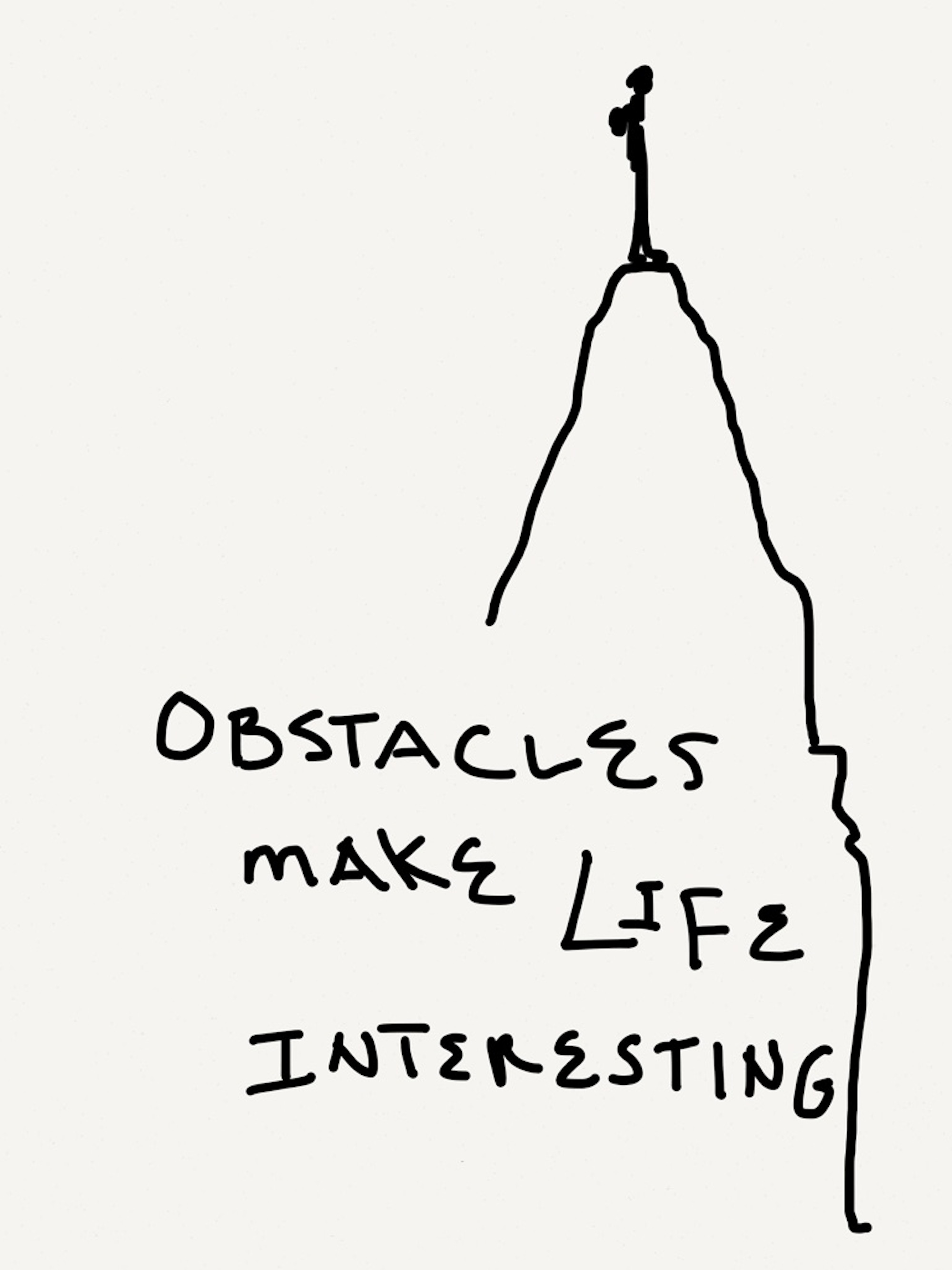
Obstacles Make Life

FOR TODAY’S FEATURED PRINT FOR HUMANS, GO HERE.

You Are The Giver Of Meaning

TODAY’S FEATURED PRINT FOR HUMANS

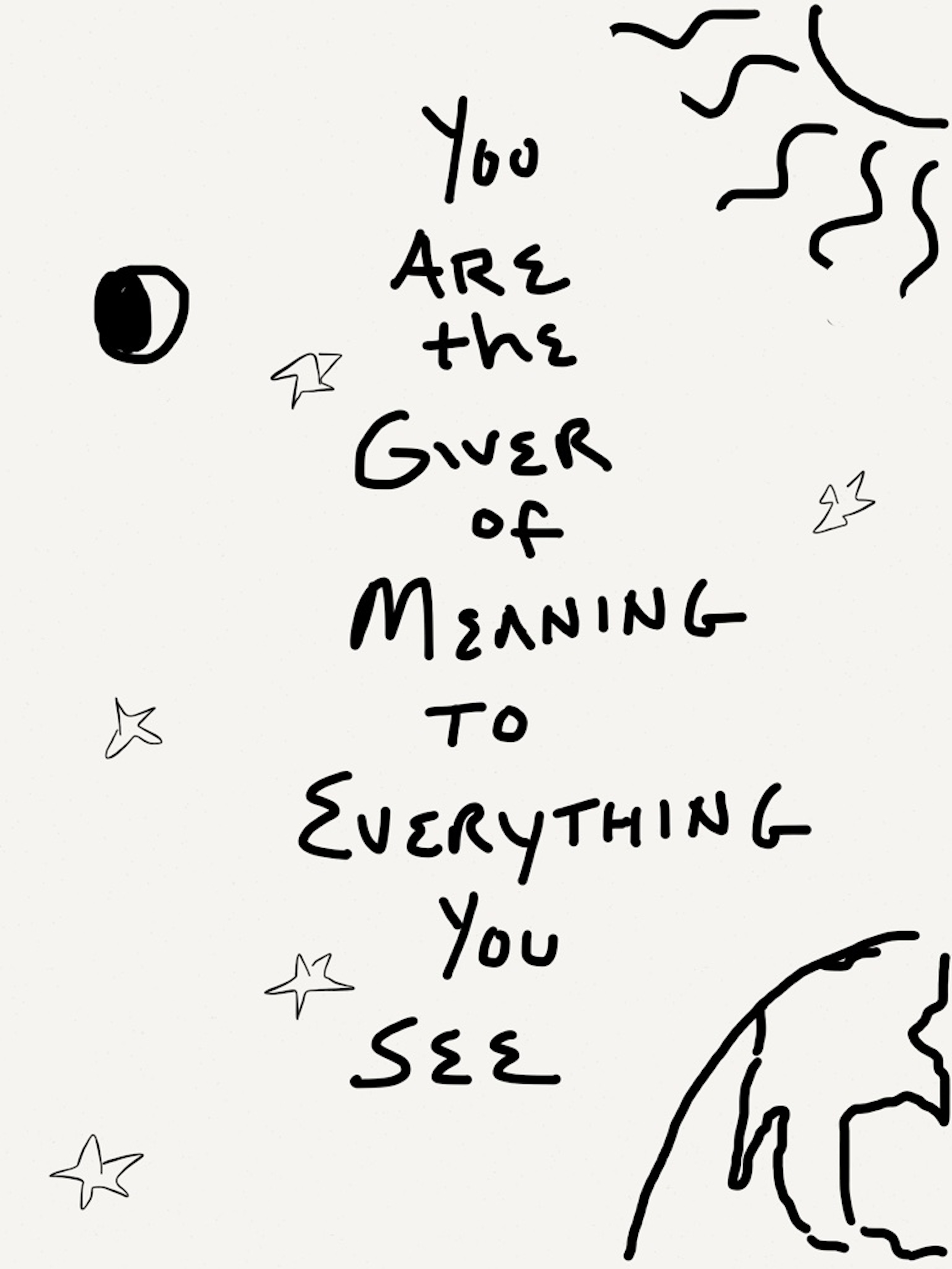
You Are The Giver of Meaning

FOR TODAY’S FEATURED PRINT FOR HUMANS, GO HERE

Dance Without Effort

my mud-slog

my mud-slog

Last night I painted badly and I did it intentionally. I went down into the cool of the basement studio to escape the heat and humidity. A new canvas was stapled to the wall, gessoed and ready to go. I picked up my brushes, squeezed paint onto the palette and began working.

Many years ago I made the switch from oils to acrylics because the fumes were making me ill. It was a happy accident. Acrylics required me to work fast and fast meant I had no time to think. I learned by default that I am a much better artist when I’m not laboring over the details. Sometimes the process feels like an invocation. Sometimes the process feels like a rolling mess that morphs and morphs until the final moment when, like focusing a telescope, the image becomes crystal clear.

My paintings are generally big. They demand a full-body engagement, painting-as-dance. I know I am working well when I lose track of time, when the dance overtakes me, and the line between painting and painter disappears. It is pure magic: a place free of thought-obstacles.

Last night there was no magic. When I was younger the slog sessions would depress me. I believed I had to have magic all of the time and felt despair when, instead of magic, I danced knee-deep in mud. It took a long time for me to appreciate the necessity of the mud dances. Painting badly is, of course, necessary to paint well. In fact, I now know that there is no such thing as painting badly just as there is no such thing as perfection. Saying more with less is a life-long learning process for all artists. Freedom of expression is a yoga, a practice. It has as much to do with muscles as it does with minds. It is a yoga of brevity. It is as efficient as breath. It is a paradox of stepping out of the way so that you can fully step forward.

I once saw an exhibit of the hundreds of sketches and studies John Singer Sergeant did before painting El Jaleo. I loved it. He drew the same thing over and over again. He painted again and again the smallest detail. He was putting the image into his body. He was teaching his muscles to flow without tension. The finished painting (the last thing in the exhibit) was thrilling. It is a celebration of brevity, free motion without mental intervention. It made me dizzy. It made me cry because I knew how devoted he was to his practice to say so much with so little. I knew how many hours of effort it took for him to dance so effortlessly.


Art Already In Me

TODAY’S FEATURED PRINT FOR HUMANS

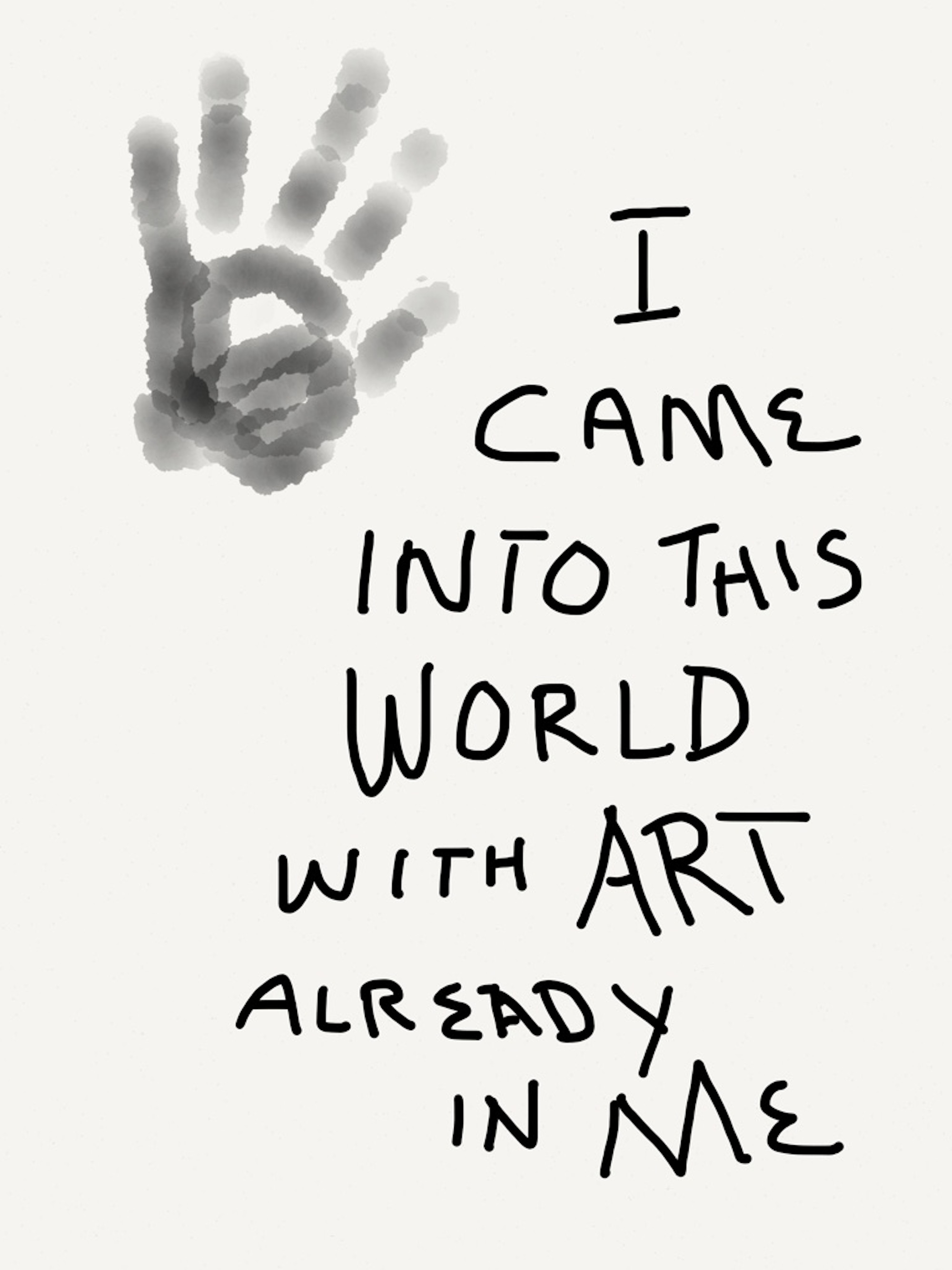
Art In Me

FOR TODAY’S FEATURED PRINT FOR HUMANS, GO HERE.

Experience The Miracle

From the archives: Pidgeon Pier. This painting is about paying attention

From the archives: Pidgeon Pier. This painting is about paying attention

“It has become my view–my faith–that all elements of nature have that power to produce peace. It is surely why so many are drawn away from their urban lives and back to natural places. But those places need not be grand scenic vistas. The same peace can be found in the dandelion growing in the nearest vacant city lot.

It is, in the end, a choice either to “shut up and listen” to these sources of strength–no matter how great or humble or where we encounter them–or to hurry on by.”

~Master Jim Marsh in a comment about my post, Sit By The River

There was a cool breeze off the lake this morning that slowed the mounting humidity. We were a mile into our usual morning walk, rounding the path to the rocky lakeshore, when we entered the storm of dragonflies. There were hundreds of them, hovering just above our heads, occupying a narrow band that stretched as far as the eye could see!

I gasped and stopped! Never in my life had I seen so many dragonflies. Kerri said, “They come out when the weather has been hot and without rain.” Before continuing on our way, we stood for a few moments appreciating the hovering, the methodical zigging-and-zagging. Until our path deviated from the coast, they were with us, green and purple spirits, riding the air-line where earth meets water. For me it was pure magic.

Many years ago, as a way of ending our relationship, a woman told me that it was too hard to be with a mystic. I’d never before (or since) thought of myself as a mystic so I looked it up to make sure I understood why a mystic might not be easy to live with:

Mystic (noun): a follower of mysticism.
Mysticism (noun):
1. Belief in intuitive spiritual revelation,
2. Spiritual system,
3. Confused and vague ideas.

I laughed aloud when I read the three definitions of mysticism; the third definition applied to the previous two! I left my dictionary with two beliefs:

  1. All human beings are mystics if they simply slow down and pay attention. There’s no trick to it. And, that was certainly the problem in my relationship: I have always liked walking slowly in a world drunk on racing to the next big thing. That is hard to live with!
  2. The line between a spiritual revelation, a cathartic experience, a scientific eureka, or an artistic visit from the muse, seems to me, to be semantic. In our age of the intellect we generally run from the word intuition unless we apply a label like “gut instinct” (transforming a feminine energy to a masculine gut) or “I just knew it!” (transforming the scary clarity of an intuitive feeling into a safe clarity of an intellectual experience). It’s all wordplay.

Hearts know. Thoughts babble. And the only way to sort it all out is to stand still, stop the babbling, and see the miracle.

Paddle On

photo-3We’d been out in the canoe for more than an hour. The morning was warm and the water was still. We hugged the shore, cruising the lily pads. Dan told us some of the lily pads were over 150 years old. I was amazed at their capacity to reach through time but also reach through long stems to the water’s surface to drink the sun.

The turtle emerged from nowhere. It appeared from the depths, through the lily pad stem forest, and rose to within inches of the surface. It was big for a lake turtle, perhaps the size of a dinner plate. I let my paddle trail in the water. It was so close I could have reached into the water and touched it. We glided forward and turned the canoe so Kerri might see it but the turtle had already disappeared.

the view from the canoe

the view from the canoe

Turtle is perhaps the oldest known symbol for the earth. In many traditions, turtle carries the world on her back; the earth is her shell. She is a great reminder to go slow and persevere, to live grounded amidst the chaos of life. She symbolizes patience and ease. I was struck by how similar are the symbols of turtle and lily pad. Peace. Ease. Both are extraordinary symbols of grounding or rooting. Both cross the boundary of elements: the turtle lives in water and land. The lily pad reaches through the water to find air and sun. Both inhabit the depths and reach to the surface.

It feels as if I came into this world with art already in me. From an early age I drew pictures, not because I wanted to but because I had to. Like the lily pad, I was reaching for something unknown. I drew the same images over and over again: a cabin in the woods, eyes, clowns. I wasn’t drawing to master the image, I was drawing and painting in order to reach beyond the image. There was something there, beyond, deep in the depths, a root, rich soil, the void. There was a force behind the image that pulled me. My artistry felt like a descent into the caves of the ancients, a search for sources mythological.

Sometime during these past few years, the direction of the pull reversed itself. Like Orpheus in the underworld, I turned around. I walked toward the surface. In essence, the pull to the depths became a reach to the light. The sun called. Balance, in this life, at long last necessitated light and warmth.

Tom once told me that inheriting his family’s ranch and subsequently finding a trunk hidden in the wall of the house containing his ancestors possessions served as an affirmation that he had finally come home. Sitting in the canoe, the turtle rising by my side, I felt the affirmation. I am now only inches from breaking the surface. I drink the light because I know the depths and am adept at walking in the dark unknown.

the first layer of  under-painting for the next piece

the first layer of under-painting for my next piece

I am working much slower now. I am in no hurry to get anywhere. And my art, my life, is the better for it.


Walk With Your Ally

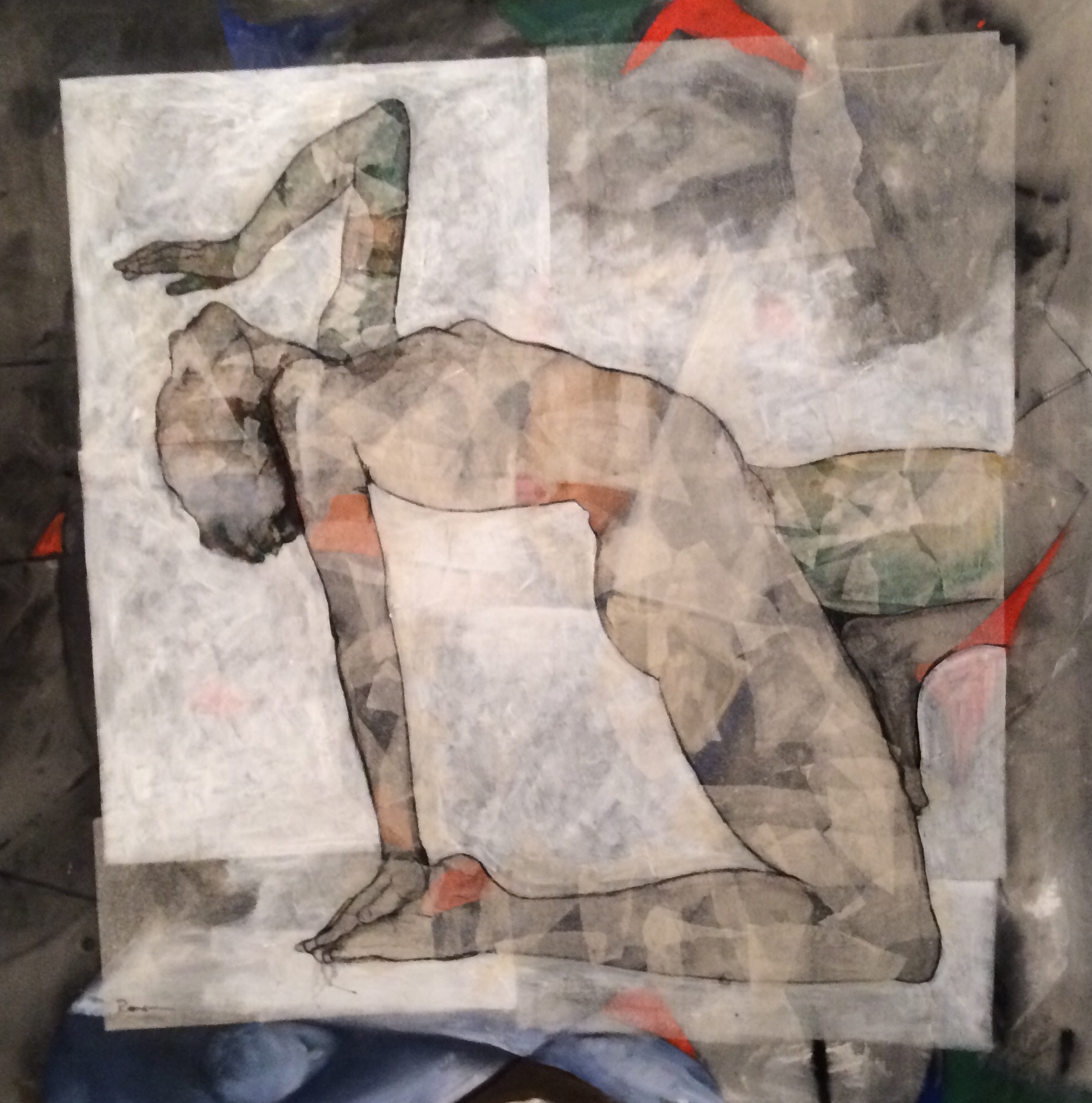
another painting in the Yoga series

the latest painting in the Yoga series

David is among my chief muses. He was the first person I met in my spontaneous-no-plan-move-to-Seattle over 15 years ago. We sat next to each other at a conference and he asked me if I wanted to be in a play. When I said yes he said, “Great. Can you be at rehearsal tonight?” Like me, he is a painter as well as a theatre artist. He steps through life with his eyes firmly focused on the possibilities. He reminds me that obstacles are nothing more than interesting process steps. When I wander through museums or galleries David goes with me whether he is there or not. When I see a play that inspires me, I wish that he might see it, too, so we might talk about it.

Recently, he sent this quote: “My intention has been, often, to say what I had to say in a way that would exemplify it; that would, conceivably, permit the listener to experience what I had to say rather than just hear about it.” – John Cage, Where the Heart Beats: John Cage, Zen Buddhism, and the Inner Life of Artists.

When I was in college studying acting I had a professor who would say, “You will always know a good play from a bad play because a bad play wants to tell you what happens. A good play wants to include you in what happens.” He also used this rule to define good acting from bad acting. His shorthand phrase was, “Show me, don’t tell me.” It is the artistic equivalent of, “Give a man a fish and he will have a meal; teach a man to fish and he will eat forever.” Art, regardless of the form it takes, is meant to teach people to fish.

Art is not a “thing,” it is a relationship. It is a dynamic orientation to life. It is an experience (not a possession). My interpretation of my professor’s rule goes something like this: a good play/performance/painting includes; a bad play/performance/painting excludes. Vital art reaches for others. Empty art rejects or attempts to elevate itself above others.

The best artists I know have learned to get out of their own way. They have essentially, let go of all investment in self-importance. They serve the art and, so, are not terribly invested in whether a critic or a friend likes or dislikes their work. They have grown beyond attempting to control the perceptions of others (control is an act of exclusion); they are attempting to reach the soul of the matter, touch the soul of the other.

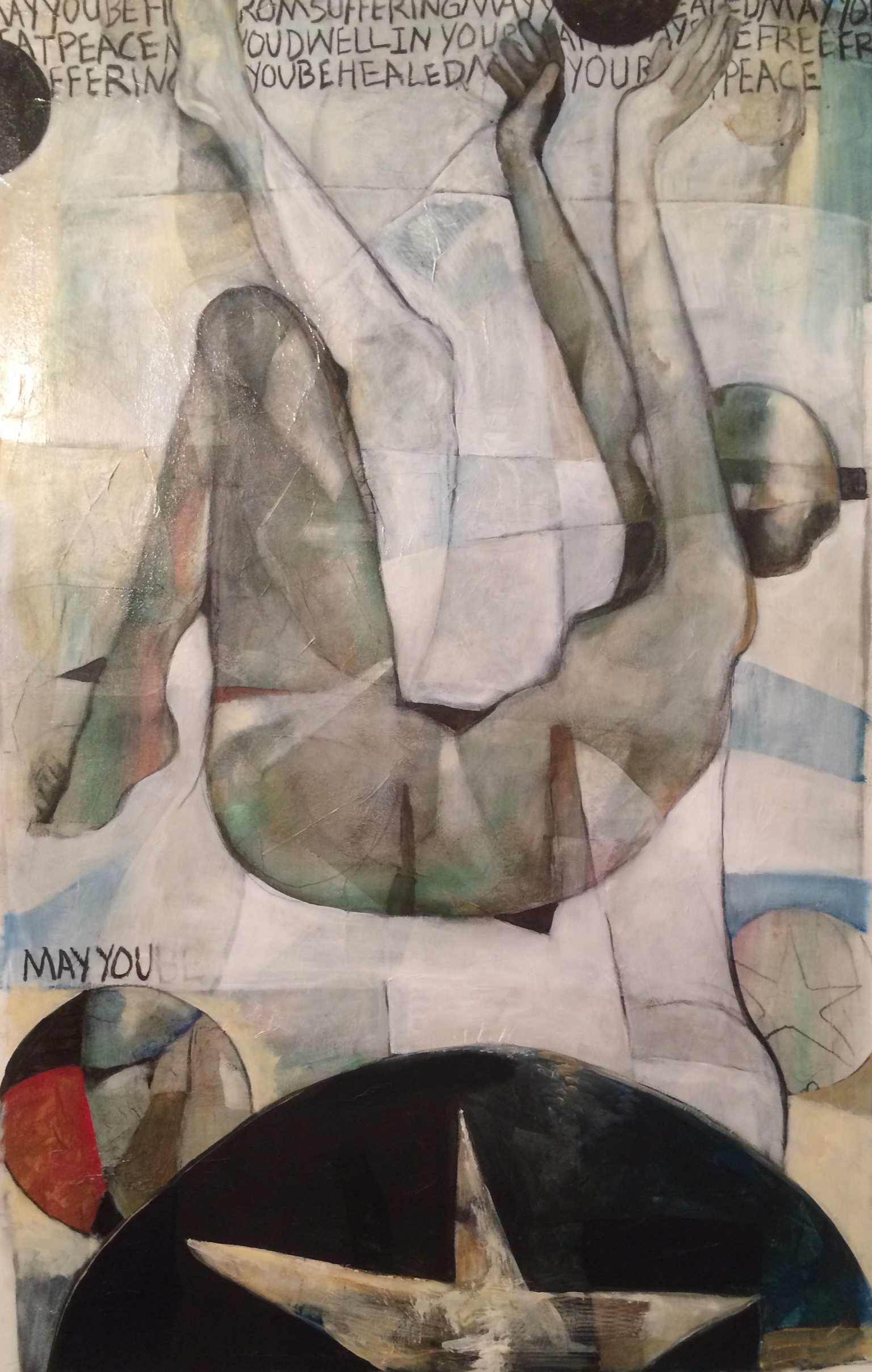
finally finished: May You Be

finally finished: May You Be

It is also true that great artists are constantly learning. And, since growth is always in the direction of the unknown, it is terribly important to have allies to walk with you. Stepping into the unknown is best done in the company of others, those special few wanderers who you can turn to and say, “Whoa! Did you just see that?” David, who is always there with me, laughs in response to my awe, and says, “Tell me! What did you see?”


Hear The Calling Voice

photo

next steps to my latest painting. it’s coming along!

“Maybe that means that the voice we should listen to most as we choose a vocation is the voice that we might think we should listen to least, and that is the voice of our own gladness….I believe that if it is a thing that makes us truly glad, then it is a good thing and it is our thing and it is the calling voice that we were made to answer with our lives.” ~ Frederick Buechner, Secrets In The Dark

This week I received an email from a long lost friend, a man I haven’t seen in over 25 years. Although we have yet to talk, his email contact has already sparked within me a life review. What have I done in all of these years? Who have I become in the quarter century since last I saw my friend? He wrote a brief three sentence overview of career advancement and family highlights (graduations and retirements). In attempting a reply, I found it impossible to encapsulate my path as there has been nothing linear, logical, or similar in my steps. I’ve walked a much different road. My inner imperative roars rather than whispers.

My life has been a source of great concern for my parents. Security has never been high on my list of occupational criteria. The day that I graduated from college my mother asked in all seriousness, with the love and concern that can only come from of a worried mother, “Now that you’ve gotten the theatre thing out of your blood, what are you going to do with your life?” She could see (before I did) my attraction to edges and my need to run at them and jump. She understood my need to question the rules, challenge assumptions, and live on the margins so I might better see and understand the happenings in the main stream. She saw and for a while feared the call of the art within me.

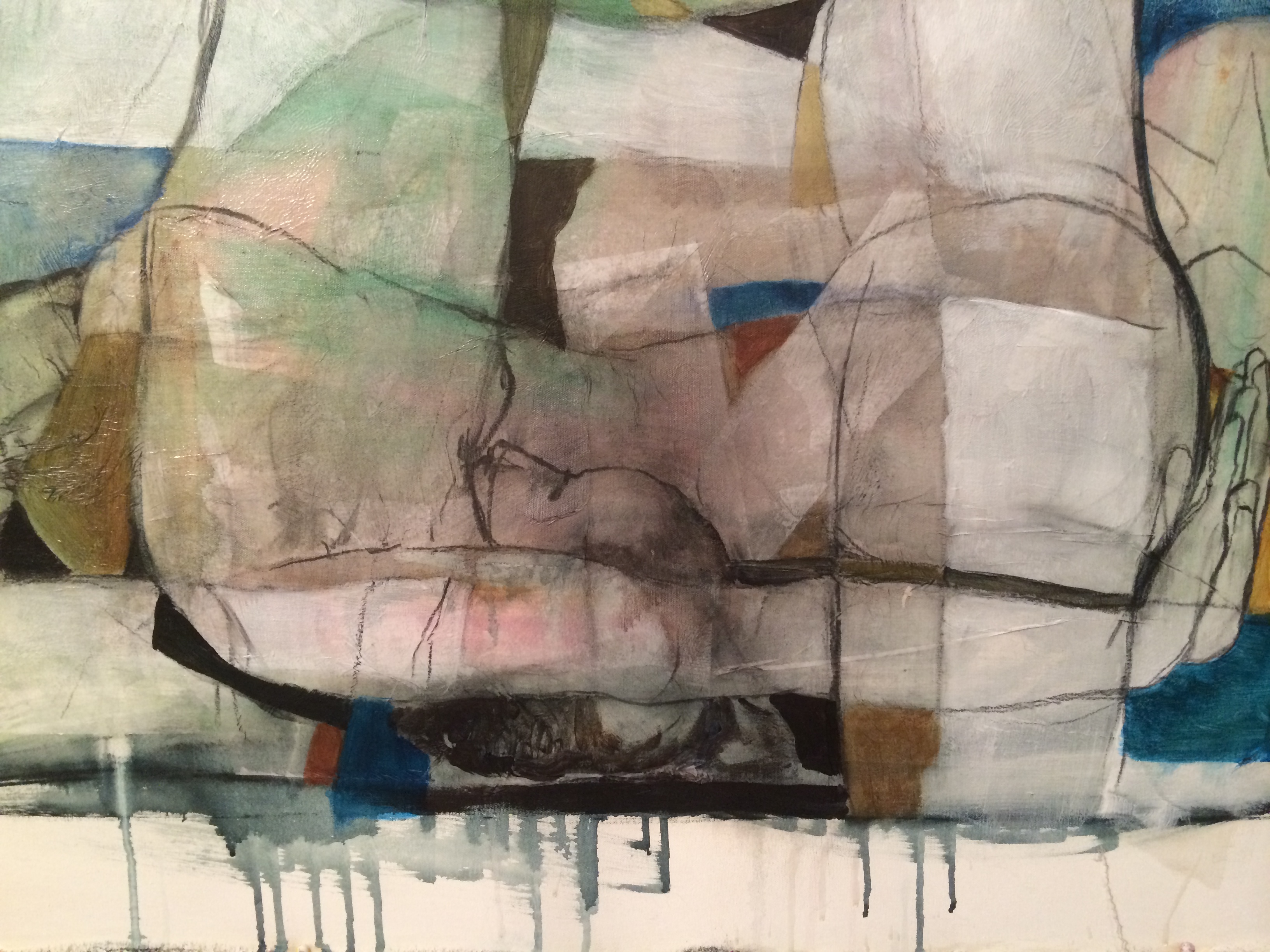
a close-up

a close-up

Judy once told me that she never wanted to be too comfortable because she intended to live life, not protect herself from it; she didn’t want to become complacent in this gorgeous life. Security is low on her list, too. She’s my go-to person when I lose the voice of gladness in the static and clamor of ‘should-do.’ She cuts through the noise, “Can you hear the birds, feel the sun on your face?”

When we were students in college, Roger asked me to read Herman Hesse’s book, Narcissus and Goldmund. He told me that he would most likely live the life of Narcissus and I would follow Goldmund’s route. Narcissus is a priest and teacher seeking God in the rituals of the institution. Goldmund finds illumination through the mess and random experiences of his life. One seeks God through order. The other finds God in chaos. Both are following their call, their voice of gladness. My path has, as Roger predicted, mirrored Goldmund’s. The voice, the call of gladness is clear to me on the inside while the path is nearly unrecognizable from the outside perspective.

another close-up

another close-up

So, what to tell my friend when we speak? Like all artists, I have answered the calling voice with my life.

Meet The Fire

a work in progress. this one is slow going!

a work in progress. this one is slow going!

In order for the phoenix to rise it must first burst into flames and be reduced to ash. Every rebirth requires a death. I imagine the phoenix does not relish the flame but after a few cycles it recognizes the necessity of the fire.

The same image (metaphor) is everywhere: the caterpillar must first cocoon and then be reduced to mush before the impossible happens. The leaves must fall from the tree before the root can replenish, revitalize, and do the impossible: bring forth new life.

The healers in Bali assured me that a wound is necessary to open the door to the gift – and each had suffered a devastating wound or loss en route to fulfilling their healing power. The journey through the wound was necessary to turn on the power. The heroes cycle, the belly of the whale, the quest through the wasteland, finding joyful participation in the sorrows of the world; growth is a fiery, difficult business.

In my life I’ve worked with many, many people in all manner of change and transformation processes. It is surprisingly common for people to want their phoenix without experiencing the flame. It took me a while to realize that people (organizations and otherwise) were hiring me under the guise of helping them transform but in truth they really wanted me to help them circumvent the fire.

People go to great lengths to avoid the flame. No one willingly seeks the wound and no one transforms without it. No one in their right mind jumps out of bed in the morning ready to jump into the abyss and yet the adventure is impossible without it. If a full rich experience of living is the aim of our limited time on this earth, then the fire is necessary. The fire is part of the ride.

Fire avoidance is what dulls an otherwise vital life. Comfort is certainly a worthy aspiration but as the only aspiration it deadens, it limits the life-color-palette to taupe. The trick, as all the stories teach us, is never to avoid the fire, to protect yourself from it, but to be alive in it, to know what it is to be reduced to ashes and know somewhere deep inside that the phoenix will always rise just as spring will always come.

Seek Solitude

from my Yoga series of paintings

from my Yoga series of paintings

It is easier to sail many thousands of miles through cold and storm and cannibals, in a government ship, with five hundred men and boys to assist one, than it is to explore the private sea, the Atlantic and Pacific Ocean of one’s being alone. ~Henry David Thoreau, Walden

I remember watching a documentary of the painter Lucien Freud. He said he couldn’t understand why anyone would choose to be a painter because the choice meant living a solitary life. His comment struck me as odd because, for me, solitude was necessary for the muse to come through. I often yearned for solitude. I always looked forward to my time with the muse.

More than twenty years ago, for a period of time, I was painting exclusively. I had an abundance of solitude. Each evening my dear friend Albert would show up at my door, force me out of the studio and take me to a coffeehouse. He told me that he feared my isolation, that without human contact and conversation, I might twist. His fear, although probably valid, also struck me as odd.

A solitary life can be quiet, prayerful; it can be full. A solitary life can also be lonely and empty. The difference, of course, is in the presence of a relationship. Most painters that I know, most artists, feel as if they are a “channel to something bigger.” Something comes through and it is in the solitary moments that the channel opens. It is in the solitary moments that the relationship becomes available. The relationship with the muse can be full, rich, and three-dimensional. I imagine monks, nuns and ascetics of all spiritual traditions know this relationship, too. Solitary need not be lonely just as, paradoxically, the loneliest place on earth can be in the middle of city teeming with people.

The exploration of the private sea, the Atlantic and Pacific Ocean of one’s being is the province of the artist. The relationship with “something bigger,” with the muse, is the seed from which all art forms grow. The seed is visible in the adornments found in pyramids, in the harp of Orpheus, and in the paintings of Marc Chagall. It is present when children with gusto run their fingers through paint or dance all alone in the grass just because it feels good.