So, Really? [David’s blog on Not So Flawed Wednesday]

It’s the eve of the new year.

This is the season that holiday cards arrive in the mail. Often, the card is accompanied with a letter reviewing the senders’ events-of-the-past 365 days*. Those letters are necessarily reductions and always make me wonder what didn’t make the cut. What is the abundant story told between the lines? What is the story of abundance edited out for holiday-brevity?

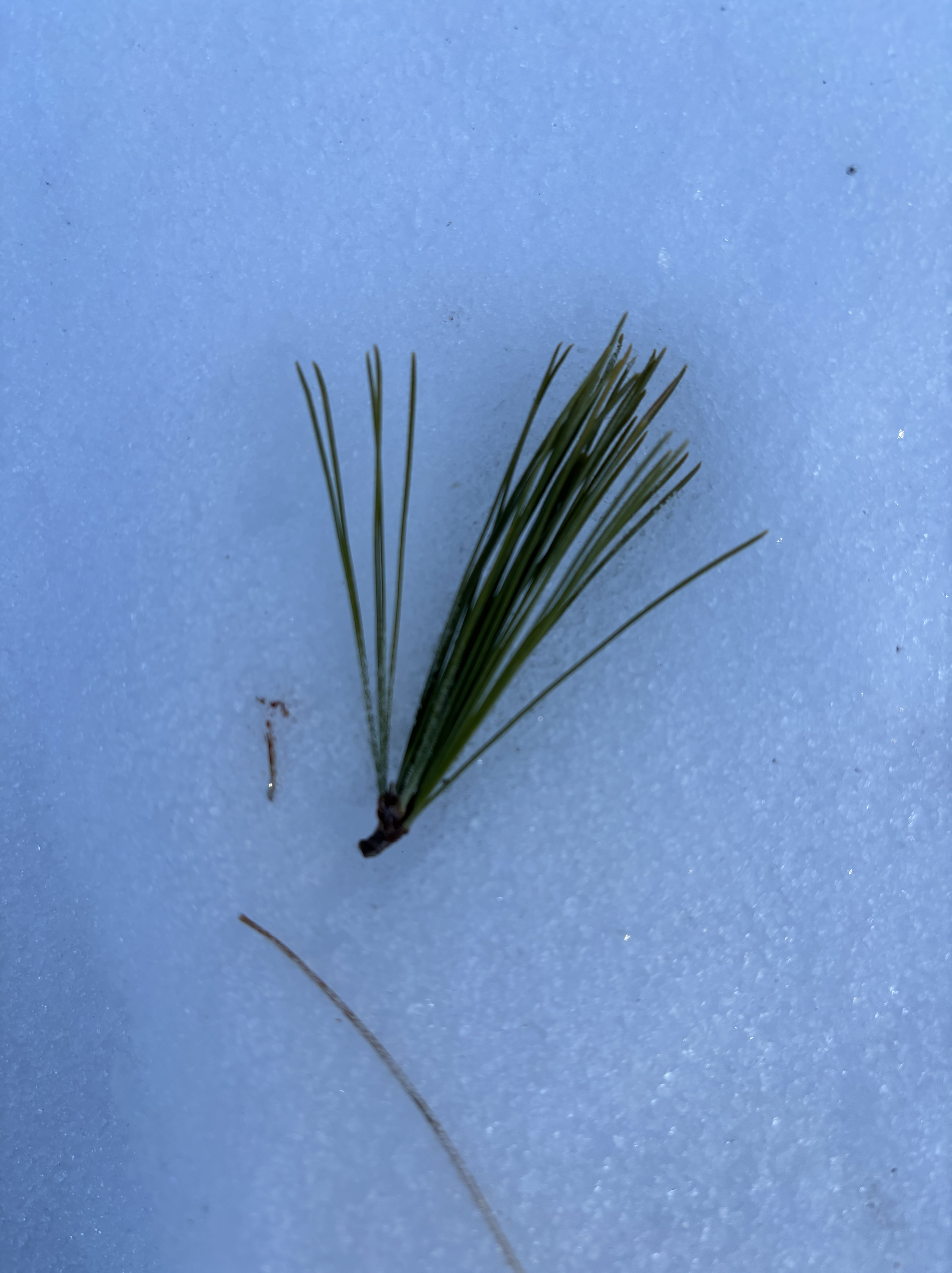
For instance, if I tried to share our experiences from yesterday – the life events of a single day – it would be a novel. My holiday card would be tucked into page 392 of my account of a single day of life. Would you like to know that we took a walk? Is it relevant to know that on our walk we discussed the many people we lost this year? There have been many. We told stories of the-last-time-we-saw-them. Our stories of loss evoked a deep appreciation of life. We shared dreams of the future. There are many dreams. Yearnings, in fact. In a single minute we laughed hysterically at the antics of our grown children, during a recent brief visit, racing through the house opening closet doors to find both forgotten treasures and fodder to torture their mother – and then we fell into silence wondering when we would see them again. Human stuff. Longing bouncing against laughter. We do that a lot: bounce joy off of sadness, pull awe out of desolation. She stopped suddenly and knelt in the snow, the beauty-tug of the sprig of pine needles against the ice-cold-blue-blue was too much to pass by. The many, many moments of heart-tug would feature prominently in our novel-length-holiday-letter-recounting-of-a-single-average-day.

Don’t get me wrong, I appreciate knowing that Junior made the soccer team or that in April the family got new iPhones. Achievements and advancements are nice to know. In that spirit, did you know that we have new gutters? The gutters were my gift this year to Kerri. She got me a new fuel pump for the truck. The real story, however, the interesting part of the life-tale, is the reason we needed new gutters in the middle of December. And what is the wild story behind the fuel pump?

Necessity always makes for a great story. So does the collision of yearning and obstacle. I wonder what inner-imperative drove Junior to soccer?

Everyone wants to put a good face on their passage. We do too. I’m more than willing to redact my days and paint a smile on my life-message. Yet, every time I read a holiday message printed on holly-decorated-paper, I wish that I could have a single hour with the holiday letter writer. We’d brew a cup of coffee, sit together in the sun and I’d ask, “So, really, what gets you up in the morning?”

*read historian Heather Cox Richardson’s review of the events of 2025

read Kerri’s blogpost about PINE ON SNOW

likesharecommentsupportthankyou

A Closer Look [David’s blog on KS Friday]

“Art enables us to find ourselves and lose ourselves at the same time.” ~ Thomas Merton

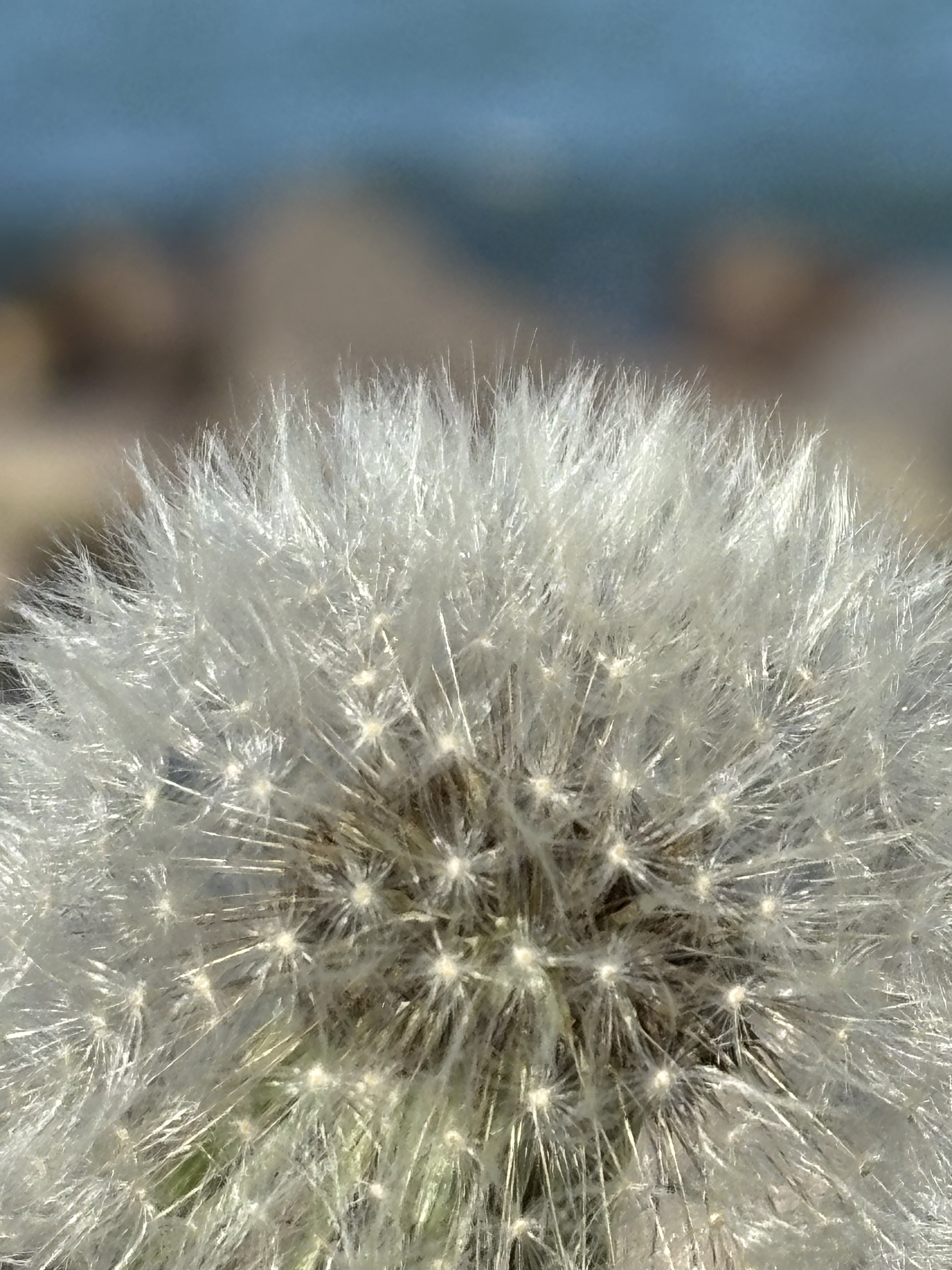
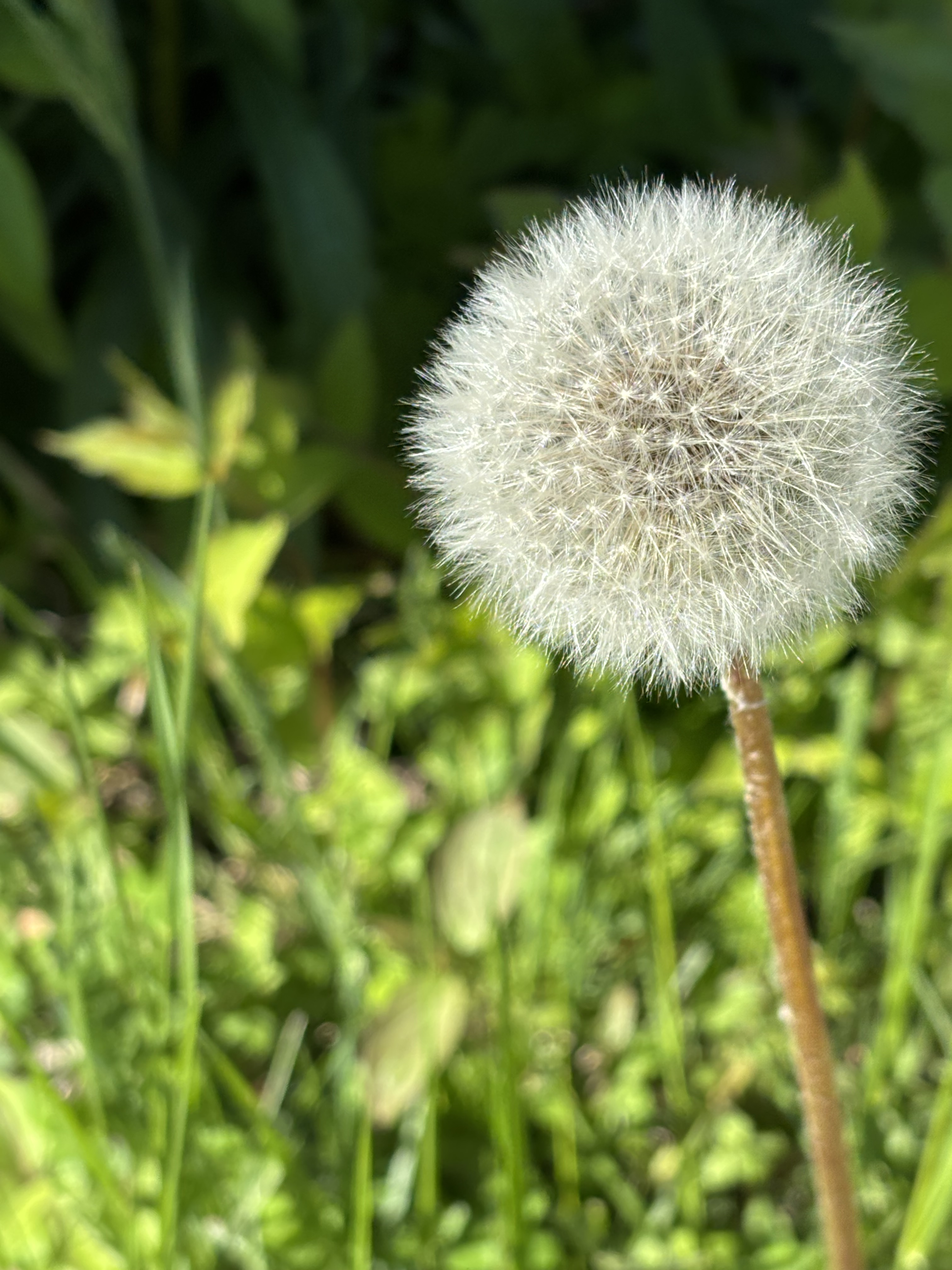
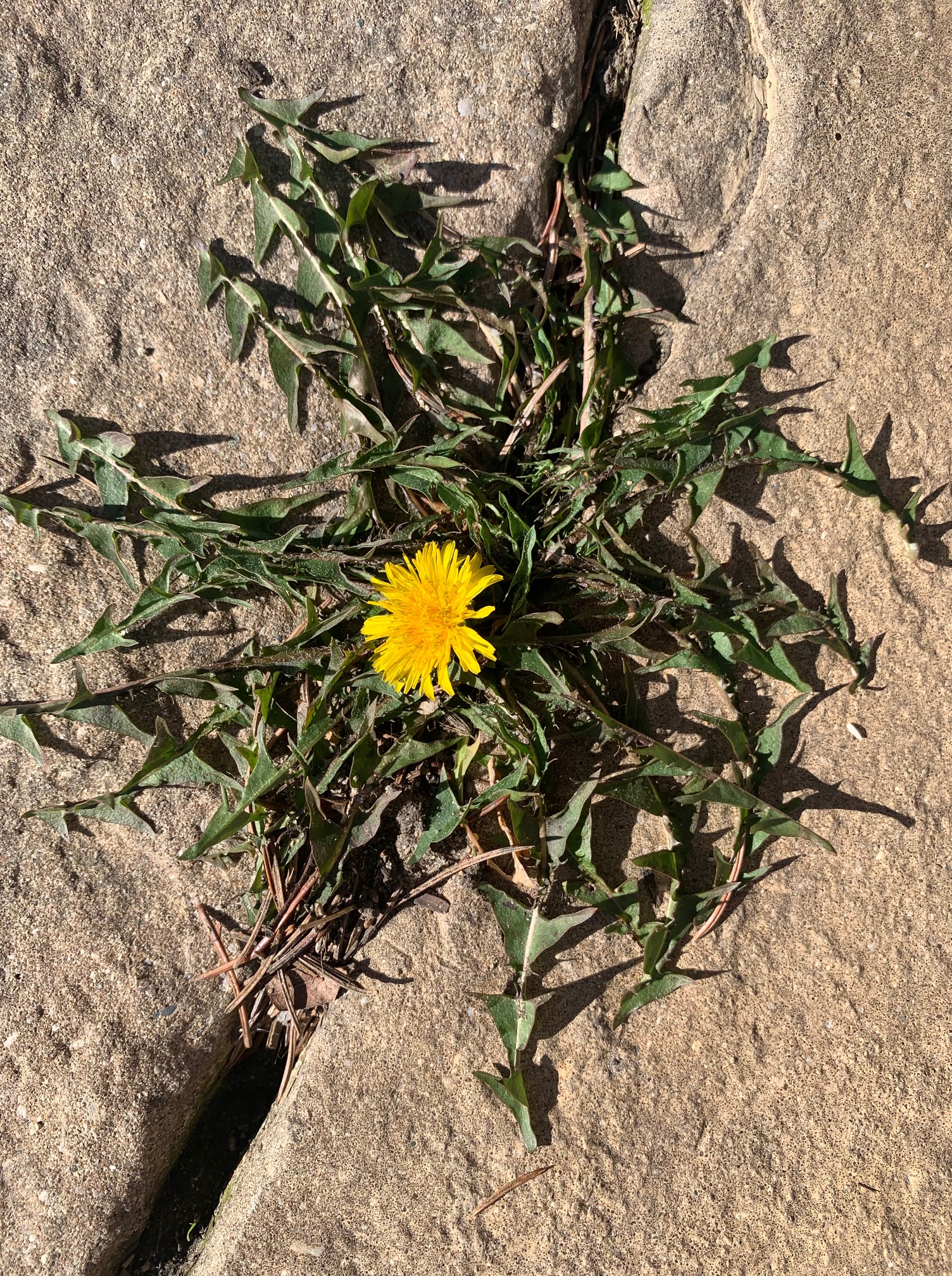
A closer look at the dandelion reveals a fractal. Each level a repeat of the same or similar pattern at a progressively smaller scale.

Listen to your inner monologue. It is the story that you tell yourself about yourself. Listen to the stories in the news or racing across your social media screen. They are the stories that society is telling itself about itself. Any good novelist or playwright will tell you that conflict is the motor of story. Note: conflict need not be violent. Longing is a conflict. Unrequited love is a conflict. A search for meaning is a conflict. A closer look at humanity reveals a fractal. Each level a repeat of the same or similar pattern at a progressively smaller scale.

Robert Olen Butler defined story this way: “When a yearning meets an obstacle.” I believe words matter. I have always appreciated Robert Olen Butler’s definition of story because it does not use the word “conflict”. It is the fractal of the human experience.

The Buddhists teach that desire is the cause of suffering. I giggle every time I consider that marketing is essentially the creation of desire so it follows that it is the engine of suffering. The peace found in possession is fleeting. My Buddhist cartoon: retail therapy is but a single stop on a continuous cycle of suffering. If I was a teacher of story-writing I’d send my students to the outlet mall to study shoppers. My bet is that they’d eventually recognize themselves in the shoppers; then they’d have something essential to write about.

Picasso said, “Every painting is a self-portrait.” His sentiment is a fractal. We watch movies to see ourselves. We attend concerts to transcend ourselves – to lose and then find ourselves in the music.

A closer look at us reveals a fractal. We are both the yearning and the obstacle. A repeat of the same or similar pattern no matter the level or the scale.

Fistful of Dandelions © 1999 Kerri Sherwood

Kerri’s albums are available on iTunes or streaming on Pandora

read Kerri’s blogpost about THE DANDELION

likesharecommentsubscribesupport…thankyou.

Be-Longing [David’s blog on Two Artists Tuesday]

“Be yourself; everyone else is already taken.” ~ Oscar Wilde

I am spiraling down a rabbit hole of thought. This morning I read that many Indigenous languages have no verb form of “to be”.

It might seem like a small thing but it is not. We make sense of our world – and ourselves – through the language we use.

“To be” is a verb of separation. It is a verb of identity, placing primary emphasis on the individual, emphasizing difference rather than similarity. It places the identity-accent on “I”. A present tense of “to be” is “I am”. To be is to be alone.

“To be” fosters “be-longing“; the longing to find and express the unique self, and then “to be” accepted, paradoxically through differentiation. Our “to be” imperative requires us “to be” removed, above it all, accenting the ego, so that the highest achievement, the most celebrated “being” is the one who rises above the crowd. The one who successfully separates.

Is it no wonder that the three “great” western religions place humans atop a hierarchy, high above and removed from nature? Our notion of original sin stories us as born bad to the bone; we kick ourselves out of the garden of our own nature so we might strive “to be” better than we are.

Our language, rooted in “I am”, is incapable of storying us as belonging to nature, being a part or expression of nature. We must strive to return to the garden in order to find the tree of everlasting life.

Our language requires us to story a god living remotely in the sky. The god promises an exclusive resort called heaven if-and-only-if we elevate ourselves above our original nature. Separate to belong.

To this day I ponder a conversation I heard again and again in graduate school: people, living in a city of 1.8 million, yearning for community, discussing over and over the need to create community. How is it possible for nearly two million people to live together in a city without feeling a sense of community? It was not community they yearned for, it was belonging. Connection. An identity of inclusion.

Recently Kerri asked me, “I wonder what it would feel like if…?” I carried her question into our hike. I wonder what it would feel like if I did not story myself as separate? What would it feel like if I knew belonging as a given? Not just belonging to a community of people but intrinsically belonging to all of creation.

“Lookit,” she said, showing me the photograph that she’d just taken of the dandelion. “Isn’t it perfect?”

Perfect (adjective): flawless. ideal. magnificent. A word of unity. Belonging.

“Yes,” I said, aware of the story-limits of my language. I wondered what it might take for us “to be-ers” to see ourselves as perfect – as a given- to be as perfect as the dandelion.

read Kerri’s blogpost about THE DANDELION

likesharesupportcommentsubscribe…thankyou.

The Spirit Of Play [David’s blog on DR Thursday]

In a fit of serendipity, while awash with an overwhelming feeling of loneliness, this morning I opened The Marginalian and found musings about loneliness:

“Jungian analyst Robert A. Johnson groups all the possible lonelinesses into the three core kinds that pulsate beneath our daily lives and govern our search for love: the past-oriented loneliness of missing what once was and never again will be, the future-oriented loneliness of longing for what could be but has not come to pass, and what he calls “the profound loneliness of being close to God… The first two lonelinesses are rooted in time…The third kind of loneliness deals not with the temporal but with the eternal; it exists outside of time — like music, like wonder, like love.“[Maria Popova, The Marginalian, April 20, 2025]

Yearning for the past. Fear of the future. Disappearing into the now.

I’ve spent my entire life standing in front of an easel. The younger me was trying to get to something behind the eyes. He was reaching into the mystery to try to understand it. Paint was the means to get there. I miss that man. A later version of me became burdened with trying to get eyes to see what I had painted. He was trying to reconcile the inner pursuit of the mystery with the outer necessity of paying the bills. His valuation became wonky, sometimes confusing personal worth with sales of his paintings. His intention split. He questioned the price of pursuing the mystery. When the acknowledgment finally set in that he would never have pieces in museums or coffee table books written about his work, he struggled but soon realized his struggle was akin to a butterfly breaking free and shedding a cocoon.

Two kinds of loneliness. No one can go with you when you gaze into the past; sense-making what-was is a solo journey. Similarly, no one can accompany you into the cocoon or know what lies beyond.

I loved this phrase in the article: “…the existential disorientation of feeling your transience press against the edge of the eternal, your smallness press against the immensity…” That perfectly describes how I now feel standing before my easel: small.

Kerri sat with me in the studio. I have two tiny canvases sitting on the easel. As I was describing what I was intending she stopped me and challenged me to do something new. She challenged me to let go of what I know. She asked me to step beyond my comfortable place into the mystery. I knew she was right. I know it is the only way forward. That is why I miss terribly the younger version of me who didn’t know any better. He threw paint with enthusiasm because he didn’t know any other way. He lived each day on a new trail; exploring.

I heard Horatio in my head: “Paint crap!” he said, howling, a laughing Buddha. “Paint lots and lots of crap.” Stepping onto a new trail is lonely. And, that’s the point. There’s nothing like not knowing what’s ahead to open the eyes (and heart) to the greater mystery (read: possibility), to fill-up withwonder, to resurrect the spirit of play.

from the archives: LAUGH, 18″x24″ oil on canvas (the collection of Marian Jacobs)

read Kerri’s blogpost about THE FENCE

likesharesupportcommentsubscribe…thankyou.

Beyond Measure [David’s blog on Two Artists Tuesday]

Just as we had the first time we met thirty five years ago, we talked of intuition and prophesy, past lives and future hope. We discussed the politics of the day. We shared our appreciation for art, music and theatre. Our conversation ran amok over the geography of our lives, trying to catch up on all that transpired in the many years since we last saw each other. As always, there was not enough time.

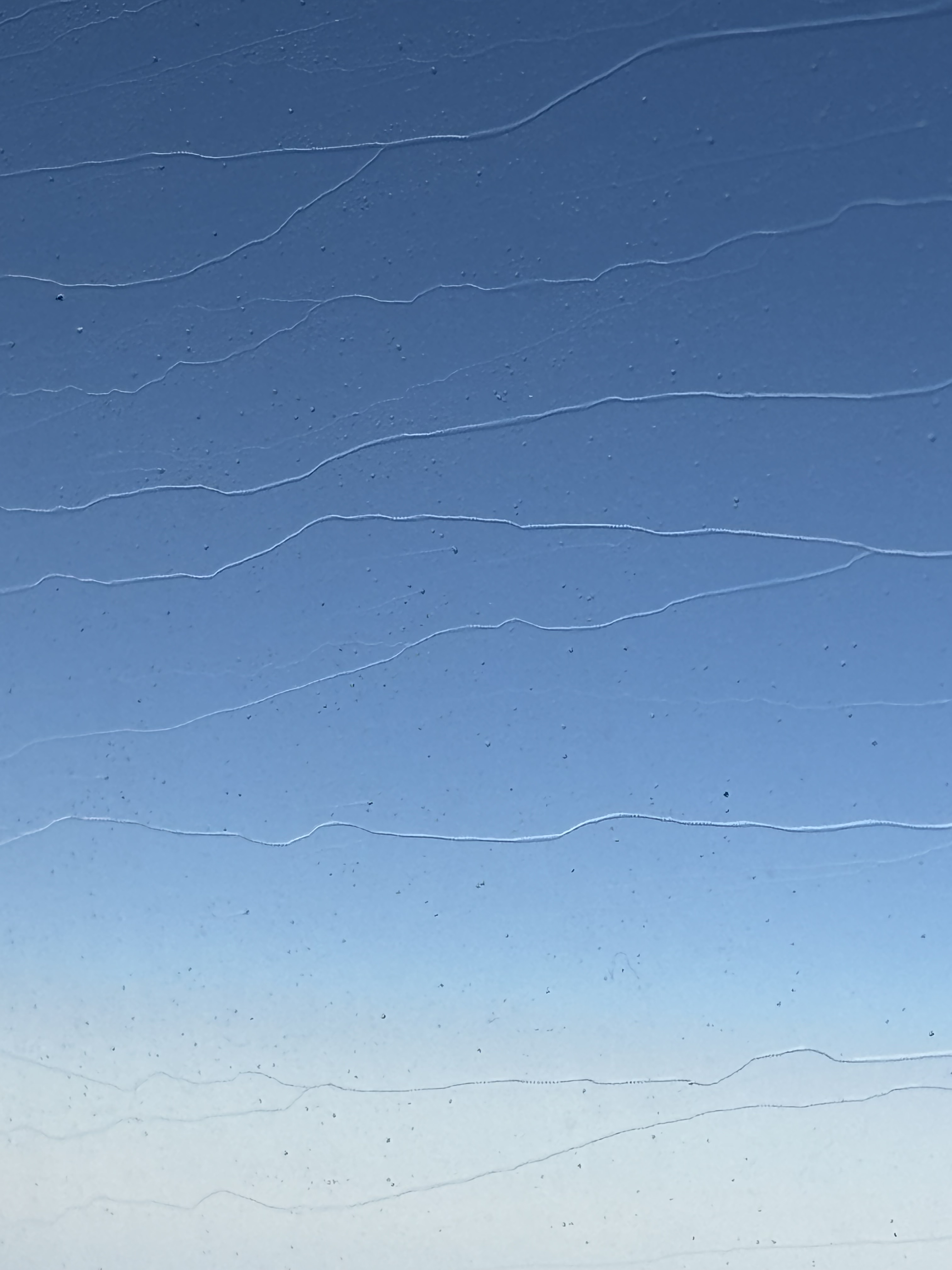
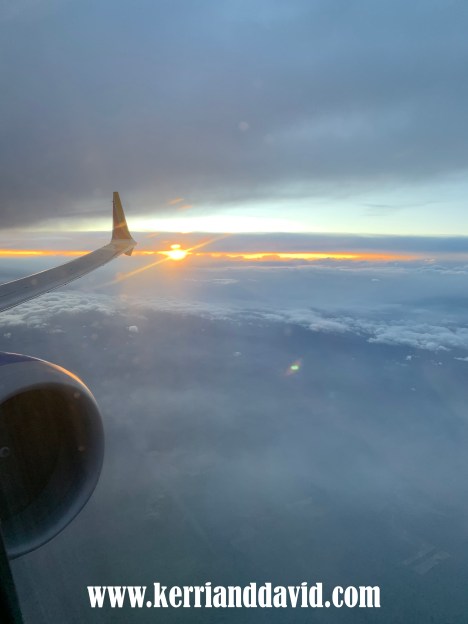
For some reason her photograph of the water running across the airplane window made me think of ancestors. A protective web of well-wishers, a buffer of safe-keeping while hurtling through the air. Ever present. I imagined what Leonardo da Vinci would do if he were sitting in my seat. He made many, many drawings of contraptions that might someday allow humans to fly. A yearning; his mind fully immersed in the field of possibility. Stuffing ourselves in planes, we forget how much we take for granted. Leonardo, traveling in coach, would be beside himself.

We returned home a day early. A text from the airline warned of coming storms and travel disruption. It was a good decision. A few hours after we landed the snow came. On the drive home we shared stories of being stuck in airports. Our stories were populated by kind strangers. Angels who helped.

20 prepared hot soup for our return. Dogga met us at the door, bouncing with enthusiasm. Four bags of groceries arrived, a surprise welcome home gift from Jen and Brad. Supplies to get through the storm. We reviewed Kerri’s photos from the trip. We ate, sipped wine and regaled 20 with travel stories.

Later, exhausted, crawling beneath the quilts, she said, “The best part of travel is coming home”. My last thought drifting into sleep, Dogga gently snoring at our feet: “We are rich beyond all measure”.

read Kerri’s blogpost about TRAVEL

likesharesupportcommentsubscribe…thankyou.

A Joining With [David’s blog on saturday morning smack-dab]

I had a minor revelation (again) while we were working on this cartoon. What’s the question we ask when we go to the dictionary to look up a word? We ask, “What does it mean?” The operative word is “it”.

English speakers are bound by the word “it.” “It” magically, unconsciously, turns everything into an object. A thing. A thing to be pursued, chased, grasped. Found. Possessed. Bought. Sold.

Hope. Happiness. Kindness. Aspiration. Desire. Yearning…Love.

And what if “it” can’t be found or bought? What if “it” can only be tended, nurtured, like a flame? What if “it” can only be shared. Felt. What if “it” wasn’t a “thing” – an object – at all? What if “it” isn’t a transaction?What if “it” is a warmth? What then?

Is it possible for me to give you hope? Or is it more likely that hope is how we experience the sunrise after a cold dark night? A dawning both inside and out. A joining with…

Regardless of what our language might lead us to believe, hope, like love, is a how, not a what.

I know this: if we could find “it” and wrap “it” and give “it”, we would. Our hope for this season? That “it” finds you.

read Kerri’s blogpost about BUYING HOPE

smack-dab © 2024 kerrianddavid.com

likesharecommentsupportsubscribe…thankyou.

Find Your Right Place [David’s blog on Two Artists Tuesday]

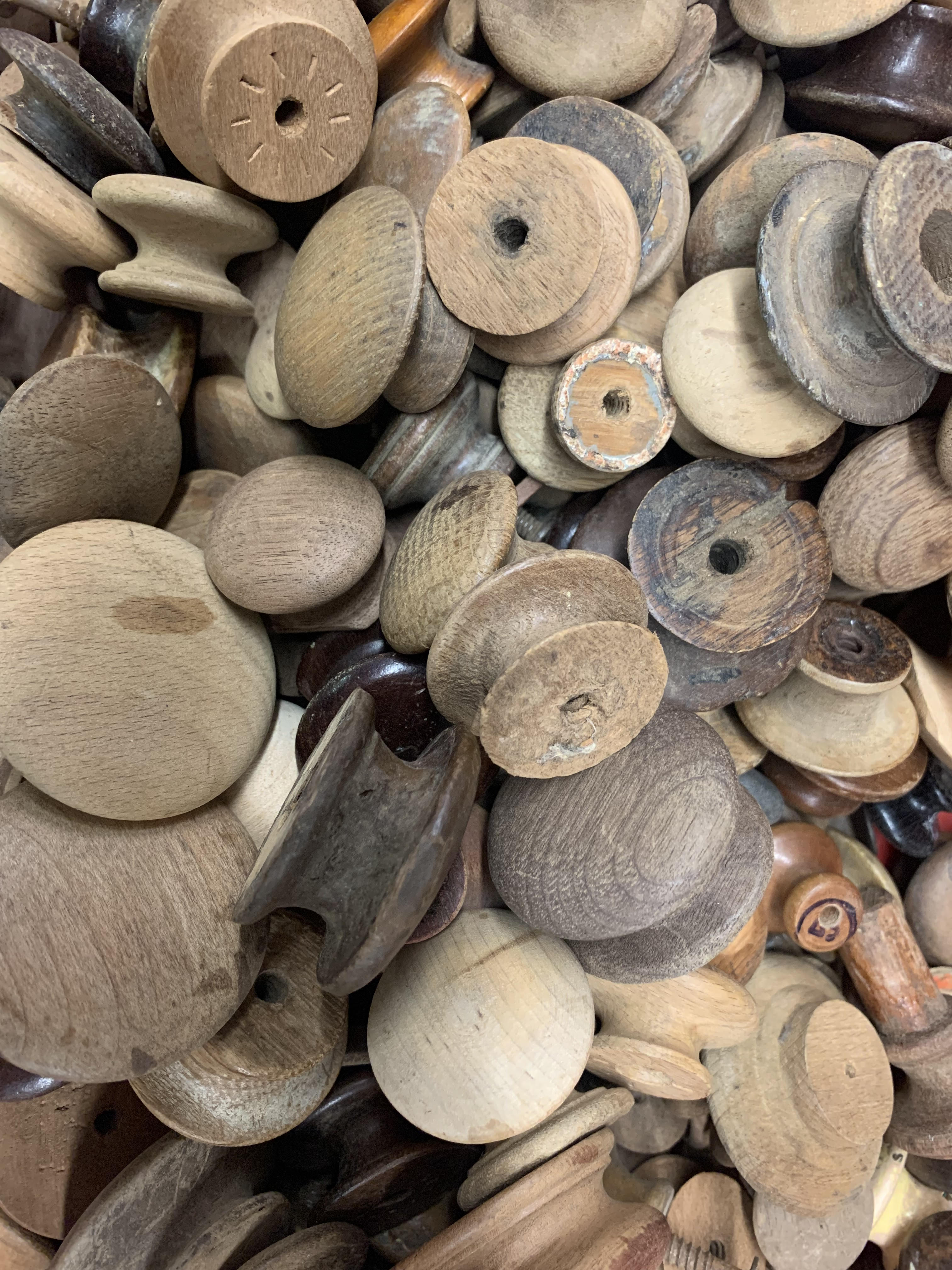
A box of drawer pulls is a box of stories lost to time. Many are worn from long use, polished by human hands. Some have never been used, rarely touched, except by those of us that casually sift through the box.

It’s easy to personify a drawer pull and turn it into a story of yearning. A story of yearning for purpose. A story of being chosen. A story of finding a home.

As I lift a tiny knob from the box I ask, “And what about you?” I am tempted to buy the little knob for no other reason than to get it out of the box. To give it a home. I have already projected a personality onto this tiny pull and laugh heartily at myself.

The shopkeeper eyes me hopefully. It is unusual for the box of knobs to elicit laughter. She’s giving change to another customer.

I rub the tiny knob like a worry-stone and place it back in the box. “Have hope,” I tell the tiny knob. It is worn smooth from a long life of good use. “You’ll find your right place, your next life, someday soon.” I can feel it.

Were I a sculptor, an artist that worked in three dimensions like Louise Nevelson, the whole box would be coming home with me. I know the right artist will find this box and when they do, this little drawer pull, rather than sit forgotten on my shelf, will be delighted to transform, serving a less-functional but more heart-inspired kind of beauty, sublime as a work of art.

read Kerri’s blogpost about KNOBS

like. share. comment. support. subscribe…thank you.

Flawed [David’s blog on Merely A Thought Monday]

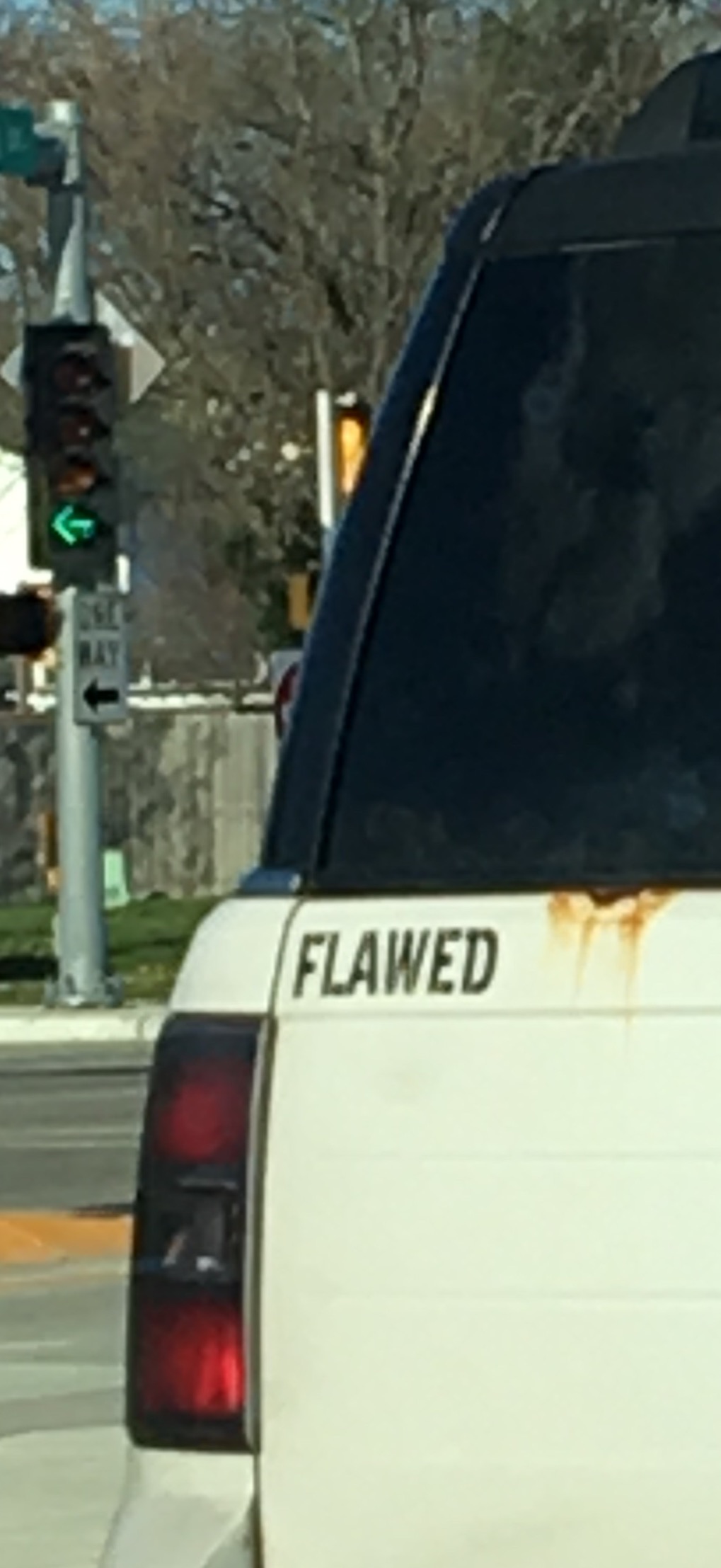
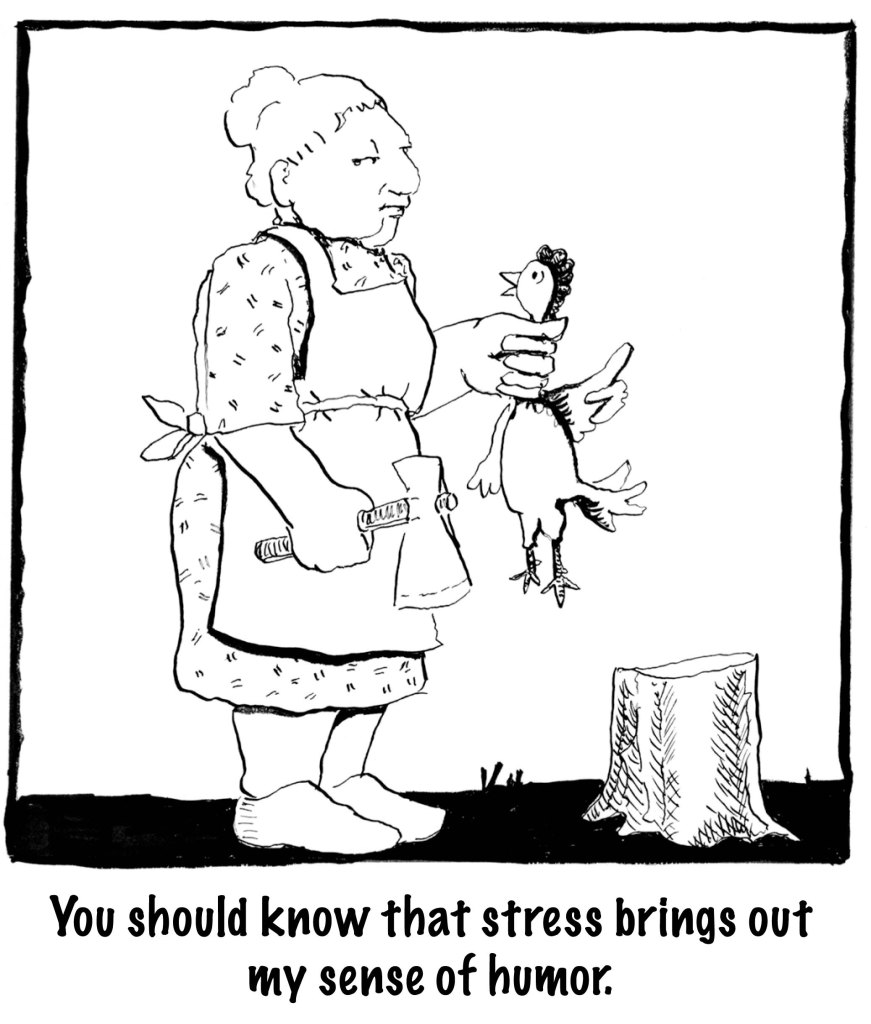
Over time I have grown more and more fond of our cartoon, “Flawed.” It was initially a collaboration between Kerri, 20, and me and was the source of great hope (we attempted to syndicate it) and many giggles. It was also the origin of our Wednesday melange posts: the prompt for Not So Flawed Wednesday was a Flawed Cartoon.

I noticed that writing and drawing a cartoon transforms you into a dedicated ethnographer. It necessitates paying attention to the world unfolding around you. It transforms you into a collector of the beautifully ridiculous.

The material has to come from somewhere. While we were producing Flawed, we’d move through our days with paper and pencil at the ready or we’d whip out our phone, add a note, send an email or text to ourselves. “What’d-ya see?” was a regular question. Everything was fodder for Flawed. A simple trip to the grocery store became a rich expedition for cartoon possibilities.

While hyper-focused on the actions playing out all around us, one thing became abundantly clear: people are flawed. Thank goodness. All of us are pushing our individual carts through life, gathering our stuff, stacking our importance, wishing other people would get out of our way – until we need them – and then we are grateful for their assistance. We rarely see that we are shopping together, all sharing the same store, the same road, all attending to our aloneness in the midst of abundant and ubiquitous support.

No one is perfect. No one has answers to the big questions. No one is free of flaws or quirks or trespasses or cracked-yearnings. It’s possible that our flaws are what bind us. Wabi-sabi. We are kintsugi held together, made better and stronger by the pure gold of our imperfections. That was – that is – the idea behind Flawed Cartoon.

A few Flawed Cartoon Designs on Society6

read Kerri’s blogpost about FLAWED

like. support. share. subscribe. comment. thank you!

Tiny Hands. Precious Gift. [David’s blog on KS Friday]

We’ve been writing our blogs together for so long (323 weeks and counting) that this post has become something of a spring ritual: the first dandelion.

Among other things, the first dandelion plucks Kerri’s parental heartstrings. Nothing throws her back in time like the first dandelion of the season. She is regularly contacted by wistful parents after they first encounter her song, Fistful of Dandelions. The power of the arts.

What those wistful parents don’t know is that her song, as well as the first dandelion, fills her cup with yearning for the days when her children freely played in the fields, rolled in the grasses, and ran to her with tiny hands clutching too many yellow dandelions.

Artists do not invent – they articulate what lives in the fields beyond language. They touch what we experience but cannot quite grasp. In her song, she reaches for what parents feel but can barely endure – what she feels but can barely endure: little legs racing across a field, tiny hands holding precious a gift: the new season’s miracle-pop of brilliant yellow. “Dandelions for Momma.”

Fistful of Dandelions © 1999 Kerri Sherwood

Kerri’s albums are available on iTunes and streaming on Pandora and iHeart Radio

read Kerri’s blogpost about DANDELIONS

like. share. subscribe. support. comment. thank you.

A Second Look [David’s blog on Two Artists Tuesday]

Aura Moon Double Haiku

An appearance.

Things are rarely what they seem.

Masks conceal faces.

The moon winks and nods,

Tugging at the aching heart.

Take a second look.

The aura of the back light at night. Wires that carry electricity to the house. A sliver moon. A photographer playing with the elements. What began as a spontaneous chase to capture the waning moon became a rolling series of discoveries: “Look what happens when the light is on!”

“I want to shoot the moon through the wires,” she said, aiming her camera.

“A good first line for a novel or a play,” I thought.

Character One: I want to shoot the moon through the wires.

Character Two: Maybe we should talk about it? (no answer) Do you think we’ll hear the owl tonight?

And so it goes, listening and looking into the night. The story progresses until their desires meet at a distant crossroads.

read Kerri’s blogpost about THE WINKY MOON

like. support. subscribe. share. comment.