Eat Your Consolation [on saturday morning smack-dab.]

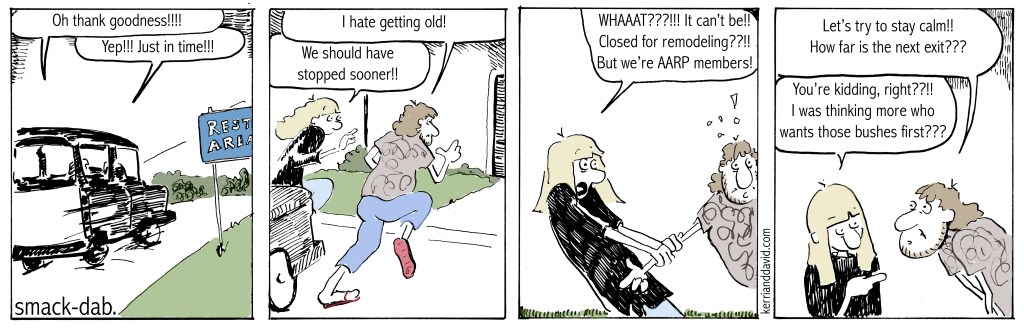
We love roadtrips. We’d rather drive than fly.

The rules-of-life change when on a roadtrip. Special allowances are made, especially at snack time. And, the most important rule change when on a roadtrip: it is always snack time.

In our early years, during our first-ever-roadtrip, I learned that Twizzlers held a special place in Kerri’s roadtrippin’ heart. They go waaay back. They are essential equipment. Competition is involved. I’m more of a peanut M&M guy and had never thought of turning my road-snacks into sporting events. In the road-snack department, I apparently had lots to learn!

I lose the Twizzer competition every time. She has years of practice and I adore how wildly she celebrates my defeat. I’m not saying that I throw the game. I legitimately lose. My losing streak has actually become part of our roadtrip tradition. I don’t mind my no-win-record, my consolation prize is a handful of multi-colored peanut M&M’s.

Life on the roadtrip is good. Very good.

read Kerri’s SMACK-DAB thinking

smack-dab. ©️ 2021 kerrianddavid.com

Be Indeterminate [on Two Artists Tuesday]

Through the good graces of our tomato plants, I’ve learned a few new concepts this summer. Determinate and indeterminate. Bush and vine. Determinate tomato plants (bushes) are bred to stop growing. Indeterminate tomato plants (vines) will grow indefinitely or until the weather conditions “are no longer favorable.”

Our plants are indeterminate. Each morning, Kerri visits our planting bench and checks her tomatoes. 20 taught her a few simple tending-rules and now, each morning, there are more and more little indeterminate miracles moving backward along the color spectrum, finally arriving at a brilliant red.

Life is indeterminate.

My new tomato-terms come just in time. My current project has me revisiting my past life as a teacher and facilitator. If I apply my new terminology to people I can’t help but think it is the lucky few who survive so much dedicated energy to stop the learning-mind in the name of education. The natural output of a system designed on manufacturing principles is to truncate the questioning mind by patterning the notion that there is a predetermined answer. It becomes a game of finding the answer that teacher wants – a closed loop – instead of an incitement of curiosity. Children are excellent game players and translate the gaming pattern into their now-dulled-adulthood.

There is a cycle apparent in all genuine learning processes. It begins with discontent. Curiosity is a movement born from some form of discontent. It leads to questioning. Questioning always leads to disturbance (the interruption of the known). And, just like that, out of the disturbance something new is seen, call it a breakthrough, call it an insight, call it new learning…Many classrooms – certainly the systems – are designed and organized to keep disturbances to a minimum. The mantra is ‘control’ rather than ‘inspire curiosity.’ Business has the same dedication.

We’re taught that disturbance is the sign of something wrong rather than the crusty earth breaking to reveal new verdant life.

Discontent leads to questioning, leads to disturbance, which leads to breakthrough. And, an insight will always lead to discontent. It’s a story cycle, where yearning meets obstacle. Learning is by definition uncomfortable and at its best when it is uncontrollable.

Last week I attended a meeting. My two companions and I brought our homework back to the team. One was content. The other two of us were filled with discontent. The leader of the session, at first, was angry. He did not get the result he’d anticipated from his exercise. “So, you two are telling me this process was worthless!” he raged. We’d spent our week questioning instead of answering. Discontent. Questioning.

“No! It was great!” we chimed in chorus. “Look at all the good information we uncovered!” It was a mess. Big disturbance. We cycled through our misalignment a few times, wrangling over perception and usefulness. More rage. And then…an insight. The breakthrough. All of the rage, all of the appeasing, began to flow in a single direction. A possibility took shape. A target materialized that was much better than the prescribed pursuit. Energy filled our zoom-osphere. Laughter. Excitement.

Learning. Indeterminate. Open questions. Hot pursuits.

I am drawn to and surrounded by the dedicated indeterminates; those who refuse to stop learning: David, Mike, Horatio, MM, Bruce, 20, Judy, and yes, Kerri…I am a very fortunate man to be surrounded by so many tomatoes moving their way backward along the color spectrum, not afraid to walk through their discontent toward bigger and bigger questions.

read Kerri’s blog post about TOMATOES

Make Life Better [on Merely A Thought Monday]

Lately, the universe has pitched me headlong into a master class on efficiency. Maximum productivity with minimum wasted effort. A useful concept in certain arenas and an intensely destructive concept in others. For a person who’s spent his life in a study of curiosity, art, and the creative, it’s an unexpected study at this stage of the game. It is sometimes uncomfortable but I consider it an opportunity for balance. Artists rarely meditate on efficiencies. We’re more of a discovery clan and efficiency is generally the enemy of discovery. No one ever sailed to the edge of the world with efficiency-on-their-lips.

Once, I made the argument to a school board that daydreaming was highly productive. It seems a no-brainer to me that exercising the imagination should be highly valued in a learning environment. Einstein’s Theory of Relativity came to him in a dream about cows. It is not an accident that many insights and revelations come in the shower or while driving or peeling a carrot. Newton’s apple did not fall on his head while he was exercising maximum productivity. The mind, to be efficient, needs space to breathe, fields to roam. It is the most elegant of paradoxes but mostly lost on worshipers at the altar of efficiency. In the modern business world, efficiency is all about time since time is billable. You know the mantra: time is money. Do more with less. Somehow, we’ve turned that nonsense into a virtue, a thing to be desired. A reason to squeeze.

There’s another, more admirable side to efficiency-seekers. How to make work less arduous. Grease the wheels and remove the friction. Relieve the burden. Not faster but easier. Ann used to say, “Find a need and fill it.” She’d look at people toiling and ask, “How can I ease their struggle?” Beaky was that way, too.

Near our home there is a stretch of shoreline with an ineffective seawall. It was built with stones and debris that become projectiles when hit by forceful waves. The locals know to avoid that stretch during a storm. It’s deadly. After the storm, it has become our ritual to walk the path to see the destruction. It’s always impressive. How far can a wave throw a heavy stone? The answer: farther than you think. Mother Nature yawns when we think we can control her. The seawall has become my metaphor for human hubris but also masterful inefficiency. It would cost money to build a proper wall. So, instead, after each storm, crews collect the rocks and pile them back on the shore, readying them to be hurled by the next storm.

We saw a double-rainbow and turned toward the shore. Kerri never misses an opportunity to capture a little miracle or a slice of beauty. We parked in front of the seawall-of-inefficiency and I laughed out loud. A budding Banksy sprayed a message on the rubble: love. The secret message-maker could not have found a more appropriate word: Love. Can you imagine anything more inefficient and, at the same time, more potent? Love moves mountains but is not billable. It transcends time. What better reason to do anything? Well, perhaps reason has nothing to do with it and never has. Reason has the worshipers-of-the-efficient perpetually re-stacking stones.

It’s easy to be seduced but let’s face it, life reduced to billable hours is not life at all. On the other hand, there is nothing more inspiring, nothing more curiosity-invoking than asking, “How can I make life better for everyone?”

Love on a rubble pile. What could be better? On second thought, what could possibly be more efficient?

read Kerri’s blog post about LOVE ON A ROCK

Let’s Get On With It [on Not So Flawed Wednesday]

It was a national campaign of the US Department of Homeland Security. If you see something, say something. The enemy is here. It is us. We pulled it from an episode of Grace & Frankie. Old folks have hair that grows in places it ought naught. Frankie plucks a hair from Grace’s chin. “How long has that been there?” Grace exclaims. “Frankie, if you see something, say something!”

Yesterday, I had a collision of experiences at the courthouse during my jury pool swim. First, I read an article in The Atlantic, by Tom Nichols, Afghanistan Is Your Fault. He wrote, “The soldiers who served overseas in those first years of major operations soon felt forgotten. ‘“America’s not at war” was a common refrain among the troops. “We’re at war. America’s at the mall.”’

He continued, “A serious people—the kind of people we once were—would have made serious choices, long before this current debacle was upon them. They would today be trying to learn something from nearly 2,500 dead service members and many more wounded. They would be grimly assessing risk and preparing both overseas and at home for the reality of a terrorist nation making its way back onto the international map.

Instead, we’re bickering about masks. We’re holding super-spreader events. We’re complaining and finger-pointing about who ruined our fall plans.

Next, I was among the many chosen for voir dire (the jury selection process). I was in the last group selected so the odds of my serving on the jury were slim. I sat in the courtroom and watched an amazing moment unfold. The judge said something that all Americans should hear. It aligned perfectly with Tom Nichols’ thoughts. A potential juror, a young man, claimed serving on a one-day trial would create hardship. He’d miss a day of work. The judge questioned him to get more context and then sat back, considered for a moment, and said this:

“Democracy is hard work. When I was young, there were three things that we had to do: pay taxes, honor the draft if called, and serve on a jury if called. All of those things create hardship. Taxes aren’t easy. The draft changed the lives of thousands of young people. Serving on a jury interrupts life. It creates hardship. Giving of yourself to the common good means serving something greater than yourself. It is an interruption. Today, there are only two of those things because there is no draft. My point is, giving of yourself to make this gorgeous system work is not easy. It is hard work. It creates hardship to ensure that our system, the oldest democracy in the world, thrives and survives for the next generation.”

America is at the mall. Meanwhile, democracy is hard work.

For a serious people, there is a center to our commons and, keeping it alive, takes a bit of self-reflection and sacrifice. Giving of yourself to the common good means serving something greater than yourself.

Divided we fall. It is a cliche’ but could not be more relevant.

The enemy is here. It is us. Bickering about the lesser while the greater slips from our fingers. “If you see something, say something” is predicated on an assumption: we are in service to something greater than ourselves. We are on the same team with a common, shared interest.

The judge sat back in his chair after his lecture and asked the young man, “Are you less capable of handling hardship than anyone else in this room?”

“No, sir,” the young man sat back in his chair, resigned.

“Good!” the judge exclaimed. “Now, let’s get on with it.”

read Kerri’s blog post about SEE SOMETHING, SAY SOMETHING

Smile With Pete [on Two Artists Tuesday]

It is a hot and humid morning as we sit to write. The sky is dark and rumbling. A storm is moving in. Dogga doesn’t like the thunder. He stays close. He studies our responses. Kerri jumped up to close the windows against the rain.

News of Pete’s passing came yesterday. And, although I have not seen him in a few years, it sucked the air from my lungs. His path through life was not easy. He was the first truly free spirit I met in my youth. I’d met lots of pretenders, cape-wearing artists that fancied themselves to be free. Angry activists. Pete was different. His protest against the Vietnam war meant that he simply refused to fight. Peace made him a criminal so he went where he could live as he believed, a hippie, living off the land and off the grid. He understood that his actions mattered. He understood that his choices impacted everyone so he was dedicated to making sustainable, non-violent life-choices. Pete was way ahead of his time.

He was a beekeeper and, occasionally, when he needed help, I rode in his old truck and helped him lift the heavy hives, moving them to the next field. He collected the honey for sale and made beeswax candles. If a puritan work ethic smashed into a Buddhist mindset, Pete was the result. He worked hard. He relaxed hard.

He believed in the illumination of human consciousness. He meditated and practiced presence. We talked endlessly about the nature of…nature and what it was to be of the earth and not on the earth.

One night, after a long drive and a long day of moving hives to a farmer’s field, too late to drive home over the passes, the farmer gave him permission to camp overnight. Pete rolled out his sleeping bag and fell asleep under the stars. Two county ditch riders, seeing a hippie in a farmer’s field, decided it would be great fun to run their truck over the hippie. Pete’s hair got caught in the bumper. He was drug behind the truck for a long, long way before his hair finally released from his head.

No one can explain how he survived. His body was broken, his brain was damaged, but his spirit was unharmed. I’ve never seen another human being go through so much, lose so much, and come out smiling. In my middle age, years after the “accident,” sitting with Pete at family picnics, I’d ask him how he was doing. “Greeeeaaaaat!” he’d say, smiling his famous smile, closing his eyes again, turning his face to feel the sun.

No one I’ve ever known had more reason to be bitter yet had less capacity for self-pity. A peace-lover who became a survivor of horrific violence, an independent spirit who became impossibly dependent, a man of nature who was rendered incapable of doing any more than looking at the mountains and the fields, and his response was to smile.

Pete was rendered present. He embraced a simple gratitude for every day of life. He was capable of being no where else and inhabited his limitation with appreciation.

Even in his wreckage he managed to live fully his convictions. Isn’t that the mark of a great person?

read Kerri’s blog post about GRASSES

Let The Outside In [on Merely A Thought Monday]

Civilization excels at manufacturing anesthetics.” ~Declan Donnellan

“What are you waiting for? Snow?” 20 was sweating. It was July, hot and humid, and he wondered why we had yet to put the air conditioner units in the windows. Our house was built in 1928 and central air is something we can only imagine. In truth, we’d been asking ourselves the same question all summer. Why are we suffering the heat and, yet, so resistant to putting the ac units in the windows?

Finally, the penny dropped. We realized why we had no desire to plug up the windows, shut the door, and manufacture cold air. Last summer, as the pandemic numbers soared, as our city burned with civil unrest, we shut the world out. We isolated. We turned on the cold air and made certain we felt as little of the heat as possible. This summer, even though we are still keeping our circle small, we want to feel the summer. We want to breathe the real air, not the manufactured stuff.

The real air is hot. Humid. Uncomfortable.

I made breakfast after reading the news. Poor Kerri had to listen to my epiphany-rant: While cracking eggs I realized that the horror story of the GOP wouldn’t be able to perpetuate their pandemic-denial-march if the people listening to them wanted to hear truth. “If I was born in 1700,” I said, “I’d have an excuse for being ignorant. I’d be illiterate and have very limited access to information. I’d be easily led because I wouldn’t have the capacity to check the story that I was being fed. That’s not true today.” We have, unlike any time in human history, immediate access to information. I rarely participate in a conversation that doesn’t involve someone pulling up information on their phone, checking a fact or the veracity of a story being shared. How then, in the middle of the national pandemic hot spot, can the governor of Florida block every science-based mitigation measure and whip up a fruit smoothie of fear – how can he manufacture so much empty air – without his constituents crying foul? The answer is easy: they would rather not feel or know what’s really going on outside their comfort-bubble. They are choosing fluff over fact, anger over curiosity.

In our day and age, ignorance is a choice. Denial is a choice. Plugging the windows is a choice. Insular is a choice. The device carried in every pocket could, in a heartbeat, puncture the gasbag-foolishness.

Reading this post, MM will be compelled to once again send me this quote, so I will preemptively include it: “(Humankind) would rather believe than know.” E.O. Wilson, Sociobiology.

I know. I know.

Belief, like sugar, is easy to consume. Knowledge takes some effort and self-reflection. Anger and fear and division are easy, too, especially when the target audience of the fearmongers has no desire to challenge the narrative. It is the great paradox of our times that those waving their flags and screaming the loudest about their freedoms are so ready and willing to abdicate their freedom of thought. They parrot the fox. They inhale the anesthetic, the manufactured air.

Last night we watched a great short documentary, Lessons From The Water: Diving With A Purpose. Black divers searching for the shipwrecks of slave ships. One of the founders of the projected said,“Here in the US, our (African American) history has been ignored,” he adds. “They don’t really teach anything about slavery in schools. And I think if you don’t teach your history, you’re bound to repeat it.”

They dive to find the artifacts, to tell a fuller story. They dive. They look for artifacts. Facts. A complete narrative.

It made me think about the enormous resistance to critical race theory, the intense counter-narrative to climate change, the ferocious dedication to perpetuating The Big Lie, the ubiquitous conspiracy theories and global rise of authoritarian voices…all of it an appeal to an insular story. Close your eyes. Trust without question what you are told.

The real story is uncomfortable. It is hot. It needs telling. Fingers out of ears, eyes wide open. Forward movement, growth, health, is never the result of suppression, distraction or numbness. Health, equilibrium, always follows the revelation and acceptance of the full story. It’s open windows. It’s letting the outside in.

read Kerri’s blog post about LET THE OUTSIDE IN

Pull The Weed [on KS Friday]

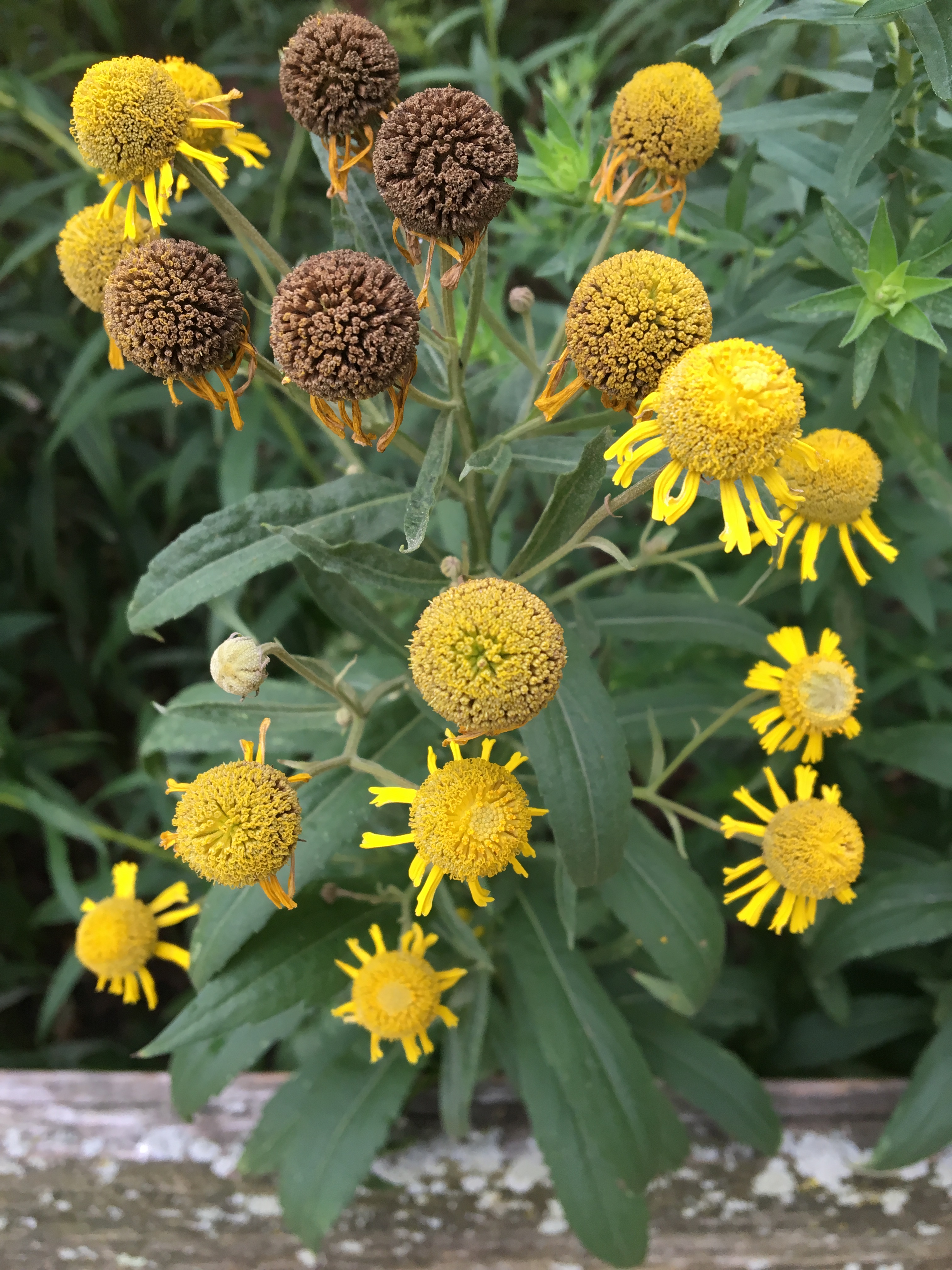
One of my favorite simple pleasures each day is watching Kerri go out in the early morning and tend to her tomatoes. The world is quiet. The coffee is brewing. Dogga makes sure the yard is clear of marauding squirrels so the path to tomatoes is safe. An extraordinary ordinary moment. A tender ritual. A wonderful world.

Put down your clever and pick up your ordinary. It is one of my favorite “rules” of improvisational theatre. It is also a good credo to live by. Trying to be clever will take you out of the game every time. It is as true in all aspects of life as it is in art. The beautiful little secret: power, presence, flow…these live in the province of the ordinary.

When I was learning to scuba dive,Terry tried to teach me one central concept: get neutral. After several dives, fighting for control, trying “to do it right,” burning through my oxygen with my dedicated stress, I simply relaxed. I found the neutral that he advised. It was as if I joined the current. The colors sharpened. Time seemed to slow. My breathing definitely slowed. What was a struggle only a few moments before was suddenly easy. I’d picked up my ordinary. I got out of my way.

I delight watching children draw. They are free in their ordinary, not a shred of clever to be found. They lose that. We lose that, trying to be…something other than what we are. How many of us shudder in the notion that we are inauthentic? How many of us invest in the notion of low “self-esteem?” The circle of ordinary comes back around though it is cloaked in words like “self love” or “acceptance” or “wholeness.” Get neutral. Put down your clever.

Ordinary, not clever. It is a discovery that ought to stick early in life but generally lands much later. There’s very little distance between the child that freely colors and the adult that one day remembers that nothing is broken, nothing needs fixing. It is ordinary to color with abandon. The riches are in tending the tomatoes. “Clever” is merely a weed that needs pulling. In the ordinary, a wonderful world is waiting.

PULLING WEEDS on Kerri’s album RIGHT NOW is available on ITunes or streaming on Pandora

read Kerri’s blog post on TOMATOES

pulling weeds/right now ©️ 2010 kerri sherwood

Sit On The Curb [on DR Thursday]

As much as our wily-ole brains would like us to believe otherwise, we can be nowhere else but in the present. Everything else is imagination.

Years ago I belonged to a support group of independent consultants. We met once a month to discuss our business challenges, insights, and to give and receive some advice. One of the members of the group was a Byron Cady coach. I have no memory of the discussion that prompted her to offer this Byron-thought-metaphor: “If your house burns down, rather than race around in panic, the best thing you can do is sit on the curb and appreciate the moment.”

To the consumer-mind, wisdom often sounds like bad advice. That you are alive, that you have this moment, means that no real possession was lost. The question is, in the face of calamity, what will you make of the moment?

Brother Joseph told the story of holding a woman wearing expensive furs, each finger was diamond encrusted, as she died on the street. He was, in the moment, overwhelmed by the worthlessness of her stuff. The illusion of value once life has gone.

Life. This moment. Calamity is certain to come. Sit on the curb and see what is there, beyond what you think is there.

We’ve had our share of adversity these past few years. I would like to report that we laughed heartily in the face of lost jobs and broken wrists and pandemic madness and civil unrest. We did not. We shook our fists at the sky. We made up words and ran loops like Chicken Little. We invested in all manner of fear-of-the-future and ran from monsters-of-the-past. None of our racing around or fist-shaking brought comfort or change.

But, the moments that we took a breath, walked a trail or sat on the back deck and listened to the cardinals and crows, sipped hot coffee on cold mornings, held hands – sat on the curb and appreciated the undeniable truth of our moment: we have everything. We have this moment – the only moment of life that we’ll ever inhabit. We have each other. The rest, the fear of future, demons of the past, are pure imagination. In those moments, wrapped in a circumstance of calamity, we laughed at the beauty of it all.

read Kerri’s blog post about LAUGH IN THE FACE OF CALAMITY

Expect Surprise [on Not So Flawed Wednesday]

Walking through the Lake District in a driving rain, cold and soaked to the skin. Roger had a high fever and was near delirious. The hostel closed. We had to leave. It was miles to the next village. This day was not going according to plan. The trip was not going according to plan. It was the darkest moment in a series of dark moments. “What else could go wrong?” I asked. There was nothing to do but shiver and take another step. And then, unheard of at the time, an RV rounded the bend. The door popped open and a cheery voice asked, “Do you need a ride?”

I often think of that ride. That unlikely RV. Suddenly there were towels to dry ourselves. Aspirin for Roger. The mother of the clan took over and attended to my sick friend. Mugs of hot tea. We were delivered safely to the next village. They did not leave until they knew we had a warm place to stay until the rains passed. Something went right. It was breathtaking.

It was a life lesson for the younger version of me. My very own Aesop’s Fable. What looks like tragedy is often an opportunity, and vice versa. When it appears that things cannot get worse, they often do get worse en route to something better. The real lesson was to be in it, rain or shine. Joyful participation. I didn’t get the lesson right away. It took a few laps before it stuck.

That trip was decades ago and, to me, seemed ill-fated from the outset. But, when I think back on it, I remember the kind family in the RV, the man standing in line behind me who secured a ticket for me when I didn’t have enough money. The kindnesses too many to count. The utter shock of serendipity. What we needed always appeared somehow, in unexpected ways.

Quinn used to say, “Cultivate your serendipity.” Open yourself to chance, to the unexpected. Expect surprise.

read Kerri’s blog post about THINGS GOING RIGHT

Choose [on Two Artists Tuesday]

“It’s a serious thing just to be alive on this fresh morning in this broken world.” ~ Mary Oliver

Were I to have been born in an earlier century I would not be alive today. Twice on my life-path doctors have declared that, “You are now a miracle of modern medicine.” Leeches and blood-letting would not have cured what ailed me.

This thing called ‘science’ is what gave me more days of life. It is the same science that developed vaccines for a pandemic but also made possible the technology that makes mass-media-misinformation possible. Here is the medicine. Here is the disease. It is exactly as Sophocles wrote: Nothing vast enters the life of mortals without a curse.

One morning, deeply tired, I arose to go do a job that I did not like. It was a means to an end and I dreaded the day ahead of me. Stepping out the door, the cold morning air stopped me in my tracks. It slapped me awake. The air was crisp and clean, the neighborhood was quiet. The light in the sky was brilliant. I drank it in. I vowed never again to dread a day of my life. In truth, I had no idea what the day held for me. Why then, would I story my day with a frame of dread? Why tell myself a tale of just-getting-through-it? Why not open to the possibilities of surprise and miracle? Why not embrace the already-stated-obvious-thing: I had no idea what the day held. That simple fact would be true every single day of my life. Dread was a choice, not an inevitability.

To be alive on this fresh morning. It is a serious thing. In this world, broken by the little story of us-and-them, the tiny tale of power-over. Choices. The miracle of the new day is present whether it is seen or not. We can cloak it in dread or gratitude, in support or division. It doesn’t care either way. The miracle of the new day, the gift of being alive on this fresh morning in a world that is broken or healed, whole or fragmented – it all depends upon the story-frame we wrap around it. The story we tell is a choice, not an inevitability.

read Kerri’s blog post about JUST TO BE ALIVE