Return To Zero [David’s blog on Not So Flawed Wednesday]

In college, I learned from our technical director, Steve, to thoroughly clean the shop at the end of each day. Every tool was put back in its place. The floor was swept of sawdust. Brushes washed and paint cans sealed and re-shelved. The shop was returned to zero so we might start afresh the next day. We learned that taking care of our space was an act of taking care of our art. Self care. I carried that lesson forward in my life, in the theatre companies I had the privilege of guiding.

I learned that it feels good to take care of your space. I also learned that it fosters something vital and often elusive for artists: ownership and a sense of responsibility for their artistry. It’s grounding. I’ve had the unhappy experience of witnessing artists (and business leaders) who have a bevy of assistants follow them with brooms, like the guys with buckets and shovels following the horses in a parade. Cleaning your own space prevents the unhappy ego-ascension onto a personal pedestal; a guaranteed artistry killer. A guaranteed community killer.

I’ve also had the unhappy experience of witnessing artists in full fear of their artistry. Making a hot mess and cleaning it up is a great cure for even the most dedicated perfectionist. Instead of art, intend to make a mess. Then clean it up. Repeat. You’d be amazed at the impossibly beautiful work that emerges when the impossible expectation is put in its proper place.

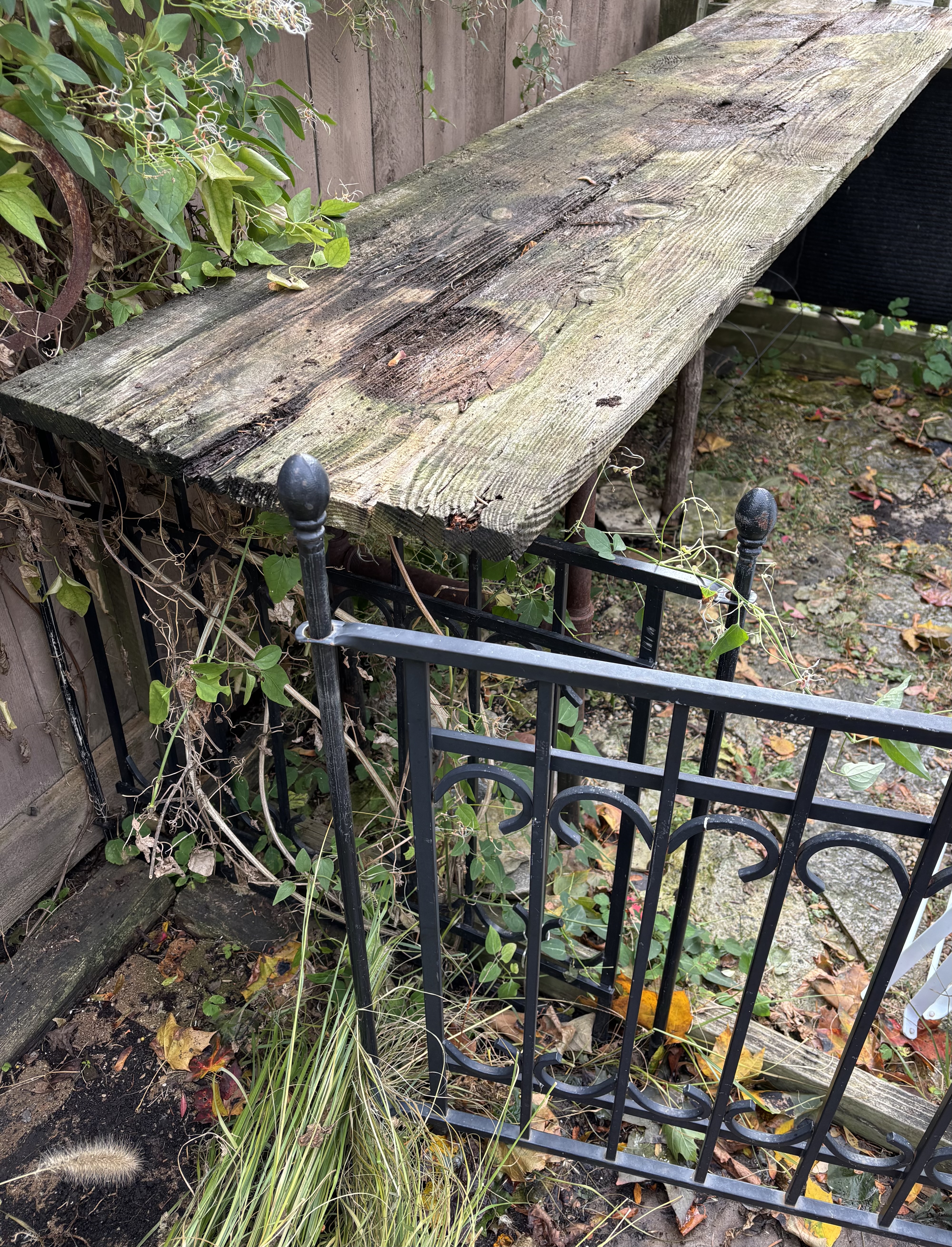
The abrupt and abundant snow earlier this week brought an end to the plants on our deck and potting bench. We spent a good part of the weekend cleaning out and storing the clay pots, raking the leaves, clipping the peonies and containing the tall grasses. Readying the yard for the return of spring. While clipping the plumes I was for a moment thrust back into the shop in college. Steve walked by, the keys on his belt jangling. Time to clean up and close up for the night. I smiled. I doubt that he understood how important his simple requirement of keeping the space clean would become for me, a north star for those moments when I was attempting to climb on my pedestal or was afraid of my gift.

read Kerri’s blogpost about THE BENCH

likesharesupportcommentthankyou

Let It Sit [David’s blog on Not So Flawed Wednesday]

Over thirty five years ago, people I loved, people who loved me, bought me an easel. It was a gift for my very first solo show. All these years later, it is the only easel I’ve ever had, the only easel I use. The only easel I will use. If the canvas is too big, if I can’t put it on my easel, I tack it to the wall.

My easel is well traveled. It moved up and down the west coast. It moved into and out of studio spaces. It rode in the truck to the midwest. It has hosted hundreds of canvases. It has become the Velveteen Rabbit of easels. It is no longer shiny and new. It is covered with layers of acrylic drips and splashes, the support stabilizer is bowed, I must be vigilant to keep it square. It is, I recently realized, my mirror image, my double-walker: I, too, am covered with drips and splashes, my stabilizer is bowing, and I am constantly vigilant about keeping myself grounded and square.

A few days ago, during a studio clean, I decided it was time to do a bit of easel excavation and repair. The build up of acrylic paint on the bottom canvas holder is…prodigious. I wasn’t prepared for what I was about to experience. As I peeled back the layers of acrylic, I unearthed the layers of my creative life. The layers of my life. I could literally associate the colors of the acrylic strata with specific paintings, with specific eras, with foibles and triumphs, despair and new hope. There were many many layers. It was like reading a diary, a life review in spatter.

Tom McKenzie taught me that in order to invite in new energy it is sometimes necessary to close the shop. Lock the door and let it sit. Make space. Time and patience will loosen the grip of old ideas, stale patterns – and open pathways to fresh possibilities. I’ve followed his sage advice twice before. Once I stopped painting for a full year. I not only closed the building but I burned the paintings. In both cases, locking the door was followed by a renaissance, a surge of new and surprising work.

I saw the story of my twice-artistic rebirth as I slowly peeled the history from my easel.

And, as I stripped back the layers of my life, the full understanding of what I was doing settled in. I am cleaning my easel in preparation for my third closing of the building. I am cleaning it so it will be ready for that day-in-the-future when I unlock the door. Spacious and rejuvenated. I have been fighting it. I have been angry about it because I feared it – I always fear that the muse will leave and never come back even though I know in my bones that the muse is the wise-voice asking me to breathe, to make space. Now, as is always the case after a few years of fighting a losing battle, I am accepting it. It’s time to lock the door. Empty the glass. Let it sit.

read Kerri’s blogpost about SPACE

like. share. support. subscribe. comment…thank you.

Follow The Lines [David’s blog on Not So Flawed Wednesday]

There was a time when humans didn’t know how to translate three dimensional space into a two dimensional rendering. We either had no capacity for understanding visual perspective or no reason to pursue it. Art was symbolic, purely. And then came Brunelleschi. An architect. Linear perspective, a mathematical construct, became all the artistic rage. The wilds of symbol met the dictates of the representational. Horizon lines and vanishing points, the one-two step of perspective danced into the arts in a crazy time we know as the Renaissance. A painting could pull us into its world. The ghost of the ancient Greeks whispered 15 centuries into the future.

With perspective came a wholly new set of questions. The magic of math. The study of nature. How close can we come to understanding how things work? What are the secrets driving the universe and what we see? What lurks behind and beyond the symbol? What do we not see?

The trees in Kerri’s photo are roughly the same size. The trees retreat into the distance so the furthest tree appears to be smaller, the closest tree taller. It’s an illusion that we take for granted, so steeped are we in the necessities of perspective. The smallest child with a crayon wouldn’t care or perhaps even see the distance. They’d happily scribble the symbol: tree. An older child would put down their crayon and insist that they couldn’t draw because the magic of perspective is intimidating. Trying to “capture” reality in two or three dimensions is a tall order. Trying to place yourself and others inside it is overwhelming.

On this foggy day on the coast of Lake Michigan, I admire the perfect lesson in perspective taught by the trees stretching out in front of me. The fog brings to mind string-theory and the mathematics of multiple realities existing in a single space or Stephen Hawking’s bubble theory, many many universes brushing each other as they pass. What would Brunelleschi think of that? Follow the lines of perspective far enough and it becomes necessary to sail beyond the known horizon. Expressionistic. Conceptual.

Both Picasso and Einstein broke apart our understanding of space and invited an entirely new form of perspective into our conversation. The mystic and the mathematical. Multiverse and many dimensions.

Standing in the park, fingers cold, swallowed by the dense fog, I am a lucky child with a crayon knowing that all I can manage to do is scribble.

read Kerri’s blogpost on PERSPECTIVE

like. share. support. comment. many thanks.

buymeacoffee is a an impression left by a crayon meant to let others know that someone is out there and paying attention to the lines of perspective.

Fill The Space With Goodness [on Two Artists Tuesday]

When I was learning to be on a stage there was a phrase I particularly appreciated: fill the space. There was also a companion question that seemed to be more important: what are you bringing to the space?

The assumption beneath both the phrase and the question is that you have a profound impact on your world. Not in abstraction. You are an active participant in creating it. After all, the space is shared, co-created. What do you intend to bring to the shared space? Are you going to “take” energy from the shared space (it’s all about me) or are you going to “bring” energy to the shared space (we are in this together). I understand this choice to be the direction of intention. It’s the origin story behind the name of this blog. A performers job is to bring good energy and light to the shared space, to unify it. To grow the goodness.

I think that’s why Kerri and I are attracted to prayer flags. The mantras on the flags are blown by the wind to fill all the space of the world with good will and compassion. Fill the space with goodness to the benefit of all. A straightforward yet profound intention.

It seems like such a simple thing, doesn’t it? Intend to bring good energy to the space that is shared by all. And, to us, it seems like the number one imperative of our times. In this me-me-me era, rife with “taking” energy from the space, it’s crucial to help reverse the tide.

She was holding black and white bandanas and I saw the thought hit her. She turned and asked, “Do you think it’s a good idea to make our own prayer flags?”

“Absolutely.” I said. “Why not? This world could use all the good intention that we can muster.”

All the world’s a stage, after all.

read Kerri’s blogpost about PRAYER FLAGS

like it. share it. support it. comment on it. we appreciate it.

Make Space [on DR Thursday]

I’ve read that a too-busy mind can’t solve problems. To see solutions, beyond quick fixes, requires some open thought space. There’s plenty of research supporting this notion. It’s the reason most epiphanies happen in the shower or while taking a drive. The mind loosens its grip long enough for a new idea to rush in.

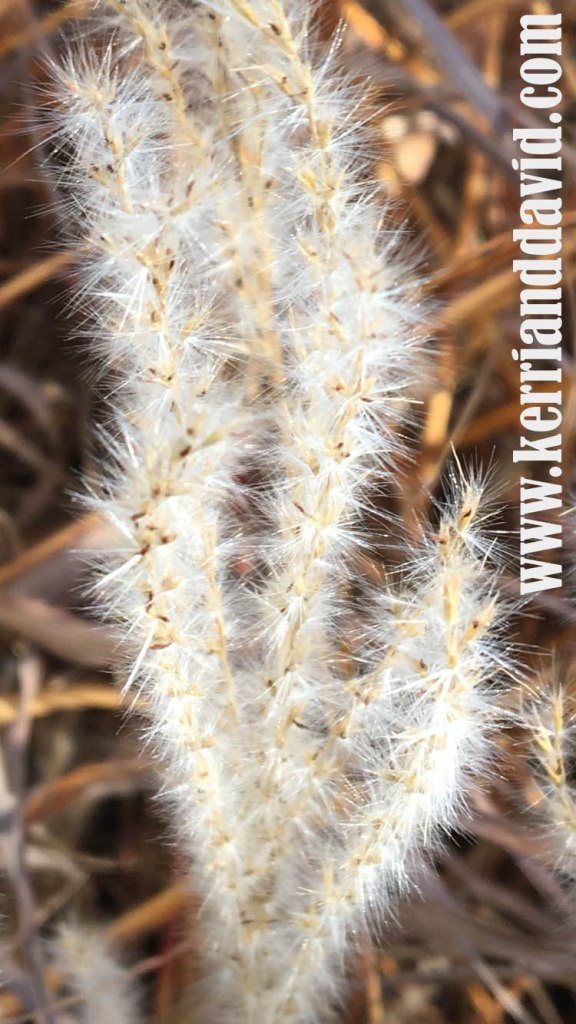
Lately, when my brain is in a twist, I take a few moments and visit the switchgrasses in our front yard. They are electric with color. This year, they are showing shades of pink, yellow and orange that they’ve never before revealed. The white plumes dance above the color, moving with the breezes. It not only takes my breath away but I’m finding it impossible to knit my brow and hard-squeeze synapses into sense-making while watching the dance.

I’ve cleared the boxes and bags from my studio. There are still multiple canvases stacked willy-nilly against the wall, it needs a good sweeping, but I can already feel the space breathing. I can feel myself breathing. As it turns out my studio has been a reflection of my too full mind. Clutter keeps the juices in check.

Last night we watched a movie. The main character, an equestrian, was having a hard time returning to competition. She was trying too hard. She was trying to be perfect and her mind and heart were locked up, in opposition. The horse felt her discord and could not move freely. “Forget about winning,” her dad told her. “Go have fun and remember why you loved to ride in the first place.” Sage advice when a good heart is being drowned out by a noisy mind.

An open studio. The grasses tickling my mind into chuckling relaxation. Space. Who knows what new idea is waiting to rush in!

read Kerri’s blogpost about GRASSES

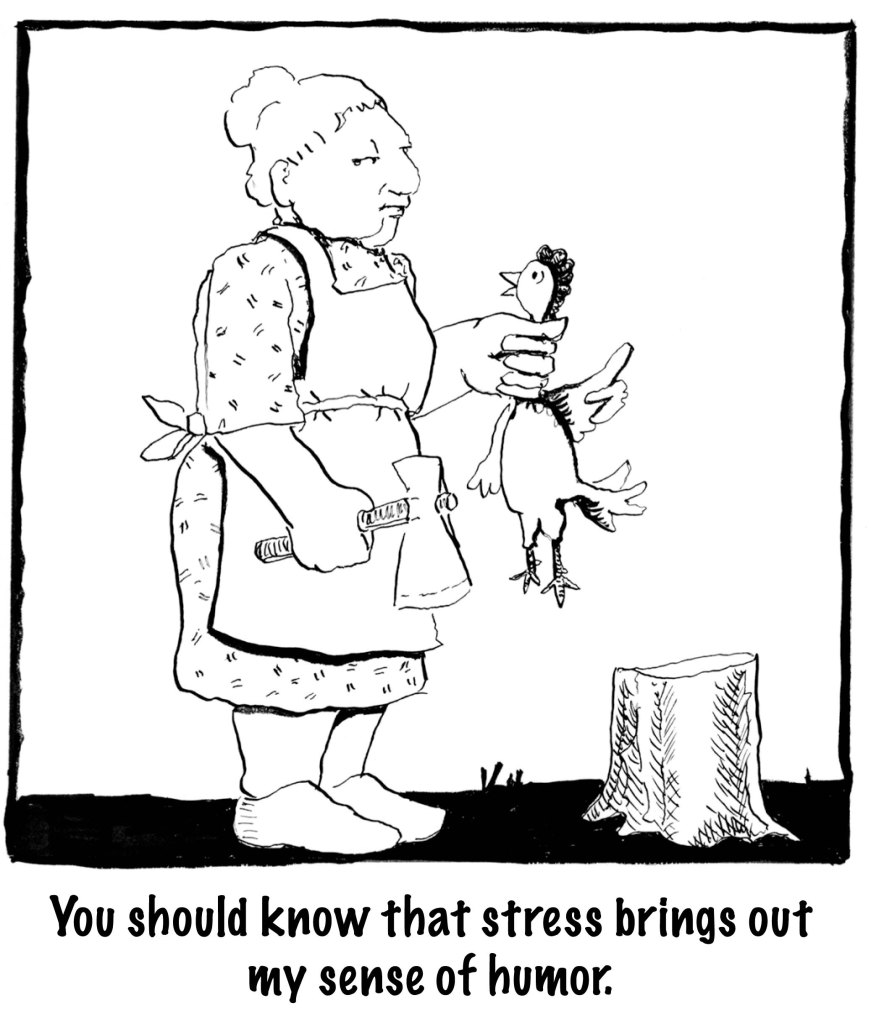
flawed cartoon © david robinson, kerri sherwood, john kruse

Dream [on Not So Flawed Wednesday]

When does a dream turn into a goal?

Lately, I’m having conversations that confuse me. Business thinking, engineer minds, make models for creation. Creativity plans as action templates and guides.

Screen writers make plans, too. Step outlines. The difference is in the process. A creative mind makes models and plans with full intent to throw them away. To discover the best story, their plan involves making space for the better idea. Open up by tossing the model. Clear the deck by shuffling the plan. Sketches and rough drafts. It’s a conversation with the muse. Muses are notoriously structure resistant until the story makes an audience sit forward. Movement first. Then, the structure begins.

The engineer mind works in the opposite direction. The dream must wear the mask of a goal or it is considered invalid. Too squishy. Construction begins immediately with targets and tasks. Order. It is, in fact, the same process as the creative mind, only it is less forgiving of space. It forces the muse to move. Time is of the essence. Structure first. Then movement. Efficiency is a tree with shallow roots.

It confuses me. Dreams do not wear ties or leather shoes, yet, scrape the blueprint and you’ll find a dream every time. Perspective requires stepping away from the canvas. Standing too close for too long and loss of vision is the result. Every time. It’s not a mystery or voodoo. It’s physics. Great ideas and idea-break-throughs happen in the shower or walking on the trail. A clear mind. A different focus creates space. Too tight thinking, too close in for too long, sucks energy.

Once upon a time I worked with organizations and educators. They also confused me. Squeezing the air out of their space they’d gasp, “We can’t breathe.” A little bit of space, some play, a refocus on the relationships was good medicine. Fresh air. Step back and see the painting. The point of perspective is to see. The secret: permission to remove the status games and need to be an authority and, for a moment, reconnect the players to their dream.

At the nucleus of every goal beats the wild heart of a dream.

read Kerri’s blog post about DREAM

Reseed [on Merely A Thought Monday]

We pulled everything off the walls of the office. The photographs and posters of plays I’ve directed, Kerri’s first album, framed, a gift. Our poster announcing Beaky’s Books. “I don’t think the office should be about the past,” she said. “It’s time to make this space about our current work and the future.”

She chose a painting, Nap On The Beach, one of many created from our experiences together. She’s making a poster of Smack-Dab, our cartoon. Turning our eyes from what we’ve done, where we’ve been, who we were. We’ve changed. We want different things now. We work in different ways now.

She’s slowly cleaning out the house. I can’t help. This is something she must do by herself. Purging closets, the laundry room, the storage and work rooms. The year of water upended our house. Several times. It continues in the front yard, all the way to the street. When the ground settles, we’ll reseed the lawn. How’s that for a metaphor? When the ground settles, we will reseed.

It takes time for the ground to settle. It can’t be rushed. It should not be rushed. The same is true for cleaning out. We have new piles forming: what goes, what stays. I climb the stairs to the office each morning. When I come down again, she shows me the new space that she’s created from the day’s purge. It’s true on many levels. She’s creating space. Old baggage and burdens are going out with the old clothes and broken appliances. I can see it in her eyes. Space. Light. Like the house, she is beginning to breathe again.

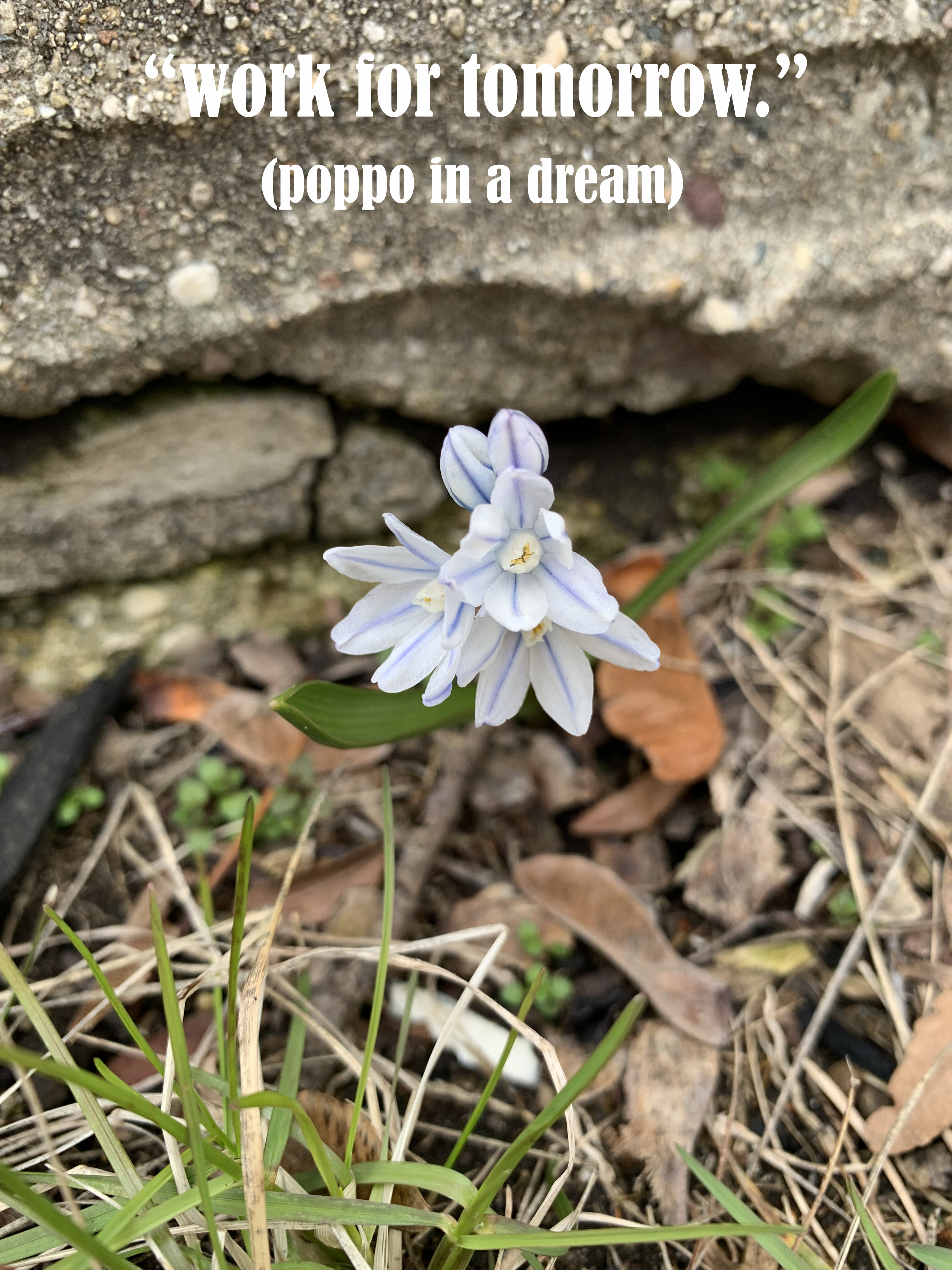
She told me about the dream, her father was setting up microphones. “What are you doing?” she asked.

“Working for tomorrow,” he said.

I had to work hard not to weep. She’s had a rough few years. “Your daddy’s talking to you,” I said. “Sage advice.”

She nodded. Her eyes turning from the pain and constraints of the injuries. Letting go of the past. “Work for tomorrow,” she smiled.

read Kerri’s blog post about WORK FOR TOMORROW

Shape The Vessel [on Two Artists Tuesday]

George Ohr was one of the great ceramic artists of the late 19th and early 20th century. Like Van Gogh, he died unknown, never experiencing the success of his work. Robert reminded me of George Ohr’s story and I reminded Robert that Ohr would be a terrific story for him to tell through a one-man play.

What is it to follow your art-call with heart and dedication with nary a hint of financial reward or success on the horizon? Vincent Van Gogh would have been called an amateur during his life since the making-of-money is the flag we plant in the sand marking the line between being a professional and a dilettante. Those lines do not exist for artists with a deeper call. The money does not the artist make.

The Ohr-O’Keefe Museum of Art was designed by renowned architect Frank Gehry, quite a journey for the unseen work of George Ohr’s life to find so much vibrant admiration after his passing. Had he known it would have changed nothing. He’d have spent his days at the potter’s wheel either way.

“Shape clay into a vessel; It is the space within that makes it useful. Cut out doors and windows from a room; It is the holes that make it useful. Therefore, profit comes from what is there; Usefulness from what is not there.” ~Lao-tzu

Profit and usefulness. Shape and space. Mary Oliver asked the question: What will you do with your one wild and precious life? It hits the nail squarely on the head. It was not the pots that George Ohr made or the paintings that Van Gogh painted, it was the space they entered while throwing pots and painting paintings. It was the world they entered through their artistry, more expansive than financial success, more necessary than renown. A wild and precious life lived wildly and with avid appreciation.

Standing amidst the brilliant orchids, some of the flowers were in their last days. Their beauty fading, they cared not a wit. It is not in their nature to stretch their faces and pretend that the cycle of life is more valuable in the early bloom than it is in the late retreat. All is treasured, beguiling. Every last moment, not to be stalled or held onto. The root as necessary as the bloom, the winter as indispensable as the spring.

read Kerri’s blogpost about FIREWORKS

Care For Your Space [on Not So Flawed Wednesday]

It seems like such a simple concept. Tom taught it. So did Paul. And, since I was one of their students, I taught it, too. How you treat your space is a reflection of what you think of your art. The concept is universal. Replace the word “art” with “work” or “life.” You and your space are not separate. We worked hard at the theatre to become better artists and produce better plays and a significant part of that work was bettering and maintaining our artistic “home.” We were proud of our work and it showed -everywhere. Our “space” included our community and our art was meant to make it better.

Yesterday it was warm so we took a walk on a favorite loop. As we returned to the car we watched a man clean out his truck. He’d come to the park, not to walk or appreciate the quiet. His purpose was to dump his trash onto the paved lot. In an earlier time, pre-gun-gun-everywhere, we might have said something. Instead, we stared in disbelief. His space,I thought, does not extend beyond his truck. Neither does his community.

Yesterday, after the walk I received a text from Mike. He was a big part of my long-ago theatre. He’s realizing a dream and opening his own theatre. He’s led a company for a few decades but they didn’t have their own space. Now, they do. He – the artistic director – was mopping the floor and paused to send me a text. It’s the other part of the lesson from Tom and Paul. And Demarcus. And Quinn. There’s no hierarchy. There’s no above and below. Loving the space, loving the art that happens in the space: no separation. One and the same for everyone involved and everyone needs to be involved.

You and your space are not separate. The care you take of your outer space is equal to the care you give to your inner space. And, vice-versa.

[visit Justin’s to see how a company can make a better world]

read Kerri’s blogpost about NEAT EARTH

Await The Return [on KS Friday]

This time of year I do a lot of staring into the night sky, pondering vastness. Reflecting on the year. It’s what we’re hard-wired to do as we approach the darkest night of the year. And, along with the darkest night of the year, comes the turning point. The return of light. This fact of earth’s orbit has spawned ritual, religious metaphor, and all manner of contemplation, letting go, setting new intentions, since humans first started, as I did last night, looking into the sky. We feel our smallness looking into the face of starry infinity.

This year there’s a delightful serendipity associated with the solstice. We cross the line from darkest night to return of the light on December 21. On December 22nd, as we creep our way back into light, the James Webb telescope will be launched into space and, when it unfurls and points its lens into other star systems, it will be looking for life on other planets. It will be looking for other beings staring into the night sky who might also be pondering their relationship with the universe. I look at you, you look at me.

We are candle people. We light them all the time for various reasons, marking auspicious occasions or simply to lift our spirits. We bought a menorah this fall. Kerri’s clan is religiously complex and we wanted to celebrate Hanukkah with her cousins. I read a bit since I am fond of finding the roots of rituals. I learned that the menorahs with seven branches, among other things, represent the five visible planets plus the sun and the moon. The rounded shape of the branches represents their trajectories across the sky. We lit the candles each night, singing poorly but with love and conviction the prayers. Connecting with her cousins, connecting with the light and pondering our place in a spinning universe.

Sitting at my desk, upstairs, too long staring at a computer screen, I heard her at the piano. I crept halfway down the stairs not wanting to break the spell. She played a carol, quietly. It’s rare these days that she plays. Broken wrists. Resistant fingers. Bruised heart. Yet, the piano calls. The lighting of the candles, the quiet pondering of “what’s it all about”, has made a crack in the darkness. There is a vast inner universe, too. We shoot telescopes into our selves. I look at you, you look at me. Smiling on the steps, I realized that I am anxiously awaiting the return of the light.

read Kerri’s blog post about LIGHT