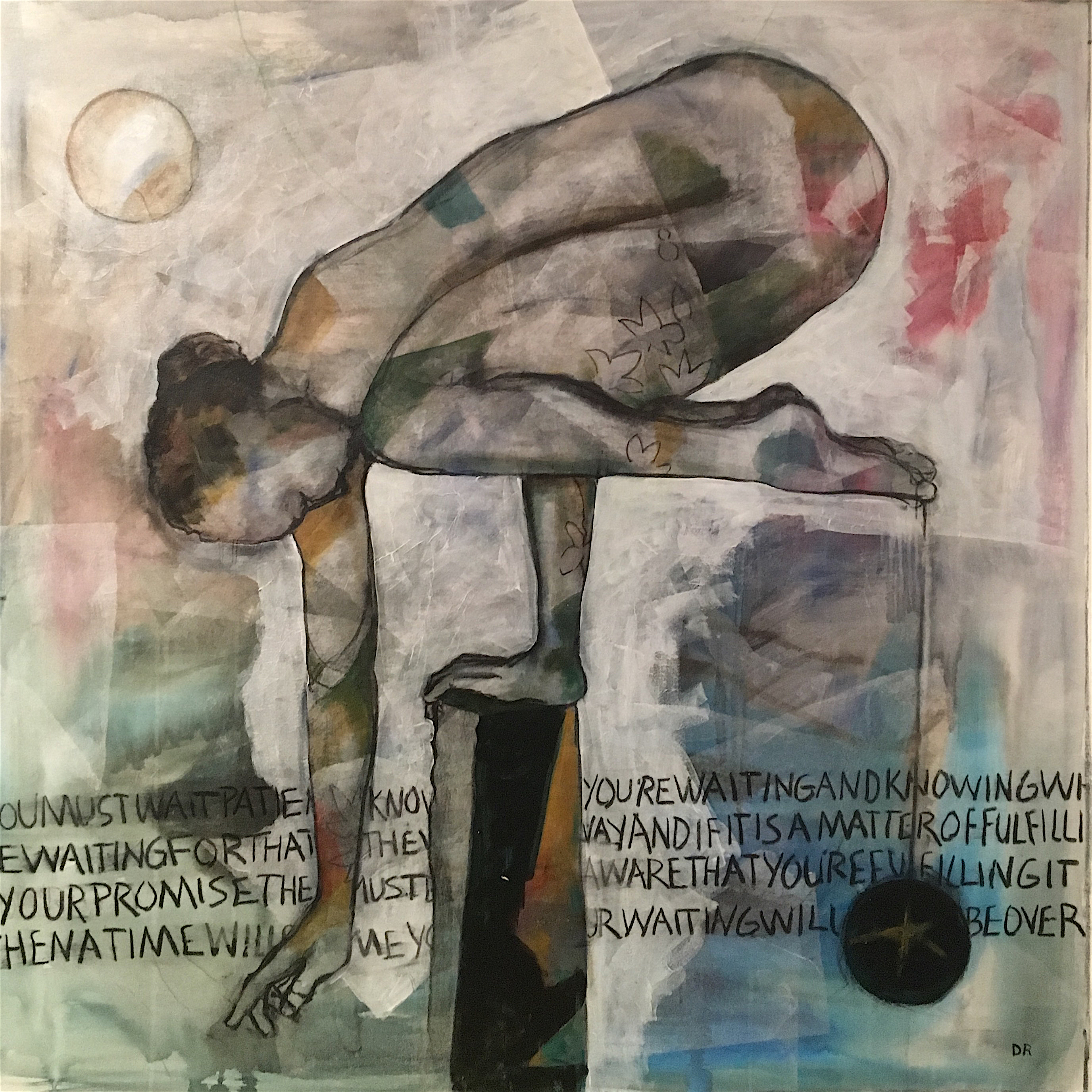
A Dream Itself [David’s blog on KS Friday]

I awoke this morning with a line from Hamlet running through my mind: “There are more things on heaven and earth, Horatio, than are dreamt of in your philosophy.” What dream, what night-wander was I following that made me bob to the surface with a line from Hamlet as my first thought of the day?

Sometimes I use Google like I use the i-Ching. A divining tool. I called up the phrase from the mighty Google and read two opposing opinions of the meaning of the line. Of course. Divining tools generally cast a broad net. The first writer interpreted the line to mean that the human imagination has limits; there is so much that we don’t know and cannot yet imagined. The second interpretation was stated with absolute authority. This is what Shakespeare meant! “One must believe what he or she sees. Even if they previously did not think so, the real evidence should change their mind.”

Evidence or the limits of imagination? Evidence as the limiter of imagination? I was no closer to answering my dreamtime question but I was affirmed in the dynamic nature of perception and interpretation. What a great play!

Living as we now are, in the advent of A-I, one must not believe what he or she sees. I have no idea what Shakespeare meant – we never discussed it – but I am certain that what one sees is no longer evidence of anything. What one hears requires vetting. There are more things on heaven and earth than Shakespeare could have possibly imagined. Our world is beyond his dreaming or he might have suggested to Horatio that he must question everything he hears and challenge everything he sees.

And, about my dreamtime question? I’ll leave that, too, to Hamlet: “A dream itself is but a shadow.”

Kerri’s albums are available on iTunes and streaming on Pandora and iHeart Radio

read Kerri’s blogpost about THE NIGHT
like. comment. share. subscribe. support. thank you!

Pull The Thorns [David’s blog on Merely A Thought Monday]

Matthew and Rumi agree: “You hypocrite! First take the beam out of your own eye, and then you will see clearly to remove the speck from your brother’s eye.”

 The Buddha is purported to have said: “The faults of others are easier to see than one’s own.”

The message is ubiquitous. The teaching is universal. If you wish to wander in the fields of flowers, pull the thorns from your heart. And, like all simple truths, it’s easier said than done.

History is riddled with the greatest persecutors loudly proclaiming themselves victims. It’s a pattern. Sometimes the odor of hypocrisy is faint. Sometimes it stinks to high heaven. Currently, we are watching this age old drama play out on our political stage. No-self-awareness. Not-an-iota-of-personal-responsibility.

It’s worthy of Aeschylus. It’s a theme that runs through the greatest works of Shakespeare. Othello. Hamlet. MacBeth. Lear. Tortured thorny hearts with split intentions. It’s ever-present because it’s a bear-topic that every human has wrangled. Psychologists call it “projection.”

There is no path to inner peace that does not begin with dedicated self-reflection, self-revelation, and a subsequent healthy course of eye-beam-removal. A good honest look at the thorns carried within the heart before the plucking. What’s true of an individual is also true of a community.

And, if we are lucky and brave and honest, “…at length, truth will out.” A good test of truth is the flood of peace that ensues. A wander through the fields of flowers.

read Kerri’s blogpost about PULLING THORNS

like. share. subscribe. support. comment. thank you.

Language Blossoms [David’s blog on Two Artists Tuesday]

I just experienced something new: a visual route to a find synonym. That might not seem like a big deal but for a visual-guy like me it fundamentally changes my relationship with language.

I wanted another word for “shine” and, instead of finding a static linear list, a blossom of interconnectivity unfolded on my screen. Shine in the center, five interconnected primary synonyms, with each of the five subsequently sprouting five fingers of word possibility. I was gobsmacked. Like a child with a new toy, I clicked back into the site again and again so I might see the word bloom.

I’ve directed (and loved) many of Shakespeare’s plays. I am an avid reader. I write everyday and spend more time than I care to admit chasing down words. Yet, had you met me when I was a wee-lad of 22, none of these things would have seemed possible. It hurt to read. The worst hell imaginable for me was diagraming sentences. My knuckles were rapped by stern-faced English teachers more than once for poor use of language, rotten sentence construction. And, although I had an undeniable enthusiasm for the theatre, I literally hated reading plays when I was in high school.

Linear sequential is not my friend.

One day in my 24th year an actor introduced me to Shakespeare. Active language. Delicious sounds and living images. The penny dropped. The world opened. I have been a voracious eater-of-language ever since. When rehearsing, I dance my words.

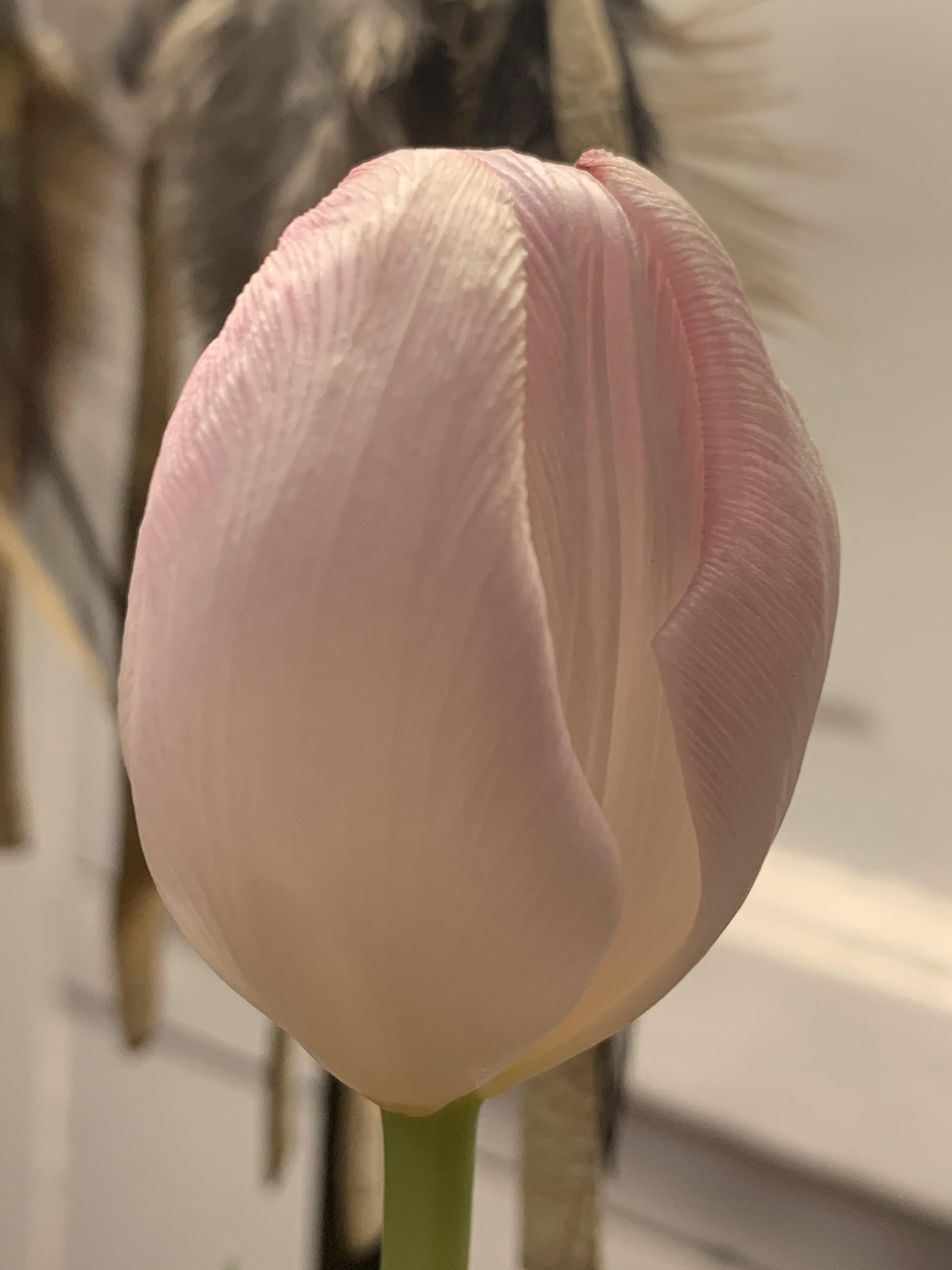
Words matter. They are alive when not forced to toe-the-line. Symbol and sound, makers of meaning, each intimately connected to the other. When I come back to this earth I will hopefully be a poet, attempting to capture in language that which is impossible to articulate. The beauty of a pink tulip. A flower selected by a mother for a rare visit from her daughter. Our daughter. Our daughter: a surprising and remarkable combination of words I never thought I’d utter.

Language unfolds and reaches deep into pools of meaning. Words blossom. And nothing is ever the same.

read Kerri’s blogpost about PINK TULIPS

like. share. support. comment. four words that inspire gratitude in our hearts.

buymeacoffee is exactly what you make of it. the meaning is yours to give.

Word Play [David’s blog on Not So Flawed Wednesday]

“Do you know what these are called?” she asked.

The homeowner, smiling that someone was appreciating his garden, replied, “I don’t know but they’ve been there since I was a kid.”

She whispered to me, “I know what they’re called but I can’t remember.” And then, as we continued down the road, she abruptly stopped, arms thrust high as if she’d just kicked the winning goal, “Snowdrops! They’re snowdrops!” The celebration of a thought retrieved from a long lost corner of the mind. “Snowdrops,” she smiled and strutted.

Beyond the strut-and-dance of word retrieval, there’s a great opportunity in this time of lost words. I adore the words we invent to replace a missing word. We stray far beyond the boundary of thing-a-ma-gig. Whos-e-what-see is child’s play compared to the sounds that come out of our mouths. They sometimes sound like remedial German: Schodenhammer. They sometimes sound like dinosaurs: Velocimapper. Shakespeare, the greatest of word inventors, reminds us that language is not a fixed thing. I think he’d be delighted by our spontaneous additions to the English language. “Make it rhyme!” he’d cheer!

And then, when a word goes missing and spontaneous-word-invention fails, there are the delicious descriptions. “Dough with things stuffed inside. You know! You cook them!” Ravioli? Pot Sticker? Gyoza? “That thing you fold and put in your pocket. It has money in it. Sometimes. And credit cards.” Oh, yes, even the most mundane word can hide for a while. The green thing with a big pit inside. Poor lost avocado.

Where do these words go? Vacation? I loved the homeowner’s response: I don’t know but they’ve been there since I was a kid.

read Kerri’s blog about SNOWDROPS

comment. like. share. support.

buymeacoffee is a word…well, three words smashed together to make a clever title for a donation site.

Fill The Space With Goodness [on Two Artists Tuesday]

When I was learning to be on a stage there was a phrase I particularly appreciated: fill the space. There was also a companion question that seemed to be more important: what are you bringing to the space?

The assumption beneath both the phrase and the question is that you have a profound impact on your world. Not in abstraction. You are an active participant in creating it. After all, the space is shared, co-created. What do you intend to bring to the shared space? Are you going to “take” energy from the shared space (it’s all about me) or are you going to “bring” energy to the shared space (we are in this together). I understand this choice to be the direction of intention. It’s the origin story behind the name of this blog. A performers job is to bring good energy and light to the shared space, to unify it. To grow the goodness.

I think that’s why Kerri and I are attracted to prayer flags. The mantras on the flags are blown by the wind to fill all the space of the world with good will and compassion. Fill the space with goodness to the benefit of all. A straightforward yet profound intention.

It seems like such a simple thing, doesn’t it? Intend to bring good energy to the space that is shared by all. And, to us, it seems like the number one imperative of our times. In this me-me-me era, rife with “taking” energy from the space, it’s crucial to help reverse the tide.

She was holding black and white bandanas and I saw the thought hit her. She turned and asked, “Do you think it’s a good idea to make our own prayer flags?”

“Absolutely.” I said. “Why not? This world could use all the good intention that we can muster.”

All the world’s a stage, after all.

read Kerri’s blogpost about PRAYER FLAGS

like it. share it. support it. comment on it. we appreciate it.

Name It [on Merely A Thought Monday]

The artist, Joe, had us write our names again and again until the lines lost their meaning, until we realized the lines were…lines. And shapes. Until we realized that our names were drawings. Unique and easy. His message? Everyone draws. And, more importantly though less obvious, the lines do not carry the meaning, the person infuses the line with meaning.

Visiting a pal in the hospital, I watched a heart monitor. More lines. Pattern. Waves. Visual indications of the drumbeat of the body. The drumbeat of the body propels the rhythm of the poet’s pen. Iambic pentameter. Short, loooong. Short, loooong. The poet’s lines reach through time and space, heart-meaning yearning to pulse through another person, to perhaps synchronize with their heart-wave pattern. Centuries may have passed between the inky scribbles from the poet’s pen to the person absorbing the meaning into their beating heart. Time travel. Ancient heart touches the living. “When to the sessions of sweet silent thought/ I summon up remembrance of things past…”

Watch a child learning to “write” their alphabet. Assigning meaning to shape. Crayon fist making lines. The refined adults see the shaky line as crude. Cute. Titanic imagination squeezes itself into alphabetic parameter. The little hand becomes a giver of meaning to shape and line. Expression. Learning to combine the limited shapes for greater and greater complexity. The conundrum: among the first lines we learn to scrawl are our names yet these few lines carry a question that can never be answered. Who am I?

The artist, Joe, had us dash off our names again and again until the lines seemed nothing more than a doodle. The meaning is not found in the lines; the lines and shapes merely point the way to the question.

read Kerri’s blogpost about THE CONTRAIL LINE

share or like or buyusacoffee.com. better than all, let us know you are out there.

Incant [on Not So Flawed Wednesday]

It reads like a love poem. Puschkinia blooms in the empty moment between the fading of the snowdrops and the blooming of Chionodoxa.”

Despite their desire to be understood otherwise, botanists are poets, too. Taste these sounds: siehei, sardensis, forbesii. Spoken together they form an incantation worthy of Macbeth’s witches. There are three witches in the play: Category, Sub-category, and Group. Chionodoxa, we are told, is commonly called “Glory Of the Snow”. The poet-botanist would have us know that, in the empty moment between the fading of snowdrops and the blooming of the Glory-Of-The-Snow, tiny Puschkinia reaches through the soil and fills the void with cobalt and white.

Love poems and incantations. Love poems are incantations. “And because love battles not only in its burning agricultures but also in the mouths of men and women,… Neruda. Ahhhh.

“Double, double toil and trouble; fire burn and cauldron bubble.” What will the future bring? Glory-Of-The-Snow, of course! Shakespeare would have nothing less.

All of this poetry came alive in our front yard this week. It was the empty moment, It was the space between the fading snowdrops and the blooming of Chiondoxa. Had we not looked up from our computers, had we feared the cold wind off the lake and stayed comfy and warm inside, we certainly would have missed it.

Love poems and incantations. Harbingers. Nature quietly whispers its temptation, “Puschkinia blooms.”

read Kerri’s blogpost about PUSHKINIA

See Down The Pike [on Flawed Wednesday]

“Age and stage,” 20 says, to explain the behavior of people. Age and stage.

I pulled up Shakespeare’s Seven Ages of Man soliloquy. Jaques from As You Like It. “All the world’s a stage…” We perform the role of ourselves in this drama of life. In a funny coincidence, I’m spending some time inside Pirandello’s play, Six Characters In Search of An Author. David is updating the script and preparing for a production. I’m fortunate enough to play witness to his journey. ‘All the world’s a stage’ meets ‘who will tell our story?’

In the final lap of his career, Tom was an assistant superintendent at a school district. He’d shake is head and say, “Parents forget that they were once children and expect their kids to do things that they themselves could not do as children.” Each age grows blind to the previous stage. We forget the great learning-power of making a mistake.

My favorite of Tiago Forte’s 10 Principles of a Second Brain is to make it easier for your future self. It’s a great idea and I wish the bevy of my past selves had been kind enough to consider me at this age and stage. When I turn and look at the rough wake of my passage I know that, with some better choices, I might have scribed a more direct path. Or not. My past selves caution me to fully appreciate the messes and the mistakes that they made. My life is better today because of the rampant foolishness of those former-me’s.

The Balinese believe that we come back every seventh generation. They are an ancestor returned. As such, they are less likely to foul their nest believing they will themselves be the future inhabitants of the nest. Looking down the long-road, they see themselves dealing with the world they currently create. And so cooperation, sustainability, and peace are much higher on their priority list than guns and every-man-for-himself. To care for another is to care for their future self. They find a society like ours, that allows anyone in the community to be homeless, to be broken. Diseased. Or simply adolescent.

I can’t help but think they are mature while we are mewling toddlers. Considering the impact of your actions seven generations into the future is surely a sign of maturity. Thinking of others, understanding betterment as a shared responsibility, is an adult perspective. Currently, we allow our children to be slaughtered and protect the gun that killed them. Surely there’s some growing-up to be done.

I wish I had a penny for every recent conversation I’ve heard that began with the phrase, “I don’t understand what’s going on in this nation.” 20’s voice pops into my head, “Age and stage,” he says in my mind. “Age and stage.” Let us hope that there’s some maturity coming down the pike, that we survive this stick-your-finger-in-the-socket stage.

Perhaps we will someday look back and appreciate the mess, the rampant foolishness, the mishmash we are making.

read Kerri’s blogpost about AGE AND STAGE

Name Your Wine [on Two Artists Tuesday]

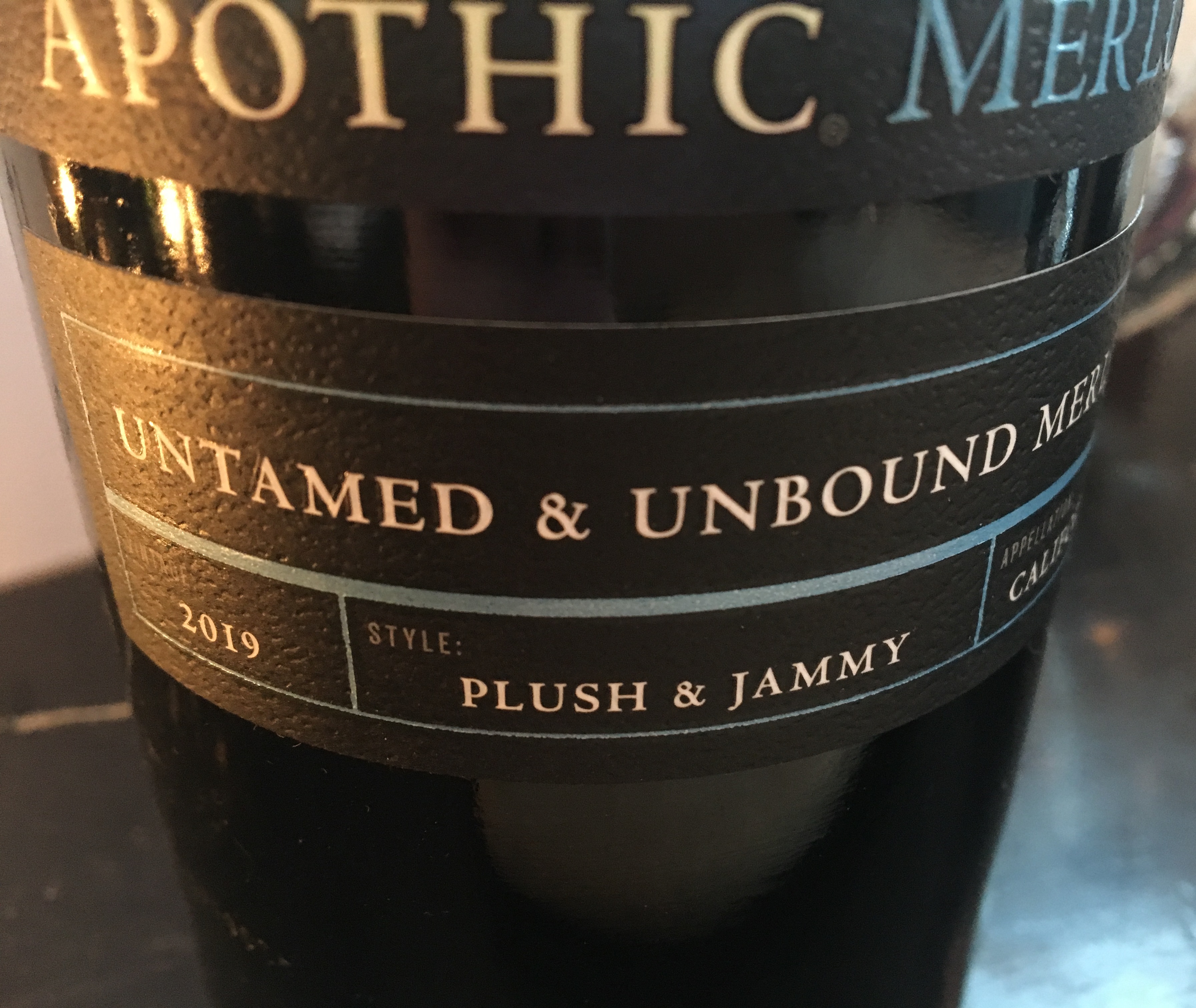
“Ooooh,” I said, reading the bottle, “I want to be untamed and unbound. Plush and jammy!” She rolled her eyes. I won’t tell you what she said. There might be children reading.

As wine bottles often do, it inspired an interval of time paying attention to the phrases I paste on the labels of my life. What if I described my days with wine-label terminology? Last week was definitely earthy and robust. Crusty with hearty notes of calamity.

In my work life, I’m hearing with alarming frequency the word taxonomy. We need to create a taxonomy. We are approaching a taxonomy. The study of naming. The science of definition. With what classification will we identify, and therefore label, our creation? If our product was wine, what would we say of it? Bold and expansive, yet subtle and refined? Are we talking about what it is, what it does, or defining it so it will sell? Those levers are never mutually exclusive. A written language is always an abstraction. Reaching yet never hitting its mark.

Aren’t we living in an age where the world is seeking a new-ish taxonomy? Spin your news channels and hear the same story-wine described in remarkably contradictory terms. What is fruity to one audience is classified as filthy to the other. Two labels, one wine. One team refusing to taste for themselves. We brand ourselves “divided.”

William Shakespeare either created or wrote for the first time in the English language over 1,700 words. I want him on my taxonomy team. I want him to lead my wine-life-labeling committee. Though, I imagine he would be amused to tears at our wild word-world of marketing, our reality-wielding-“news” channels, he wouldn’t be at all surprised that the power of a label pasted on an experience. “Call it what you will,” he might say, “It’s a sorry sight.” No matter. Words, words, words.

Sorry sight! A great name for a wine. A bold red blend for a brave new world. William gives it two thumbs up. Edgy and energetic, nutty and dippy with hints of crackers.

read Kerri’s blog post about WINE LABELS

Ask The Essential Question [on KS Friday]

in transition copy

Quinn told me that there are really only three questions: Who am I? Where am I going? What is mine to do? All other questions can be boiled down to one of these essences. All stories can be reduced to one of these questions. And, the real kicker? There is never a single answer to these three essential questions. Life is always moving so, the moment you think you have an answer-by-the-tail, you’ve moved to a different place. You’ve changed. You will change again. And again. The story evolves. The long body of a life is rich in transition. Life is transition.

Change the pronoun. Who are we? Where are we going? What is ours to do? These are the questions beating at the heart of the American experiment. Our rhetoric is out of alignment with our reality. It turns out that our hero tale has a matching anti-hero story. We know it but do not deal with it. The shining city on the hill was built on the backs of slaves and sustains itself on a rolling subjugation of the latest arrivals. We revel in inequality while proudly pronouncing that all are created equal.

As master Shakespeare reminds us, “…but at length truth will out.” Our truth is out. We are a festival of inequity. There is a yawning maw between the haves and the have-nots. It is by design and not by accident. It is not our problem as much as it is our pattern. And so, we  ask one of the essential questions: Who are we? And, in asking it, we must first look at how we define the pronoun ‘we.’ WE. The people. Who are WE? White male land owners? The one percent? Or, many diverse and rich origin stories come together in a promise of one nation, a nation of equal opportunity for all devoid of exploitation? It is the ideal. Is it the intention? Who do we want to be?

WE, as I understand it, is all inclusive. Multi-cultural as one. Both/And.

I take heart. Every caterpillar has a melt down phase en route to becoming a butterfly. The mush phase is necessary to fulfilling the mature promise, the expression of the ideal. In transition.


IN TRANSITION is on Kerri’s album RELEASED FROM THE HEART


read Kerri’s blog post about IN TRANSITION


? website box copy


in transition/released from the heart ©️ 1995 kerri sherwood

waiting and knowing ©️ 2015 david robinson