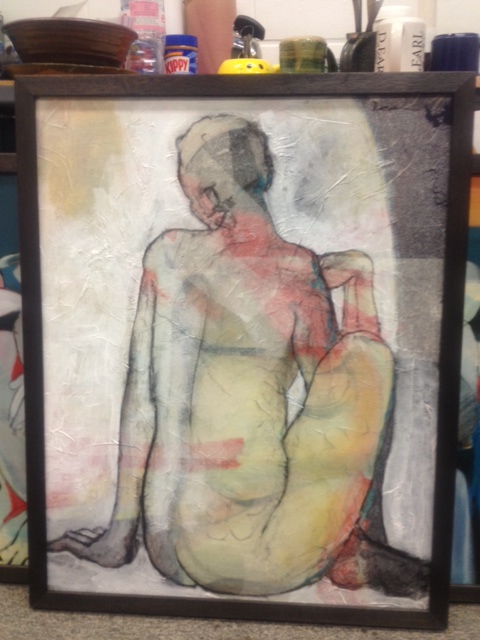
Change Your Mind

I used this quote by Friedrich Nietzche in The SEER:

“The snake which cannot cast its skin has to die. As well as the minds which are prevented from changing their opinions; they cease to be a mind.”

A few days ago I asked myself this question: What if I never painted another painting or wrote another word? What would happen? Who would I be?

title_pageThe first question, what would happen, is much less interesting to me than the second question: who would I be if I simply put down my brushes forever? When I was younger, I felt driven, as if I had to paint. I needed it. In asking the question I recognize that now I choose it. I don’t have to paint; I want to and consequently I am a much better artist. It’s a paradox: I am a better artist because I don’t need to be an artist. In other words, I don’t need to be, I am.

I’ve been revisiting The SEER. My initial team of wise-eyes unanimously voted the first draft to be “too much.” The book that I published is comprised of the first three chapters of the original draft. I deconstructed them and broke the steps into smaller bites. There were six more chapters outlined and, in my latest revisit, I recognize that I have a trilogy if I want it. So, book two is in process. I’m going to release the first draft in daily snippets as I write it. Everyone gets to be my wise-eyes this time around.

Here’s the launching pad section for book two from The SEER. It’s from the second cycle (story):

You can change your story. That is the sixth recognition. Doesn’t it sound simple? Say it this way: changing your story is the equivalent of changing who you know yourself to be. Changing your story often requires the loss of your illusion, a lot less armor and nothing left to lose. Who are you when you don’t know who you are or where you are going? This was the heart of Virgil’s question to me. Who are you distinct from your circumstance? Who are you when the mask comes off? More importantly, what are you capable of seeing when you are not looking through a [knight’s] visor? No one is immune to the stuff of life. Everyone lives a unique version of the story cycle. It too is a pattern, a natural process.

Go here to buy hard copies (and Kindle) of my latest book: The Seer: The Mind of the Entrepreneur, Artist, Visionary, Innovator, Seeker, Learner, Leader, Creator,…You.

Go here (to Leanpub) for all digital forms of The SEER
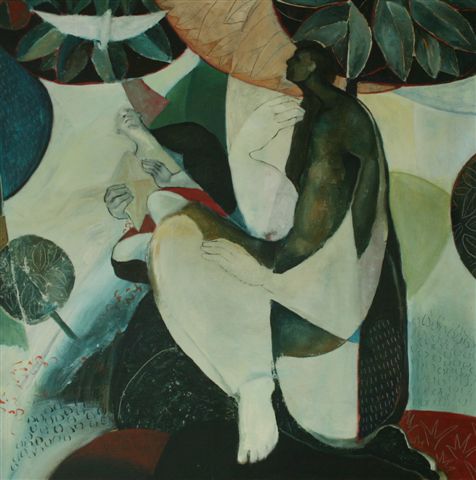
Canopy by David Robinson

Canopy by David Robinson

And, for fine art prints of my paintings, go here.


Tap Your Wellspring

photoThe winning phrase of the week is “Wellspring of jubilation.” It came as a wish, “May you always drink from the wellspring of jubilation.” What a great image!

A wellspring is no ordinary spring. It is a source, a beginning point. The phrase made me ask more than a few good questions. For instance, how would I live my life if I was sourced from a wellspring of jubilation? Or, a more useful question: what is my wellspring? Where do I draw inspiration?

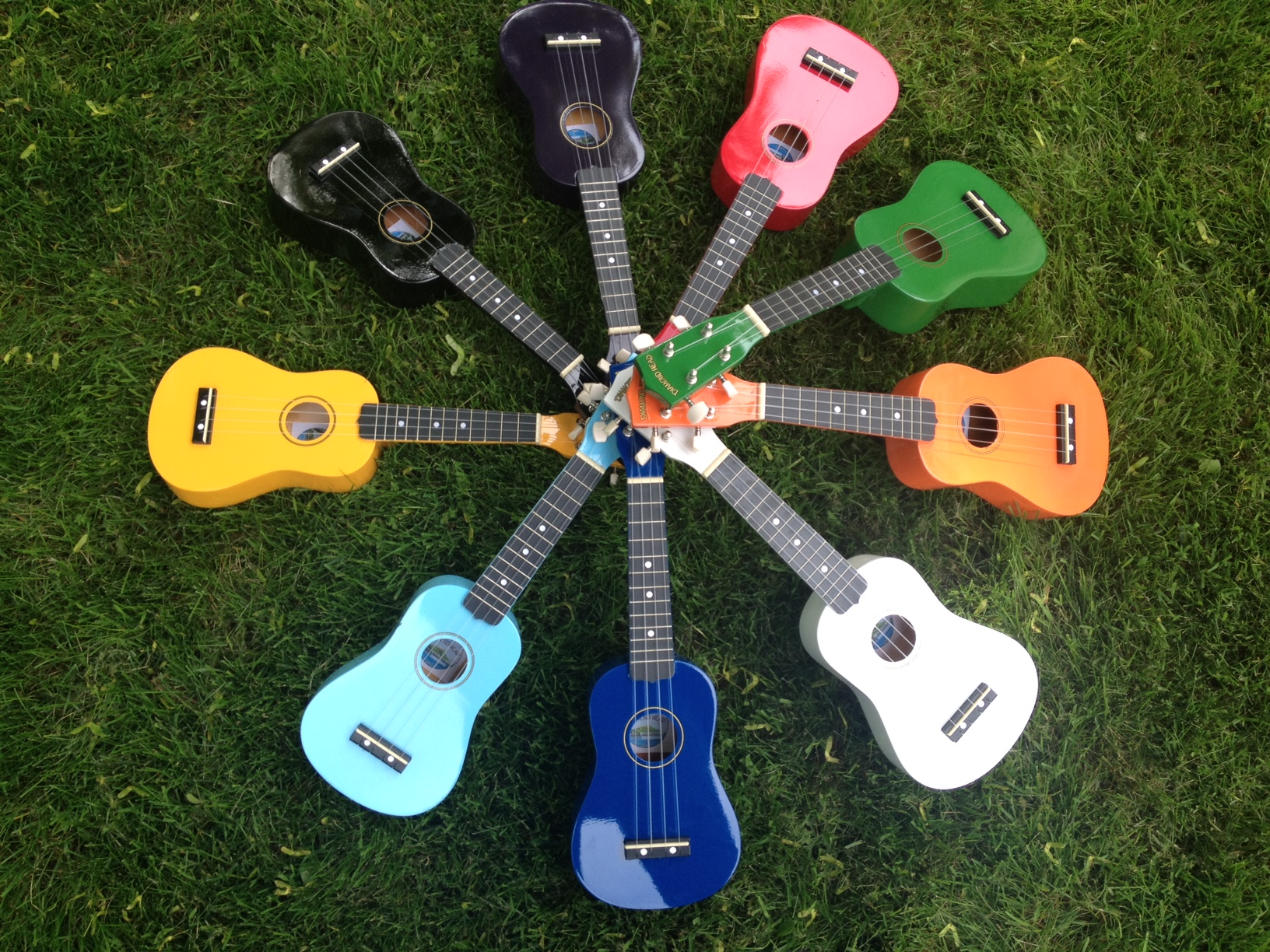
Last night on our back deck we held ukulele band practice. We are rank beginners but we played our notes with gusto whether they were right or wrong. We laughed. We sang so loud that a neighbor down the street got on her bike to seek the source of the music. What is the source of the music?

Jay brought a travel guitar to the ukulele practice to lend to Helen. Helen is petite and wants to play the guitar but is having a hard time finding one small enough for her hands. After the ukulele practice, Kerri held the guitar and played a few chords for Helen and the chords morphed into an old John Denver song. All the women began to sing. The sun was setting, the women were softly singing, and Helen’s face was beaming. She’d found a guitar that she could play. The moment was pure and stopped me in my tracks. It is a gorgeous moment when desire meets potential and possibility is born. This moment was a drink from the wellspring of jubilation. It filled me.

Jubilation is rejoicing. It is celebration and sometimes celebration is quiet. Sometimes rejoicing is a song whispered with friends as the light of day passes from pastel to gray. As I listened to their song, as I watched the faces of the singers, I decided that the wellspring of jubilation is everywhere. I am capable of being in my wellspring all the time. It is not location specific. The source of all things that inspire me is not a place: it is an orientation to my life. It is the simple act of paying attention; seeing the moment, participating in the ordinary that is extraordinary and knowing beyond doubt that the extraordinary is everywhere.

The extraordinary is happening all of the time. The question is not, “Where is it?” The question is, “Can you see it?”

title_pageGo here to buy hard copies (and Kindle) of my latest book: The Seer: The Mind of the Entrepreneur, Artist, Visionary, Innovator, Seeker, Learner, Leader, Creator,…You.

Go here to get fine art prints of my paintingsEmbrace

Speak Your Truth

old photo of an old watercolor. I did this painting sometime in the 1980's

old photo of an old watercolor. I did this painting sometime in the 1980’s

Words hook me and lately I’ve been paying attention to the difference in the phrases:

  • Speak the truth, and
  • Speak your truth

One word makes a world of difference! Literally, an entire world of differentiation is made in one little word. “The” truth or “your” truth?

Outside of every courthouse in America is Lady Truth wearing a blindfold and holding a tipping scale. The idea is that truth is objective and fact based. Truth, so the symbol implies, is blind to any personal consideration and justice is equal to all who enter the marble courthouse. It’s a concept that was firmly ensconced in the age of reason with roots running back to the Greeks: truth is something neutral, measurable, concrete, fixed, and external. In such a construct, inner truth is suspect because it is subjective and, at best, fluid.

I’ve sat on a few juries and was reinforced in the notion that the lawyer who told the better story always wins. Truth in the courthouse was as malleable as truth outside the courthouse. The point of the whole exercise, a prosecution and a defense telling opposing stories to a captive group of citizens, is an exercise in subjectivity. Whose version of truth do the captive citizens embrace? Truth, in the courthouse, is an agreement.

Also, there are a myriad of forces at play in the epicenter of the symbol and few are fixed, blind, or measurable. For instance, a public defender with a mountain of cases does not stand a good chance against a modestly prepared prosecution. The story is already tipped when the circumstance of the play is “someone stands accused….” If truth were fixed and measurable, millions of Americans would not be glued to their televisions each night watching Law & Order. Truth makes for good drama because it is a matter of perception. Truth is perception.

We live in the age of news as entertainment (I’d make an argument that we’ve digressed into the age of news as marketing ideology – but that is a post for another day). For instance, listen to the news as told by MSNBC and then flip your dial to FOX NEWS and you’ll see what I mean. Then, for grins, listen to the same series of stories as reported by the BBC. We regularly apply two words when debating our news-of-the-day that make me shake my head with despair: slant and spin. Truth is what we want to believe – or, more to the point, what others want us to believe.

And therein lies the hook. Because we hold dear the notion that truth is neutral, external, and objective, despite overwhelming evidence to the contrary, we are willing to abdicate personal truth. We blunt the inner guides for what we are told to think, feel, and believe. We become passive. If truth is fixed and external then the inner voice is all but meaningless. Self-doubt is the blossom. The symbol of blindfolded Truth is accurate but it is a different kind of blindness. Seeing is as much internal as external. Experiences are interpreted; there will always be conflicting points of view. That means there will be multiple truths. Always. Isn’t that the definition of subjective?

The only real measure that matters is inner truth. At the end of the day, in the dark of your private space, there is no one other than yourself to ask (and answer) the question, “Did I speak truth or did I spin things.” Words matter. Words create. Truth is the name we give things.

title_pageGo here to buy hard copies (and Kindle) of my latest book: The Seer: The Mind of the Entrepreneur, Artist, Visionary, Innovator, Seeker, Learner, Leader, Creator,…You.

Go here for all forms of digital copies

Go here for fine art prints of my paintings

Eve, by David Robinson

Eve, by David Robinson

Shift The Frame

another of my illustrations for Lucy & The Waterfox

another of my illustrations for Lucy & The Waterfox

I’ve been sitting in my fair share of waiting rooms, coffee houses, and gathering spaces lately and so I’ve been eavesdropping on conversations. Who knew there were so many problems in the world! Based on my public space sample you’d think that things were dire. The news of the day concurs with the casual coffee shop discourse. Problems abound. Wars rage, resources dwindle, political leaders squabble, corporations pillage, siblings rival, and people cut each other off in traffic! As my friend Albert used to say, “Good heavens! Just drop the bomb, already!” With so much devoted suffering, so much impending doom, ill intent and disaster anticipation, it’s a wonder we can sleep or step out of our houses in the morning.

Why is this the story we tell? We talk about life as if it was happening to us, as if we play no role in making things happen. I used to make it my practice to count the acts of kindness I saw each day and compare them with my count of acts of cruelty. There was never a day when the cruelty outpaced the kindness. For every example of road rage there were 20 instances of road generosity. In fact, in my count, the acts of kindness so far outstripped the cruelty that it became ridiculous to keep the count. We are far more kind than cruel, far more capable than inept, far more connected than detached, yet our narrative reverses the order. We tell a story of separation, of dog-eat-dog, of the inability to cooperate.

Many years ago the good folks at Disney conducted a study and found that when people had a bad experience at Disneyland they’d tell on average 18 other people. If they had a positive experience at the park they’d tell 3 people. That’s a significant imbalance. We seem reticent to share our joys and adept at sharing our fears.

It’s as if we are addicted to conflict and, well, we are. We delight in defining ourselves by our problems. It’s a pattern. More, it’s a story imperative. We are, after all, storytelling beings. We never cease storying ourselves through our inner monologues and outer dialogues. We justify. We defend. We interpret. In general, stories – lived and scripted – are driven by conflict; conflict moves the story forward. Stories are made meaningful by overcoming the forces of opposition. Our lives are made meaningful by the metaphoric mountains we climb. We mistakenly define a good life as the absence of conflict. Conflict is necessary; it is our relationship to conflict that keeps us hooked on the drama like so much sugar.

There is a significant threshold, a passage into health and power that happens in a life when the narrative changes from, “things happen to me,” to a story of, “I make things happen.” Conflict is present in both story frames. In the frame of, “things happen to me,” conflict is an oppositional wind. In the frame of, “I make things happen,” conflict is fuel, we no longer are at the mercy of the forces but in alignment with them. The metaphoric wind is at our back moving us forward.

When we make this story frame shift, we no longer need the drama; we no longer seek to fix things. We see a different set of options. Literally, we see a different set of possibilities. We create and live from a different pattern. We see choices instead of victimization. We see active participation, conflict as challenge, engagement, and opportunity.

The, “I make things happen story,” necessitates responsibility: wars can’t just happen, resources can’t just dwindle, political leaders just can’t squabble, corporations can’t just pillage. We would tell a story of “we,” and take the step into maturity that the story of, “things happen to me,” obscures.

Go here to get my latest book, The Seer: The Mind of the Entrepreneur, Artist, Visionary, title_pageSeeker, Learner, Leader, Creator…You

Or, go here for hard copies (Amazon)

Face The Sun

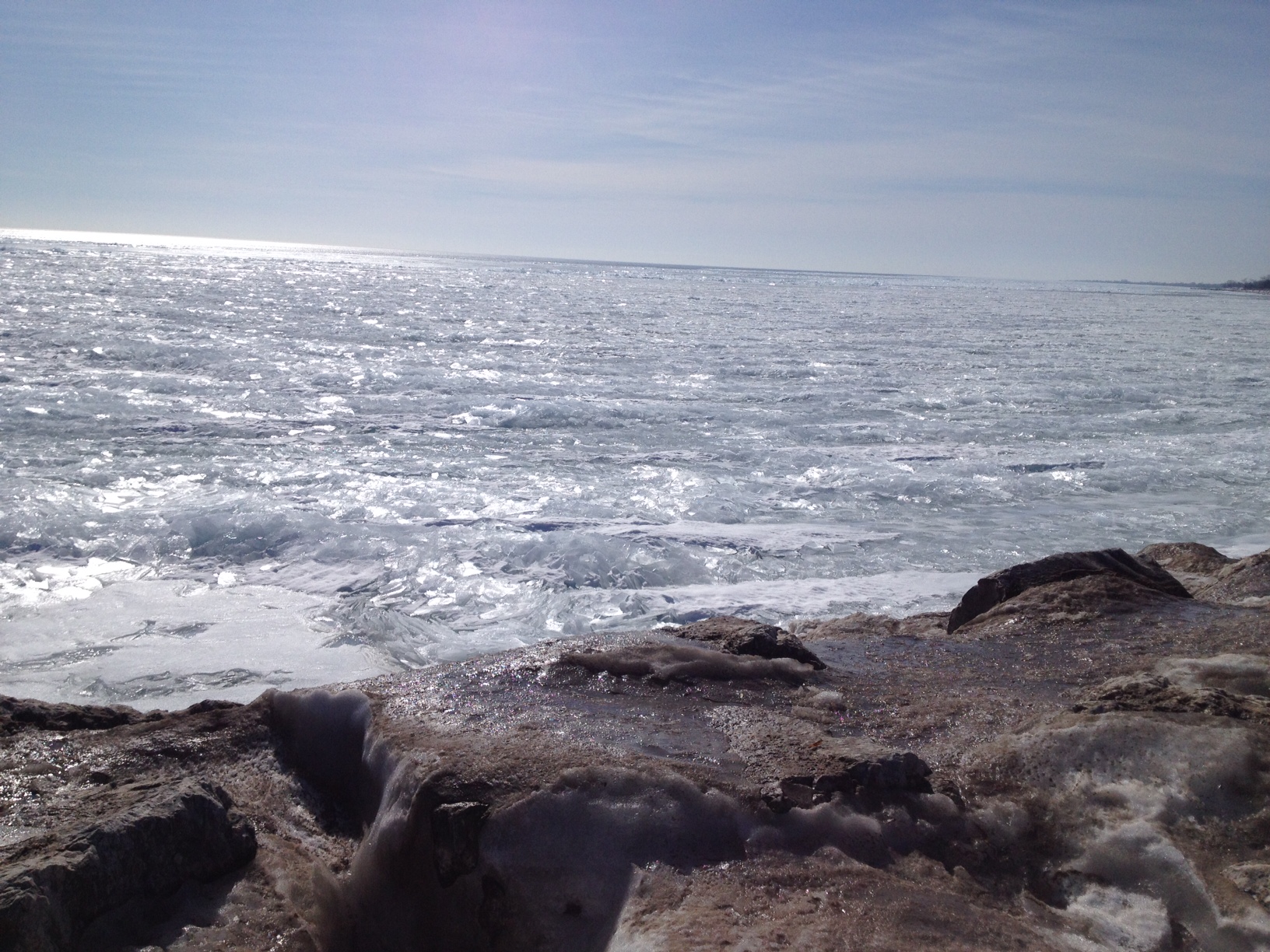
Lake Michigan frozen

Lake Michigan frozen

Standing on the sea wall, the sun on our faces, the frozen Lake Michigan looked like a vast field of broken glass, shards akimbo, glistening in the morning light. The shards popped and crackled, moaned and snapped; it was the first warm day in months. The birds frolicked. It was a small taste of spring, a gift before winter’s return tomorrow. I closed my eyes, faced the sun, and drank it in.

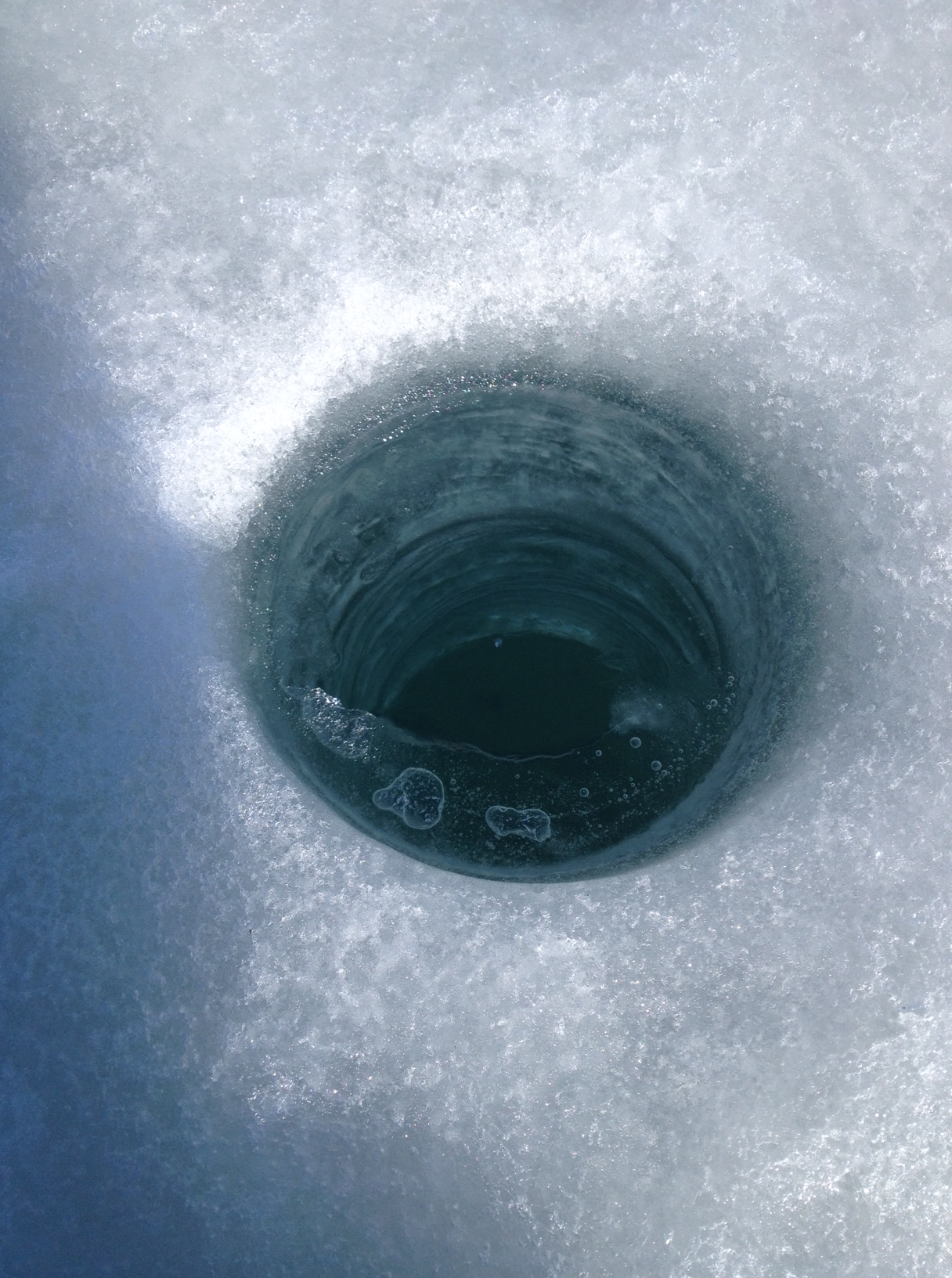
Kerri and I had just walked across the harbor. We watched the ice fishermen drill holes in the ice. The bit dropped more than two feet before breaking through. The fishermen assured us that the ice was very thick. “I’ve lived my whole life here and never seen the ice this deep,” the man said, sipping his coffee and looking at the lines he’d dropped in the water. We stepped out onto the ice, making a pact to rescue the other – and walked across the harbor.

The sea wall is on the far side of the harbor and usually requires a boat to reach. It is constructed of enormous boulders, some still encased in ice and looking like something the artist Christo might have created. On our water walk to the sea wall we snapped photographs, splashed in newly formed puddles, and left footprints in the snowy spots.  We laughed. We waltzed around an old fishing hole. We looked at each other and said over and over, “I can’t believe it!”

On the wall, listening to the ice chorus, my eyes closed and soaking up the sun, I photo-1remembered a conversation that I had years ago with Father Lauren when I was a student at The College of Santa Fe. We had great conversations because he knew I was not a believer in his faith. In many ways we saw the world from diametrically opposed points of view but rather than wrestle with winning the other to our perspective, we asked questions to try and understand. Father Lauren saw the earth as corrupt. I saw (and see) it as magnificent. We were talking about reincarnation and he’d just asked, “What kind of god would punish people by bringing them back to this place?” I responded with a phrase I’d recently heard in a lecture Joseph Campbell delivered about the gnostic gospels, “The kingdom of heaven is on earth and men just do not see it.”

Father Lauren closed his eyes and tried to spin his paradigm around. He asked, “So, we are already in heaven and simply need to open our eyes to the beauty of it all?”

“Yes,” I said. “That’s what I believe.”

He smiled, “I just can’t believe it.”

Standing on the sea wall, Kerri took my hand. The ice sang. She whispered, “I just can’t believe it.”  I wanted to reach back in time and tell Father Lauren, “Yes. That’s the thing! When you open your eyes and see heaven on earth, what you see is impossible to believe.” Heaven has nothing to do with belief and everything to do with what you choose to see.

“Me, too,” I whispered, the sun on my face. “It is unbelievable.”

Go here to get my latest book, The Seer: The Mind of the Entrepreneur, Artist, Visionary, title_pageSeeker, Learner, Leader, Creator…You.

Go here for hard copies (Amazon)

Eat Well

"Lovers," a work in progress by David Robinson

“Lovers,” a work in progress by David Robinson

[continued from LOOK BEYOND THE BOX]

I’m looping back to Craig’s questions concerning boxes and stages. I think the next question to wade into is about what I see from my stage and when did I know to create my stage.

This is the view from my stage. It may sound bleak at first but stay with me:

Yesterday I had the opportunity to travel into Chicago and work for a couple of hours with Skip’s class at the Illinois Institute of Technology. They are budding entrepreneurs. There’s lots of energy in the world today bubbling around this word, “entrepreneur.” Accelerators and incubators are popping up everywhere. We are now a society gorging on new technology; since we are modeled on the Rome of the Caesars we have little patience for digestion (it takes time) so we prefer to vomit what we just consumed to make room for the next course. We are living at the time of an idea feeding frenzy and mind blowing technological advances. Folks with resources but few ideas are hungry to link up with folks with ideas and no resources. Everyone is insatiably hungry. No amount of gorging will satisfy the hunger.

In our world of rabid consumption, nutrition isn’t necessarily a high priority. I mean that literally and metaphorically. For evidence, look at what the networks call “news.” Long ago we realized that entertainment is more profitable than reporting so reporting is now entertainment. It matters little if there is substance to the story so long as people consume it. More evidence: one of my favorite rants of the past decade came from Dane, a neighbor, who was sitting on his stoop eating a bag of potato chips. He called me over to look at the ingredients listed on the package. High on the list, in fact the second ingredient listed, was sugar. Dane screamed, “There’s more sugar than salt in my chips!” He fumed, “I’ve been reading the ingredient lists on everything and there’s sugar in everything. It’s more important to get us hooked than to feed us anything of substance!” Of course, the punch line to the story is that he ranted with his mouth full of chips. Another bit of evidence: I stopped counting the times I’ve heard a politician say, “We have to weigh our interests against our values.” You can find a variation of this statement in the news of the day everyday. You can find an example of it in your life each day, too. How do you weigh your interests against your values?

This consumption/nutrition question is the epicenter of confusion for lots of people. It is the reason many boxes and stages are constructed.

Most people that I work with are seeking greater meaning. They want a richer experience of life. They want to fulfill their potential. In the midst of their consumption of time, they feel consumed. They have little time to breathe. They have little capacity to develop deep, meaningful relationships. They are finding that their stuff doesn’t fill the void. They are finding that their achievements are hollow unless they serve the real needs of others. They always find that what they seek is something that they’ve had all along: relationships.

There is no magic to sustenance. Slow down and enjoy your meal: literally and metaphorically. Slow down and make the meal: literally and metaphorically. Slow down and make the meal from food that hasn’t been processed: literally and metaphorically. Care for the soil and you will grow healthy food: literally and metaphorically. This requires slowing down. All of these are about the relationship you have with your world. All rich relationships require lingering and the riches are always in the relationship. Always.

Substance is always about a relationship. Relationship can’t be consumed; it must be entered and/or engaged. Tend the relationships, especially the relationship you have with yourself. In this way, the box or stage you construct will be built from self love and self love is the wellspring of love for others.

I see riches in the relationships all around me and a species (homo sapiens) trying to remember what it means to eat from the tree of life.

[to be continued]

Go here to get my latest book, The Seer: The Mind of the Entrepreneur, Artist, Visionary, title_pageSeeker, Learner, Leader, Creator…You.

Go here to get a hard copy (it’s Amazon)

Look Beyond The Box

one of my paintings (untitled) from the Yoga series

one of my paintings (untitled) from the Yoga series

[continued from SEE THE BOX]

Craig’s question is bigger than a single post can accommodate. He’s both reflecting and asking several questions about the boxes people construct around themselves, about building personal “stages” and what becomes visible to us when we open ourselves to life without editor or inhibition. He’s asking deep river questions about the assumptions we make when we look at others through the lens of our own experience. He asked about what I see from my stage and when did I know to create my stage. And, here’s the kicker question, “When was the last time you stepped up and saw something you didn’t know was there?”

I want to start with the last question first because I believe it colors all of the other questions. At this point in my life, there isn’t a day that passes that I don’t see something surprising or new. I know that sounds like a superficial dodge until you consider that it wasn’t always the case. Like everyone else, I was schooled in a long series of mistaken notions: 1) that people need to know where they are going before they go there, 2) people need to know what they are doing before they do it, 3) knowing is something that happens in the head, and 4) that truth is singular and knowable; believers in right/wrong paradigms are especially fond of this point.

It took a few years (okay, decades) to realize that “knowing” is a process and not an arrival platform and, therefore, no body knows. People build boxes around themselves because they think they must know what is unknowable. People build boxes around themselves because they think they must look a certain way or think what others want them to think. People build boxes around themselves in an attempt to control what they can never control. No one really knows where they are going (well, everyone knows where they are going but dying is an existential question – a topic for another post). No one knows what tomorrow will bring. As Marshall McLuhan wrote, people step into the future with their eyes in the rearview mirror. We make sense of today through yesterday’s eyes so we can only “know” what happened, not what will happen. The day before September 11, 2001 people walked into airports to greet their friends and relatives at the gate. And then, the very next day, like millions of people, I sat in front of a television and watched a plane fly into the World Trade Center. That day I understood that what I thought I knew was basically useless.

Each of us has, at one time or another, had a personal September 11th. People learn. They grow. They have experiences and then make meaning of their experiences. People change. Life is a moving target. At one point in my life I started my own school within a school. It was experiential and filled with filmmaking and theatre and performance art. At the beginning of that era of my life I thought I would run that school until I the day I died. Three years later, I was done with my exploration in education and I surrendered my cushy tenured position and ran for the air of uncertainty. People story themselves according to inner imperatives through lenses of past experiences. The idea that we are primarily rational and reasonable is…not rational or reasonable.

At some point, when you cease thinking you know stuff, your eyes open. You see beyond what you think. Everything is surprising beyond the dull-wit of thinking. Thinking (a language-based activity) will always be an abstraction. Put a word on something and you delude yourself into thinking that you “know” what it is. This is especially heinous when applied to other people. People build boxes around themselves because of the words placed on them or the words they place on themselves.

Mostly, people build stages for the exact same reason. Saying, “I’m not going to be influenced by others; I’m going to act independent of others” is also a delusion constructed from notions of “knowing” or trying to determine how others will see you. Most stages are constructed from the desire to control. Sometimes the biggest box looks like a stage.

When you no longer need to know anything, you see surprising things everywhere you look.

[to be continued]

Go here to get my latest book, The Seer: The Mind of the Entrepreneur, Artist, Visionary, title_pageSeeker, Learner, Leader, Creator…You.

Go here for hard copies (it’s Amazon, don’t be afraid;-)


Stalk The Story

title_pageLast year I wrote a book and only recently got around to publishing it. One of the many benefits of waiting several months to publish is that I forgot what I wrote so, in preparing to publish, I got to read my book as if someone else wrote it. I got to discover my own book!

Now that the book is out in the world I’m receiving lots of requests to talk about it or coach to it. The requests are driving me to read it again and again – only through a different set of eyes each time. The question I’m asking myself is this: What is teachable beyond the obvious? I end each chapter with exercises and ideas but the real teachable moments happen within the story (just like life!). Here’s a “for instance” tidbit from the book:

When a story stalks you through your lifetime you inevitably learn some things about stories; you unwittingly stalk them, too. One of the first things I learned was that the word “beginning” is arbitrary. An end is always a beginning. A beginning is always an end. What we call a beginning or the middle or an end is really a simple matter of our point of view. It depends on what we see.

We rarely recognize the teachable moments in our lives. They seem so distant or have become so wrapped in justification that we don’t recognize them as opportunities for learning. A teachable moment is often embedded in the story that stalks you. In the book I weave the story of Parcival through the main narrative because Parcival gives his voice away. The main character of my book gives his voice away. He invests in the idea of what he should be and, so, loses sight of who he really is. He betrays himself. I’ve yet to meet a person who hasn’t given their voice away or lived from an image (a “should-do”) instead of honoring their “I-want-to-do.”  A moment of self-betrayal is a story that will stalk you all of your life. It will follow you until you reclaim your voice. And, the capacity to reclaim voice comes from a lifetime spent stalking the moment of self-betrayal. It’s a life story loop.

What are the stories that stalk you? The answer to this might not seem immediately apparent but if you take a moment and reflect you’ll likely come up with a moment (or several) that has shaped or continues to shape your life.

A moment of betrayal and a moment of reclamation might make a tight little beginning-middle-end story or might represent two beginnings or two ends, depending on how you decide to see it. Wounds are often opportunities for growth. Triumphs are often the beginning of a new chapter. We grow. We learn. We story and re-story ourselves. We give pieces away and reclaim them later. What’s important is that we learn to see our dance, capture the moment, and grow.

Go here to get my latest book, The Seer: The Mind of the Entrepreneur, Artist, Visionary, title_pageSeeker, Learner, Leader, Creator…You.

Go here to get hard copies


Take The Time

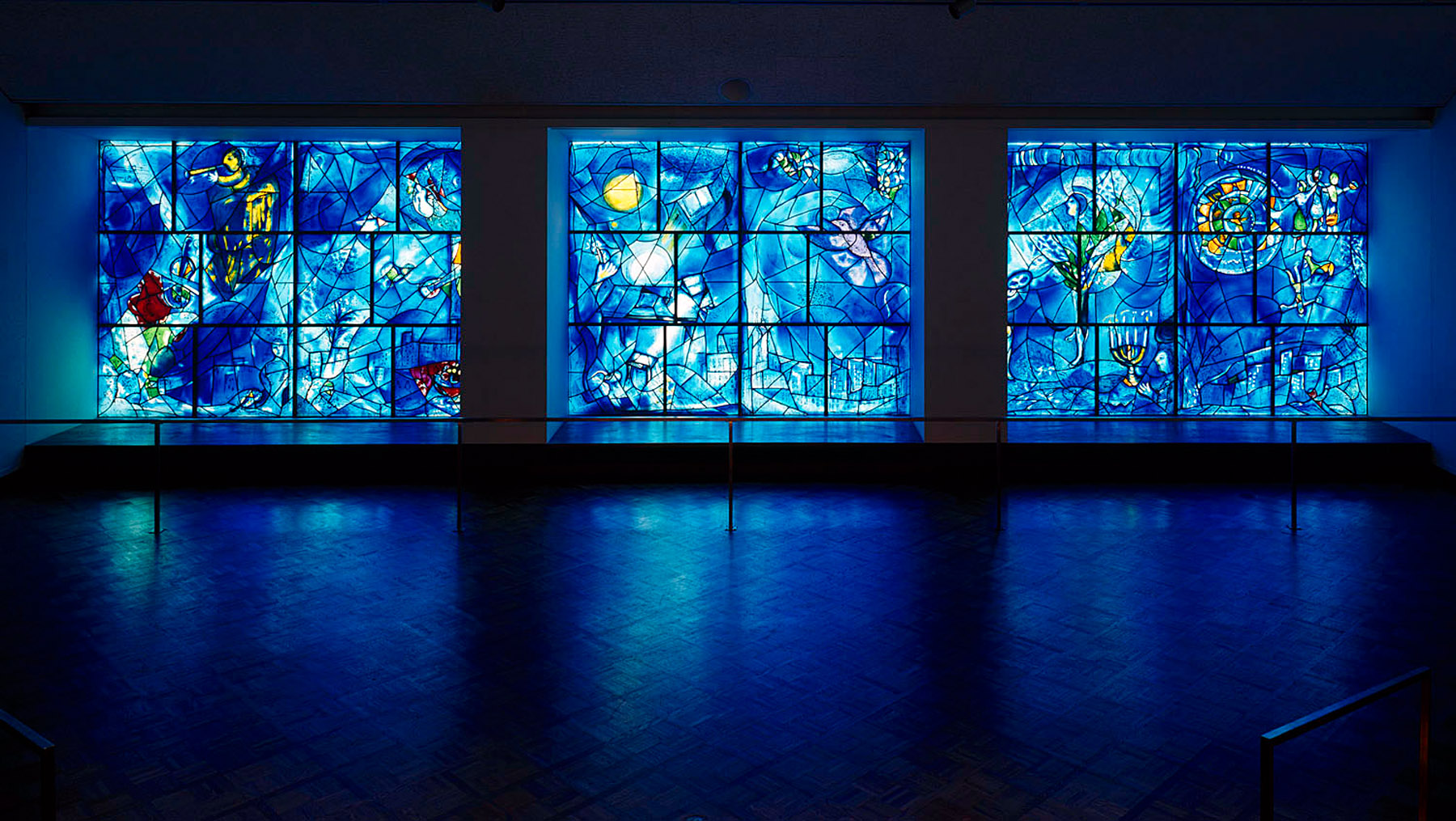
Marc Chagall  'America Windows'

Marc Chagall ‘America Windows’

I finally saw Marc Chagall’s ‘America Window.’ It’s at the Art Institute of Chicago and has long been on my must-experience list. It’s a long list! Unlike most bucket lists, my list cannot be contained in a bucket and I have no illusion that I will experience everything on the list before I die. It’s not possible to experience everything on my list in a single lifetime. I keep my list to remind myself that my life is both finite and that this life holds more miracles than any single life-bucket can contain. Finite lifespan nests within the infinite awe.

The Window provided me with an extraordinary perspective flip. When first approaching it I thought, “How spare!” It was breathtaking in color but seemed narratively sparse, like a Mark Rothko instead of a Marc Chagall. And then I stepped closer and the story of the Window began to emerge. An entire world opened for me. The longer I looked the more I saw. The more I saw the more I wanted to look. It was as if I was at first hypnotized and then drawn into the world of the Window. When I finally decided to leave, I walked several paces away and turned back for one more look. The world that had at first seemed spare was now too full to comprehend. I was seeing beyond my thinking.

What a great metaphor for the process of stepping into presence! It’s a process of moving from the conceptual to an experience. Our thinking, our relationship with language, requires us to generalize and a generality is always an abstraction. It is made up. For instance, right now, looking out my window, I see many “trees” and, in truth, I’m not seeing them at all. I’m seeing the abstract concept “tree” that I attach to many, many unique forms. I’m seeing what I expect to see. If I take the time to go outside and touch, smell and feel them, I see that each “tree” is vastly different than all the others. No two forms are ever the same. They are vastly different than my expectation. It is not until we take the time to move beyond our words that we regain our capacity to see.

Chagall, like all great artists, knew this. He knew that people need help seeing and that seeing is vastly different than looking. Vital life, dare I say the rich meaning of life, is available when we learn to see beyond our abstractions. Vital life (the infinite) dances in front of us all of the time. It is the role of the artist to help us move beyond our expectation and engage with the dance. The Window reminded me that sometimes we need only take the time to open our eyes and see.

Go here to get my latest book, The Seer: The Mind of the Entrepreneur, Artist, Visionary, title_pageSeeker, Learner, Leader, Creator…You.

For hard copies, go here

Exit The Grey

Pieta with Paparazzi_David RobinsonThe universe delivered a hammer-on-the-head-message to me this past year. It showed up in the books I read, the films I saw, and the conversations I had. It hammered me for months before I decided to pay attention. The message is simple: get out of the debate.

The debate ignites inside whenever there is a grey zone: the places where we ignore a decision or abdicate a responsibility. It’s the conversation inside when we’ve not made a choice and/or are waiting for circumstance to decide for us. The debate happens where we have yet to draw a boundary when we need to draw a boundary. It splits the inner monologue into two voices. “Stop. Go. No, stop. Go. Ahhhhhhh!!!”

Getting out of the debate means to be clear. It means to choose to be clear. Make a choice. Walk the path with eyes wide open. If you don’t like the current path of choice you can turn around or cut across the field. You can always choose to stomp through the tall grasses and make your own path or fake a crop circle. And, there is always available the choice to stand still and do nothing. Standing still never requires justification so no debate is necessary. Choose to stand still and see the stars. Feel your heart beating. Smell the hint of fireplace smoke in the air. Listen to your beating heart for a clue about your next choice. The choice to stand still will always lead to a yearning. It will inevitably lead to a step.

I’ve learned that clarity does not mean “being right.” In fact, “being right” is usually a sign of the absence of clarity. The need to “be right” is a blossom of fear. Inner clarity means to walk with your head up, eyes and heart open. It means to embrace the moment and the mess. It means to be available to learning.

You never lose time when you are clear; you gain perspective. You gain experiences. You embrace your moment. You no longer believe in illusions like “mistakes” or “failure.” You walk strong. You practice grace. You see.

Go here to get my latest book, The Seer: The Mind of the Entrepreneur, Artist, Visionary, Seeker, Learner, Leader, Creator…You.title_page