Tacit Teachers [David’s blog on Not So Thawed Wednesday]

“Rilke recommended that when life became turbulent and troublesome, it was wise to stay close to one simple thing in nature.” ~ John O’Donohue, To Bless the Space Between Us: A Book of Blessings

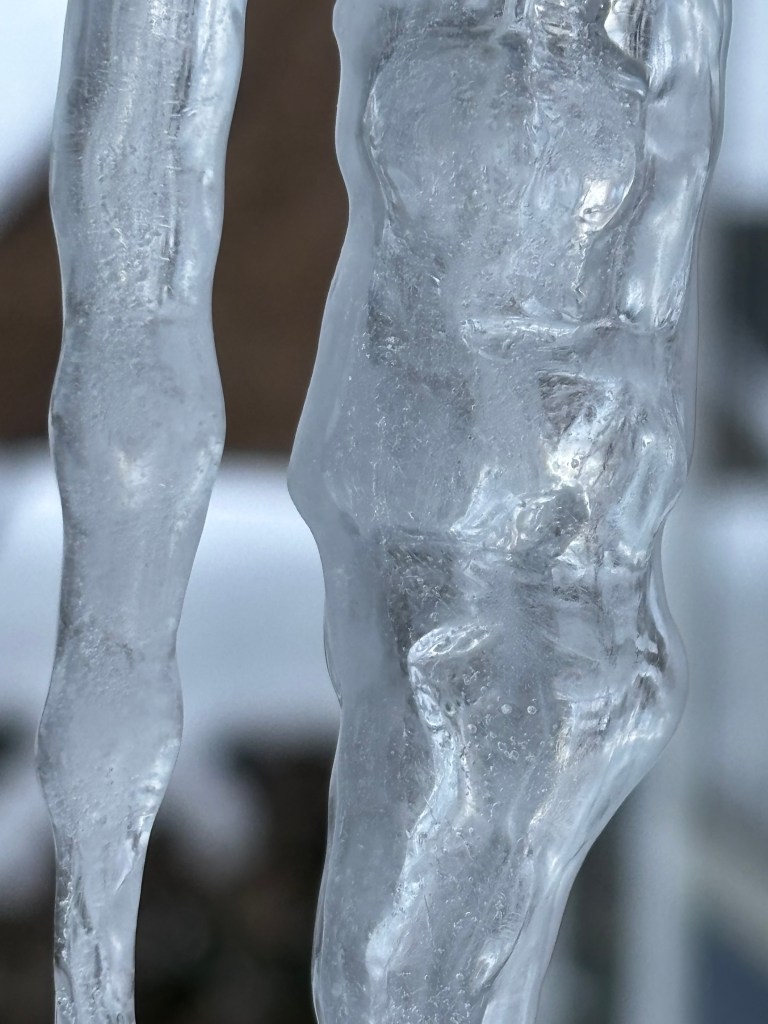
For my one simple thing this winter, in these turbulent and troublesome times, I choose icicles. Or, perhaps it is more accurate to say that icicles have chosen me. We are spending an inordinate amount of time together.

When one is as up-close to icicles as I have been in these past weeks, it is impossible not to notice their unique self-expression; each has an individual personality, a beauty all their own. They are sculptural wonders. And yet, follow them back in drip-time and they originate from a single formless origin.

With hot water or Dan’s heat gun I attempt to alter their form and they laugh. I call myself an artist but am no match for their sculptor. That is why it is wise to stay close to them. They are tacit teachers. They put me and these troubled times into perspective.

They are a temporary map of the path of least resistance. And they are gloriously impermanent. Even in seeming stillness, they are moving, changing. Worthy reminders and ample reasons to keep them close. I am glad that they chose me for remedial instruction.

read Kerri’s blogpost about ICICLES
likesharesupportcommentthankyou

Find Your Right Place [David’s blog on Two Artists Tuesday]

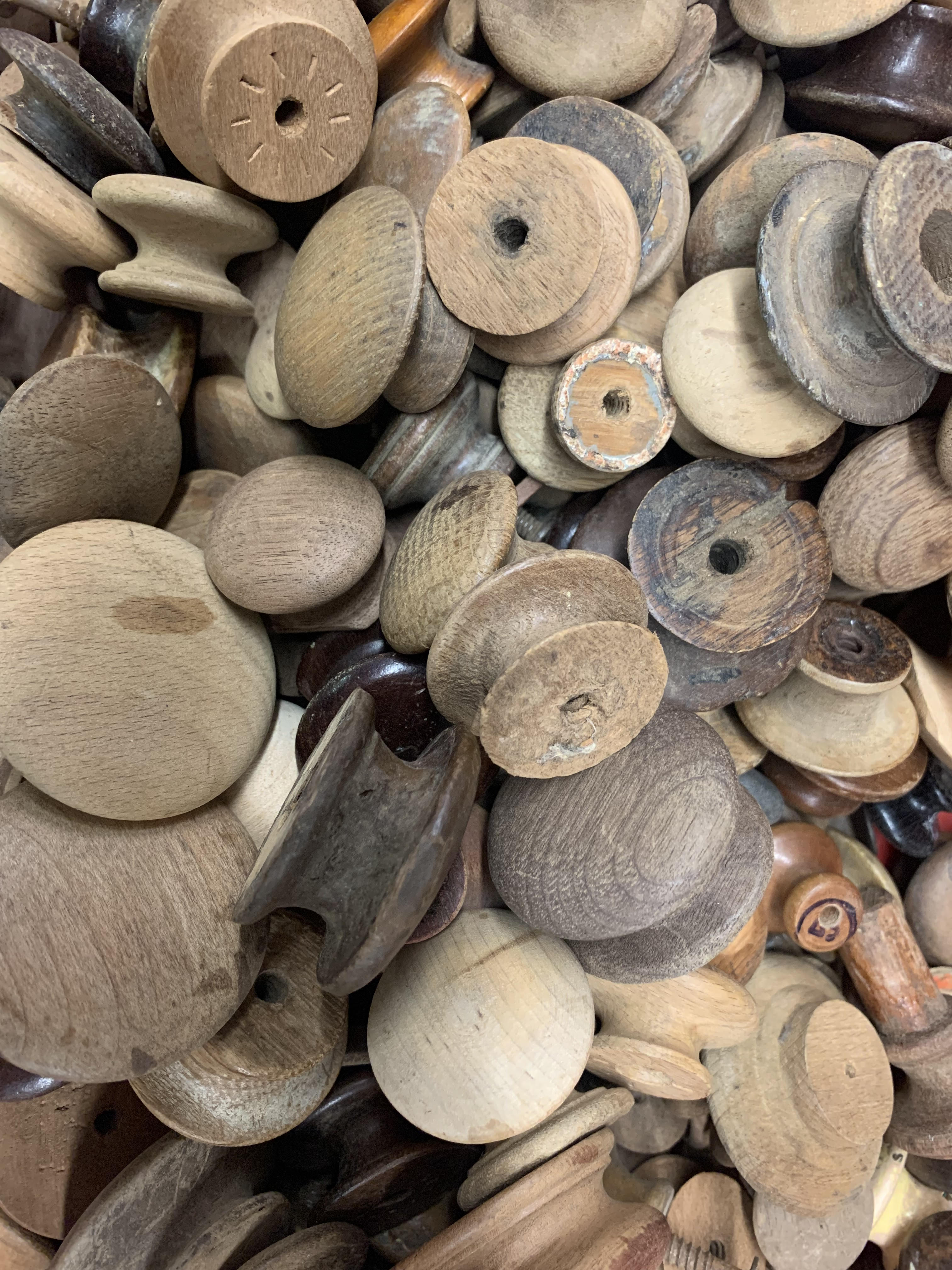
A box of drawer pulls is a box of stories lost to time. Many are worn from long use, polished by human hands. Some have never been used, rarely touched, except by those of us that casually sift through the box.

It’s easy to personify a drawer pull and turn it into a story of yearning. A story of yearning for purpose. A story of being chosen. A story of finding a home.

As I lift a tiny knob from the box I ask, “And what about you?” I am tempted to buy the little knob for no other reason than to get it out of the box. To give it a home. I have already projected a personality onto this tiny pull and laugh heartily at myself.

The shopkeeper eyes me hopefully. It is unusual for the box of knobs to elicit laughter. She’s giving change to another customer.

I rub the tiny knob like a worry-stone and place it back in the box. “Have hope,” I tell the tiny knob. It is worn smooth from a long life of good use. “You’ll find your right place, your next life, someday soon.” I can feel it.

Were I a sculptor, an artist that worked in three dimensions like Louise Nevelson, the whole box would be coming home with me. I know the right artist will find this box and when they do, this little drawer pull, rather than sit forgotten on my shelf, will be delighted to transform, serving a less-functional but more heart-inspired kind of beauty, sublime as a work of art.

read Kerri’s blogpost about KNOBS

like. share. comment. support. subscribe…thank you.

Stroll With Alexander [David’s blog on DR Thursday]

20 knew we needed a get-away. He suggested a stroll through Milwaukee’s Third Ward. Knowing it was our favorite, he offered to treat us to a bowl of gumbo and a glass of wine at The Public Market. It was a successful temptation. We chose a beautiful day and drove into the city.

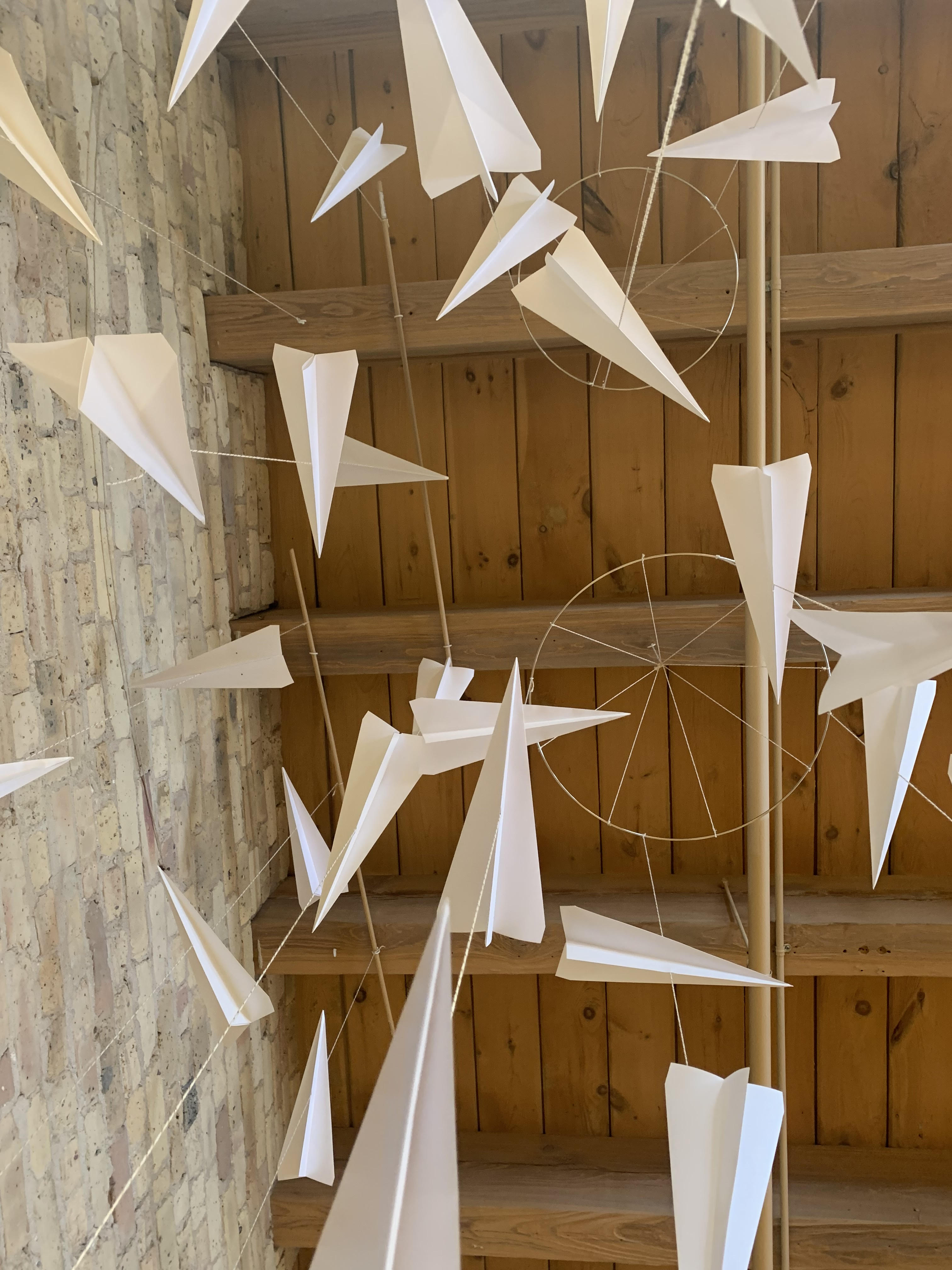
Among the many gifts that day as we strolled in and out of shops was the very present spirit of Alexander Calder. Almost every shop we entered featured a mobile or some variation of sculpture suspended from the ceiling. Paper planes, vibrant lemons in tidy lines like a Sunny-Roman-legion on parade, colorful shapes and orbs delicately balanced and dancing in the air, casting shadows. All paying homage to the art work of Calder. My bet is that few of the shopkeepers knew the origin, the ancestry of their twirling displays.

Calder’s mobiles were radical when he made them. He changed our understanding of sculpture and opened a new world of possibilities. Nearly 50 years after his death, his innovation is commonplace. Incorporation into the norm is the hallmark of profound innovation. Computers are ubiquitous but when they first hit the scene they were revolutionary. Electric light, the telephone, automobiles, televisions, cameras, elevators, air conditioning…They change us. They change our expectation.

So, too, the work of artists. The Impressionists shocked and appalled their contemporaries when they initially showed their paintings. They did not know that they were Impressionists. They were reacting to the latest innovation-of-their-day known as the camera – a device that could easily record reality, important events, make portraits of royals… the job of painters – so they either had to explore new avenues of painting or become irrelevant. To our eyes, 150 years later, their work is anything but progressive or shocking. It is everywhere.

Artist not only change what we see, they change how we see. They challenge us to see what we do not yet see.

A-I is currently stirring our dust and is already being incorporated into the daily grind. The pace of change compresses the distance between the moment of profundity and incorporation into the everyday. The realities of the pace-of-change are, like the camera, changing the nature of what it means to make art.

It’s good to remind ourselves that it hasn’t always been this way. What’s twirling over my head is clever and is the ripple of a revolution. It’s why I loved my stroll with Alexander Calder through the Third Ward. 20 didn’t know it, but he gave me so much more than a getaway, a bowl of gumbo and a glass of wine.

a page from an old sketchbook

visit my gallery site

read Kerri’s blog about MOBILES

support. like. share. subscribe. comment…thank you.

One And The Same [David’s blog on Two Artists Tuesday]

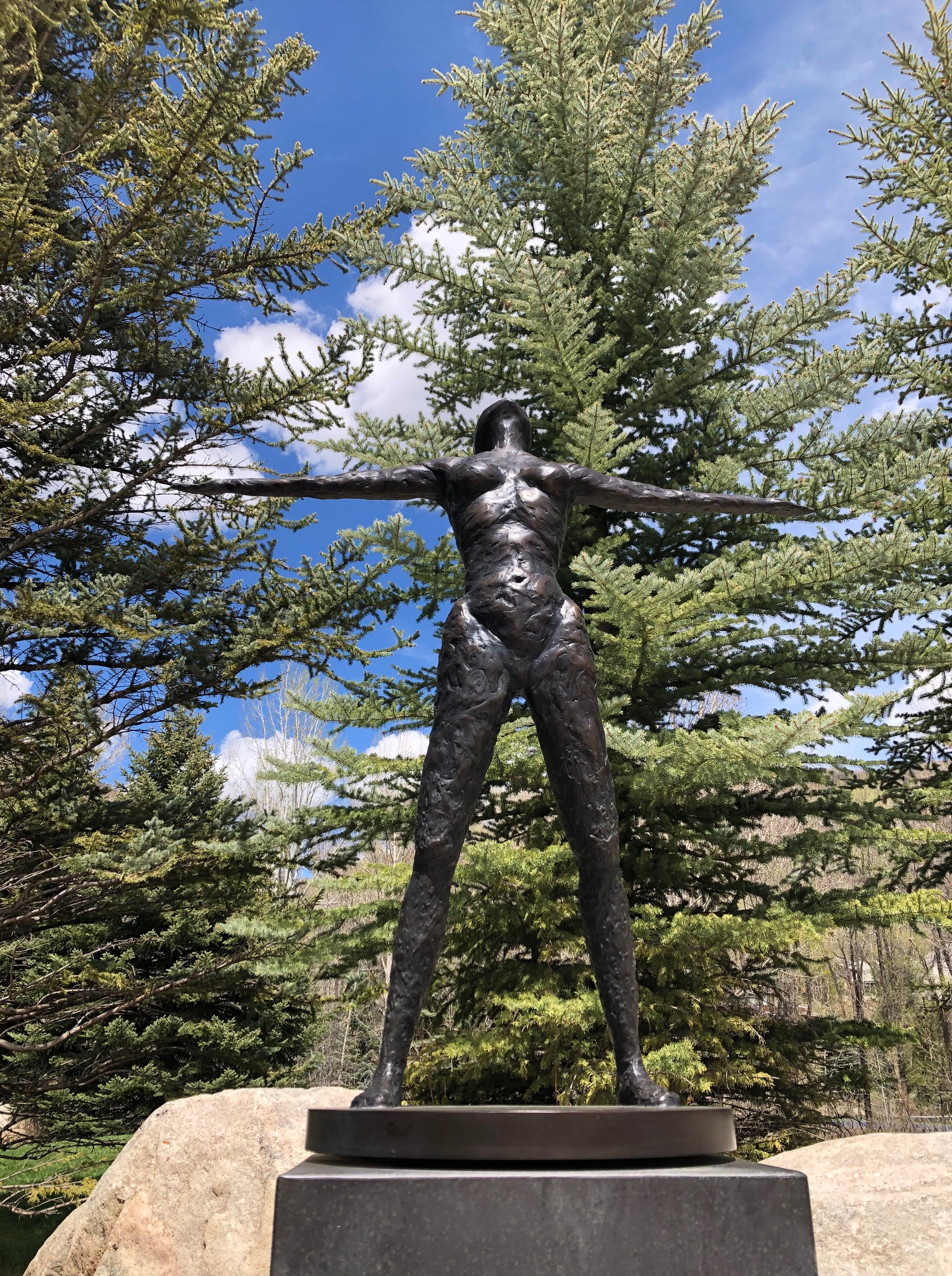
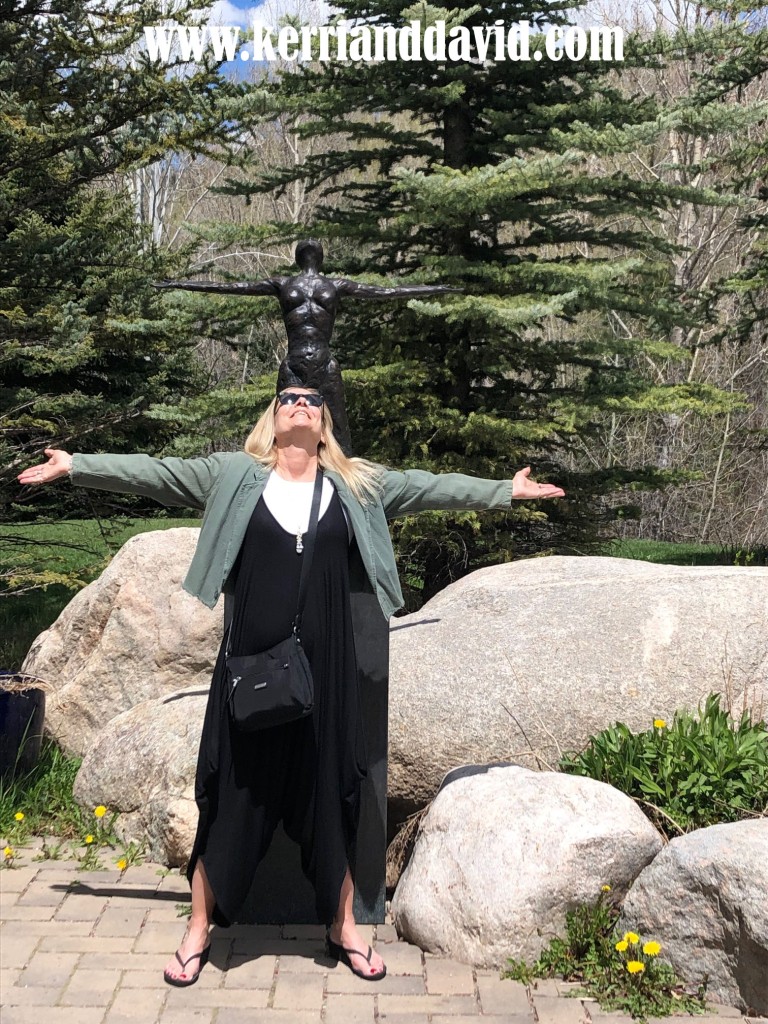
[Embrace of Life by Mimi Webster in the John Denver Sanctuary]

She shared a video posted by a friend: elephants drinking from a watering hole. The opportunity of a lifetime to see it. Yet, it is something that happens everyday if you live in that part of the world. The ordinary and the miraculous, one-and-the-same.

He wrote that he was helping his granddaughter move from college for summer break. His love was palpable. The task was nothing more or less than an opportunity for shared time. Time shared, nothing better.

We took a walk along the lake, my dear-friend, long lost and newly found. We were catching-up on missed chapters and yet talked as if we were picking up a conversation that we started yesterday, as if no time passed between our last meeting and today. In the telling we consciously wove together the rich tapestry of our friendship-story, the necessary sharing of triumphs and tragedies. All important colors on the palette.

“When was the last time we were here?” she asked as we crossed the bridge into the sanctuary. More than a few years. “So much has happened,” she whispered. So much. We are different than the couple who held hands and crossed this bridge in the past. We no longer swim against the current. The wisdom of exhaustion. She saw the sculpture, Embrace of Life, turned and threw open her arms, mimicking the pose and said, “Yes!”

read Kerri’s blogpost about EMBRACE OF LIFE

share. comment. like. subscribe. support. many thanks!

Secret Sauce [David’s blog on Not So Flawed Wednesday]

The Des Plaines river spilled out onto the flood plain. The trees, not at all surprised, rose tall through the murky water in this yearly ritual of spring. “Has it ever been so high?” she asked. I shrugged.

We walked the path. It mostly rose above the waterline. With water lapping on both sides, the trail sometimes resembled a bridge. A crystal clear day teased forward the colors of the birch and grasses. The world was vibrant and strange. We had the sense that we were walking in another dimension. Second attention; alternate reality.

The beaver tree made more dynamic by its reflection in the water stopped us in our tracks. Were I judging sculpture in nature’s competition, this would be a clear winner. The massive tree, already tipped and chipped at a precarious angle, compounded by the image mirrored in the river overflow gave the illusion of a sphere without roots and heightened the tension of the unstable tree. Weebles wobble and, despite their reputation, sometimes they fall down.

Creative tension. The secret sauce of all good art. Between the river challenging its boundaries, the trail snaking and in danger of disappearing, the vibrant color teased forward by the sun’s eclipse, and the good work of an aesthetic beaver with the notable assistance of the water’s reflection, this walk was as artistically rich, inspiring and refreshing as any day I’ve spent in a gallery.

read Kerri’s blogpost about THE TREE

like. share. support. subscribe. comment. thank you!

A Sculpture Worth Making [David’s blog on Two Artists Tuesday]

The question floated across my screen, something I’d asked a group many years ago. I don’t remember the moment so it was a blast from the past of a former me: apparently I asked, “What if no one else has your answers?”

The timing was interesting since I am currently without answers. Well, more accurately – more honestly – I’m standing still surveying the wreckage.

I appreciated my blast from the past because now, at this point in my life-journey, were I working with a group, I’d flip the equation and ask, “What if no one else has your questions?” I’m no longer a big believer in answers.

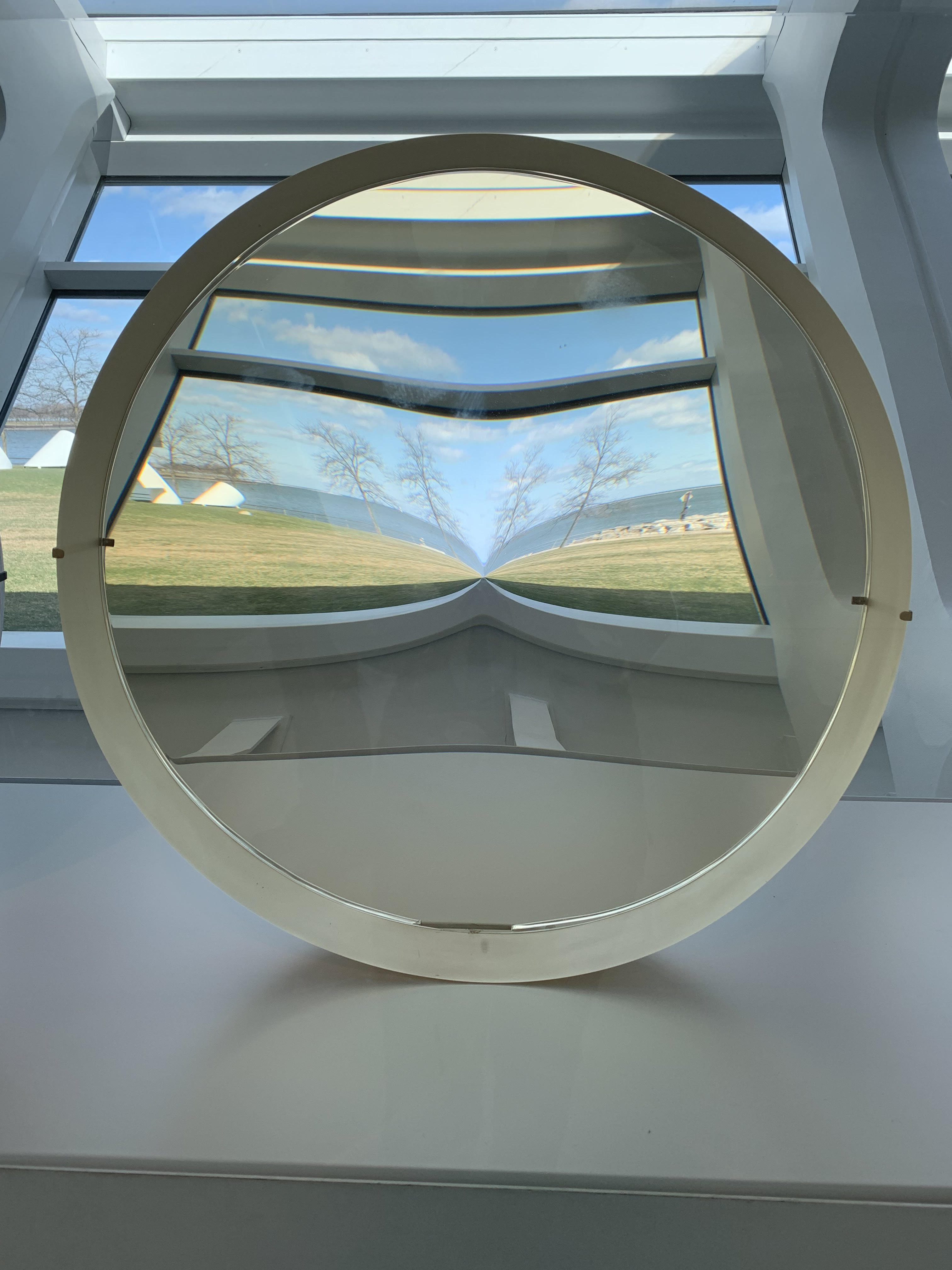
We stopped in the long hallway leading to the contemporary art collection to admire the lens. I didn’t note the title or the name of the artist so I cannot give credit where credit is due. I’ve looked at the piece before but never with the same appreciation. Never from this moment in time. It was suddenly, intensely relevant. All points bend toward a common center. A point of view that generates circles. A single intersection.

“It’s an ego,” I thought. It believes it’s the center of everything that’s happening. It made me laugh. It brought to mind the ubiquitous lesson from Quinn: “There are six billion people on this planet and you are the only one that cares what you think.” Or feel. Or see.

No one else has your questions. No one else has your answers.

Standing before the sculpture I imagined flipping the script and reversing the circle: what would it look like to genuinely care what other people think. Or feel. Or see. With no need to understand it or change it or control it. Only care about it. About them. There’s a common center available in that paradigm, too.

Now, how do I make that lens? That’s a question worth asking, a sculpture worth making.

read Kerri’s blogpost about THE LENS

subscribe. support. share. like. comment. many thanks.

Look To Nature [David’s blog on DR Thursday]

Like waves frozen in time, the tall grasses have taken on the persona of an angry sea. We’ve stood in wonder at the whipping wind sending wavelike ripples across a field of wheat; this is not that. These waves are motionless.

They are worthy of Andy Goldsworthy. If they stretched for miles and miles I’d be certain they came from the mind of Christo. Yet no human hand or mind is at work here. Nature mimics herself in these grasses. They merit our awe and attention.

Along our trail there are several nests visible. Sparrows and swallows and hornets. I cannot imagine creating something so delicate and intricate. I have opposable thumbs so would be working with more than a beak yet I doubt I could craft such a miracle. It’s taken a lifetime for me to see beyond the word “nest” and see – really see – these fabulous sculptures made of grass, sticks, and mud.

Admiring the rolling grasses as Kerri kneels to snap her photograph, E.O. Wilson slips smiling into my mind and repeats: “Nature holds the key to our aesthetic, intellectual, cognitive, and even spiritual satisfaction.”

Yes. I remember.

from my long-ago unfinished project: Kichom and Fucci. An illustration study for a story told by Kichom Hayashi

visit my online gallery

read Kerri’s blogpost about ROLLING GRASSES

like. support. share. comment. thank you.

buymeacoffee is what you make of it. nothing more. nothing less.

Drop The Leaf [on Two Artists Tuesday]

I’ve spent hours of my life in figure drawing classes. There’s nothing more beautiful or complex than the human body. There’s nothing more sacred. When I was very young, I drew people – both naked and clothed, both male and female – from photos in The National Geographic magazines. I drew figures and bits of bodies from plaster casts – both plaster-naked and plaster-clothed. I drew figures from those weird artist wooden mannequins, never clothed, sex-neutral, gender unknown.

A friend just sent a story from The Washington Post. A principal in Florida was forced to resign after sixth grade art students were shown a picture of Michelangelo’s David. Had my eye-roll been any more pronounced my eyeballs would have popped out of my head and rolled across the floor. This principal’s forced resignation: a fig leaf by another name.

It’s true, The David was strapped with a fig leaf by outraged clergy shortly after it was displayed in public in 1504. Humanity has grown-up a bit since then, or so we might have hoped. It’s true: history repeats itself though you’d think with all the bodies sunning on Florida beaches, with the ubiquitous sex in movies, on television, and used to sell everything from automobiles to vacation destinations, that the un-leafed David might be understood as high art rather than an affront to any pretend moral authority.

Don’t look up if you visit the Sistine Chapel; Adam has yet to eat from the tree of knowledge and is naked, naked, naked. Touched by god. It is, after all, a painting of the day he was “born.”

The Greeks-of-yore, those whacky inventors of democracy and critical thinking, understood the body to be virtuous. Michelangelo was drawing from that deep pool of tradition and wisdom rather than the shallow frog pond of pretend-pious-purity. David, a biblical figure, stands naked before the giant Goliath. Virtue with a slingshot. Sacred and beautiful.

It takes a modern-day-Florida to turn virtue to vice while elevating vice as virtue. The cure for their fake-moral-fig-leaf is simple: attend a few figuring drawing classes. Drop the leaf. Or, go to the beach and open their eyes.

read Kerri’s blogpost on LEAF IMPRESSIONS

Welcome Home [on Not So Flawed Wednesday]

I realized on a night dive, 90 feet below the surface in the darkest dark I’d ever experienced, that my consciousness was like the flashlight I held. I saw only what was in the small space illuminated by my light. There was a vast world beyond what I could perceive in my limited view. I understood that the most potent choice I have – or will ever have – is where I decide to aim my light.

“Welcome home!” she said as we stepped into the gallery with three magnificent sculptures by Barbara Hepworth. The soft light, the floor-to-ceiling windows drawing us toward the lake. An open clean space. She was imagining this room was what our future home might feel like. I lapsed into studio fantasies.

I’ve always appreciated this room in the museum but for some reason, on this day, the sculptures were magnetic. While Kerri took photographs, I communed with Barbara Hepworth. The pieces are totems. Sacred symbols. Barbara Hepworth was a woman sculptor in a century that pretended the arts were the province of men. Her life spanned both world wars. She reached beyond the horror of her time to something more elemental. I found hope in her work. Guidance. Perseverance. She was shining her light on what humankind might become. Form and emptiness, perfectly balanced.

“Look,” Kerri said, showing me the photo. “It’s a porthole.” A perfect circle. A horizon. “I could stay here all day,” she closed her eyes and breathed in the space.

“Me, too.” Welcome home.

read Kerri’s blogpost about THE PORTHOLE

Chisel [on DR Thursday]

The conversation in the car was about astrology. I am an Aquarius. Confusingly, the water-bearer is an air sign. Kerri is Aries; fire. “Air is necessary for fire,” she laughed. As in most metaphors and models, each element transforms the others. It’s creation-in-motion. Life is a great shapeshifter. A single element is undefinable without the others.

The same is true with people. We only know who we are relative to the others in our lives. The heat of our relationships transform us. Transformation is a daily reality, a common experience, but so ubiquitous that it goes unseen. We only notice it when the volcano erupts or when we wake up one day and say to ourselves, “I am different now.”

The beautiful canyons in Utah were, over eons, carved by water. Zion. Arches. The Grand. Everyday, water meets earth. Heat and wind. Sculpture.

Long drives bring reminiscence. Something sparked our conversation about the canyons we’ve carved in our lives. Everyday, trickles of water. Relationship. Slow, almost imperceptible changes. One day, after years and years, you look in the mirror and see the colors revealed by erosion and time. The chiseled shape. Pieces and parts that felt essential, washed away. What remains?

Beautiful. Crucial. Elemental. Still transforming.

read Kerri’s blogpost about WATER

face the rain © 2019 david robinson