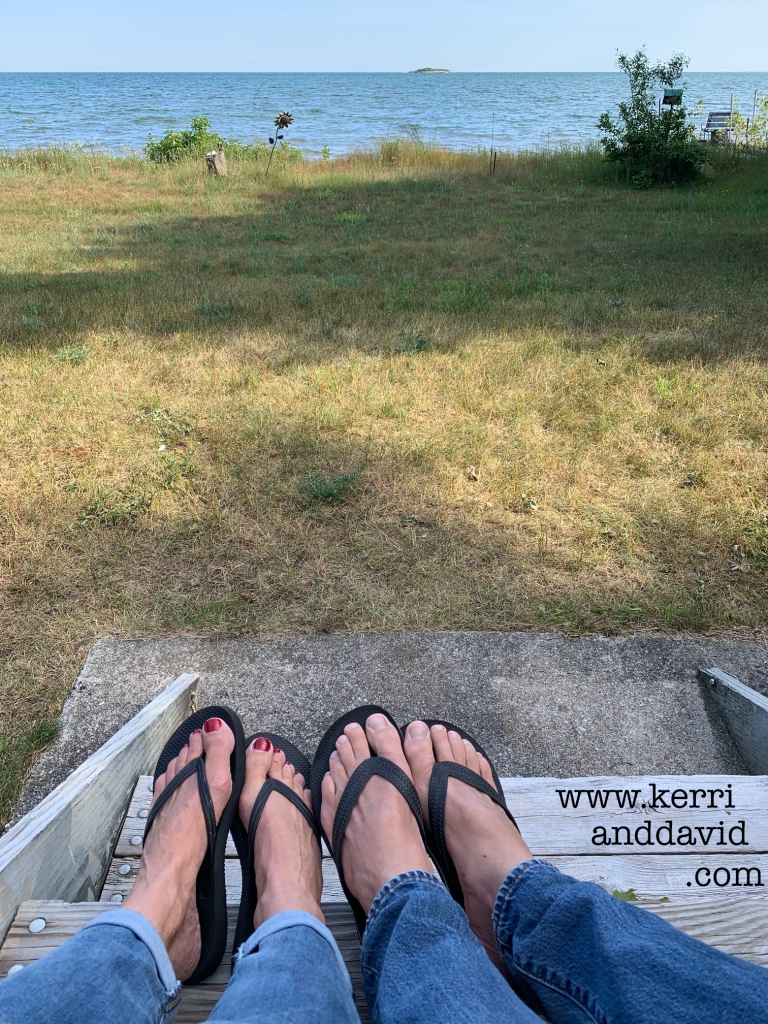
I used to wonder how my elders could “just sit around and talk” – or not – and marvel at the appearance of the crabapple blossoms, revel at the appearance of some bird or another. “There must be something more interesting to do!” I’d say and silently huff, “I’ll never-ever just sit around and stare at stuff.”
Well.
We spent hours the other day watching the crow babies in their nest. The cardinals’ arrival always gets a rise out of use. The day the peonies bloomed was cause for celebration. Now I think, “The world would be a better place if people could just slow down long enough to notice all the miracles happening around them.”
Now I know. There is nothing more important or interesting to do than be fully present where I am.
I’m so glad that the younger version of me was so utterly wrong.
I’ve been pondering something Horatio said during our call yesterday. “Circumstances change but that doesn’t change how you have to live.” he added, “You still have to live a good life.”
It is not a new concept. How many times have I said to groups, as if I knew what I was talking about, “You are not your circumstance.” In the school of hysterical irony, I am constantly catching myself teaching what I most need to learn. I heard in Horatio’s comment something often spoken but discerned for the first time: You still have to live a good life.
What does it mean to live a good life? What does it mean to me? To you?
In a broad sense we were discussing the many changes we’ve experienced over the past decade. Decades. Aging. Climate. Loss of loved ones. Pandemic. The politics/division of our times. Technology. A flurry of fast moving circumstance. What seemed so important a decade ago is now barely a shadow memory. Aptly, an illusion.
You still have to live a good life.
Horatio spoke of going into his studio. “Immersing in the tangible,” he said. Painty fingers. Music. Charcoal dust. The smell of coffee and conté crayons. Exiting the noise and inhabiting the now. That’s a good life. I recognize that place.
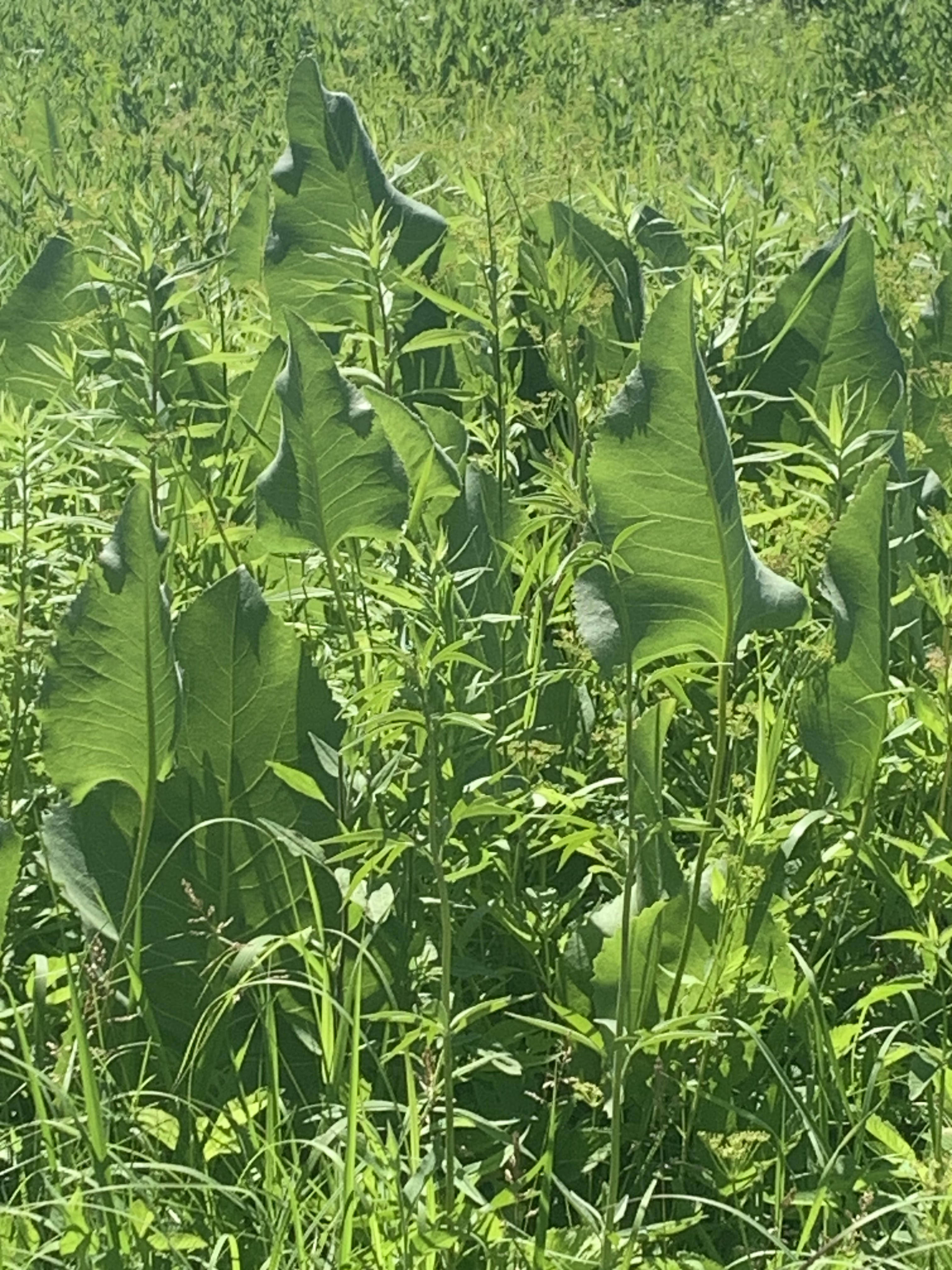
Inhabiting the now. Kerri and I walk the trail arm in arm until she spots the next photo-op. “Lookit!” she chimes, showing me her new image-capture. “Green on green,” spoken with the enthusiasm of a five year old. Our walks are immersions in the tangible. We’ve had so much rain lately, there is an explosion of green in our world. We walk slowly so we might see it. Sense it. The shapes are as extraordinary as the many shades of green.
Horatio’s comment struck an ancient chord in me.
Sitting in our stream in the mountains of Colorado, Kerri and I talked about the next phase of our lives. A intentional creation. “The Sweet Phase,” she called it. It is inaccurate to suggest that we will create The Sweet Phase as much as we will inhabit it. The tangible. The now. Just like entering the studio. We’ve already started. Our practice is to not get swept into the swirling drama of circumstance. “…that doesn’t change how you have to live.”
It’s a question of recognizing it. Regardless of the circumstance, how utterly good living life really is.
Chris wrote that he was taking a break from Facebook. “I’ve spent too much time in this space.”
I told Kerri that after I was finished with my slow re-read of Amusing Ourselves to Death, for a while I was only going to read books that filled me with light. “I’ve had too much of darkness,” I said.
Walter Lippmann posited that “…distorted information was inherent in the human mind. People make up their minds before they define the facts…” In other words, we are more gullible and impressionable than we care to admit, and are too soon planting our belief-flags in the sand. In other-other words, fact checking is not a human forté. Gossip mongering is.
Kerri and I often walk arm and arm along the waterfront, an old-world evening constitutional, a stroll taken slowly enough to notice, an opportunity to say “Hello,” when passing neighbors and friends. More and more I think it an essential to regularly set aside those little screens that dominate our viewpoints, and clear our minds. Every painter knows that perspective is gained by stepping back. I can read streams of opinions all day long but nothing beats the affirmation of real community than a hot summer night, people sitting on porches and a neighborhood mosey.
Families filled the park. The cool breeze off the lake drew them to the shore. Barbecues. Children chasing balls and each other. A feeling of respite was pervasive. Laughter. Shared space. We passed two teenage girls sitting on a bench with a bucket of colored pencils between them, coloring their books and chatting.
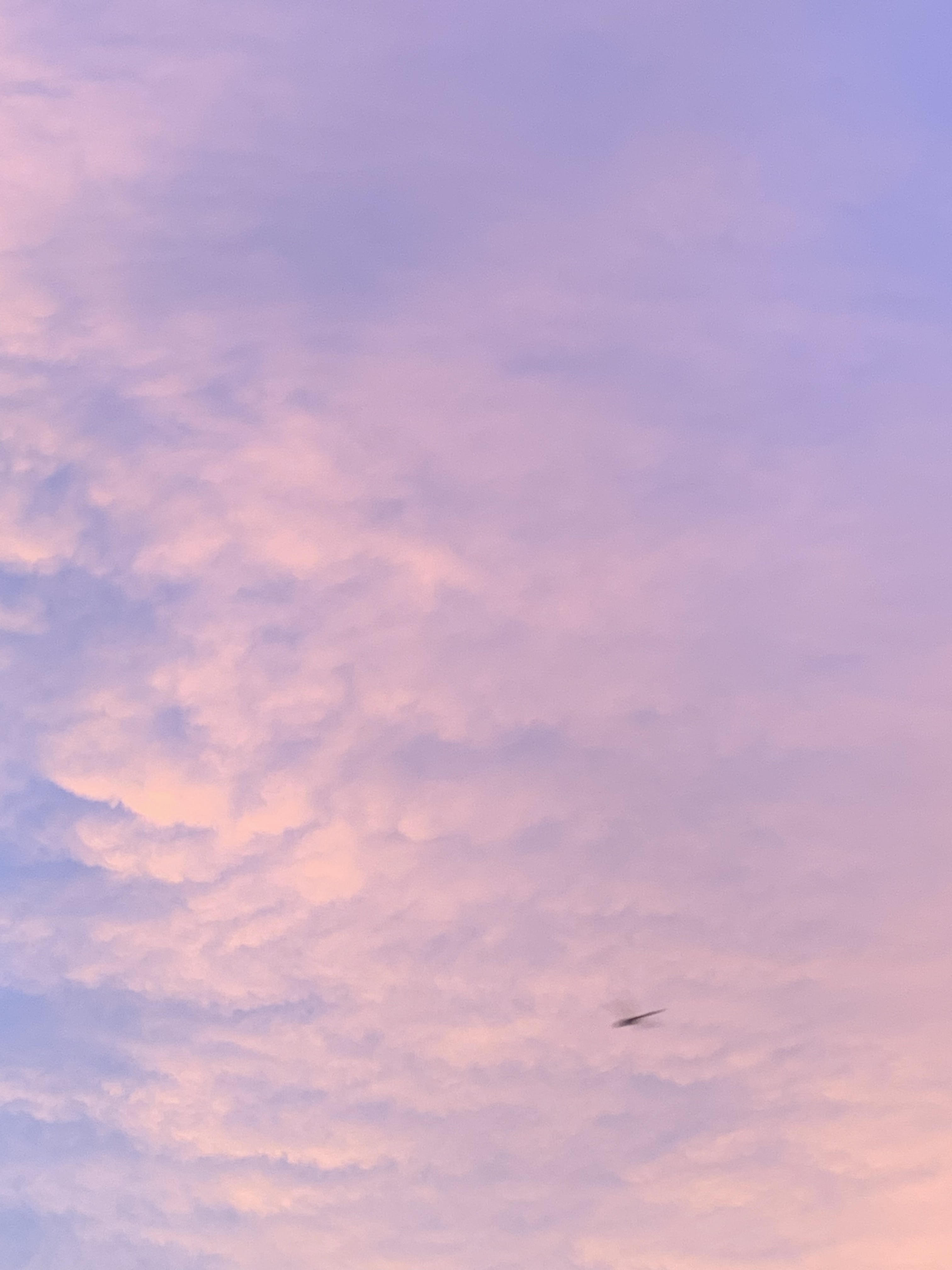
The sky morphed from orange and blue to purple and pink. A single bird arced across the sky. “What are you thinking?” I asked.
“Nothing. Nothing at all.” she said. “I’m just enjoying the moment.”
I smiled, thinking, “Yes. And isn’t that exactly the point?”
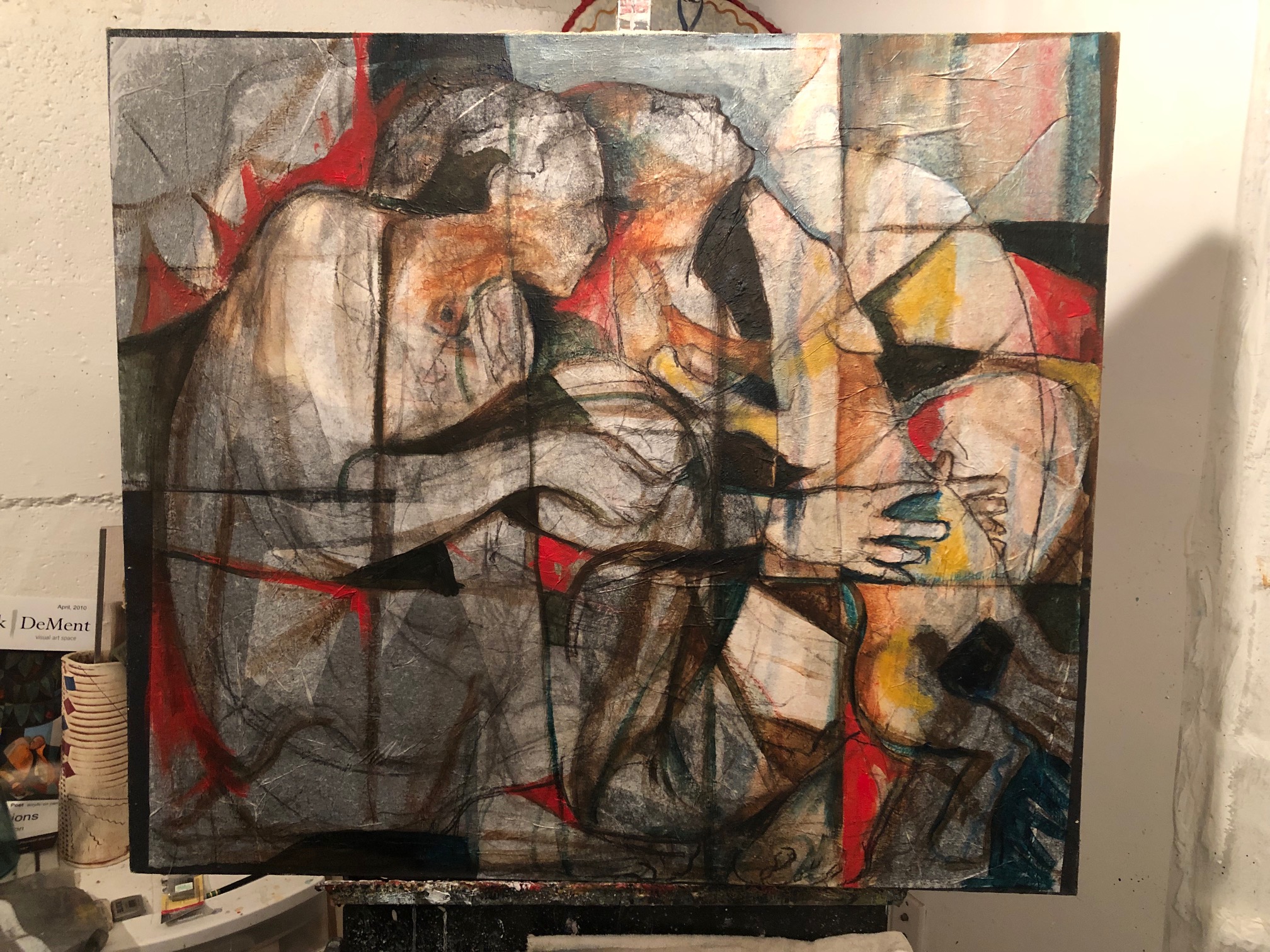
A few months ago Horatio told me that I needed to paint. Lately I’ve been mostly writing. He suggested that it would be good for me to get back into the visual part of my brain, the part that isn’t reliant on words. Horatio is wise. This morning I went down stairs and spent some time in the studio. As is usually the case, he was right.
Weeks ago I sketched a painting on a canvas. It’s been sitting on my easel. Waiting. For today.
It took a few minutes for me to let go. Standing and staring at the sketch, I felt locked up. I grabbed a small brush which is always a signal that I am thinking too hard. I was trying to “solve” the image through a linear sequential process. I put down my little brush, opened a jar of paint, and dunked my fingers in the jar, and began to spread the red paint just like I did when I was 5 years old. I used a rag to smear and pull and shade some of the globs. I reminded myself that I didn’t need to know where I was going. In fact, I needed to “not know” where I was going and dance with the image.
After a while I stopped thinking and started responding. I sighed a deep sigh of relief. I lost track of time. I felt a wave of spaciousness roll in to my too tight mind. Energy restoration.
Horatio must have seen it in me. My grief.
It’s a question of balance. I have lately of my artistry been asking the question, “Why?” As I roll into the next phase of life I am revisiting my roots. Why did I start doing this anyway? Why, as a child, did I paint through the night. If you’d have asked the child version of me the question “Why?” I’d have answered, “Because I have to.” There was no choice. There was no “Why?” There was a driving imperative. A siren call to “What if?”
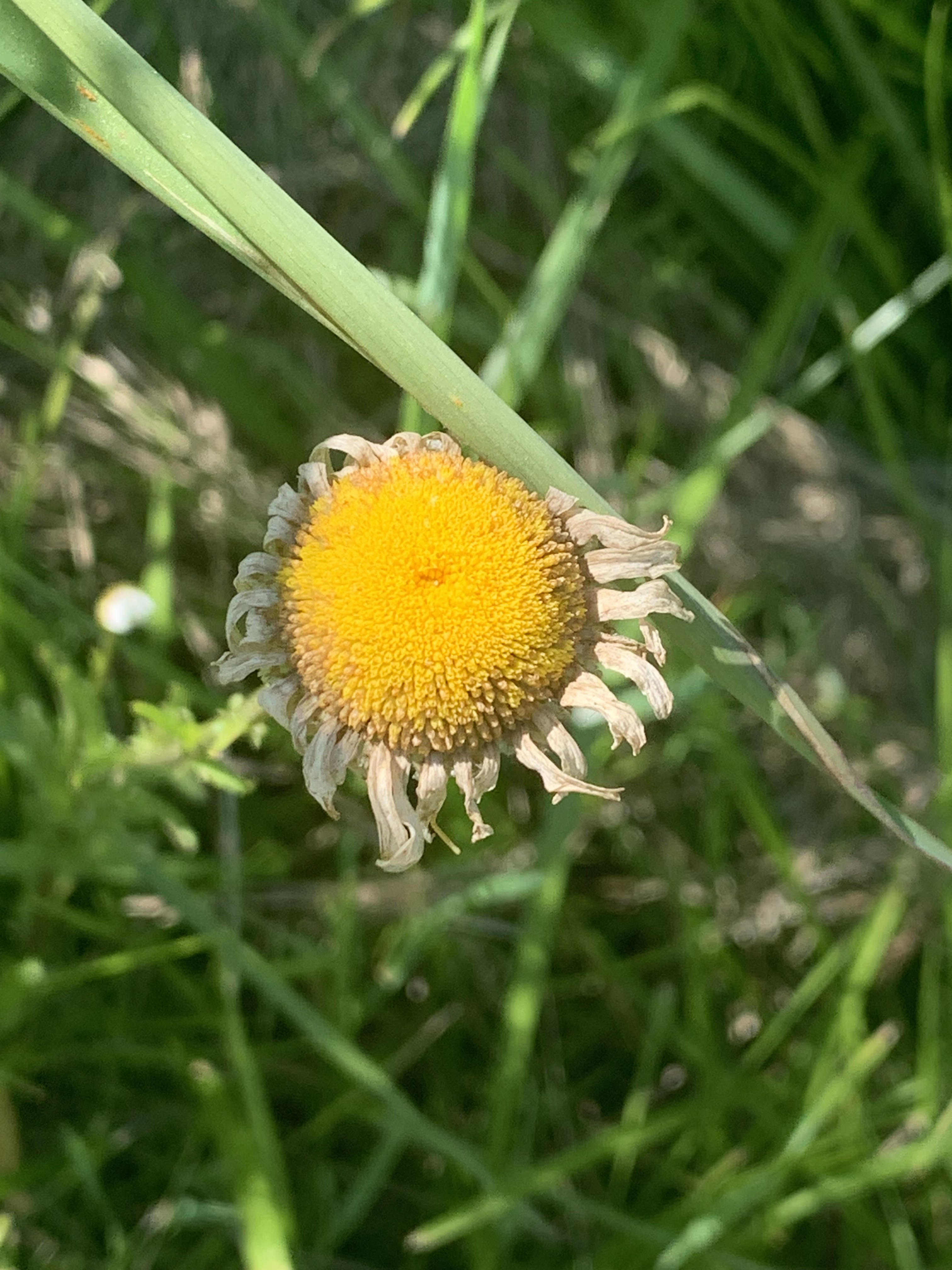
An aging Daisy. Kerri’s photograph brought to mind Tom Mck. He told me when he entered his sixties, he became invisible. He felt as if he was stepping into the prime of his creative years yet the people he’d mentored or directed or coached – the people whose careers he had informed, shaped and helped launch – the people he reached out to after retiring from his “real” job – no longer considered his artistry valid or valuable. They never told him that he was no longer viable in their eyes but he knew. They either didn’t return his calls or it was months later that he’d get a dodgy response to an inquiry or a question.
I am experiencing some of that.
Today in the studio I realized that I have been asking the wrong question. I already know why. Asking “why” is like picking up a little brush, it is to think too hard. The truth is that I’ve always known: Because I have to. The five year old version of me was not concerned with value and validity in the eyes of others. That version of me thought nothing of dipping his fingers into paint and swirling them across the page. Because it felt good. Because it felt right. This version of me – after I stopped thinking – knew just what to do. I “thought nothing” of opening the jar, dipping my fingers into the paint… What if?
My visibility or invisibility is, in fact, irrelevant. As Tom Mck drilled into me: A writer writes. A painter paints. The rest is simply out of my hands.
County Rainy Day. Underpainting the sketch with painty fingers
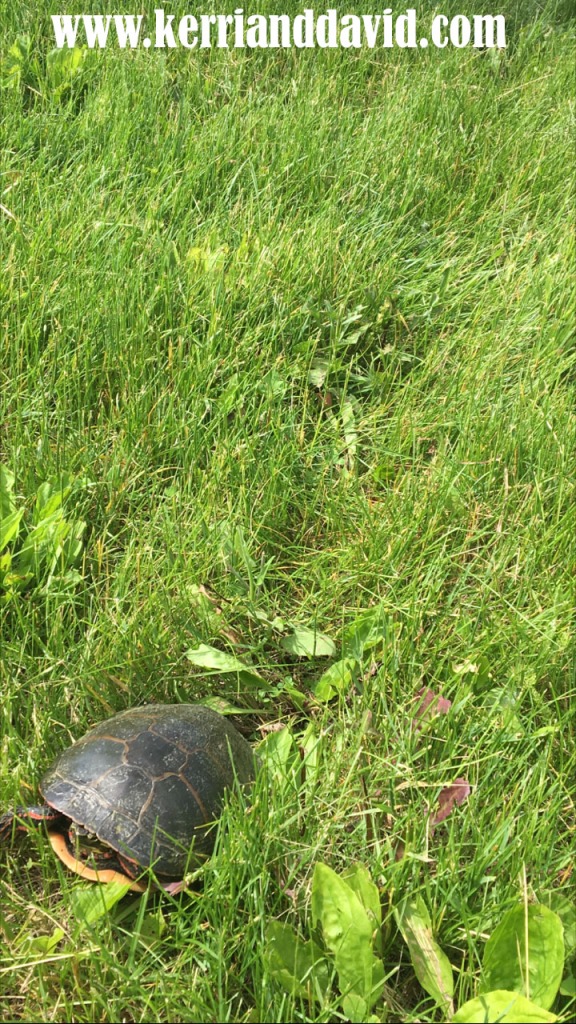
A turtle appeared on the path at just the right moment. As I like to say, our “jammies were in a bunch” and we were about to go over the edge and fall into a dark abyss of circumstance-dissatisfaction. We rounded the bend as our discontent began spiraling out of control, and then we saw the turtle.
Everything changed in an instant.
She cooed, knelt, and stroked the turtle’s shell. Not expecting a tsunami of affection, the turtle retreated into its fortress. But after a moment, realizing that this assault was indeed loving, it peeked and then poked its head out into the light. It slowly pivoted so she might get a better angle for her photoshoot. The turtle was a patient model and didn’t seem to mind her multiple-broken-promises of “Only one more, I swear,” as she continued snapping photographs.
We admired the orange markings, outlined in black, set in the field of green. “Gorgeous,” she whispered, tracing the markings with her finger.
After an appropriate visit, we left it to return to the marsh, and continued on our way. “What were we talking about?” I asked.
“I can’t remember,” she said, her prior frustration having completely dissipated. Mine, too.
In truth, we both remembered but no longer needed to grouse about what we could not control. We probably didn’t need to spin frustration tales to begin with. Thankfully, we were turtle-slapped into the recognition that what we needed most in our dedicated-exasperation was to slow down and appreciate our walk.
The wisdom of distraction. A turtle suddenly appears on the path at just the right moment…
Let me describe the present moment. It is morning. A gentle rain is falling outside, tap-tapping a steady rhythm on the gutters and pools in the driveway. The window is open just enough so the smell of new rain is carried on a slight cool breeze. We sit, feet beneath the quilt, writing. Dogga was asleep in his favorite spot at the doorway but must have sensed I was about to write about him. He stretched, yawned, groaned, and jumped up on the bed. He nestled in and is once again asleep. Oh, yes, and there is coffee.
I was compelled to write about the present moment because I just read to Kerri an article in the New York Times about the social side of artificial intelligence. AI companions. At first it begged the question, “What is real?” but then I caught my prejudice. Are the conversations I have in my head real? Are my perceptions of the world real? Why should the conversations people are having with their AI companions be any less real than the nonsense that daily runs through my noggin? There is, according to the report, an epidemic of loneliness in these un-United States and true companionship is, apparently, hard to come by. It smacks to me of another layer on the bubble: people create their AI companions and AI companions learn how to respond to their creators from their creators…
There was no filter used to capture this pink-purple sky. It’s one of the things I appreciate about Kerri’s urge to aim her camera. She rarely attempts to alter the image. To make it something else. She is drawn to photograph the present moment with all of its flaws and barnacles. And beauty and grace.
Last night, during our 3am banana-and-trail-fest, we bumbled into a series of videos: people who have decided to live off the grid yet are documenting and sharing their homesteading process on YouTube. We’ve been following Martijn Doolaard for a few years and delight in the travels of Foresty Forest and his dog Rocko. Alternate lives. Old world craftsmen-and-women using-but-not-lost-in the wonders of new world technology. Sense-making.
My 3am revelation? I’m drawn to these people because of the balance they seek to establish: hands and feet firmly rooted in the traditions of dirt and toil and presence, while at the same time appreciating and using technology to capture their present moment. To share. To create. To suggest to us 3am sleep-deprived watchers that there is, indeed, a balance to be struck. No need to get lost. Barnacles and beauty available during this time of intense change.
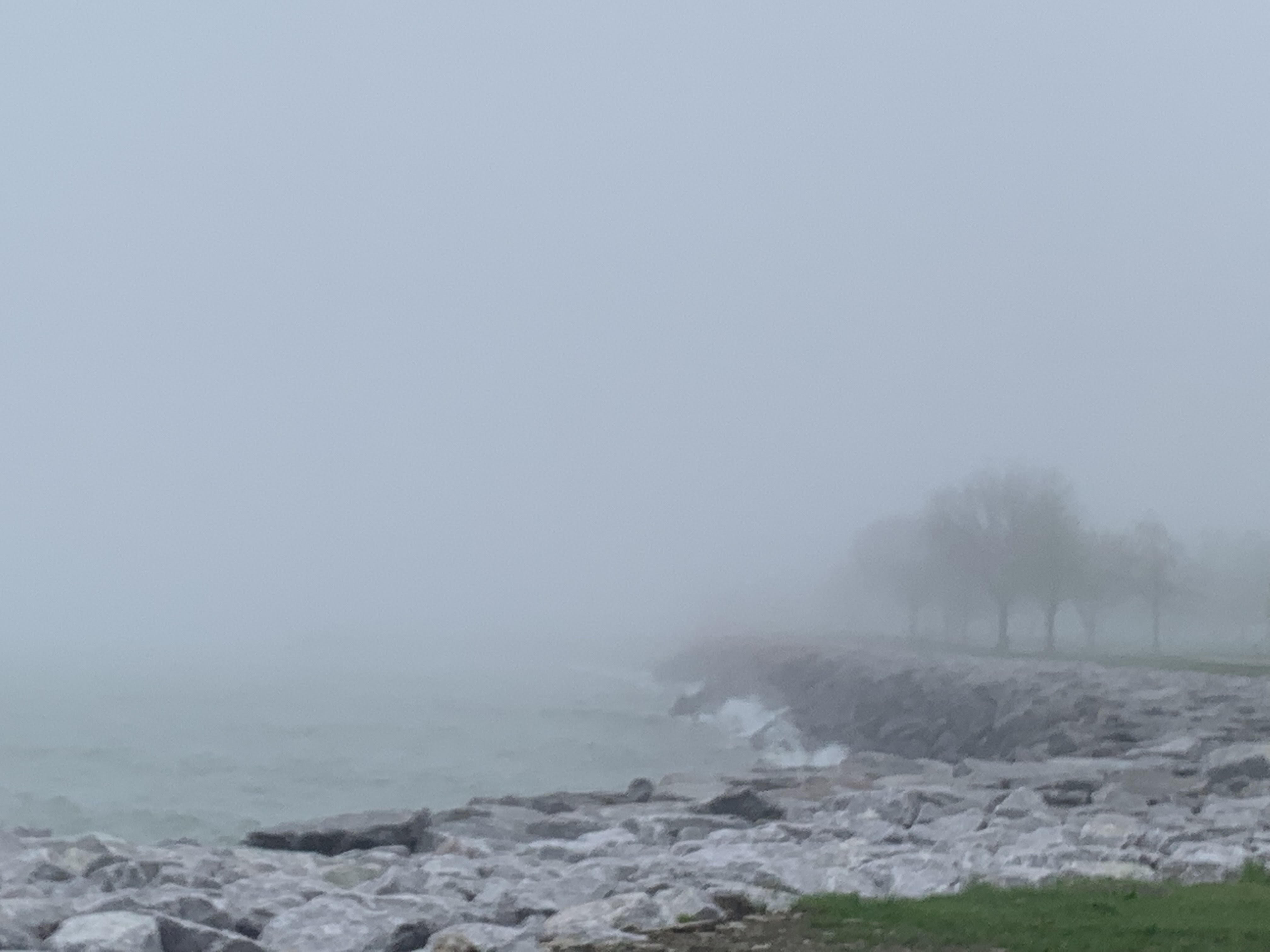
The day brought to mind Avalon, the mythical island hidden from sight by the spells of the wise women who rule there or perhaps by charms cast by King Arthur’s sister, Morgaine. It is where Arthur was taken after he was gravely wounded in battle. To heal or to die. It depends on which version of the legend that you read. As I watched her take the picture I wondered if Avalon could pop-up off the coast of Lake Michigan. If it can be spelled and disappear from sight it certainly can be spelled to appear wherever Morgaine chooses. Magic is magic. Possibility is open-ended until doubt or belief renders it otherwise.
While I was studying the photo, pondering what I might write, Kerri played a song by John Denver. I didn’t recognize it and looked over her shoulder. It was the last song he wrote before he died. Yellowstone (Coming Home). He did not know it would be his last song. He had no expectation of dying on the day his plane dropped from the sky into the ocean. I have sometimes wondered what would be my last painting or the final piece I might write. In my imagining, I always know. “This is the last,” I think and set down my brush, one more step in preparing to enter the mist.
I read somewhere that the real key to happiness is to lose your self-importance. It’s counter-intuitive in a culture that identifies through individual achievement. Climbing the ladder. Top dog. Happiness as a by-product of achievement and possession. Yet, it seems simple if you think about it. Happiness, not as an acquisition but as as an aspect of presence. Happiness enters when we are present in our moment and, in order to actually be present in the moment, the eyes and heart and mind need to let go of the desire to be other places, future or past. Happiness finds us when enough is truly enough and everything else, all the imagined importance, the yearning and the lack, disappear into the fog of time’s illusion.
Benison was my word-of-the-day. It was a new word to me and it means a blessing or benediction (to bestow a blessing). I especially appreciated this word-of-the-day since I’ve lately been listening for the word “blessing”. It’s become something of a study or a game. I laughed when the word popped into my inbox. “Good timing!” I chirped.
I rarely go a day without hearing someone, somewhere, utter the word “blessing”. On the street, in the grocery store, neighbors chatting over the fence, in a bar, passing people on the trail…I’ve decided it’s a blanket word, generic, used to include many experiences. “What a blessing!”
I was considering adding it to my list of over-used and no longer meaningful words, like paradigm or story except that lately I’m of the opinion that this whole life, the entire ride with all of it’s ups and downs and confusions and clarities, is a blessing. A benison. A gift. Every single moment.
It flies in the face of common sense since I was given to understand that blessings are unique, something special. If every single moment is a blessing, then what’s the point of elevating this moment over that moment? Of course, I realized that I was (again) missing the point. The whole ride is a blessing. We mostly don’t realize it. We are mostly unconscious of it. Our awareness is some-other-place making lists or worrying worries so we mis-understand it. The word “blessing” is a descriptor of something unique and precious: those rare moments we actually grasp the enormity of being alive. Full stop and, as Lydia reminded me, breathe in the awe.
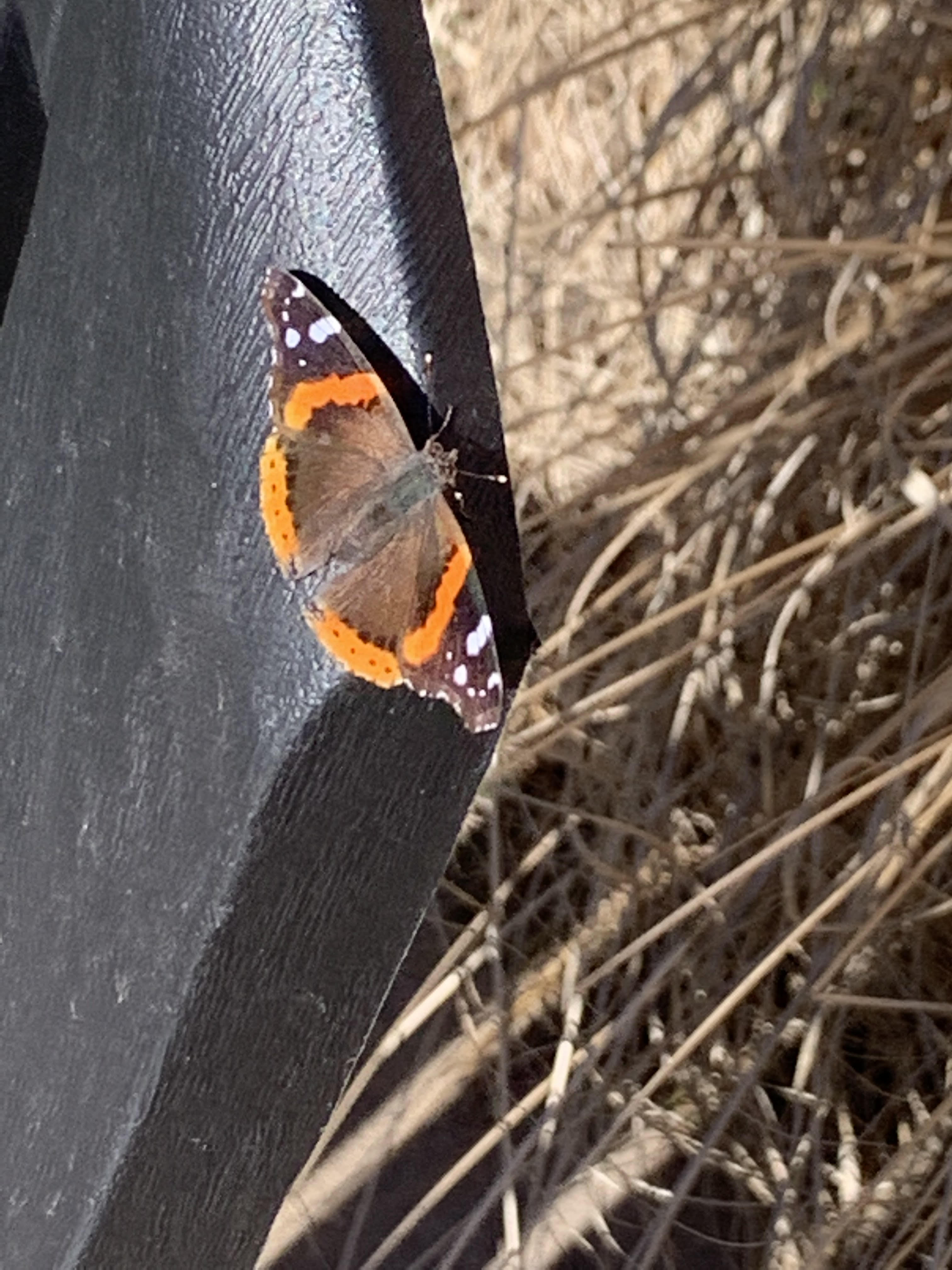
These days I think Kerri and I are practicing seeing our blessings. We are cultivating our capacity to notice. We note with delight the first buds of spring. We savor tastes. We love on the Dogga. So, when the Red Admiral butterfly landed on the Adirondack chair on a sunny early spring afternoon, “a symbol of spiritual awakening, transformation and renewal” we simultaneously said, “What a blessing!”
“I know what will happen.” “Same old same old.” “It’s always been this way.” “Why bother?” “Nothing ever changes.” “Who cares anyway.” “Tomorrow will be the same as today.” “It doesn’t matter.” “It’s just an idea.”
Pattern thought. Repetition’s repetition. Dulled life.
Looking up, the tree line cut a diagonal across the sky. The sun peeked from behind evergreen. I could have thought, “I’ve seen it a thousand times.” And, truth be told, had that been my thought, I probably would have reduced it to something without words. A yawn. Or worse, it would have gone unnoticed as a lost moment in a mind full of complaints.
As it was, I’d never before been on this particular turn of the earth or looked at the sky at that precise moment. What, exactly, “caught my eye?”
I do not know what will happen. Nothing is ever the same. Ever. It is impossible to have been this way before because no one has ever lived this moment until now. That’s the response to “why bother.” It always changes. And I care. Tomorrow can’t possibly be the same as today so it matters.
Every idea reaches beyond the confines of “just.” Ideas are expansive. Just is reductive.
People are expansive unless they choose otherwise.