Honor All Perspectives

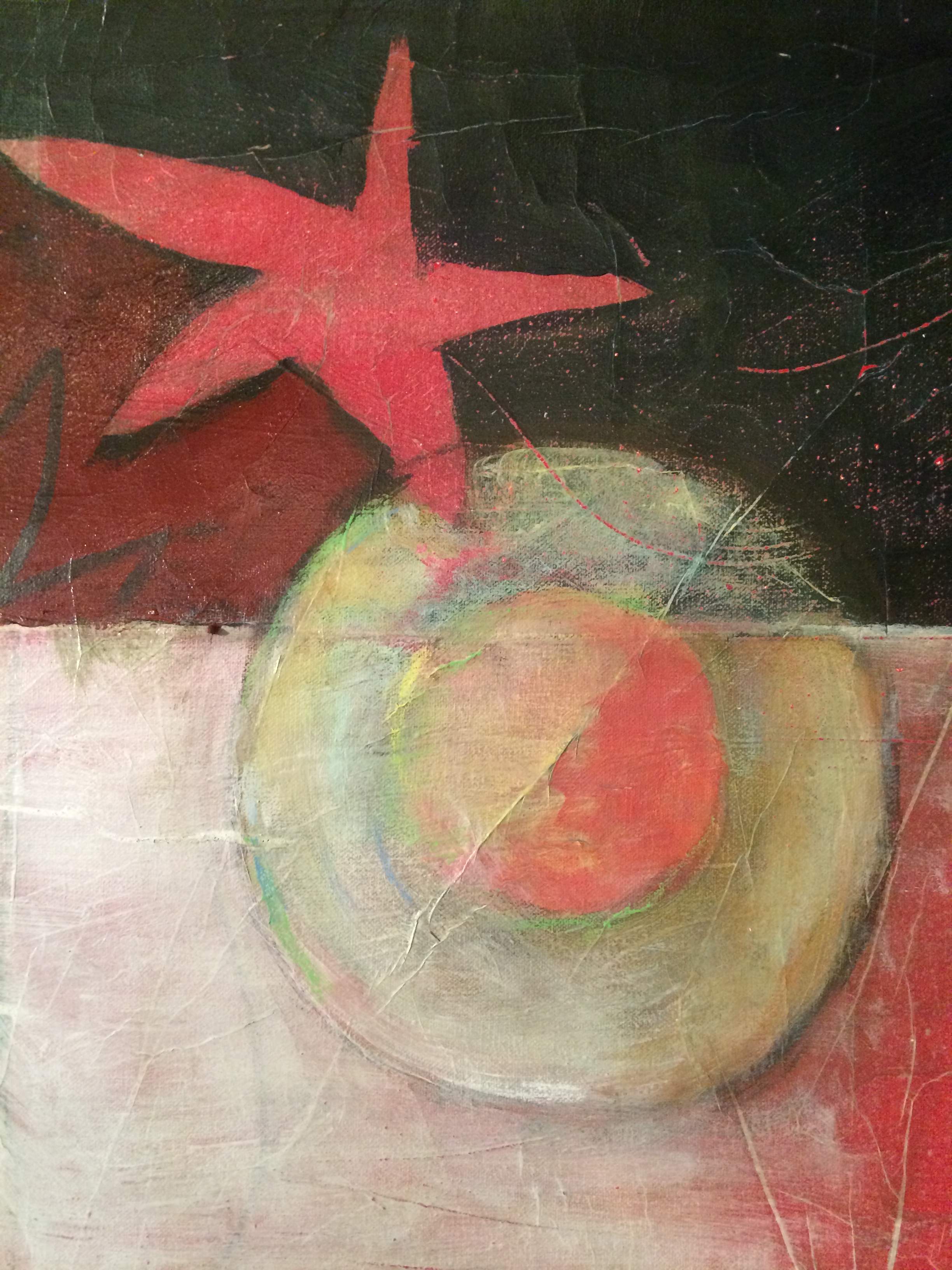
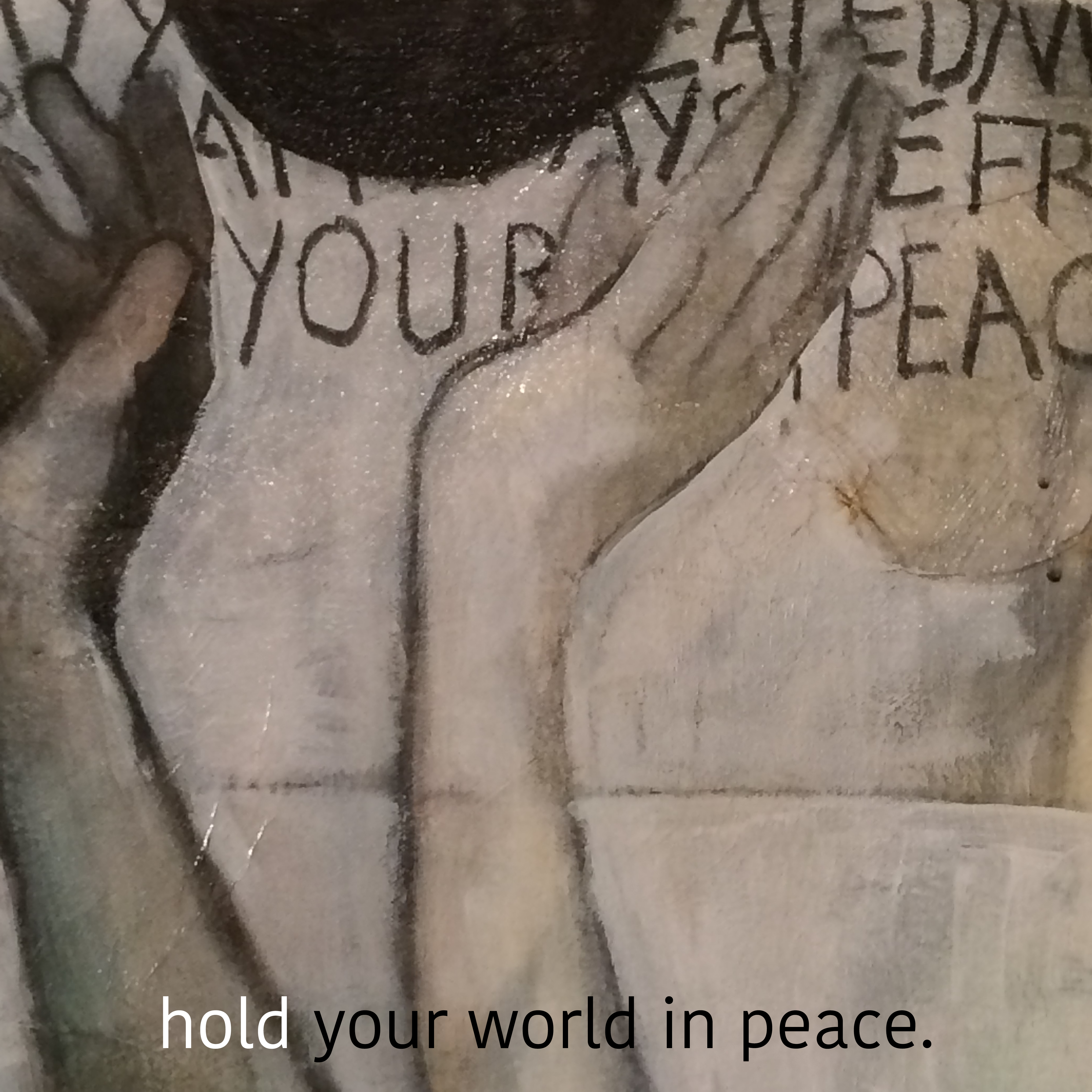
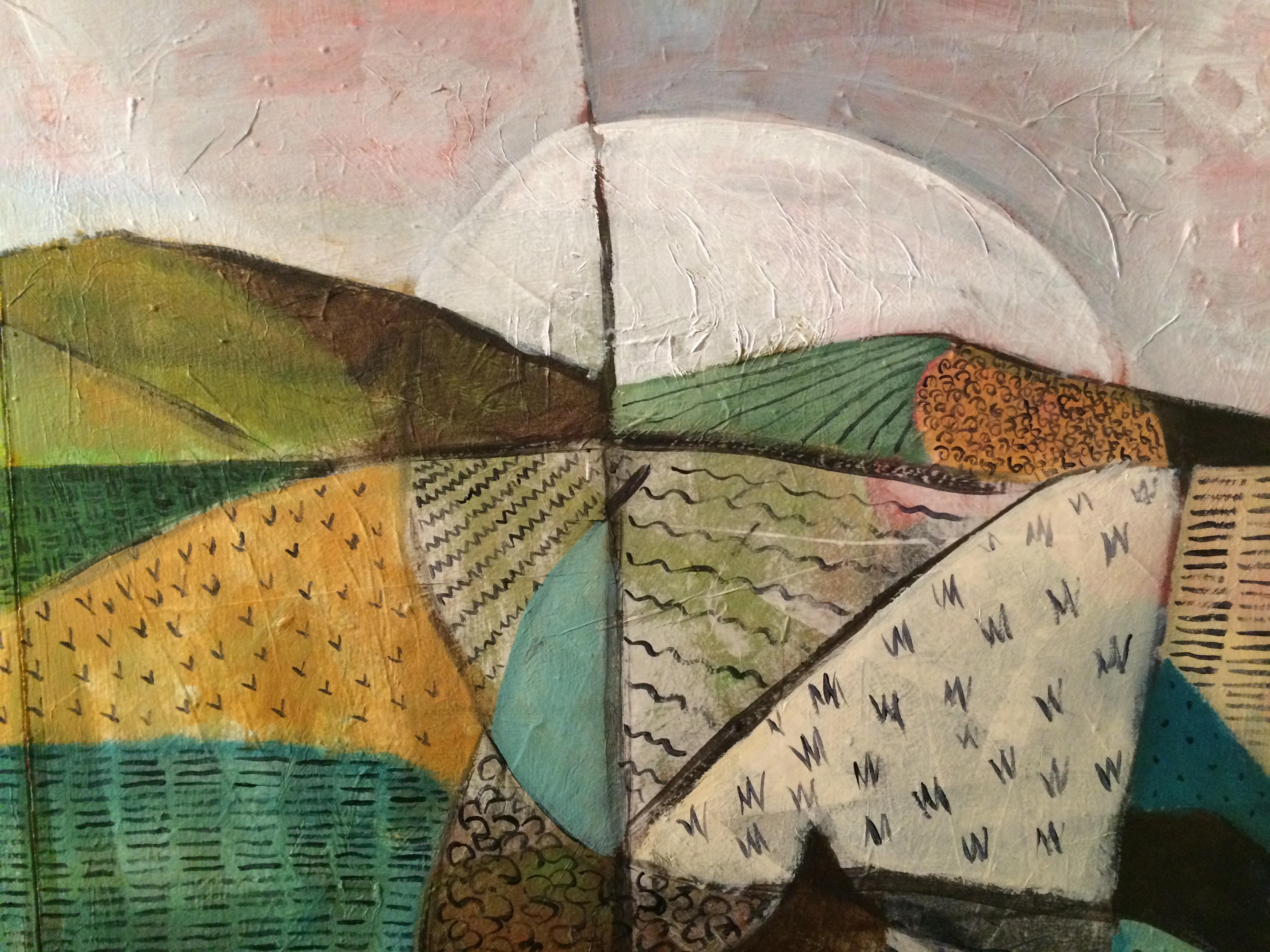
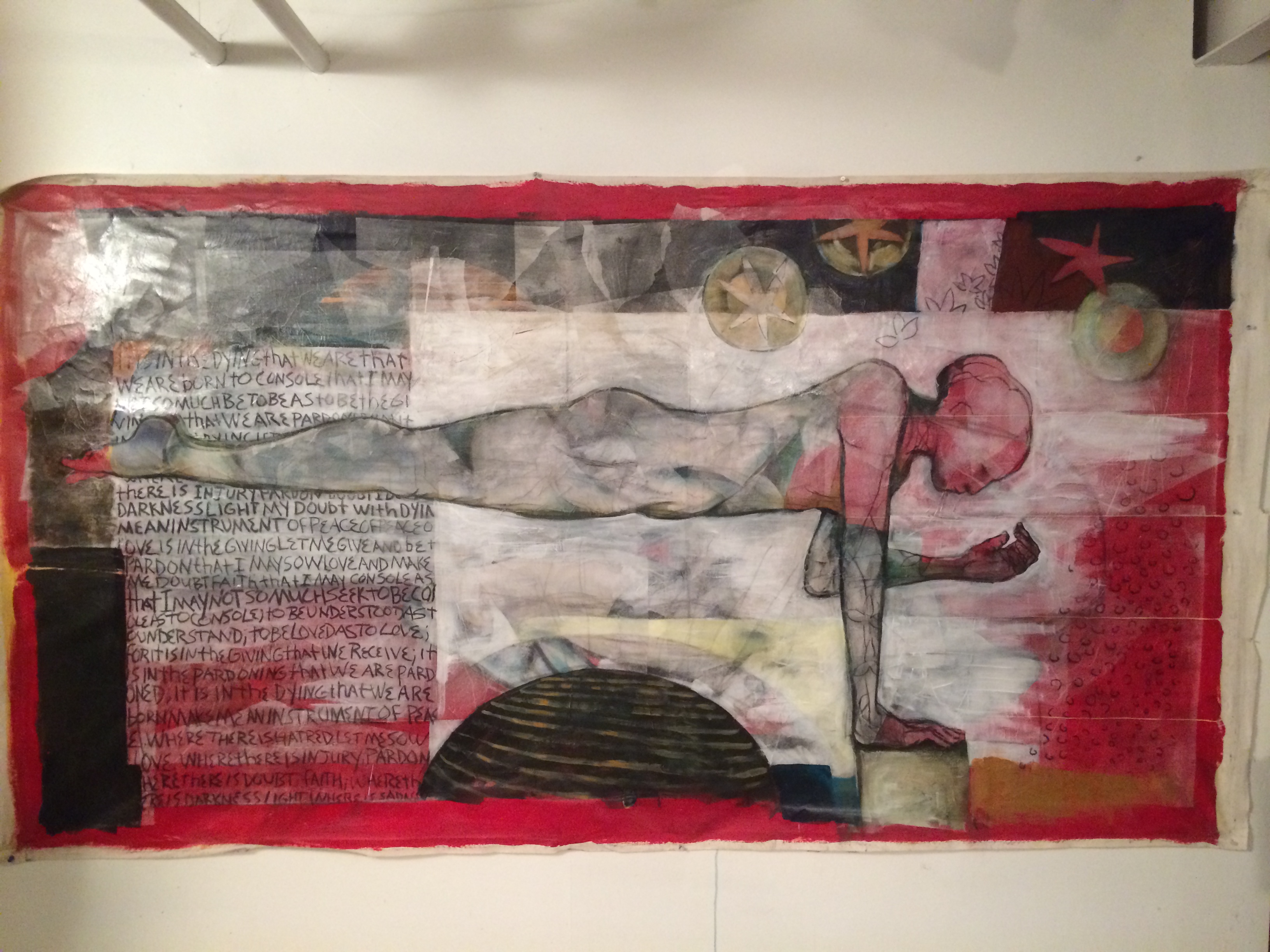
my latest painting. Hope asks, “What do you see?”

Hope Hughes, Kerri’s longtime assistant and voice of reason in all-things-business, passed through my studio and flung herself in front of the painting I was working on. “Stop!” she cried. “Don’t touch it! It’s finished!”

“Finished? I just started,” I whined. She laughed at the perplexed look on my face.

“Put down your brushes,” she smiled, “and listen for a minute.”

Over time I’ve learned to listen to Hope. She makes sense of the world through her feelings which comes in handy to an over-cerebral artist like me. She has no inner-editor in the early stages of communication so I’ve learned her heroics are pure. She sees something that I do not. This is not the first time Hope has thrust herself between me and the painting I am about to destroy, so when she asks me to ‘look’ there is usually a good reason. I set down my brushes, cross my arms, and huff as if to say, “I’m listening but make it fast.”

Each time she begs me to stop work on a painting, a great debate rages in the household. This time was no exception. I sit in my chair and listen to what she sees. It is always diametrically opposed to what I see so I pretend to pout (I secretly love this process because it is EXACTLY what I adore about art in general and painting in particular). She tries to get me to tell her what I intended to paint, coaxing me to talk about what I see but I refuse. As Joseph Campbell once said, “If an artist respects you, s/he will not tell you what a painting means. ” Art is always about a relationship between the piece and the viewer and the artist needs to stay out of the way. If the artist has no respect for you (or themself), s/he will tell you what the painting means to them. I respect Hope so I stay out of the way.

In this painting, Hope sees deep humility in dual fatherhood.

My refusal drags other people into the fray. She snaps a photo of the painting and then shares it with others, asking what they see in the painting, what descriptors they would use. As is always the case, the replies sometimes align with her perception and sometimes not which further fuels the debate. 20 had the misfortune of coming over for dinner and he was subjected to the photograph test.

In this painting, 20 sees grief and loss. In this aspect he agreed with Hope: the painting is finished.

When I first started showing paintings I would follow patrons through the gallery (they did not know I was the artist) and listen to their perceptions. They rarely saw what I intended but what they saw was marvelous – almost miraculous to me. It was an advanced course in understanding the futility of trying to determine what another person perceives. Art, I learned in those days, is a living relationship. Perception is personal. No one is a blank slate. Paintings evoke. The meaning is made between the patron and the painting.

I enter into the studio to drop out of my many descriptors and over-cerebral tendencies. I go to the studio to engage in a pure relationship with…my muse(?) I am never more alive than when I am painting. I am never more quiet than when I am painting. The images that emerge from my quiet are sometimes incidental, always surprising, and are sometimes just a map of a moment in the greater relationship of my life. Only a moment. I feel that I have never finished a painting because the paintings themselves are not distinct, separate from each other. They are living things. They change over time. They are moments, marks in the sand in a greater ongoing relationship in the long-body of my life.

What do I see in this painting? It is not important to know. Is it finished? For me, never. And, and for Hope, yes.

Every artist needs a Hope Hughes. Someone they trust, someone they respect to step in front of their work and without editor, tell them what they see. Hope reminds me that the true value/purpose of art is to create a commons capable of affording multiple perspectives and the rich opportunity to discuss the differences in what we perceive.

Unroll The Generosity Perspective

from the archives: EmbraceI’m eavesdropping. Kerri and Pastor Tom are in the next room having a planning session. I just heard P-Tom say, “The generosity perspective fell down. Woody rolled it up and put it under the table.” I laughed out loud. They are talking about a banner but, taken out of context, it is a terrific and ominous phrase!

If you take a gander at the daily news, follow the political circus, count the people trampled in the crush to buy stuff the day after Thanksgiving, you would be hard-pressed to find a better phrase for our times. The generosity perspective fell down. And, to add icing on the metaphoric cake: Woody easily rolled it up. He put under a table.

This land is your land. This land is my land. This land was made for you and me.

I’m convinced that there is another side of the coin. There is no denying that meanness exists in our world. Humiliation is a game played everyday through social media and beyond. Yet, I still believe that there is a disconnection between the rhetoric and the lived experience. I see and experience terrific acts of generosity every day. Some are small acts, some are vast – unfathomable, some are spontaneous, some are planned but all are generous. In fact, when I really pay attention, I find that the incidences of generosity far outpace the acts of cruelty.

Cruelty makes for good gossip and good gossip is cruel. And so, meanness sells. It is good for advertisers so those are the stories we broadcast. Generosity, on the other hand, erases victim stories and so is rarely yummy-fun to talk about. Acts of generosity are less potent as a selling tool.

Cruelty is easy to see. Generosity requires an intentional focus.

This morning I bumbled into a TED talk by Patti Dobrowolski. I learned that the odds are 9-to-1 against making change even if the change needed is life saving. Her message is great: draw the story you want to tell. Literally, draw it. And then tell it. If we want a different story we have to imagine a different story. If we want a different story we need to tell a different story. If we want a different story we need to act a different story.

If Woody easily rolled up and stashed the generosity perspective under the table it should be equally as easy for Woody to reach under the table, unroll the generosity perspective and hang it for all to see.


Open Your Eyes

a detail from the painting on the chopping block. It's called "The Stillness Must Be Immense."

a detail from the painting on the chopping block. It’s called “The Stillness Must Be Immense.”

There is a debate raging in my house. Yesterday I was about to wipe a painting off my canvas and begin anew when Kerri intervened. “I love it!” she declared. “I hate it,” I replied. “Truly,” she said, “I love it.” When I wrinkled my brow she restated, “I love it.”

Many years ago I was stepping toward a canvas to wipe it clean. The painting wasn’t working for me and I’d given up. I wanted to start anew. My landlady, Kathleen, came into the studio at just that moment and hurled herself in front of the canvas. “You can’t erase it!” she declared! “This is one of my favorites!” She had the look of a desperate woman begging for the life of her child. I relented. I couldn’t wipe it clean. She confessed to coming into the studio the previous evening and admiring the painting. “I spent a long time with it!” I made a deal with her. I promised to show the painting – to include it in one show – and let the public decide. If it was roundly reviled, as I KNEW it would be (as I was actively roundly reviling it), I’d paint over it without drama or interference. If it was appreciated by anyone, by a single person, Kathleen could say, “I told you so,” and I’d never paint over it.

the painting Kathleen saved

the painting Kathleen saved.

A few months later I hung the painting in my solo show at Rock/Dement studio gallery in

Seattle. At the opening a woman came into the gallery, stood before the painting, and burst into tears. She looked at me with tears rolling down her face and said, “I love it.” Kathleen waited a few days before allowing words to break through her smug smile, “Well,” she sighed, “I told you so.”

That painting is the reason I made the same deal with Kerri yesterday. I will let it remain long enough to show one time. If it is roundly reviled and ignored, then I will paint over the canvas without protest. If a single person likes it or expresses appreciation for it, she can bury me in a mountain of, “I told you so,” and the painting will live on long after I’m gone.

The Stillness Must Be Immense.

The Stillness Must Be Immense.

This morning I posted an image, a print that reads, “CROSS THE BOUNDARY OF ELEMENTS.” In the short blurb associated with the image I wrote that sometimes we have to stand in other people’s shoes. We have to see what they see. I am an artist and am convinced that artistry is all about opening new visions for others. It is about helping people see what is there, not what they think is there – and I’m certain that I fall into a thought eddy while painting. It is, perhaps impossible for me to see what others see in my paintings. What I judge to be worthless has often proven to be magnetic to others. And so, I am willing to make this bet, I delight in the moments when my understanding of life turns back on me, flings itself in front of me and screams, “Open your eyes!”

another detail of the painting.

another detail of the painting.

Cross The Boundary Of Elements

TODAY’S FEATURED IDEA FOR HUMANS

Cross The Boundary

In a world of right and wrong, yours and mine, red states and blue, crossing the elements means relinquishing the idea that “I know,” or that “I’m right.” My “normal” may not be your “normal;” it’s a good bet that my perspective is not your perspective. Cross the boundary of elements and stand for a moment in other people’s shoes; swim in their element.  Reach across the known to see what they see. Find the middle way.

 FOR TODAY’S FEATURED PRINT FOR HUMANS, GO HERE.

Everyone Has Their Heaven

TODAY’S FEATURED PRINT FOR HUMANS

everyone has their heaven

FOR TODAY’S FEATURED PRINT FOR HUMANS, GO HERE.

Sit By The River

photoThe back deck of the Minturn Inn overlooks the Eagle River. We sit in the sun and are mesmerized by the sound of the rushing water. It is liquid peace. In this moment I believe that people seeking to develop a meditation practice should begin sitting by a river. The water easily carries away all thought and worry.

The river is a great giver of perspective, a great deliverer of presence.

I am struck by this power of the river – and it is a power. We easily grasp nature’s power when a tornado levels a town or an earthquake devastates a city but forget that there is a flip side, a quieter side to nature’s ominous power. There is a vast quiet. In our world peace seems nearly impossible to achieve yet in less than a minute, sitting by the river, I am steeped in peace. That is an awesome power!

I once read (somewhere) that we have a vibrant internal compass capable of ringing true from false, right from wrong. If we make a choice that is out of our integrity, the compass spins wildly out of control, setting off an unstoppable inner monologue, a great inner debate. If the choice is in alignment, the moment passes unnoticed. True north is known by the absence of spinning. Inner quiet is an affirmation. Nature – including our inner nature – doesn’t lie.

Sitting on the deck, breathing in the mist and peace of the rushing water, I know that what’s most important in this life, the real art, happens in the quiet spaces, the moments that thought cannot penetrate, the spaces that require no definition or justification. They are the moments ripe with gratitude. They are the moments dripping with appreciation. I know that all the debates and disagreements and defenses are paper tigers. I also know that this peace is not the province of the river. It is, in fact, available all the time. The river simply reminds me to hush up and listen.

Gear Down, Baby!

a detail from my painting, John's Secret

a detail from my painting, John’s Secret

When writing The Seer I showed the early chapters to some pals and the response was unanimous: break it down into smaller bites. The conceptual steps were too big for readers to connect the dots.”What!” I exclaimed. “Are you kidding me!” I protested. “Are you telling me that people need me to spell it out for them? Am I supposed to hit them on the head with a hammer?” I cried in disbelief to my bemused pals. Their response to my inner adolescent was, again, unanimous: yes. You need to go slower, take smaller steps, and come a bit closer to earth. The details matter. The job is not to be understood. The job is to create understanding.

After gnashing my teeth and tearing my clothes I took their sage advice. And, it was sage advice. The book that I published was comprised of only the first three chapters from the original manuscript broken into smaller thought-bites. Breaking it down was one of the hardest and best things I’ve ever done. Like Horton the-hearer-of-a-Who, I discovered complete new universes in the details, in the things I’d deemed too insignificant to mention or simply didn’t see with my head so firmly in the clouds. Ironically, while writing a book entitled The Seer, I learned a lesson in seeing.

Skip laughed when we first met. He’s a very-big-thinker and, like me, sees the world from 30,000 feet. He exclaimed, “Oh, No! You have the curse, too!” From 30,000 feet, small steps and details are almost invisible or easy to ignore. From 30,000 feet, everything is inter-related, one great big dynamic flowing motion. From 30,000 feet, the ubiquitous question is, “Don’t they see?” The runner-up question is, “What’s the problem?”

As we learned in school, the devil is in the details so, with my head in the clouds I have often been surprised by the detail-devil. People on the ground plant flags and guard territory. People on the ground choose sides and assume a defensive posture before thinking to ask a single question. Fear drives swifter action than does lofty reason. People are much more complex than they seem from the conceptual heights.

And, the only way of working with a complexity is through a simplicity. Connect the dots. Do not assume that “they” will “know” or “understand.” Do not assume that “they” see what I see or believe what I believe – or that what I see or believe is better or more valid than what they see. Opening a heart is a slow affair. Listening is best done when leaning in. Asking questions before making statements is good artistic process. Be a dot that connects to the other dots. Art, in all of its forms, is meant to serve as the great dot connector.

John's Secret by David Robinson

John’s Secret by David Robinson

Kerri, no stranger to my 30,000 foot rants, has developed a short-hand phrase for those too-many-moments when I need to move slower and pay attention to the details. She is helping me with this life lesson by applying a simplicity to my complexity. Now, when I have assumed that the dots are already connected and am perplexed by the breakdown, she simply says, “gear down, baby.” Move to a lower gear and open your eyes. Connection always happens in a lower gear. What is really there is infinitely more important (and often more beautiful) than what we want to be there. Releasing the “shoulds” opens eyes and hearts for shared experiences. So, gear down, baby.


See Again and Again

A detail from my painting, An Instrument of Peace

A detail from my painting, An Instrument of Peace

It has become my habit, when I finish a painting, to take photographs of sections of the piece. It helps me see it again. Often, I like these detail photographs as well or better than the painting. There are always discoveries in the details.

My paintings always surprise me. Years ago, I was showing my paintings to Jim Edmondson and he asked why all of my pieces had three spheres in the composition. I didn’t know what he was talking about. He laughed, our roles reversed, and he began showing me my paintings; each piece included three distinct spheres. I literally did not see them. They were apparent only after he made me look at sections of the paintings. I was both shocked and delighted. Perception is not universal.

Another detail from An Instrument of Peace

Another detail from An Instrument of Peace

The mastery of art (the mastery of life – same thing) is to transcend the notion that you “know” and that what you know is “right.” Krishnamurti wrote that, the moment you judge something, you cease to experience it. The fullness of life is in the experience and not the translation of the experience. All of us assume that we see the whole picture. We assume that we see is reality (truth) – and that reality (truth) for me must be reality for you. It is not. To have an “open mind” and “clear vision” is to release the notion that there is one truth, one way of seeing.

Once, I directed a production of God’s County by Steven Dietz and I knew it was a good production because half of the audience left angry and the other half left inspired. One play, many interpretations and the interpretations were, like all things we name as reality, rooted in each individual’s personal experience. What matters is not that our interpretations need to be the same, but a recognition that what you see is just as valid as what I see. As my friend Joe once said, “We come to know ourselves through other people’s eyes.”


An Instrument of Peace

A rough shot on the studio wall of An Instrument of Peace

title_pageGo here to buy hard copies (and Kindle) of my latest book: The Seer: The Mind of the Entrepreneur, Artist, Visionary, Innovator, Seeker, Learner, Leader, Creator,…You.

For all digital forms, go here (Leanpub)

What’s The Story

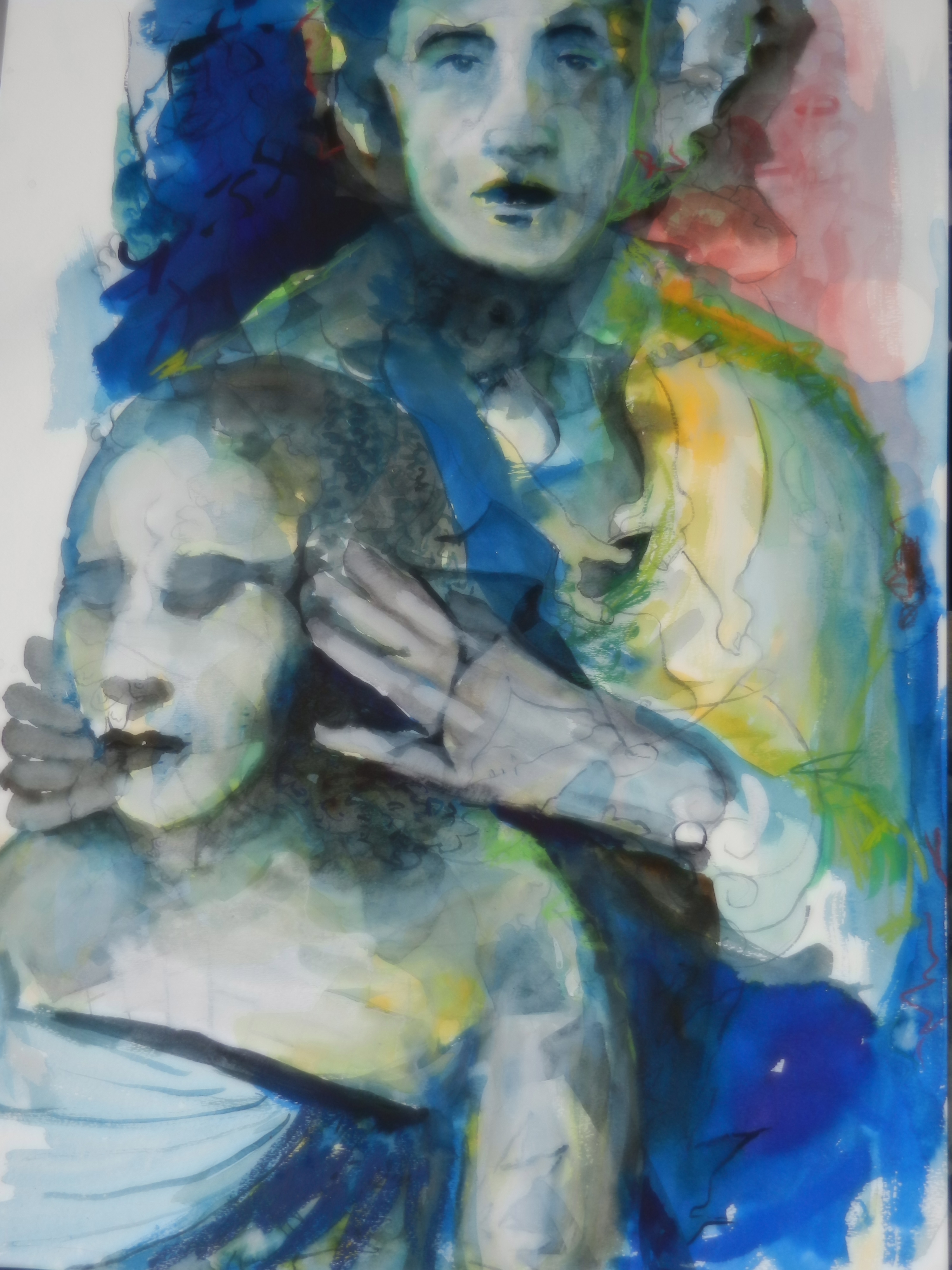
This is a very old watercolor that I called The Inner Monologue

This is a very old watercolor that I called The Inner Monologue

All the ladies were talking about how their bodies have changed with age. My body has changed, too! You’d never know it now but I used to be less than two feet tall with really pudgy knees. Kerri punched me when I offered my perspective on my body change. Apparently there is a statute of limitation for how far back in time you can go on the my-body-has-changed conversation.

When I was studying acting we were taught to write backstories for our characters. The play script was filled with clues but we learned that a character is not 3 dimensional until it has an articulated history. This was always problematic for me. I had no problem creating a backstory – that was easy – and I could justify my imagined story happenings in the script – but I couldn’t see how my imagined story led to more specific actions in the performance. If anything, the backstory got in my way. Like all young actors I got lost in the backstory, trying to “tell” it rather than pursue my clear action. Acting, like life, is about the pursuit of desire. My backstory muddied my ability to act. Acting is an art form of the present moment.

When I was teaching acting I came across the same problem. The young actors would spend hours telling me the details of their backstory which only served to diffuse their present action. They’d try to perform their history instead of pursue their current target.

The backstory was interesting but functionally useless in the present moment.

I’m finding the same challenge off the stage as I found on it. In one form or another I’ve coached a lot of people. I hear a lot of backstories. Our backstories are interesting. They do what they are meant to do: they give us identity. We spend hours and hours telling each other about our past adventures and abuses. People are storytellers, telling the story of their lives all day, everyday. Most of the storytelling concerns the past. What we did or did not do, what was done to us or justifying what we did to others. Most backstories are about limitation. Most backstories have a root in fear that show up as “reasons why I can’t” stories. Do you remember the famous Richard Bach quote? Argue for your limitations and sure enough they are yours. As interesting and informing as it is, very little of the backstory is functionally useful in the present moment. I don’t want the person I was a decade ago defining the choices I make today.

It’s become something of a mantra for me, something I find myself writing or saying a lot: The actions we need to take are usually very simple. The story we wrap around them make them difficult. What’s the story?

title_pageGo here to buy hard copies (and Kindle) of my latest book: The Seer: The Mind of the Entrepreneur, Artist, Visionary, Innovator, Seeker, Learner, Leader, Creator,…You.

Go here for fine art prints of my paintings:

This painting is called Icarus.

This painting is called Icarus.

Tap Your Wellspring

photoThe winning phrase of the week is “Wellspring of jubilation.” It came as a wish, “May you always drink from the wellspring of jubilation.” What a great image!

A wellspring is no ordinary spring. It is a source, a beginning point. The phrase made me ask more than a few good questions. For instance, how would I live my life if I was sourced from a wellspring of jubilation? Or, a more useful question: what is my wellspring? Where do I draw inspiration?

Last night on our back deck we held ukulele band practice. We are rank beginners but we played our notes with gusto whether they were right or wrong. We laughed. We sang so loud that a neighbor down the street got on her bike to seek the source of the music. What is the source of the music?

Jay brought a travel guitar to the ukulele practice to lend to Helen. Helen is petite and wants to play the guitar but is having a hard time finding one small enough for her hands. After the ukulele practice, Kerri held the guitar and played a few chords for Helen and the chords morphed into an old John Denver song. All the women began to sing. The sun was setting, the women were softly singing, and Helen’s face was beaming. She’d found a guitar that she could play. The moment was pure and stopped me in my tracks. It is a gorgeous moment when desire meets potential and possibility is born. This moment was a drink from the wellspring of jubilation. It filled me.

Jubilation is rejoicing. It is celebration and sometimes celebration is quiet. Sometimes rejoicing is a song whispered with friends as the light of day passes from pastel to gray. As I listened to their song, as I watched the faces of the singers, I decided that the wellspring of jubilation is everywhere. I am capable of being in my wellspring all the time. It is not location specific. The source of all things that inspire me is not a place: it is an orientation to my life. It is the simple act of paying attention; seeing the moment, participating in the ordinary that is extraordinary and knowing beyond doubt that the extraordinary is everywhere.

The extraordinary is happening all of the time. The question is not, “Where is it?” The question is, “Can you see it?”

title_pageGo here to buy hard copies (and Kindle) of my latest book: The Seer: The Mind of the Entrepreneur, Artist, Visionary, Innovator, Seeker, Learner, Leader, Creator,…You.

Go here to get fine art prints of my paintingsEmbrace