Walk With Your Ally

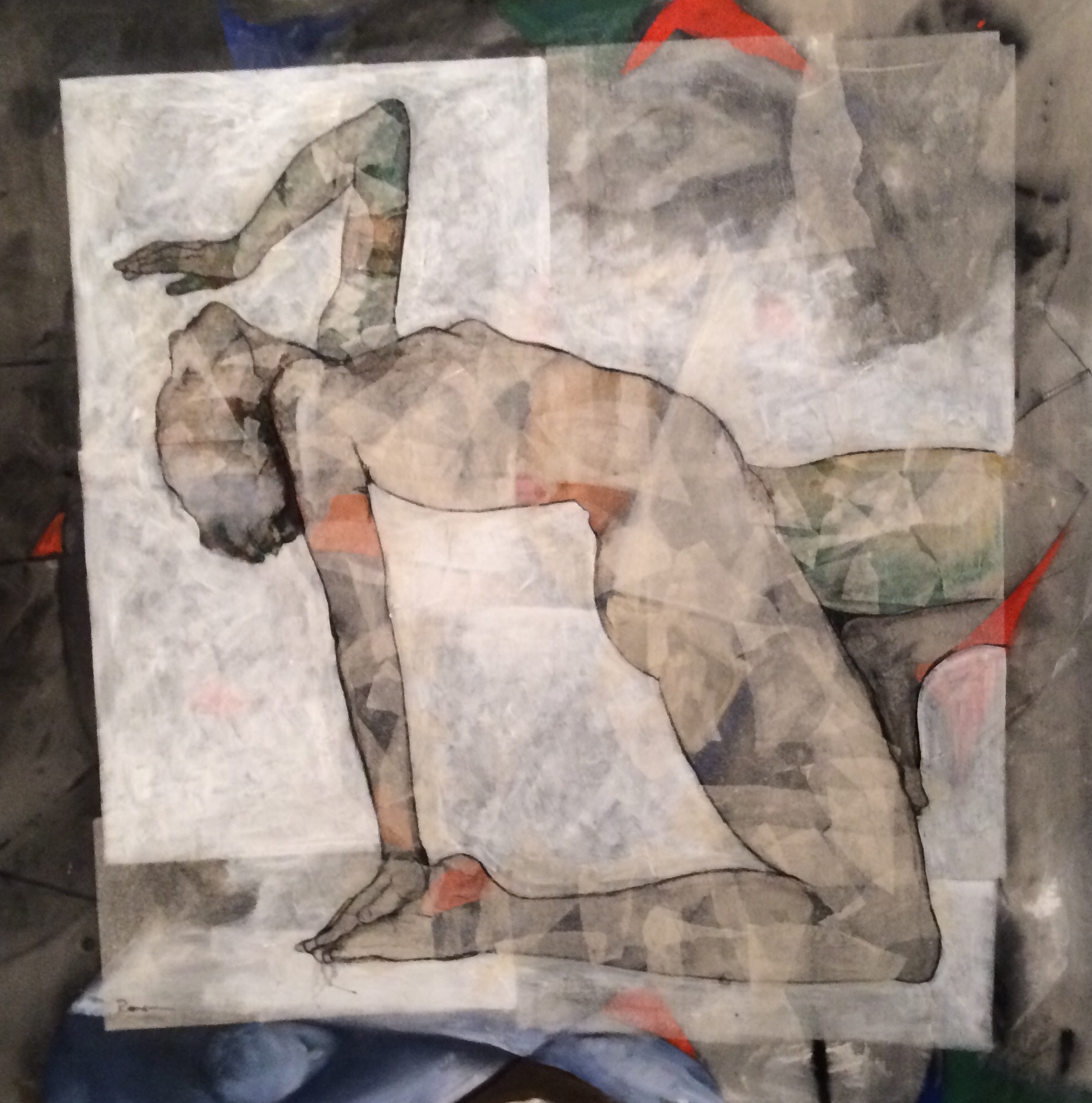
another painting in the Yoga series

the latest painting in the Yoga series

David is among my chief muses. He was the first person I met in my spontaneous-no-plan-move-to-Seattle over 15 years ago. We sat next to each other at a conference and he asked me if I wanted to be in a play. When I said yes he said, “Great. Can you be at rehearsal tonight?” Like me, he is a painter as well as a theatre artist. He steps through life with his eyes firmly focused on the possibilities. He reminds me that obstacles are nothing more than interesting process steps. When I wander through museums or galleries David goes with me whether he is there or not. When I see a play that inspires me, I wish that he might see it, too, so we might talk about it.

Recently, he sent this quote: “My intention has been, often, to say what I had to say in a way that would exemplify it; that would, conceivably, permit the listener to experience what I had to say rather than just hear about it.” – John Cage, Where the Heart Beats: John Cage, Zen Buddhism, and the Inner Life of Artists.

When I was in college studying acting I had a professor who would say, “You will always know a good play from a bad play because a bad play wants to tell you what happens. A good play wants to include you in what happens.” He also used this rule to define good acting from bad acting. His shorthand phrase was, “Show me, don’t tell me.” It is the artistic equivalent of, “Give a man a fish and he will have a meal; teach a man to fish and he will eat forever.” Art, regardless of the form it takes, is meant to teach people to fish.

Art is not a “thing,” it is a relationship. It is a dynamic orientation to life. It is an experience (not a possession). My interpretation of my professor’s rule goes something like this: a good play/performance/painting includes; a bad play/performance/painting excludes. Vital art reaches for others. Empty art rejects or attempts to elevate itself above others.

The best artists I know have learned to get out of their own way. They have essentially, let go of all investment in self-importance. They serve the art and, so, are not terribly invested in whether a critic or a friend likes or dislikes their work. They have grown beyond attempting to control the perceptions of others (control is an act of exclusion); they are attempting to reach the soul of the matter, touch the soul of the other.
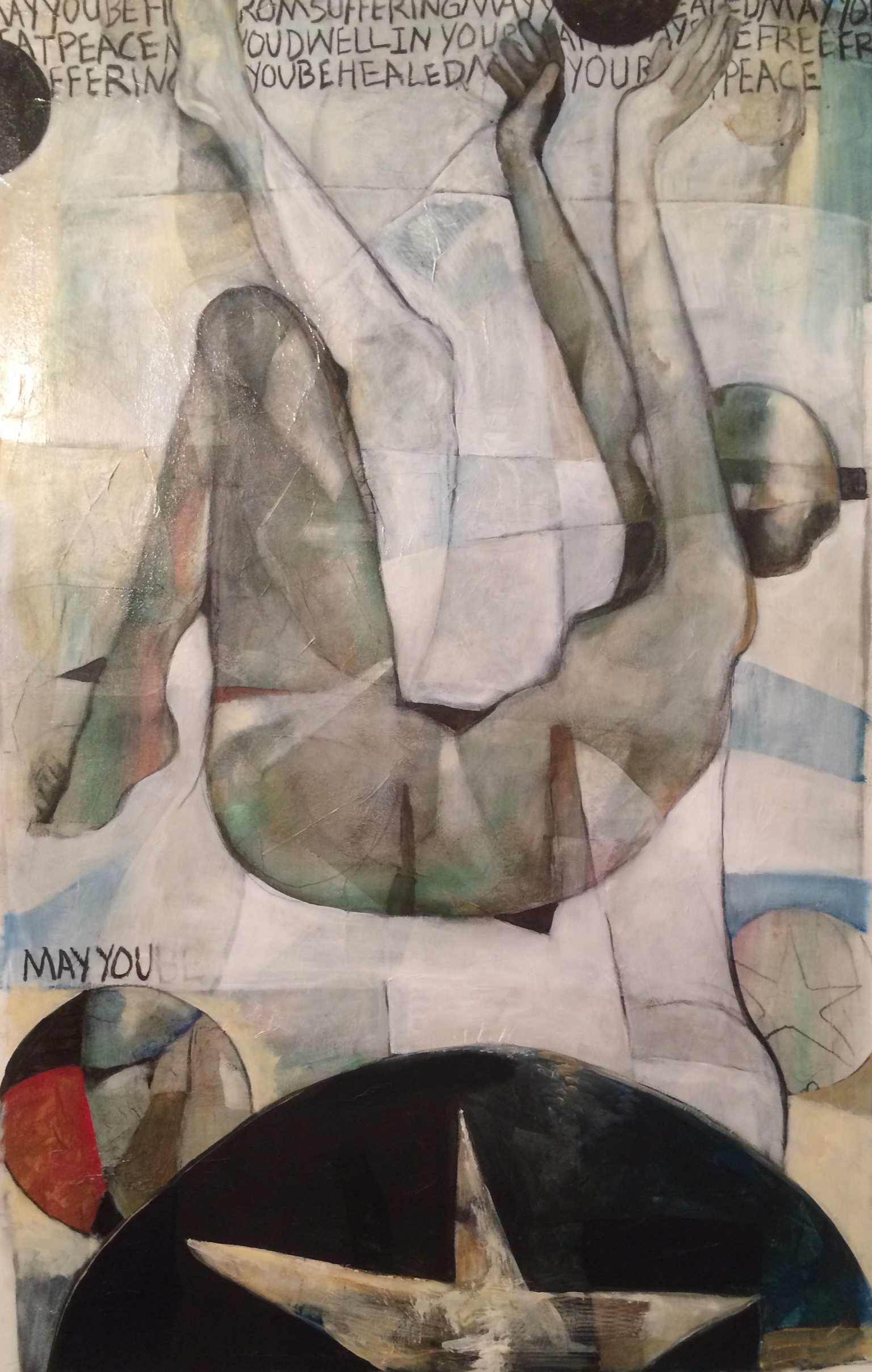
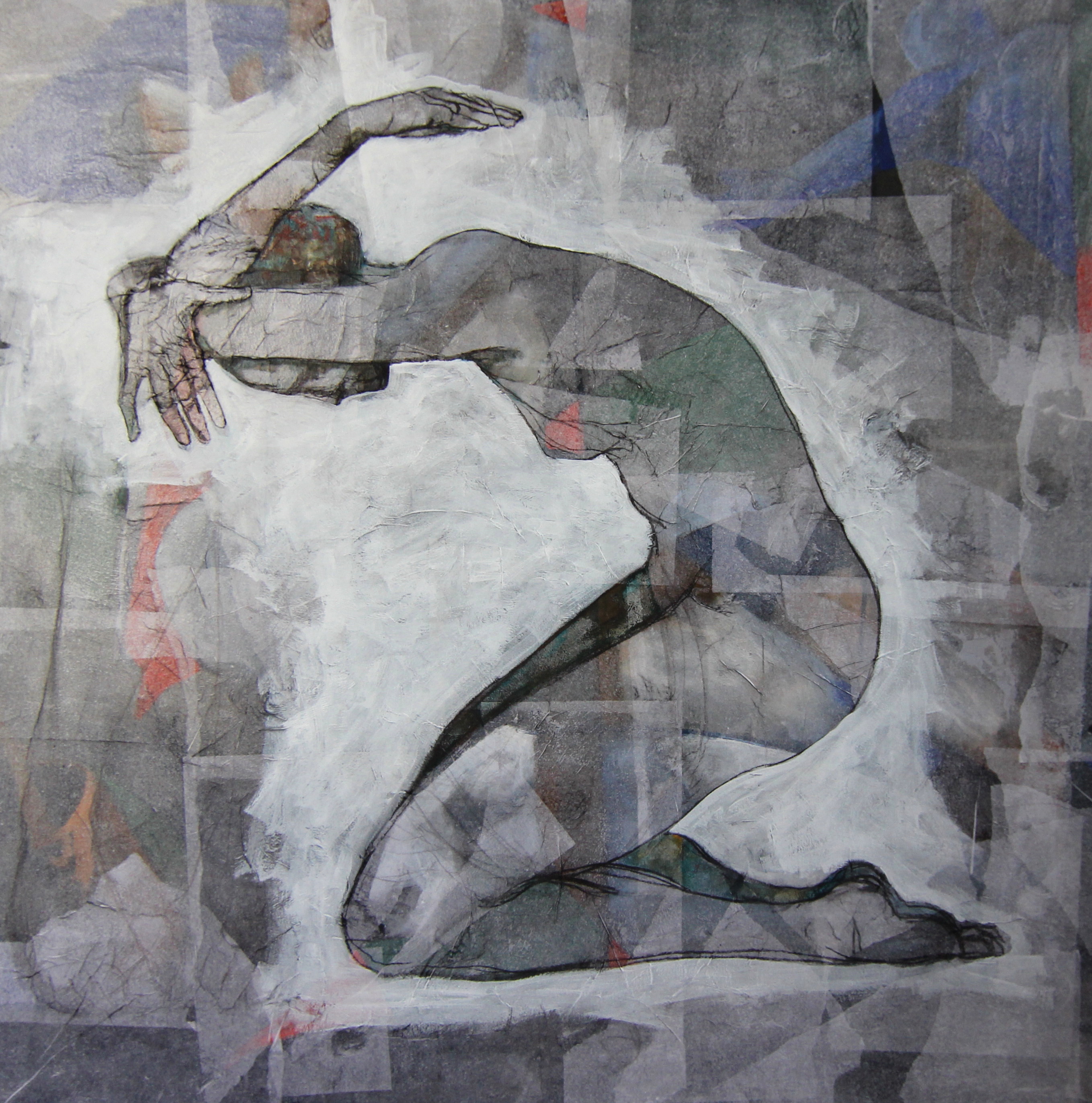
finally finished: May You Be

finally finished: May You Be

It is also true that great artists are constantly learning. And, since growth is always in the direction of the unknown, it is terribly important to have allies to walk with you. Stepping into the unknown is best done in the company of others, those special few wanderers who you can turn to and say, “Whoa! Did you just see that?” David, who is always there with me, laughs in response to my awe, and says, “Tell me! What did you see?”


Seek Solitude

from my Yoga series of paintings

from my Yoga series of paintings

It is easier to sail many thousands of miles through cold and storm and cannibals, in a government ship, with five hundred men and boys to assist one, than it is to explore the private sea, the Atlantic and Pacific Ocean of one’s being alone. ~Henry David Thoreau, Walden

I remember watching a documentary of the painter Lucien Freud. He said he couldn’t understand why anyone would choose to be a painter because the choice meant living a solitary life. His comment struck me as odd because, for me, solitude was necessary for the muse to come through. I often yearned for solitude. I always looked forward to my time with the muse.

More than twenty years ago, for a period of time, I was painting exclusively. I had an abundance of solitude. Each evening my dear friend Albert would show up at my door, force me out of the studio and take me to a coffeehouse. He told me that he feared my isolation, that without human contact and conversation, I might twist. His fear, although probably valid, also struck me as odd.

A solitary life can be quiet, prayerful; it can be full. A solitary life can also be lonely and empty. The difference, of course, is in the presence of a relationship. Most painters that I know, most artists, feel as if they are a “channel to something bigger.” Something comes through and it is in the solitary moments that the channel opens. It is in the solitary moments that the relationship becomes available. The relationship with the muse can be full, rich, and three-dimensional. I imagine monks, nuns and ascetics of all spiritual traditions know this relationship, too. Solitary need not be lonely just as, paradoxically, the loneliest place on earth can be in the middle of city teeming with people.

The exploration of the private sea, the Atlantic and Pacific Ocean of one’s being is the province of the artist. The relationship with “something bigger,” with the muse, is the seed from which all art forms grow. The seed is visible in the adornments found in pyramids, in the harp of Orpheus, and in the paintings of Marc Chagall. It is present when children with gusto run their fingers through paint or dance all alone in the grass just because it feels good.


Take The Time

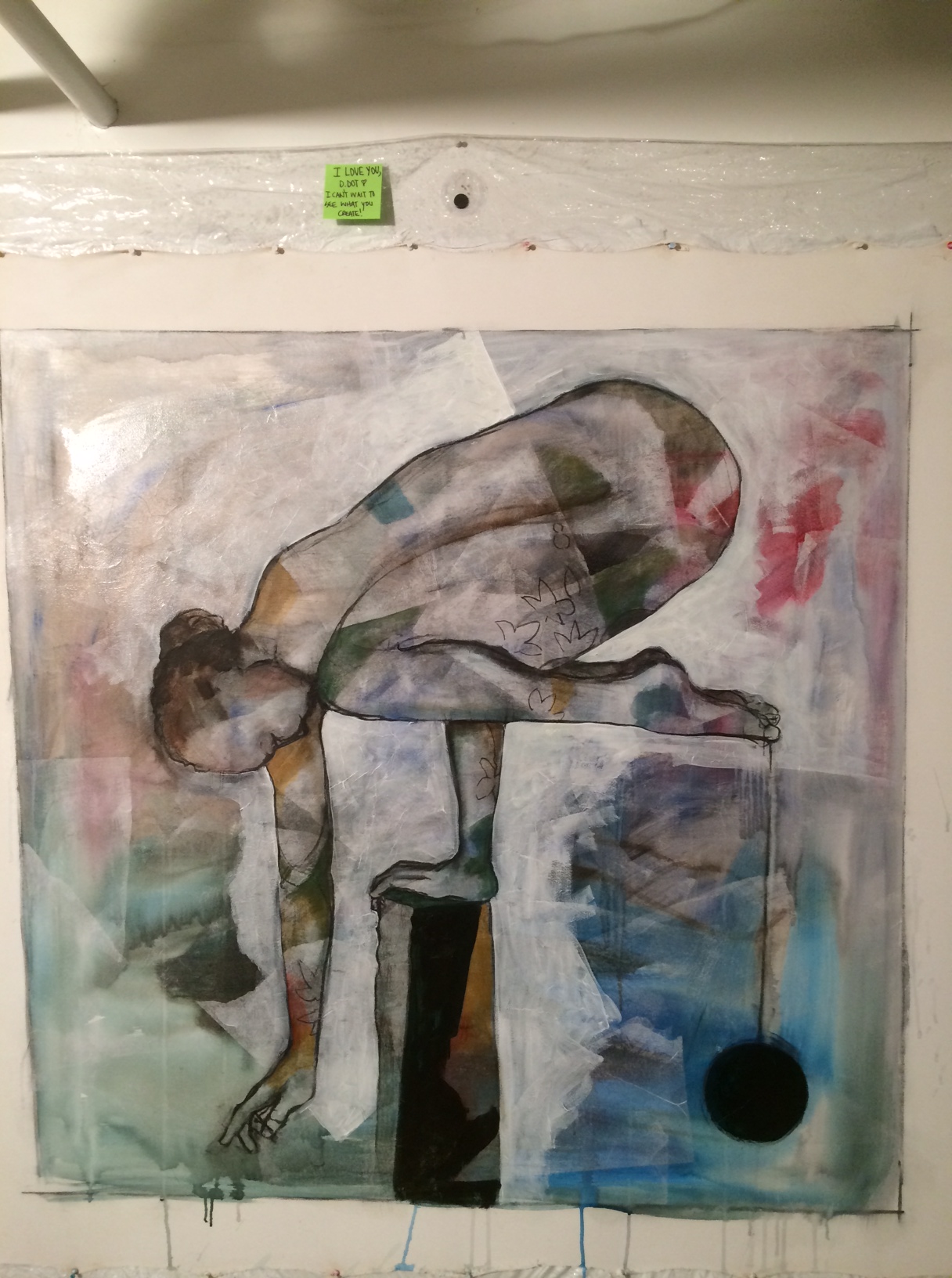
Yoga Series 7When the world says, Give Up, Hope whispers, Try one more time.

I am updating my website though I am no longer permitting myself to call it an update. To update implies (to me) something periodic. This thing requires constant attention. As it turns out, websites never sleep. Rather than an update I now think of it as a scheduled feeding. Our cat, Baby Cat (were he human he’d be a sumo wrestler or a bouncer at a biker bar), is the only creature alive that requires more feeding than my website. Baby Cat is much more vocal about his scheduled feedings so I’m mentally linking my Baby Cat and website feedings.

My current website feeding, let’s call it an appetizer, involves paintings. I’m including an archive that reaches back a decade or more. There are paintings that go back further in time (much further) and I will post my archeology as I continue the feeding. The remarkable thing about including an archive is that it has provided the opportunity for a life-in-art review. And, I don’t recognize the guy that did some of those paintings. I recall applying paint to canvas but the overall experience is akin to remembering a past-life. They are at the same time “me” and “not me.” A few years ago I went to a Picasso retrospective at The Seattle Art Museum and wondered if the man at 90 years old liked or appreciated the work he did at 20 years old. Like all great painters he grew simpler with age, he said more with less. With age, he had less to say so he was at once both free and precise (a great definition of artistry).

In my life-in-art review I’ve been most interested in the work that happened during transitional periods. For instance, shortly after I moved to Seattle (sixteen years ago) I took most of my existing paintings to a local beach and, over three consecutive nights, burned them. It was my version of a forest fire, a spontaneous conflagration that stripped my internal landscape bare. What followed was a slow revitalization. Renewal. I remember the faces of the people who helped carry my paintings to the fire. They thought I was engaged in a fiery self-sabotage. I knew otherwise. My work had become sterile and heavy. Hope was calling and I needed to drop some dead wood, shed an old skin,… (fill in your favorite analogy). It was hard, messy, scary, and, for me, necessary.

A few years ago I followed Barney and Skip around the Benziger Winery. They were giving me lessons in biodynamics. The lesson over and over again: it’s about the health of the soil. The health of the vine is an expression of the health of the soil; excellent wine cannot be pushed. It takes time. It takes attention to the whole system. Art follows the same principles.


Make No Sense

these hands will change

these hands will change

The woodpecker hammered high atop the ancient television antenna. He seemed not to be bothered by his lack of progress, beak on metal. At first I thought it made no sense and then it occurred to me that progress was not the goal. Perhaps the woodpecker hammered for the pure pleasure of the sound of it. It need not make sense. This woodpecker was an artist to his or her core!

Yesterday was a “no-power-tools” day. No sharp objects were allowed. No walking near ledges permitted. I was distracted; tired to the core. Late in the day we drove 45 minutes to a bakery called ‘Simple’ in Lake Geneva. They make the world’s best flourless chocolate cake. “This makes no sense,” Kerri said as we stepped out of the bakery with our cake. We laughed and ate a slice in the car; pure pleasure before driving home.

Every time the neighbors let their dogs out, Tripper Dog-Dog-Dog runs a frenetic figure eight in the backyard, over and over and over. He exhausts himself. He is having some exotic shepherd fantasy or perhaps he cannot contain his delight. It makes no sense for him to run a trench in our backyard for dogs he’s never even seen. He runs for the pleasure of it.

We sat in the sun this morning drinking coffee. The sky was cloudless, the air was cold but the sun was warm. We leaned against the house, saying little, feeling the warmth seep into our bones. We both knew that on this day we would do nothing. There would be no visible progress toward any defined goal. The wheels of society would have to grind on without us. We needed most to stop, to sit, to stare, to laugh at the Dog-Dog.

photo-2I started a painting a few weeks ago. It is a figure falling through space. Something has been wrong all along and sitting in the sun I figured it out. The hands are all wrong. Rather than reaching for something to grasp they ought to be letting go.


Appreciate It

#5

#5 in the process shots

Spring came fast. At this time last week there was a four-foot drift of snow on the back patio; it was Tripper Dog-Dog-Dog’s favorite plaything, leaping in and out of the snow monster. Today, a mere seven days later, the monster is gone, the back yard is snow free. Dog-Dog has already found a new favorite game: plucking leaves floating in the pond and then racing the circumference of the yard as if the newly plucked leaf was valuable treasure.

John’s dad passed yesterday. His passing was both sudden and not a surprise. His dad was an artist, a brilliant painter, and the celebration of his life will include much of his life’s work. “That’s what he would have wanted,” John said. After the call with John, Kerri looked at me and said, “There’s no time to waste.” Life happens so fast.


#6

#6

I went down to the studio and worked (yes, Skip, these are the next two process shots and the sketch;-). While I worked I listened to Kerri’s album, This Part Of The Journey. She came down to see how the painting was progressing and heard her music. She asked me to listen to a moment, a swelling of the strings, and told me of the day she and her producer mixed the track. It is a moment of music that can break your heart or make you yearn for home. “This is a piece I wrote for Wayne,” she said. Wayne was her brother; cancer took him many years ago. We listened in silence, appreciating the fullness of the moment, appreciating the power of her music, appreciating the painting that was emerging; appreciating life happening.

photo-4

from the sketchbook.


See Again and Again

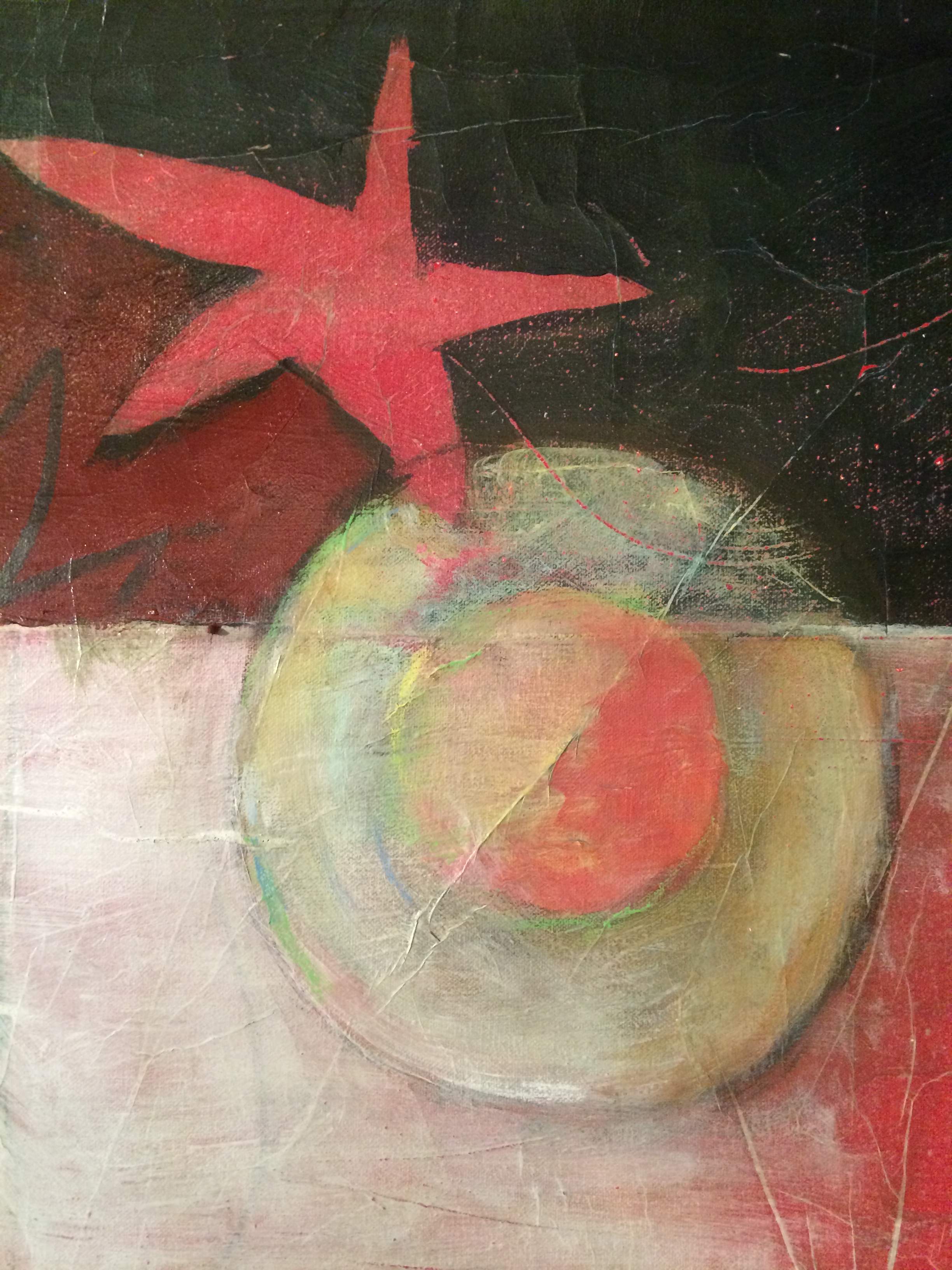
A detail from my painting, An Instrument of Peace

A detail from my painting, An Instrument of Peace

It has become my habit, when I finish a painting, to take photographs of sections of the piece. It helps me see it again. Often, I like these detail photographs as well or better than the painting. There are always discoveries in the details.

My paintings always surprise me. Years ago, I was showing my paintings to Jim Edmondson and he asked why all of my pieces had three spheres in the composition. I didn’t know what he was talking about. He laughed, our roles reversed, and he began showing me my paintings; each piece included three distinct spheres. I literally did not see them. They were apparent only after he made me look at sections of the paintings. I was both shocked and delighted. Perception is not universal.

Another detail from An Instrument of Peace

Another detail from An Instrument of Peace

The mastery of art (the mastery of life – same thing) is to transcend the notion that you “know” and that what you know is “right.” Krishnamurti wrote that, the moment you judge something, you cease to experience it. The fullness of life is in the experience and not the translation of the experience. All of us assume that we see the whole picture. We assume that we see is reality (truth) – and that reality (truth) for me must be reality for you. It is not. To have an “open mind” and “clear vision” is to release the notion that there is one truth, one way of seeing.

Once, I directed a production of God’s County by Steven Dietz and I knew it was a good production because half of the audience left angry and the other half left inspired. One play, many interpretations and the interpretations were, like all things we name as reality, rooted in each individual’s personal experience. What matters is not that our interpretations need to be the same, but a recognition that what you see is just as valid as what I see. As my friend Joe once said, “We come to know ourselves through other people’s eyes.”


An Instrument of Peace

A rough shot on the studio wall of An Instrument of Peace

title_pageGo here to buy hard copies (and Kindle) of my latest book: The Seer: The Mind of the Entrepreneur, Artist, Visionary, Innovator, Seeker, Learner, Leader, Creator,…You.

For all digital forms, go here (Leanpub)

Follow The Thread

My work in progress.

My work in progress.

I spent the morning in the studio fanning the flame of a painting I started weeks ago. It’s hard for me to leave a painting once I start it. Once started, there is a thread that I must follow through the maze of developing imagery that will eventually bring me to completion. If I drop the thread, I lose my way. When I find myself thinking too much I know I’ve lost the thread and it is best to do nothing. It is best to sit in the maze and be lost. Moving from the intellect alone will always create mud or worse, it will kill the painting. The thread, to be useful, is intuitive, a guide of feeling. I’ve learned that sitting still is a necessary and useful skill.

To return to the painting requires finding a wholly new thread. It requires sitting with the existing image until the new thread appears. Sometimes the new thread presents itself when I stare at the painting. Sometimes the new thread jumps me in an alley or while having coffee with a friend. That’s what happened with this painting.

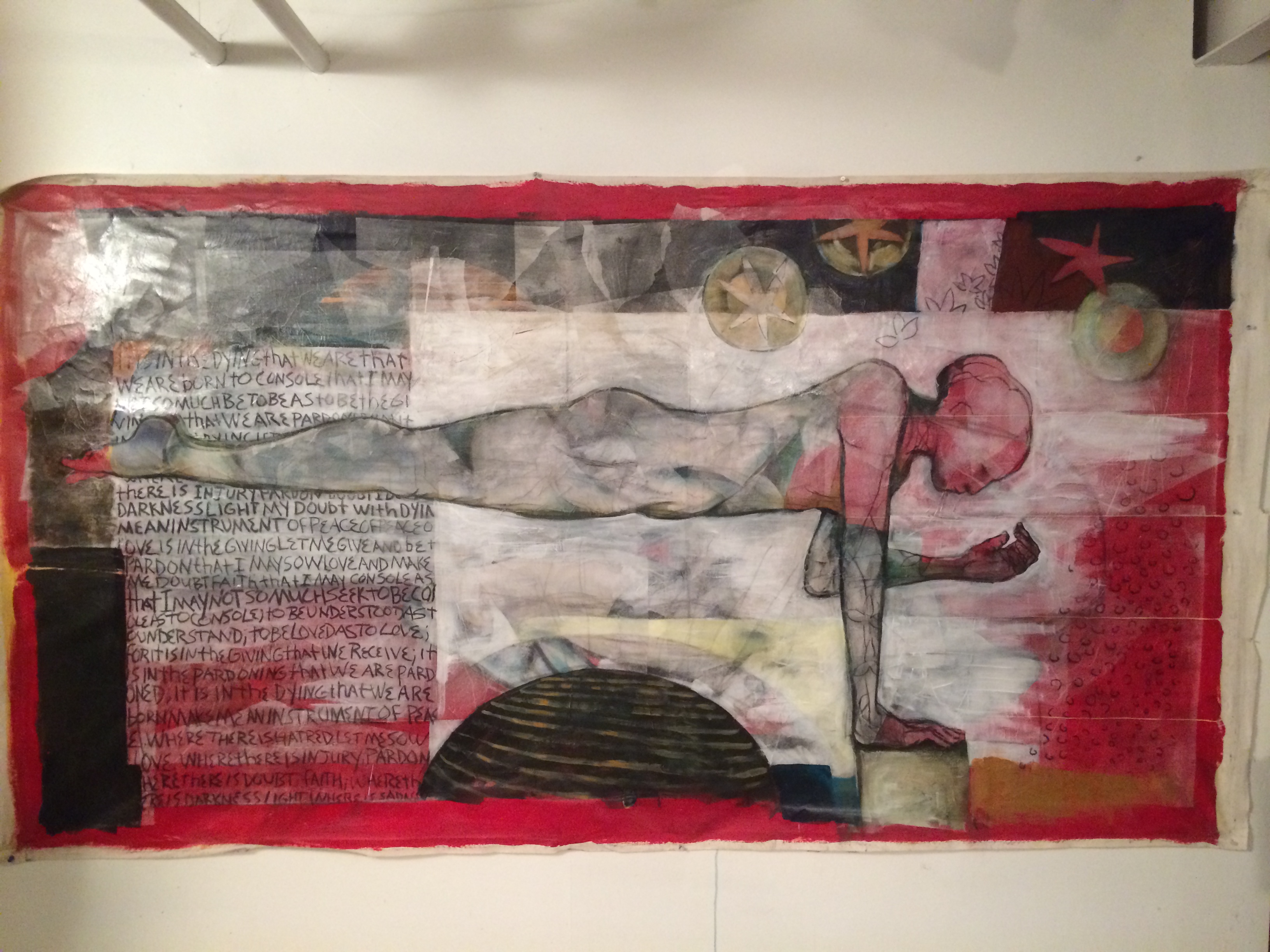
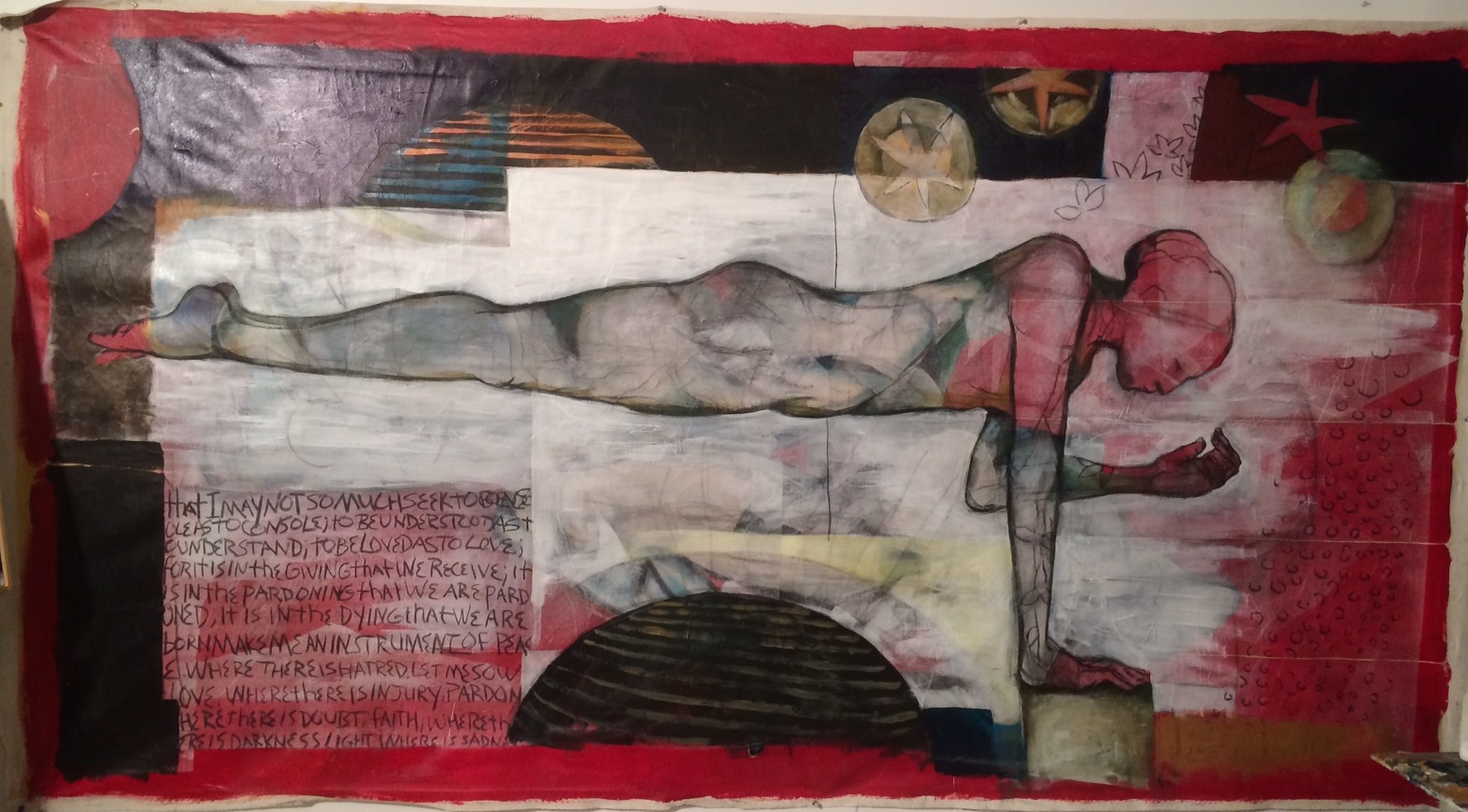
The new thread mugged me. I was miles from the studio and heard someone recite a portion of The Prayer of Saint Francis; the painting was suddenly smacking my inner eye. I knew exactly what I needed to do. It felt right. It felt vital. It would not leave me alone – and that’s how I know I’ve found the thread again. The prayer wanted to be in the painting. This thread would not lead to the same outcome. This thread would lead to a completely different painting.

More and more, words are showing up in my paintings. As I walk deeper into specific symbolism, I’m discovering the word as image. Using words as design elements, shaping a word as I shape a drawing, letters as visual symbol (they are symbols referential to sound). These words that do so much to shape our perception and either put locks on our experiences or set us free – they are calling to me as pure visual forms. Letters are simple lines and shapes sequenced and given meaning as words. Just so, words are lovely shapes sequenced and given meaning as sentences. The meaning is not carried in the words (the symbols) but in the reader. The shapes are visual statements before they are infused with symbolic meaning. Open a book written in a language that you do not read and you’ll see what I mean. You can’t make meaning of the symbols but you can appreciate the visual – in fact, once your brain ceases attempting to assign meaning to the symbols you can actually see the pure form (this is a good rule of thumb for cultivating presence, too).

Here’s the prayer in its symbol form for you to interpret and an image of how it currently exists in the painting:

Lord, make me an instrument of Your peace. Where there is hatred, let me sow love; where there is injury, pardon; where there is doubt, faith; where there is despair, hope; where there is darkness, light; where there is sadness, joy.

A detail of the prayer.

A detail of the prayer.

O’ Divine Master, grant that I may not so much seek to be consoled as to console; to be understood as to understand; to be loved as to love. For it is in giving that we receive; it is in pardoning that we are pardoned; it is in dying that we are born again to eternal life.


title_pageGo here to buy hard copies (and Kindle) of my latest book: The Seer: The Mind of the Entrepreneur, Artist, Visionary, Innovator, Seeker, Learner, Leader, Creator,…You.


Say Yes To How

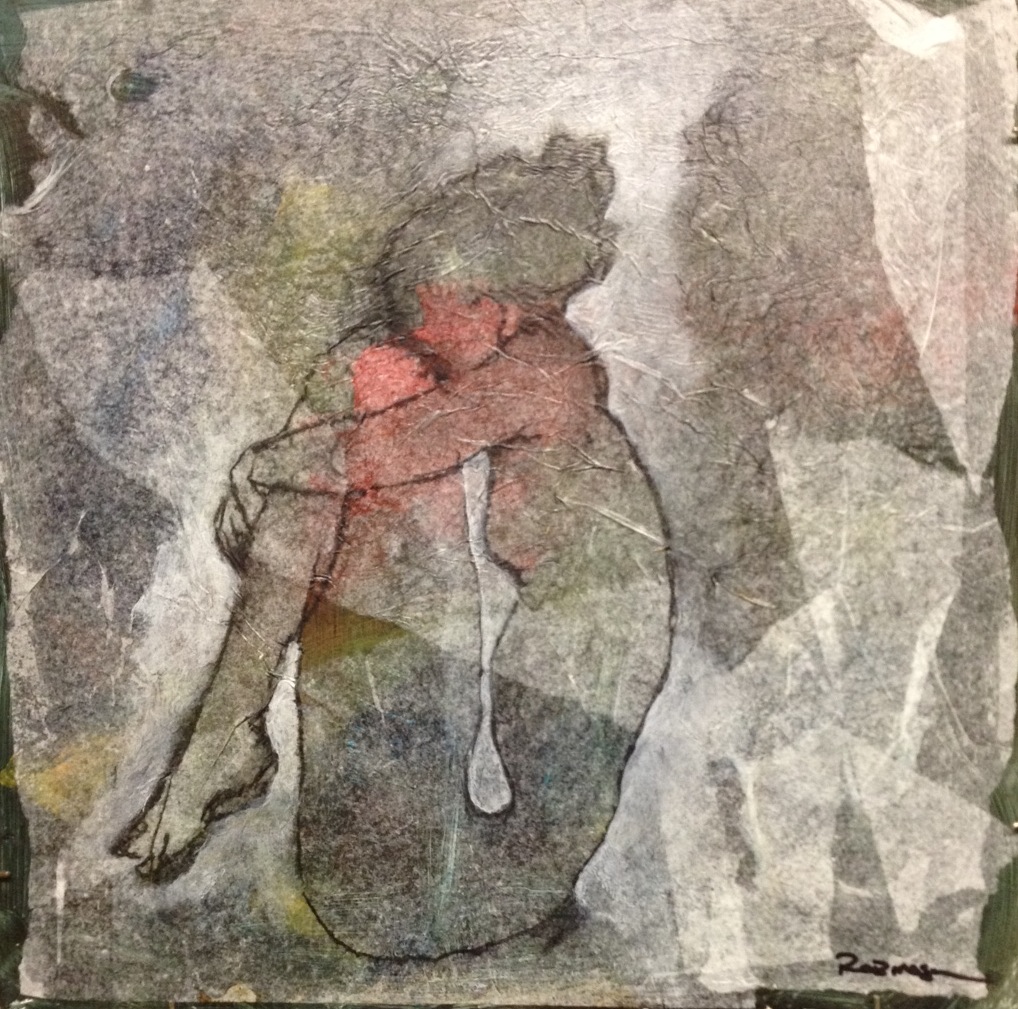
This is one of my first test paintings for the yoga series. It's small, maybe 10inches square.

This is one of my first test paintings for the yoga series. It’s small, maybe 10inches square.

I’ve spent much of the past week shooting and cropping photos of my paintings. I’m cataloguing. I’m gearing up to show again.

I took an extended hiatus from showing when I went on my walk-about. Actually, in the few years prior to walking about, I stopped showing except for open studio nights and the few opportunities that found me. I continued to paint. I drew a comic strip. I wrote a book. There was lots and lots of energy output but very little energy to calling attention to my work.

The process of shooting the photographs has been a process of rediscovery: I painted paintings and stored them. More than once, now, I’ve unrolled a canvas and exclaimed, “Ah! I forgot all about you!” It’s a paradox: it’s as if I stumbled upon the work stash of some long ago artist; each roll holds a surprise. Each roll also holds a homecoming.

Early sample from the Yoga series. 18" x 24"

Early sample from the Yoga series. 18″ x 24″

Because I’ve been painting but not showing, I’ve inadvertently created an opportunity! I have an intact series: my yoga paintings. This series is a great gift because I can track my growth, I can trace the development of a technique and a visual stream of consciousness. I can see the seed. I can see the the seed cracking open, the green tendrils that grew from the seed. I can see the blossom. And, there is more to come that remains yet unknown.

When I started the series I had no idea that I was actually starting a series. At the time I was bored with my work. A friend, an acupuncturist, asked me to create some paintings for his office. Bodies in motion. I was messing around with different surfaces so I took the opportunity to play. I thought few people would see the paintings so there was no pressure to produce. I actually practiced what I preach: I played. I loved the mess. The point was the process and not the product. No single painting was an end in itself. There was no thought to being good or investing in any of the games that make art a labored mental exercise. It was fun. It was a discovery path.

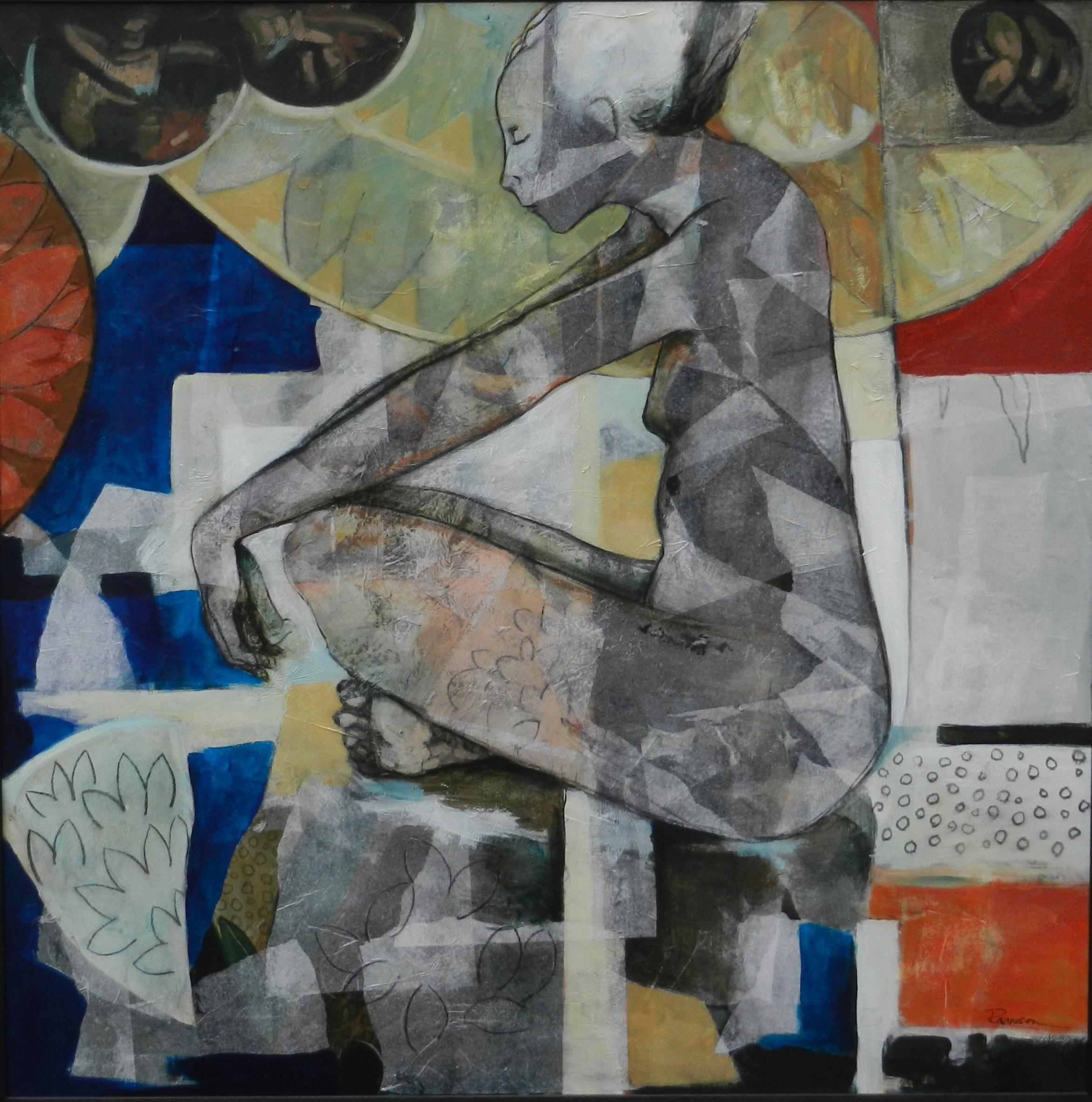
The Yoga series all grown up. This piece is  4' x 4'

The Yoga series all grown up. This piece is
4′ x 4′

It continues to be fun. It continues to be a path of discovery. The pieces are becoming more complex; the figures at first were suspended in space. Now, they exist in environments. The pieces started small. Now, they are quite large (and getting bigger).

I’ve been writing these past few weeks about the question “How?” I realized yesterday, as I shot the latest painting in the series, that over the past few years I’ve often asked myself, “How am I going to paint that?” The answer has always been a rich and vital, “I don’t have the vaguest idea! Let’s find out.”

The latest in the series. This piece is almost 5ft x 5ft

The latest in the series. This piece is almost
5ft x 5ft

Peter Block wrote a great little book entitled, The Answer To How is Yes. As it turns out, these paintings are my visual record of how I said and continue to say Yes to How.

Go here for art prints of my yoga series. The newest pieces will be available soon!


title_pageGo here for my latest book

Stand In The Cornfield

647. Join me in inspiring truly powerful people. Each day I will add a new thought, story or idea to support your quest and mine.

Many years ago I painted a portrait of my father standing in a cornfield. It was an odd painting for me to do at the time as I’d stopped doing portraits years before. I just had to do it. I wasn’t working from a photograph; I just knew he had to be standing in a cornfield. It is a painting I never show. It is a painting of yearning fulfilled.

My father was born in a small farming town in Iowa and spent his adult life yearning to live in the place of his birth. He moved for work and then for love and although he knew where he wanted to be, he could not find a way to return. I put him in the cornfield because symbolically that was where he most wanted to be: in a small community, contained, where life made sense, where people knew where they fit and where people were not in so much of a hurry that they would stop and talk.

Yearning is a funny thing. Yearning is a necessary thing. Yearning is not what is missing; it is the space between where you are and where you want to be. Yearning can be fuel. It can help clarify what you want and energize your actions toward manifesting your desire. Or, it can twist your guts and make you bitter: unspent energy needs to do something and if it is not moving toward your fulfillment it will knot your belly and make your neck tense. Once in a class, I watched several people give speeches. Many put their energy into the speech and where poised, present. Many others were ungrounded and unconsciously pounded the podium or wiggled their legs; energy must have someplace to go.

Yearning can be proof of separation (“I don’t have what I want”) or proof of connectivity (“this is what I will create”). The difference lives in how you define yourself: if you are in this life looking for what you can get, your yearning will probably feel a lot like separation. If you are in this life living according to what you bring to it, your yearning will be an umbilical cord to what you will create and will nourish you in the creating.