Share and Renew [David’s blog on Merely A Thought Monday]

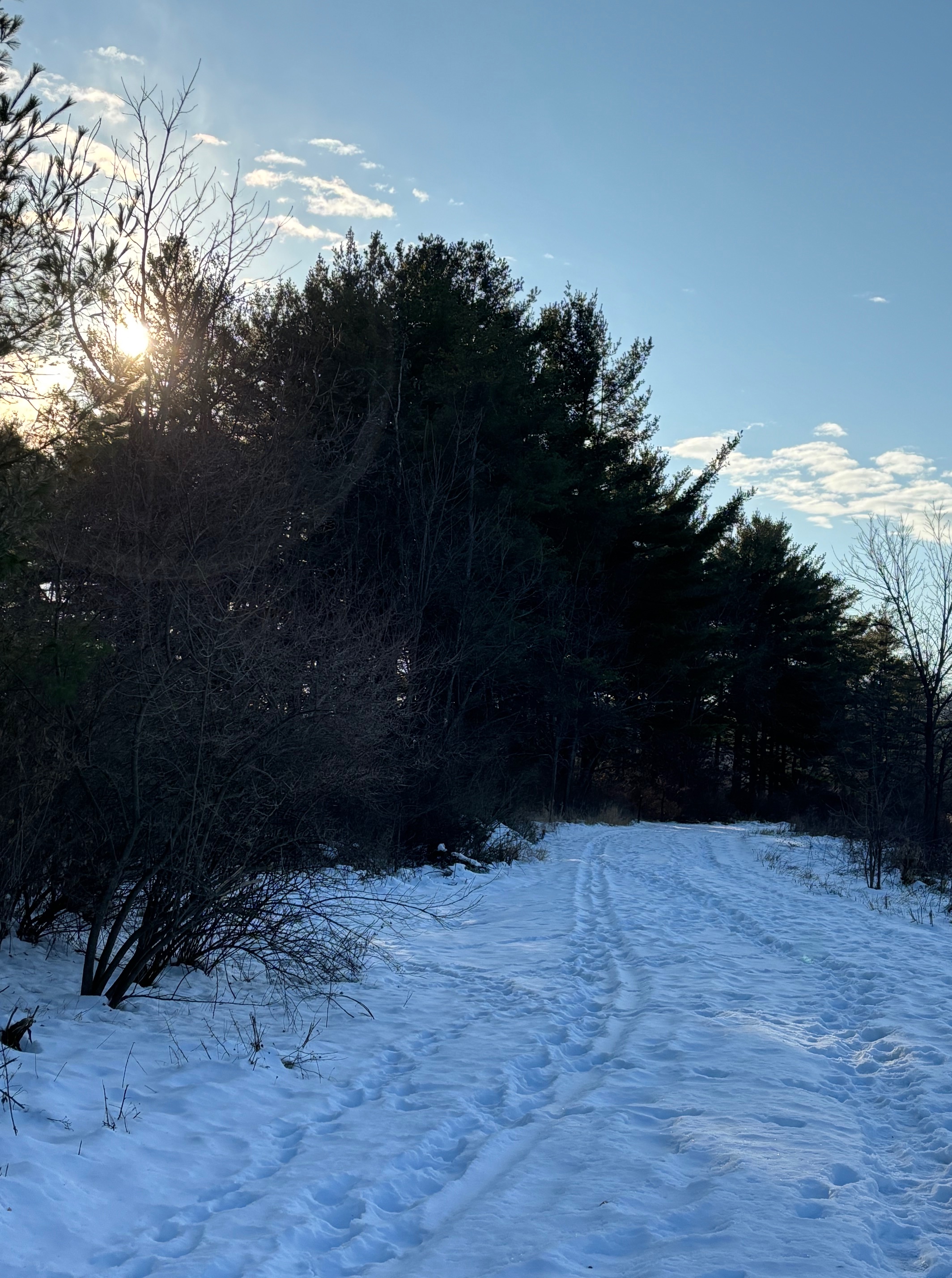
As additions-to-traditions go, the bauble-on-the-tree is a relatively recent inclusion. People have decorated their dwellings with pine boughs, a symbol of renewal and rebirth (of the light), for many, many centuries. Placing ornaments-on-trees only began in the 1800’s.

We decided this year – for reasons that reach beyond words – to bring out Beaky and Pa’s ornaments. We are minimalists mostly so in the decade of my Wisconsin life these ornaments have lived in a box in the basement. We look at them every year but have never – until now - hung them on a tree. They are glass and fragile so we worked slowly, placing them with care.

Having them with us this season has been more powerful than I imagined. Having them with us this morning is more meaningful than I thought possible. Family is with us. And, isn’t that, after all is said and done, the point of it all? Given family and chosen family. To feast our long line of belonging and celebrate our brief time on this earth together. To honor that we are, as Jean Houston wrote, “…the burning point of the ancestral ship.” To gather, adding to the rich bank of shared memory. We reach back in time with gratitude. We live forward through our children and their children and their children…

This morning we sit quietly, sipping our coffee, sharing stories, hanging out with Beaky and Pa, in our recognition and deep appreciation of this time of life’s Renewal.

read Kerri’s blogpost about BAUBLES

like. share. support. comment.

buymeacoffee is…

Enter The Sanctuary [on Not So Flawed Wednesday]

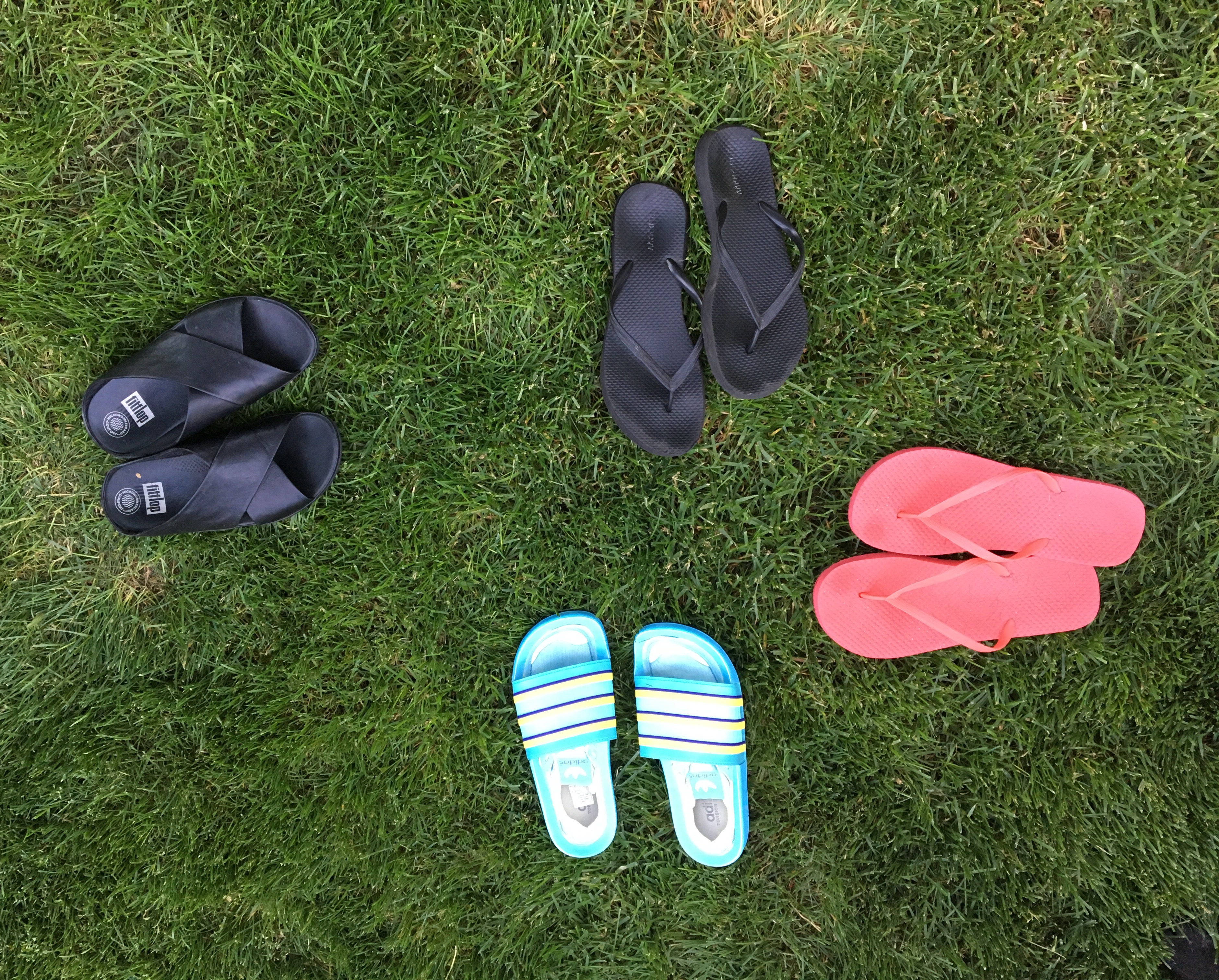
This is an image of sanctuary. The back yard of dear friends, time spent together, taking precautions to be safe in a time of pandemic.

There’s more than one compromised immune system represented in this photograph. It is why we continue to meet outdoors. It is why, until we were vaccinated, we were careful to keep distance between us. How odd to honor the love of dear friends by inserting space between us. Our flip flops and sandals are stand-ins for a group selfie.

When our postal carrier came to the door to deliver a certified letter, she groused about the process for capturing the required signature, “We have to do this because of COVID,” she sneered, “even though there is no COVID.” We’ve learned not to push back on ignore-ance. I was reading about Brazil eclipsing the the over 500,000 deaths-mark when the doorbell rang. Kerri signed for the letter. She closed the door and we simply stared at each other. No words.

I delight in this photograph because, to me, it is slightly disorienting. If you had to guess which direction the photo was taken, you’d most likely guess blue. You’d be wrong. Perspective is just that – perspective. From my perspective, the photograph is upside-down. The photographer wears black flip flops.

We constantly locate ourselves in our stories. The location we choose is not passive or general. It is unique, dynamic. It gives us a point of view but does not afford us a lock on truth. Learning to question your unique perspective, to challenge your story-as-central, is an important growth step. It is maturation. Learning to question what you are told is an invaluable skill to develop.

As a lover of story, as a student of perspective, I am fascinated by the story-war raging in my nation. Politicians drape themselves in the flag, defending a violent insurrection on democracy, while demonizing and fearmongering BLM. Propaganda, hate-mongering and conspiracy theory is run amok and fueled by entertainment posing as news. Voter suppression laws, gerrymandering, stuffing the courts, all in the name of…what? The story of division. The dedicated maintenance of a half-story. A national story increasingly exposed as redacted. Why should a democracy work so hard to prevent a portion of its population from voting? To prevent its full history from being told? As we ask in the coaching world, “What’s underneath?”

Nations, like people, cannot grow until they look at the whole of their story, until all perspectives are voiced.

I’ve wandered back into the world of entrepreneurs and business. Each day I read or am shown the data on teamwork or the power of collaboration. The software-as-a-service world is dedicated to facilitating better communication, efficiency in sharing and collaborating, crossing disjointed platforms, and reaching into clouds where all are stronger as one than when in silos. I’m finding it intensely hopeful. Progress is calling us together. The economy is global as is the pandemic. We are in this together.

No one is healthy if all are not healthy. It’s the rule of the backyard, the honoring of dedicated friendship. My job is to protect you and yours is to protect me. It’s the story of the sandals and flip flops, the image of sanctuary, and, if not the yearning of this nation, it is the reality of this interconnected world.

read Kerri’s blog post about SANDALS

Honor All Perspectives

my latest painting. Hope asks, “What do you see?”

Hope Hughes, Kerri’s longtime assistant and voice of reason in all-things-business, passed through my studio and flung herself in front of the painting I was working on. “Stop!” she cried. “Don’t touch it! It’s finished!”

“Finished? I just started,” I whined. She laughed at the perplexed look on my face.

“Put down your brushes,” she smiled, “and listen for a minute.”

Over time I’ve learned to listen to Hope. She makes sense of the world through her feelings which comes in handy to an over-cerebral artist like me. She has no inner-editor in the early stages of communication so I’ve learned her heroics are pure. She sees something that I do not. This is not the first time Hope has thrust herself between me and the painting I am about to destroy, so when she asks me to ‘look’ there is usually a good reason. I set down my brushes, cross my arms, and huff as if to say, “I’m listening but make it fast.”

Each time she begs me to stop work on a painting, a great debate rages in the household. This time was no exception. I sit in my chair and listen to what she sees. It is always diametrically opposed to what I see so I pretend to pout (I secretly love this process because it is EXACTLY what I adore about art in general and painting in particular). She tries to get me to tell her what I intended to paint, coaxing me to talk about what I see but I refuse. As Joseph Campbell once said, “If an artist respects you, s/he will not tell you what a painting means. ” Art is always about a relationship between the piece and the viewer and the artist needs to stay out of the way. If the artist has no respect for you (or themself), s/he will tell you what the painting means to them. I respect Hope so I stay out of the way.

In this painting, Hope sees deep humility in dual fatherhood.

My refusal drags other people into the fray. She snaps a photo of the painting and then shares it with others, asking what they see in the painting, what descriptors they would use. As is always the case, the replies sometimes align with her perception and sometimes not which further fuels the debate. 20 had the misfortune of coming over for dinner and he was subjected to the photograph test.

In this painting, 20 sees grief and loss. In this aspect he agreed with Hope: the painting is finished.

When I first started showing paintings I would follow patrons through the gallery (they did not know I was the artist) and listen to their perceptions. They rarely saw what I intended but what they saw was marvelous – almost miraculous to me. It was an advanced course in understanding the futility of trying to determine what another person perceives. Art, I learned in those days, is a living relationship. Perception is personal. No one is a blank slate. Paintings evoke. The meaning is made between the patron and the painting.

I enter into the studio to drop out of my many descriptors and over-cerebral tendencies. I go to the studio to engage in a pure relationship with…my muse(?) I am never more alive than when I am painting. I am never more quiet than when I am painting. The images that emerge from my quiet are sometimes incidental, always surprising, and are sometimes just a map of a moment in the greater relationship of my life. Only a moment. I feel that I have never finished a painting because the paintings themselves are not distinct, separate from each other. They are living things. They change over time. They are moments, marks in the sand in a greater ongoing relationship in the long-body of my life.

What do I see in this painting? It is not important to know. Is it finished? For me, never. And, and for Hope, yes.

Every artist needs a Hope Hughes. Someone they trust, someone they respect to step in front of their work and without editor, tell them what they see. Hope reminds me that the true value/purpose of art is to create a commons capable of affording multiple perspectives and the rich opportunity to discuss the differences in what we perceive.