Recognize The Greater [on DR Thursday]

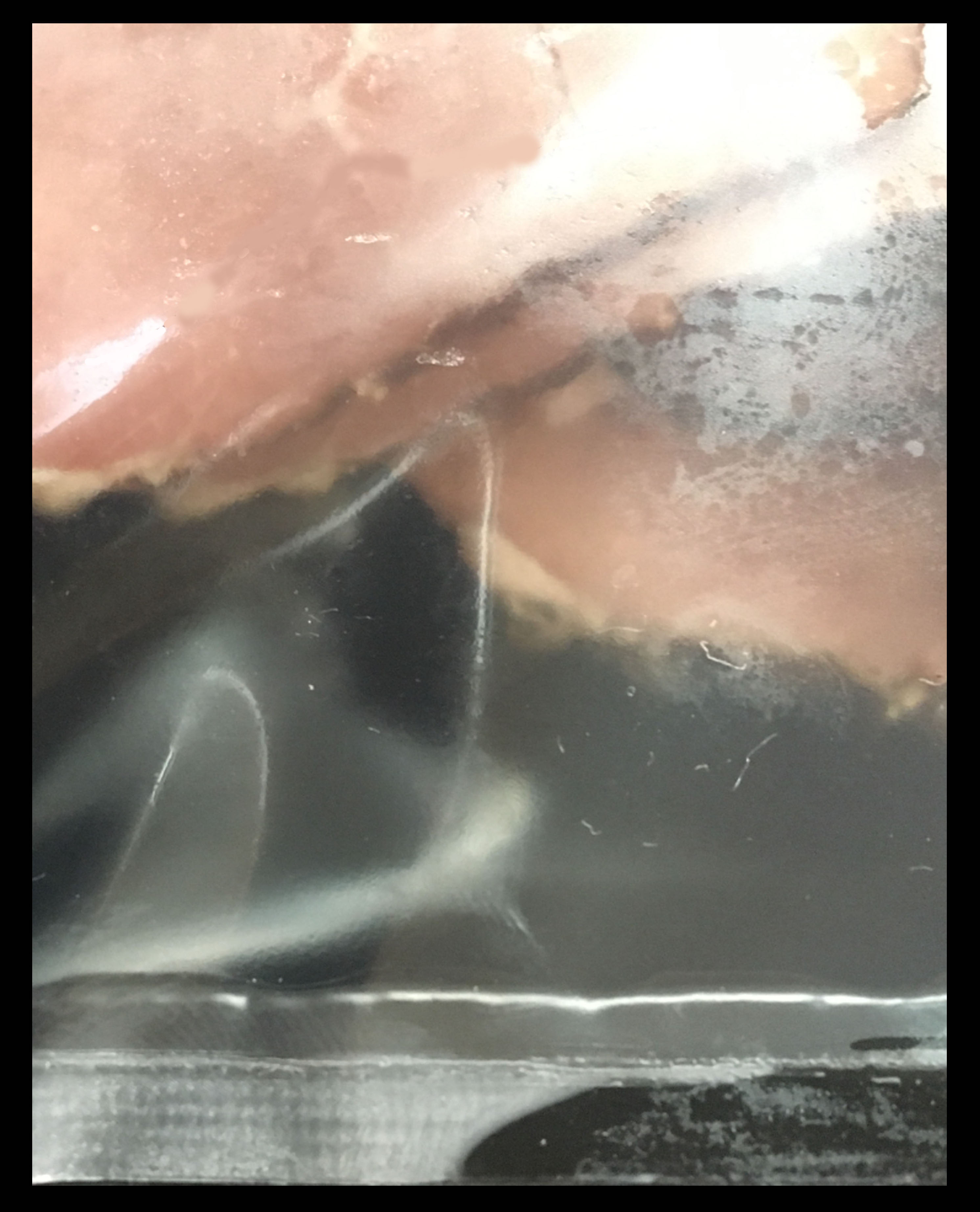
strange sky

“Can a shallow mind appreciate beauty?…When the mind is merely concerned with itself and its own activities, it is not beautiful; whatever it does, it remains ugly, limited, therefore it is incapable of knowing what beauty is.” ~Krishnamurti, Think On These Things

What accounts for the strange color of the sky? Smoke from the fires? A coming storm?

The quote above is only half of the thought. It is the set up for the real point to be made. A shallow mind is concerned only for itself. And, while consumed with the lesser, it misses the greater. It is the unintentional theme that emerged for me this week: losing the greater for the lesser. The baby goes out with the bathwater.

It is a matter of perception, of focus placement.

Yesterday I wrote about the judge questioning the potential juror about his capacity to experience hardship in order to keep the system going and growing. The juror entered the exchange with a self-focus and exited, admonished, with perhaps the possibility of seeing something beyond his own agenda. Perhaps.

I read that Rome fell when the luxuries became more important than the essentials. Societies fall when they can no longer discern between what is important and what is not, when the lesser is protected at the expense of the greater.

Years ago, during a facilitation, a young woman pulled herself from and exercise. She sat on the sidelines and brooded. After the exercise, during the debrief, she claimed that she was discriminated against because her team did not listen to her ideas. Initially, her team scrambled to apologize – one does not want to be accused of discrimination. We asked the team to explore the situation a bit further. Because the young woman’s idea was rejected, was she truly a victim of discrimination? It was an illuminating conversation. The problem – the real problem – arises when we can no longer discern between what is discrimination and what is not? There is terrible discrimination in our world and needs to be addressed. It can’t be seriously confronted if we are incapable of distinguishing between the rejection of an idea and laws that prevent citizens of color from voting.

In a pandemic, a mask is not a breach of personal freedom. It is not the state ripping away control of your body. It is a minor inconvenience to ensure the mitigation of a virus that is killing scores of fellow citizens. Despite the rhetoric otherwise, the fearmongering and tribe-building, wearing a mask is something done for the health of the whole. It is not unlike jury duty.

It is a matter of perception. Of focus placement. Self or other? Lesser or greater?

The rest of the quote: “Whereas, a mind that is not concerned with itself, that is free of ambition, a mind that is not caught up in its own desires or driven by pursuit of its own success – such a mind is not shallow, and it flowers in goodness. Do you understand? It is this inward goodness that gives beauty, even to a so-called ugly face.”

Pay attention to the verb. Beauty is given. Concern for the well-being of the other is a sentiment expressed and championed in every corner of the world, by all the figures we quote, elevate, and sometimes emulate. Martin Luther King, Ghandi, Abraham Lincoln, Mother Teresa,…it’s a very, very long list.

Communities thrive when they are capable of enduring hardship for each other, for the benefit of the whole. They also thrive when they hold boundaries and protect the rights of the individuals. Those two seemingly different actions are, in fact, one and the same.

Societies fall when shallow minds prevail, when they can no longer discern between essentials and luxuries, privileges and responsibilities. When personal comfort takes precedence over enduring ideals.

It’s a matter of perception. Of focus placement, and make no mistake, focus is easily led. Just like a package of pastrami mistaken for a strange colored sky.

read Kerri’s blog post about PASTRAMI SKY

shared fatherhood ©️ 2017 david robinson

Discern [on Flawed Wednesday]

“For in the end, he [Aldous Huxley] was trying to tell us what afflicted the people in ‘Brave New World’ was not that they were laughing instead of thinking, but that they did not know what they were laughing about and why they had stopped thinking.” Neil Postman, Amusing Ourselves To Death: Public Discourse In The Age Of Show Business

Neil Postman wrote Amusing Ourselves To Death in 1985. Cassandra, sounding the alarm to a community too distracted to listen. Were he alive today, he’d think – but would not say – “I told you so.” All the quotes in this post are his.

I read in my daily-news-horror-trawl a quote from a Wyoming man who believes he’s protected from the pandemic because of the color of his hair. It might sound wacky until you consider that his staunch belief in the virus’ preference for hair color is just one of the many misinformation narratives currently being fed to the angry and easily led. He is, without question or thought, breathing the gas of a political party that wants to keep him distracted, fearful and high.

If you are not choking on the fumes of excessive gaslighting, then you are among those whose eyes are burning from the corrosive air it produces. Are you as tired as I am of reading accounts of deathbed appeals for the vaccine? It is too late, in your final moments of life, to realize you’ve been duped. It’s a tragedy. Are you as disgusted as I am, having been witness to the undeniable violence of the insurrection, of listening to the blatant denials? Despite what your eyes saw, it was just another day of tourists wandering through the Capitol. Gaslight tears.

During the first year of the pandemic an acquaintance latched onto a comorbidity table lifted from the CDC website and circulated as “proof” that COVID was less dangerous than the common cold. It was, of course, taken out of context. A quick visit to the CDC website (seriously, less than 30 seconds), viewed in context and with an understanding of the meaning of the word “comorbidity,” easily debunked the claim. Our acquaintance, enraged, doubled down on his claim of “proof” – though he could not be bothered to spend 30 seconds to check the poison gas that he was gulping.

“When a population becomes distracted by trivia, when cultural life is redefined as a perpetual round of entertainments, when serious public conversation becomes a form of baby-talk, when, in short, a people become an audience, and their public business a vaudeville act, then a nation finds itself at risk; culture-death is a clear possibility.”

The legal defense has been successfully used to defend both Tucker Carlson and Rachel Maddow: the courts ruled that reasonable viewers should know the difference between news and opinion. This is news. This is not.

Do we have the ability to differentiate between public business and a vaudeville act? The evidence is not hopeful.

The court’s ruling, then, is likely based on a faulty premise: that people are able to differentiate. That the audience is reason-able or values reason. Able-To-Reason. Reason is the power to think, understand and form judgments through a process of logic. In order to be reasonable one must value reason. One must want it.

Logic and reason, both assume the inclination and capacity to question. Curiosity, real curiosity, does not seek agreement or group think. It seeks to step into the gap between what is espoused and what is lived. It seeks solid ground to build upon so must recognize sand when it sees it.

And, what if “reason” long ago fled the coop? Or, what if “reason,” has never been a dominant trait in the coop in the first place? What if discernment dies in the presence of so much gas?

“Huxley feared the truth would be drowned in a sea of irrelevance.”

read Kerri’s blog post about IT DOESN’T KNOW

Listen To Them [on Merely A Thought Monday]

cleared the path bridge copy

Saul taught me to look beyond anything I understood as an obstacle and, instead,  place my focus on the field of all possibilities. “Place your focus on the obstacle and you will deal with the obstacle. Place your focus on the possibilities and you will deal with possibilities.”

Tom taught me to choose my battles and to fight only those worth fighting. “You don’t want to die on every hill,” he said. “In life there are really only one or two hills worth dying on.”

Ironically, Quinn, one the best storytellers I’ve ever known, taught me not to make up stories. Pointing to the big tall bank building he said, “See those people up there on the top floor? They don’t know what they are doing, either. They’re just making it up, too.” Or, maybe, he was attempting to teach me to tell a better story about myself.

It is not an understatement to say that I am rich in guides, teachers and mentors.

Doug, a Vietnam vet and one of the best teachers I’ve known, one day called me into his office and showed me a tattered, ruined book of poetry. “I bought it in the airport on the way to the war,” he said. “It saved my life.” He told me the story and it made me weep. Doug taught me the power of art. So did Paul and Roger. My two MM’s (Master Marsh and Master Miller) continue to teach me this lesson. Dawson, too.

Kerri and I are in a period of change that is simmering with unknowns. It is not the first time in my life that the dense fog has come in. She asked, “What do you think will happen?” I said, “Well, ultimately we’ll die.” She punched me. “That’s not what I mean!” she groused, adding a second punch. “Geez.”

Later, after the double punch, we took a walk on the Des Plaines river trail. An elderly man came around the bend and said with great jest and enthusiasm, “I cleared the path for you! It’s all clear.”

“Clear.”  It’s a poetic term. It means ‘possibility.’ And I heard them, my chorus of teachers and guides. All of them. Loud and clear.


read Kerri’s blog post about CLEAR PATH


muddy boots blue website box copy


Put It In Context [on Two Artists Tuesday]

THIS from the ferry copy

Context (noun): the circumstances that form the setting for an event, statement, idea, and in terms of which it can be fully understood and assessed.

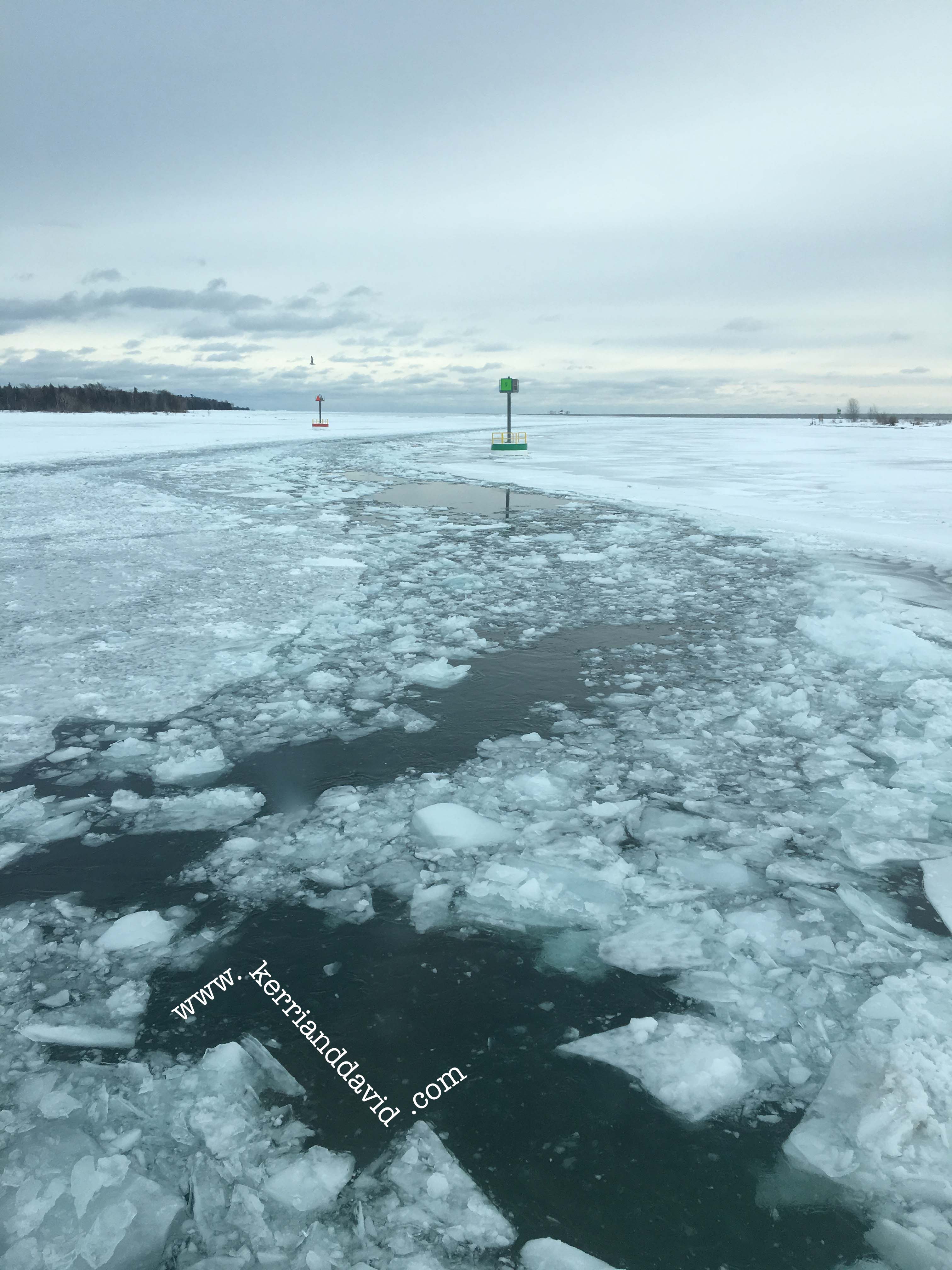
I love this photograph. It could be of the salt flats. It could be desert landscape. It could be the arctic snows. Absent of context, how can we know?

The headstone of the 21st century will read ‘Taken out of context.’ I was a teacher when the internet first washed over the land and the question on every educator’s desk was this: how do we teach students to discern what information is valid and what is not? Education is, at least partially, the pursuit and discernment of what is true and what is not.

Discernment (noun): the ability to judge well.

In a world in which any one can post anything about any topic in service to any agenda, void of context and with an astounding expectation of 280 characters or less, how do we judge well? No attention span available. No context necessary. Discernment is out of reach. As W.B. Yeats wrote, “The center cannot hold.” 

“The best lack all conviction, while the worst are full of passionate intensity.”  (Yeats, The Second Coming)

Context avoidance and manipulation is not unique to the 21st century. It’s been around since the invention of preachers and politicians. We simply have the tools to amplify it and glut ourselves on the fat that remains.

‘Taken out of context’ comes with a cold surgical sister phrase: after the fact. They knew after the fact. He was an accessory after the fact. It was only after the fact that they saw what was there all along.

fact (noun): a thing that is known or proved to be true.

How do you know or prove something to be true? It is the same question educators faced so long ago: how do we discern what information is valid and what is not? Well, begin by slowing down enough, care enough to place the thought, idea, opinion, data, in its full context. Conviction, ideals, truths…all of these lofty words, have meaning and value, become grounded, solid, and meaning-full – in the presence of context.

(The photograph was taken from a ferry cutting through the surface ice at Death’s Door).

lake ice copy

pull the camera down and this is what you see


read Kerri’s blog post on ICE LANDSCAPE


zigzag through ice website box copy


Use Reason

Step Into Unknown with Sig“When a speaker who does not know the difference between good and evil tries to convince a people as ignorant as himself, not by ascribing to a poor beast like a donkey the virtues of a horse, but by representing evil as in fact good, and so by a careful study of popular notions succeeds in persuading them to do evil instead of good, what kind of harvest do you think his rhetoric will reap from the seed he has sown?” Phaedrus by Plato


The woman walked to the end of the small pier and started to weep. It was a cold day and windy. Kerri and I maintained silence as we passed. The woman was making an appeal to her god. She asked the stormy lake and angry sky, “Why?”

Belief is a powerful thing.

Beth believes that the universe was created 6,000 years ago. Even though the gasoline she pumps into her car is evidence to the contrary, nothing will shake her firm belief. No amount of science, data, or experience can crack her conviction to what she believes.

At first glance Beth might seem an oddity but she is actually more representative of the norm. Consider this quote published this morning in our local paper. It’s an editorial from the Los Angeles Times entitled, “The ‘fake news’ dilemma.” “Some observers argue that the public’s receptivity to fake news is a sign that we live in a ‘post-factual’ society, with people who are mainly interested in information that comports with their preexisting notions.” In other words, no amount of science, data, or experience can crack our convictions to what we believe. And, like Beth, we do not want to hear [or consider] anything that challenges our beliefs. Rather than question, we plant our belief-flag and defend the territory.

Flag planting makes for good ratings. Conflict is an easier story to sell than compromise so it is not surprising that we have news sources that blatantly cater to our preexisting notions. Division makes us a good market and infinitely manipulatable.

Certainly defending the territory of unquestioned belief feels good. Righteousness, blame and gossip always feel good. There’s no responsibility required! Here’s another bit to consider from the editorial: “The problem is obvious: When surveys by the Pew Research Center find that 62 percent of U.S. adults get at least some of their news from social media, and 20 percent of social-media users say the things they read online have changed their views on an issue or candidate, the electorate is all the more vulnerable to a disinformation campaign. By Buzzfeed’s count, the 20 most popular fake-news stories in the last three months of the campaign were shared more often on Facebook than the top 20 stories from leading mainstream news sites.”

What prayer do we have when we are too…lazy…incapable…. to discern gossip from news, belief from fact [dear reader help me find a word other than fact].

For me, the top spot on the hierarchy of beliefs-that-blind is the “pre-existing notion” that we human beings operate from reason. Reason requires doubt, questioning, listening, and reaching for the perceptions of others. Reason, like heart, is a commons. It thrives on honest debate and will have nothing to do with individual or collective rigidity. We are not born with it, however we are born with the capacity to engage it. It is not something any single individual attains – it is not attainable – it is relational – it requires multiple perspectives and continued conversation. It requires a step into the  unknown.

Thoughts Babble Hearts Speak


Save

Save