What Makes Us Beautiful [David’s blog on Merely A Thought Monday]

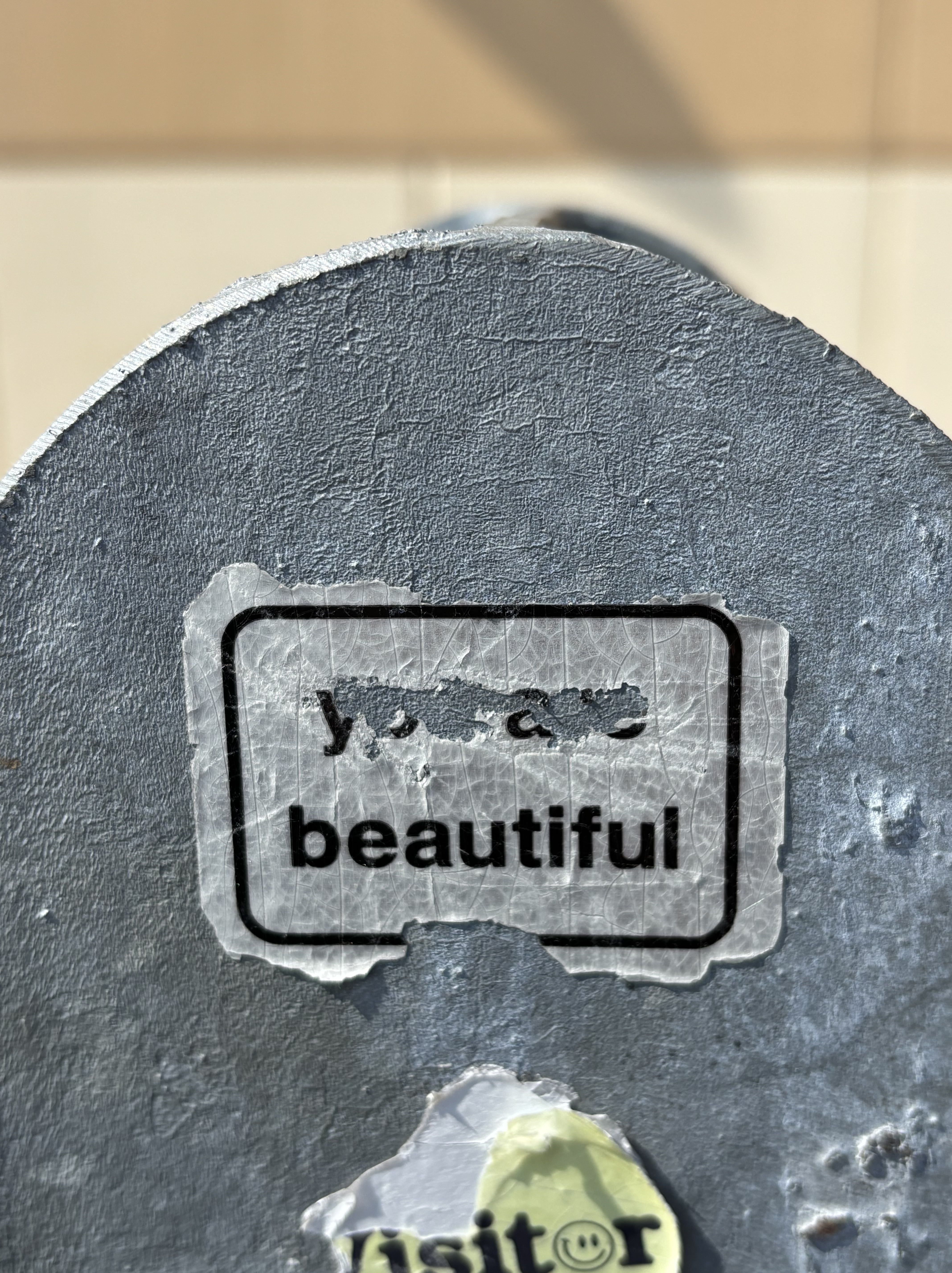
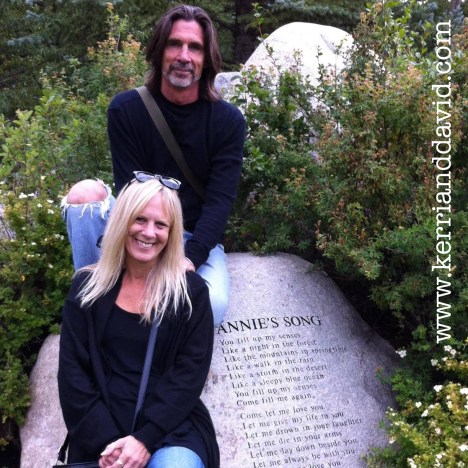
When I tell Kerri that she is beautiful she deflects or minimizes my words. She tells me that I am biased or acts as if she didn’t hear me. She is not unique in her response. How many of us have long ago shielded ourselves against the idea that we are beautiful?

Peel back the layers.

Many years ago a student came to my office. He was sobbing. He had recently revealed to his family and peers that he was gay and their overwhelming message back to him was that he was broken and needed to be fixed. He was vulnerable in revealing his truth – his beauty – and was slapped. The message: you are ugly. In his despair he could not see that the ugliness was in how he was being treated. At some point he cried, “I just want to break something!” I thought that was a very good idea so we went outside and hurled ceramic plates at a brick wall. We laughed and laughed until he could hear the words, “You are not broken”.

What I didn’t say to him was this: They want to hammer you into compliance because they fear your difference. Fearful people are threatened by difference. They label it as ugly. Your difference is what makes you unique, beautiful and special.

Isn’t it interesting to you that we-the-people, inhabiting the most individualistic nation on the planet, buy our clothes from the same retailers, worship hallowed brands, with the express purpose of fitting in? We express our individuality, judge our beauty, by conforming to a fashion image.

It is one of the reasons why Kerri cannot possibly allow my admiration of her beauty. She doesn’t fit the magazine-model-ideal. She is a blue-jeans-and-boots wearing, black thermal shirt girl (thank god!). It creates a split. On the one hand, she is an artist, a woman wrapped in difference who easily lives on the margins so she can more clearly see and reflect the society in her music, writing, and photographs. On the other hand, she cannot allow the notion that her difference is the very thing that reveals her beauty. She doesn’t fit the norm. She doesn’t match the magazine ideal or wear the right brands. She compares herself to those who do so she can’t possibly allow that she is uniquely beautiful.

It’s a lot of pressure, this need to fit in. In fact, it is a basic survival instinct to a herd animal like a human being. That is the real beauty, the magic of these United States. It is a society that, at it’s best, when it is in its right mind, strives to create the inclusion of difference, intends to celebrate the unique, make a safe home for diversity, a safe place for all to worship as they choose, love who they choose. In the ideal, difference – sometimes called “freedom” – is protected equally for all under the law.

We wrestle with the split. We need to remember that we are unique in the history of the world. We are a democracy comprised of people from all over this gloriously diverse planet, a nation of immigrants. This latest attempt by the morbidly fearful to scrub ourselves bland, straight and white, to bludgeon us back-in-time to some fantasy uniform past, is ugly and destructive. They would bully us into conformity, a one-size-fits-all mentality. We need only remember that our difference, our diversity, is precisely what makes these United States of America unique, beautiful and special.

This is not the time to deflect. What makes us truly beautiful is worth owning and vigorously protecting.

read Kerri’s blogpost about BEAUTIFUL

likesharecommentsupportthankyou

Know The Difference [David’s blog on Flawed Wednesday]

“Public education does not serve a public. It creates a public. And in creating the right kind of public, the schools contribute toward strengthening the spiritual basis of the American Creed. That is how Jefferson understood it, how Horace Mann understood it, how John Dewey understood it, and in fact, there is no other way to understand it. The question is not ‘Does or doesn’t public schooling create a public?’ The question is ‘What kind of public does it create?'” ~ Neil Postman, The End of Education: Redefining the Value of School.

It’s important to know the difference.

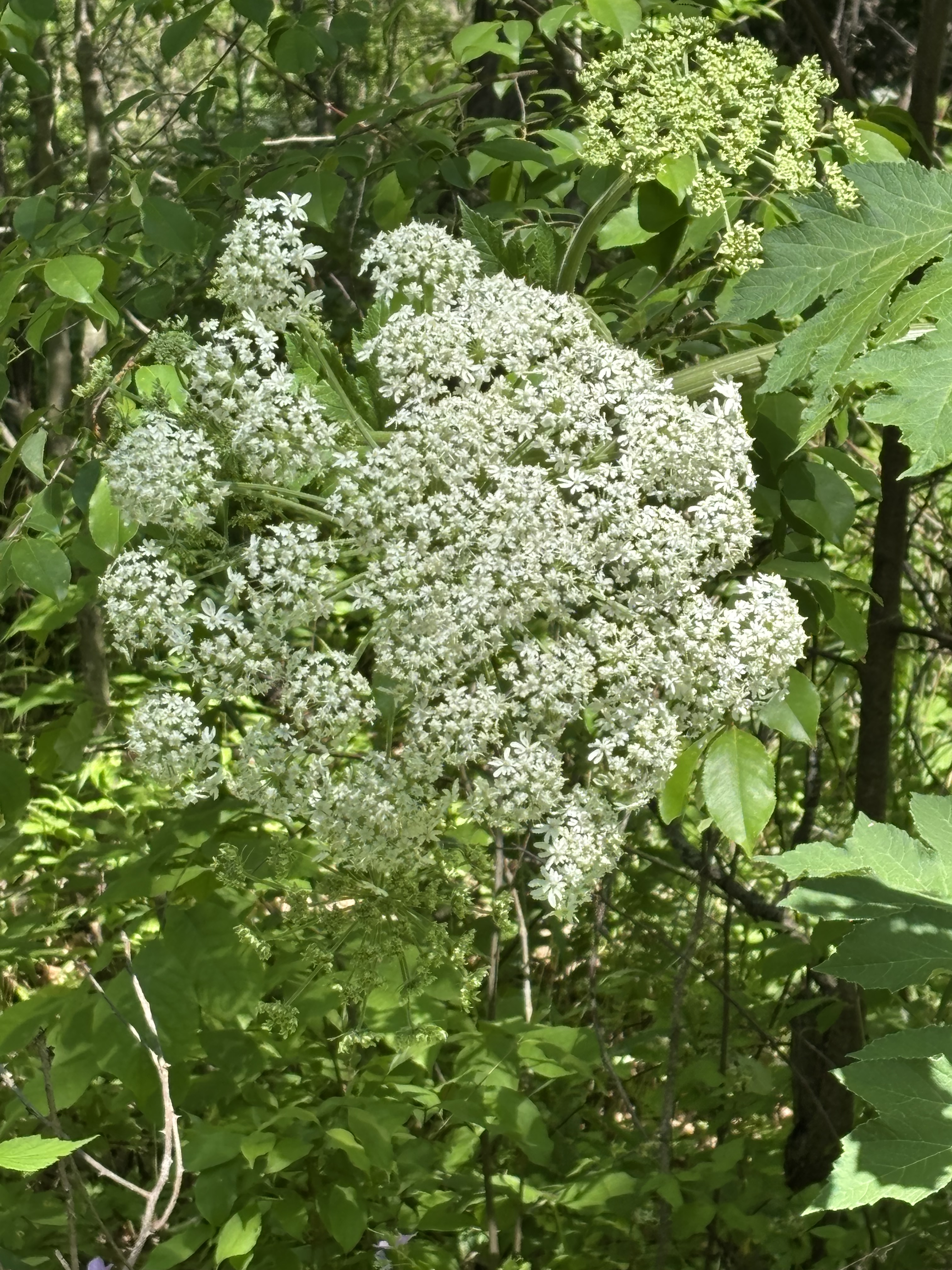
In the forests and fields through which our walking path winds, there is Cow Parsnip, Queen Anne’s Lace, and Hemlock. All sport umbrella-clusters of tiny white flowers. They are all members of the carrot family. To the untrained eye – like mine – they look similar. They are dangerously different.

Socrates was sentenced to death and was made to drink Hemlock. It’s very toxic. Queen Anne’s Lace is edible and used medicinally. Cow Parsnip can be eaten “if handled properly,” however a combination of sap and sunlight can cause a painful rash.

It is important to know the difference. It is why education is so important. It is why asking questions, stoking curiosity and looking deeper – beyond the superficial – is invaluable. The point of education, as Neil Postman reminds us, is not to get a better job, it is to be a well-rounded human being capable of making informed decisions.

“At its best, schooling can be about how to make a life, which is quite different from how to make a living.”

Republicans since Reagan have been actively undermining our public schools. Cutting budgets, hyper-emphasizing testing (answer-driven rather than question-inspiring), and waging a foxy campaign against “the woke,” a term referring to people who are curious enough to question what they are being told – a skill useful in learning. The demonizing of education and the educated has without doubt led us to this moment: a gullible, angry and easily distracted citizenry. I almost wept the day the young man, an expectant father, told me that he was going to home school his child because he didn’t want his son’s head to be filled with “any of those crazy ideas” that they teach in the public schools. He didn’t want his boy to be woke.

I wanted to tell that young man that democracy is an idea. So is fascism and communism and authoritarianism. It’s important to know the difference.

The fox and Republicans have been for years weaponizing the term “socialism”, an accusation they level when their wealth is threatened by those who question why taxation is unfair, who ask why Republicans cheer when government creates programs uplifting corporate America but snarl when government creates programs that uplift private citizens. Socialism is an idea, too. Asking questions, protecting civil rights, and believing in the promise of democracy is not socialism. It takes some study and questioning to know the difference.

There’s a reason that the cartoon symbol for insight is a light bulb illuminating brightly over a character’s noggin. Letting in the light.

Discernment. Distinction. Knowing the difference between indoctrination and education. Knowing the difference between character and corruption, value and vice, wisdom and hogwash. Knowing how to discern news from propaganda would seem to be essential – democracy-saving. Life saving.

And so, here we are, awash in a cult movement called MAGA, enabled by a feckless Republican Congress, that worships incompetence and promotes ignorance. It shields itself against even the most basic of questions and eschews responsibility for, well, anything (blame is their game). It howls in indignation at the very thought of learning. It is a celebration of the dim-bulb. Drinkers of toxic hemlock, totally incapable of discerning the difference between the deadly and the medicinal, the truth and a lie.

“Because we are imperfect souls, our knowledge is imperfect. The history of learning is an adventure in overcoming our errors. There is no sin in being wrong. The sin is in our unwillingness to examine our own beliefs, and in believing that our authorities cannot be wrong.” ~ Neil Postman, The End of Education: Redefining the Value of School.

read Kerri’s blogpost about DISCERNMENT

likesharecommentsubscribesupport…thankyou

An Unearthing [David’s blog on KS Friday]

“We shall not cease from exploration, and the end of all our exploring will be to arrive where we started and know the place for the first time.” ~ T.S. Elliot, Little Gidding

It is not so simple to Be You.

I’ve yet to meet a person who knows without question, without doubt, who they are.

That is not a flaw. It is a given since we are not a piece of furniture, not a thing or an end result. We are so much more. An unearthing. A discovery.

We are human beings. Questioners. Questions.

We are both seeker and sought. We are both archeologist and vast hidden city.

Of course, that is not the meaning behind the message stitched on the rainbow hat. Be You is an affirmation of inner truth in the face of social pressure to Be Other than You.

There are other seekers – other people – who, in their fear of the unknown, attempt to define you. Confine you. They make rules, absolutes. They wish to stop the seeking.

Your difference is a disturbance in their rigid field of sameness.

They desire limited commerce and will only travel well-worn paths. They worship control – so controlling you, they believe, will keep them safe in their comfortable known. They would have you walk on their paved path. Color within the lines. Worship as they do.

Your difference shakes their cage. Your difference is a siren’s call to the scary edge of the unknown, to growth since growth is always in the direction of the unknown.

They quake. They fear your difference because they fear that they will disappear if they step toward the rim of learning: they fear what they will find in themselves – or have to admit to themselves – so they sail far away from the edges.

Be You? Just as others propel you forward in your discovery, just as resistance helps you discover the parameters and depths of your belief, your difference serves as a harbinger for others, a message in a bottle, calling them to the precipice of their greater archaeology.

What is over there? In there? Under there? Beyond? Me?

Is it an end? A beginning? And who will walk with me? Why?

As always, rather than a book of rules, a fistful of pat answers, is it not more useful – more honest – to ask and ask and ask a better question?

[Quinn called these The Big 3: Who am I? Where do I come from? What is mine to do? We never arrive at an absolute answer since we are a moving target, always growing in a relationship with the unknown. The point is not to nail down a forever-answer; the point is to be brave enough and open enough to continually ask the questions.]

GRACE on the album RIGHT NOW © 2010 Kerri Sherwood

Kerri’s albums are available on iTunes and streaming on Pandora

read Kerri’s blogpost about BE YOU

likesharecommentsupportsubscribe…thankyou!

It’s Fine [David’s blog on DR Thursday]

Now most folks suffer in sorrow
Thinking they’re just no good
They don’t match the magazine model
As close as they think they should

They live just like the “paint by numbers”
The teacher would be impressed
A life-time of follow the lines
So it’s just like all of the rest

~David Wilcox, Leave It Like It Is

To be honest, I began writing a post about self-love and bagged it. I don’t really know anything about self-love, which is why I wanted to write about it. Luckily, I realized that it was way too big of a topic for my little, little post.

Tara Brach wrote about her mother’s deathbed confession: “All my life I thought something was wrong with me. What a waste!”

Recently Kerri and I had a conversation about how different we feel – how different our lives have been – from our friends and neighbors. We did not color within the lines. Younger versions of ourselves were split in two: one half following the imperative of our muse, the other half chastising because we didn’t fit in. I’m happy to report that we’ve made peace with the paths we’ve chosen.

We’ve been alive, not necessarily safe.

I used to tell groups I facilitated that “Nothing is broken, nothing needs to be fixed.” I believed it but didn’t necessarily live it. I was looking for what was missing.

It turns out that nothing was missing. My chosen path looked chaotic when compared to the template expectation. It’s a damn hard road when you are both trying to fit in and trying to follow your star. The road was only difficult because I expected pavement when I was a dedicated off road traveler.

What follows is the complete text of my imagined graduation speech to the class of 2025:

“Leave it like it is, it’s fine.” ~ David Wilcox.

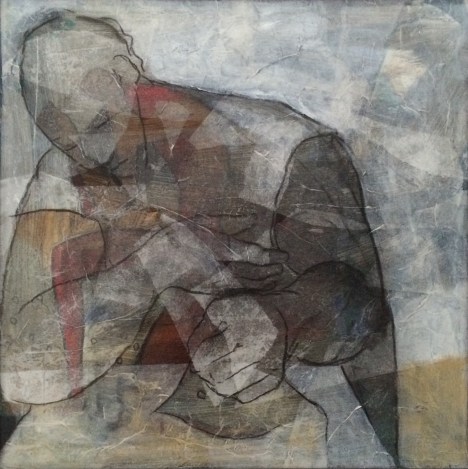
Pax, 24″x24″, mixed media on panel

read Kerri’s blogpost about COMPARTMENTS

likesharesupportsubscribecomment…thankyou.

DEI is U.S. [David’s blog on saturday morning smack-dab]

“…Hitler then promulgated a special decree titled “Destructive Measures on Reich Territory.” Otherwise remembered as the “Scorched Earth Decree” or “Nero Decree,” for the brutal Roman Emperor Nero (ruled 54-68 C.E.), the order mandated the destruction of Germany’s infrastructure.” Sealing The Third Reich’s Downfall: Adolf HItler’s “Nero Decree”

Of course, at the very heart of the U.S. American experiment is diversity. We have many catch phrases celebrating our common bond: A nation of immigrants. When I was young we were taught that our nation was a melting pot. More recently we celebrate our multiculturalism. In any case, the very center of our ideal is printed on our currency: out of many, one. E Pluribus Unum. In fact, it is our nation’s official motto.

In the past few weeks, with an all-out assault on DEI, Critical Race Theory, LGBTQ rights, restrictions of conversations about race and gender in classrooms, demonization of immigrants, the free press…we are witness to the current Republican administration’s version of a Nero Decree. An all-out-assault on our infrastructure. A scorched earth policy meant to pull down our democracy and replace it with an ugly White Christian Nationalism, the exact opposite of our founders’ intention. A flip of our national motto.

How far into the current Nero Decree do we need to go before our elected leaders remember their oath is to The Constitution and not to their party or the whim of an authoritarian? At what point will they recall the the purpose and absolute necessity of checks-and-balances? How much more indecency will we witness before they act or before we-the-people wake up and remember that the power is with the people? People of many races, genders, ethnicities…a richly diverse, formidable people when united.

(Bonus: A cautionary phrase from the National Center for Constitutional Studies: “Toynbee observed that 19 of the world’s 21 significant civilizations disappeared from the face of the earth – not from assault by outside forces, but from deterioration within the society.”)

read Kerri’s blogpost about DEI

smack-dab © 2025 kerrianddavid.com

likesharecommentsupportsubscribeunitespeakoutstaywoke…thankyou.

Right Before Our Eyes [David’s blog on Two Artists Tuesday]

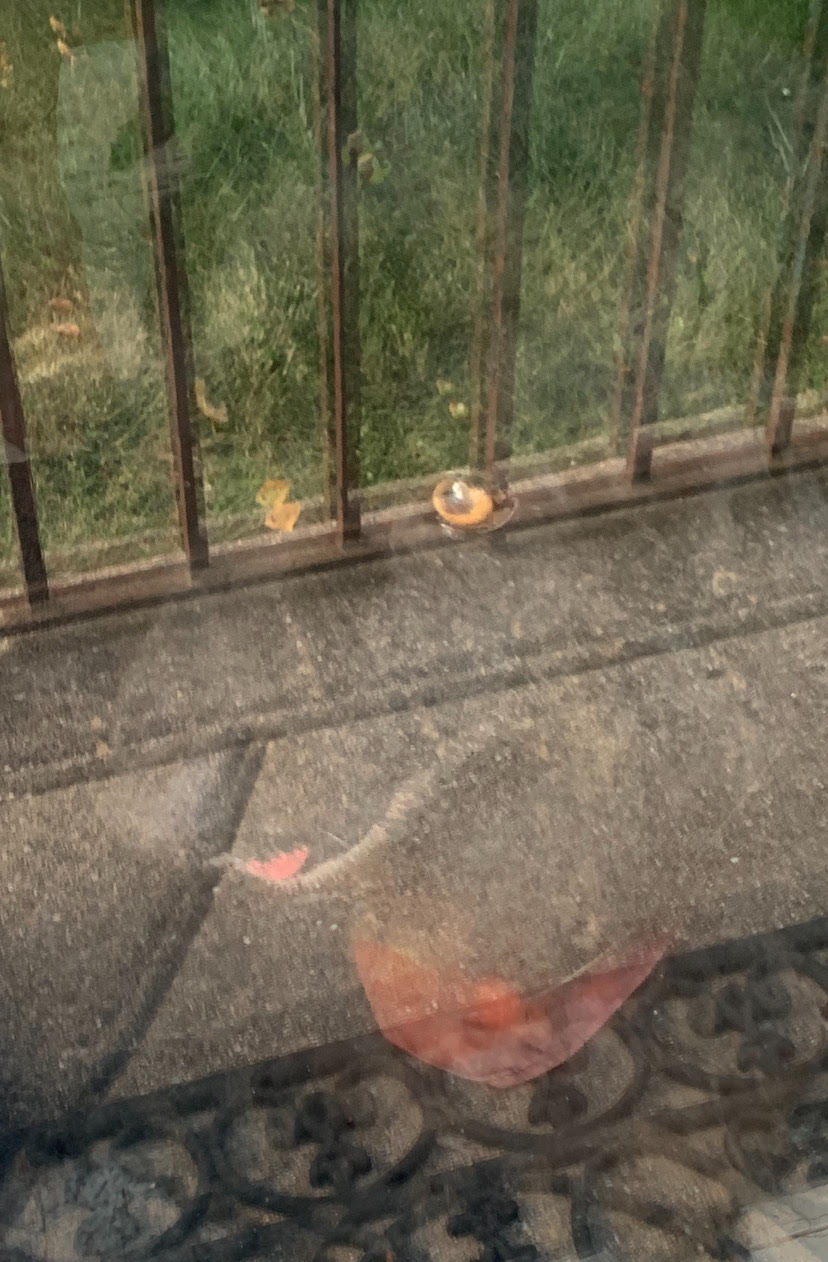
If you are like me, this image took a moment to grok. All the elements are apparent yet, at first, my brain couldn’t pull the pieces together. Kerri, standing outside the front door, took the photo of Dogga on the inside staring out. What is reflection? What is image-through-the glass? It reminds me of those famous drawings that can be seen in completely different ways, the old crone and the young woman. One drawing, two possible images. An optical illusion.

After the image of Dogga-in-the-glass came into focus for me, Kerri exclaimed, “I can’t believe it took you so long to see it!”

MC Escher made a career of creating optical illusions. Stairways to nowhere. Hands drawing hands. The mathematics of art and design. We are rarely aware that our brains assign rather than discover meaning, selecting and assembling pieces in order to sense-make. Like well-worn paths through the woods, our sense-making carves default channels: we see what we expect to see. We see it because we believe it, not the other way around. That is to say, we rarely see beyond what we think. Thinking paths-of-least-resistance render us blind.

The pursuit of truth is to see beyond our well-worn paths. Escher knew that. His images play with our expectations. His images, for a moment, shock us into seeing beyond our expectation.

Factors like age or cultural orientation create biases in the making of meaning, in the assembly of the illusion. For instance, in the drawing of the old/young woman, older people will more often see the old woman while younger people will almost always see the young woman. If you happen to come from a culture that is not inundated with images (there are a few remaining on the planet), it is likely that you would only see scribbles on a page. You would see neither the old or the young woman.

Your normal is not my normal. Your well-worn thought-paths are different than mine.

Given identical experiences, your sense-making will differ from mine. It is the genius behind our system of governance. That two opposing points of view might come together, discuss what they think-they-see and compromise on a best path forward, is the foundation-stone of our democratic system. The genius begins when allowing that one party sees an old woman while the other sees a woman who is young. Both can be valid. Both can exist on the same page.

Allowing for and valuing differences of perspective leads to common ground, shared action.

On the other hand, the same system collapses when what is immediately apparent to both parties is summarily denied by one side of the aisle. It’s another type of illusion altogether: the negation of the obvious. For instance, our last presidential election endured 65 challenges in court and all were summarily thrown out for lack of evidence. Both sides knew – and know – without doubt that the election was valid, free and fair yet the red-hat team continues to fearmonger, pounding the drum of corruption, wearing another kind of thought-path in the minds of their constituents, rendering them blind.

There is a clear distinction between sorting out differences and creating them to exploit fear.

Coming together, in an attempt to see beyond expectations, respecting differing perspectives, valuing the multiple perceptions of a diverse nation in order to stand on common ground is democracy at its best. Creating division, whipping up disunity, negating and devaluing the perspectives and values of others spells the end of democracy. It intentionally pulls the nation apart.

Democracies pursue truth. Autocracies thrive on falsehoods. The choice we face is abundantly clear and right before our eyes. As a nation, all we need do is step off our well-worn thought-paths and open our eyes.

read Kerri’s blog about ILLUSIONS

like. share. comment. subscribe. support…thank you.

Ask A Simple Question [on DR Thursday]

It’s existential. What you see changes depending upon where you stand. That’s true when engaging any piece of sculpture. It’s true when engaging anything in life. Point-of-view is fluid and relational. This sculptural reminder is Olafur Eliasson’s Rainbow Bridge.

In another era of my life facilitating diversity and inclusion workshops, the same surprisingly simple concept was usually a revelation to people. What you call “normal” is merely a point-of-view. Most importantly, it’s not everyone’s point-of-view. Your “normal” is unique to you, not universal. Most hopeful: it’s not fixed in stone. It’s changeable. Relational. Capable of growth. A mature point-of-view recognizes that it need not, it cannot, be the center of the universe. A mature point-of-view necessarily asks an all important question: “What do you see?”

It’s not only possible to look at the same sculpture and see a myriad of differences, it’s necessary. It’s human. Sharing what we see is how we, together, create community. A common center is created by a circle of differing points of view. A common experience is borne of sharing disparate points-of-view of the same event. A common center is made functional when everyone in the circle is capable of asking with sincerity a simple question: What do you see? It is made vibrant when everyone in the circle expects the answers to be different than their answer.

Art is one way of responding to the simple question.

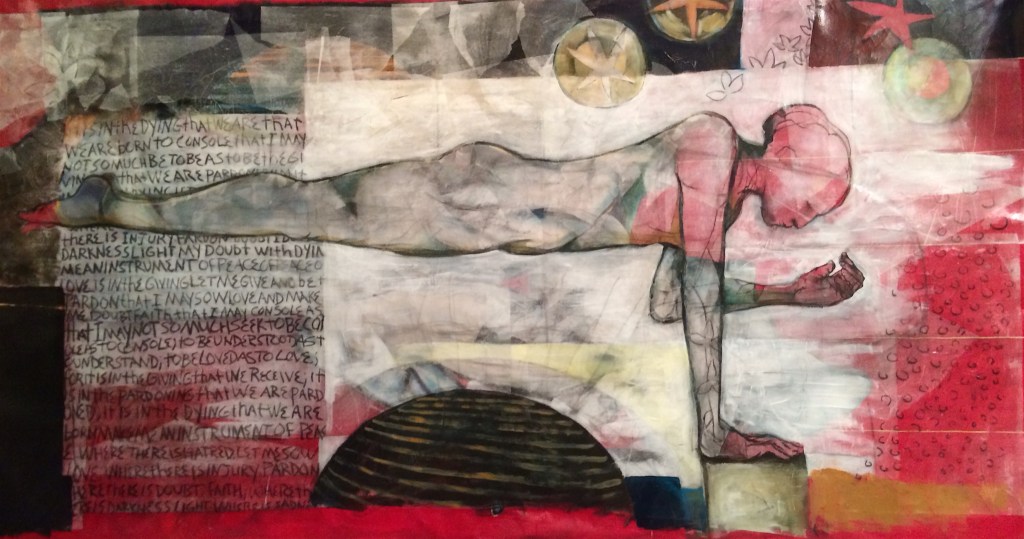
Instrument of Peace, 48x91IN, mixed media

read Kerri’s blogpost about RAINBOW BRIDGE

instrument of peace © 2017 david robinson

Cross The County Line [on Not So Flawed Wednesday]

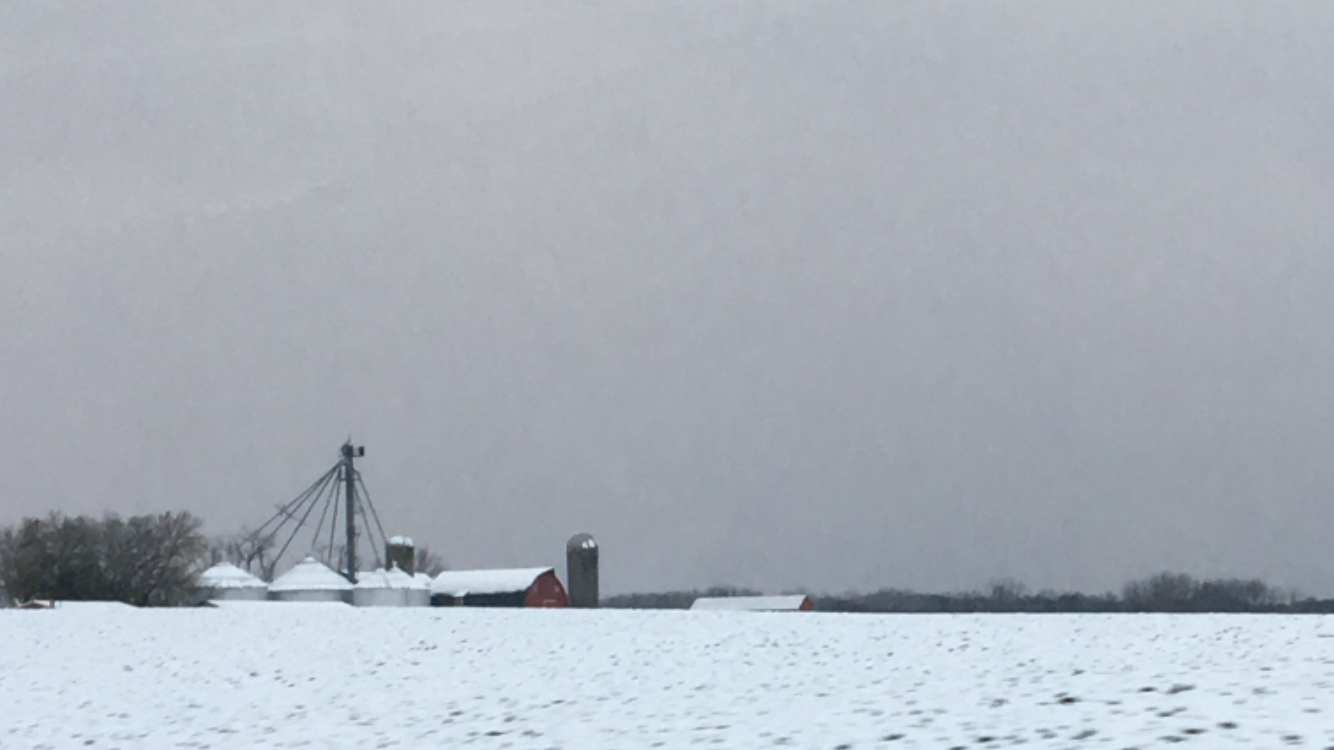
Drive west from our house near the lake for a few miles and you’ll come to the interstate freeway that runs north to Milwaukee and south to Chicago. Cross under the freeway, continuing west and you enter what we call “the county.” Rich farmland. The freeway serves as a dividing line from urban to rural.

Sometimes it feels like crossing the line into another culture. Blue to red. The county redness puzzles me but that’s a topic for another post. We drive into the foreign culture with the same curiosity we might bring to Tunisia or India. “I wonder what they see…” is a common refrain.

Sometimes crossing the freeway line feels like an escape into open space and a breath of fresh air. Once upon a time we took Sunday drives; the point was to go get lost in the county. “Left or right?” Kerri would ask. Both choices leading to the unknown.

We are avid freeway avoiders. It doesn’t bother us to take extra time traveling to Chicago or Milwaukee on the backroads. Less aggression. We relax and enjoy the ride. Often, especially during rush hour, our backroads travel proves faster than the traffic jam.

Last week, en route to the hand specialist in Milwaukee, we traveled our usual backroad path, winding through the county. There was no snow at our house when we left. We crossed the freeway into another landscape, blanketed with white. It was as if we crossed the line into another season. We entered an alternate reality.

“That’s so odd,” I said.

“No,” Kerri replied. “That’s the county.”

read Kerri’s blogpost about THE COUNTY

Be Different [on Merely A Thought Monday]

Inadvertently, 20 did me a great favor. On the day Kerri and I married, he carried a concealed camera and captured conversations and special moments of our ceremony. In his footage is a short exchange he had with my dad. My dad said of me, “He’s his own man.”

To that point in my life I’d wondered what he thought of me, my winding career path, my free-form seeming-feral existence. “He’s his own man,” brought me peace.

Once, during a conference that we led, Alan told me I should dress differently. “People would have more respect for you,” he said. Once, trying to fit in, I wore a suit to a facilitation and Rich told me I should dump the suit and dress as myself. I’ve awarded him the blue ribbon for best advice.

In my consulting life I wore clogs. I hated shoes with strings. The first thing I did at every job was kick off my clogs. You’d be surprised how invested people in power suits are in their footwear. You’d be heartened how human they become when they unlace and kick off their shoes. It’s like removing a mask.

People hire me because I am different. Because I see differently. My difference is my gift, the epicenter of what I bring to the world – and that is true of all people.

In a culture that prides itself on its individualism, it’s always been amusing to me how invested we are to “fit in.” Shopping at the right store, wearing the right clothes, we gush about our wild nature while synching tight the corporate tie. To “dress for success” means to fit a prescription, to NOT stand out. Business casual. The real real. All houses must look the same. Revealing behavior betrays the swaggering rhetoric.

Our individualism is at best a thin veneer. In truth, we fear difference. I dare the court of Supremes to uphold a coach’s right to pray before the big game on the 50 yard line if he’s Sikh. Or Muslim. Or Hindu. Or Buddhist. My son is gay. He lives a constant, never-ending battle to defend his difference. Why?

“But the truth is, I am different,” I said to Kerri who was red-faced with anger at the email from the concrete sub-contractor. He turned down the job to replace our bit of sidewalk, broken out during the waterline repair. Among his reasons, “…and he seems a little different.” He was referring to me.

“I’ve dealt with that my whole life,” I said as she furiously typed a reply. “It’s not a big deal. I’m an artist.”

“It is a big deal,” she snarled, typing harder, faster.

Listening to her ferocious key-pounding, I had a sweet wave of appreciation for her. In a lifetime of “different”, it is a rare and precious moment that someone vigorously defends your difference. Rather than hammer you into creased dockers, lace-up shoes or the right haircut, a furious defender was unfamiliar. She, too, is different and knows the bruise of the shame-hammer. I suspect we’ve all experienced its sting.

In my head, I heard my dad say, “He’s his own man.” Peace. I am what I am and the people who love me wouldn’t have me any other way. That makes a difference. All the difference.

This I know: it’s nice – so nice – not to be alone in my difference.

read Kerri’s blogpost about DIFFERENCE

Honor Difference [on DR Thursday]

A Double Haiku:

Honor Difference.

A mural in Milwaukee.

Heart of the ideal.

Infinite palette,

Many hands, many painters,

Eyes that choose to see.

Read Kerri’s blog post about Honoring Difference

helping hands ©️ 2012 david robinson