Welcome Home [on Not So Flawed Wednesday]

The people that bought my parent’s home flipped it in a few months. They remodeled the bathrooms and updated the kitchen. They refaced the fireplace. They pulled up the carpet and refinished the hardwood floors. It was gorgeous. It was a surprising chapter of what has become my unintentional 2021 mediation: home. At the beginning of the summer, after days of hauling and cleaning, as my last act before leaving for good, Kerri suggested that I crawl into the cedar closet of my boyhood bedroom (I loved sitting in that closet as a boy) and sign my name. A sweet goodbye and thank you. Home is a memory.

It was only a few months ago that we moved my mom into her “new home.” She wanders the halls and we know that time is the only cure for what she seeks. Home, for her, will be a feeling that finds her, at last, only after the wear and tear in the rooms is of her making. Her pacing is wearing a trail, carving a path. Home is a feeling.

In the past 8 months my dad has moved three times into his “new home.” Memory care facilities are surprisingly inept at caring for elders who’ve lost their memories. High price. Low care. Everything is a business: a theme/rant for another post. In his current home, finally, he feels safe and, after a trip out, wants to return to his room. Home is safety.

Before his memory was gone, we took my dad back to his hometown, Monticello, Iowa. His primary need was to show us the tiny Home that his grandfather built. It’s the place where his dad was born. It is across the yard from where he was born. His tales were glorious in their hardship. They needed very little to make good memories. Today, the tiny house built with no money and huge heart is a storage shed but through my father’s eyes it was nothing short of a castle. I will always savor the image of him standing in front of his Home. Home is an origin and an anchor.

When we pull into the driveway, after a long trip or a jaunt to the store, we always greet our home, “Hello, happy house!” Our home feels alive, a presence or being. The walls carry our story. The rooms remember and replay the voices of her children. We’re packing a lot of story into the walls of our old house. It is packing a lot of story into us. Home is a relationship.

When we came upon the woodpecker-condo-tree, Brad said in jest, “Why don’t you stick your hand in there.” We laughed. “I told him I’d be like the monkey with its fist in the coconut, I wouldn’t be able to let go of the critter inside and also wouldn’t be able to get my fist out of the small hole. I’d be stuck on the trail forever. The woodpecker condo would be my new home. Kerri and Jen were inspecting the perfect circles. It felt good to be on a walk with them. It had been a long time since we’d had the chance to just hang out. Home is a friendship.

We had tacos at Jay and Charlies with the Up North gang. Jay showed us her new porch. We sat in the shade and drank margaritas and laughed. I told Jay that her porch and yard felt serene. She smiled and told me that it was her sanctuary. I was, for a moment, completely overwhelmed by how much life we’ve walked with these special people. Passages. We’ve shared and received so much support – immediate presence when need arose – from our stalwart gang. Sanctuary. Home is a community.

It’s just as the needlepoint declares: Home is sweet.

read Kerri’s blog post on Home Sweet Home
Recognize The Greater [on DR Thursday]

strange sky

“Can a shallow mind appreciate beauty?…When the mind is merely concerned with itself and its own activities, it is not beautiful; whatever it does, it remains ugly, limited, therefore it is incapable of knowing what beauty is.” ~Krishnamurti, Think On These Things

What accounts for the strange color of the sky? Smoke from the fires? A coming storm?

The quote above is only half of the thought. It is the set up for the real point to be made. A shallow mind is concerned only for itself. And, while consumed with the lesser, it misses the greater. It is the unintentional theme that emerged for me this week: losing the greater for the lesser. The baby goes out with the bathwater.

It is a matter of perception, of focus placement.

Yesterday I wrote about the judge questioning the potential juror about his capacity to experience hardship in order to keep the system going and growing. The juror entered the exchange with a self-focus and exited, admonished, with perhaps the possibility of seeing something beyond his own agenda. Perhaps.

I read that Rome fell when the luxuries became more important than the essentials. Societies fall when they can no longer discern between what is important and what is not, when the lesser is protected at the expense of the greater.

Years ago, during a facilitation, a young woman pulled herself from and exercise. She sat on the sidelines and brooded. After the exercise, during the debrief, she claimed that she was discriminated against because her team did not listen to her ideas. Initially, her team scrambled to apologize – one does not want to be accused of discrimination. We asked the team to explore the situation a bit further. Because the young woman’s idea was rejected, was she truly a victim of discrimination? It was an illuminating conversation. The problem – the real problem – arises when we can no longer discern between what is discrimination and what is not? There is terrible discrimination in our world and needs to be addressed. It can’t be seriously confronted if we are incapable of distinguishing between the rejection of an idea and laws that prevent citizens of color from voting.

In a pandemic, a mask is not a breach of personal freedom. It is not the state ripping away control of your body. It is a minor inconvenience to ensure the mitigation of a virus that is killing scores of fellow citizens. Despite the rhetoric otherwise, the fearmongering and tribe-building, wearing a mask is something done for the health of the whole. It is not unlike jury duty.

It is a matter of perception. Of focus placement. Self or other? Lesser or greater?

The rest of the quote: “Whereas, a mind that is not concerned with itself, that is free of ambition, a mind that is not caught up in its own desires or driven by pursuit of its own success – such a mind is not shallow, and it flowers in goodness. Do you understand? It is this inward goodness that gives beauty, even to a so-called ugly face.”

Pay attention to the verb. Beauty is given. Concern for the well-being of the other is a sentiment expressed and championed in every corner of the world, by all the figures we quote, elevate, and sometimes emulate. Martin Luther King, Ghandi, Abraham Lincoln, Mother Teresa,…it’s a very, very long list.

Communities thrive when they are capable of enduring hardship for each other, for the benefit of the whole. They also thrive when they hold boundaries and protect the rights of the individuals. Those two seemingly different actions are, in fact, one and the same.

Societies fall when shallow minds prevail, when they can no longer discern between essentials and luxuries, privileges and responsibilities. When personal comfort takes precedence over enduring ideals.

It’s a matter of perception. Of focus placement, and make no mistake, focus is easily led. Just like a package of pastrami mistaken for a strange colored sky.

read Kerri’s blog post about PASTRAMI SKY

shared fatherhood ©️ 2017 david robinson

Let’s Get On With It [on Not So Flawed Wednesday]

It was a national campaign of the US Department of Homeland Security. If you see something, say something. The enemy is here. It is us. We pulled it from an episode of Grace & Frankie. Old folks have hair that grows in places it ought naught. Frankie plucks a hair from Grace’s chin. “How long has that been there?” Grace exclaims. “Frankie, if you see something, say something!”

Yesterday, I had a collision of experiences at the courthouse during my jury pool swim. First, I read an article in The Atlantic, by Tom Nichols, Afghanistan Is Your Fault. He wrote, “The soldiers who served overseas in those first years of major operations soon felt forgotten. ‘“America’s not at war” was a common refrain among the troops. “We’re at war. America’s at the mall.”’

He continued, “A serious people—the kind of people we once were—would have made serious choices, long before this current debacle was upon them. They would today be trying to learn something from nearly 2,500 dead service members and many more wounded. They would be grimly assessing risk and preparing both overseas and at home for the reality of a terrorist nation making its way back onto the international map.

Instead, we’re bickering about masks. We’re holding super-spreader events. We’re complaining and finger-pointing about who ruined our fall plans.

Next, I was among the many chosen for voir dire (the jury selection process). I was in the last group selected so the odds of my serving on the jury were slim. I sat in the courtroom and watched an amazing moment unfold. The judge said something that all Americans should hear. It aligned perfectly with Tom Nichols’ thoughts. A potential juror, a young man, claimed serving on a one-day trial would create hardship. He’d miss a day of work. The judge questioned him to get more context and then sat back, considered for a moment, and said this:

“Democracy is hard work. When I was young, there were three things that we had to do: pay taxes, honor the draft if called, and serve on a jury if called. All of those things create hardship. Taxes aren’t easy. The draft changed the lives of thousands of young people. Serving on a jury interrupts life. It creates hardship. Giving of yourself to the common good means serving something greater than yourself. It is an interruption. Today, there are only two of those things because there is no draft. My point is, giving of yourself to make this gorgeous system work is not easy. It is hard work. It creates hardship to ensure that our system, the oldest democracy in the world, thrives and survives for the next generation.”

America is at the mall. Meanwhile, democracy is hard work.

For a serious people, there is a center to our commons and, keeping it alive, takes a bit of self-reflection and sacrifice. Giving of yourself to the common good means serving something greater than yourself.

Divided we fall. It is a cliche’ but could not be more relevant.

The enemy is here. It is us. Bickering about the lesser while the greater slips from our fingers. “If you see something, say something” is predicated on an assumption: we are in service to something greater than ourselves. We are on the same team with a common, shared interest.

The judge sat back in his chair after his lecture and asked the young man, “Are you less capable of handling hardship than anyone else in this room?”

“No, sir,” the young man sat back in his chair, resigned.

“Good!” the judge exclaimed. “Now, let’s get on with it.”

read Kerri’s blog post about SEE SOMETHING, SAY SOMETHING

Ask The Simple Question [on Merely A Thought Monday]

“Simplicities are enormously complex. Consider the sentence “I love you”.” ~Richard O. Moore, Writing The Silences

I’ve been told again and again that, at the heart of every complexity, there is a simplicity. And, of course, at the heart of every simplicity, there is a complexity. So, either way you go, there you are.

I find that I am yearning for greater and greater simplicity. I appreciate quiet. I avoid crowds, not “like the plague” but because of it. I’d rather be in my studio or on a trail than almost anywhere else. I wish I could go sit in a museum all by myself, in the quiet for an hour or two, with a Chagall or Picasso. Intentional beauty. I feel like the world is so full of extraneous noise and dedicated bloviating that I’m having trouble hearing the simple essentials.

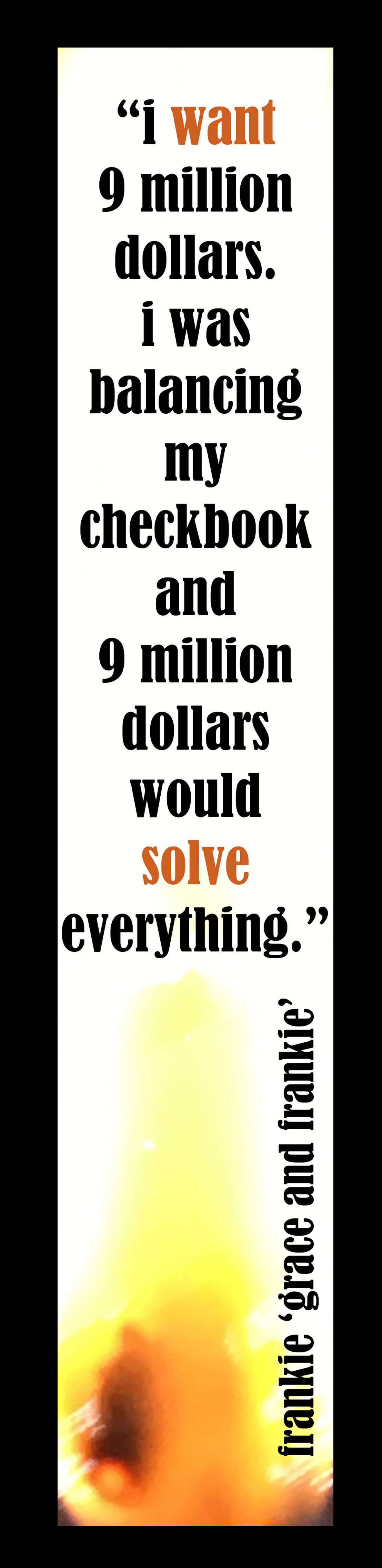
And, perhaps because my desire is for simplicity, I find that I am, like Frankie, projecting simple solutions on to everything. Yes, 9 million dollars in my bank account would solve everything!

Almost.

Do you remember Rodney King? I was in Los Angeles when he was beaten, when the city was aflame after the acquittal of the officers who beat him. Do you remember what he asked? It was the ultimate simplicity: “Why can’t we all just get along?”

I think it would take something more than 9 million dollars to solve the complexity to which Rodney King spoke. There probably isn’t enough money in the world. But, here in my dedicated simplicity, I think the opposite should be true. Rather than cost anything, getting along would probably save all of us a lot of money, and time, and heart ache. Getting along would profit all of us.

It costs nothing to open a door for someone. Put a price on gratitude. I can’t. How much does it cost to tell the truth? What about making sure everyone is safe and well fed, that everyone can walk safely down the street, that people are paid fairly, that the rules apply equally to all, that, if you’re injured or become sick, you will be treated and not lose your house in the process?

It doesn’t seem like that should be so far out of reach.

There I go again. At the heart of every simplicity…

read Kerri’s blog post about 9 MILLION DOLLARS

Read A Tiny Note [on Two Artists Tuesday]

I was still in shock. It was late, beyond midnight. The roosters were watching for the sunrise. The ritual I’d witnessed that night blew the metaphoric wheels off my car. Wave after wave of knife-wielding priests ran at the Rangda, a priest chosen for the evening to wear the mask, to enter the trance and become the demon. The priests stabbed the Rangda but to no avail. The blades bent. They were repelled. Eventually, all entered the trance and turned the knives on themselves, taking the energy, the protection of the Rangda, into their bodies. Into the community. No one was injured. Peace was made with the Rangda. Balance was affirmed.

I held one of the knives after the ritual was complete. It was not a stage prop. I could not have bent the blade on my chest without doing injury to myself.

Budi explained it all to me. I had so many questions. In his culture, the dark forces are not to be resisted or banished. There is no hell separate from heaven. Evil and good are not compartmentalized. There are energies, some dark and some light. There is no need to make peace with the light. The necessity is to face and make peace with the dark. Balance is created, an intentional relationship with a dynamic whole. It’s a dance of responsibility, a balance of dark and light. The middle way.

Balance.

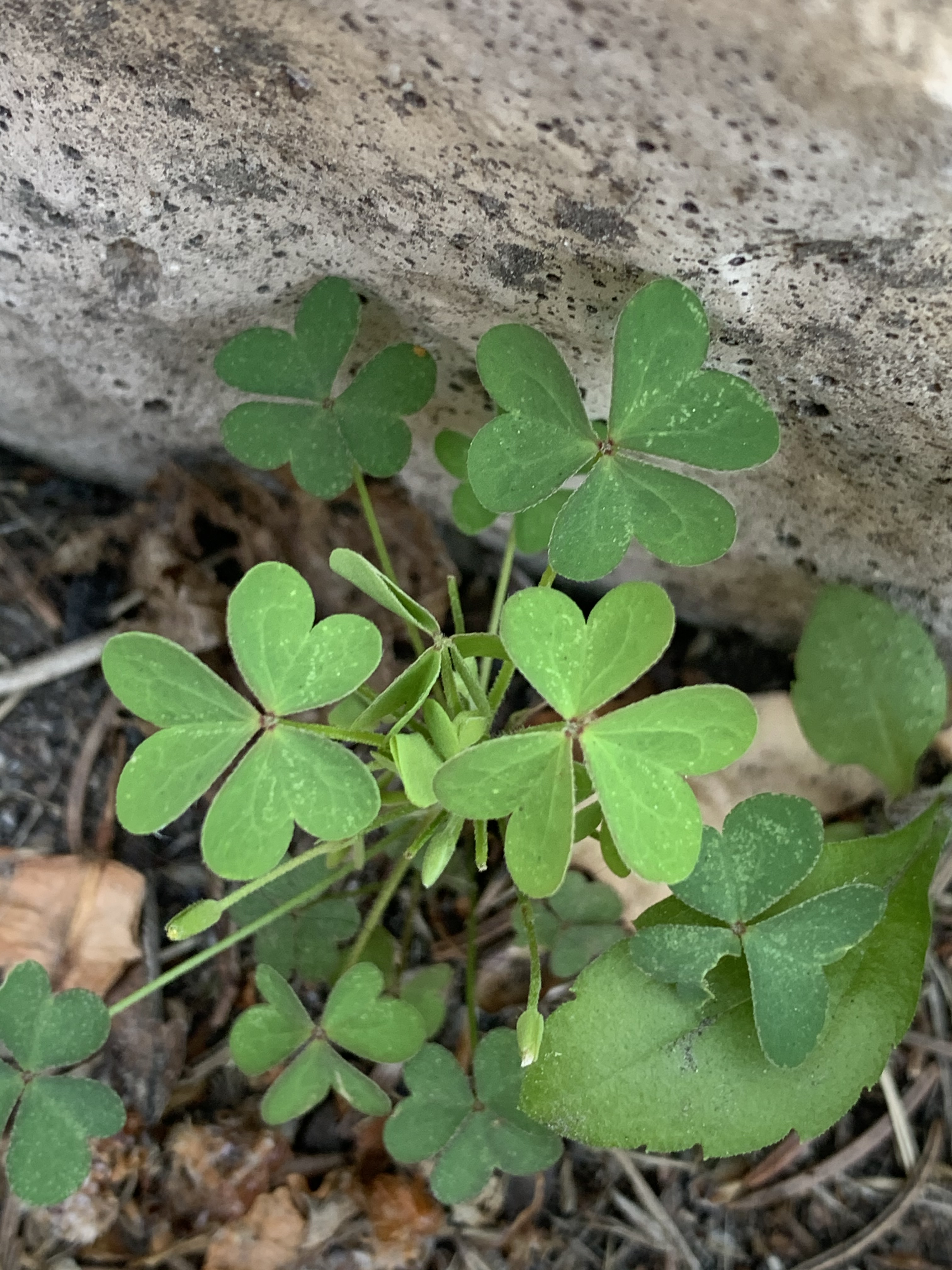
I loved this photo when Kerri showed it to me. Clover. You can’t tell but it is tiny. It is bursting from beneath the stone that serves as the step onto our deck. It made we wonder if the fairy people were close at hand. They serve, in the western tradition, a similar role to the Rangda in Bali. Nature spirits. It was most important to keep in the good graces with the Fairies. Honor their places. Respect and maintain the balance. According to tradition, they went into hiding, they left because we assaulted their spaces; we came to value the path of resources, mining, deforestation, fracking, damming…over the path of balance.

This tiny breath of clover. I sat on the stone last night. The air was cool after a humid and hot day. DogDog was doing his rounds. I had not thought of the Rangda in years. A tiny community on a tiny island. The “mayor” of the town introduced the ritual to us as their art. “We have so little to offer you,” he said in his broken English, “but we bring you our most prized offering, our art.”

Art. A prized offering. The dance of energies, an intentional relationship with the dynamic whole. An ongoing ritual of balance. It was the first time I witnessed a community that had yet to exorcise its art from the sacred. It bent knives. It restored balance. It belonged and gave deep meaning to every member of the community.

Tiny. Like the Fairies or the community on the island. A simple respect for what is good for the whole. Balance is expressed in the tiny things, the choices of where to walk, what to say. What helps in the long run. What does not. What gives meaning and cohesion to a community. What does not.

Budi would caution us with COVID and guns and a globe that is weirding and warming, “Rangda is ignored,” he’d say.

“Yes,” I’d reply, “the fairies have gone into hiding.”

But, all is not lost. They left a tiny note at our back door. Balance, it reads, is a relationship, an intentional act. It is an ongoing ritual, a tiny sacred thing.

read Kerri’s blog post about CLOVER

Imagine It [on Flawed Wednesday]

Malidoma Somé wrote that a society with locks on its doors is a sick society. Something has broken down when a home needs protection from the other members of the community. Acquiring stuff takes precedence over honoring your neighbor. Can you imagine living in a community built upon mutual respect and trust, that valued and protected its members over its acquisition of stuff? Pie-in-the-sky? That might be the problem: we can’t imagine it.

Societies betray themselves. Despite the values inscribed in library cornices, despite the commandments we hold up as sacred ideals, we lock our houses against each other. We turn away when we see a person in need, their cardboard sign an appeal for help. The gap between the espoused and lived value-set is wide. In a society that claims greatness but practices mediocrity, is it no wonder that so much energy is dedicated to perpetuating a big lie? The lie is not the exception, it is the norm. The lock on the door.

Apparently, there is so much road rage on a particularly beautiful stretch of road rolling into Aspen, Colorado, that signs are posted giving travelers the number to call when the need for help is dire. Societies betray themselves. Why would a road through so much beauty, a road that dead ends in to some of the world’s great ski areas, a place where the elite retreat for some peace and quiet, why would there be so much rage on the road to such a place?

It must be a metaphor.

We tell a good story, that all are created equal, but we fight like hell to keep the full story untold. It’s happening now. Again. Still. Why are we so afraid to tell the whole story of a nation touting equality but built upon slavery and a rolling metamorphic racism? Like an individual, a society can’t address its problem until it admits it has one.

Gaps between espoused and lived values usually fill up with rage. Our gap is textbook. So many guns, so many locks on the door, so many patterns of violence and suppression that repeat over and over again.

Can you imagine living in a society that was proud of its story and need not dunk it in a lie? Or feast on an orgy of guns in order to feel potent and protected? Or post signs warning of the ubiquity of rage? That just might be the problem: we either can’t or won’t imagine it.

read Kerri’s blog post on ROAD RAGE

Complete The Ritual [on KS Friday]

One of the strangest rituals in directing plays comes in the closing hours of tech rehearsal. It is the final button, the cherry on the sundae; the last detail before the addition of the audience: choreographing the bow. The mechanics of gratitude. The curtain falls. The audience claps. The actors return to the stage to accept the appreciation. It’s important, in that moment, to know what to do and where to go. It’s important to know when to bow and when to vacate the stage.

It’s a mechanical moment made generous – made real – when the audience arrives. After having been led through a story or gifted with a performance, the curtain falls, the audience claps in appreciation. The actors, relieved and filled with gratitude, return to the stage and bow in thanks. Appreciation meets appreciation. The strange ritual of the previous day becomes the point of the whole exercise. Without the other, audience and performer, the storytelling is empty. We complete each other. We acknowledge in appreciation this absolute truth. My story is nothing without your witness. Your story is incomplete without my story. You applaud for me. I bow to you.

A major purpose of the artist is to remind the community of this truth. We are nothing without each other. We are capable of walking into impossible questions, when, together, we gather to share and complete a story.

Artistry is a service industry. It is humbling. It is meant to be humbling.

I sit staring at the screen. I am rewriting a script, a piece I performed with a symphony in 2008. I was terrified until the conductor lifted his baton. I remember very little after the first note was played. I came back into my body the moment the music concluded, my story told. The applause. I’ve never felt so small. I’ve never felt so full. Both.

The conductor wants to perform the piece again in 2022, only he asked that I revise the story, something that will speak directly to the issues of our times. The mechanics of writing. A strange ritual, this staring at the screen. I know the story I want to write. I wonder if I am up to this task. And then, I remind myself that this question, “Am I up for it?,” is the wrong question. It leads me to believe that I am alone in this creation. Of course I am not up for it! But, together, with the musicians, the conductor, the audience… Someday, after the mechanics, the rehearsal, the revision, the final button of preparation, we will gather and together, we will walk into impossible places, ask questions too big to be answered. Together, we will join hands and share the experience of a story. The curtain will fall. The audience will clap. The performers will bow. We will remind ourselves, as this strange ritual completes itself, that we are nothing without each other.

[I love this sculpture. Kerri keeps it close by her piano. The Bow by Duke Kruse.]

kerri’s albums are available on iTunes

See The Verb [on Not So Flawed Wednesday]

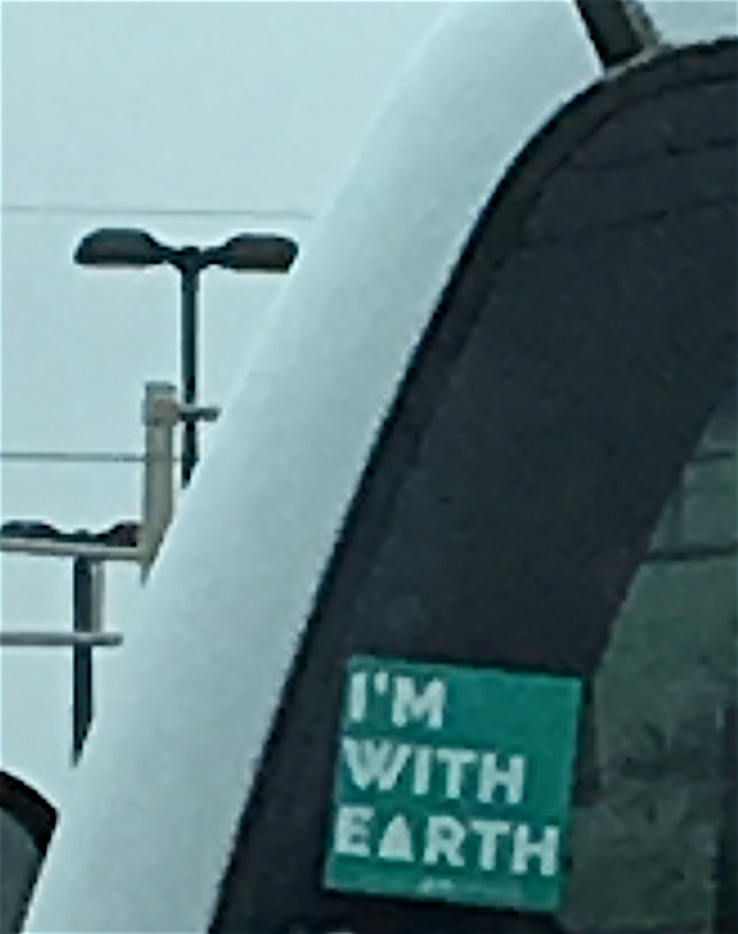
Random fact of the day: my waking thought this morning was about The Geography of Thought. No kidding. It’s a terrific book by Richard Nisbett. The subtitle is “How Asians and Westerners Think Differently…And Why.” Somewhere in the recesses of my brain I must have been pondering the bumper sticker we recently saw: I’m With Earth.*

One of the points made in the book, the one that permeated my dream state, is that different languages place different emphasis on different parts of speech. For instance, many Asian languages place emphasis on the verb. English speakers place the emphasis on the noun. In listening to mothers talk to their infant children, an English speaker will say, “Look at the red truck! Do you see the red truck?” An Asian mother will say, “Look at the red truck go!” Do you see the red truck go?”

Why does it matter where the emphasis lands in a language structure? Noun or verb?

The language we use shapes our thinking and seeing. It shapes basic worldviews. Earth as a noun or earth as a verb. Earth as a stand-alone-thing or earth as a moving interrelationship. These are vastly different worldviews.

This was my thought/image coming out of sleep: earth and sky. In a noun world, earth and sky are two distinctly different things. In a verb world, earth and sky are not separate things, they are verbs, actions, interplay of a dynamic relationship. In a noun world, I am also a distinctly different thing. In a verb world, earth, sky and I are not separate things, we are a dynamic inseparable relationship. We.

The bumper sticker is a declaration: I am with earth. It makes perfect sense in a noun world because it is also possible, in a perceptual world of separate things, to be against earth. Nature needs to be conquered, tamed. In a noun world, earth, once tamed, is a resource and resources are meant to be used. In a noun world, we are capable of believing that our actions have no impact on our environment. Action and environment are nouns, separate things.

In a verb world, what you do to the earth is what you do to yourself. No separation. In a perceptual world of relationship, of verbs, it is understood that your actions not only have impacts, your actions are impacts.

We woke to the news of yet another mass shooting. This one in Colorado. As usual, we know that our community and leadership will offer thoughts and prayers but nothing really – not really- will be done to address it. In a noun world, we protect the rights of the individual, the separate thing. In a verb world, there are no mass shootings. None. Violence done to one is violence done to all. In fact, more people are gunned down in the United States in a day than are killed by gun violence in Japan in a decade. The differing linguistic emphasis extends to differing understanding of rights and responsibilities.

Language matters. Where we focus matters. What we emphasize matters. The story we tell is determined by the language we use to tell it. I am with earth. Or, I am earth. I go to worship. I am worship. I seek purpose. I am purpose. Separation. Relationship. A whole philosophy of living reduced to a simple bumper sticker.

So, when we ask complex questions like, “Why can’t we do anything about gun violence?” or, “How is it possible that people in a pandemic refuse to wear masks to protect each other,” our answer is really very simple: our language makes it so.

Perhaps in a world of nouns a declaration is the best we can do. It is a step toward the middle way, a declaration of responsibility to the commons. Black Lives Matter. #MeToo. Stop Asian Hate. I’m With Earth.

*The “I’m with Earth” sticker is from the very cool company Gurus

read Kerri’s blog post about I’M WITH EARTH

Line Up Behind “They” [on Merely A Thought Monday]

When the world is just too much to ponder, one of our favorite bits of escapism is to catch an episode of Highway Thru Hell. Heavy rescue tow trucks working miracles clearing the highways of impossible wrecks. Flipping large semi-tractor-trailers, pulling them off of icy bridges and out of ditches. The physics of their work is mind-bending. Angles of lift, leverage, and thrust. Marvels of nuance in heavy metal. It is a symphony of paradox: crude meets delicate, tender masculinity.

On the surface, it seems an odd choice of wellsprings to refill our faith in humanity. But, every time we indulge in our flight from the news-of-the-day, I find myself whispering, “Unbelievable.” Not only do they willingly wade into impossible messes, they do it with a singular and clear understanding: they are serving a greater good. They are trying to open or keep open a highway. Connectivity. Commerce. Community. Like any doctor removing a blockage, they are servants to communal flow. I think that is why we visit them on the highway.

At the shop, they work out their pecking order. There is no lack of flexing muscles and man-drama. But, once they are called to a crash, all the “I” flees the scene. There are police, and flag people. There is traffic backed up for miles; each and every car and truck a person with a place to be. And the tow truck operators know it. They talk about it. Their service outruns their egos. They do not hesitate to call for help. They make choices based on the needs of others. The fantasy-world of “I” dissolves into the hard reality of “Us.”

In that hard reality of “Us,” you’d be hard-pressed to find a more thankless job. They work long hours in extreme weather. The conditions are dangerous and dirty. They clear the wreck, get back into their trucks, and move onto the next, with little or no thanks from the community they serve. Yet, they show up everyday. They take extreme pride in doing their work. There is a mastery that they acknowledge in the older drivers and strive to achieve it themselves. They learn from each other. They mentor each other. They celebrate each other.

They.

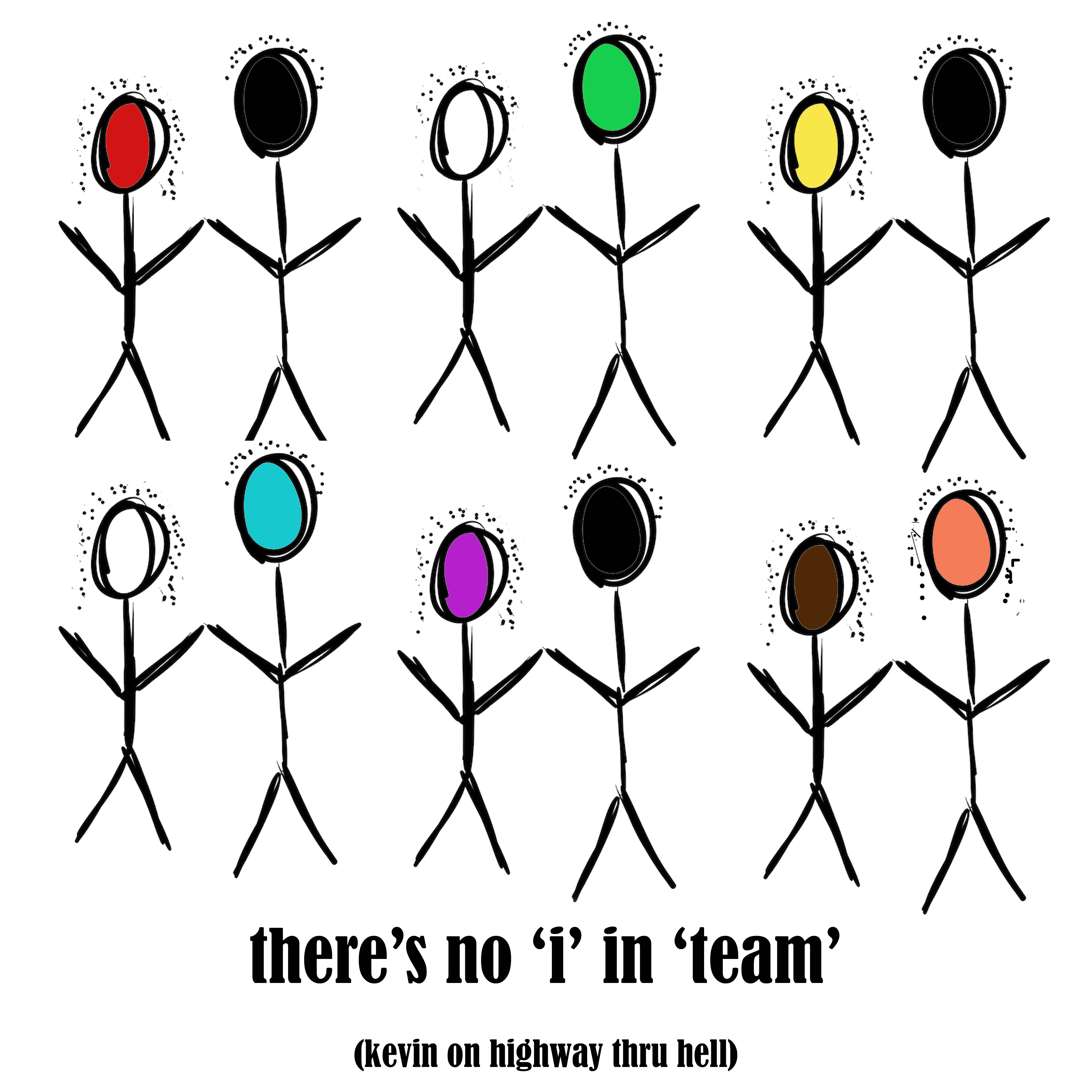
When Kevin, one of the tow truck operators, driving away from an exhausting job that took many people and many hours to complete, said with tired satisfaction, “There’s no ‘I’ in team,” I thought, that’s exactly why I escape from my highway thru hell to this Highway Thru Hell.

These Highway Thru Hell guys are plugged into the simple reality of existence. They know unequivocally that no one walks this earth alone. They know that their work on this earth, amidst the mess and chaos and dirt, is about keeping the flow going, and that requires an “I” that lines up behind service to “They.”

read Kerri’s blog post about NO I IN TEAM

Follow The Lights [on KS Friday]

Before moving to Wisconsin I had no holiday tradition. Being “not religious,” my celebrations were more spontaneous and improvisational than rooted in any specific custom or expectation. Dinners with friends. One year I baked bread with strangers. One year I took a boat to an island because there was a hot springs by the beach. One year, because I was alone and life was crumbling all around me, I scheduled for myself 30 coaching calls; that was the most memorable and profound holiday season of my life. I helped people. I met Kerri.

Since moving to Wisconsin my holiday tradition has been to help Kerri create choir performances for services. When I suggest that I helped, I mean I carried stuff, set up chairs, pushed pianos, moved bells into the choir loft, set up microphones, hauled big bowls of sand for candles. I am part Sherpa. It has been the busiest and zaniest time of the year. After playing the late night Christmas Eve service – the last of many running through the week, we come home, and with our neighbors, light luminaria up and down the street, pull two fire pits onto the driveway and stoke them for warmth. We open bottles of wine and place on a table bowls of snacks. People come and, huddled around the fire, we talk and laugh until the cold wee-hours of the morning.

This year, with the loss of jobs and collapse of community, with the pandemic spiking, our traditions are erased. For me, this feels like familiar territory. For Kerri, it is a profound loss and is disorienting. She had a full-on-old-fashioned-melt-down a few nights ago after cutting her finger on a broken wine glass. “It’s too much…” she sobbed. I couldn’t help but feel as she wept that I/We have walked a full-circle. Eight years later, life is again crumbling all around me/us. This could be the most memorable and profound holiday season of our lives. I didn’t offer my thoughts. I have learned in moments of crisis that silence is often more helpful than platitudes of encouragement. I am slow but sometimes I get there.

Leo had a Christmas tradition that I admired. He gave everyone in his circle an orange and a few walnuts. He grew up very poor and, as a child, those were the gifts he received. It was the most and best gifts that his parents could give. Throughout his long and successful life, he gave them to remind himself – and those he loved – that the holiday was not about the stuff. It was about the people who stand in the circle with you, the people who stand in the fire with you. The people who you love, who give all that they have: their hearts. An orange. A few walnuts. Big, big love.

This year, those people will stand virtually with us and we with them. The hot fire of this year has burned away the superficial. The recognizable patterns have all but disappeared. Yet, the essentials remain. The essential few remain. Deeply rooted. Deeply felt.

The cycle of life, the cycle of The Lights in Kerri’s song, reminds us of all that really matters. New life, linking back. Ancient hearts beating in our breasts. Full of light. Full of big, big love.

Kerri’s albums – including the lights – are available on iTunes

read Kerri’s blog post about THE LIGHTS

the lights ©️ 1996 kerri sherwood