Right Before Our Eyes [David’s blog on Two Artists Tuesday]

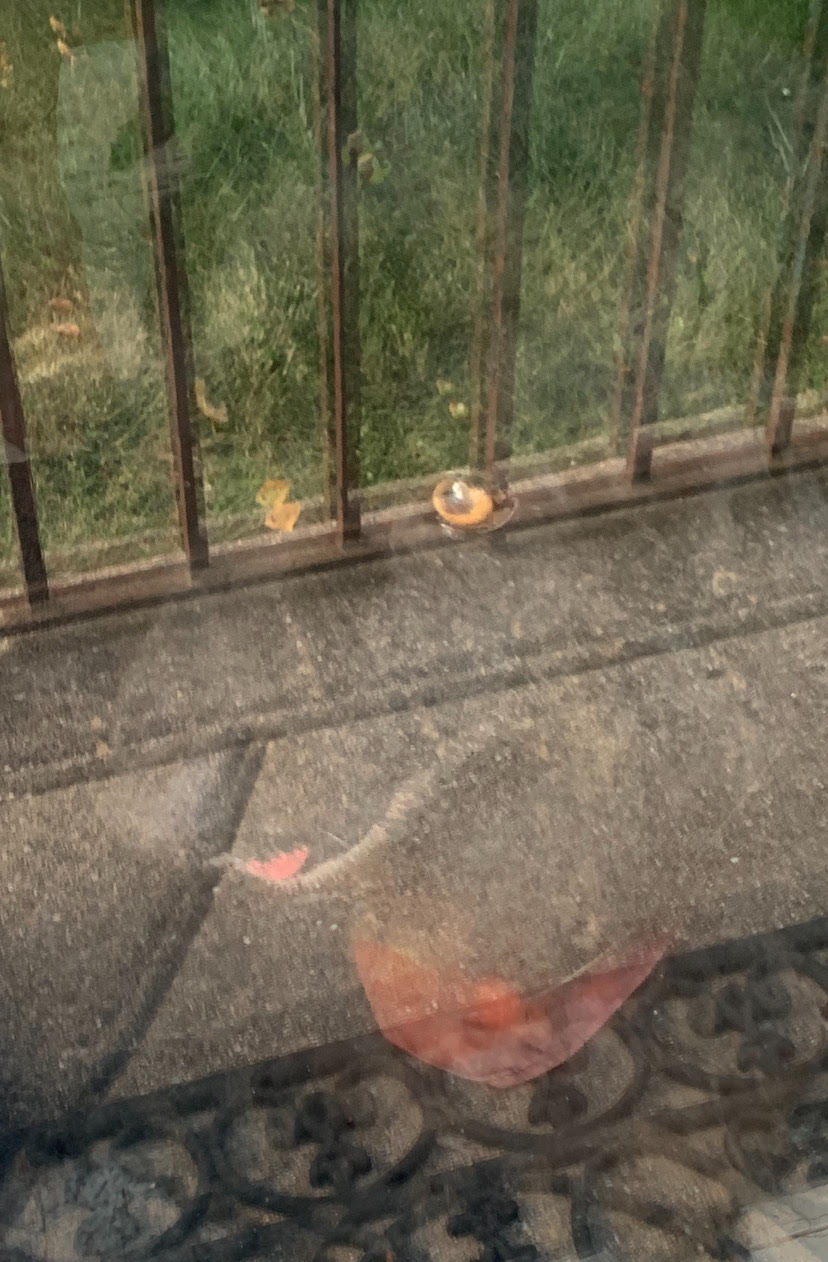
If you are like me, this image took a moment to grok. All the elements are apparent yet, at first, my brain couldn’t pull the pieces together. Kerri, standing outside the front door, took the photo of Dogga on the inside staring out. What is reflection? What is image-through-the glass? It reminds me of those famous drawings that can be seen in completely different ways, the old crone and the young woman. One drawing, two possible images. An optical illusion.

After the image of Dogga-in-the-glass came into focus for me, Kerri exclaimed, “I can’t believe it took you so long to see it!”

MC Escher made a career of creating optical illusions. Stairways to nowhere. Hands drawing hands. The mathematics of art and design. We are rarely aware that our brains assign rather than discover meaning, selecting and assembling pieces in order to sense-make. Like well-worn paths through the woods, our sense-making carves default channels: we see what we expect to see. We see it because we believe it, not the other way around. That is to say, we rarely see beyond what we think. Thinking paths-of-least-resistance render us blind.

The pursuit of truth is to see beyond our well-worn paths. Escher knew that. His images play with our expectations. His images, for a moment, shock us into seeing beyond our expectation.

Factors like age or cultural orientation create biases in the making of meaning, in the assembly of the illusion. For instance, in the drawing of the old/young woman, older people will more often see the old woman while younger people will almost always see the young woman. If you happen to come from a culture that is not inundated with images (there are a few remaining on the planet), it is likely that you would only see scribbles on a page. You would see neither the old or the young woman.

Your normal is not my normal. Your well-worn thought-paths are different than mine.

Given identical experiences, your sense-making will differ from mine. It is the genius behind our system of governance. That two opposing points of view might come together, discuss what they think-they-see and compromise on a best path forward, is the foundation-stone of our democratic system. The genius begins when allowing that one party sees an old woman while the other sees a woman who is young. Both can be valid. Both can exist on the same page.

Allowing for and valuing differences of perspective leads to common ground, shared action.

On the other hand, the same system collapses when what is immediately apparent to both parties is summarily denied by one side of the aisle. It’s another type of illusion altogether: the negation of the obvious. For instance, our last presidential election endured 65 challenges in court and all were summarily thrown out for lack of evidence. Both sides knew – and know – without doubt that the election was valid, free and fair yet the red-hat team continues to fearmonger, pounding the drum of corruption, wearing another kind of thought-path in the minds of their constituents, rendering them blind.

There is a clear distinction between sorting out differences and creating them to exploit fear.

Coming together, in an attempt to see beyond expectations, respecting differing perspectives, valuing the multiple perceptions of a diverse nation in order to stand on common ground is democracy at its best. Creating division, whipping up disunity, negating and devaluing the perspectives and values of others spells the end of democracy. It intentionally pulls the nation apart.

Democracies pursue truth. Autocracies thrive on falsehoods. The choice we face is abundantly clear and right before our eyes. As a nation, all we need do is step off our well-worn thought-paths and open our eyes.

read Kerri’s blog about ILLUSIONS

like. share. comment. subscribe. support…thank you.

Check Your Stems [David’s blog on KS Friday]

Wild Carrot. Queen Anne’s Lace. Throughout every season we find ourselves marveling at the aesthetic structure of the plant. The graceful curves and shapes. They inspire movement and floral symbols in my paintings.

Summoning the Oracle, Google, I learned that a common question asked is how to discern Queen Anne’s Lace from poisonous Hemlock. They are surprisingly similar in appearance. “Poison hemlock stems are smooth, while Queen Anne’s Lace stems are covered with tiny hairs…” The moral of the story? Check your stems.

Check your stems.

The verb form of the word ‘stem’ concerns origins. Comes from. Arises from. For instance, the stem of the word ‘democracy’ arises from ancient Greece. The word literally means the people (demos) rule (kratos). “Democratic government is commonly juxtaposed with oligarchic and monarchic systems, which are ruled by a minority and a sole monarch respectively.” Healthy disagreement, opposing points of view expressed without fear en route to compromise, is the beating heart – the stem – of a democracy.

The stem of the word ‘fascism’ comes from Latin and means, “bundle of sticks,” – the visual symbol evolved to include an axe at the center of the bundle, representing “a way of organizing a society in which a government ruled by a dictator controls the lives of the people and in which people are not allowed to disagree with the government.” Elimination of opposing points of view is the stem of fascism.

“Fascism’s origins are…ultimately centered on a mythos of national rebirth from decadence.” You could find no better or clearer tag line for a fascist intention than Make America Great Again. You could not pen a better blueprint for the fascist overthrow of democracy than Project 2025. The forcible suppression of opposition. Political violence as a necessary means of national rejuvenation, the demonization of the “other”.

As demonstrated in their gathering in Milwaukee, the reds are now a perfect expression of their symbol: a bundle of tightly bound sticks in lock-step – with an axe hanging over their heads ready to eliminate any voice of opposition. It turns out, like their sycophantic VP pick, many of these men and women, who once called their supreme red leader “America’s Hitler” and “a wannabe dictator”, were right. Sadly, they lack the courage of their convictions. They fear the axe. They lack a basic grasp of the necessity in a healthy democracy for genuine voices of opposition.

Is it rule by-the-people-and-for-the-people or a fascist autocracy?

How can we discern democracy from poisonous fascism? Check the stems.

Open your eyes and look, really look. The red hats have wrapped themselves in the flag so they might appear like the Grand Old Party. They are not. To anyone undecided or confused or jaded, I can only offer this advice: it’s important to check your stems before you ingest too much fascist hemlock believing you’re dining on democracy.

This Part of the Journey on the album of the same name © 1997, 2000 Kerri Sherwood

Kerri’s albums are available on iTunes and streaming on Pandora and iHeart Radio

read Kerri’s blogpost about WILD CARROT

like. share. support. comment. subscribe…thank you.

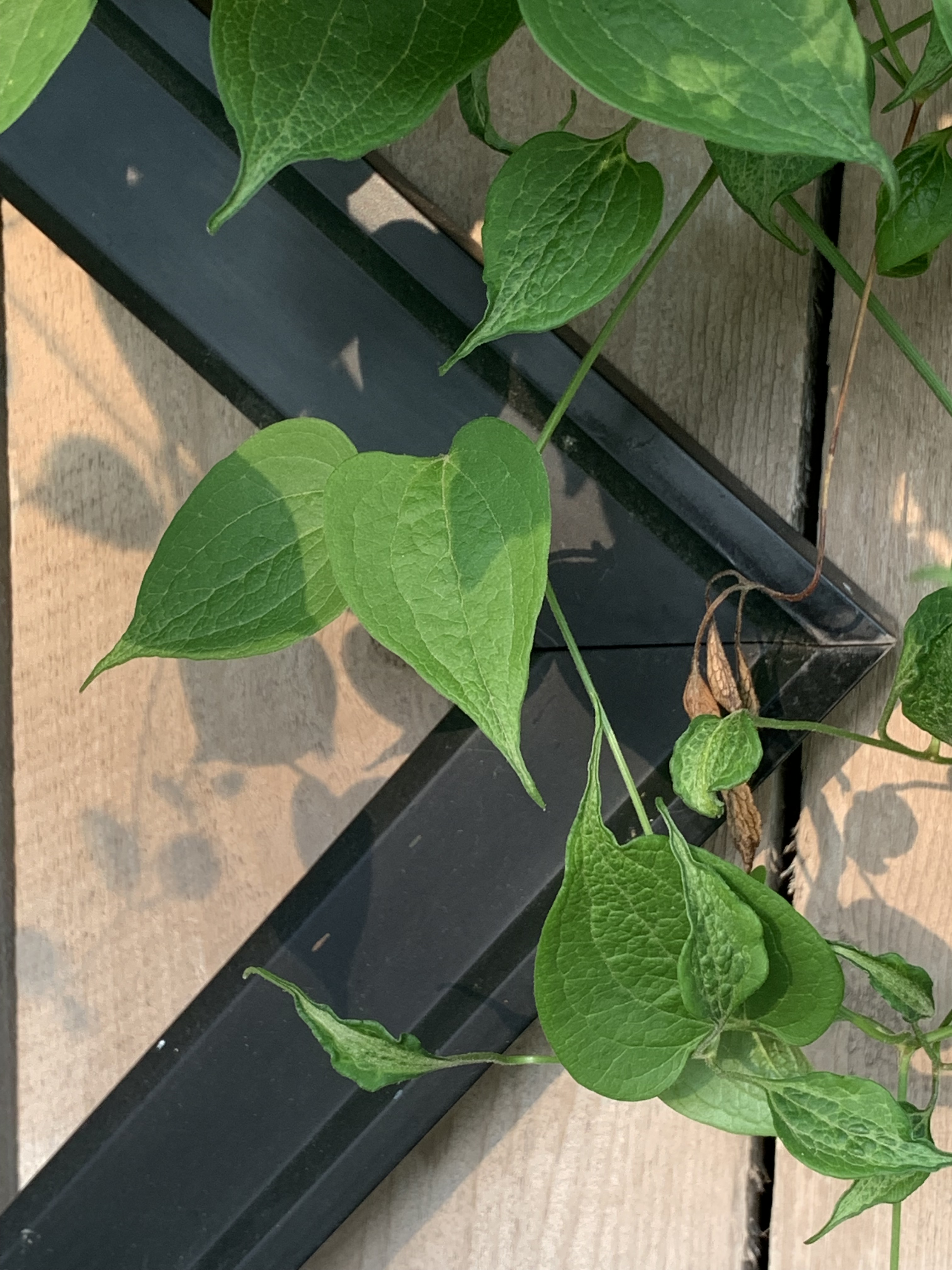
Meet The Frame [on DR Thursday]

“There are people who prefer to say ‘yes’ and there are people who prefer to say ‘no’. Those who say ‘yes’ are rewarded by the adventures they have. Those who say ‘no’ are rewarded by the safety they attain.” ~ Keith Johnstone

A violent storm blew through so we spent the night hunkered down in the basement. We had very little sleep. Sleeplessness always leads me to moralize and for that, I apologize.

A frame of reference is a powerful thing. Experiences are interpreted through a frame of assumptions. We are witness to a time in which verifiable reality is denied because it doesn’t jive with the tribal frame.

Master Marsh passed along this quote from E.O. Wilson’s Sociobiology: “(Humankind) would rather believe than know.”

Knowledge often challenges the frame. That is the point of knowledge. Growth. And growth is always a challenge to what was formerly believed possible.

It is somehow easier to lapse into a conspiracy theory, demonize an other, deny what is indisputable, than it is to allow that the frame is just that, a frame. It’s not a truth. It’s a context. It’s a binding agent. Culture is a frame of reference. Religion is a frame of reference. What we believe of ourselves is not a fact. Identity is a frame of reference. Democracy is a frame of reference. Autocracy is a frame of reference. Supremacy is a frame. Equality is a frame. Every-man-for-himself is a frame. Brother-and-Sister’s-keeper is a frame.

None are truth. Frames are creations. Agreements. Aspirations.

Frames that allow for challenges, for growth, are sustainable. Those that do not, those that deny insight, fact, data, new knowledge, those that are threatened by opposing-point-of-view, inevitably collapse in their denial.

The fire burns. A garden hose is not an effective defense, regardless of belief. Temperatures rise relative to emissions. Rain forests disappear. A lie undermines the foundations of democracy. Believe it or not. Harry Truman sat in his cabin nestled into the mountain called St Helens. Despite repeated appeals from fleeing neighbors, repeated rumbles and tremors, warnings from scientists and safety personnel, he believed he would be safe, that his mountain would never erupt. Traces of Harry have never been found.

So it goes with the denial of believers. Frames held too tightly blind rather than reveal.

Every artist knows the transformative power of a frame. A frame can make almost any scribble look substantial. A cheap frame can diminish the greatest masterpiece.

New knowledge meets an old frame. Growth or entrenchment? Blind acceptance or emerging possibility? Yes? No? Both?

read Kerri’s blog post about FRAMES

held in grace: surrender now ©️ 2016 david robinson