Sit By The River

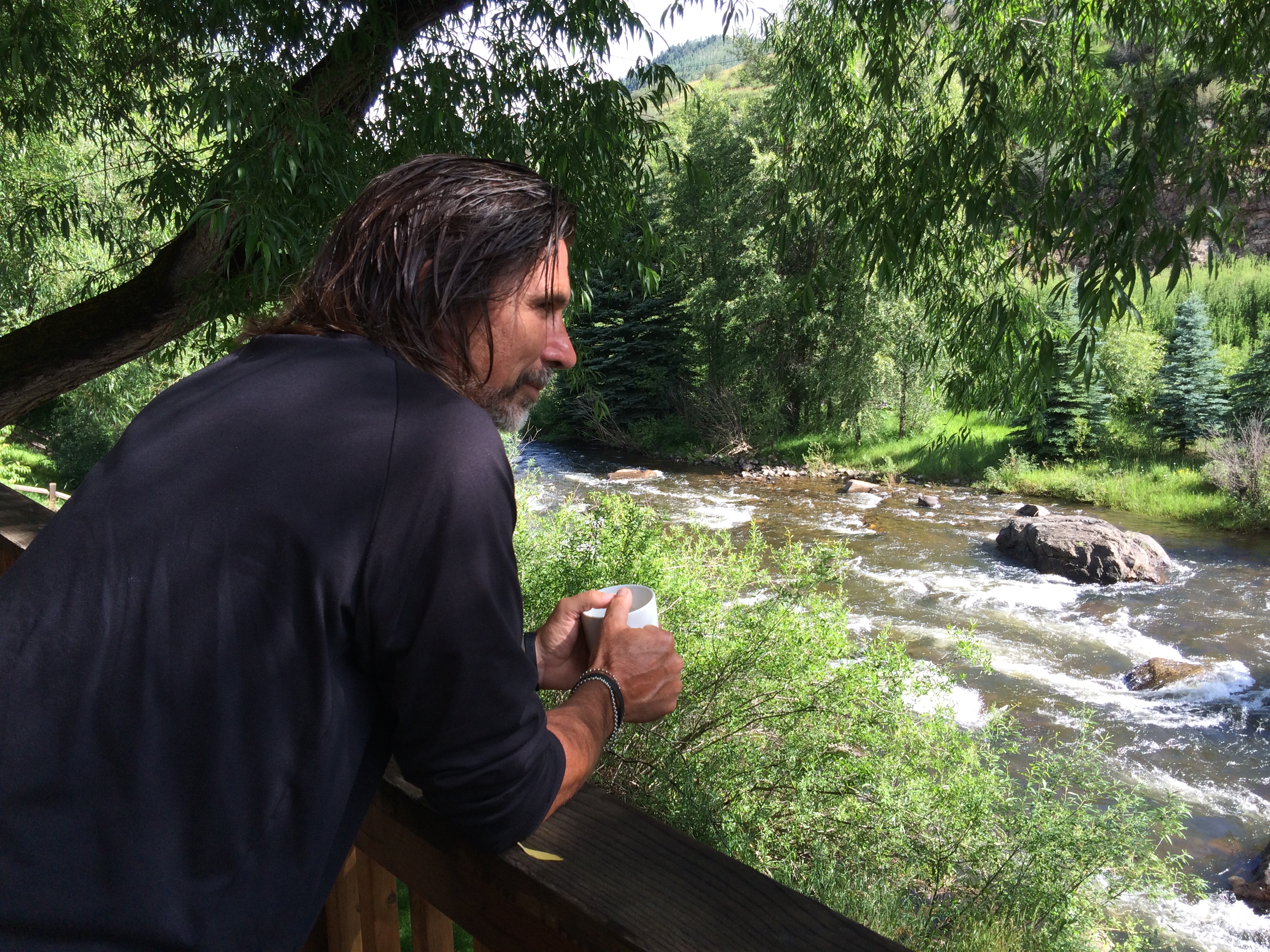
photoThe back deck of the Minturn Inn overlooks the Eagle River. We sit in the sun and are mesmerized by the sound of the rushing water. It is liquid peace. In this moment I believe that people seeking to develop a meditation practice should begin sitting by a river. The water easily carries away all thought and worry.

The river is a great giver of perspective, a great deliverer of presence.

I am struck by this power of the river – and it is a power. We easily grasp nature’s power when a tornado levels a town or an earthquake devastates a city but forget that there is a flip side, a quieter side to nature’s ominous power. There is a vast quiet. In our world peace seems nearly impossible to achieve yet in less than a minute, sitting by the river, I am steeped in peace. That is an awesome power!

I once read (somewhere) that we have a vibrant internal compass capable of ringing true from false, right from wrong. If we make a choice that is out of our integrity, the compass spins wildly out of control, setting off an unstoppable inner monologue, a great inner debate. If the choice is in alignment, the moment passes unnoticed. True north is known by the absence of spinning. Inner quiet is an affirmation. Nature – including our inner nature – doesn’t lie.

Sitting on the deck, breathing in the mist and peace of the rushing water, I know that what’s most important in this life, the real art, happens in the quiet spaces, the moments that thought cannot penetrate, the spaces that require no definition or justification. They are the moments ripe with gratitude. They are the moments dripping with appreciation. I know that all the debates and disagreements and defenses are paper tigers. I also know that this peace is not the province of the river. It is, in fact, available all the time. The river simply reminds me to hush up and listen.

Hear The Calling Voice

photo

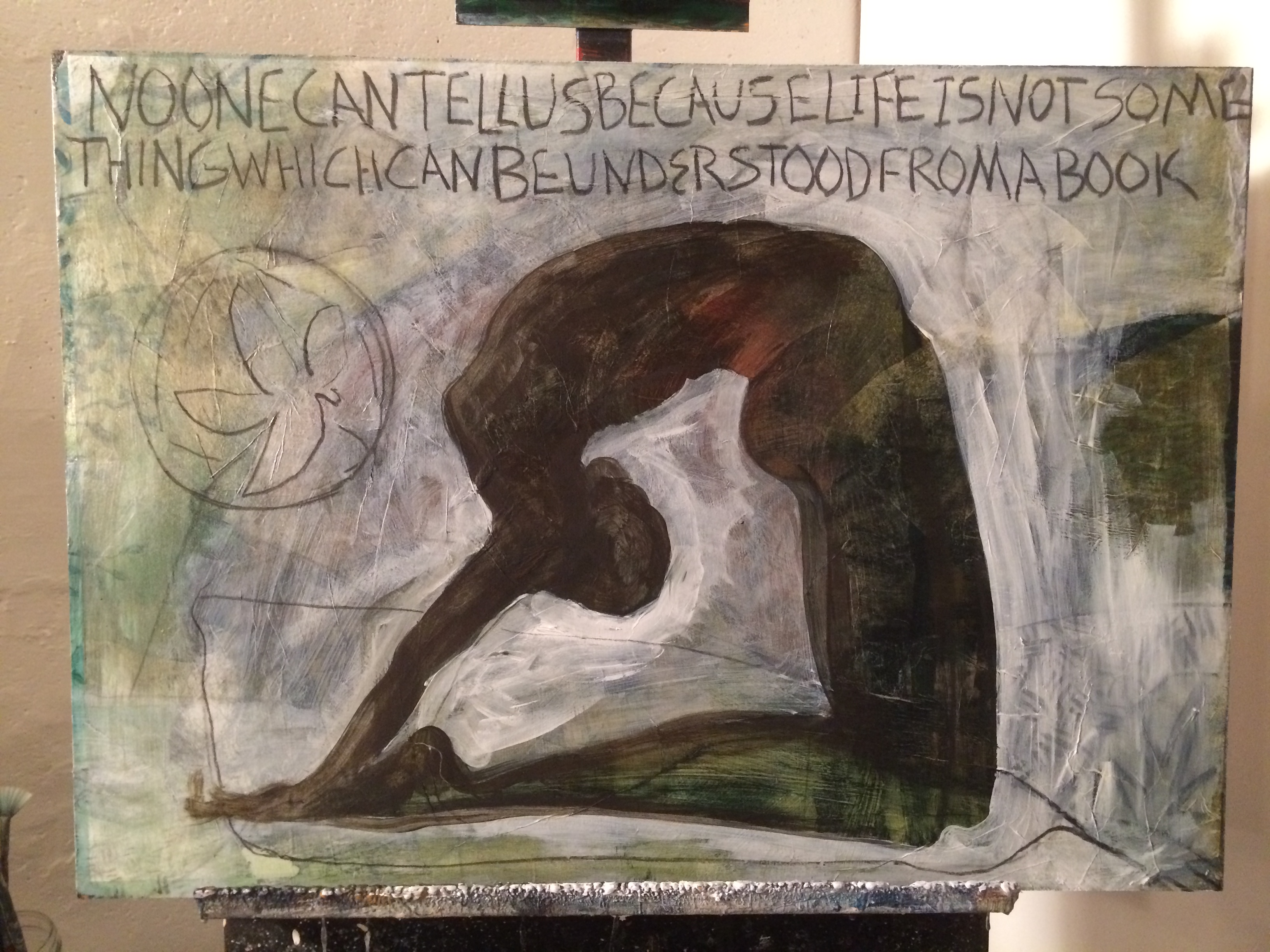
next steps to my latest painting. it’s coming along!

“Maybe that means that the voice we should listen to most as we choose a vocation is the voice that we might think we should listen to least, and that is the voice of our own gladness….I believe that if it is a thing that makes us truly glad, then it is a good thing and it is our thing and it is the calling voice that we were made to answer with our lives.” ~ Frederick Buechner, Secrets In The Dark

This week I received an email from a long lost friend, a man I haven’t seen in over 25 years. Although we have yet to talk, his email contact has already sparked within me a life review. What have I done in all of these years? Who have I become in the quarter century since last I saw my friend? He wrote a brief three sentence overview of career advancement and family highlights (graduations and retirements). In attempting a reply, I found it impossible to encapsulate my path as there has been nothing linear, logical, or similar in my steps. I’ve walked a much different road. My inner imperative roars rather than whispers.

My life has been a source of great concern for my parents. Security has never been high on my list of occupational criteria. The day that I graduated from college my mother asked in all seriousness, with the love and concern that can only come from of a worried mother, “Now that you’ve gotten the theatre thing out of your blood, what are you going to do with your life?” She could see (before I did) my attraction to edges and my need to run at them and jump. She understood my need to question the rules, challenge assumptions, and live on the margins so I might better see and understand the happenings in the main stream. She saw and for a while feared the call of the art within me.

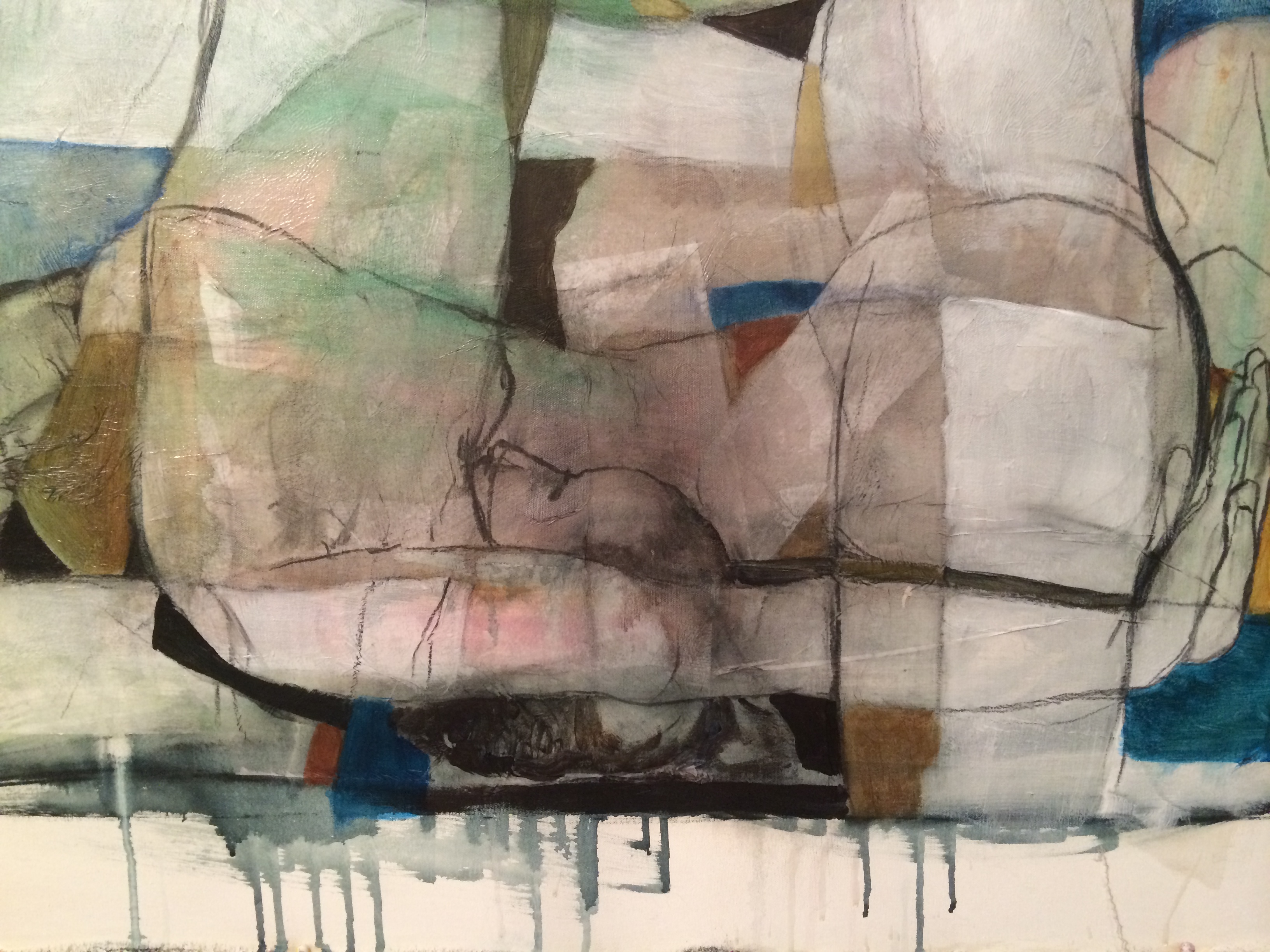
a close-up

a close-up

Judy once told me that she never wanted to be too comfortable because she intended to live life, not protect herself from it; she didn’t want to become complacent in this gorgeous life. Security is low on her list, too. She’s my go-to person when I lose the voice of gladness in the static and clamor of ‘should-do.’ She cuts through the noise, “Can you hear the birds, feel the sun on your face?”

When we were students in college, Roger asked me to read Herman Hesse’s book, Narcissus and Goldmund. He told me that he would most likely live the life of Narcissus and I would follow Goldmund’s route. Narcissus is a priest and teacher seeking God in the rituals of the institution. Goldmund finds illumination through the mess and random experiences of his life. One seeks God through order. The other finds God in chaos. Both are following their call, their voice of gladness. My path has, as Roger predicted, mirrored Goldmund’s. The voice, the call of gladness is clear to me on the inside while the path is nearly unrecognizable from the outside perspective.

another close-up

another close-up

So, what to tell my friend when we speak? Like all artists, I have answered the calling voice with my life.

Seek Solitude

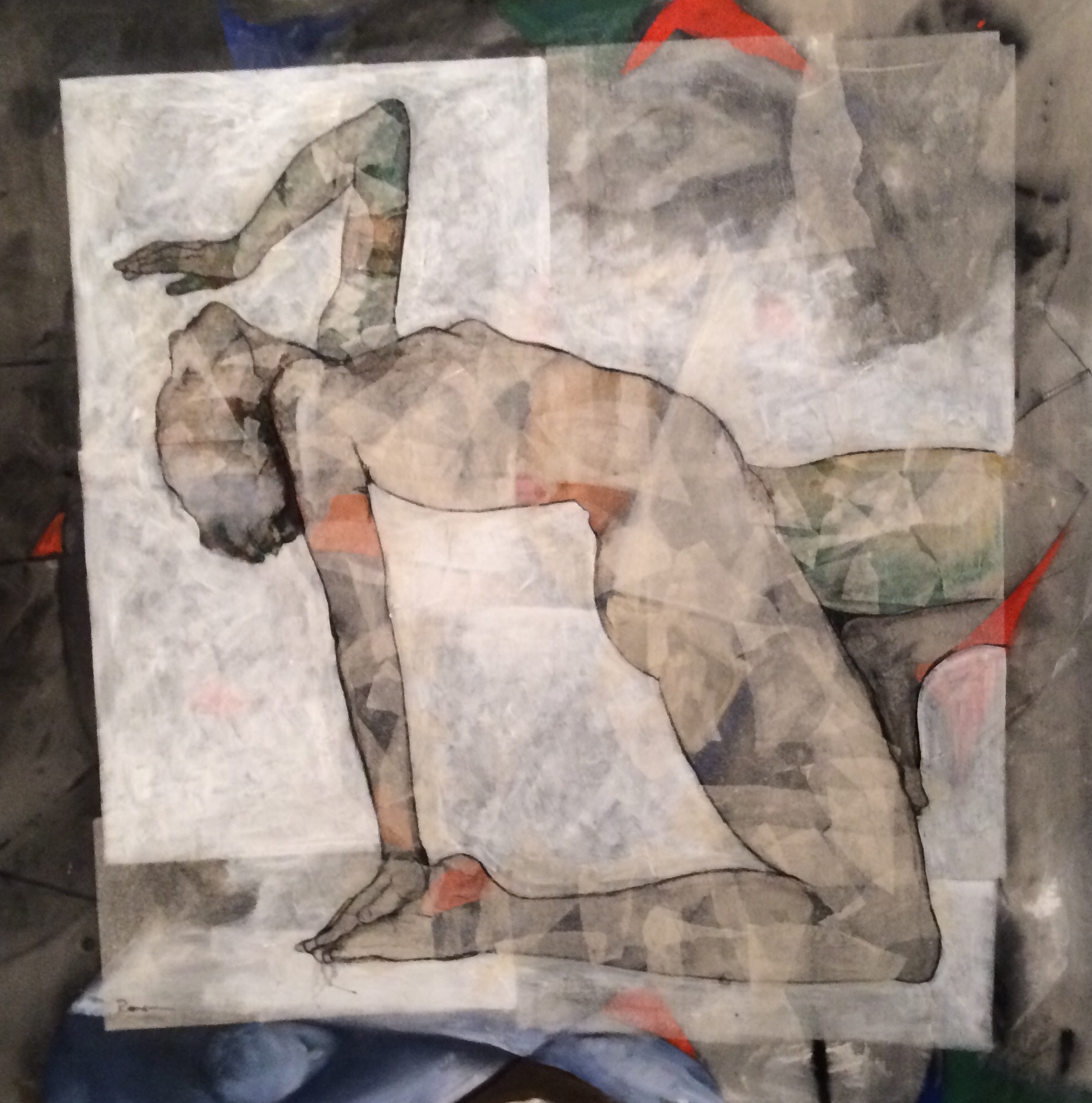
from my Yoga series of paintings

from my Yoga series of paintings

It is easier to sail many thousands of miles through cold and storm and cannibals, in a government ship, with five hundred men and boys to assist one, than it is to explore the private sea, the Atlantic and Pacific Ocean of one’s being alone. ~Henry David Thoreau, Walden

I remember watching a documentary of the painter Lucien Freud. He said he couldn’t understand why anyone would choose to be a painter because the choice meant living a solitary life. His comment struck me as odd because, for me, solitude was necessary for the muse to come through. I often yearned for solitude. I always looked forward to my time with the muse.

More than twenty years ago, for a period of time, I was painting exclusively. I had an abundance of solitude. Each evening my dear friend Albert would show up at my door, force me out of the studio and take me to a coffeehouse. He told me that he feared my isolation, that without human contact and conversation, I might twist. His fear, although probably valid, also struck me as odd.

A solitary life can be quiet, prayerful; it can be full. A solitary life can also be lonely and empty. The difference, of course, is in the presence of a relationship. Most painters that I know, most artists, feel as if they are a “channel to something bigger.” Something comes through and it is in the solitary moments that the channel opens. It is in the solitary moments that the relationship becomes available. The relationship with the muse can be full, rich, and three-dimensional. I imagine monks, nuns and ascetics of all spiritual traditions know this relationship, too. Solitary need not be lonely just as, paradoxically, the loneliest place on earth can be in the middle of city teeming with people.

The exploration of the private sea, the Atlantic and Pacific Ocean of one’s being is the province of the artist. The relationship with “something bigger,” with the muse, is the seed from which all art forms grow. The seed is visible in the adornments found in pyramids, in the harp of Orpheus, and in the paintings of Marc Chagall. It is present when children with gusto run their fingers through paint or dance all alone in the grass just because it feels good.


Walk Through The Firewall

from my narrative series: Sleepers

from my narrative series: Sleepers

The text read something like this: There are some things in life you cannot circumnavigate. You can only move through them.

Carol told me that each year there is a growing change in her students. There is a gap between their generation and ours – and it is alarming. She teaches young actors at a college for the arts.

“What’s the difference? “ I asked, “what’s the change?”

“They are increasingly more and more medicated,” she said. “Through their whole lives, since they were small children, they’ve been reinforced through medication that their emotions, what they feel and how they express it, are bad. To teach them to be actors, to be authentic on the stage, to allow that what they feel is necessary and good, is nearly impossible when they are drugged to prevent them from feeling anything.”

She paused for a moment and added, “I can’t ask them to get off their drugs. I can only help them consider that their feelings, their emotions, are not the enemy but the route to truth.”

I offered that the drugs serve as a firewall that keeps them from themselves. It dulls them from the full range of life experiences. Years ago, when I was working in the schools, I experienced the first wave of kids drugged into compliance. It seemed that the solution for almost everything was medication. Their attention was either in deficit or their behavior obsessive and, either way, meds were the answer.

We talked of the other firewalls, the drugs that numb us or distract us from a full range of life experiences. Television in excess is the most obvious. And then there is the downside of social media; disconnection in the guise of connection.

I shared that, on my move to Wisconsin, I decided to unplug from the daily news. For me, it was serving as a firewall against the essentials of life. Too much adrenaline and fear numbs us. It makes us close, shut down. I felt that the noise was doing the opposite of what it pretended. I suspected that I was less informed by listening to the onslaught of opinion-masked-as-news. I realized that I was agitated all the time by the battling correspondents and felt infected by the us-and-them picture they were painting of the world. When minor events are elevated to disaster status the real disasters pass unnoticed. Everything evens out. All colors of life reduce to bland gray.

Now that I’m through the firewall the events of real importance are evident beyond the chatter. If I really need to know it, I hear about it. In unplugging, I am actually more informed. And then there is this: without the incessant chatter, my artistry is coming through with clarity and potency. In seeing more clearly I can see my self more clearly. When not dulled or distracted by the noise, the full range of sound and color has re-emerged. The lesson: this world does not need fixing or changing or improvement. Neither do I.  It is gorgeous and profound when we are able to live unafraid of what we feel.


See It Blaze

text from Krishnamurti as it appears in my painting

text from Krishnamurti as it appears in my painting

Every once in a while the things I read, the experiences of my life, seem to coordinate. Like a thought-confluence, the books, the poems, the errands, the conversations, run into a single thought-stream. It’s as if they called each other last week and asked, “So what are you going to wear?” Often, this is how the universe places its hammer on my head.

A few stanzas from a Mary Oliver poem, Morning Poem (read the whole poem sometime. It’s breathtaking):

each pond with its blazing lilies
is a prayer heard and answered
lavishly,
each morning

 whether or not
you have ever dared to be happy,
whether or not
you have ever dared to pray

Did you catch the word, ‘lavishly?’

Here’s a bit from Carlos Castaneda, A Separate Reality:

What makes us unhappy is to want. Yet if we would learn to cut our wants to nothing, the smallest thing would be a true gift…. A warrior knows that he is waiting and what he is waiting for; and while he waits he wants nothing and thus whatever little thing he gets is more than he can take.

Prayers answered lavishly. Whatever little thing he gets is more than he can take.

For me, there are a few important words that have, from over-use, fallen into the bin of meaninglessness:

presence, transformation

Actually, they are in the bin because we’ve managed to make them (like the word, ‘art’) commodities, marketing terms, something owned or purchased with coin or wile or reason. Something possessed or not possessed. Something available to a few but not all.

Sometimes the words open again, the experience opens again, when said another way. For instance, the phrase, “cutting our wants to nothing,” is another way of saying ‘presence.’ Don Juan would have made a good Buddhist! When present, the ordinary pond blazes, it teems with life and isn’t the experience of teeming life at the heart of any good prayer? The last time you caught your breath, a sunset or watching your child sleep, you were present, you wanted for nothing,  your prayers were lavishly answered.

my latest work-in-progress

not yet finished – maybe never will be – an, perhaps, that is the point.

The message of the hammer on my head: The pond is always blazing. The transformation is not in the pond but in our ability to see it.


Dance With The Fire

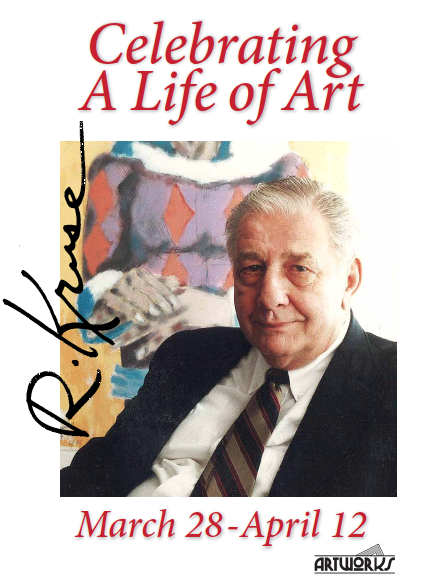
Screen Shot 2015-03-29 at 5.21.46 PMLast night was Duke’s (Richard Kruse’s) memorial art show. There was an abundance of food, wine, laughter and stories. The gallery was literally filled with his paintings, prints, and sculpture. He was prolific. His paint encrusted chair, draped with his paint spattered coat, sat empty before his easel; on the easel was a large sketch pad, a place for notes for Duke and his family. I watched people approach the chair, catching their breath before sitting to compose their thoughts in the very chair he’d occupied for decades to compose the paintings that lined the walls. The chair became sacred space, a bridge between worlds.

I did not know him but I felt an immediate kinship with his work. He was a figurative painter – as am I – and given to the mystic – as am I: he worked the figure to find the soul shining inside – as do I. It was a great treat to thumb through his sketchbook. The energy and freedom of his drawings took my breath away; this was a man who needed to make art. It was an imperative made visible. I found an even deeper kinship in his imperative.

It’s hard to explain to someone who is not filled with the fire, the inner necessity to draw, dance, make music,…. It is more than a want or desire. It can be ignored but withering is the price. If it is not honored it will consume. To someone who does not know this fire the making of art appears as an indulgence. To someone who burns with the fire, anything else is a distraction; they will construct their life patterns according to the necessity of the fire.

The myth of the suffering artist is perpetuated by non-artists. The only artists that suffer are those who ignore their gift. Most people, despite their rhetoric, fear the kind of freedom and energy evident in Duke’s sketchbook. Artists run at the unknown. They develop craft so they might relinquish control in order to dance with the fire. Too much investment in control (of self, of other, of circumstance) smothers the flame. By the stories I heard, by the power of his sketches, by the laughter his life evoked, I can only assume that Duke must have been a master of this fire-dance.


Shovel Snow And Survive

...and that's only half of it;-)

…and that’s only half of it;-)

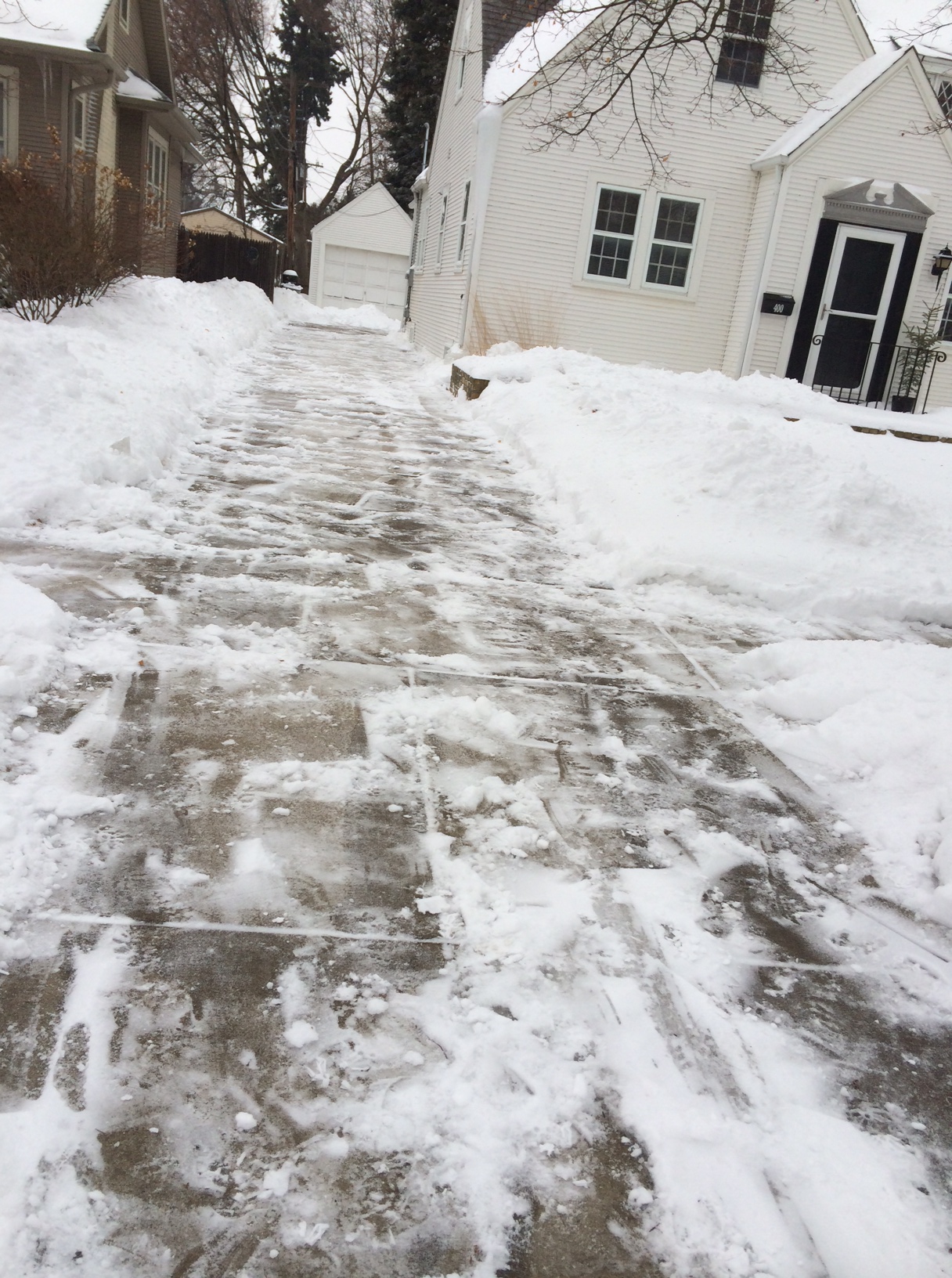
We have a freakishly long driveway or so it seems to me every time it snows. During the summer months I never think about the length of the driveway. In fact, when it is not snow covered, I appreciate its ability to accommodate several cars. Valet services everywhere might lust after our snow-free driveway. Our neighbors routinely mistake our driveway for the approach to a country club.

Last night Skip took the train up from Chicago. It was his first visit to our house. His first question to me upon seeing the house was, “Are you the snow blower?” He immediately recognized the freakish length of the driveway due to the massive piles of snow that currently define it. Skip also knows I have an excessive amount of hot air (so I am capable of literally blowing snow when on a good rant) that interrupts any sense that I might actually possess. Point-in-fact, we have a snow blower that sits comfortably in the garage. It requires a goodly amount of maintenance or perhaps a single bullet to the engine. I’ve considered mounting it on a pedestal for my yard maintenance sculpture series. Had I confessed possession of a snow blower Skip would certainly have asked, “Does it blow snow?” What an absurd question! Of course not!

There’s something in me that likes a challenge. Last night it snowed and I couldn’t wait to step into my big Wisconsin boots, grab my new green shovel (I broke the old orange shovel in the last heavy snow), and get to it! Kerri shook her head and reminded me that people “my age” routinely expire from excessive snow shoveling and, since we have a freakishly long driveway, there is excessive snow to shovel. She made it sound like my demise was not only possible but imminent. She said it was simple logic: if A) excessive snow shoveling causes early dirt napping and B) there is excessive snow to shovel, then, C) my shoveling excessive amounts of snow excessively would likely lead to early dirt napping.

I reminded her that we are both artists and logic rarely interferes with our decision-making. “Then take your time,” she admonished. “Go slow.” Ah! In the rebuke of logic, a little bit of Zen is always welcome. I shoveled snow slowly and survived. I paused often to breathe-in the cold and listen to the wind.


Explore The Human

photo-2

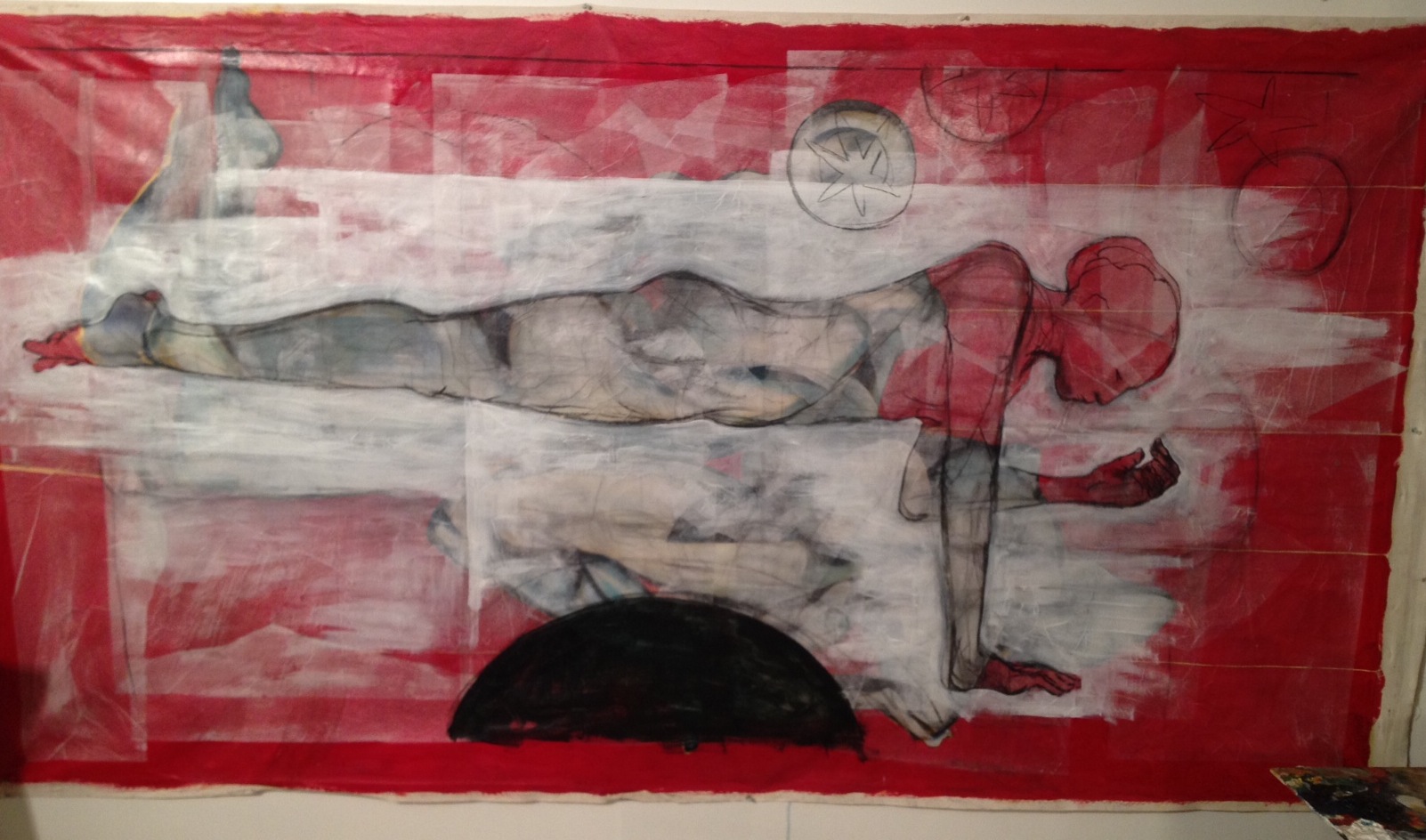
my latest work-in-progress. No name yet, approximately 5ft x 9ft.

Standing on the stair to her studio, Pam said, “I’m not sure where my work is going. I’ve pulled out all of the old paintings so I can see where I’ve been, what I’ve been doing, and maybe that will help me live into what’s next.” Like me, Pam has been a painter most of her life. She’s been through this transition many times before and recognizes the necessity of fallow artistic fields. Rather than push or panic, she’s matured as an artist and knows enough to value the emptiness.

With maturity comes faith. The muse never leaves. She rests. Artistic cycles are no different than seasons. Like a farmer living through the winter months on the harvest of the fall, Pam will spend hours sitting with her old work, thinking nothing, drinking in the nutrient of her artistic yield, allowing her inspiration fields to recharge and rejuvenate. She will allow herself to go empty, creating ample space for the new work when the muse reawakens. And then, one day, she will pick up a brush and be surprised by what comes through her.

Hans said, “An artist matures when he or she ceases working from their pain and begins exploring the human condition.” Working from the wound is necessary as adolescence is necessary. Most artists in our western tradition begin in rebellion, pushing against, making statements. We celebrate the outsider, the margin-sitter and so the wound can be difficult to escape: artistic pain becomes a role, an expectation. In practice it is akin to a developmental stall. The only place to go when pain is the norm is into the intellect: to produce, to make statements. Pain isolates and ultimately, an isolated artist is ineffective. Artistry, like all things vital, must occupy a shared space. It is communal or it is impotent.

Potency comes when the eyes turn out, when the question of “we” becomes more vital and interesting than the question of “I.” Artists mature when they reorient, when instead of the art expressing their pain, they serve the art and, make no mistake, art is another word for “human condition.” Art is bubbling life in all its forms: visual, kinesthetic, aural. As Hans said, “I want to fall deeper and deeper into the music. I want to find the edges and follow where it takes me, give myself over to it.”

title_pageGo here to buy hard copies (and Kindle) of my latest book: The Seer: The Mind of the Entrepreneur, Artist, Visionary, Innovator, Seeker, Learner, Leader, Creator,…You.

DSC_1196 copyGo here to support the kickstarter campaign for my play, The Lost Boy.

Say Yes To How

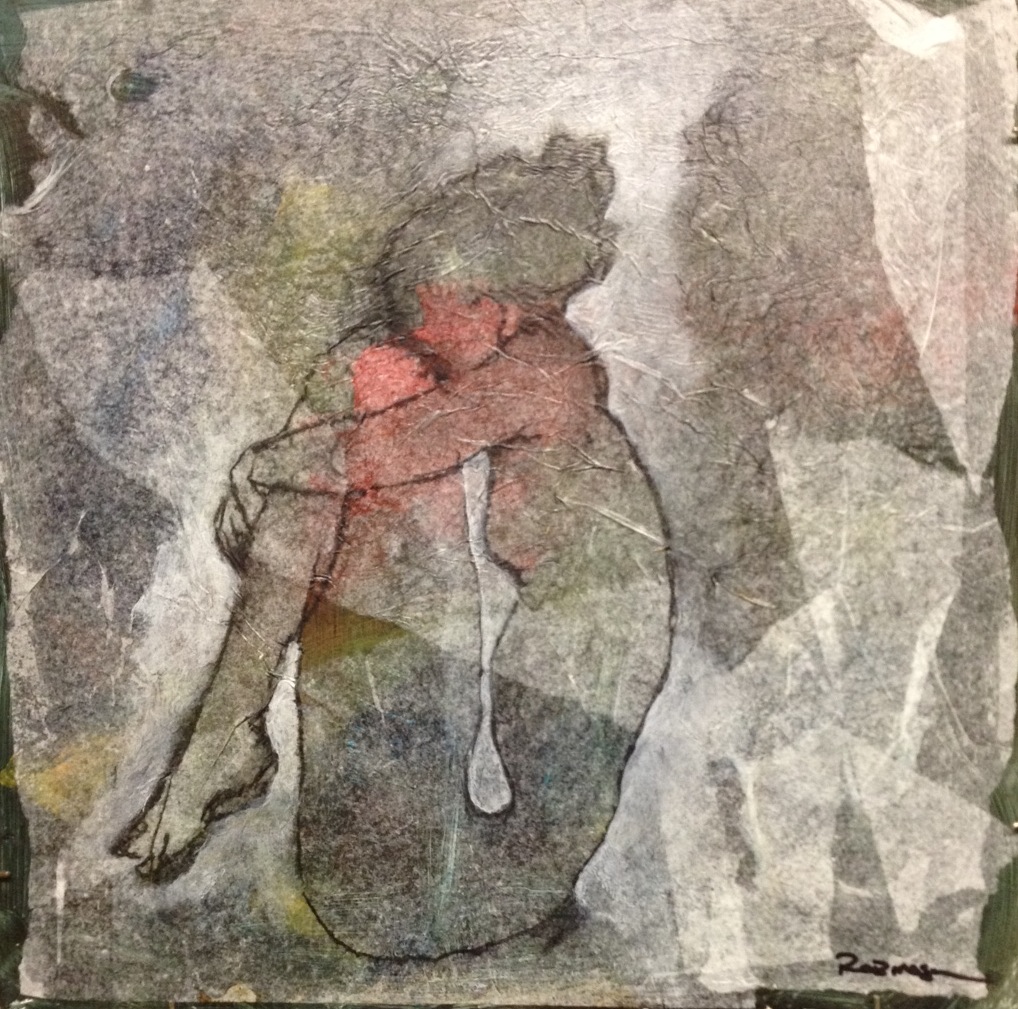
This is one of my first test paintings for the yoga series. It's small, maybe 10inches square.

This is one of my first test paintings for the yoga series. It’s small, maybe 10inches square.

I’ve spent much of the past week shooting and cropping photos of my paintings. I’m cataloguing. I’m gearing up to show again.

I took an extended hiatus from showing when I went on my walk-about. Actually, in the few years prior to walking about, I stopped showing except for open studio nights and the few opportunities that found me. I continued to paint. I drew a comic strip. I wrote a book. There was lots and lots of energy output but very little energy to calling attention to my work.

The process of shooting the photographs has been a process of rediscovery: I painted paintings and stored them. More than once, now, I’ve unrolled a canvas and exclaimed, “Ah! I forgot all about you!” It’s a paradox: it’s as if I stumbled upon the work stash of some long ago artist; each roll holds a surprise. Each roll also holds a homecoming.

Early sample from the Yoga series. 18" x 24"

Early sample from the Yoga series. 18″ x 24″

Because I’ve been painting but not showing, I’ve inadvertently created an opportunity! I have an intact series: my yoga paintings. This series is a great gift because I can track my growth, I can trace the development of a technique and a visual stream of consciousness. I can see the seed. I can see the the seed cracking open, the green tendrils that grew from the seed. I can see the blossom. And, there is more to come that remains yet unknown.

When I started the series I had no idea that I was actually starting a series. At the time I was bored with my work. A friend, an acupuncturist, asked me to create some paintings for his office. Bodies in motion. I was messing around with different surfaces so I took the opportunity to play. I thought few people would see the paintings so there was no pressure to produce. I actually practiced what I preach: I played. I loved the mess. The point was the process and not the product. No single painting was an end in itself. There was no thought to being good or investing in any of the games that make art a labored mental exercise. It was fun. It was a discovery path.

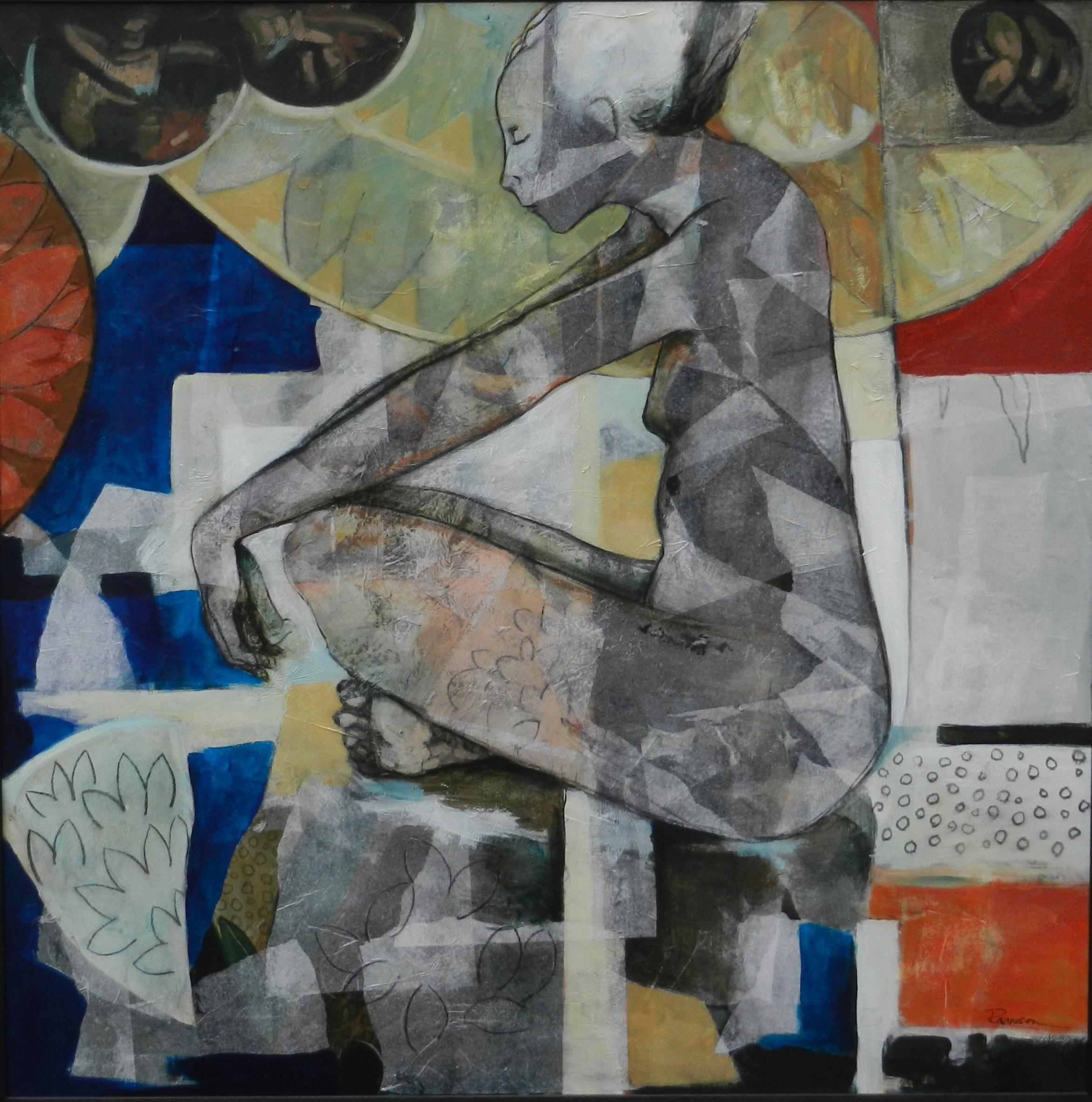
The Yoga series all grown up. This piece is  4' x 4'

The Yoga series all grown up. This piece is
4′ x 4′

It continues to be fun. It continues to be a path of discovery. The pieces are becoming more complex; the figures at first were suspended in space. Now, they exist in environments. The pieces started small. Now, they are quite large (and getting bigger).

I’ve been writing these past few weeks about the question “How?” I realized yesterday, as I shot the latest painting in the series, that over the past few years I’ve often asked myself, “How am I going to paint that?” The answer has always been a rich and vital, “I don’t have the vaguest idea! Let’s find out.”

The latest in the series. This piece is almost 5ft x 5ft

The latest in the series. This piece is almost
5ft x 5ft

Peter Block wrote a great little book entitled, The Answer To How is Yes. As it turns out, these paintings are my visual record of how I said and continue to say Yes to How.

Go here for art prints of my yoga series. The newest pieces will be available soon!


title_pageGo here for my latest book

Give As Love

The stack of paintings sitting in my basement waiting for me to show them.

The stack of paintings sitting in my basement waiting for me to show them.

Sitting in the choir loft this morning I was at first disappointed that the stained glass window was silent. I was so full of questions – and have lately been so full of questions – and have come to look forward to hanging out in the loft, conversing with the window, while Kerri plays a service.

When I bring my questions the window always has something to say. The window offers a better set of questions or a startling reflection or a slap of insight. The window’s responses always come in the form of a message of return (return to heart, return to forgiveness, etc.). If I get quiet and ask my question, out of the peace, a conversation always ensues. Today, from my quiet, I asked my question about artistry, about my artistry, and I was met with an unusual silence. I wrinkled my brow. I wondered if my conversation with the window had come to an end or if perhaps my question was out of the scope of topics for a stained glass window.

There was a visiting pastor, an elder who’d been preaching for over 50 years. I sat up and paid attention when he began his sermon this way:

“Artists have a special gift. They help others see in a new way….”

His message was about love. Love, he told us, takes many forms and the form that love takes depends upon the unique gifts of the lover: a symphony is a gift of love, a painting is a gift of love. A plumber fixing a broken water main late into the evening is a gift of love. “What is your gift? he asked. Do you recognize it as love?

A few years ago, on New Year’s Eve, I visited a tarot woman at a bookstore in Denver. During our session she asked me a question that felt like a cold slap in the face. “You know god’s voice,” she said. “Why do you not use it?” I mumbled a lame excuse that dribbled into silence. “Why do you not use it?” she asked again.

Sitting across the table from the tarot woman, I knew without doubt that I have, my whole life, been a great servant to other people’s artistry but a lousy servant to my own. In my life I’ve been the midwife to many people’s gifts while mine have remained mostly unrealized.

The window whispered, “A painting is a gift of love. So is a play. So is a book. These are your forms of love. Your gift is a gift of love. Love is god’s voice and you know god’s voice.”

“I do know it,” I said, timid to admit it. “Don’t we all?” I asked the window.

“Access is open to all. Few actually listen,” the window replied. “Few know how to listen. Most fear their gift and plug their ears.”

To offer my gift without inhibition is how I best express love to the world? That was old and new for me at the same time. I asked the window, “How many artists need to hear that message? How many people need to hear that message?”

“You are deflecting. You deflect your gift by serving other people’s purposes before your own. These questions you ask are the wrong questions,” said the window. “Yes, of course, all people need to hear the message. But, is it your purpose to deliver the message or is it your purpose to fulfill your gift? Helping others hear their message is not yours to do. Yours is to fulfill your gift and, in that way, help others to see their gift in a new way. You need do nothing but give your gift. They will see or not without your intervention. Love by giving your gift. It is simple. Give your gift, give your love, without reservation or doubt.”

“Love can be how you listen to a friend in need,” the pastor said. Love is not about the rules or the restrictions. Even when you try to alienate love, it will always find its way back to you. It will find its way back through you.

“You know god’s voice,” the window continued. “And you know it. Return to the truth; return to your truth. The question, ‘Why do you not use it,’ no longer matters. It, too, is a deflection. Asking ‘why’ merely delays the giving. Use it. Give it. Give as love.”

Go here to get my latest book, The Seer: The Mind of the Entrepreneur, Artist, Visionary, title_pageSeeker, Learner, Leader, Creator…You.

Or, go here for hard copies.