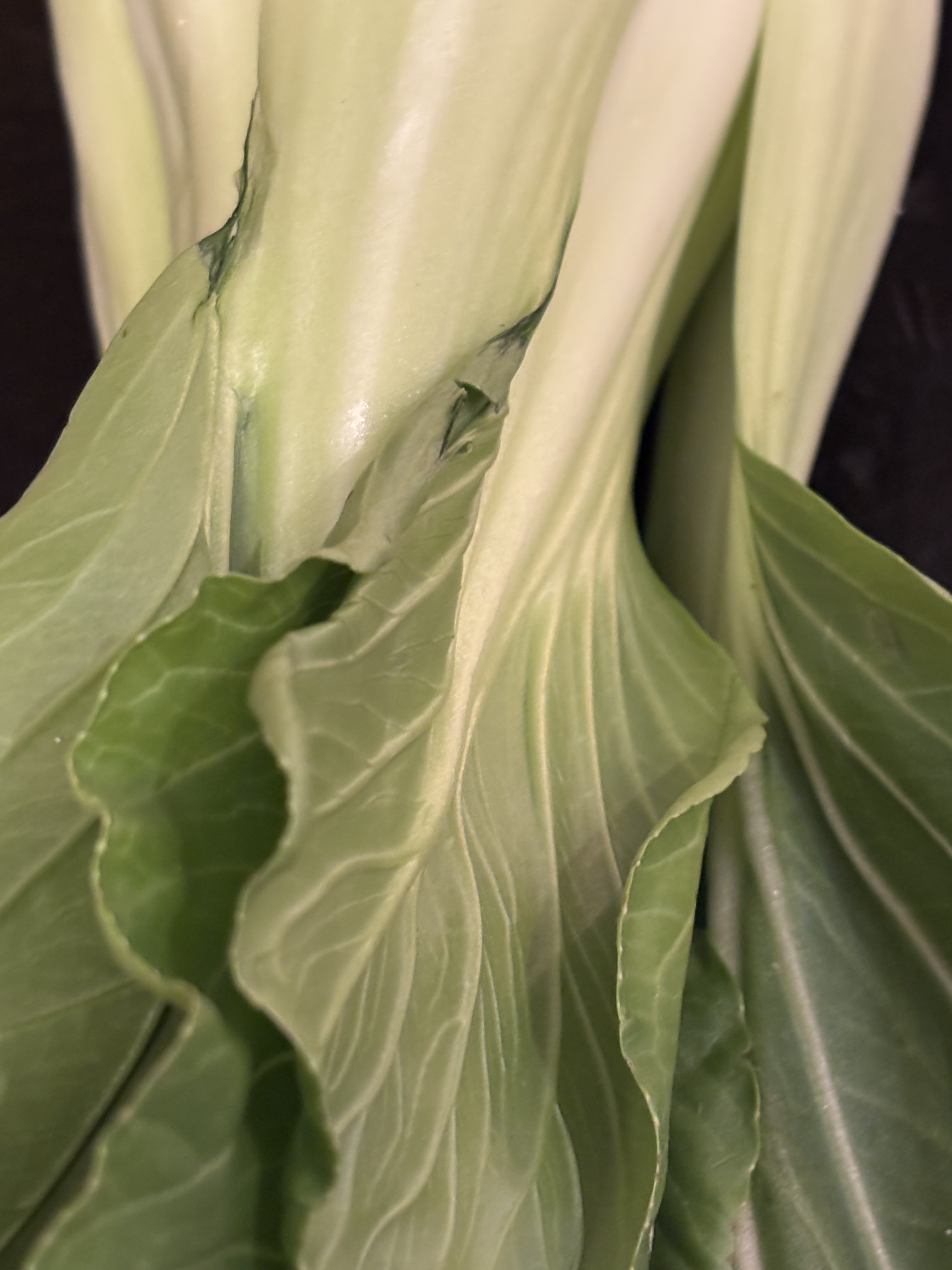
And Bok Choy [David’s blog on Two Artists Tuesday]

This week we made a miso pot-sticker soup (Japanese). 20 made for us a red curry noodle soup (Thai). We often make pasta dishes and will soon cook chicken marsala (Italian). Later this week we will make fajitas (Mexican). In one of our soups we used for the very first time bok choy (Chinese cabbage).

We drove on errands and passed Panda Express (Chinese), Pimmy’s (Thai), Masala House (Indian), Buono Beef (Italian), La Fogata (Mexican), La Caribeña (Columbian) Madame Pho’ (Vietnamese), Gyro Grill (Greek), Bisi (Ethiopian)…There are many more. A not-so-surprising statement of food diversity borne from a nation comprised of diverse people.

We passed a mosque, a Buddhist temple, a synagogue, churches of all shapes and stripes. A few miles north is a Sikh temple, a Hindu temple, an Amish community, and a Taoist Center to the west.

A quick look (less than a minute) at the labels on my clothes reveals items from Vietnam, China, Mexico, India and Bangladesh. I recently bought a pair of shoes from Columbia Sportswear Outlet store. They were made in China. My favorite Frye boots were also made in China. Frye is a company founded in Massachusetts. Massachusetts is an Algonquin word meaning “at the great hill.” Colorado is a Spanish word meaning “colored red”.

My name, David, comes from the Hebrew word “dod” which means “beloved”. It is a name that “has been adopted into languages all over the world, including Syriac, Greek, Latin, and Quranic. Quranic means “relating to or contained in the Koran.” Syriac is a literary language, Aramaic, used by several Eastern Christian churches. Kerri is named after a county in Ireland. Her parents cleverly exchanged the “Y” for an “I”. Kerry is a Gaelic word meaning, “Ciar’s people.” Ciar was a legendary warrior (This is new knowledge to me and explains a lot!)

In our history we find the word “settlement.” English, Dutch, French, Spanish. Another word, “migration”, shows up later in reference to the arrival of the Irish, Italians, Germans. “Immigration’ is a word that includes the arrival of the Chinese, Japanese, Mexicans and many people from Central America. Of course, we cannot forget the word “slavery” which was the path of Africans to this land, and “displacement” which is the sanitized word referring to the fate of the native peoples. “Attitudes towards new immigrants have fluctuated from favorable to hostile since the 1790s.”

This morning I read this from Heather Cox Richardson (Letters From An American, Feb. 1, 2025): Trump’s loyalists overlap with the MAGA crew that embraces Project 2025, a plan that mirrors the one used by Hungarian prime minister Viktor Orbán to overthrow democracy in Hungary. Operating from the position that modern democracy destroys a country by treating everyone equally before the law and welcoming immigrants, it calls for discrimination against women and gender, racial, and religious minorities; rejection of immigrants; and the imposition of religious laws to restore a white Christian patriarchy.

Given the reality of what is all around us, of what actually populates our lives, can you possibly grasp the magnitude of delusion and utter amorality in the minds (there are no hearts) of the current republican administration?

read Kerri’s brilliant blogpost (though she regularly disparages everything she writes)
likesharesupportwakeuplookaroundyoucommentsubscribetoreality…thankyou.

Everything There Is [David’s blog on Two Artists Tuesday]

Sometimes she takes pictures when she is driving. “What are you doing?” I cry, my life flashing before my eyes.

“It looks like a feather!” she retorts.

“Oh, great” I say, reciting the last line of my obituary. “If only the cloud had not looked like a feather, he would be with us still.” She rolls her eyes. Apparently she survived the imaginary crash and went on to build an extensive catalogue of interesting cloud photographs. For all I know, having perished for a feather cloud, she gained world-wide fame for her interesting shots of condensed water vapor.

As I lay in bed last night, the window opened ever so slightly allowing the cold air to circulate above the warm-warm quilt where we lay pretzeled, Dogga sleeping at our feet, I had a single moment of presence. I know it because I was completely overwhelmed with intense gratitude. Falling out of the moment, I took a snapshot in my mind and heart so I would never forget how profound life is in each and every passing moment.

This was the thought that washed over me: Beyond the dance of giving and receiving, there is only this: being-with. That’s all there is. That’s everything there is.

read Kerri’s blogpost about the FEATHER CLOUD

likesharesupporteachotherappreciateeachothercommentsubscribetolife…thankyou.

Connective Tissue [David’s blog on Two Artists Tuesday]

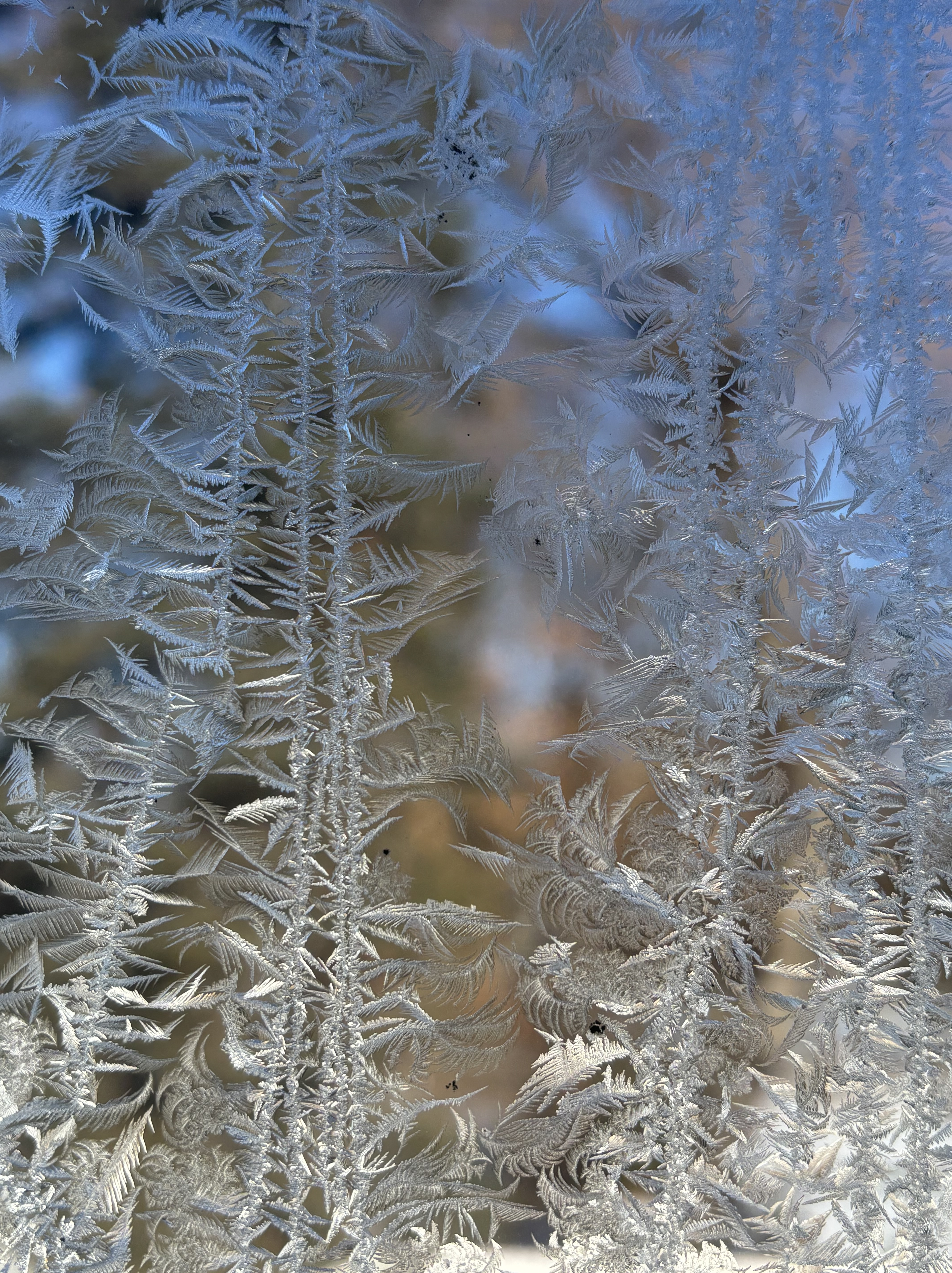
I literally watched the ice crystals blossom on the glass. I was Jack watching multiple bean stalks stretch and reach into the sky. They feathered and connected, the light behind them making the ice-miracle color-lush.

It brought fascia to mind. That is not as arbitrary a thought as it might as first seem. I am reading about fascia. Don’t ask me why. I won’t be able to answer. My reasons are not random, just hard to articulate.

Fascia is the connective tissue of the body. It not only wraps around muscle, organs, and bones, it also embraces every ligament, every joint, every nerve, every artery and vein, every cell of our bodies. Every thing. It is a paradoxical wonder: it is flexible but provides structure, it is soft and loose but provides support. It literally holds our bodies together. It gives us shape. Most amazing of all, it is continuous, a an unbroken tissue-web from the tippy-top of our heads to the farthest molecule of our big toe, from the outermost layer to the innermost core.

When fascia is stressed, it tightens. It grips. It holds down the fort.

It responds to sensory stimuli. It feels. Trauma, physical or psychological, can cause the fascia to lose flexibility; this loss is called “restrictions”. In other words, too much stress makes fascia grip and not let go. The restriction creates an energy eddy that solidifies. A hard spot. A place where toxins congregate.

The good news is that the eddy or restriction can be released – but never through force. Pressure only serves to make the grip tighter. Gentle oppositional touch, fascia yoga, will eventually send the message: you can let go now. Relax. Trust.

I remember watching Koyaanisqasti, the 1982 documentary composed of slow motion and time lapse footage, no spoken words, that explores our relationship with technology and nature. Koyaanisqasti is a Hopi word meaning “life out of balance.” I was awe-struck by the interconnectivity it revealed. We move as one whether we realize it or not. We are not separate from nature or the world in which we live. We are nature. Out of balance with ourselves.

My long lost pal Roger used to say that it is a trick of language that fools us into compartmentalizing our experiences. “When you hurt your toe, it’s not just your toe that is injured; your whole body is injured,” he’d say.

Every “thing” impacts every other “thing”. Separation is an illusion.

The second day. The fascia of the nation is stressed. Hard spots have formed. Our faith in the populace is strained. We tighten our grip. We isolate, circle the wagons and hold down the fort. It is early so we can do little more than shake our heads in disbelief. 77 million of us chose the path of hatred and gross indecency. We fracture. We necessarily emphasize separation, “I am not them.”

And yet, we…The whole body is injured.

Perhaps the fascia has some lessons to teach us about how we might deal with the trauma to our national body: the election of indecency, the elevation of a confederacy of dunces. It certainly provides clues for how we – those of us who did not vote for hatred – might regain a healthy equilibrium. Gentle touch. Send the message to one another, “I am here.” Not only are we more than opposition; we are the carriers of the spark of the ideal of democracy. We are the movement forward. Even though an abomination currently sits at the resolute desk, we are the connective tissue, the shape givers of our nation and of the future.

read Kerri’s blogpost about ICE

likesharesupportcommentsubscribe…thankyou.

Meet The Expectation [David’s blog on Two Artists Tuesday]

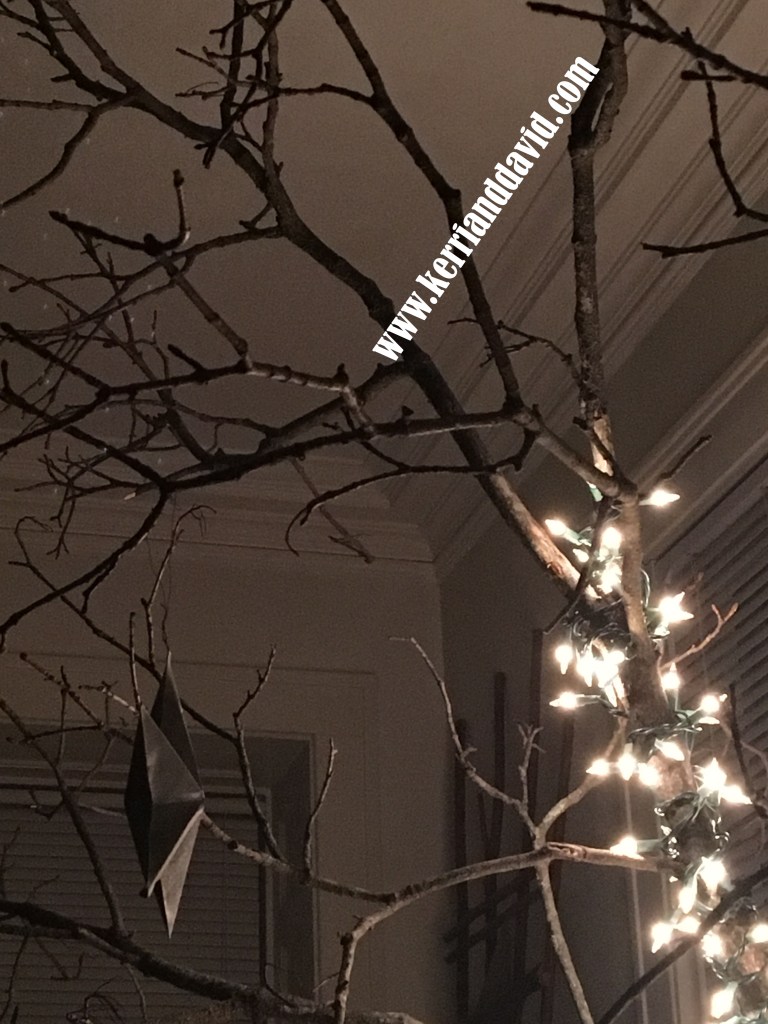
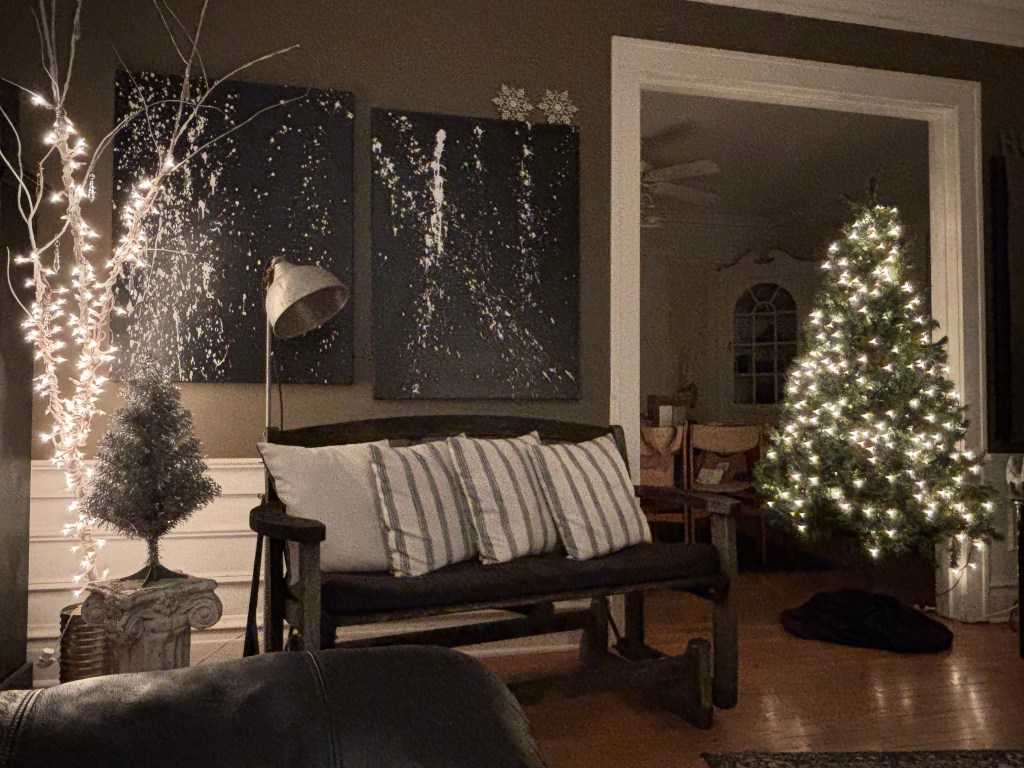
In our house they are called “happy lights” because they make us happy. And, because they make us happy, happy lights can be found in almost every room of our house. They wind around the headboard of our bed, they outline the window in the sitting room, they wind around the aspen log in our dining room. They wind around the big branches in our living room.

On particularly dark days, after opening the shades, the first action of the day is to plug in the happy lights. All of them. It’s a task that requires moving room-to-room, intentionally inviting happiness into the space. It’s not a bad way to start the day. It’s not a bad practice to stumble around the house, half awake, and expect happiness to turn on with the lighting of the happy lights. And, not surprisingly, happiness meets the expectation.

At the end of the day the last act of closing-up and tucking-in the house is to unplug the happy lights. It’s become a ritual of gratitude, a thankfulness for the happiness brought by the lights. Our headboard happy light, always the first light of the day, is the last light we turn off before sleeping, the last whisper of appreciation for the day.

In these past few months I have grown more conscious and grateful of our happy light ritual. The intentional invitation and invocation of happiness, the deliberate practice of gratitude, seems more and more necessary amidst the national dedication to maga-animus. If there is nothing to be done about the indecent darkness descending on the country, we can, at the very least, invite light into our home, and perhaps share some small measure of the happiness and kindness that our happy lights inspire.

read Kerri’s blogpost about HAPPY LIGHTS

likesupportsharecommentsubscribe…thankyou.

The Future We Plant [David’s blog on Two Artists Tuesday]

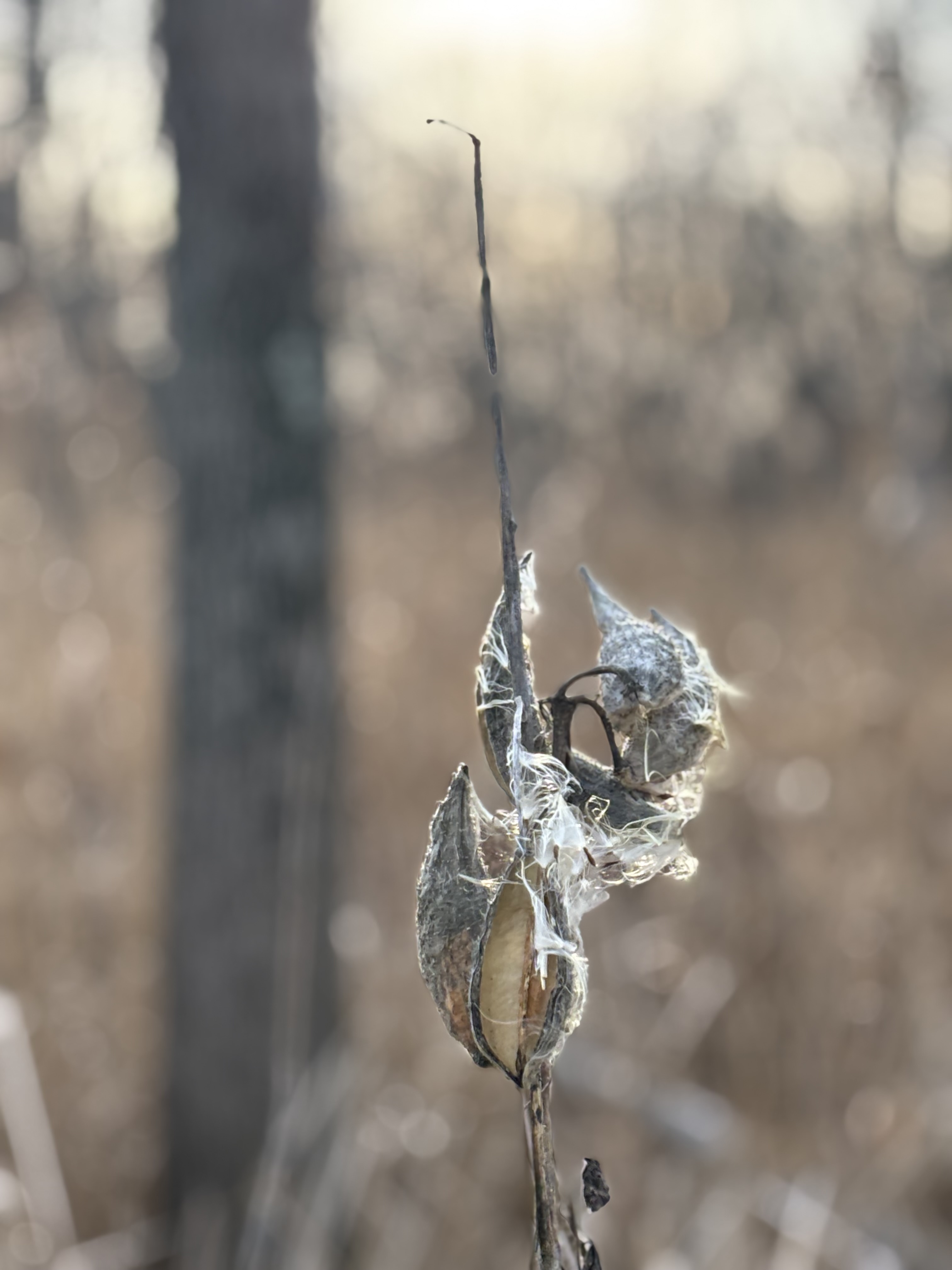
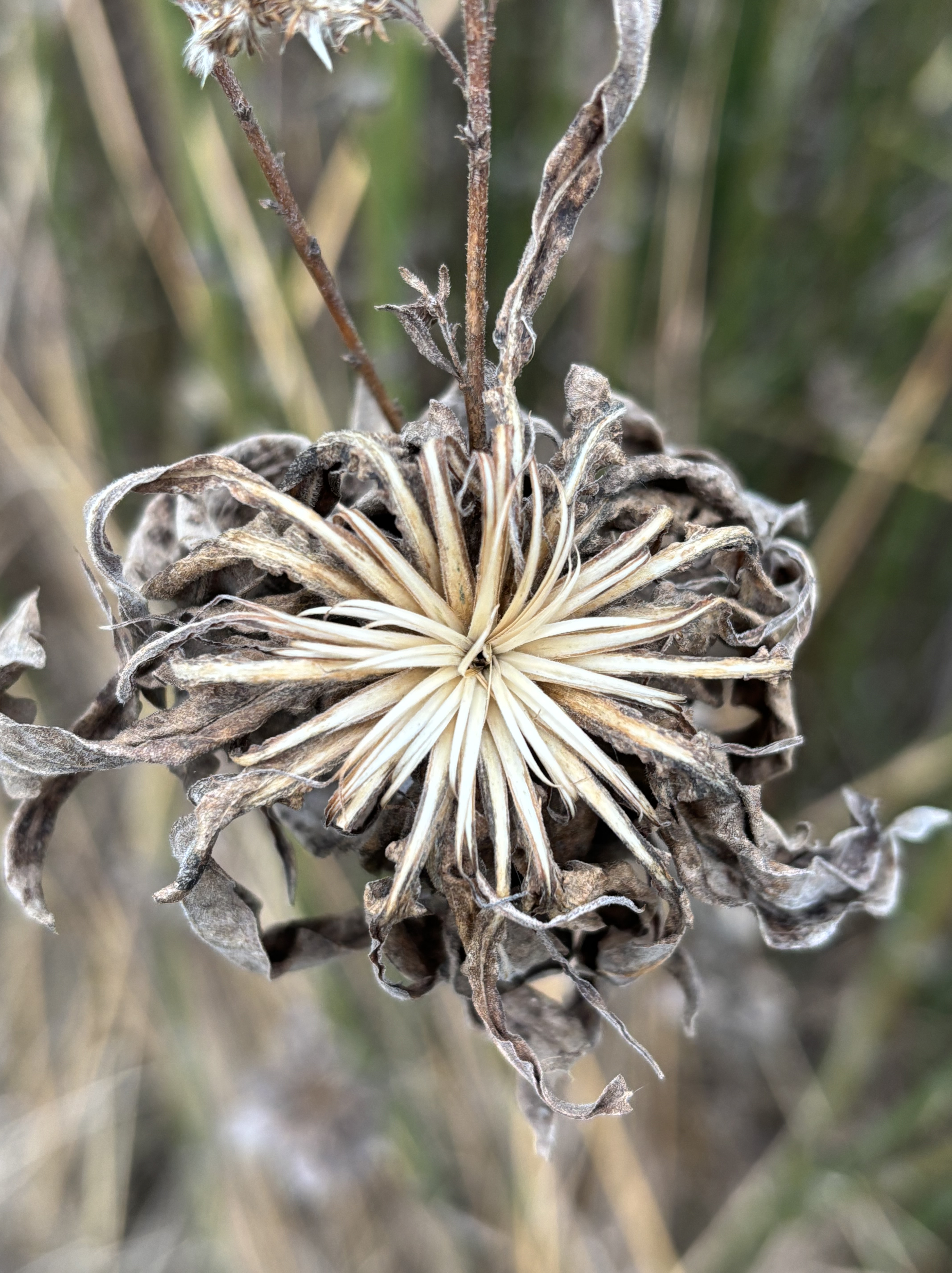
Milkweed seed pods in winter. It’s mauve flowers are by now a distant memory yet their remembrance also must serve as a desire. What would be the point of releasing its seed to the wind if there was no dream of future mauve blossoms?

Kerri and I are not so different from the Milkweed. We write everyday; our words are seeds released into the e-wind with the hope of reaching fertile hearts and minds. Who knows what blossoms our word-seeds might inspire?

Much of what we write is the mauve blossom of word-seeds sent on the e-wind by others. The thought-seed of others lands and is planted in our hearts and minds. Over time, with warmth and consideration, the seed cracks and sends new-thought shoots to the surface, seeking sun and expression. And so we write. We send. Others receive. In turn, they write or draw or dance – they send – and we receive. It’s a cycle of sharing that goes mostly unrecognized. A riot of unseen interconnectivity. It’s called inspiration.

Words, even the most casual, are more powerful than we realize. They are symbols. They are seeds of future-thought in others. Some, like invasive weeds, are capable of doing harm. They choke the inner landscape where they are planted. Some are like acorns. They land in timid hearts and produce towering strength beyond imagination.

When I listen to the discourse in our media and politics, I shudder at the seeds being planted. I marvel at the ease of misinformation, the ubiquity of lies. Words meant to mislead. Words meant to do harm. Words meant to hurt. Mean-spirited seeds.

I can’t help but wonder what fields of flowers we would produce if we understood the real power of our words. I wonder what future we plant in each other through the words we so easily release into the wind.

read Kerri’s blogpost about MILKWEED

likesharesupportcommentsubscribe…thankyou.

What We Pretend To Be [David’s blog on Two Artists Tuesday]

“A Republic is an empire of laws, not men.” ~ John Adams

On the eve of the new year it is customary to make resolutions and, borrowing from the great Kurt Vonnegut, I have a suggestion for both a national and personal resolution: “We are what we pretend to be, so we must be careful about what we pretend to be.”

This year we must resolve to be careful what we pretend to be.

I grew up hearing that we are a nation of laws and that no one – no one – was above the law. That founding principle, long held, understood by all, honored by all, was applied to all. Even presidents. It is a principle at the epicenter of what defined us. It was what we once pretended to be. Recently, the Supreme Court ruled that we must pretend to be something else, the law of the nation cannot – or will not – touch everyone. In these past months we’ve been witness to the fall of the law. We are now pretending to be an empire of lawless men.

The 14th Amendment of our Constitution disqualifies former government officials from holding office if they took an oath to support the Constitution but then betrayed it by engaging in an insurrection. It is written into our Constitution, our highest document of law. Where-oh-where are the keepers of the law? What now are they – those lawmakers in both houses of Congress, sworn to uphold the Constitution – pretending to be? They must be pretending that they swore an oath, nothing more. Law-less men and women.

I can – and have – read The Constitution. It is easy to find, easy to read. The 14th Amendment is not ambiguous.

Where-oh-where are those conservative members of the Supreme Court who pretend to be literalists, interpreters and champions of the letter-of-the-law as written in the Constitution? They, too, swore an oath. They must be pretending to be blind. What letter of the law are they literally pretending not to see?

They certainly want us to join them in pretending not to see.

I can see. I know an insurrection when I see it. I know who incited it. I cannot pretend otherwise. Why are we pretending not to see it?

My resolution: to be very careful what I pretend to be. I hope you will join me in my resolution.

read Kerri’s blogpost on THE NEW YEAR

likesharesupportcommentsubscriberesearchreadchallengequestion…thankyou.

A Little Bit Of Light [David’s blog on Two Artists Tuesday]

The holiday around our house is like a daily treasure hunt. I never see her do it, I never catch her in the act, but each day, a bauble or bulb or ornament shows up on a windowsill or in a flower pot or hanging from a shelf in the kitchen. A little bit of light found in an unlikely place.

Today is the eve of Christ mass. It is also the eve of Hanukkhah. It is the eves-eve of Kwanzaa. A birth, the rededication of a temple of belief, a celebration of culture. Symbols and rituals of hope and renewal, showing up everywhere. A little bit of light popping up in kitchens and family rooms, places where people gather when they are seeking light and love.

A few years ago she wrote a song in what seemed to me only a minute or two. She needed another piece for a cantata she was rehearsing and couldn’t find anything that she liked. It’s called “You’re Here”. It exists only in the roughest of recordings. I caught it on my iPhone. This morning, while searching for another piece of music, we came across it and, as is true every time I hear it, I was saddened that this little bit of light is not known far and wide. A song of brokenness healed. A sunrise. A wish of hope.

I’ve posted it before – probably this time last year. But this morning, given the brokenness of our nation, the dedicated us-and-them-ness, the splintering of family, pundits and politicians fueling-rage-for-gain…I found it much more relevant now than when she wrote it.

If it is not of your faith tradition, you only need listen beneath the words to find the purity of her intention. A little bit of light found in an unlikely place.

Merry eve. Happy eves-eve.

You’re Here © 2018/2024 Kerri Sherwood

read Kerri’s blogpost about UNLIKELY PLACES

likesharesupportcommentsubscribe…thankyou.

Our Real Riches [David’s blog on Two Artists Tuesday]

Since rarely in life have we had excess, we’ve become experts of austerity and yet we seldom feel wanton or that we are lacking in any way. Quite the opposite! We usually walk in rich abundance – the kind that is not connected to possession or attainment or access. We appreciate to our core the gift of being alive, our time together, the plenty that comes from our friendships, the affluence of our artistry. There is no end to the ideas we chase or the moments we cherish. For us, each walk on the trail is extraordinary. We never take it for granted.

The gift of our strict no-spending orientation is that, when we do afford ourselves a treat, the pleasure is amplified; a tiny moment elevated to the exceptional. For instance, yesterday while shopping for gifts we did something that we rarely allow ourselves to do: we stopped at a bakery, bought a pastry and a cup of coffee. We were giddy with excitement. We savored every bite. We cherished sitting in the warm cafe on a cold wet day and sipping a hot, bold cup of coffee. A seasonal sensual pleasure. We promised each other that someday we would do it again.

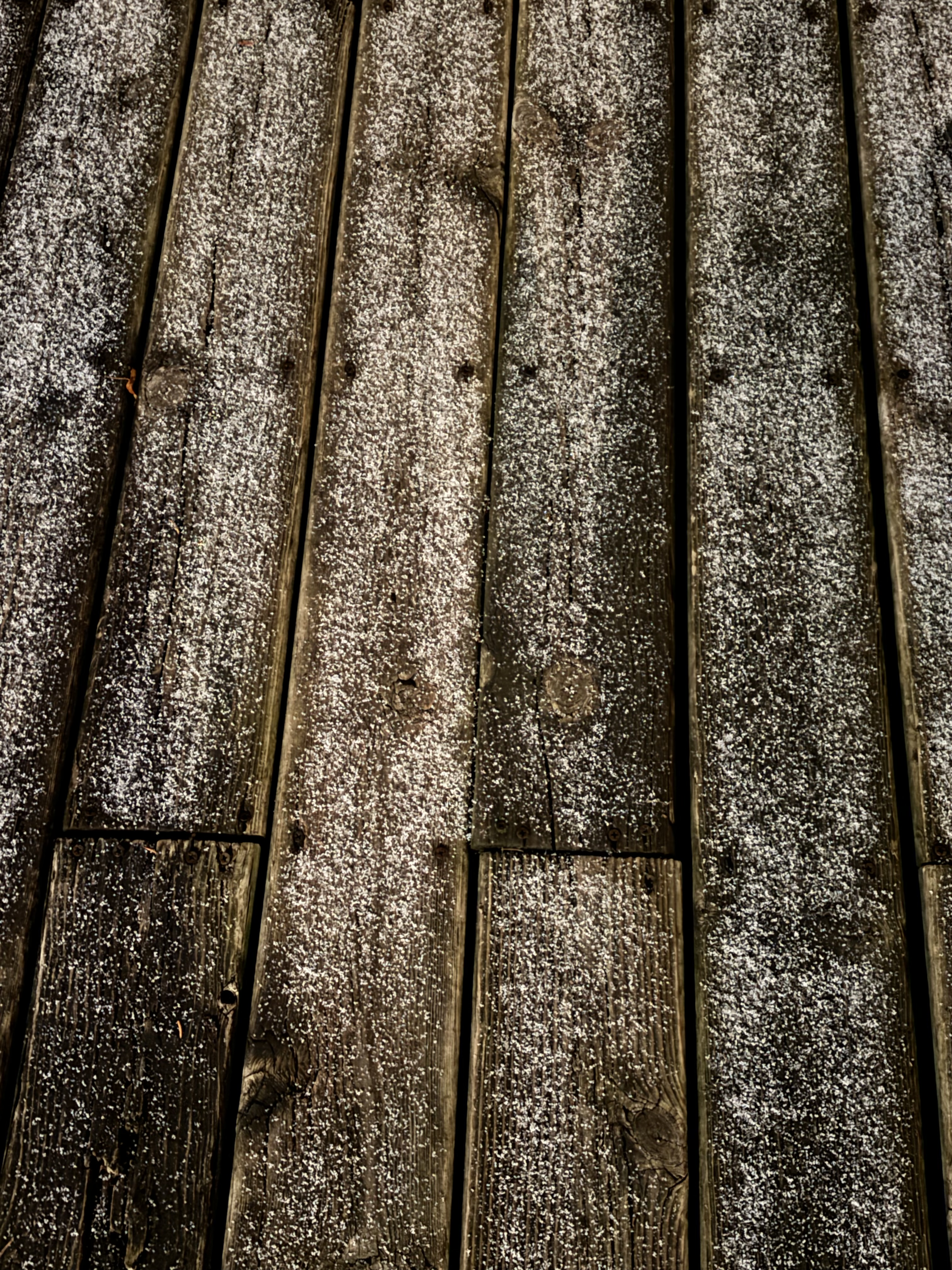
Our real riches are in our eyes, our seeing. Kerri’s eyes see beauty in everything. At the first dusting of snow she dashed outside to capture the textures and color on the deck. “Lookit!” she said, showing me her discovery, nose red from the cold.

My eyes see movement and connectivity. Busy streets often appear to me as a dance. In a past life I adored teaching because I could see ideas ripple and discoveries flow through the class. I adored watching audiences join in what I came to understand as a single heart beat. Perhaps that was what called me to the theatre. I am only now beginning to understand what calls me to paint.

We moved our old wooden glider, deck furniture, into our living room. A well-used, very old studio lamp, a treasure found at an antique sale for five dollars, serves as a reading lamp. Next to the glider is a tall branch, painted white, wrapped in happy lights and adorned with holiday crystals. It’s become a favorite place to sit. Our happy hour has migrated from the kitchen table to the living room glider where we can appreciate our holiday decorations and watch the world pass by outside the front window.

‘I love it here,” she says, giving Dogga a nibble of cracker. Me, too. I love it here.

***

After writing my post, while waiting for Kerri to finish hers, I opened my email and read the latest of Maria Popova’s The Marginalian:

“The destination, rather than a place, is a state of being — the recompense of paying everything in our path the gratitude and reverence it is due for merely existing. For we forget, too, that dignity — this deepest reverence for being — is not something we can ever have for ourselves unless we accord it to everything and everyone else.”

read Kerri’s blogpost about APPRECIATION

likesharesupportcommentsubscribe…thank you.

Embrace Invisibility [David’s blog on Two Artists Tuesday]

In a recent documentary about his life and work, artist Anselm Kiefer said, “Being is nothingness and nothingness is being.” He was pondering how small and insignificant we are in the scope of the infinite universe, and how, for him, our smallness relieves the stresses of having to succeed. He added, “I fail before I begin.”

The best advice I’ve received recently? Horatio’s suggestion that I go into the studio and “Paint crap.” In other words, loosen up, have fun, completely detach from outcomes. Fail before I begin. Sage counsel: paint for pure pleasure and for no other reason. Drop the measuring stick and reclaim the child who loved to paint. The other stuff will take care of itself.

We regularly check in on Martijn Doolaard. He’s reconstructing old stone buildings as his homestead in the Italian Alps. His weekly update films are gorgeous. His way of working is more so. In his own words, he focuses on process. There are goals, certainly, but everything he does, he does beautifully. He is attentive even in the most tedious of tasks, working, not to get through it, but to do it well.

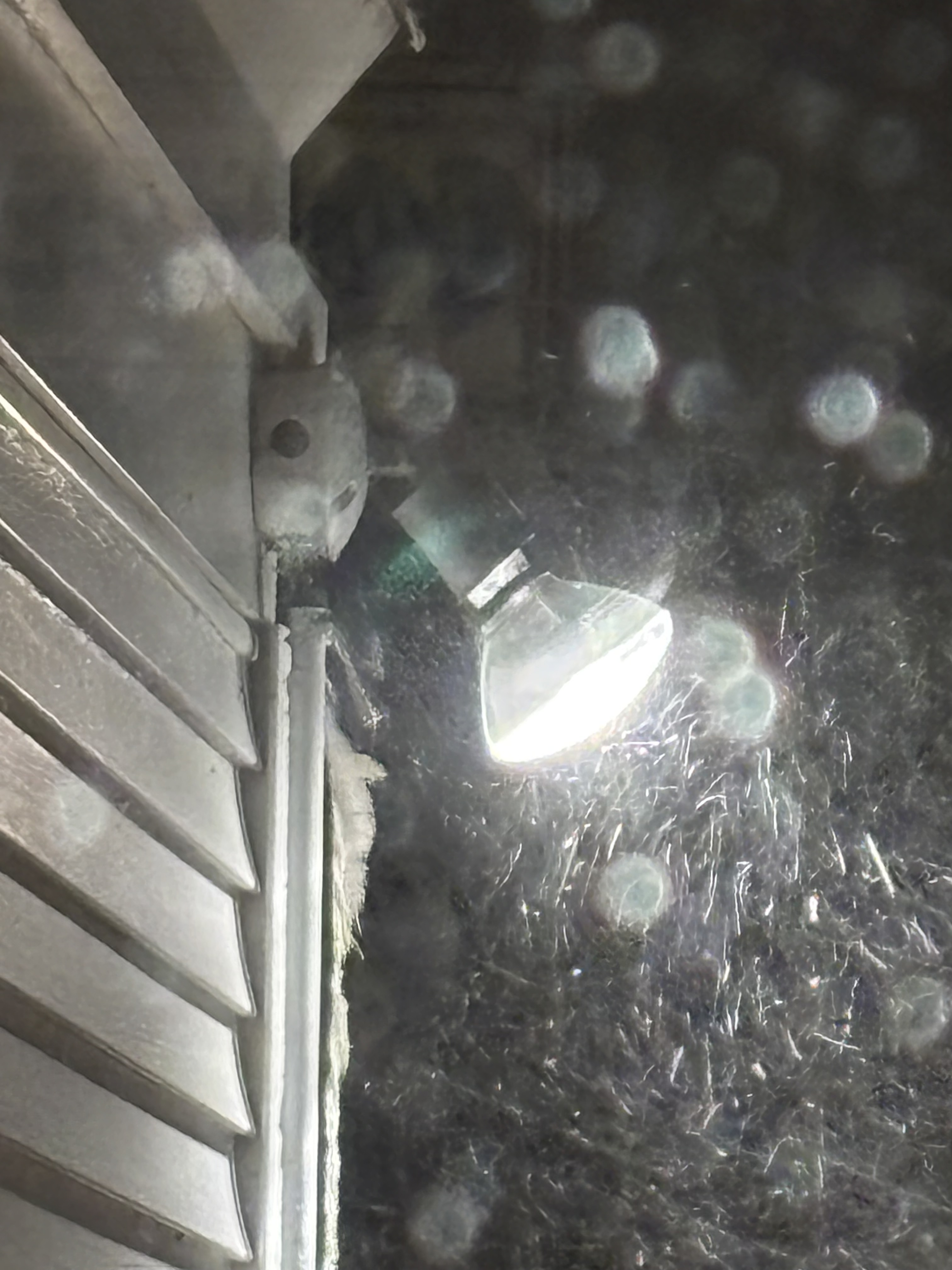
Staring out the window over the kitchen sink, we switched on the backyard light so we might see the arrival of the snow. The season’s first snowfall came in the night. I thought about a post I wrote and then erased, about achieving invisibility. It wasn’t a complete thought and I wasn’t certain whether I was writing about my fear or my freedom. Anselm made an appearance in my mind as I marveled at the flurry of snow made visible by the light: Being is nothingness and nothingness is being. Embrace invisibility and dance with abandon in the fields beyond failure and success. What else?

read Kerri’s blogpost about THE FIRST SNOW

likesharesupportcommentsubscribe…thank you.

A Mutual Bond [David’s blog on Two Artists Tuesday]

Among the many tiny treasures that Horatio dropped on me during our call was this: when it’s all said and done, love is paying attention.

That may not on the surface sound like an earth-shattering revelation until it’s pondered for a moment. To what or to whom do you give your attention?

Attention is something given.

Actors (and artists) mature when they understand it. The scene is never about them. It is always about the “other” and the relationship created when attention is given. In this way artistry is a potlatch, a gift-giving.

When Kerri stops on the trail, captured by something beautiful, a thistle, a pattern, a winter sky…there is palpable love in the attention she gives. I often imagine that the thistle or caterpillar first gave their attention to her. That was the call. The allure that drew her attention. That, of course, is the secret: giving attention is a magnet. It creates a mutual bond.

There is a profound power available when one learns that attention is not happenstance but intentional. A choice.

It may be the epicenter of all choices, the fundamental decision: where do you decide to place your focus? Where – or to whom – do you give your attention?

“Target what you love,” Horatio said. “Tap into the source.”

read Kerri’s blog on TWO ARTISTS TUESDAY

like. share. comment. subscribe. support…thank you.