Listen To Beaky [on Not So Flawed Wednesday]

good morning sunshine copy

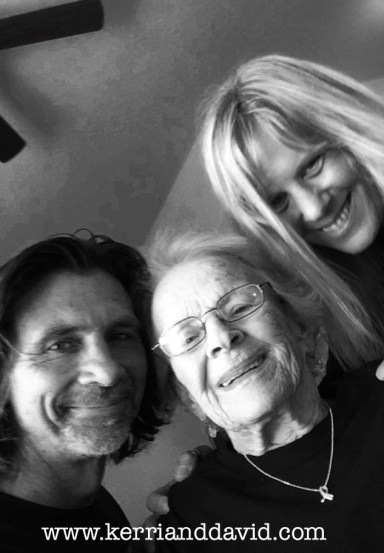
Today we turn our thoughts toward Beaky. A bright light. Five years ago, on this day, she passed away.

Not only does it seem impossible that she died five years ago but it seems more impossible that I only knew her for 18 months. If you were to ask me how long I knew Beaky I’d say, “Forever.” Some people are just like that. Kindred.

She and I were co-conspirators. We plotted strategies – all unsuccessful – to convince Kerri that her natural curls were gorgeous and did not need straightening. She gave me a lesson in applying lipstick and rouge, standing next to her walker, looking into the mirror, popping our lips. After being catheterized, she cautioned me to be careful what I wished for. “When I was young I wished I could pee standing up.” she said. “MOTHER!” Kerri blushed as Beaky winked at me.

Time and again, I was moved by her kindness, her generosity to others. After taking a fall, rushed to the emergency room, writhing in pain, she looked up at the attending nurse and said, ‘You have a beautiful smile.” The role of nurse fell off, the woman flushed pink and was transformed by the compliment. Beaky did that a lot, she hit people with a dedicated kindness when they least suspected it. Her kindness was not manufactured, it was matter-of-fact. It was sturdy,  genuine.

The night before we saw her for the last time, we scoured her house for a blue notebook, the journal she’d kept during a long ago trip through Europe with her husband. Beaky was a recorder of life’s events. Not merely notes, her journals and calendars were threads to a vital time, to living memory. She thought the notebook was lost. When Kerri gave her the journal, Beaky hugged it to her breast and rocked it like it was a long lost child come home.”Oh, you found it! You found it!” she cried.

As we left her that day, she said, as she always did when we departed, “Be kind to each other!” Much more than a salutation, it was an invocation. Be kind to each other.


read Kerri’s blog post about GOOD MORNING SUNSHINE


momma, d & k website box copy


Stand In It [on Not So Flawed Wednesday]

99 cents:gallon cropped copy

Adding to the pandemic-time-disorientation-syndrome, gas prices dropped to a level that we haven’t seen for 20 years. I looked at the sign while filling up and asked Kerri, “Wow. Where are we?”

She shook her head. “This is weird.”

“What were you doing the last time gas was this cheap?” I asked.

“It’s ironic, isn’t it,” she replied, “cheap gas and we can’t go anywhere.” We are road tripping fools so inexpensive gas is a titanic tease amidst a stay at home order.

There are cultures on this planet that believe we move through time backwards, we row ourselves through life with our eyes firmly fixed on where we’ve been rather than where we are going.

This makes sense to me since making sense of life is a backward looking affair. And, the really great thing about sense-making is that it is never completed. The story we tell ourselves about our life and choices is…a story. A new day brings a new perspective on an old well-storied choice. Some of my dumbest decisions, the actions I have been most critical for taking, from my current view, now look wise. Or, at the very least, inevitable.

We afford ourselves more grace with a longer view and several revisions of the old story.

It has been said that the fear of death is not, as advertised, the fear of the unknown. It is the fear of the loss of what is known. We hold fast to our oars, grip with all of our might onto what we think we know and  can control.  We row our little boat in a vast uncontrollable sea.

Actors come alive on stage when they forget their lines. Suddenly the “real” penetrates the pretend. The loss of control ignites life both on the stage and off. The audience sits forward. Something real and unknown is unfolding!

Fear of losing the known. Like actors on the stage, people come alive when they turn and stare into what cannot be controlled. The now. When they forget their lines, lose their name and stare blankly into the dark house. And, the only thing to be done is to stand in it. Relax. Sit forward. Something real is unfolding.

The words will return. We’ll get a grip on the oars sooner or later. The illusion will be restored. A good actor knows that panic only perpetuates the blankness. Relax. A good actor knows the others on the stage will lend a hand if necessary. Good assurances for all of us in this pandemic play. Stand in it. Our boat is going someplace we cannot control.

Something real is unfolding.


read Kerri’s blog post about CHEAP GAS


bootsbythestage website box copy


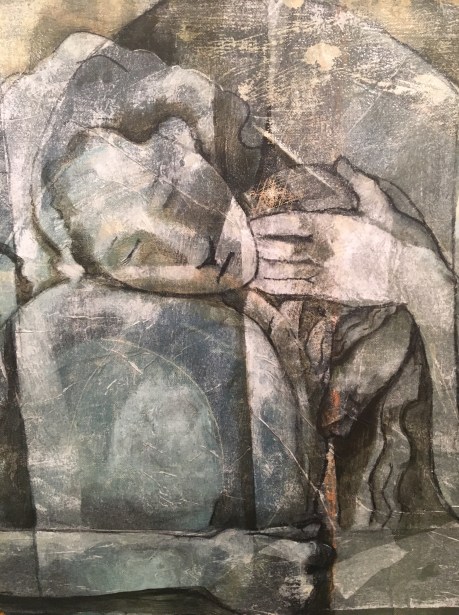
underpainting copy

Add A Stone [on Not So Flawed Wednesday]

southport cairn copy

I am fond of a labyrinth tucked into the woods at The Whidbey Institute. I’ve spent many a sunrise and sunset walking the meditation path to its center and back again. After each trip into the labyrinth, I’d add a small stone to the cairn that stood adjacent to the entry point. A ritual to mark my passage. A location stone.

I hadn’t thought of the labyrinth for years.

Last week, on a stormy day, we took a long walk through our neighborhood and emerged on to the beach at Southport.  We were stopped in our tracks by what we found there. A field of cairns. Someone – or many someones – had created dozens of stacked stones. Each unique. Some playful. Some sorrowful giants. Markers of the way home? Funeral stones? Sculpture merely? The intention didn’t really matter. They brought us peace.

We approached silently just as I used to approach the labyrinth at Whidbey. We entered the field with a reverence that surprised me. We wandered through them, spent time with them. Some were massive, towering over us. Some very small, a few stones stacked at our feet.

Pebble and red brick trails ran like crazy lines connecting the cairns, a mixed up maze that begged us to follow, to make sense of the impossible. This labyrinth had no center. This meditation maze led nowhere specific, looping back, a dead end here, a path to the water, and over there, a line that stopped at a heart made of rock, a spiral. A wish. A message. An inspiration.

I could imagine no better monument to this pandemic. A shattered labyrinth. Burial monuments. A field of markers standing ready for the day when we might find our way out. A quiet reverent place where we are called to add a stone, a simple gesture to remember our passage through.


read Kerri’s blog post about CAIRNS


cairns website box copy


Observe The Rituals [on Flawed Wednesday]

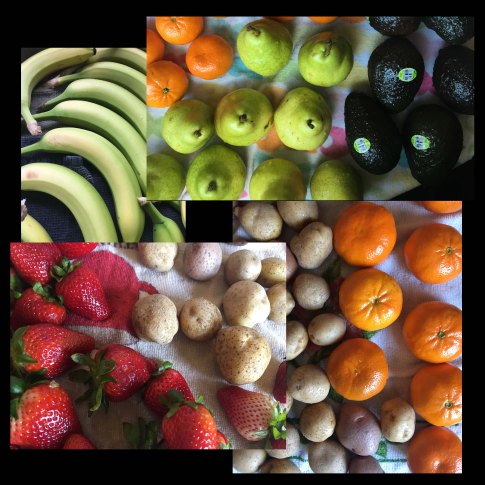
washed fruit copy

Like you, we are practicing new rituals that two months ago would have seemed like so much science fiction. We wash and disinfect all the food we buy. Dry goods stay in food-quarantine for 48 hours before they are allowed in the house. The mail is disinfected and banished to in a safe spot for two days before we open it.  Rituals of safeguarding. Rituals of necessity.

All are rituals of distance.

Rituals of cooperation. We walk everyday. We have always walked everyday but in these days we cross to the other side of the street if someone is coming our way. Or they cross to the other side. At first, this who-will-cross-first ritual was negotiated, awkward. Uncomfortable. In just a few short weeks it has become conventional, intuitive. In the time before the pandemic, it would have been a statement of rejection to avoid contact. Now, it is a statement of participation. We cannot safely visit our neighbors yet we daily street waltz with strangers. The world is upside-down.

Rituals of obfuscation. I read this quote this morning: The whole concern of an intelligent person is to see the facts and understand the problem – which is not to think in terms of succeeding or failing [Krishnamurti, Think On These Things]. In these days of pandemic, the President holds a jaw-dropping daily ritual to whip-up a counter-narrative to the facts of his inept leadership, to shut down his experts, to shout down or otherwise maul questions that do not support his pathological lie.  It makes for great TV ratings but lousy governance. And, a substantial number of people are so distracted by the clown that they do not grasp the reality of the fire raging outside of the circus tent.

Rituals of revelation. Marie Antoinette famously said of her starving citizens, “Let them eat cake!” I told Kerri that each week of this pandemic has brought me an understanding beyond the abstract of a specific episode in history. Today, the courts in our state, the Supreme Court of the nation and the Republican party of Wisconsin are essentially blocking the citizens’ capacity to safely vote. They are either gobsmackingly ignorant or astonishingly cruel. The choice: gather and vote in the midst of pandemic or vote not at all.  So few of those trusted with representing the will of the people of this nation are actually concerned with the will or the safety of the people.  It’s a win/lose game played by the privileged few in which the people are disposable. Let them eat cake. I now understand in my gut the moral outrage of the starving citizens of 18th century France.

We wash our fruit. We cross the road when others approach. We try and get out everyday, seeking places that  others have not yet found. We watch the numbers of deaths climb exponentially everyday. We shake our heads in disbelief at our bloviating leader. We call our friends. We now routinely say, “Webex” and “Facetime” and “Google hangout” when we used to say  “get together.” New rituals born of distance. New rituals born of separation in an era of gaping divides. Surely, one day, the pendulum will swing back the other way, the circus will pack up and the clown will go down the road. We will come out of our houses, greet our neighbors and remember what it was like to bridge divides and begin embracing the rituals shared on common ground.


read Kerri’s blog post about WASHING FRUIT


? website box copy


Admit It [on Not So Flawed Wednesday]

snow in evergreen copy

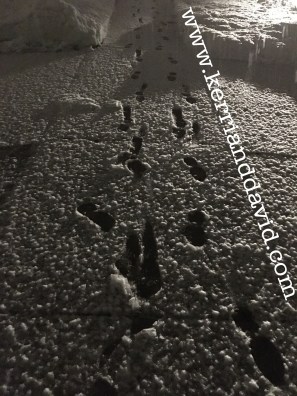
When we first met, a snowfall – especially at night – served as an immediate call to strap on our shoes, pull on our parkas, and walk into the quiet of the new snow. Somewhere in the passage of time, we ceased heeding the call and, instead, opted for warm blankets, wine and a gaze out the window. “Look at how huge those flakes are!” we exclaim and sip.

So it was a surprise that with last weeks sudden spring snow, we both felt that old giddy schoolchild’s enthusiasm and threw on our coats (pulled mittens over splinted wrists) and crunched into the evening flurry.

The sun was setting so the neighborhood was awash in purple and blue. The wind through the trees served to hush an already muted world. We came upon an evergreen tree that made us gasp. We pulled off her mittens so she could take a picture.

It is in moments like these that I remember all that I know about perfection, all that I forget the second I re-remember all that I know about perfection. Namely, it is not an achievement. It is not something to strive for. It is not distinct or otherworldly. It is here all the time. The challenge is in seeing it. The challenge is offering it admission into our otherwise busted and angst-ridden narratives.

A quiet evening. The crunch of our feet in new snow. A flurry of unique-in-all-the-world flakes falling into uniformity on the ground, resting in the needles of an evergreen. Kerri gasps, “Help me take off my mitten! I want a picture.” I step back, breathe in the cold clean air. The wind playing music through the trees. “Isn’t it gorgeous?” she asks moving in for a close-up.

‘Perfect.” I nod. Just perfect.


read Kerri’s blog post about SNOW IN EVERGREENS


prayerflagsinsnow website box copy

Check Your Sources [on Flawed Wednesday]

red and blue america copy

When I hung up the phone I turned to Kerri and said, “I have to make peace with the fact that Fox News is going to kill my parents. I have to make peace that Fox will inevitably kill someone I love.”

I remember writing research and opinion papers in high school. Beyond giving shape to thought, the lesson was about citation. Know your sources. Know the difference between a fact and an opinion. Perspective is just that, a point of view. When the internet roared into being, as a teacher, I hammered the same nail into my students, “In a world in which anyone can assert anything, it is vitally important, more so now than ever, to discern what has merit and what does not. You have to protect yourself and know what is perspective and what is fact.”

An educated person asks questions about what they are told. An educated person asks questions about what they are telling themselves.

A three minute Google search of media bias rankings will provide an number of links to follow and all issue relatively consistent reports: there isn’t a media watch agency in the world that considers Fox News a source of news. It is ranked as a solid source of right wing propaganda.  Sifted information with an agenda. And yet, so many of the people I love have rooted their hard perspective in this flimsy pseudo soil. The rankings will also point the curious to news outlets that are more neutral and fact based.

If it is so easy to discern, to check whether or not it is drek that you swallow, why are so few adults interested in doing what every middle school student is taught as an essential?

Fact is proclaimed as false news. “Alternative facts” are elevated as truth. Anger is strummed in a fearful populace. Absolute loyalty is demanded for tribal membership (do not question…). Conspiracy theories create a wall of white noise punctuated by cheer inducing blame games and name calling.  Deep state bogeymen and enemies-enemies everywhere. Feed the anger. Hype the fear. Think no thoughts in the face of blaring discrepancies. An unassailable thought-free-firewall is firmly erected in the Fox-votary.

From outside the Fox bubble we ask, “Are they really that gullible?” From inside the Fox bubble, they ask, “Are they really that blind?”

The divide is complete. Two warring narratives. And so we are conquered. The pandemic does not care whether we are in a bubble or not.

Outside the Fox bubble we practice social distance. We are told that it is the only tool we have in the box – in the absence of  adequate testing – to slow the spread. We see the comparison data and recognize that, given the hubris in the other narrative, that the USA is on track to repeat the horror that is now overrunning Italy. We listen to the the CDC and the WHO for our information. We see Spain converting ice rinks into morgues. We challenge the mind numbing notion put forward by a feckless president that this is “like the flu.”

The peace I need to make? The people inside the Fox bubble, many people that I love, are not gullible or stupid – not by a long shot. But, they’ve forgotten what they learned as a baseline to being an educated, curious and responsible adult: check your sources. They wouldn’t wholeheartedly buy the story of a used car salesman. They’d check out the car before they bought it. In this day and age, the same rule applies to news. They are making a choice.

Blind belief is a lemmings game. Human beings have the capacity to open their eyes and to question.


read Kerri’s blog post about RED AND BLUE


snowsteps website box copy


See The Pattern [on Not So Flawed Wednesday]

napkin copy

Virgil: From what you wrote, I see that you think you have a problem. The first recognition is simple: you do not have a problem. You have a pattern. ~ David Robinson, The Seer

I’ve stared at this napkin for a long time wondering what to write. It’s not that I have nothing to say, it’s that I have too much to say. I’ve killed more than one dinner party going on and on and on about patterns.

In 2014 I published a book, The Seer. The first three chapters are about patterns of seeing, patterns of thinking. Patterns of self-story. So, rather than rewrite something that I have already written, here’s a small slice, an email conversation, from the first chapter of The Seer:

 ***

Me: I realized that I think in patterns. I think the same stuff over and over. This is a puzzle: the act of looking for patterns opened my eyes. So, patterns reveal. And yet, later, when I became aware of the patterns of my thinking, I recognized that those patterns were like ruts or grooves. It’s as if I am playing the same song over and over again so no other music can come in. My thinking pattern, my rut, prevents me from seeing. So patterns also obscure. Make sense?

Virgil: Yes. It must seem like a paradox to you. Think of the song or rut as a story that you tell yourself. Your thoughts, literally, are a story that you tell yourself about yourself and the world; the more you tell this story the deeper the rut you create. So, a good question to ask is: what is the story that you want to tell? Are you creating the pattern that you desire to create? We will return to this many times. This is important: the story is not happening to you; you are telling it. The story can only control you if you are not aware that you are telling it.

 Me: Can you say more?

 Virgil: We literally ‘story’ ourselves. We are hard-wired for story. What we think is a narrative; this pattern (song) that rolls through your mind everyday is a story that you tell. You tell it. It defines what you see and what you do not see. What you think is literally what you see.

 There was a pause. That was a lot for me to take in. When I didn’t respond, he continued:

Virgil: So, what you think is nothing more than a story; it’s an interpretation. You move through your day seeing what you think – instead of what is there. You are not seeing the world, you are seeing your interpretation of the world. You are seeing from your rut and your rut is a pattern. So, your patterns of thinking, your rut, can obscure what you see. Make sense?

 Me: Yes. I guess 😉 So, when I started looking for patterns outside of me, I…stopped seeing from within my rut? I stopped assuming that I knew what I was seeing. So, I was capable of discovering new patterns and connections?

 Virgil: Yes, something like that. You said that when you looked for patterns you slowed down and felt that you could see. I would say it this way: you stopped moving through your world and for a brief period you were actually in your world. For a brief period you were no longer lost in thought but present with what was right in front of you. You suspended what you think you know so you started to see again. You were curious. To be curious is synonymous with “not knowing.”

 Me: Okay….

 Virgil: Humor me and entertain this notion: your thought, your story, is not passive. It is a creative act. What you think IS what you see. Most of the time people create what they see based on their rut. They see what they expect to see. To practice curiosity is to suspend the assumption of knowing. To practice curiosity requires us to step out of the rut. Stop assuming that you know and you gain the capacity to see beyond what you think.

 A glimmer of light pierced the dark recesses of my mind. Suddenly I was back in front of the Sphinx and I could see the answer to the riddle. It was so clear! I typed:

Me: Wait! Is this why I need to distinguish between problems and patterns? If I tell myself that I have a problem to solve, I am telling a certain kind of story. If I tell myself that I have a pattern to change, I am telling an entirely different kind of story. Is that true?

Virgil: Yes. It sounds too simple, doesn’t it? A problem is a story. It is a lens that filters your sight. A problem does not exist unless you insist that it is there. You say that you are an entrepreneur. How many great products and services were the results of an accident in the lab? How many innovations were missed because the ‘solution’ did not fit the ‘problem’ as identified? A problem is a rut that separates you from possibilities. On the other hand, a pattern connects you to possibilities. See the pattern not the problem.


[go here for a fun Escher-activity about pattern to use during this time of social distancing]


read Kerri’s blog post about THE NAPKIN
 

tpacwebsitebox copy


the seer ©️ 2014 david robinson

Give And Receive [on Not So Flawed Wednesday]

sleeping dogga copy

DogDog has two distinctly different personalities. In the sunny hours he is high strung, high energy, high joy. He rarely stops moving, circling the yard, circling the rooms of the house, moving his toys from here to there and back again. When it is time to take out the garbage, he delights in clearing the yard of marauding squirrels. I am always well protected when I deliver the trash to the can.

At night, our energizer-bunny-of-a-dog collapses. He gently herds us into the living room and, if we sit, even for a moment, he believes that his people are securely in the pen and he is off duty for the day. He punches out,  settles on the cool floor and is asleep in a nanosecond. In that moment he is transformed into ‘sweet dog.’

Rather than serving as the protector, sweet dog is a sponge for affection. If we move, stand, cross the room, cough,… he rolls onto his back, availing himself for a belly-belly. Sweet dog does not bark. Sweet dog knows our nighttime travel patterns and is somehow always positioned in our path. Sweet dog is a no-apology opportunist.

High joy. Sweet. Giver. Receiver. Both are qualities to be admired.

At night, before he retires to his crate, he waits for us on the foot of our bed. We spend several minutes loving on him. He gives himself over completely to our affection. It is among my favorite rituals of the day to heap love on DogDog before putting him in his crate.

I read once that the phrase “unconditional love” was redundant. The quality that makes love love is the absence of condition. If what we call “love” comes with qualifiers or expectations then it is not love at all. It is something else.

High joy. Sweet. Love (unconditional). I am always, everyday, in awe of this furry teacher and mostly grateful that he is endlessly patient with the glacial pace of his student.


read Kerri’s blog post about DOGDOG SLEEPING


dogga front yard website box copy

Knit A Better Structure [on Not So Flawed Wednesday]

impact 2 copy

“…the test of a civilization is how it cares for its helpless members.” ~ Pearl Buck

As a nation, we are currently enamored with tests, and it is not a stretch to say that we’d receive a failing grade on this test of civilization. The helpless members do not fare well.

As Horatio pointed out, much is lost between the cracks of the quintessential conundrum built into the DNA of these United States: the dueling philosophies of every-man-for himself versus I-am-my-brother’s-keeper. Republicans versus Democrats. Corporate greed versus social need. Black and white thinking that leaves gaping voids into which the helpless members disappear. There is no both/and to be found. Division has been a useful tool of control since the inception of the American experiment. The ideological cleaver is sharper than ever these days.

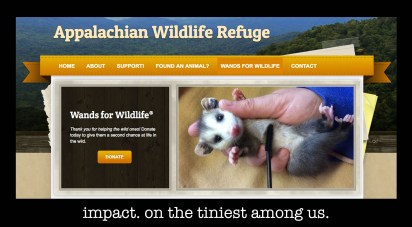
Yet, there is hope that reveals another side to our character.  Kerri said, “Look at this!” The Appalachian Wildlife Refuge put out a call for used mascara brushes. They are a useful tool in saving small critters and returning them to health. They received so many brushes, the response was so great, that they had to put limits on when they would accept new brush donations. It’s my bet that people of all political stripes and social strata sent their used mascara brushes to the Refuge. It’s my bet that the critters and the caregivers were grateful in every case.

When tragedy strikes, we rush to meet the need. When a photo moves us, we respond. Something pierces the superficial divide and reaches into our communal heart.

Robert Fritz teaches that behavior is like water, it follows the path of least resistance. If you want to change behavior, you must first change the underlying structure of the land. What might it take for us to challenge this superficial concocted divide, to reach deep  into our DNA and knit a better structure of the land – something more useful and more profound than perpetually dueling philosophies? What might it take for us to put down our cleaver and pick up our mascara brushes? What might we imagine and create together that would help history give us a better grade on our test?


read Kerri’s blog post about IMPACT


bonfire website box copy

Bother to Ask A Question [on Flawed Wednesday]

think before you share copy

All of us know this tale: A farmer loses his ax. He saw the neighbor boy playing in his field so he suspects the boy took his ax. He tells his wife the neighbor boy is a thief. The wife goes to town shopping and tells everyone she meets the story of the neighbor boy stealing her husband’s ax. People share the story and the story magnifies. An ax is now the least of the boy’s crimes! They tell other people and when things go missing or worse, the boy is their suspect. If he could steal an ax he could also steal a shirt off the line. He’ll take your horse when you’re not looking! He’s a chronic thief! The boy is shunned. His family is ostracized. The farmer feels satisfaction until the day he finds his ax resting on the tree – right where he’d left it.

Narratives are very, very powerful.

Yesterday I listened to a speaker from SelahFreedom present on the growing “industry” of sex trafficking. It was horrifying. One of the slides on the speaker’s Powerpoint was from a pimp’s notebook, instructions about how to keep his women under his control. Drugs help but the narrative weave is all. It could have been notes taken from the commandant at a concentration camp or a cult leader’s handbook. Paranoia tactics. Isolationist, us-versus-them strategies. Lies and distortions repeated to the point that it is impossible, once inside the narrative, once hooked in the story, to distinguish between reality and the distortion.

We live in the age of information and misinformation. We now inhabit the era of hyper-magnified distortion. A single post, a tweet, can reach millions in an instant. The boy stole the ax! They are trying to make us all socialists! The judge was biased! Don’t believe what you see! Witch hunt! Hoax! Believe what I say not what I do.

When was the last time you checked the veracity of your news sources? When was the last time you bothered to fact check or research something that alarmed you in your stream?

Fear is a great brain scrambler. Robert Sapolsky, researcher of stress in animals, has shown that zebras are capable of shaking off their stress after the lion gives up the chase. People, on the other hand, whip up and maintain their stress by repeating the story over and over to all who will listen. And, more to the point, there need not be a real lion chasing us, just someone who knows how to manufacture a lion and get us to spread the terror, to share without question.

It’s the pimp’s strategy. Stoke fear. Discourage thinking.  Threaten. Sow doubt. Play on insecurity. Keep them hooked. Encourage thoughtless sharing of an empty narrative. It validates the perspective of the pimp and the farmer who couldn’t possibly have lost his ax all by himself.

Despite what they tell you, the pimp is never protecting your interests. The pimp is only concerned with his own interests and needs a deep state of delusion running rampant through his stable, to control the narrative.

Imagine what might have been possible if anyone in the ax chain had thought to ask a question, had stepped back to think about what they were hearing before they hit the easy button to share.


read Kerri’s blog post about THINK BEFORE YOU SHARE


shadow bristol woods website copy