A Fragile Thing [David’s blog on Two Artists Tuesday]

“A new idea is delicate. It can be killed by a sneer or a yawn; it can be stabbed to death by a quip and worried to death by a frown on the right man’s brow.” ~ Ovid

I continue to replay in my mind the moment that the young man, the expectant father, told us that he intended to home school his child. He said that he didn’t want his child’s mind filled with the wild ideas peddled in public schools. He wanted his child to know-only-the-facts. Just the facts. I’ve previously written about this so it clearly continues to bother me.

I wanted to tell him that democracy is not a fact. It is an idea. It bothers me that I didn’t say what I was thinking. I wanted to tell him that he was being fooled by leaders who want to keep his child – and all people – ignorant. Learning – education – is about the pursuit of questions and active engagement with ideas. It is not about the-facts-in-isolation.

I wanted to tell him that the quickest way to numb a mind is to steep it in isolated facts. Solving difficult problems, facing complex challenges, is predicated upon the capacity to entertain ideas. It’s not so easy to gaslight a populace that regularly exercises their power to question. Gaslighting is a snap with people who’ve been schooled to rely on just-the-facts, especially when the “facts” are crafted by the wily fox. Facts-in-isolation permit folks to wield words like “socialism” like a weapon with no real understanding of the sword that they swing. It’s been a useful Republican scare-word since the 1950’s because very few who brandish the word understand what it actually represents. Understanding requires the ability to ask questions, to compare, to contrast, to consider. To doubt.

Ideas are dynamic. Facts are static. Minds are dynamic but can too easily be made static.

“Democracy’s a very fragile thing. You have to take care of democracy. As soon as you stop being responsible to it and allow it to turn into scare tactics, it’s no longer democracy, is it? It’s something else. It may be an inch away from totalitarianism.” ~ Sam Shepard

Relative to the history of the world, democracy is a new idea. Like a new-born, it is delicate and requires nurturing and constant attention. It requires the constant feeding and stimulus of a curious mind. Today, we find ourselves, the stewards of democracy, an inch away from totalitarianism. We are witness to the realization of a Republican dream: the dismantling of the Department of Education, a war against our colleges and universities waged to eliminate the pursuit of ideas in favor of the state-approved facts.

Democracy is a fragile thing. It’s a new idea and the new idea is delicate. Its genius is to question, to compare and debate. It renews itself through collaboration and compromise. It pursues a more perfect union knowing that it can never arrive there since it is an idea, not a place or achievement. Democracy, like all vital ideas, is a relationship that requires tending.

It haunts me, what I wanted to say to the new father but did not: it is no small choice to stifle a questioning mind in favor of a pre-approved fact. This might be a good time to question what you think.

read Kerri’s blog post about A FRAGILE THING

likesharesupportthankyou

Know The Difference [David’s blog on Flawed Wednesday]

“Public education does not serve a public. It creates a public. And in creating the right kind of public, the schools contribute toward strengthening the spiritual basis of the American Creed. That is how Jefferson understood it, how Horace Mann understood it, how John Dewey understood it, and in fact, there is no other way to understand it. The question is not ‘Does or doesn’t public schooling create a public?’ The question is ‘What kind of public does it create?'” ~ Neil Postman, The End of Education: Redefining the Value of School.

It’s important to know the difference.

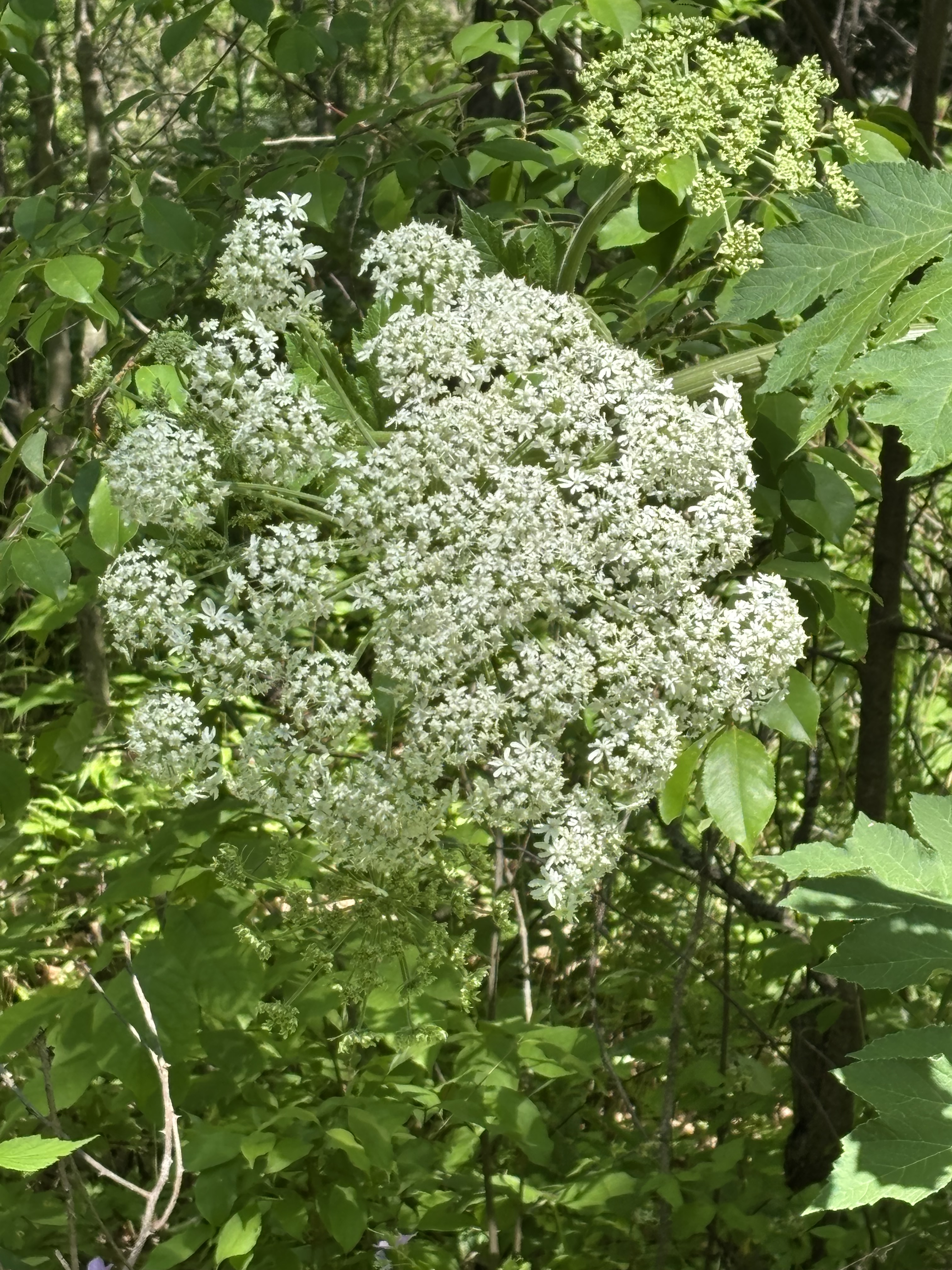
In the forests and fields through which our walking path winds, there is Cow Parsnip, Queen Anne’s Lace, and Hemlock. All sport umbrella-clusters of tiny white flowers. They are all members of the carrot family. To the untrained eye – like mine – they look similar. They are dangerously different.

Socrates was sentenced to death and was made to drink Hemlock. It’s very toxic. Queen Anne’s Lace is edible and used medicinally. Cow Parsnip can be eaten “if handled properly,” however a combination of sap and sunlight can cause a painful rash.

It is important to know the difference. It is why education is so important. It is why asking questions, stoking curiosity and looking deeper – beyond the superficial – is invaluable. The point of education, as Neil Postman reminds us, is not to get a better job, it is to be a well-rounded human being capable of making informed decisions.

“At its best, schooling can be about how to make a life, which is quite different from how to make a living.”

Republicans since Reagan have been actively undermining our public schools. Cutting budgets, hyper-emphasizing testing (answer-driven rather than question-inspiring), and waging a foxy campaign against “the woke,” a term referring to people who are curious enough to question what they are being told – a skill useful in learning. The demonizing of education and the educated has without doubt led us to this moment: a gullible, angry and easily distracted citizenry. I almost wept the day the young man, an expectant father, told me that he was going to home school his child because he didn’t want his son’s head to be filled with “any of those crazy ideas” that they teach in the public schools. He didn’t want his boy to be woke.

I wanted to tell that young man that democracy is an idea. So is fascism and communism and authoritarianism. It’s important to know the difference.

The fox and Republicans have been for years weaponizing the term “socialism”, an accusation they level when their wealth is threatened by those who question why taxation is unfair, who ask why Republicans cheer when government creates programs uplifting corporate America but snarl when government creates programs that uplift private citizens. Socialism is an idea, too. Asking questions, protecting civil rights, and believing in the promise of democracy is not socialism. It takes some study and questioning to know the difference.

There’s a reason that the cartoon symbol for insight is a light bulb illuminating brightly over a character’s noggin. Letting in the light.

Discernment. Distinction. Knowing the difference between indoctrination and education. Knowing the difference between character and corruption, value and vice, wisdom and hogwash. Knowing how to discern news from propaganda would seem to be essential – democracy-saving. Life saving.

And so, here we are, awash in a cult movement called MAGA, enabled by a feckless Republican Congress, that worships incompetence and promotes ignorance. It shields itself against even the most basic of questions and eschews responsibility for, well, anything (blame is their game). It howls in indignation at the very thought of learning. It is a celebration of the dim-bulb. Drinkers of toxic hemlock, totally incapable of discerning the difference between the deadly and the medicinal, the truth and a lie.

“Because we are imperfect souls, our knowledge is imperfect. The history of learning is an adventure in overcoming our errors. There is no sin in being wrong. The sin is in our unwillingness to examine our own beliefs, and in believing that our authorities cannot be wrong.” ~ Neil Postman, The End of Education: Redefining the Value of School.

read Kerri’s blogpost about DISCERNMENT

likesharecommentsubscribesupport…thankyou

Our Dull Ho-Hum [David’s blog on Merely A Thought Monday]

“In spite of indignation and anxiety over what has occurred, I cannot help wondering where we have failed. There was a time during the war when we enjoyed the trust and respect of little and big nations everywhere. What has happened to turn that, in some cases, into suspicion and disdain? We cannot blame our leaders, because we are a democracy. Somehow we the people have failed.” ~ Eleanor Roosevelt, My Day, August 23, 1946

Our conversation was sparked by a post by John Pavlovitz: The people I’m struggling the most with right now are the polite people, the patient people, the people who are acting as though they are above those of us who have f*cking had it.

If our democracy fails – as it now seems is almost inevitable – we could blame the cowardly Republican congress, the unscrupulous executive or the corruption of the Supreme court. What of the responsibility that falls squarely on our shoulders?

We the people voted the corruption into place. For years we’ve tolerated the lies, the meanness of spirit, the grift. We tuned in to news that was more interested in ratings that in factual reporting. We allowed an insurrectionist, rapist, felon to run for the highest office in the land. We did not express outrage when the Supreme Court not only protected the felon, but granted him immunity from the law, elevating him to monarch status.

We’ve normalized the abhorrent. We’ve made the monstrous acceptable, ho-hum.

We have, for a decade, watched the real-time dismantling of democracy like we watch reality tv. We perform the daily doom scroll, seeking, grousing about and then forgetting the latest outrage. I return, again and again, to the forward Neil Postman wrote for his book, Amusing Ourselves to Death:

Orwell warns that we will be overcome by an externally imposed oppression. But in Huxley’s vision, no Big Brother is required to deprive people of their autonomy, maturity, and history. As he saw it, people will come to love their oppression, to adore the technologies that undo their capacities to think.

We are allowing the whitewashing of history, the celebration of ignorance over education. Only an empty-headed society would tolerate the elevation of the most unqualified to positions of leadership. 90 million people yawned and rolled over rather than go to the polls when the very existence of democracy was on the ballot. Congress knowingly confirmed a kakistocracy that made no effort to hide its authoritarian agenda.

Last weekend 4 – 6 million people took to the streets to protest the ho-hum. It was the largest protest in the history of our nation. It had no visible impact on our elected leaders. Ho-hum. They pushed forward their Grossly-Gluttonous-Bill with language that prevents the courts from checking the overreach of the executive. They added language that would make it impossible for a citizen to seek redress from government abuse.

They no longer fear the vote of the people. They are counting on our passivity. They are counting on our dull-minded ho-hum. They are counting on our capacity to change the channel when we don’t like what we are watching.

“We seem to have forgotten to weigh our values and to realize that we have to pay for the things we want. The payment which can bring about friendly and peaceful solutions is infinitely less costly than the payments which will have to be made if we are going to be an enemy to all the world.” ~ Eleanor Roosevelt, My Day, August 23, 1946

read Kerri’s blogpost about HO-HUM

likesharecommenttalktoeachothersupportsubscribeprotestspeakupspeakout…thankyou.

A Second Glance [David’s blog on DR Thursday]

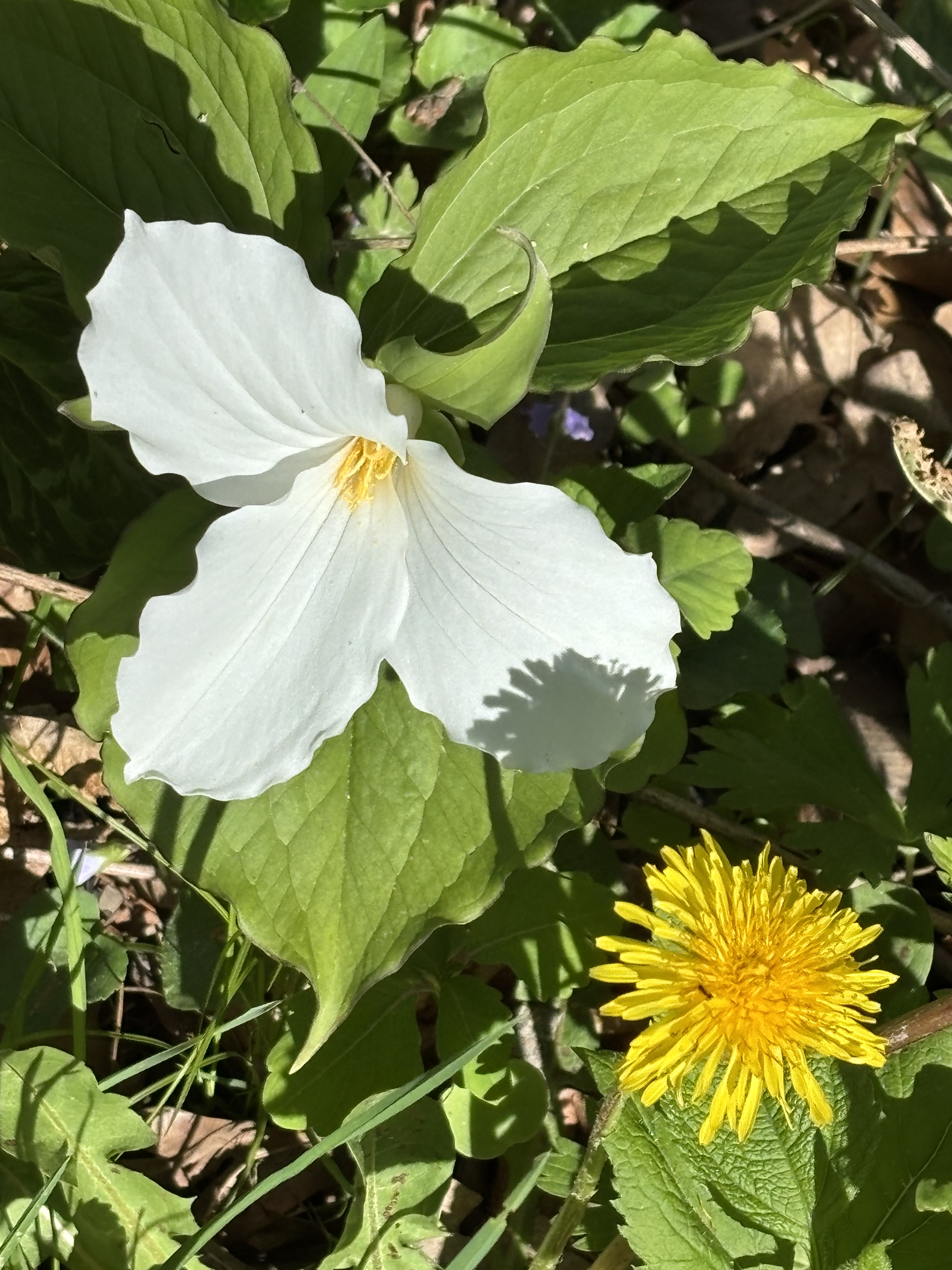
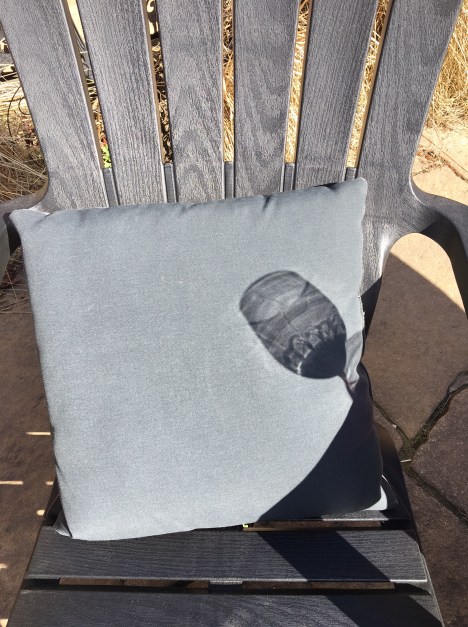
Look carefully and you will see the shadow that the dandelion cast upon the white petal.

Can you see the veining of the leaves? The watercourse way? The ridges in the petals serve the same life-giving purpose although by a subtly different, visibly beautiful design. Can you see it?

There is a small spot of purple. Can you find it? It pulls the eye. It provides the tension necessary for focus, inspiring movement of the eye.

Is the ant adventuring across the dandelion apparent at first glance? Like the spot of purple, it is there though probably not apparent at first glance.

At first glance. To the casual eye. On the face of it.

And then there is the purpose beyond the pretty. Do you see it? The petals of white, the yellow pistil attract pollinators in an attempt to perpetuate their species. The ant does not adventure for fun but for food.

Do you see the dried leaves supporting the green and white, the yellow and purple? Once green themselves, drinking the sun, they now provide sustenance to the next generation, warmth to the root.

It was the shadow of the dandelion cast that caught her attention.

It takes time to see the purpose beyond the pretty. It takes a longer second glance. Seeing – and understanding – interdependence takes more than a first glance. It requires some learning. Observation. Study.

My father used to tell me that I’d educated myself into stupidity. I did not take it personally as I knew that he was captive to the fox. He knew, as do I, that the fox is dedicated to the superficial. He was schooled by the fox to believe that looking beyond the superficial, a thing called “learning”, was a worthless thing. The fox preaches simple idiotic solutions. Build a wall. Deport without due process.

Critical thinkers and active questioners are less likely to eat the smorgasbord of drivel and easy conspiracy served up as sustenance by the fox. The fox relies on the superficial. The fox defends against a second glance. The fox talks fast, a carnival barker, enticing people into the tent with freak-show promises, bearded ladies and conjoined twins, performances guaranteed to shock the most hardy of viewer.

Every carnival barker knows that a longer second glance would shed some light on the subject. It would reveal the make-up, the spirit gummed whiskers, the hollow dumbbells of the strongman. A little study would reveal the purpose: outrage in exchange for your nickel.

The only way to keep the viewer in the tent is to escalate the outrage. Keep them solidly in their reptile brain. The only rule? Never ever provide a second glance. Prevent at all cost a deeper look. Stigmatize learning. Undermine fact. Distract. Gaslight. Blame. Assault education. Oh, and never ever pass up a chance to charge another nickel.

Look carefully and you will see the shadow…

read Kerri’s blogpost about THE SHADOW

likesharesupportcommentsubscribe…thankyou.

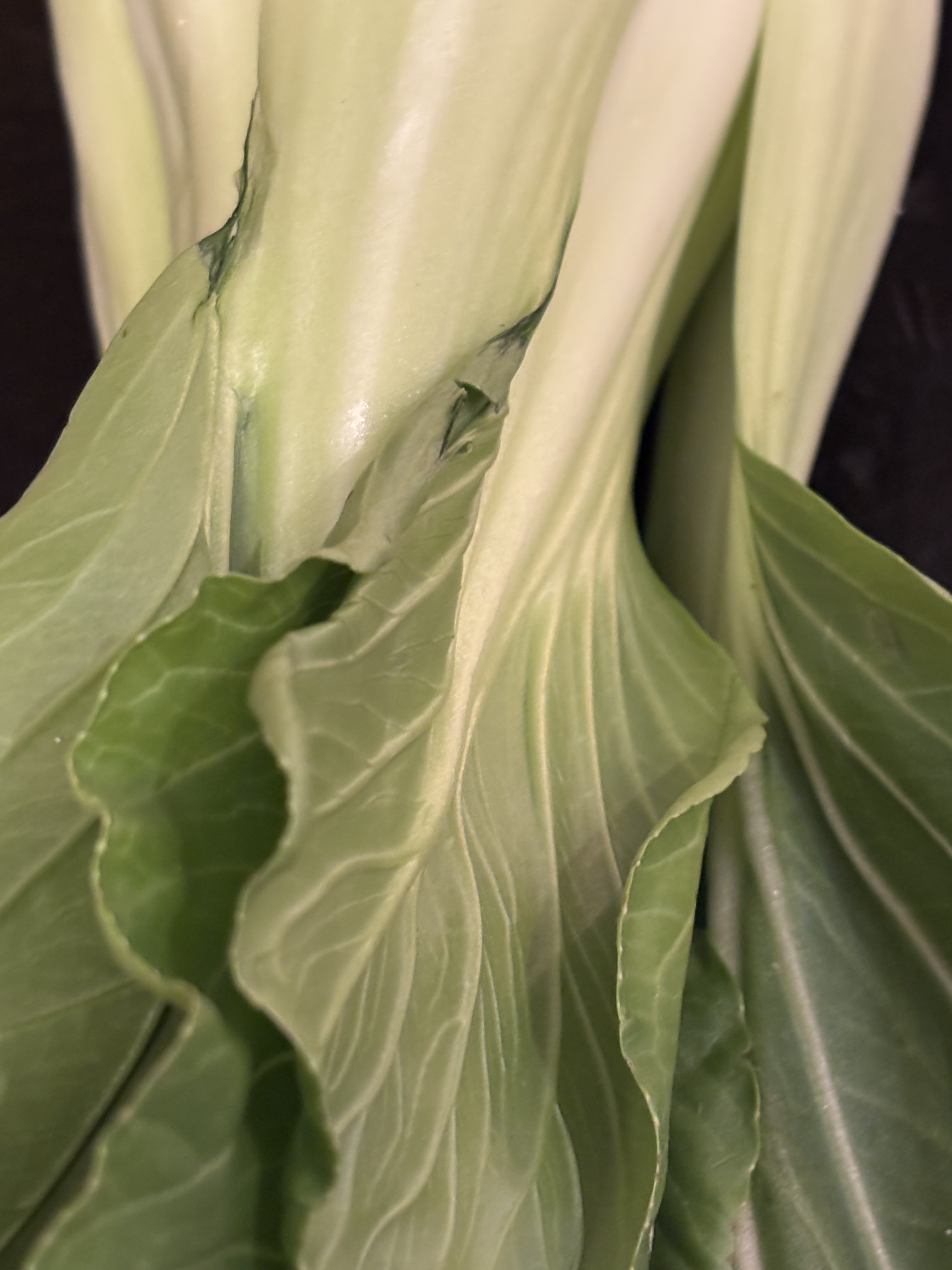
And Bok Choy [David’s blog on Two Artists Tuesday]

This week we made a miso pot-sticker soup (Japanese). 20 made for us a red curry noodle soup (Thai). We often make pasta dishes and will soon cook chicken marsala (Italian). Later this week we will make fajitas (Mexican). In one of our soups we used for the very first time bok choy (Chinese cabbage).

We drove on errands and passed Panda Express (Chinese), Pimmy’s (Thai), Masala House (Indian), Buono Beef (Italian), La Fogata (Mexican), La Caribeña (Columbian) Madame Pho’ (Vietnamese), Gyro Grill (Greek), Bisi (Ethiopian)…There are many more. A not-so-surprising statement of food diversity borne from a nation comprised of diverse people.

We passed a mosque, a Buddhist temple, a synagogue, churches of all shapes and stripes. A few miles north is a Sikh temple, a Hindu temple, an Amish community, and a Taoist Center to the west.

A quick look (less than a minute) at the labels on my clothes reveals items from Vietnam, China, Mexico, India and Bangladesh. I recently bought a pair of shoes from Columbia Sportswear Outlet store. They were made in China. My favorite Frye boots were also made in China. Frye is a company founded in Massachusetts. Massachusetts is an Algonquin word meaning “at the great hill.” Colorado is a Spanish word meaning “colored red”.

My name, David, comes from the Hebrew word “dod” which means “beloved”. It is a name that “has been adopted into languages all over the world, including Syriac, Greek, Latin, and Quranic. Quranic means “relating to or contained in the Koran.” Syriac is a literary language, Aramaic, used by several Eastern Christian churches. Kerri is named after a county in Ireland. Her parents cleverly exchanged the “Y” for an “I”. Kerry is a Gaelic word meaning, “Ciar’s people.” Ciar was a legendary warrior (This is new knowledge to me and explains a lot!)

In our history we find the word “settlement.” English, Dutch, French, Spanish. Another word, “migration”, shows up later in reference to the arrival of the Irish, Italians, Germans. “Immigration’ is a word that includes the arrival of the Chinese, Japanese, Mexicans and many people from Central America. Of course, we cannot forget the word “slavery” which was the path of Africans to this land, and “displacement” which is the sanitized word referring to the fate of the native peoples. “Attitudes towards new immigrants have fluctuated from favorable to hostile since the 1790s.”

This morning I read this from Heather Cox Richardson (Letters From An American, Feb. 1, 2025): Trump’s loyalists overlap with the MAGA crew that embraces Project 2025, a plan that mirrors the one used by Hungarian prime minister Viktor Orbán to overthrow democracy in Hungary. Operating from the position that modern democracy destroys a country by treating everyone equally before the law and welcoming immigrants, it calls for discrimination against women and gender, racial, and religious minorities; rejection of immigrants; and the imposition of religious laws to restore a white Christian patriarchy.

Given the reality of what is all around us, of what actually populates our lives, can you possibly grasp the magnitude of delusion and utter amorality in the minds (there are no hearts) of the current republican administration?

read Kerri’s brilliant blogpost (though she regularly disparages everything she writes)

likesharesupportwakeuplookaroundyoucommentsubscribetoreality…thankyou.

For The Truth Will [David’s blog on KS Friday]

In the past three days I’ve seen this quote by H.G. Wells cross my screen more than once: “Civilization is in a race between education and catastrophe. Let us learn the truth and spread it as far and wide as our circumstances allow. For the truth is the greatest weapon we have.”

I would say, given the outcome of our most recent election, education just lost the race. It was not an accident that H.G. Wells wrote that we must “learn the truth”. Truth, like democracy, is a question, not an answer. Learning is a pursuit of questions, not an indoctrination of answers. It doesn’t take a prophet to see the coming elimination of questioners, the (continued) banning of books, the suppression of ideas. As we have just witnessed, truth has no relevance in a society fortressed against learning – especially about itself.

In my personal cosmos, Wednesday morning I officially elevated Neil Postman to the status of prophet. There was no ceremony. I’ve included both of these Postman quotes in previous posts but they are startlingly relevant and revealing of our current catastrophe. He published them in 1985:

“When a population becomes distracted by trivia, when cultural life is redefined as a perpetual round of entertainments, when serious public conversation becomes a form of baby-talk, when, in short, a people become an audience, and their public business a vaudeville act, then a nation finds itself at risk; culture-death is a clear possibility.” ~ Neil Postman, Amusing Ourselves to Death

Historians will certainly write extensively about what we just experienced: a serious public servant lost an election to a vaudeville act. A nation finds itself at risk.

I am in a news blackout. I couldn’t bear to hear the pundits debate all-the-reasons-why without actually taking a good hard look at themselves, without actually recognizing that they, too, are part of “the perpetual round of entertainment” squeezed in-between commercials.

“For in the end, he [Aldous Huxley] was telling us that what afflicted the people in Brave New World was not that they were laughing instead of thinking, but that they did not know what they were laughing about and why they had stopped thinking.” ~ Neil Postman, Amusing Ourselves to Death

The maga-madcap-clan is doing a victory lap and posing for pictures. Their Project 2025 plan will sooner or later drive the faithful – and the rest of us – out of the vaudeville tent. Serious chaos has a way of slapping even the most entranced audiences into consciousness. Catastrophe, if survived, is a great clarifier. The maga-madcaps will look and sound much differently outside the distractions of the tent in the full light of reality.

Maybe then – just maybe – we will be capable of coming together, looking at ourselves, newly unafraid of the rigors of learning and where it leads us, and rekindle an honest pursuit of the truth. We may, once again, start thinking. As is always true in the harsh light of day, when the circus leaves town, serious questions will be all that is left, all that we have to hold onto.

read Kerri’s blog about TRUTH

A Perspective Giver [David’s blog on DR Thursday]

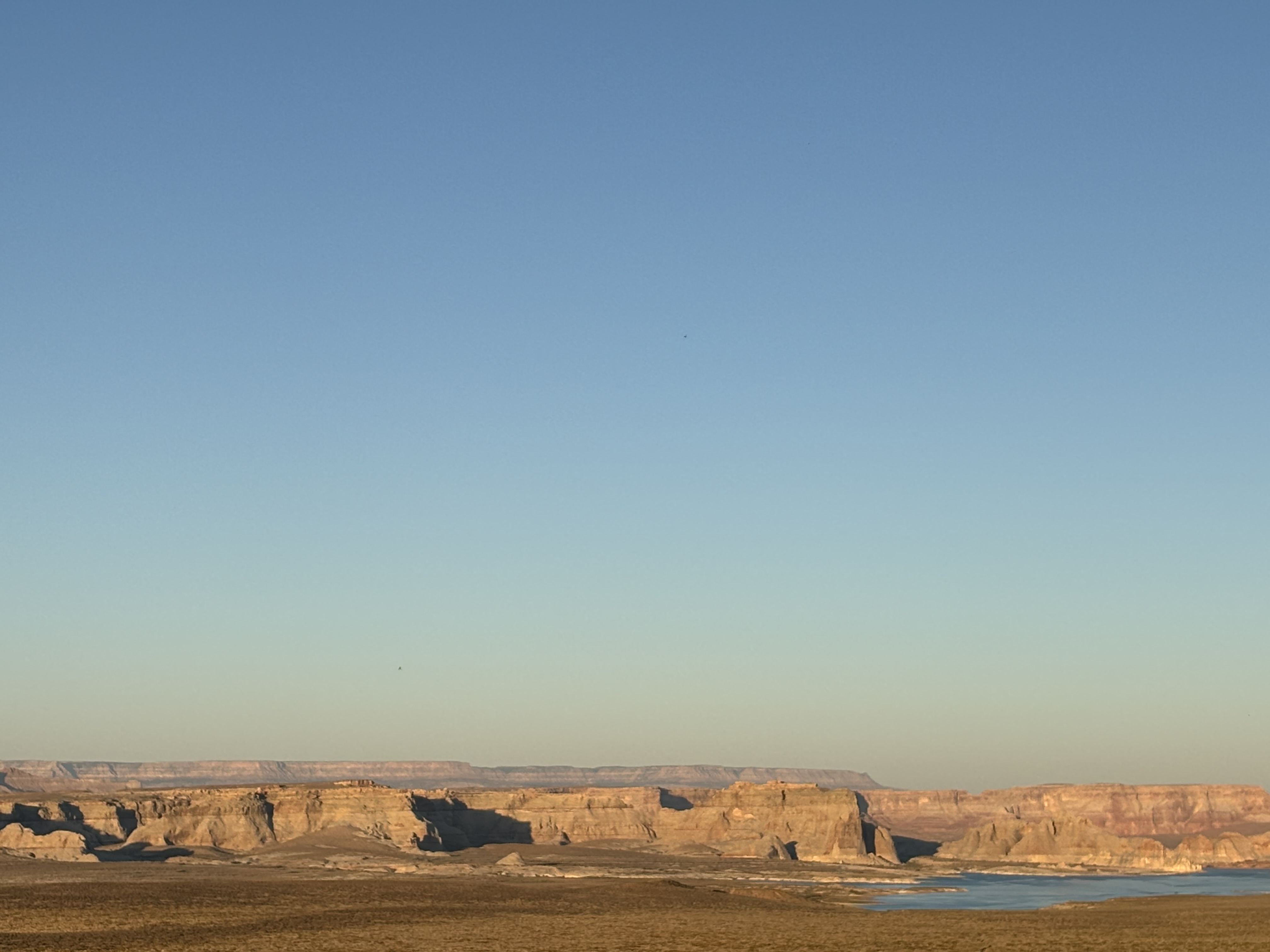
I could have sat all day on the porch and stared at the sculpted landscape, the fingers of Lake Powell reaching into the canyon. My artist’s soul rejuvenates in the southwest. It excites my imagination while quieting my mind. Just as the high desert sun warms me to the core of my being, the geography invigorates the core of my artistry.

It’s been two weeks since I sat on that porch and looked with awe at the horizon and watched the colors transform from hot orange to dusty purple as the sun progressed across the sky. It was akin to looking at the ocean surf, a rolling touch of the eternal. A perspective-giver.

While sitting on the porch I pondered our nation’s inability to fully reconcile with its past. It’s impossible to drive through tribal lands and not consider the full history of our nation. It’s been much on my mind recently since it is a central theme of my latest play, Diorama.

Think about it: just this week the maga-candidate-for-president suggested he would stop funding schools that taught about slavery. Nikki Haley, while running for the Republican nomination for president, said that there’d never been racism in the United States of America.

I sometimes wonder in these divisive times if the USA is like an alcoholic that refuses to admit that it has a problem. Why so much denial? Why so many blatant lies? In fact, it’s not new. Take a gander at the Lost Cause narrative propagated throughout the south (and the nation) following the civil war, a tale of happy slaves and benevolent slave owners. You might recognize it as it has resurged as the official curriculum in the state of Florida (and other states) in 2024. Twelve generations of brutality white washed and to what end?

Of course, it is the white-washed America that the reds aspire to inhabit – and to achieve their fantasy they necessarily need to ignore the full scope of our history. There’s no responsibility in a white washed history. In cowboy brain there are only good guys and bad guys so the good guys need never question their actions or confront their shadows. It’s an infantile narrative, not only unworthy of a maturing nation, but crippling to its growth.

The fourth step in the AA twelve step program suggests that, in order to restore our sanity – in order to grow up – we must be willing to make a searching and fearless moral inventory of ourselves. We must not be afraid to admit when we are wrong or recognize when we have strayed from our ideals.

A fearless moral inventory. An honest look at our complete history, the good, the bad and everything in between. As Aldous Huxley wrote, we are in a race between education and destruction. An educated populace would never tolerate the lies of the would-be-autocrat and would easily see through the crazy revisionist history that he manufactures and spews. Perhaps that is why he vows to dismantle the Department of Education.

The question before us in November is whether or not our democracy will prevail and mature or will the white nationalist monster, in a celebration of ignorance, eat our collective freedoms and send us swirling into the immoral (and infantile) fascist nightmare outlined in Project 2025? A fearless moral inventory or the path of the Lost Cause cowards?

The choice is ours to make. The story is ours to tell.

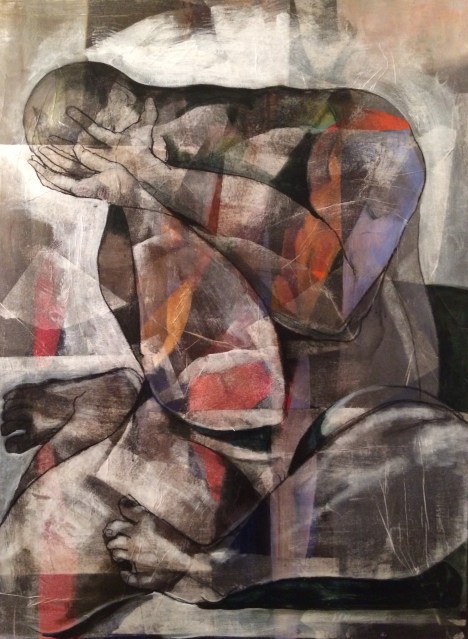
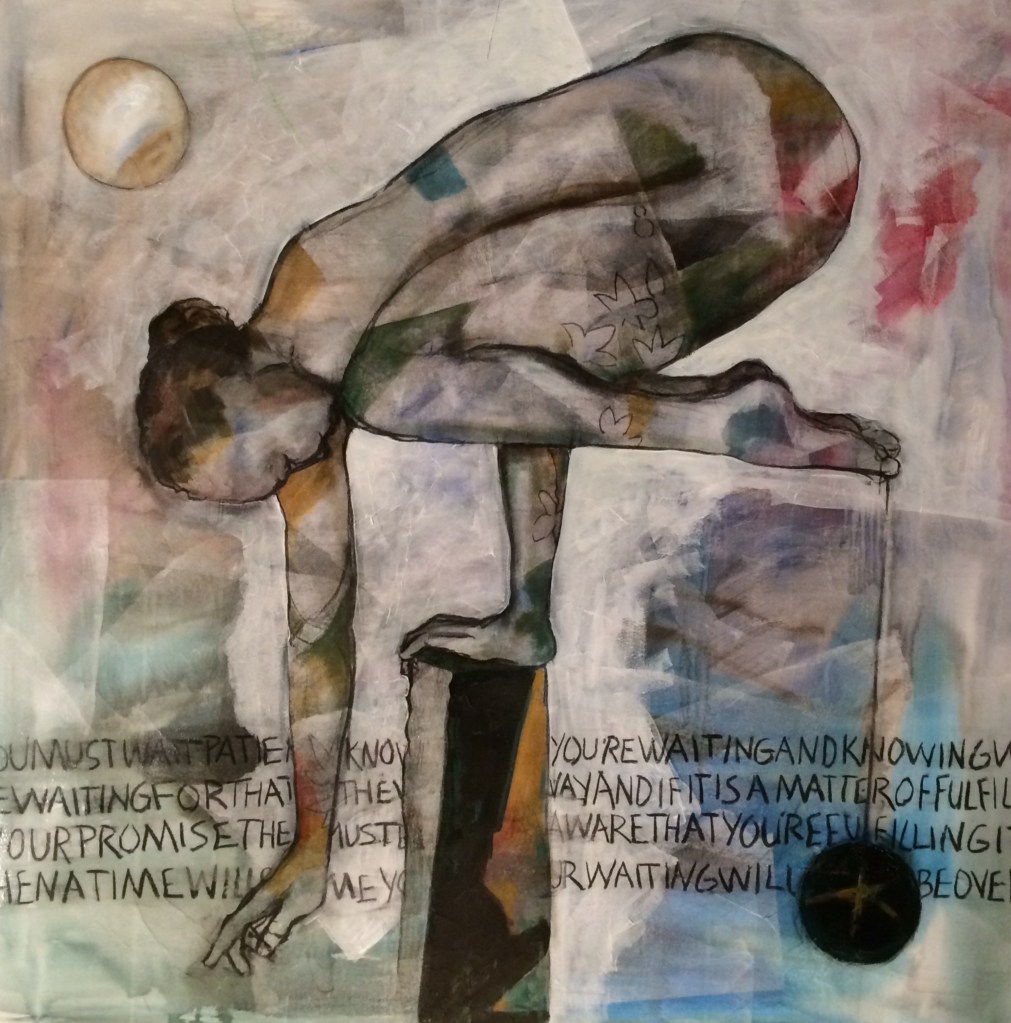
Waiting & Knowing, 48″x48″ mixed media

read Kerri’s blog about PERSPECTIVE

like. share. comment. support. subscribe…thank you.

Ponder Pure Action [David’s blog on KS Friday]

“Raise your words, not voice. It is rain that grows flowers, not thunder.” ~ Rumi

Although now it’s ubiquitous in the social media sphere, to be an “influencer” is a relatively new term of in the canon of aspirations. To affect, to sway, to direct, to shape, to guide… Someone recently suggested that Kerri and I should attempt to become influencers and we both cringed. For us, there’s something shallow about that word that makes us recoil. We write everyday because we enjoy writing and are very aware that our love of writing does not necessarily mean that we have anything new or of value to say. We like to write together. We like to share what we write.

I recently read a Taoist tenet: cease trying to influence others or to be influenced by others. It’s a notion meant to speak to the pursuit of happiness. Essentially it recommends stopping the pursuit. Happiness is not a thing to be caught. It is not something to be attained. The tenet is a suggestion to stand still, to act purely according to what presents itself in the moment. To act without thought or desire of any imagined gain. Happiness is bubbling in the present moment, expressed through pure action. Taoists – as I understand it – call this non-action (as opposed to inaction). Wu Wei.

Pure action. Effortless.

When Kamala Harris became the Democrat nominee, we wondered what we could do to help. Previous to her entrance into the race, the ugly-red-tide seemed impossible to stop. She brought light and new energy. We read – somewhere – that in order to help her, people should do what they already do, do what they do best. And so, in this present moment, we write. I cannot claim to be pure in my action since I hold the hope of influencing a few hearts and minds out there, somewhere in the nation, to fully understand the power of their vote and the need to know what they are voting for.

Yesterday on our walk we crossed paths and had a chat with a friend and, of course, talked about politics. As a professor, he said each day, regardless of the topic or the lesson, now more than ever, he is trying to teach his students critical thinking skills. “They no longer know what is fact and what is made-up. They have to learn to question,” he said, “They have to learn to think for themselves, beyond what they are hearing in social media.”

Pure action. I told him that the imperative to teach critical thinking places him on the frontlines. A thinking person could not – would not – vote for the maga-candidate. There is plenty of desire in the red-tide to remove critical thinking from higher education – from all forms of education. To narrow rather than expand minds.

After we went on our way I realized that Kerri and I are doing in our writing exactly what our professor friend is doing in his classroom: attempting to inspire critical thinking. Pointing the direction to questions and to discernment, challenging those swallowing whole-cloth the dangerous-maga-fox-misinformation to open their eyes, to pop the info-bubble.

“I tell my students that it’s easy to find the truth,” the professor said. “You just have to want to see it.”

Nurture Me on the album Released from the Heart © 1995 Kerri Sherwood

Kerri’s albums are available on iTunes and streaming on Pandora

read Kerri’s blogpost about THE RAIN

like. share. support. subscribe. comment…thank you.

All The World [David’s blog on KS Friday]

When I was on the verge of realizing my dream of creating an experiential learning school/program, I kept a poster on my office wall – the alphabet in butterfly wings. It was a layer cake of reminders: Nothing is original. Mimicking nature is a really good idea. We project our meaning onto the world and are oriented into a world of projected meaning. In other words: it’s all made-up. So, make it up!

Teachers are meant to follow a student’s questions, not stuff them with a heavy diet of unattached answers. Create a container of hot pursuit and feed the curiosity. Someday they will create and hold their own container of hot pursuit, if they are lucky enough to survive the system. That thought is not original to me. Every great teacher who I’ve known has told me some version of my borrowed-assertion.

Some day, if you are fortunate enough to take a walk with Kerri, be prepared to stop. Often. “Lookit!” she gasps for the umpteenth time and aims her camera. Stepping off the trail, kneeling in the weeds, tipping her head back to capture the clouds, hovering above an intrepid caterpillar… Catching the miracle is one of her hot pursuits. “I won’t take any more,” she says and I smile, knowingly. My job is to hold the container.

“Lookit!” she said. We were in the lobby of the theatre. Her hot pursuit is also an indoor passion. All the world is her studio. “It’s the letter K!” she smiled. “In lights!” Before I could respond she stepped away, aiming her lens at the ceiling. “It’s so cool!”

From butterfly wings to lights on the ceiling.

It occurs to me (now) that creating or holding containers of hot pursuit is one of my hot pursuits. All the world…

The Box/Blueprint for my Soul © 1996 Kerri Sherwood

Kerri’s albums are available on iTunes and streaming on Pandora and iHeart Radio

read Kerri’s blogpost about K

like. share. comment. subscribe. support. many thanks.

Unfurl [David’s blog on Two Artists Tuesday]

I’m proud of her. Twice this week Kerri has fact-checked friends on FB who posted articles riddled with misinformation meant to rile. It took her less than a minute each time. In posting a link to the fact-check, she wrote, “Please check your information before you pass it on. xo”

It seems like such a small thing but it’s lately apparent that it’s becoming everything:

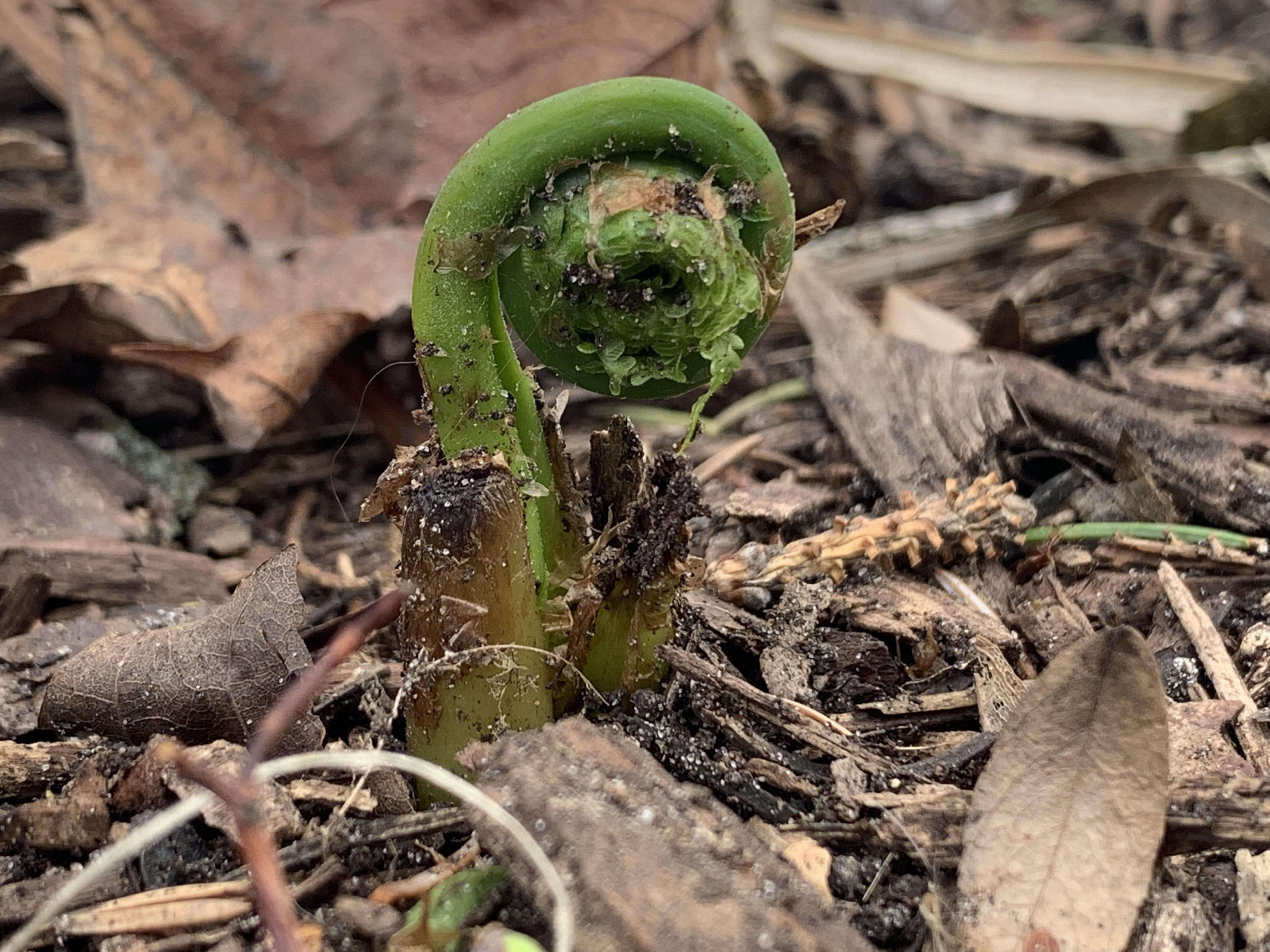
We forget that democracy is not a thing. It is an idea. It is an action rather than a noun. We forget that our democracy is young. Very, very young.

It worries me when I hear politicians making laws placing limits on the discussion of ideas at school. It worries me when I read that parents want teachers to teach “only the facts”. In today’s bubble-discourse it is a valid question to ask, “Whose facts?” Discerning between fact and fiction requires minds and hearts capable of questioning, capable of challenging the “facts” they are being fed. The notion of the purpose of education as a feeder-of-facts is nothing less than a sign of moral and mental decay. This is especially true in our great age of information with its ever-present shadow of rampant misinformation.

Democracies collapse when ideas and ideals are no longer debated, when winning-at-any-cost overshadows compromise, when respect for divergent points of view is overrun by intolerance. Healthy democracies are an ongoing tug-of-war; creative tension generated by a lively and respectful exchange of perspectives. This requires a system of education that nurtures these qualities and capacities.

Democracies collapse when they aim for an end result rather than steward a living process.

The point of education in a democracy is to consciously and carefully unfurl young minds so they might become active questioners, expansive thinkers, participating citizens in an ongoing experiment in a complex system called democracy, capable of stewarding their communities forward through an ever-changing world toward the promises inherent in the IDEA: equality, inclusion, governance by the people, for the people.

I would hope that we become capable of grokking governance-by-the-people which necessitates a people educated in ideas, reinforced in their curiosity and capacity to question, to converse and debate complex issues, capable of discerning ruinous power-over-agendas from the central idea enlivening their budding democracy: power with.

read Kerri’s blogpost about FERNS

like. share. support. subscribe. comment. many thanks.