Hear The Calling Voice

photo

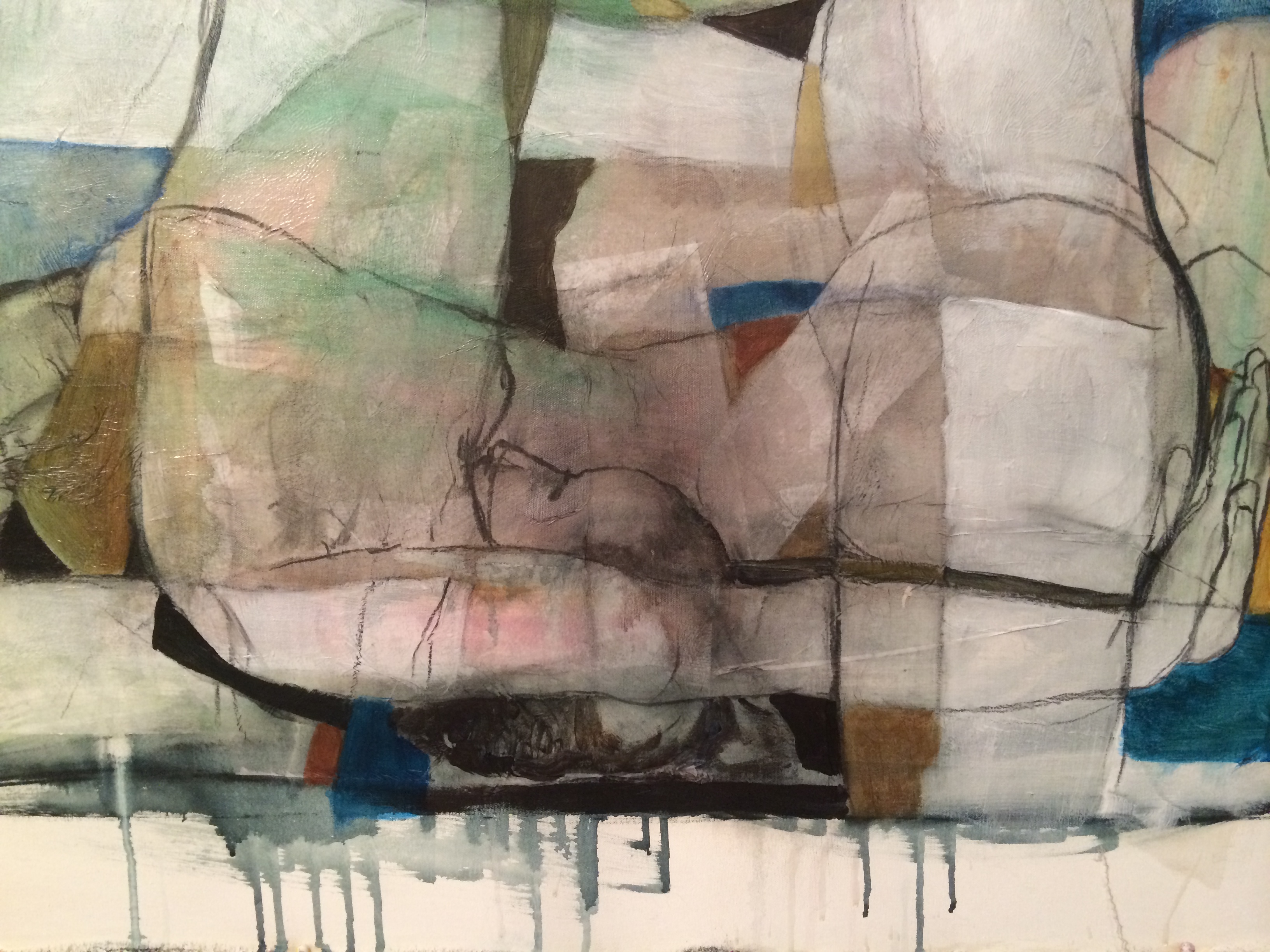
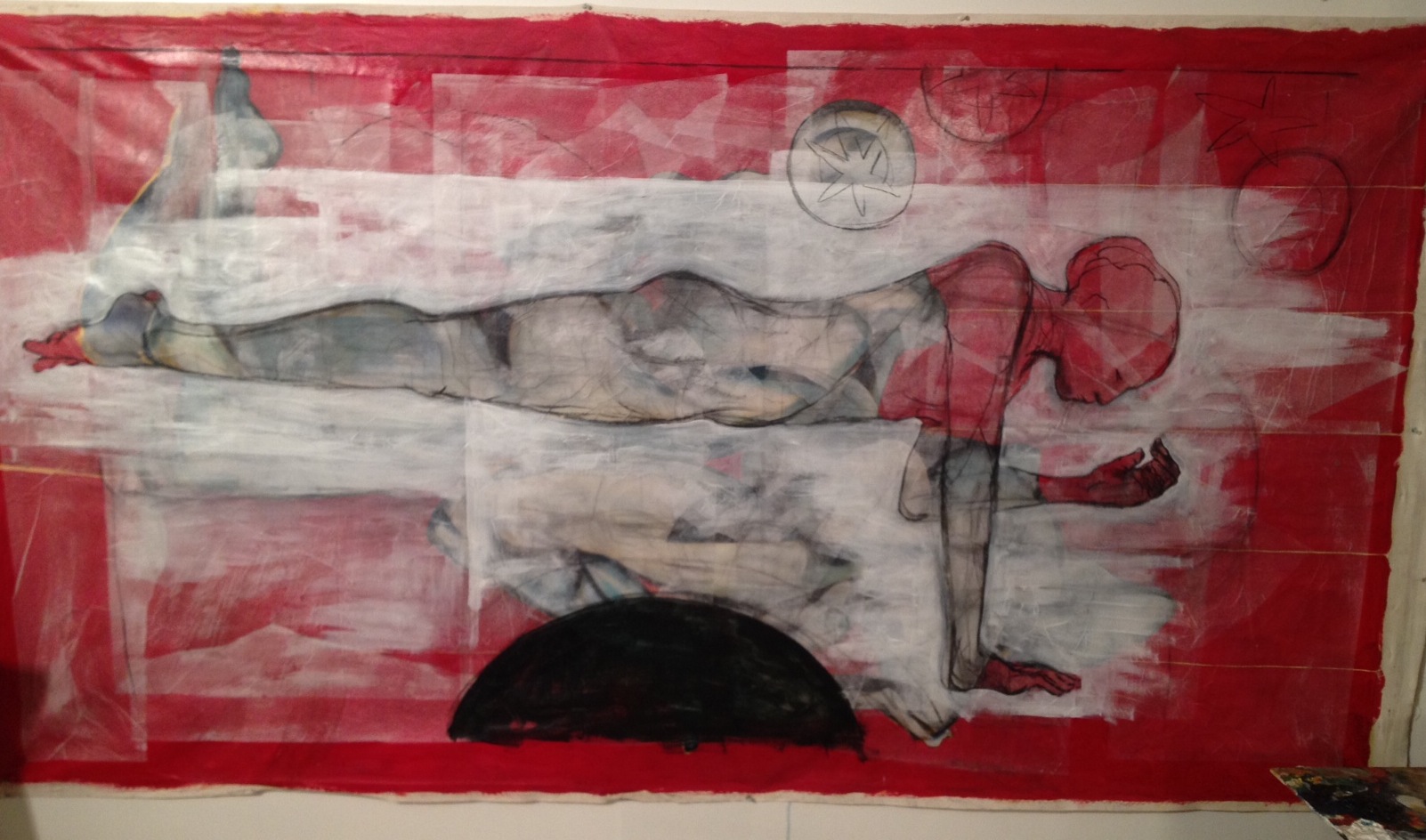
next steps to my latest painting. it’s coming along!

“Maybe that means that the voice we should listen to most as we choose a vocation is the voice that we might think we should listen to least, and that is the voice of our own gladness….I believe that if it is a thing that makes us truly glad, then it is a good thing and it is our thing and it is the calling voice that we were made to answer with our lives.” ~ Frederick Buechner, Secrets In The Dark

This week I received an email from a long lost friend, a man I haven’t seen in over 25 years. Although we have yet to talk, his email contact has already sparked within me a life review. What have I done in all of these years? Who have I become in the quarter century since last I saw my friend? He wrote a brief three sentence overview of career advancement and family highlights (graduations and retirements). In attempting a reply, I found it impossible to encapsulate my path as there has been nothing linear, logical, or similar in my steps. I’ve walked a much different road. My inner imperative roars rather than whispers.

My life has been a source of great concern for my parents. Security has never been high on my list of occupational criteria. The day that I graduated from college my mother asked in all seriousness, with the love and concern that can only come from of a worried mother, “Now that you’ve gotten the theatre thing out of your blood, what are you going to do with your life?” She could see (before I did) my attraction to edges and my need to run at them and jump. She understood my need to question the rules, challenge assumptions, and live on the margins so I might better see and understand the happenings in the main stream. She saw and for a while feared the call of the art within me.

a close-up

a close-up

Judy once told me that she never wanted to be too comfortable because she intended to live life, not protect herself from it; she didn’t want to become complacent in this gorgeous life. Security is low on her list, too. She’s my go-to person when I lose the voice of gladness in the static and clamor of ‘should-do.’ She cuts through the noise, “Can you hear the birds, feel the sun on your face?”

When we were students in college, Roger asked me to read Herman Hesse’s book, Narcissus and Goldmund. He told me that he would most likely live the life of Narcissus and I would follow Goldmund’s route. Narcissus is a priest and teacher seeking God in the rituals of the institution. Goldmund finds illumination through the mess and random experiences of his life. One seeks God through order. The other finds God in chaos. Both are following their call, their voice of gladness. My path has, as Roger predicted, mirrored Goldmund’s. The voice, the call of gladness is clear to me on the inside while the path is nearly unrecognizable from the outside perspective.

another close-up

another close-up

So, what to tell my friend when we speak? Like all artists, I have answered the calling voice with my life.

Release The Edge

photo-4

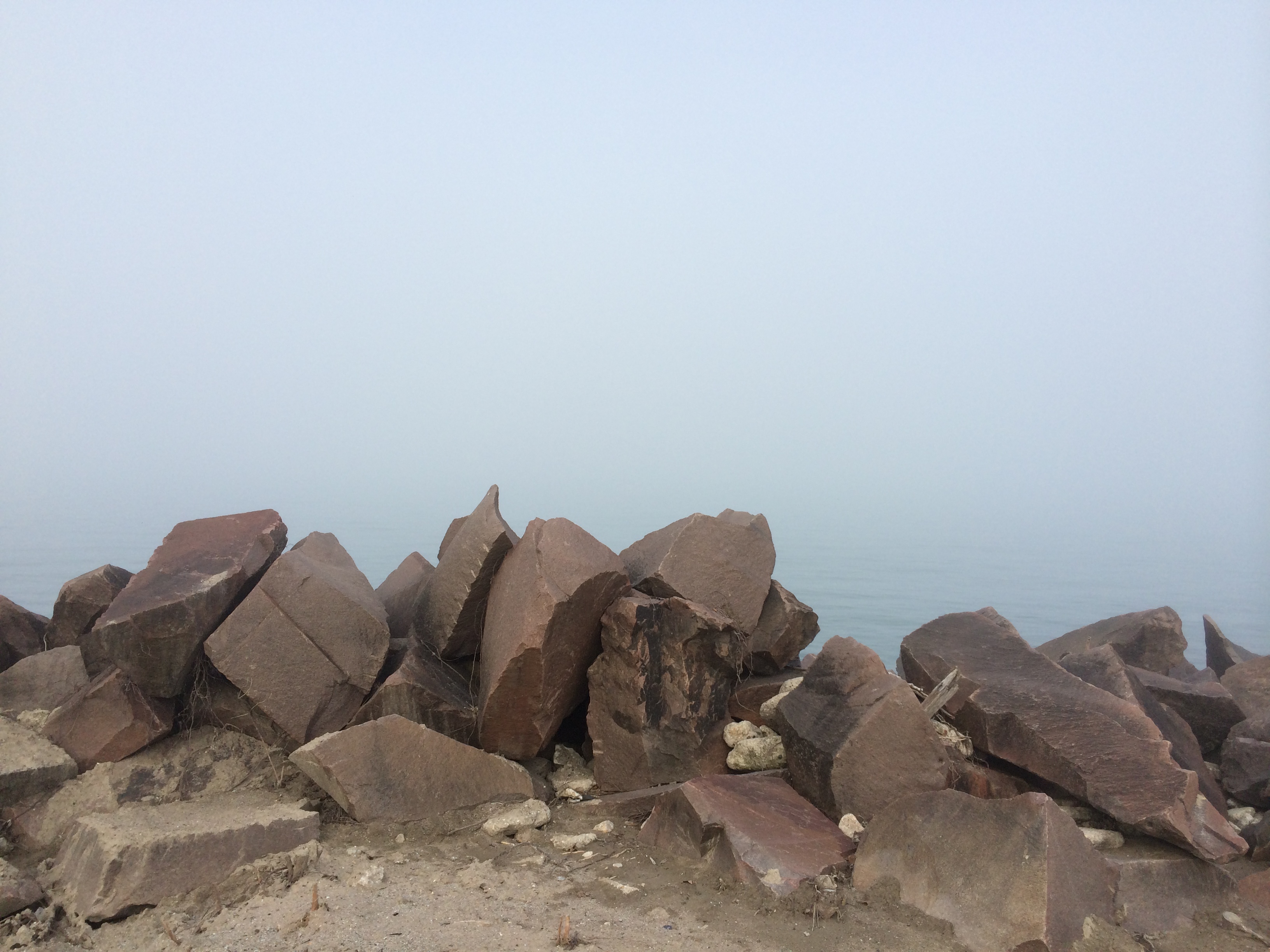
Usually, there is a lake….

Hope begins in the dark, the stubborn hope that if you just show up and try to do the right thing, the dawn will come. You wait and watch and work: you dont give up. ~ Anne Lamott

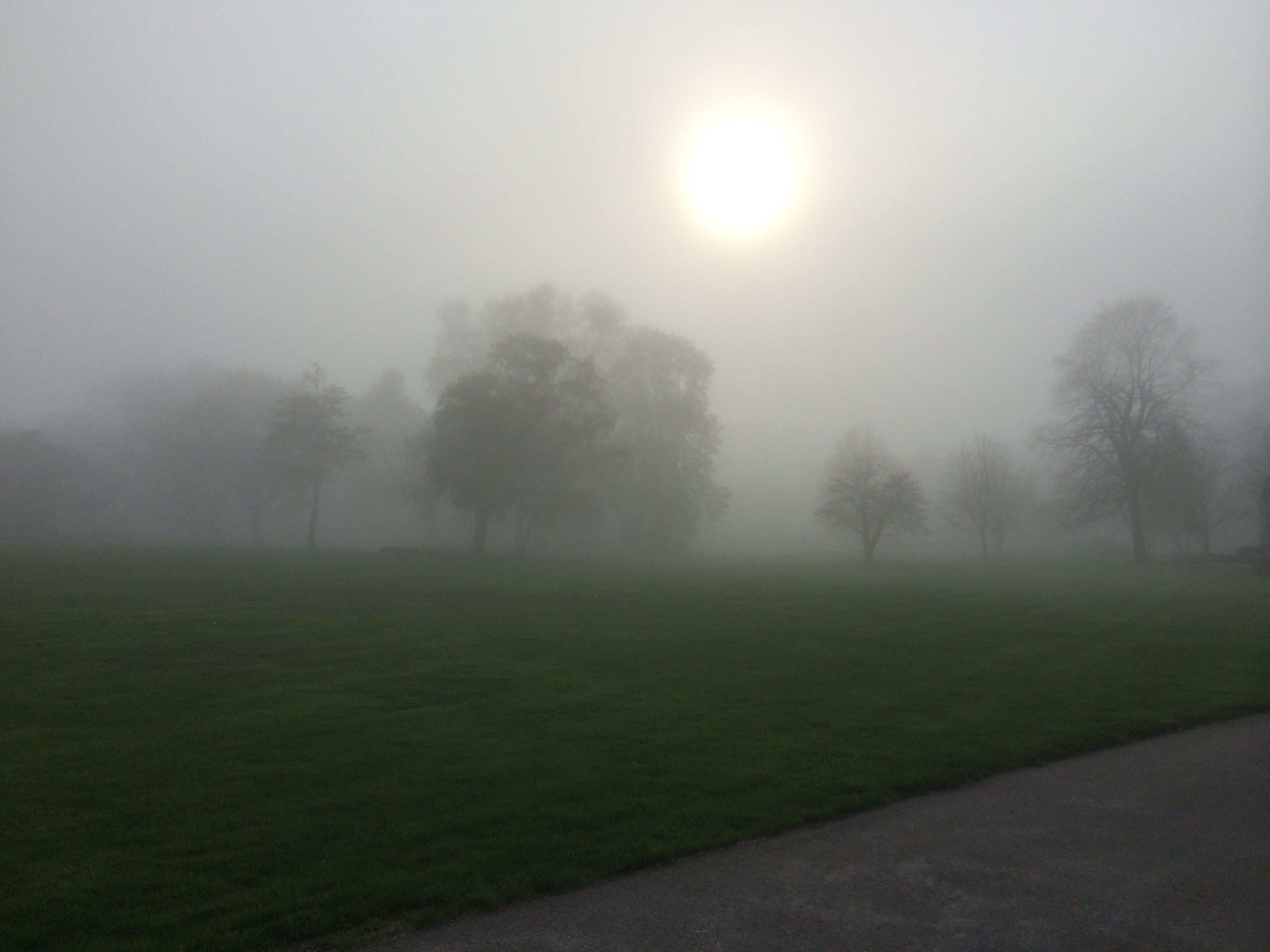
Sometimes the fog hangs heavy all day along the shore of the lake. The sun tries in vain to penetrate the fog so the air glows. When, in combination with the fog, the lake is still, like it was today, it becomes invisible, inaudible; the lake disappears. Standing on the great rock barriers, staring into the void, it feels as if you have arrived at the edge of the world.

photo-5

looking the other direction

All of my life I have been fascinated by edges. What is the line between wild and tame? Most good stories require a stride beyond the boundary, a movement into territories unknown. And, at the end of the story, what was once known becomes unfamiliar. Every ending is a beginning. What is the line that distinguishes the known from the other place? A good dose of reason will assure us that most things can be understood but a walk through a spring meadow or a night spent gazing into the stars will remind us that understanding is illusive or at best illusionary. What do we understand?

Once, working with a group of teachers, we had a terrific discussion about beginnings. Where does a story or a life begin? There is always an easy answer, “Once upon a time,” a birth date, when two people meet, the day the crisis arrived on the doorstep. In fact there is always a multitude of easy answers, of possible beginnings, and none of them are definitive. Which beginning point is the beginning point? At what moment did success arrive? Or, when did failure begin? Does my life begin with my parents or their parents or…? Edges are esoteric!

There is a long tradition in the arts of Dances with Death. Paintings, dances, compositions, plays,…; Hamlet ponders life as he holds poor Yorick’s skull. It passes all too quickly. Most spiritual traditions carry the notion that life cannot be understood, valued, or fully appreciated without first grasping that this life-ride is limited. Living a good life, a fully appreciated life, demands a nod to the edge. It’s the ultimate paradox.

I’ve courted a bundle of trouble in my life because I rarely see the black-and-white of things. Where is the line between hope and hopeless? What wall delineates faith-full and faith-less? Like happiness, edges are made, not found. Ask a physicist if it is a particle or a wave and they will uniformly answer, “It depends upon where you place your focus.” Even in the era when people believed there was a hard edge to the world and finding it meant falling off, sailors supplied their ships and sailed toward the horizon to find it.

 Icarus reached for the sun.

Icarus

Walk Through The Firewall

from my narrative series: Sleepers

from my narrative series: Sleepers

The text read something like this: There are some things in life you cannot circumnavigate. You can only move through them.

Carol told me that each year there is a growing change in her students. There is a gap between their generation and ours – and it is alarming. She teaches young actors at a college for the arts.

“What’s the difference? “ I asked, “what’s the change?”

“They are increasingly more and more medicated,” she said. “Through their whole lives, since they were small children, they’ve been reinforced through medication that their emotions, what they feel and how they express it, are bad. To teach them to be actors, to be authentic on the stage, to allow that what they feel is necessary and good, is nearly impossible when they are drugged to prevent them from feeling anything.”

She paused for a moment and added, “I can’t ask them to get off their drugs. I can only help them consider that their feelings, their emotions, are not the enemy but the route to truth.”

I offered that the drugs serve as a firewall that keeps them from themselves. It dulls them from the full range of life experiences. Years ago, when I was working in the schools, I experienced the first wave of kids drugged into compliance. It seemed that the solution for almost everything was medication. Their attention was either in deficit or their behavior obsessive and, either way, meds were the answer.

We talked of the other firewalls, the drugs that numb us or distract us from a full range of life experiences. Television in excess is the most obvious. And then there is the downside of social media; disconnection in the guise of connection.

I shared that, on my move to Wisconsin, I decided to unplug from the daily news. For me, it was serving as a firewall against the essentials of life. Too much adrenaline and fear numbs us. It makes us close, shut down. I felt that the noise was doing the opposite of what it pretended. I suspected that I was less informed by listening to the onslaught of opinion-masked-as-news. I realized that I was agitated all the time by the battling correspondents and felt infected by the us-and-them picture they were painting of the world. When minor events are elevated to disaster status the real disasters pass unnoticed. Everything evens out. All colors of life reduce to bland gray.

Now that I’m through the firewall the events of real importance are evident beyond the chatter. If I really need to know it, I hear about it. In unplugging, I am actually more informed. And then there is this: without the incessant chatter, my artistry is coming through with clarity and potency. In seeing more clearly I can see my self more clearly. When not dulled or distracted by the noise, the full range of sound and color has re-emerged. The lesson: this world does not need fixing or changing or improvement. Neither do I.  It is gorgeous and profound when we are able to live unafraid of what we feel.


Gear Down, Baby!

a detail from my painting, John's Secret

a detail from my painting, John’s Secret

When writing The Seer I showed the early chapters to some pals and the response was unanimous: break it down into smaller bites. The conceptual steps were too big for readers to connect the dots.”What!” I exclaimed. “Are you kidding me!” I protested. “Are you telling me that people need me to spell it out for them? Am I supposed to hit them on the head with a hammer?” I cried in disbelief to my bemused pals. Their response to my inner adolescent was, again, unanimous: yes. You need to go slower, take smaller steps, and come a bit closer to earth. The details matter. The job is not to be understood. The job is to create understanding.

After gnashing my teeth and tearing my clothes I took their sage advice. And, it was sage advice. The book that I published was comprised of only the first three chapters from the original manuscript broken into smaller thought-bites. Breaking it down was one of the hardest and best things I’ve ever done. Like Horton the-hearer-of-a-Who, I discovered complete new universes in the details, in the things I’d deemed too insignificant to mention or simply didn’t see with my head so firmly in the clouds. Ironically, while writing a book entitled The Seer, I learned a lesson in seeing.

Skip laughed when we first met. He’s a very-big-thinker and, like me, sees the world from 30,000 feet. He exclaimed, “Oh, No! You have the curse, too!” From 30,000 feet, small steps and details are almost invisible or easy to ignore. From 30,000 feet, everything is inter-related, one great big dynamic flowing motion. From 30,000 feet, the ubiquitous question is, “Don’t they see?” The runner-up question is, “What’s the problem?”

As we learned in school, the devil is in the details so, with my head in the clouds I have often been surprised by the detail-devil. People on the ground plant flags and guard territory. People on the ground choose sides and assume a defensive posture before thinking to ask a single question. Fear drives swifter action than does lofty reason. People are much more complex than they seem from the conceptual heights.

And, the only way of working with a complexity is through a simplicity. Connect the dots. Do not assume that “they” will “know” or “understand.” Do not assume that “they” see what I see or believe what I believe – or that what I see or believe is better or more valid than what they see. Opening a heart is a slow affair. Listening is best done when leaning in. Asking questions before making statements is good artistic process. Be a dot that connects to the other dots. Art, in all of its forms, is meant to serve as the great dot connector.

John's Secret by David Robinson

John’s Secret by David Robinson

Kerri, no stranger to my 30,000 foot rants, has developed a short-hand phrase for those too-many-moments when I need to move slower and pay attention to the details. She is helping me with this life lesson by applying a simplicity to my complexity. Now, when I have assumed that the dots are already connected and am perplexed by the breakdown, she simply says, “gear down, baby.” Move to a lower gear and open your eyes. Connection always happens in a lower gear. What is really there is infinitely more important (and often more beautiful) than what we want to be there. Releasing the “shoulds” opens eyes and hearts for shared experiences. So, gear down, baby.


Make It So

Pasta. Meat sauce. Warm Bread. Wine.

Pasta. Arugula salad. Wine.

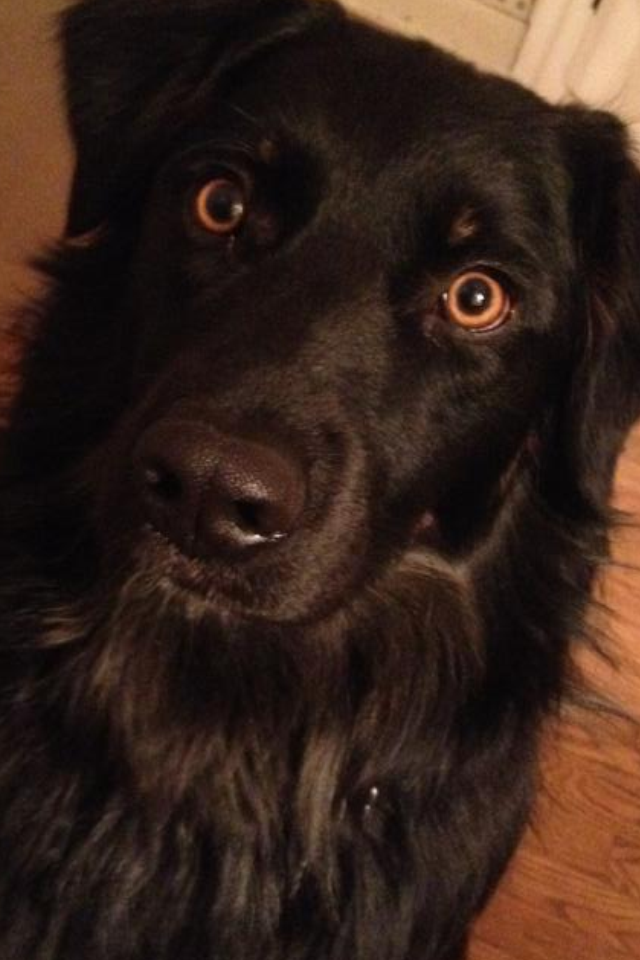
Tripper Dog-Dog-Dog knows the world through his nose. He sniffs everything. It is not uncommon after we finish a meal to come face-to-muzzle with a scent-curious Dog-Dog. Lately, as the objects of his sniffer, we’re given to staring into his amber eyes and offering the menu, saying something like, “Pasta. Arugula salad. Red wine,” or “English muffin. Peanut butter with black cherry jam. Banana. Coffee.” Satisfied with our description, he moves on to the next smell-enticing investigation.

I delight in our Dog-Dog food reports. They’ve become commonplace and matter of fact; “Chocolate chip cookie. Espresso.” Our reports never contain qualifiers, so, for instance, we never say, “A great chocolate chip cookie. Delicious espresso.” We provide the minimum, the noun.

Our Dog-Dog reports have rekindled an age-old fascination of mine: the power of words, specifically, the enormous power of the labels we attach to our experiences.

Language is a sword that cuts both ways. It can liberate and it can imprison. The difference is in how it is used. Language is the primary tool we use to make meaning. Big magic happens the day a person realizes that meaning is not something that is found, rather, it is something that is given and it is given the moment we apply a word-label to an experience. Nothing is good/bad, hard/easy until our label makes it so.

Applying a label to an experience is an act of creation. It is not passive. Take note of the word-judgments you apply to yourself or to others. For a week make a game of flipping them over and applying the label “beautiful” to where you usually apply a judgment. So, for instance, instead of, “I am fat,” why not say to your self, “I am beautiful.” Both are labels. One imprisons while the other liberates. The difference is a single word.

The label determines the possibilities we see (or don’t see). In a past life I used to facilitate organizational change and I came understand that my role was to help my clients ask better questions (use different language). They always came to the table with a “how” question: how do we change without feeling any discomfort? Response: what might you see if you stopped pre-labeling what you might feel as “discomfort?”

The mantra: have the experience first, make meaning second. And then, recognize the great capacity and opportunity you have to make meaning. Why not make a better meaning? Why not take a step and let it be a step merely?

Try this: do the Dog-Dog and, for one week, eliminate the qualifiers so that nothing is good or bad or right or wrong. It just is because you choose to make it so.

Jump!

photo

The set for The Lost Boy

Once, I stood on a ledge. I wanted to jump into a river several feet below but I was afraid. I’d watched kids do it all day. They told me in excited tones that it was only a 70-foot drop. I’m a bit afraid of heights – okay, I’m a lot afraid of heights – and from the ledge it looked to me more like 1000 feet. I jumped but have no memory of it. After investing in my fear for many minutes, I remember making a decision, standing and walking toward the edge. I remember bobbing to the surface and laughing aloud.

I learned a great lesson that day: if I put my focus on my fear I will be paralyzed. Before taking the big step off the ledge I sat on a rock, and told myself that I was afraid. I was stuck. I couldn’t move. My mind was atwitter with all the reasons I couldn’t do it. When, finally, I realized that, if I put the same amount of focus and energy into jumping as I was investing into being afraid, the jump would be easy. It would be inevitable. It would be a decision, a choice. And, it was easy. The jump was as intentional as the fear was irrational. It was enlivening.

The Chili Boys in rehearsal

The Chili Boys in rehearsal

Last week we performed my play, The Lost Boy and through the process I revisited my ledge of so many years ago. The opening night served as a touchstone of growth. A play is made complete with the addition of an audience. Boil a play down to its essence and there is an actor and an audience. One is exposed and vulnerable, the other is safe within a group. That’s what makes it work: the one facilitates the journey for the many.

The actor gives and the audience receives – and, if the actor is doing his or her job, the audience gives and the actor receives. It’s a loop. It is a relationship. For the actor, this dance of giving and receiving can be either a terrifying proposition or an exhilarating experience. It all depends upon where the actor places his or her focus. If the focus is on pleasing the audience, the play will be a miserable affair to perform. The audience will play the role of judge or worse, the enemy. It will be a ledge alive with irrational fear. If, instead, the focus is on the action of the play, the simplicity of doing, the experience will be alive and invigorating for everyone involved. The audience will be allies on a single journey with the actor. The actor will be present so that the audience can also experience presence.

When Kerri and I stepped onto the stage last Friday, there was no ledge; it was all jump…

[to be continued]

Be The Fool

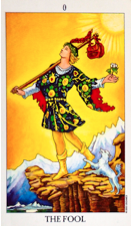
The Fool card from The Radiant Rider Waite deck

The Fool card from The Radiant Rider Waite deck

Each day I open The Bible of Mankind (sadly, now out of print) and read a phrase. It’s a form of daily meditation for me akin to throwing the I Ching; I pick from the reading what seems relevant. Some days the phrase is confusing, some days it is curious, some days it is profound. Every day it is significant. Today, the phrase was from the Buddhist tradition and under the subtitle, Foolishness & Wisdom:

“The man who has learned little grows old like an ox. His flesh grows but his knowledge does not.”

I delighted in the pairing of foolishness with wisdom. I suspect there is only one path to wisdom and it requires a good deal of foolishness. I googled the meaning of the Fool card in the tarot because, as I recollect, when upright, the Fool is about beginnings and bold steps into the unknown. From my search I found other words and phrases like unlimited potential, purity, and innocence. The Fool is ever present and has in his (her) bag all the tools and resources necessary for the journey through life. The Fool came to this earth to learn.

Another phrase that caught my attention was this: the Fool is always whole, healthy, and without fear. He is the spirit of who we are, the spirit expressed and experienced as wonder, awe, curiosity, and anticipation.

Recently, Bruce and I had a great talk about how life looks different at 50 than it did at 30. The main difference is that you know without doubt that it is limited. And, because the big death is visible, all the little death passages, the steps into the unknown, take on more import. Yearning is more electric when mortality is undeniable. All of the belief and investment in outcomes and achievements dissipate. This life is an experience, nothing more. It passes. And, it is dealer’s choice whether the experience is expressed and experienced as fear or expressed and experienced as The Fool: wonder, awe, and curiosity.

The wisdom path is the Fool’s path. The ox, to become a fool filled with knowledge, need only step out of its pen, into the unknown, and be filled with new experiences.

title_pageGo here to buy hard copies (and Kindle) of my latest book: The Seer: The Mind of the Entrepreneur, Artist, Visionary, Innovator, Seeker, Learner, Leader, Creator,…You.

Eve, by David Robinson

Eve, by David Robinson

Go here for Fine Art prints of my paintings.

Explore The Human

photo-2

my latest work-in-progress. No name yet, approximately 5ft x 9ft.

Standing on the stair to her studio, Pam said, “I’m not sure where my work is going. I’ve pulled out all of the old paintings so I can see where I’ve been, what I’ve been doing, and maybe that will help me live into what’s next.” Like me, Pam has been a painter most of her life. She’s been through this transition many times before and recognizes the necessity of fallow artistic fields. Rather than push or panic, she’s matured as an artist and knows enough to value the emptiness.

With maturity comes faith. The muse never leaves. She rests. Artistic cycles are no different than seasons. Like a farmer living through the winter months on the harvest of the fall, Pam will spend hours sitting with her old work, thinking nothing, drinking in the nutrient of her artistic yield, allowing her inspiration fields to recharge and rejuvenate. She will allow herself to go empty, creating ample space for the new work when the muse reawakens. And then, one day, she will pick up a brush and be surprised by what comes through her.

Hans said, “An artist matures when he or she ceases working from their pain and begins exploring the human condition.” Working from the wound is necessary as adolescence is necessary. Most artists in our western tradition begin in rebellion, pushing against, making statements. We celebrate the outsider, the margin-sitter and so the wound can be difficult to escape: artistic pain becomes a role, an expectation. In practice it is akin to a developmental stall. The only place to go when pain is the norm is into the intellect: to produce, to make statements. Pain isolates and ultimately, an isolated artist is ineffective. Artistry, like all things vital, must occupy a shared space. It is communal or it is impotent.

Potency comes when the eyes turn out, when the question of “we” becomes more vital and interesting than the question of “I.” Artists mature when they reorient, when instead of the art expressing their pain, they serve the art and, make no mistake, art is another word for “human condition.” Art is bubbling life in all its forms: visual, kinesthetic, aural. As Hans said, “I want to fall deeper and deeper into the music. I want to find the edges and follow where it takes me, give myself over to it.”

title_pageGo here to buy hard copies (and Kindle) of my latest book: The Seer: The Mind of the Entrepreneur, Artist, Visionary, Innovator, Seeker, Learner, Leader, Creator,…You.

DSC_1196 copyGo here to support the kickstarter campaign for my play, The Lost Boy.

Do.

from my children's book, Play 2 Play

from my children’s book, Play 2 Play

About the river, Jim said something like this: I had to stop complaining, leave town, or do something about it.

Jim chose to do something about it. He got busy. Now, he’s dedicating time each week to clean and care for a stretch of the river. He’s working to make people aware of the rich life that the river supports. He’s drawing the plant life. He’s made and delivers an incredible Powerpoint presentation.

Jim came to an awareness threshold: complaining is not doing – but unlike most people, he crossed the threshold and changed. The first necessity in any change process is to change yourself. Complaining is a first step but it is where most people stop. Complaining feels good because it provides the illusion of action. Complaining can become fuel if it is followed with a step toward action.

I’ve worked with scores of people who wanted to write books or paint paintings and most came to me with a complaint: lack of time, no quiet space, or some other circumstance that blocked their happiness. When we removed complaining as an option, they created time or quiet space. They wrote. They painted. It was not magic. It was practical. Complaining requires dedicated energy. It also takes time and more than a little thought-space. Painting, writing, or cleaning the river also requires dedicated energy. The question is about where the energy is dedicated.

Ultimately, as Jim described it, the move from complaining to doing changed how he was in the world. He changed so his world could change. He stepped from helpless witness to active participant.

title_pageGo here to buy hard copies (and Kindle) of my latest book: The Seer: The Mind of the Entrepreneur, Artist, Visionary, Innovator, Seeker, Learner, Leader, Creator,…You.

DSC_1196 copyGo here to support my kickstarter campaign for my play, The Lost Boy


Learn To Swim

from my children's book on how to play, PLAY 2 PLAY

from my children’s book on how to play, PLAY 2 PLAY

Hoodie tells me that he is sarcastic by nature but I don’t believe it. I’ve spent a lot of time in nature and I find no sarcasm there. I also understand much about human nature and know that sarcasm is not a native plant; it is invasive. It is introduced into fertile, unknowing soil.

Sarcasm is the tool of the drowning man. It is an act of desperation to push others under the water in order to elevate the self. I’ve walked many paths and worked with many powerful and not-so-powerful people. There is a rule on the stage that applies: the king never needs to act powerful because the king is powerful. Those who need to demonstrate power have none. As Quinn used to tell me, if someone has to tell you that they’re important, they really aren’t. Sarcasm is a form of importance-telling. Powerful people create power with others. Power is a creative act. It is a communal act. They have no need to diminish or reduce others because they recognize that reduction also reduces. People who must reduce others are not powerful; they’ve confused control with power. They want to be king. They want to be seen as king. But, they do not believe they are king. Sarcasm is a form of perception control.

No one is by nature sarcastic. Sarcasm is learned in batting cages, at dinner tables, and on the field of play. Sarcasm is a mask. It is a place to hide smallness. It is passed down generationally. Masks both conceal and reveal and while it might feel good to pull others under the waves, it also reveals a non-swimmer. It is habit. It is learned.

Hoodie is not by nature sarcastic. Hoodie is a swimmer. He has the stuff of kings. He also tells me that his nature is to give comfort, to help others. He will one day realize, after he transcends his habit of drowning, that his nature to lift others is the center of his power place. Sarcasm separates him, reduces him, as do all forms of self-diminishment/control. Sarcasm is a lonely planet. Power is always a movement toward others. It is generative, as is all of nature.

title_pageGo here to buy hard copies (and Kindle) of my latest book: The Seer: The Mind of the Entrepreneur, Artist, Visionary, Innovator, Seeker, Learner, Leader, Creator,…You.

Go here to support my kickstarter campaign for The Lost BoyDSC_1196 copy