Stop and Turn [on Merely A Thought Monday]

“We have no reason to mistrust our world, for it is not against us. Has it terrors, they are our terrors; has it abysses, those abysses belong to us; are dangers at hand, we must try to love them.” Rainier Maria Rilke, Letters To A Young Poet

Open the door to the monster in the closet. Walk into the wound. Throw light onto the dark. Nothing is broken, nothing needs to be fixed. All stories of resistance released into flow. Deliverance of fear.

How many times have you heard or said, “I don’t know what to do with what I feel?” Or, the partner statement, “I don’t know where to put what I feel.” Feelings as spatial.

In an earlier chapter I dreamed that I was being chased by giant monsters. I quickly ducked into a warehouse thinking I could easily find a place to hide but, much to my horror, the warehouse was vast and empty. Open space. Nowhere to hide. No other door. There was only one thing to do: turn and face the monsters. Surrendering to my fate, I stopped and watched them come at me, certain they would gobble me. But, as they approached, they shrank. The closer they came the smaller they became. By the time they reached me, they were smaller than my toe. They dissipated the moment they touched me. When I looked up I saw an older version of me standing across the room, transformed.

It was a Rilke moment.

“How should we be able to forget those ancient myths that are at the beginning of all peoples, the myths about dragons that at the last moment turn into princesses; perhaps all the dragons of our lives are princesses who are only waiting to see us once beautiful and brave. Perhaps everything terrible is in its deepest being something helpless that wants help from us.” Letter Eight, Letters To A Young Poet

A shorthand phrase from my coaching era that I’m certain Rainier would particularly appreciate; a phrase well known to the older version of me now standing across the room looking back: Invite your dragon to tea.

read Kerri’s blogpost about FEELINGS

Nod [on saturday morning smack-dab.]

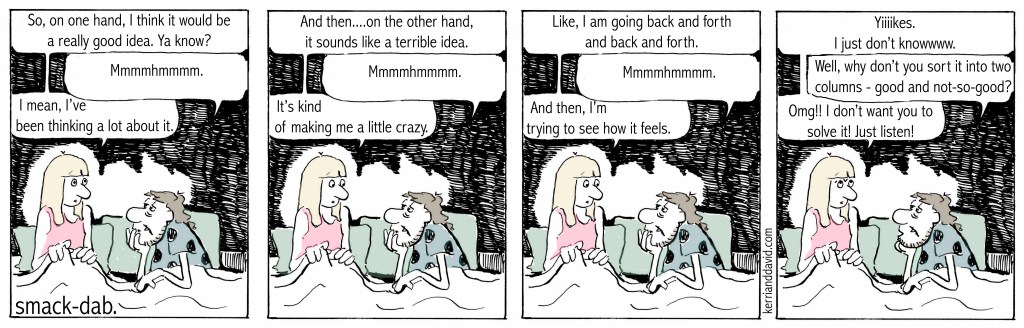
There is a lesson I receive again and again but – for obvious reasons – the penny refuses to drop. The learning hits me and slides off my Teflon brainpan. The lesson is this: Listen, don’t solve. Especially in the middle of the night. Particularly in the middle of the night. My job is to nod, nothing more.

The reason for my late night ineptitude? At the risk of reinforcing a stereotype, I am a male. I am hardwired to solve. When I’m tired I have no editor. Okay, when I’m rested, I have no editor so imagine my predicament in the dark hours.

It’s shocking. Since so much of my career was built on my great capacity to listen, I am sometimes astounded at how quickly I begin my lobby for a solution.

Dogga looks at me and shakes his head. I know what he’s thinking. “He’ll never learn.” It’s true. I can say with the utmost confidence that last night’s lesson is already forgotten and I am fully prepared to learn it again tonight.

read Kerri’s blogpost about LISTEN

smack-dab. © 2023 kerrianddavid.com

Spot Her [on KS Friday]

We decided to go off trail. There was a stand of birch trees that she’s always wanted to photograph but getting to them meant crossing the marsh. An untenable task in the warm months, but since it was a cold day, below freezing, the grasses and ice made a step-selective pathway possible.

We zigged and zagged our way toward the birches, my eyes cast down, carefully choosing the next step. I hoped that she was following my path but inevitably the crunching and crackling behind me ceased. I knew I needed to stop and prepare myself for a rescue. Something caught her eye. To get the photo she’d forget about the marsh.

Every artist needs a spotter. The dangers may not be as readily apparent as a gymnast but they are no less real. My friend Albert used to pull me from my studio when I was there too long. He saved my life more than once. Artists are given to self-doubt that congeals into dark despair. I’ve learned to be ready to throw light into the cave just as Albert did for me.

Artists are also myopic when the muse grabs hold of them. Before I met her, Kerri, looking through the lens of her camera, stepped backward off a cliff. Her muse is powerful. Her capacity for instant-hyper-focus is unparalleled. My muse clutches me in safer places like a studio or on a stage. Kerri’s seizes her in marshes and on cliff side. I am her spotter.

“Isn’t this cool!” she giggles as the ice beneath her feet groans.

“Maybe take a step to the left onto the tall grass,” I say. She takes a brief look at her feet, adjusts to slightly safer footing and then returns to the camera. “Maybe one more step?” I suggest.

Later, when we return to the car, she asks in all seriousness, “Are your boots wet? Why are my boots wet and yours are dry?” She studies her soggy boots, indignant.

“I don’t know,” I shrug. “Show me your pictures,” I suggest, deflecting her focus from her wet feet and back toward the muse.

“Oh, you’re going to love this!” she sits next to me, flipping through the many close-up shots of cattails, narrating her experience getting the photographs. Her narration does not include cracking ice, sketchy edges and near missteps into knee deep water holes. “Don’t you just love it!”

“Yes,” I smile. “Yes, I do.”

Kerri’s albums are available on iTunes and streaming on Pandora

read Kerri’s blogpost about CATTAILS

untitled interlude/released from the heart © 1995 kerri sherwood

Study The Studier [on DR Thursday]

I study the studier. She kneels, excited to capture the winter face of plants along the trail. It’s as if they call to her.

Where does it start? An idea. Broad and generic. Spontaneous. Studied.

For months I watched her take photos of the train through the trees. “Here it comes!” she’d laugh and pull her phone from her pocket, running to get the best spot on the trail. Each time as excited as the first. I took photos of her taking photos of the train snaking just beyond the trees.

Mostly she shoots close-up photographs. Spontaneous. She has an eye for detail. She helps me see what I overlook. I have an eye for the big picture, the metaphoric. I study. Pie-in-the-sky.

I think she would have been great pals with Georgia O’Keeffe. They’d have compared notes on the magic world of minutia. The dried flowers, the pattern in the petal. The amazing textures and vibrant winter colors. Some people see only brown. Kerri sees subtle changes, ochre, cream and an array of umber. A universe full of color. Just like Georgia.

This is where my studied painting started:

underpainting: train through trees.

Originally I intended to use a long canvas. The composition-in-my-mind was different, more spatially accommodating of the train. I was going to paint over something I didn’t like but she flung herself between me and the doomed painting, like the angel rescuing Isaac from Abraham’s knife. Needless to say, I shifted my composition. I had another canvas. Large and almost square.

It had been awhile since I attempted a larger painting so I made one rule: I had to have fun. Master Miller sent some cool tools for me to try. They are like large rubber scrappers and brushes. After a hiatus I have a tendency to go to detail too soon so I used his gifts to keep my strokes broad and light hearted.

Okay, I made two rules: I painted in 45 minute sessions. I generally have a 3 hour necessity but the realities of our circumstance make that dedication of time difficult. I start Dan Fogelberg’s album, Captured Angel, and when the last note is sung, I stop. I clean my brushes. It was a great way to stir my process-pot. It was frustrating and liberating at the same time.

This is where it may end. This painting has traveled a long way. Soon, I’ll turn it to the wall. I need to forget about it and will someday see it with fresh eyes. Right now, in a festival of irony, all I can see is the detail so I asked Kerri to come into the studio. Blinded by minutia I needed her wise eyes to tell me what she sees. Globally. The studier becomes the study. A perfect circle.

Train Through Trees, 48x49IN, mixed media

I’m slow-stepping into my new site. The construction continues…

read Kerri’s blogpost about DETAIL

train through trees © 2023 david robinson

Hold Space [on Not So Flawed Wednesday]

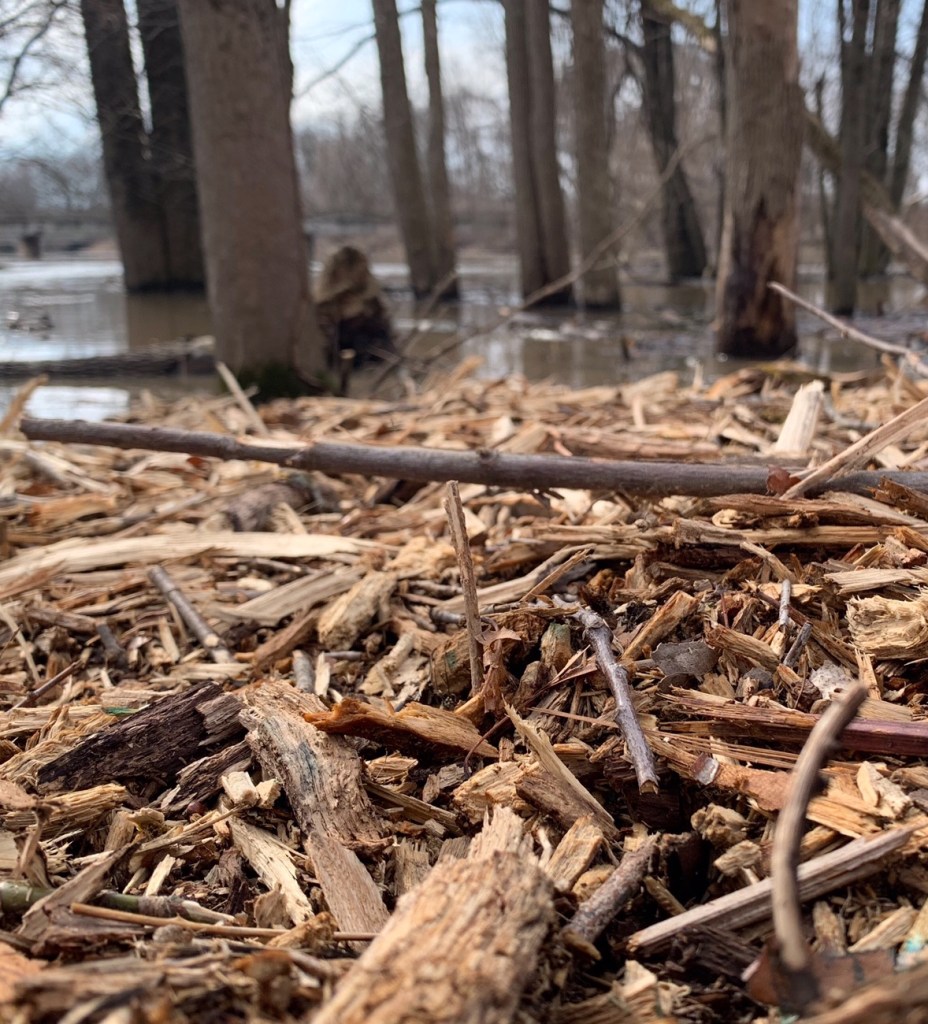
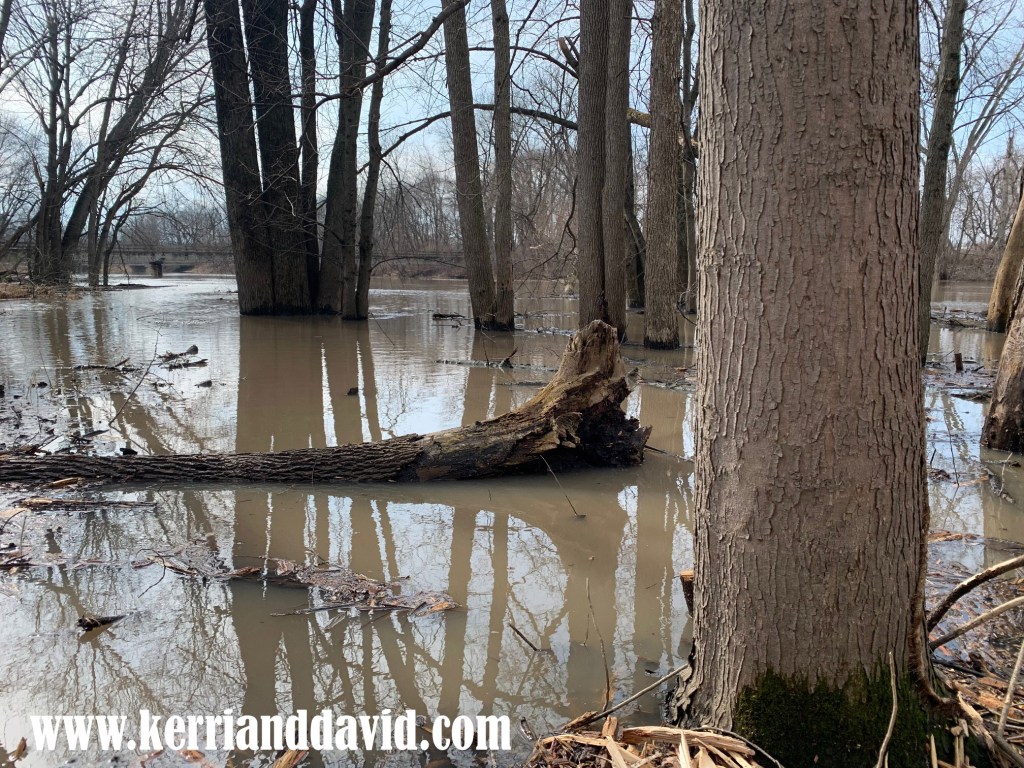
I just realized why the stripped forest is having such an impact on me. While opening the back door to let Dogga out, my dials spun and it slapped me in the face. I am like the forest.

For several minutes, staring at the photograph, writing then rejecting, then writing and again rejecting what I’d written, I decided to get up and let Dogga out. This picture was making me anxious. Moving around has always been good for me when I’m thought-wrestling.

I am like this forest. Exposed. Chips and debris are everywhere. Water is overtaking the trees.

I was writing about a question Justin asked one night at dinner. “What’s your stance about secular Calvinism?” he asked.

“I don’t think I have one,” I replied. Justin’s eyebrows hit the ceiling and I made a snap decision not to follow my reply with an explanation. He was sorting his belief and searching his heart. Empty space was more useful than cramming my erudite-and-empty justification into the moment.

Insight requires space. Lots of space.

I wish I could express how rare it is for me to keep my mouth closed when I have a thought on a topic. Kerri will laugh aloud when I read this to her. “No joke!” she’ll say. I wanted to say to Justin, “I don’t have a stance because I think it’s a given.” His question was akin to asking about my stance on the existence of the moon. No culture sees itself clearly.

No person (me) sees himself clearly.

Chips and debris. The river has overrun its banks. One half of the photo is the result of natural forces. The other half is man-made. Choices. Circumstance and intention. This landscape, once so familiar, will never be the same.

I’ve spent my life cultivating my capacity to see pattern and metaphor. It’s an artist’s prerogative to make the strange familiar and the familiar strange. I am the forest. Familiar, yet completely unknown. Stripped for rejuvenation.

Insight requires space. Perspective requires distance. Perhaps the reason I left open space in my conversation with Justin is something I need do for myself, too. Searching my heart, I am the forest. Stripped of invasive plants I can see all the way to the river. So much space.

What is my stance? Right now, thankfully, I don’t think I have one. I’m holding the space for insight to come.

read Kerri’s blogpost THE FOREST

React [on Two Artist’s Tuesday]

The answer is herbicide. That blue coloring sprayed on stumps and shards of stumps along our path is meant to prevent the invasive species from sending up new shoots. Eliminating the invasive species so the native plants might someday make a comeback is the point. It only looks like total plant decimation with performance-art-blue dotting the eradicated forest. It is, in actuality, rejuvenation.

We met a couple walking the path. They were bird watchers and thrilled about the rejuvenation project. They explained how the work would allow the river to return to its natural course. The invasive plants were choking the waterway. With the removal of the invasive plants, the wildlife, like the plants, might have a renaissance. They assured us we’d see the difference when spring returned.

When I lived in the pacific northwest, there was deep concern about the salmon. Damming the rivers interrupted the natural cycle of the salmon’s return to spawn and the entire ecosystem was suffering because of it. Salmon are considered a “keystone” species; without the keystone, the ecosystem falls apart.

As we walked our loop I wondered how the invasive plants were introduced and how long had it taken for the invaders to choke the native plants? What prompted the preserve to act now?

Most likely, the invasive plants were introduced unknowingly by people. We cultivate land. We “utilize” nature as a resource. We study. We explore. We develop. We trade. We migrate. We are a force of nature. We walk well tended paths constructed for our ease and enjoyment. Sometimes conscious and sometimes unconscious of our impact.

I had a great conversation with a forest ranger about the re-introduction of wolves into Yellowstone. The thought of “managing” nature has always struck me as paradoxical. We eradicated the wolves and then felt the impact. We re-introduced the wolves to try and correct the mistake before the ecosystem collapsed, and set off another chain reaction of unintended consequences that required further intervention. It’s like prescribing a drug to manage the side effects of a medication.

As we walked I wondered if the concept of natural balance is just too hard for us to grok. We generally don’t realize that interdependence applies to us, too. We believe we are nature’s managers rather than part of the chain. That prevents us from seeing ourselves as invasive, responsible, reactive.

We manage. And sometimes that looks like forest-performance-art-devastation with accents of green-shade-blue.

read Kerri’s blogpost about HERBICIDE

Ask The Bird [on Merely A Thought Monday]

“I think we consider too much the good luck of the early bird and not enough the bad luck of the early worm.” FDR

I laughed aloud when I read this quote. Luck certainly comes from a point of view. The good luck of the early bird is not great for the worm. I’ll add that tasty tidbit to my book of low-bar-wisdom: It’s never good news when you are on the breakfast menu.

Luck, good or bad, is never an incident isolated in time. That’s the point of the famous Chinese fable. Is it good luck or bad? Who knows. It’s all dominoes. I met Kerri because my career (and life) was collapsing. Was my career collapse good luck or bad? Ask Kerri if meeting me was good luck or bad and her answer will probably waver given the events of the day.

These past few months, after the software start-up went away and we tumbled into our latest reinvention, I’ve been pondering the Chinese fable more than usual. It felt like great luck when the opportunity appeared. If feels like bad luck in its disappearance. Both/And. I was certainly prepared when the opportunity came along. No amount of preparation-meeting-opportunity kept the company from vanishing. Bird or worm? We’ll see.

I love the notion that luck, the good side, is out there, looking for us. I imagine Luck standing on the horizon each day, shielding her eyes and whispering, “Where are they?” With us standing on our horizon looking for Luck and Luck standing on her horizon looking for us, it’s only a matter of time before we spot each other.

And, maybe we already have. That’s the tricky thing I’ve learned about Luck. She sometimes comes in disguises. That wily Luck is a trickster and has a wicked sense of humor.

This is all I know: if I was writing the children’s-book-for-adults-about-luck, the worm would have just crawled out of a tequila bottle and the newly intoxicated early bird would be left with an important question: was that worm good luck or bad?

read Kerri’s blogpost about LUCK

Visit An Old Friend [on saturday morning smack-dab.]

We often walk the same trail. You’d think we’d get bored but we like to see how it changes through different seasons and at different times of the day. It’s never the same. It’s like an old friend.

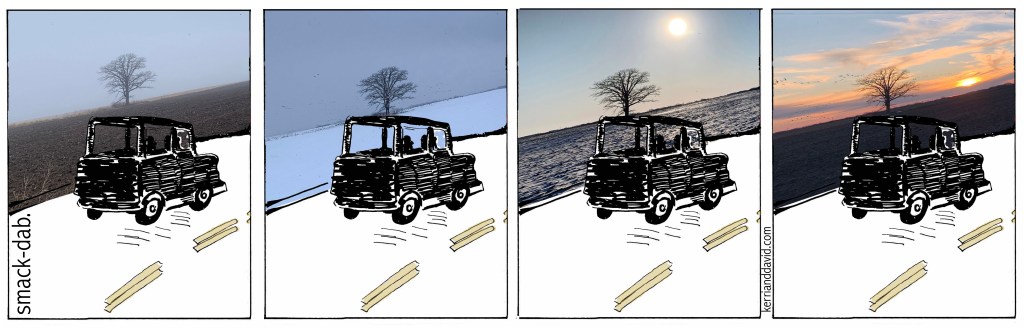
In the same way, on our way home, we stop and visit a tree in a farmer’s field. It stands in isolation, alluring on the horizon. It is both the same and never the same. A guardian in the fog. The geese land in the surrounding field and gather close to its protective arms. It is an ancient beacon in the cold icy snow. It’s silhouette at sunset has moved me to tears. We have a relationship with it. It’s like an old friend.

Our old friends remind us to open our eyes. To pay attention. To make no assumptions. They are never the same and, I suppose, the same is true of us, too. A different season. A different time of day. Through cold and sun, fog and rain, if we stop to see or slow down enough to notice, time reveals us as we are. Ever-changing. Beautiful.

read Kerri’s blogpost about THE TREE

smack-dab. © 2023 kerrianddavid.com

Check The Resale [on KS Friday]

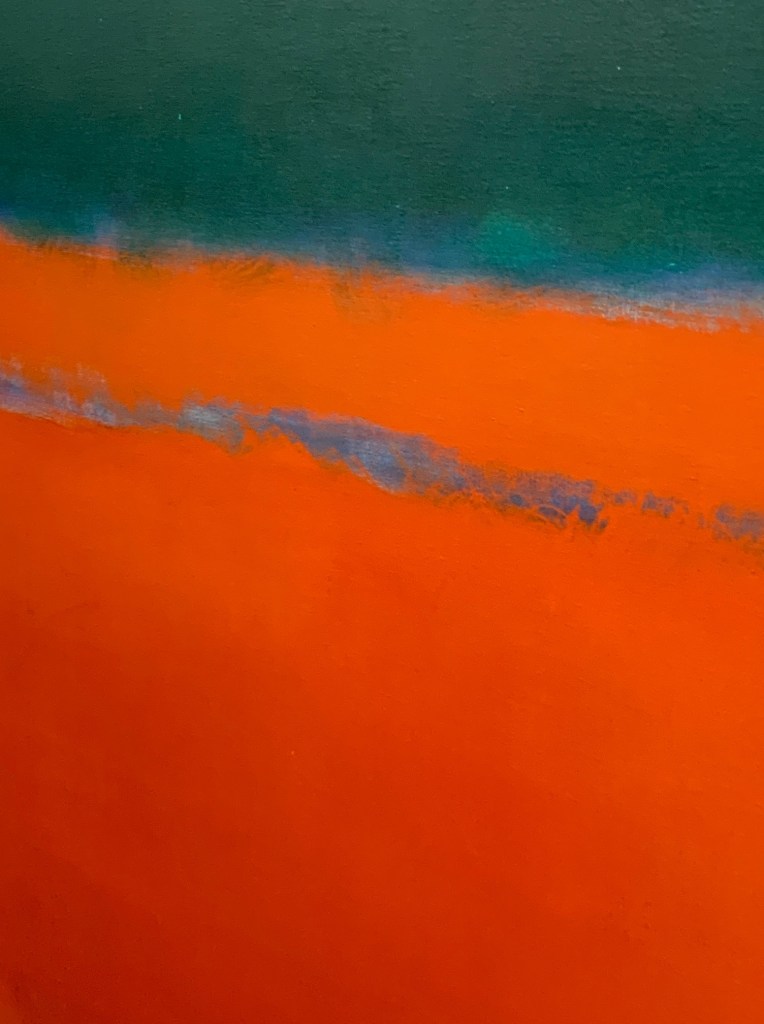
“Although Rothko lived modestly for much of his life, the resale value of his paintings grew tremendously in the decades following his suicide.”

The premise of this sentence made my jammies bunch-up. This wiki entry might have been written about Van Gogh. “Lived modestly” is a euphemism for “poor.” My favorite stereotype: the poor artist.

William Blake also lived modestly; he’d be shocked at the “resale value” of his work now. Nothing brings valuation to an artist’s work like the sudden end of the supply. Blake’s life came to a natural conclusion, so at least there’s that.

How do we know something has value? Resale, of course. Commodity. Soul reduced to a bottom line.

.003 percent of the nation’s budget goes to the National Endowment for the Arts. Valuation. If you desire to truly understand the phrase, “lived modestly,” visit your local not-for-profit arts organization. They’ll heap sincere gratitude upon you if you donate a ream of paper.

As an exercise in understanding soul, ask an actor or painter or dancer or composer the most obvious question: why do you do it?

Their answer will have nothing to do with resale value or commodity. Keep in mind, that doesn’t mean that they don’t want to be paid. Imagine Van Gogh’s answer. Or Mark Rothko’s. Emily Dickinson’s. Wouldn’t you love to know what they knew, see what they saw? Attempting to stand in their shoes, to see what they saw, is the reason that their resale value is so high. They connect us to something greater than commodity.

A caution: the next time you ask yourself, “What’s it all about?” be careful to direct your question to your inner Mary Oliver rather than your inner Elon Musk. They serve remarkably different gods.

My favorite quote of late: “And while a hundred civilizations have prospered (sometimes for centuries) without computers or windmills or even the wheel, none have survived a few generations without art.” David Bayles & Ted Orland, Art & Fear

.003%. That equates to an amount far less than Jeff Bezos’ tax bill. As a percentage, that’s much more than Kerri gets paid for a single spin of one of her pieces on your favorite streaming service (.000079 of a cent). Spotify, Pandora, and the rest are making out like bandits while the independent artists continue to “live modestly.”

What’s the real value of a nation that so desperately undervalues its art? I guess we’ll just have to wait for the postmortem resale.

Kerri’s albums are available on iTunes and streaming on Pandora

read Kerri’s blogpost about ROTHKO

every breath/as it is © 2004 kerri sherwood

Ask A Simple Question [on DR Thursday]

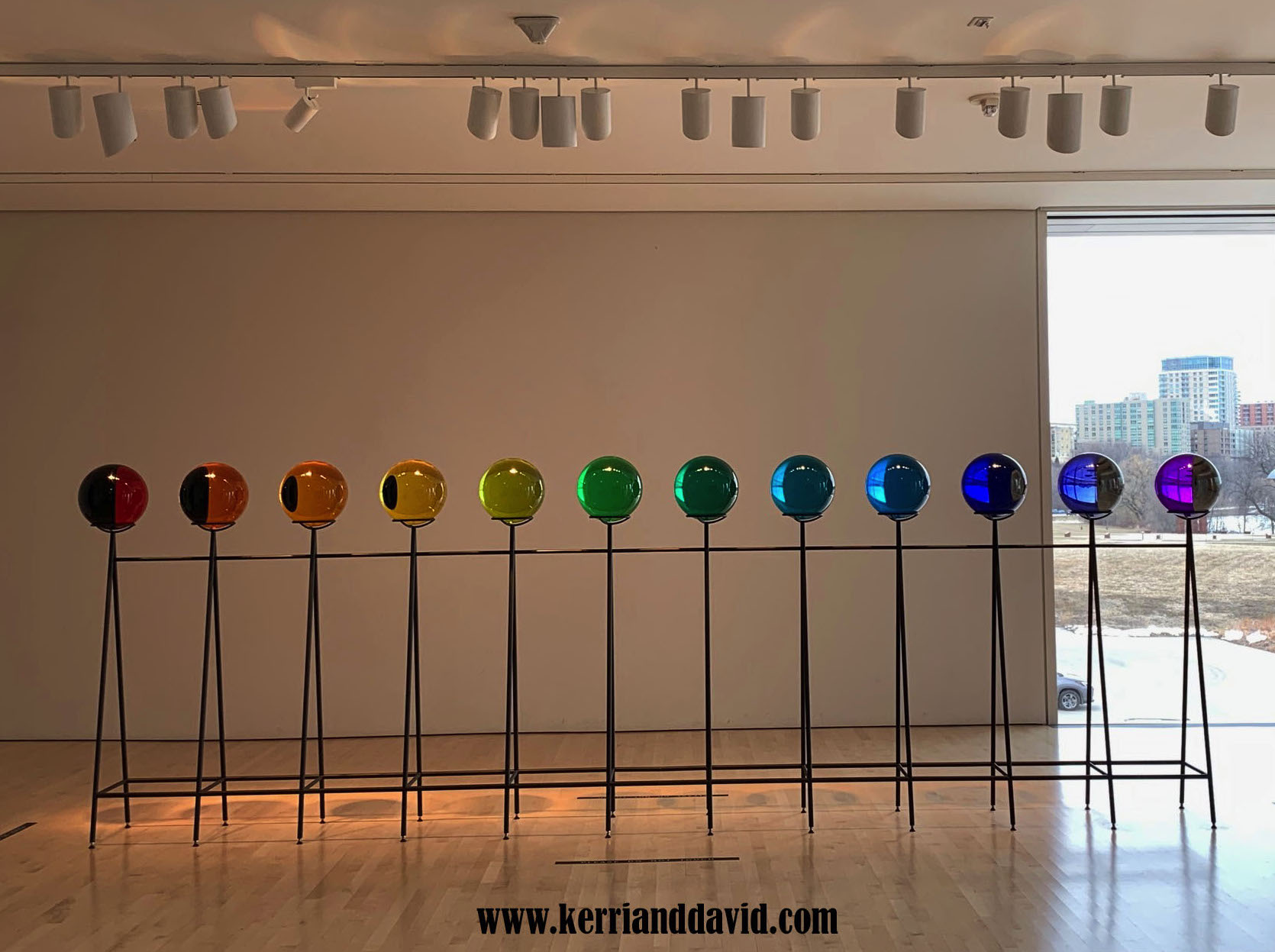
It’s existential. What you see changes depending upon where you stand. That’s true when engaging any piece of sculpture. It’s true when engaging anything in life. Point-of-view is fluid and relational. This sculptural reminder is Olafur Eliasson’s Rainbow Bridge.

In another era of my life facilitating diversity and inclusion workshops, the same surprisingly simple concept was usually a revelation to people. What you call “normal” is merely a point-of-view. Most importantly, it’s not everyone’s point-of-view. Your “normal” is unique to you, not universal. Most hopeful: it’s not fixed in stone. It’s changeable. Relational. Capable of growth. A mature point-of-view recognizes that it need not, it cannot, be the center of the universe. A mature point-of-view necessarily asks an all important question: “What do you see?”

It’s not only possible to look at the same sculpture and see a myriad of differences, it’s necessary. It’s human. Sharing what we see is how we, together, create community. A common center is created by a circle of differing points of view. A common experience is borne of sharing disparate points-of-view of the same event. A common center is made functional when everyone in the circle is capable of asking with sincerity a simple question: What do you see? It is made vibrant when everyone in the circle expects the answers to be different than their answer.

Art is one way of responding to the simple question.

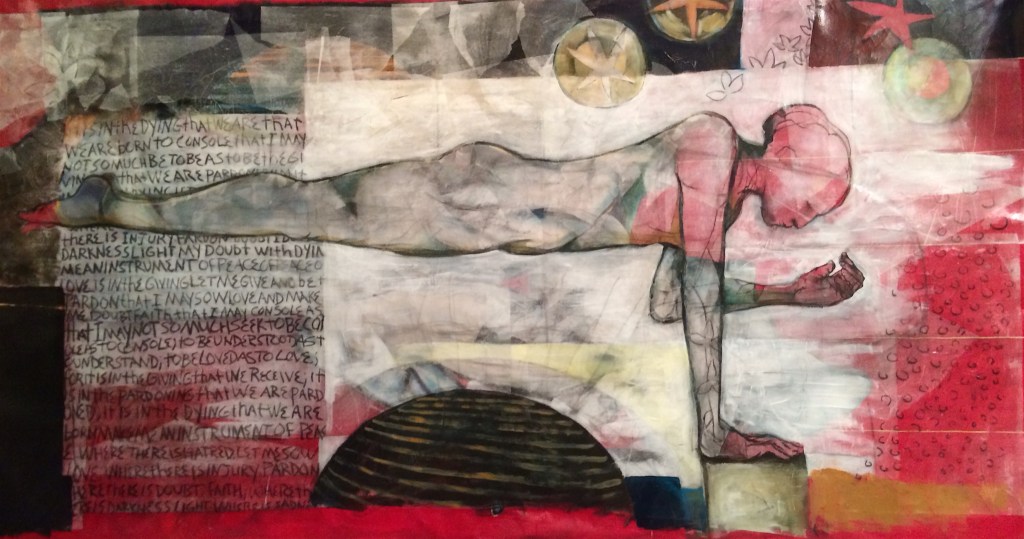
Instrument of Peace, 48x91IN, mixed media

read Kerri’s blogpost about RAINBOW BRIDGE

instrument of peace © 2017 david robinson