Feed It [on KS Friday]

“The devaluation of music and what it’s now deemed to be worth is laughable to me. My single costs 99 cents. That’s what a single cost in 1960. On my phone, I can get an app for 99 cents that makes fart noises – the same price as the thing I create and speak to the world with. Some would say that the fart app is more important. It’s an awkward time. Creative brains are being sorely mistreated.” ~ Vince Gill

I am the first in line to tell you that everyone has a creative mind. Everyone. That river of ridiculousness running between your ears is nothing other than creativity-run-amok. What else? Telling yourself that you are not creative is, in itself, a creative act. Seeds planted early in life grow into mighty obstructions. Creative wastelands are created. If you want to hear a terrific appeal to educators to nurture rather than stifle the creative mind, listen to Sir Ken Robinson’s 2006 Ted Talk. It’s appropriately titled “Do Schools Kill Creativity?”

I’ve listened to numerous school boards tell me how much they truly value the arts – until it’s time to pay for it. Sadly, it’s not a question of whether or not they value the arts; it’s that the arts, the creative minds, do not fit any of the standards of valuation against which all things are measured. They do not know how to value the creative minds that they steward. Arts organizations and artists, mostly, are not money makers. Creative minds, creative acts, do not fit in the boxes and are not measurable on standardized tests. Thinking outside of boxes is, after all, the point of a creative mind. Metrics and goals stop a creative mind and heart in its tracks. The cruelest thing you can ask any artist to do is write a grant.

And yet, an artist has to make a living. Yaki asked me if I had to choose between making a living and making my art, which would I choose? I answered, “Art, of course,” but that it was really a question of Maslow’s hierarchy: it’s hard to make art when you are not surviving. What I didn’t say is that his question perfectly captured the reason schools kill creativity and creative brains are sorely mistreated: it is assumed one must choose between. Making a living and thriving creativity are understood as oppositional.

How many parents have tried to dissuade their children from following their passion for the arts? How many times have I heard Kerri say of the stacks of music on her piano waiting to be recorded, “What’s the use?” How many times have I sat in my basement studio looking at my stacks and rolls of paintings and wondered, “Why bother?” We do it to ourselves, too.

And then, the phony metric falls and we breathe, pick up our brushes and sit at our keyboards. There is a river of riches that runs deeper than money. It is, after all, a creative act to kill a passion. It’s also a creative act to feed and nurture an artistic soul. Both. It’s what the school board doesn’t understand: the choice is not between making a living or living as an artist, the choice is between feeding inspiration, expanding a creative mind, or smothering it.

read Kerri’s blogpost about CREATIVE MINDS

Kerri’s albums are available on iTunes and streaming on Pandora
watershed/as it is © 2004 kerri sherwood

Think On Thee [on DR Thursday]

I memorized Sonnet 30 for an acting class when I was in school. “When to the sessions of sweet silent thought…” For reasons I can’t explain, I still remember it. I can barely remember my zip code but Sonnet 30 has stuck around. “…I summon up remembrance of things past.”

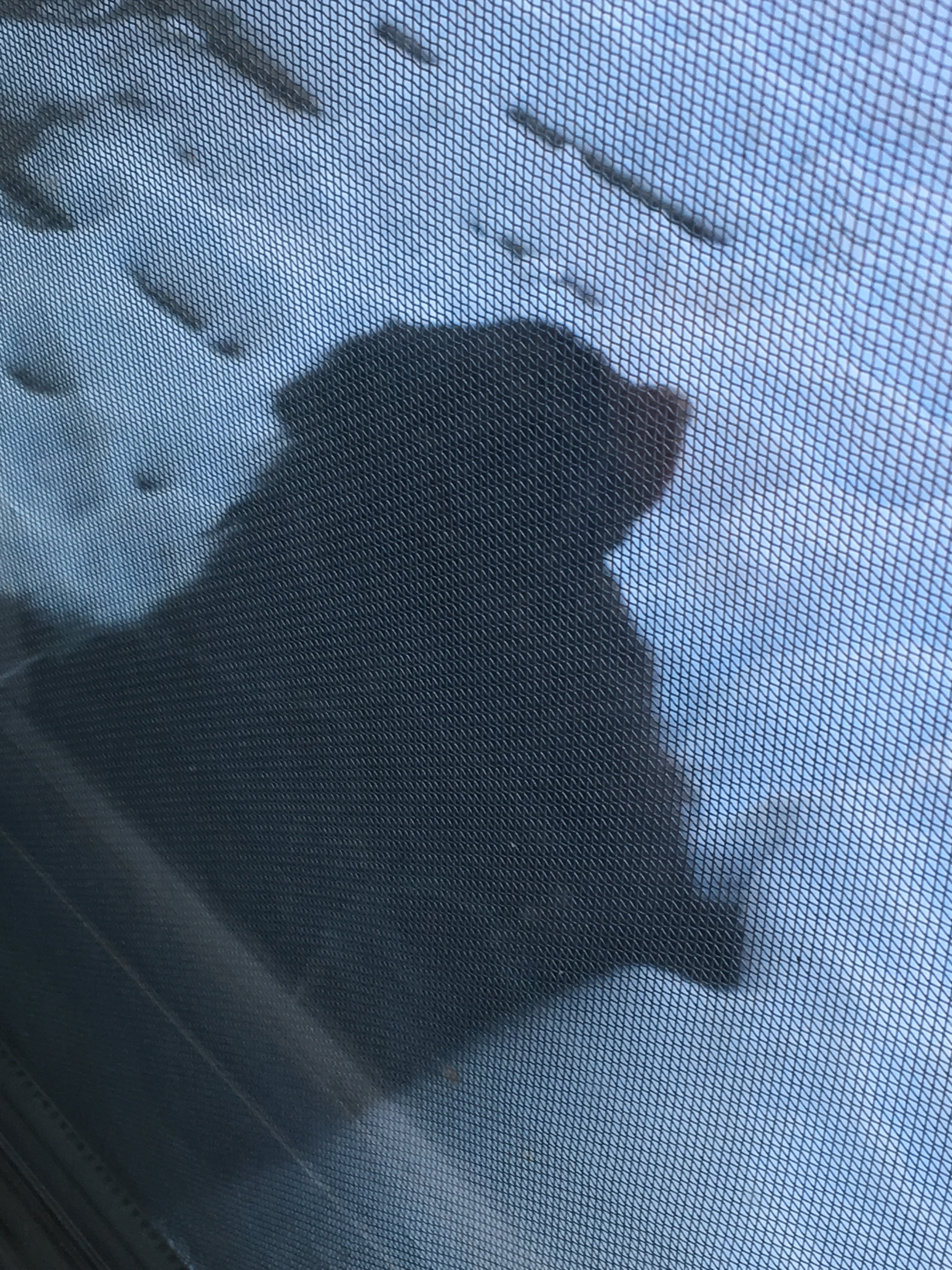
I watched Dogga this morning. Standing in the middle of the yard, barking for friendship’s call. He’s not been the same since BabyCat passed. He’s still trying to find his place. Each morning after breakfast, he returns to the kitchen and lays on the floor. It was his ritual with BabyCat. They’d mooch some bites and when there was no more hope of food, they’d jump down and snooze together in the kitchen. Now, he assumes his usual spot but only for a few minutes. It’s not the same so he moves to the backdoor or the rug in the living room.

He’s always been a snow dog. When we think it’s too cold to go out, he thinks it’s balmy and perfect. After his daily unsuccessful bark-and-response, he finds a good pile of snow and lays in it. I tell Kerri that he is surveying his vast territory. He’s an Aussie so he likes having a job. Surveying the territory, watching for marauding squirrels, provides purpose. There is no more joyful moment in our house than when it’s time to take out the trash. He loves being the advance team. He leaps vertically at the back door, his joy is too great for his little body to contain. Clearing the yard of danger, I have safe and secure passage to the cans and back to the house.

This morning, as I watched him snuggle into his snow pile, Sonnet 30 rushed to the fore of my mind. “But if the while I think on thee, dear friend, All losses are restor’d, and sorrows end.”

read Kerri’s blogpost about SNOWDOG

all my loves © 2020 david robinson

Stack Your Nickels & Pennies [on Flawed Wednesday]

From the school of if-you-are-sitting-on-the-mountain-you-can’t-see-it comes the hot mess we call healthcare in these un-united-united-states. Insanity never looks at itself and says, “I’m insane.” Our system of healthcare – and I use the term “system” loosely, is insane. In my sordid past as an organizational consultant I facilitated an experience called reverse design: ask people to design the worst system possible. The worst product imaginable. Hilarity ensued. None of those mad-mad sessions could have concocted what we call healthcare in the richest nation on earth. It seems the money has both blinded us and made us batty.

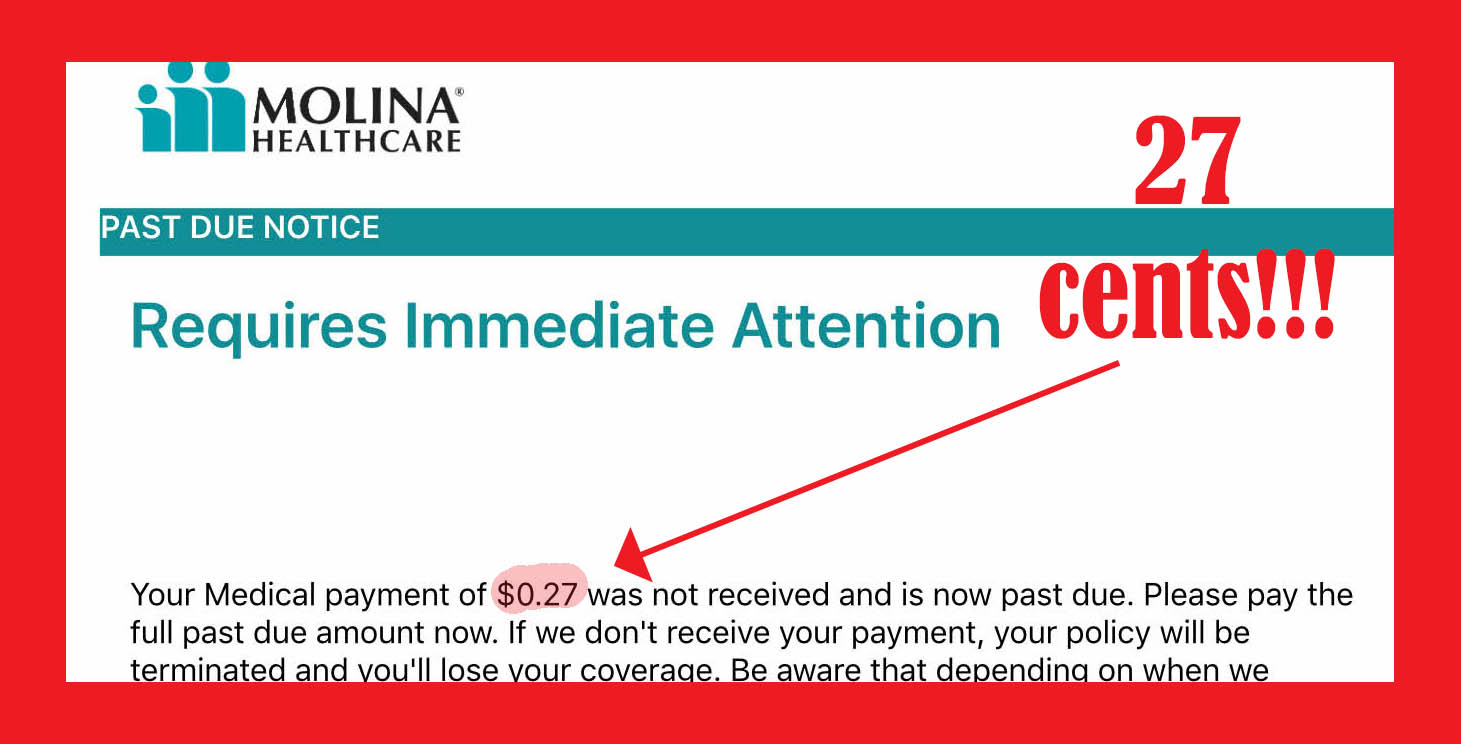
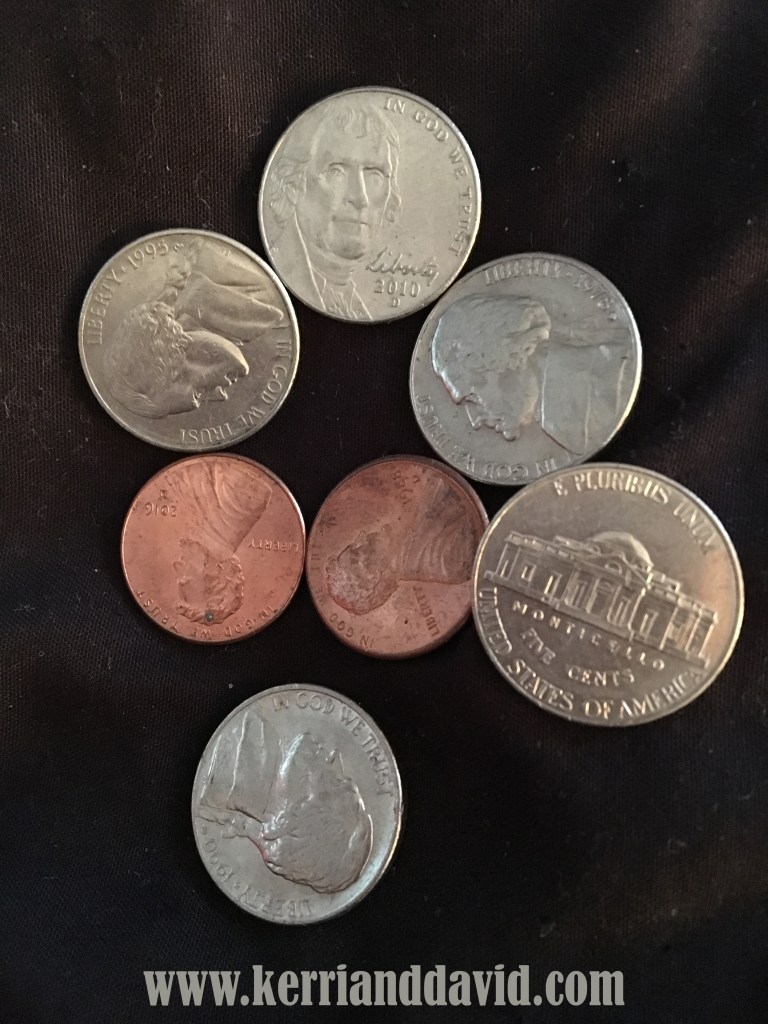
I just asked Kerri how much a postage stamp costs. “58 cents,” she grumbled, “And we got three mailings.” We finally achieved our get-out-of-jail-free card: a job with benefits. We canceled our ACA prison policy but, apparently, there was a one-day crossover in the billing cycle. I know a computer sent us the three-times-nasty-gram and spent $1.74 in postage to collect $.27. No human was involved though, having spent an inordinate amount of time on the phone with people paid to try and make sense of the nonsense, we’ve learned how numb the human mind can become when sense-making in a swamp of gobbledygook. We paid our debt online.

No human involved. De-human-izing. The Turing test is…a test of intelligence in a computer. Is the machine’s behavior indistinguishable from that of a human being? Hubris is a human quality that imagines the computer will become more like us while not recognizing that, in the process, we are becoming less like us. I doubt the computer will ever evolve to that point of pomposity. I suspect that the computer will someday recognize the folly of attempting to model itself after something so flawed as human intelligence. What intelligent machine would model itself on beings that seem incapable of creating a competent system for the care of its own health? No advanced intelligence would submerge its prime directive for the secondary intention of stacking nickels and pennies.

read Kerri’s blogpost about HEALTHCARE

Wander In Wonderland [on Two Artists Tuesday]

I’ve re-read his email several times. Skip’s explanation of the development of the computer. Subject/Object. Noun/Verb. Items/Action. It’s a story of cause and effect. This causes that. I’ve learned more from this single email than from my very expensive graduate degree. And, it’s sent me down the rabbit hole and I am currently in a world easily as miraculous as Alice’s Wonderland.

Does the moon cause the tides? It does if you are an English-speaker. Causation is the foundation structure of the English language. An action needs an initiator. The noun is king. He kicked. The sea rocked the boat. The moon causes tides. If you speak Mandarin, the moon and the tides are inseparable, not perceived or described as separate events but as interconnected. The same dance, differentiated forms.

Where does an action begin? A consequence end? I warned you. A rabbit hole.

Our perception of the world has everything to do with the language we use to describe it. Our creating of the world has everything to do with the language we use to imagine it. In a world where actions are separate from items, verbs from nouns, this causes that, it’s easy to believe that order is separate from disorder, cosmos is separate from earth, humans are separate from nature. Death is separate from life. Is it?

Each year that passes I’ve noticed the world of written communication includes more emojis and fewer words. Attention spans are shorter – mine, too. Tweet and text. Images carries the bulk of the message. If you could see the analytics on my blog you’d note that if I use more than 600 words, you are less likely to read what I write. We are slowly moving toward ideograms and slowly away from alphabets. Whatever will we do, what might we see, when nouns and verbs blend into image? When the eyes of dedicated separation begin to see through the eyes of interconnectivity – or, as Skip says, “When actions become central.”

It’s called a Wolf Moon, I read, because wolves are particularly loud and vocal during the first months of the year. One questioner asked if the moon causes the wolves to howl. Noun/Verb. Subject/Object.

read Kerri’s blogpost about THE WOLF MOON