Connect The Dots [on Two Artists Tuesday]

A curious sentiment painted on the concrete support wall of a busy overpass in a burgeoning city. Crumbling cement sidewalks, hard asphalt, steel cable supports securing a post just outside of the picture frame. A message about bridges painted beneath a bridge.

People hustle by as if there was no time to spare. They drive fast over and around the curious sentiment. The painter-of-the-sentiment placed it adjacent to a stoplight. Perhaps, while revving their engine, awaiting the return of the green light, a motorist might turn and read the thought. Perhaps the motorist might breathe it in. Perhaps the motorist might consider the message as they passed beneath the bridge.

What gets you from here to there? From birth to death? Amidst the hard realities of the road, the steel cables, the thoughtless people whizzing passed, the persevering grasses pushing through the cracks in the cement, the litter at your feet? A thirteenth century Sufi poet thought it important enough to write about it. A twenty-first century painter thought it important enough to paint the poem on a wall.

People across time and cultures have thought it necessary to place significant messages on walls. Aspirations and appeals to our better nature. A compass pointing the way for what might be, what exists but goes largely unseen. The primary thing. Every parent knows this bridge beyond the abstraction of a message on the wall. Every time rings are exchanged, vows spoken, the unseen is understood.

The hawk landed on the fence. Kerri met its eyes and they stared at each other for what seemed a very long time. Divisions disappeared. Forms fell away. Life experienced life.

Just try and place a word on that experience! A Sufi-poet tried. A contemporary street artist thought it necessary to paint the sentiment on a hard wall. What bridge connects the poet and the painter?

read Kerri’s blogpost about THE BRIDGE

Step Off [on Two Artists Tuesday]

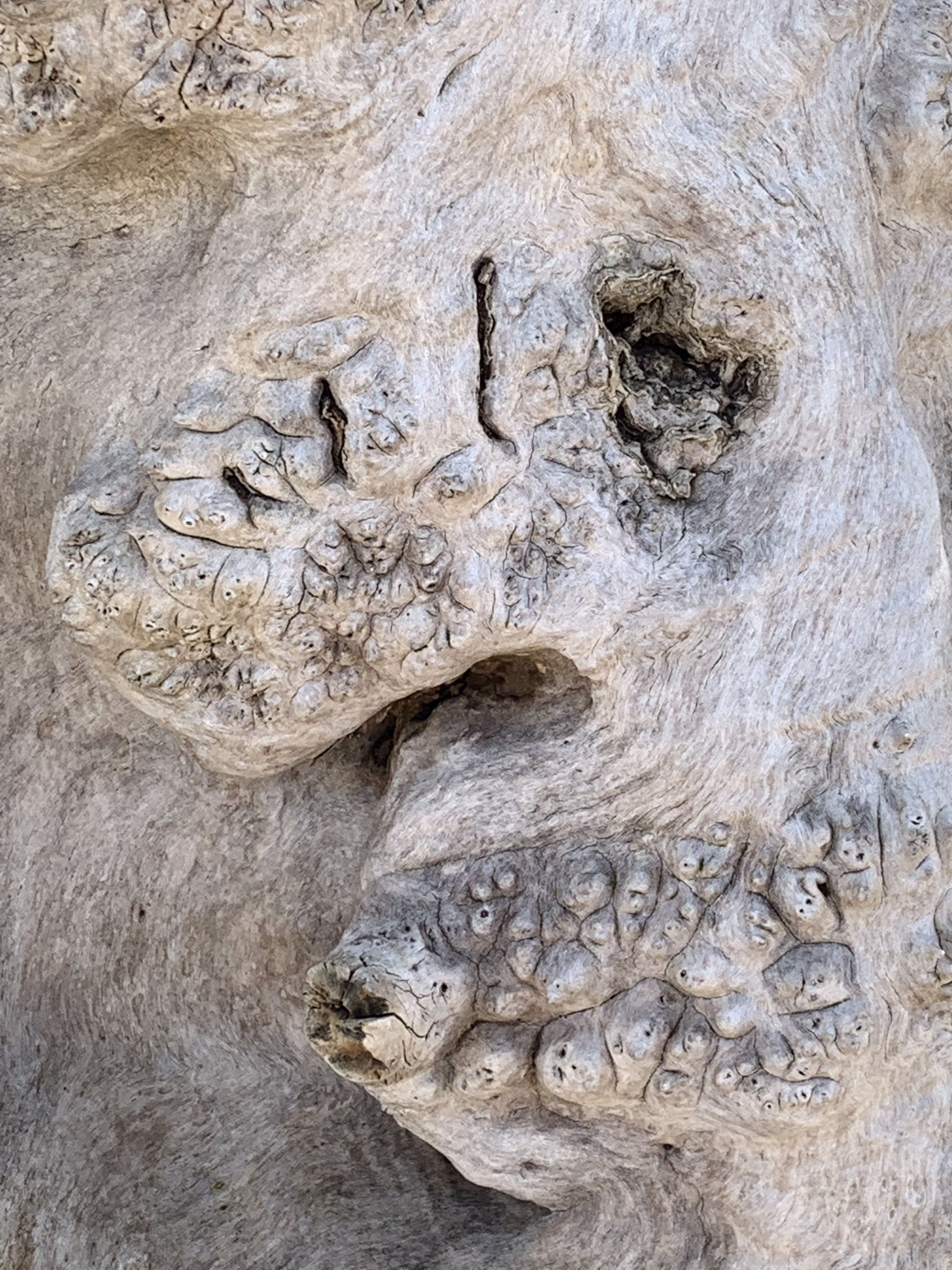
“A tree is not made of wood, it is wood.” ~ Alan Watts, The Watercourse Way

Language is powerful. It’s a drum I have beat for a long time, the notion that we insist that the narratives we wrap around ourselves are somehow “reality.” We are told that 50% of Russians believe the hell wrought on the Ukraine is merely propaganda. A made-up story. Not true. It is the narrative they are fed and, in order to eat it, they must ignore any evidence to the contrary. Their economy crumbles. The ruble falls. How could they not see it? Don’t laugh. 40% of USAmericans still believe the last presidential election was stolen, a plausible story only if wearing blinders with fingers placed firmly in ears. Burying your head in the sand is not a Russian or American trait, it’s uniquely human. We see what we believe, not the other way around. Our language makes it so.

Years ago I read that the word “wild” could only come from a people who believe all things must be tamed. Wild makes no sense without the concept of tame. Wild, bad. Tamed, good. So, a people afraid of their own “nature” must become tamers. A people who think “nature” not only can be but must be managed. To be “above” it all, in charge and atop the pyramid, giver of names. It is the necessary narrative for such tamers of the wild, those who story their very nature as corrupt. Tamed, good. Above it all. Separate. Is it any wonder the intrinsically conflicted human world rarely embraces peace? Our narrative leads us to believe, amidst so much inner and, therefore, outer conflict, peace is something to be created because we are naturally conflicted. What else?

Where, exactly, does wild end and tame begin? Where’s the line that delineates nature from civilization? What if nature is neither good nor bad? What if your nature was neither good nor bad? Perhaps self-love would be within reach and, as a natural extension, the love of others, too. It’s an alternative narrative though not possible in a belief-story that fears the wild. Wholeness begins with a step off the pedestal.

It’s in the language. Somehow separate from the world in which we live, not “in” nature or “of” nature , we are deluded to believe we are made of different stuff. Above it. Divinely manufactured. Made.

Manufactured. Made. Trees made of wood.

And, just what are we made of? I guess it depends on the story we decide to tell. Wild stuff.

read Kerri’s blogpost about TREES

Touch The Chair [on Merely A Thought Monday]

healing copy

I am reading books slowly these days. Meditating on words. Sometimes it takes me months to read what I used to blow through in a few days. I am often pleasantly surprised and taken aback by how the words I read on this morning – words written months or years ago – line up exactly with the events of my day. All the time I catch myself thinking, “How did they know I needed to hear that today?”

“There was an altar upon which we could place a photo of someone who had died. Kim chose to put a picture of his “old” self; I found one of him rowing his peapod looking so happy, so strong. Beautiful. We both grieve the loss of that Kim while getting to know and love this new one.” ~ Judy Friesem, Summoned By A Stroke.

Grieve the loss. This is the fourth time in my life that world circumstance/events have drawn a hard line between ‘what was’ and ‘who-knows-what-will-become.’ What was normal and true last week will never again be the same. Social distancing. Pandemic. Disruption is scary and confusing.

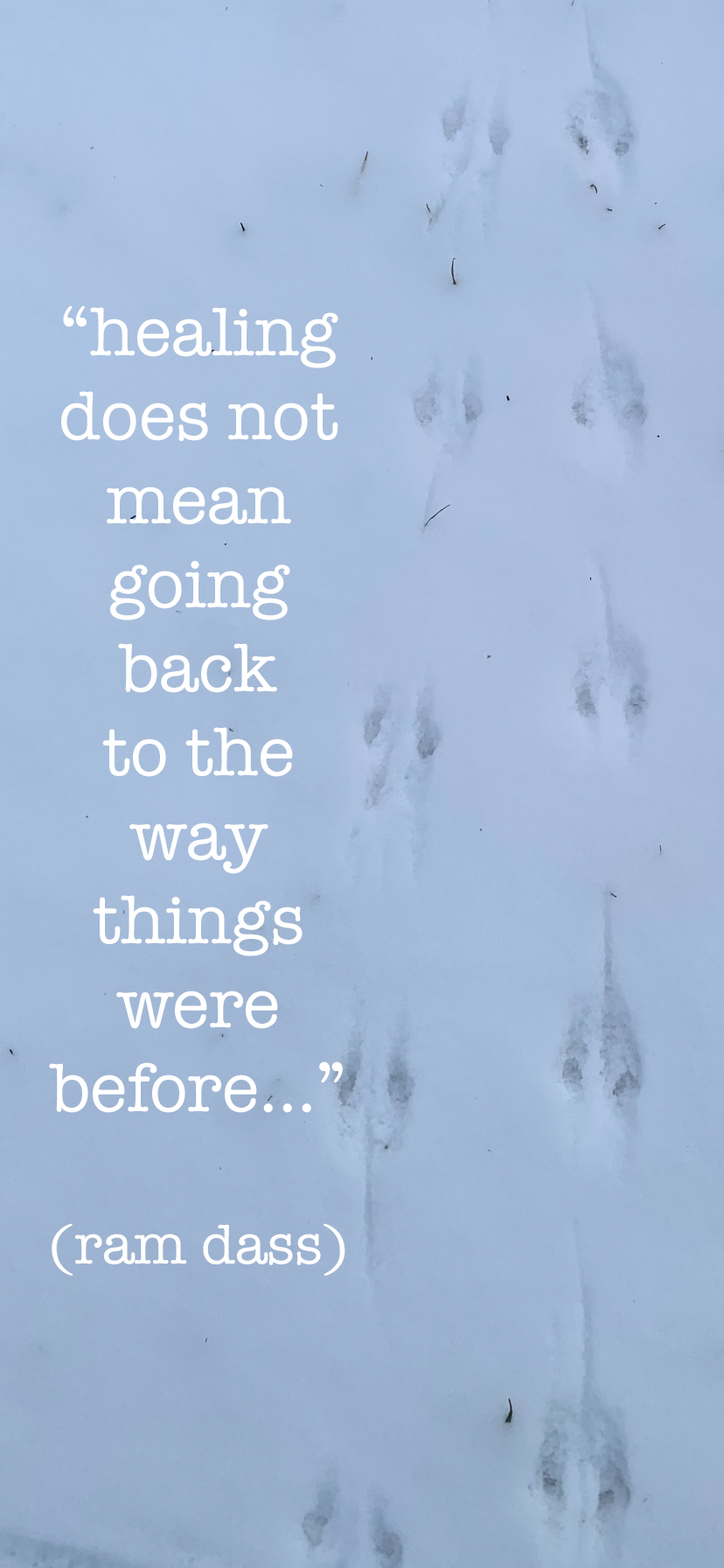
I’ve many times heard the story of immigrants, preparing to leave their homes forever for some distant and unknown shore, just before leaving, circle the rooms, touching walls, running their fingers along the arm of a well-loved chair. One last look. This is who I was. Who will I become? It is necessary to mourn what is known before making space for the unknown.

In the midst of spinning change, hanging on too long to the way things-ought-to-be or used-to-be is destructive. More than once I’ve stood with a group in full denial of their new circumstance insisting that “This is the way we’ve always done it!”  Perhaps. What is comfortable today was at one time new and uncomfortable. Someday, what is now new and uncomfortable will be a well worn path. The first step: one last look. This is who we were.

“No person is a finished thing, regardless of how frozen or paralysed their self image might be. Each one of us is in a state of perennial formation. Carried within the flow of time, you are coming to be who you are in every new emergent moment.” ~John O’Donohue, Beauty

Imagination lives in the midst of “It happened to me.” One of our greatest super-powers is the capacity to imagine ourselves different, more expansive. It is what we call dreaming. We “see” ourselves” writing the book or scaling the mountain or being a better parent or working at the soup kitchen or losing the weight or…becoming the more perfect union.

Imagination requires leaving. Leaving requires imagination.

“Fate has a way of handing us what we need in order to become whole…” ~ Judy Friesem, Summoned By A Stroke


read Kerri’s blog post about HEALING


moon website box copy


Believe [on Not So Flawed Wednesday]

believe ornament copy

Kerri just said, “I think I’d believe more if I had another glass of wine.” After I was done laughing (and getting her another glass of wine), I realized that belief is too often like that – contingent on circumstance.

When I was a wee lad (seriously, this stuff ran rampant around my little kid brain), I’d wonder what happened the day after the bloody battle when both sides raged about god being on their side. What do you need to reconcile when your team loses? Why do you need to win to confirm your belief? A side note, another of those rampant ramblings  racing through of my too tiny skull (no wonder my parents were at a loss of what to do with me)  – this one is to really get me in trouble: if your god takes sides, chooses a team or otherwise reinforces a separation from the whole, how can you not see that it must be a very small god indeed? For perspective, an existential reboot, go outside and look at the stars and understand what you are seeing. No sides. Beyond comprehension.

Conditional belief. It is run amok.

If our capacity for belief was not conditional, what might we actually believe? Who might we become if we understood that we are expressions of this great universe and that this great universe was cheering for us and those rowdy huzzahs  had nothing to do with our winning or losing, with borders or righteousness or rules or books or councils or sexual orientation or money or the color of our skin? Or beliefs. Every atom a delight. Every creation a miracle. Would we be hope-full?  Would ‘the enemy’ look the same through the eyes of unconditional belief?

I know. Pie-in-the-sky thinking. Only a child could believe so completely, so unconditionally in…goodness.

Anything is possible if you just believe.

[note: this beautiful ornament was a gift that came atop a container of ‘slushy’ – a life giving concoction brewed in Dan’s secret laboratory and delivered each year to my squeals of delight. If my belief is conditional it is Dan’s fault and I blame Gay for not reining him in. She found this beautiful ornament so I also blame this post on her generosity and good taste. These two people make me believe wholeheartedly, without condition, in goodness].


read Kerri’s more coherent blog post on BELIEVE


dogga in snow website box copy


Practice [on Merely A Thought Monday]

we all do better when copy

George Leonard wrote that mastery is not about perfection. It is not an achievement. Mastery is a process, a journey. It is a choice, a path, a decision about how you will walk through your life.

“For one who is on the master’s journey, the word [practice] is best conceived of as a noun, not as something you do, but as something you have, something you are. In this sense, the word is akin to the Chinese word tao or the Japanese word do, both of which mean, literally, road or path. Practice is the path upon which you travel, just that.” ~ George Leonard, Mastery

Despite gobs of rhetoric to the contrary, no one lives in isolation. No one achieves in isolation. To believe otherwise is…delusional.

Once, long ago, Roger said something like this: “When I hurt my toe, in fact, my whole body is hurt. It is a trick of language that I can think of my toe as separate from the whole.”

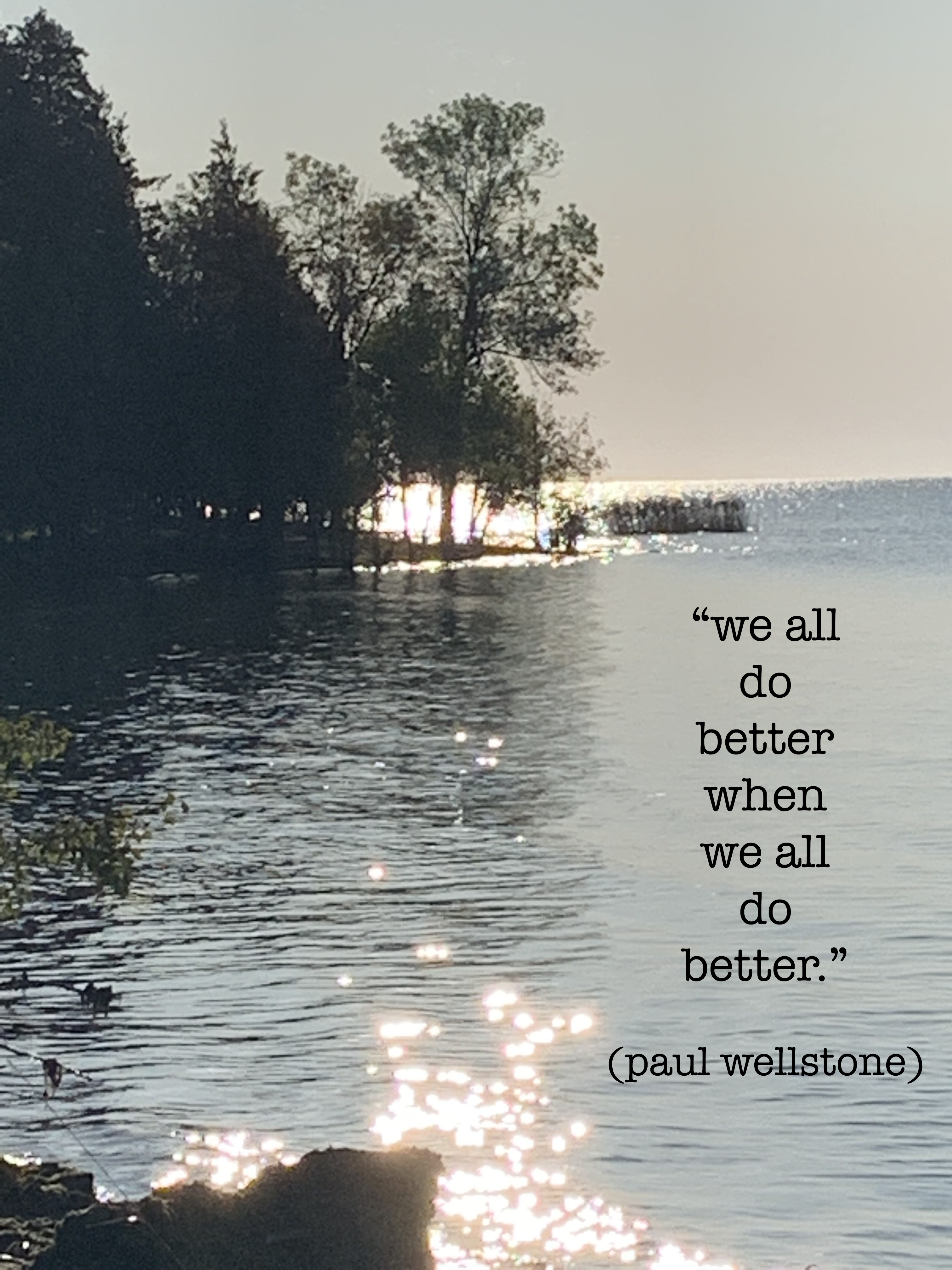
Paul Wellstone’s quote reads like a path, a tao. It is a trick of language on this tiny globe, this tinier country, to think that Us is in any way separate from Them. We all do better when we all do better. It is a choice that marks a path, a practice.


read Kerri’s blog post about WE ALL DO BETTER


hands across tree WEBSITE BOX copy