

“Be yourself; everyone else is already taken.” ~ Oscar Wilde
I am spiraling down a rabbit hole of thought. This morning I read that many Indigenous languages have no verb form of “to be”.
It might seem like a small thing but it is not. We make sense of our world – and ourselves – through the language we use.
“To be” is a verb of separation. It is a verb of identity, placing primary emphasis on the individual, emphasizing difference rather than similarity. It places the identity-accent on “I”. A present tense of “to be” is “I am”. To be is to be alone.
“To be” fosters “be-longing“; the longing to find and express the unique self, and then “to be” accepted, paradoxically through differentiation. Our “to be” imperative requires us “to be” removed, above it all, accenting the ego, so that the highest achievement, the most celebrated “being” is the one who rises above the crowd. The one who successfully separates.
Is it no wonder that the three “great” western religions place humans atop a hierarchy, high above and removed from nature? Our notion of original sin stories us as born bad to the bone; we kick ourselves out of the garden of our own nature so we might strive “to be” better than we are.
Our language, rooted in “I am”, is incapable of storying us as belonging to nature, being a part or expression of nature. We must strive to return to the garden in order to find the tree of everlasting life.
Our language requires us to story a god living remotely in the sky. The god promises an exclusive resort called heaven if-and-only-if we elevate ourselves above our original nature. Separate to belong.
To this day I ponder a conversation I heard again and again in graduate school: people, living in a city of 1.8 million, yearning for community, discussing over and over the need to create community. How is it possible for nearly two million people to live together in a city without feeling a sense of community? It was not community they yearned for, it was belonging. Connection. An identity of inclusion.
Recently Kerri asked me, “I wonder what it would feel like if…?” I carried her question into our hike. I wonder what it would feel like if I did not story myself as separate? What would it feel like if I knew belonging as a given? Not just belonging to a community of people but intrinsically belonging to all of creation.
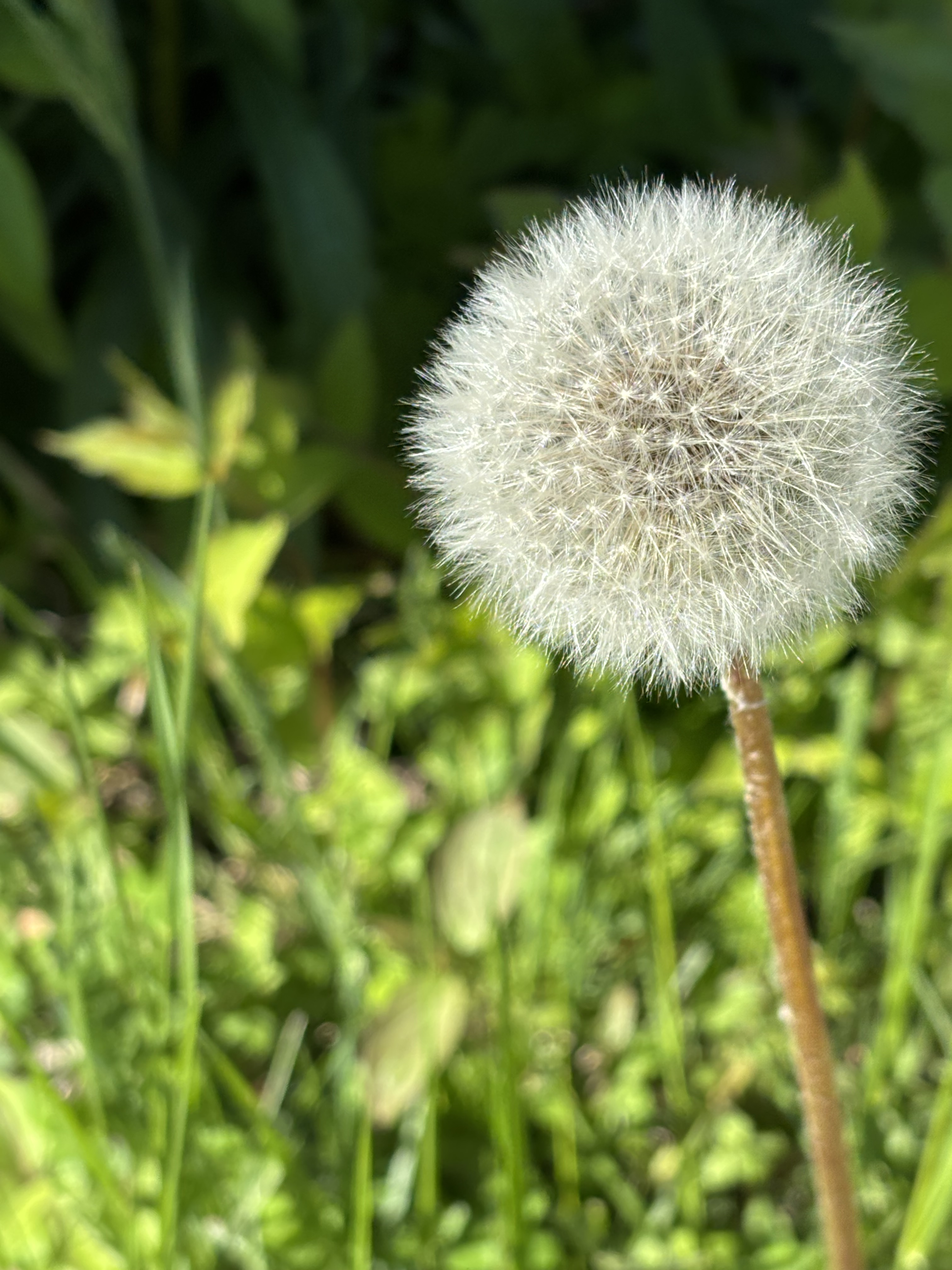
“Lookit,” she said, showing me the photograph that she’d just taken of the dandelion. “Isn’t it perfect?”
Perfect (adjective): flawless. ideal. magnificent. A word of unity. Belonging.
“Yes,” I said, aware of the story-limits of my language. I wondered what it might take for us “to be-ers” to see ourselves as perfect – as a given- to be as perfect as the dandelion.
read Kerri’s blogpost about THE DANDELION

likesharesupportcommentsubscribe…thankyou.
Filed under: Identity, Language, Two Artists Tuesday | Tagged: artistry, belonging, community, connection, david robinson, davidrobinsoncreative.com, expression, inclusion, Kerri Sherwood, kerri sherwood itunes, kerrianddavid.com, kerrisherwood.com, language, nature, separate, story, studio melange, the melange, to be, yearning | 4 Comments »






 The Direction of Intention