Two Artists Tuesday

CHILDRENarethebestwithframe jpegI knew from a very young age that I would never have children of my own. I knew. It was an intuitive knowing, not an intellectual resolve. My life, I knew, would be a wandering through the wasteland. I would tilt at windmills. I would seek for things that can never be found. Children, I believed (and still believe), needed the kind of stability that a restless seeker like me would never have been capable of providing.

Last night we went to the foreign film festival and saw an inspiring, funny and poignant Irish film called Sing Street. The ingenue explains to her suitor, an aspiring musician, that love is happy-sad. To love is to experience both.

I now have two amazing step-children. They were adults when I came into their lives and both live far away. I am slowly developing relationships with them, creating memories with them. I listen with fascination (and sometimes horror) as Kerri converses with her friends, mothers all, about their children.  There is so much suffering, to want to be near their children and yet want them to fulfill their dreams and fly. They want to be present and available BUT not too present or available; those wacky offspring want full support AND they want mom to stay out of their business. Motherhood, I’m learning, is a bottomless yearning, a constant ache, and there is nothing better. There is nothing more fulfilling.

Fathers, I’m observing, are mostly confounded. They shake their heads, not so much in agreement, but in concession. Their spouses are capable of reconciling and celebrating the ambiguity of parenthood. Fatherhood, it seems, is a surrender to the unsolvable. A submission to the mystery. The ache is no less profound. The joy is no less intense.

Happy – sad. A full spectrum of living. Love. From studio melange on this Two Artists Tuesday.

CHILDREN ARE THE BEST THING merchandise

TwoArtists childrenAre TOTE BAG  TwoArtists ChildrenAre FRAMED PRINT  TwoArtists ChildrenAre PILLOW

kerrianddavid.com

read Kerri’s thoughts about this Two Artists Tuesday

children are the best thing ©️ 2016 kerri sherwood & david robinson

KS Friday

It is one of the great pleasures of my life to be down in my studio painting when Kerri, upstairs in her studio, begins to play. I always stop and appreciate how rich, how utterly fortunate I am. There is more than just music in our house. There is a source, an amazing composer, a gifted musician. She plays like most people breathe and I marvel at the enormity and ease of her gift.

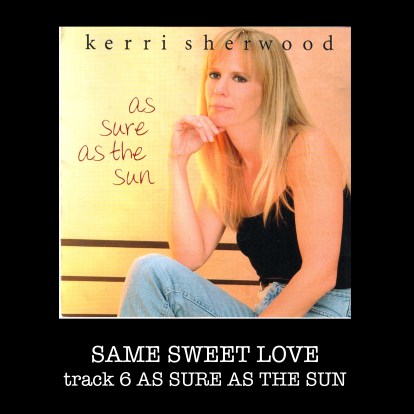
From the melange on this Valentine’s week comes a Slow Dance. It is from Kerri’s album As Sure As The Sun. Friday belongs to Kerri’s music. I am particularly fond of Slow Dance. It is visceral and reminds me of a summer evening, sitting in the adirondack chairs in the front yard, sipping wine and talking. We were listening to music and without really intending it, we began to dance. Fast dances, silly dances, rowdy-run-around-dances, and finally, laughing and exhausted, there came a slow dance. The neighbors still talk about it….


ASATS

Slow Dance from AS SURE AS THE SUN

KERRI SHERWOOD

[a note to consider: the links will by default take you to apple music – apple’s streaming service. With respect to artists everywhere, please consider downloading your music on itunes rather than streaming your music. It requires one additional click. Downloading means the artists get paid for their work. Streaming guarantees that they don’t.]

kerrianddavid.com

Slow Dance from As Sure As The Sun ©️ 2002 kerri sherwood

DR Thursday

EmbraceNow

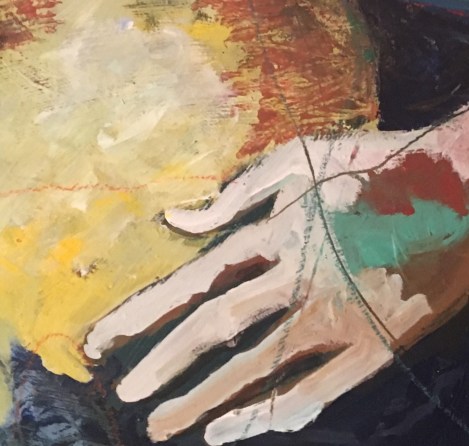
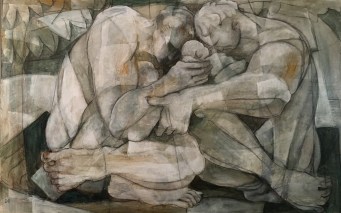
[Held In Grace: Embraced Now, mixed media on canvas, 48″ x 36″]

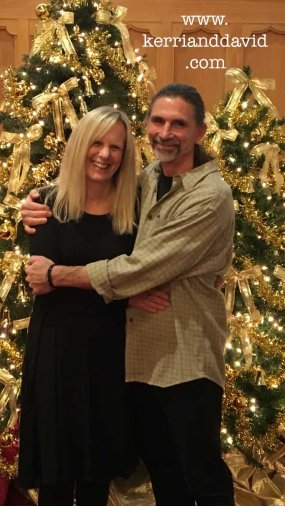
Beaky showed me a photograph taken of Kerri and me early in our relationship. She said, “I like this one because your strong arms are holding my daughter.” I took her comment as a kind of blessing. It was her way of telling me, ‘This is right and good. In this embrace you two have found all that you will ever need.’

In the studio melange, Thursdays are for my paintings. I chose this painting as the first in our melange offerings because it came from Beaky’s sentiment. During this Valentine’s week, let this painting, Embraced Now, from my Held In Grace series, remind you, as it does me, that all is right and good. In this embrace you will find all that you will ever need. It’s not a shabby thought to help navigate through a Thursday!

HELD IN GRACE: EMBRACED NOW [art prints]

HELD IN GRACE: EMBRACED NOW [purchase the original]

kerrianddavid.com


held in grace: embraced now ©️ 2017 david robinson


Two Artists Tuesday

SWEET POTATO copy

Standing at the doorstep of her mortality, Kerri’s mom, Beaky, turned to her daughter and offered these words of advice. Live life, my sweet potato. This print hangs by our front door as a reminder of two very precious gifts: Beaky and this life.

Live life; who doesn’t occasionally need a reminder?

A few years ago, as a readership experiment, we created and published a series of simple images with words. Each image or phrase had a special meaning for us. We called the series two-artists-making-stuff-for-humans. The experiment was a success, our readership quickly grew, and then, like all attention deficit artists, we moved on to other projects. In the melange, Tuesdays belong to Two Artists.


LIVE LIFE, MY SWEET POTATO

kerrianddavid.com

live life, my sweet potato ©️ 2016 kerri sherwood & david robinson


Chicken Marsala Monday

We were 14 hours into a 17 hour drive when she asked the question. “If we’d had a child, what would we have named it?” After much laughter and too much coffee we settled on Chicken Marsala.  Chicken kept us awake for the rest of our drive.

No one can accuse us of not being productive. We are a creative melange of paintings, music, plays, books, children’s books, and, now, cartoons. For over a year we attempted to syndicate our strip, Chicken Marsala (the imaginary child of an aging couple…) and were met with much enthusiasm but not syndication. We produced months of strips and single panel nuggets (chicken strips and chicken nuggets. Titanic wit, yes?).

Brewed from our studio, from the pile of creative perseverance that is stacking up below and above the ping pong table that serves as our archive , we’ve decided to offer a daily blend of goodness, thought, laughter and beauty. It may come fresh off the press or it might be aged and, like Chicken Nuggets, it might be looking for some light. Art is made to share, not archive. Either way, welcome to the melange. Chicken’s day is Monday. This nugget has everything to do with Valentine’s week and a quiet reminder that the universe of feelings is so much bigger than words can possibly contain.

love needs no words jpeg copy.jpg

LOVE NEEDS NO WORDS

kerrianddavid.com

love needs no words ©️ 2016 david robinson & kerri sherwood

Meet Your Obligation

a detail of my latest – and yet unnamed – painting

“I feel like I have an obligation to live,” she said, in response to the question from the audience.

Joyce Maynard was reading from her latest book, The Best Of Us, at The Book Stall, an independent bookstore in little downtown Winnetka. Kerri has been a huge fan for many years but had never been able to attend a reading so we jumped at the opportunity. The Best Of Us is a memoir. In 2011, in her late fifties, Joyce met her “first true partner.” A year into their marriage he was diagnosed with pancreatic cancer and died 19 months later. Her book is the story of their all-to-brief time together.

“It’s not a book about death,” she said, “It’s a book about learning what love really is. What is truly important in life.” She added, “I don’t think people should have to pay 20 bucks for my catharsis.”

An obligation to live. I loved the phrase and all that it implied. Sometimes life collapses. This week, we remembered 9/11. We watched Irma wreak havoc on the heels of the devastation of Harvey. Fires burn homes and lives in the west. Listening to Joyce Maynard read from her book, I felt as if Viktor Frankl was sitting beside me whispering, “See! She is not looking for meaning where none can be found. She is making meaning. She is giving meaning to her path. That is the ultimate creative act!”

It is the fire that burns beneath an obligation to live. To not waste another moment of this amazing life seeking for that which cannot be found; but it can be given.

Save

Touch The Arc

A painting I did twenty years ago of my dad.

Years ago I started a portrait of my dad (we call him Columbus) emerging from – or returning to – a cornfield. At the time it seemed an odd painting, something more elemental than intellectual. Something I had to paint though I didn’t really know why. I thought I’d left portrait painting far behind. Columbus is from a very small town in Iowa so the necessity of the cornfield made some small sense. He yearned to live in the town of his birth and although life took him other places he maintained a deep heart-root to Monticello. For Columbus, Monticello, Iowa was and always will be home.

After laying it out, after applying the under painting, the portrait felt complete – or I felt complete. So, I stopped. I have carried it with me all of these years.

These days, dementia has its slippery tentacles around Columbus. He is a mighty combatant in this tug of war, a war that he cannot win, and feeling his strength waning, his single wish was to one last time visit Monticello. So, this past week, Kerri, my mother, and I – as Kerri likes to say – followed Columbus’ heart around Monticello.

His heart took him three places. The first was to the cemetery. It is the place he will finally rest with his brother, parents, grandparents, aunts and uncles and friends. He wanted to wander. We followed him as he touched stones and told stories – stories he told to us but for himself: a friend who died too young in a car crash, a kind scoutmaster and mentor, an old girlfriend, a high school pal who flew an airplane and their adventures landing in cornfields. We followed, listening, renewed to the deeper truth that the stories we tell of others, the stories of shared time and experiences, both comic and tragic, when combined, scribe the arc of our own lives. Columbus needed to go to the end place to scribe his arc, to touch the depth and arc of his experiences.

The second place was the house that his grandpa Charlie built. It was the place of his childhood, the place of his greatest freedom, the place where all his stories begin and, now I know, where they return. This house is the cornfield. It is, for Columbus, the font of family and the source of his ideals. It is the symbol of his pride. This small house, with no electricity or running water, no indoor plumbing, this house that was pieced together with found material, smacked together with a handsaw and a hammer, an evolution, this house is Columbus’ holy ground. It still stands, just barely. And although now a storage shed for someone, it holds riches beyond words or measure. Columbus needed to stand in the source of his belief.

Finally, we followed his heart to visit his aunt JoAnne. She is only two years his senior but his aunt never-the-less. She is the last living person to know him through the entire passage of his life. She is his connective tissue, the one capable of affirming that it all happened, that the house and the people in it were exactly as he remembers, that this life, although only a minute long, is bottomless in the love that they share. They are the burning point of family, the front line. When we left her, Columbus and JoAnne hugged and cried, saying to each other but not for a moment believing it, “I’ll see you again.”

Stories told at the end place. Stories told from the beginning place. Stories told that connect the places. Columbus counts himself a lucky man. He knows with absolute certainty the trinity of places that hold his life/story. Sitting on the porch he (once again) taught me that stories – lives – are like a river and the flow transcends a single life. He just taught me that the story, a good life, like the painting, is never really complete.


Use Joy Language

joy-croppedTripper Dog-Dog-Dog has moved through several names in his 3 years on earth. He has a cornucopia of names. For a while I dropped the “Tripper” part of his name and simply called him Dog-Dog. Now, much as a mother might use their child’s middle name, we only call him Tripper when he’s in trouble.

Lately I call him Dog-a-Dog (or doggadogga). He answers to Wag-A-Wag. He is an Australian Shepherd and has a bobbed tail that never stops wagging. He is a happy, happy boy. When I let him out in the morning I call him Fuss Bucket. When he comes back in I call him Poop Sack (for obvious reasons) or Bark Monster or Fur Ball. He sheds like a champion. When he circles through the rooms of our house looking for a safe place to deposit his bone, I (cleverly) call him Bone.

All the variations and derivatives are terms of endearment. Dog-Dog knows and responds in kind. Love is like that. Once, sitting on a train, I watched a grandfather lovingly toss his toddler grandson in the air saying, “You’re just Rubbish! That’s what you are! Rubbish!” The boy squealed with delight. The grandfather chuckled with pleasure and repeated the toss, “You’re just Rubbish!”

Language is a beautiful paradox. It is reductive even as it points to the unfathomable universe and the infinity of love. It is referential; we sometimes forget that the word “tree” is not the tree itself. It is merely an invented-phonetic-pointer toward something too complex to comprehend.

Language is powerful beyond comprehension. We use it to narrate our worlds, both inner and outer. The words we choose create the world we see. The words we choose define the world we inhabit. In my consulting/coaching days I used to love playing with exercises that revealed how easily we come to the language of gossip and blame. It requires almost no effort. Like sugar, hate-speak is addictive. It is the mark of a lazy mind.

The language of love takes some intention and consciousness. It demands conscious effort. It requires paying attention. It requires focusing the energy of the mind and, like any focus (or muscle) it demands exercise to be healthy. And, when exercised, it becomes easy. With great love, the word “Rubbish” can generate squeals of pleasure. The name “Fuss Bucket” will engender a full body joy-wag. And, a full body joy-wag will bring the love full circle. Love is like that. Joy is like that.

In his many books, Martin Prechtel writes beautifully about the power and necessity of speaking beautifully. Speaking beautifully creates a beautiful thinker and a beautiful thinker creates – narrates – a beautiful story, a beautiful world.

Prints/Mugs/Pillows/Cards/Totes

kerrisherwood.com   itunes:  kerri sherwood


Save

Cut A New Path

ComfortNow

The latest in my Held In Grace series. This is Comfort Now

It seems to me that most of our days on this earth are spent moving through patterns, conscious or unconscious. These patterns are the rituals of our lives. Some of the rituals are easy to see. For instance, what is the sequence of actions you perform before going to bed each night? What about your ritual of rising each day? The care and feeding of Tripper Dog-Dog-Dog and Babycat are central to my rising and retreating rituals each day. We move through the same actions every morning and evening and I delight in the warmth of the ritual.

Some of the rituals are not so easy to see. Researchers tell us that most of the thoughts we think every day are the same thoughts we had yesterday. We mostly think in patterns (it makes sense once you recognize that language is constructed of category and pattern). We talk to ourselves, cutting paths through the forest of our minds and, once we’ve established a trail, we like to stay on it. Easy is often unconscious. There’s nothing wrong with staying on the easy trail if the path you’ve cut, your repetitious thought-ritual, is self-loving. The rub: ritual paths of self-loathing and self-limitation are also easy, well-worn paths and that makes them both unconscious and hard to leave.

Cutting a new path through the mind forest begins with recognizing that new paths are always available. They just aren’t easy to establish. They require new practices. They require surrender and the first bit of surrender necessary for cutting a new path is the ritual giving-over of needing-to-know-anything; new paths, by definition are unknown.

New paths are not comfortable precisely because they require attention, consciousness.

My teachers taught me that all stories worth telling are stories of transformation. The main character or characters will know something at the end of the story that they did not know at the beginning and the new knowledge will be hard-won. That’s what makes the story worth engaging. Hamlet is a much different character in Act 5 than he was in Act 1. His peace was difficult to come by. He had to learn to surrender. To cut a new path he had to make a practice of peace.

The same ideal applies to the stories we live off the stage.


Unfetter Kindness

Tripper Dog-Dog-Dog on a roadtrip

Tripper Dog-Dog-Dog on a road trip

Tripper Dog-Dog-Dog has no problem communicating his needs. I know without doubt when he wants to go out. I know when he wants his belly scratched or have his ears rubbed. He lets me know where he expects to be scratched. He is abundantly clear when food is his need. He does not second-guess his needs. He does not doubt his desires or confuse himself with obsessing over his reasons why.

Love is one of his needs. To give it and to receive it, exuberantly or tenderly, he does not invest in how I receive or return his love. He is not vulnerable because he has no need to hide or color his love-need. He has no brakes on his exuberance because it is pure, innate, and without story.

One of my favorite exercises to assign during my teacher/consultant phase was the Angel exercise. The assignment was simple: For three hours be an angel to someone. The only requirement was that the recipient could not know. Be an angel with no expectation of recognition; write about what you discover. The assignment was always greeted by a flurry of protests and questions (“I don’t know how…,” or “What does it mean to be….”). Angel-ing is scary business!

Once, to experiment, I assigned the opposite: be a devil/trickster. Instead of protests there were gales of laughter and excitement! No one asked “how.” In midst of their exuberant, fearless plotting and scheming, I reversed the design. Before they went into the world to demonize, I required them to flip their plan and do the opposite to their intended target: be an angel. Their sudden fear was palpable. “Now that you know how to torture this person, do the opposite,” I said. “Be their angel.”

Regardless of how we entered the assignment, the students/clients would return the following week exultant. Their experiences of Angel-ing, of unfettered kindness had profound blowback. They talked of their pre-Angel terror and the unexpected thrill that came with unfettered secret service to another person. They talked of the clarity that came with Angel-ing. They had fun. They felt good. They felt alive. Everything became simple. The greatest surprise of all – something that in this season we see on posters, holiday advertisements, Hallmark cards and screen-savers, something that is a cliché when proffered but rarely experienced: kindness begot kindness. Kindness begets kindness. Kindness clarifies life when it comes with no expectation of reciprocity. Kindness simplifies inner debates when it is wielded without need of reward.

Dog-Dog loves unconditionally. Love may be his only need. For Dog-Dog there is, I suspect, no distinction between giving and receiving. His exuberant love is not meant to gain access to heaven or to change the world in any way. It is without agenda. Angel-ing is like that…

photo-1