Walk In Sync [on Merely A Thought Monday]

My Seattle studio was on the 4th floor. It was a corner space so I had windows on two sides. On one side, across the railroad tracks, were the stadiums. Out of the other set of windows I could see the streets that bordered the International district. People scurrying to and fro.

Many afternoons, working on a painting, I’d hear the roar of the crowds, touchdowns or home runs. The light rail pulling into the station. The Amtrak train pulling out of the station heading north. Sirens, car horns honking. I loved my studio because, although I was surrounded by the hustle and bustle of city life, I felt somehow removed from it, a witness.

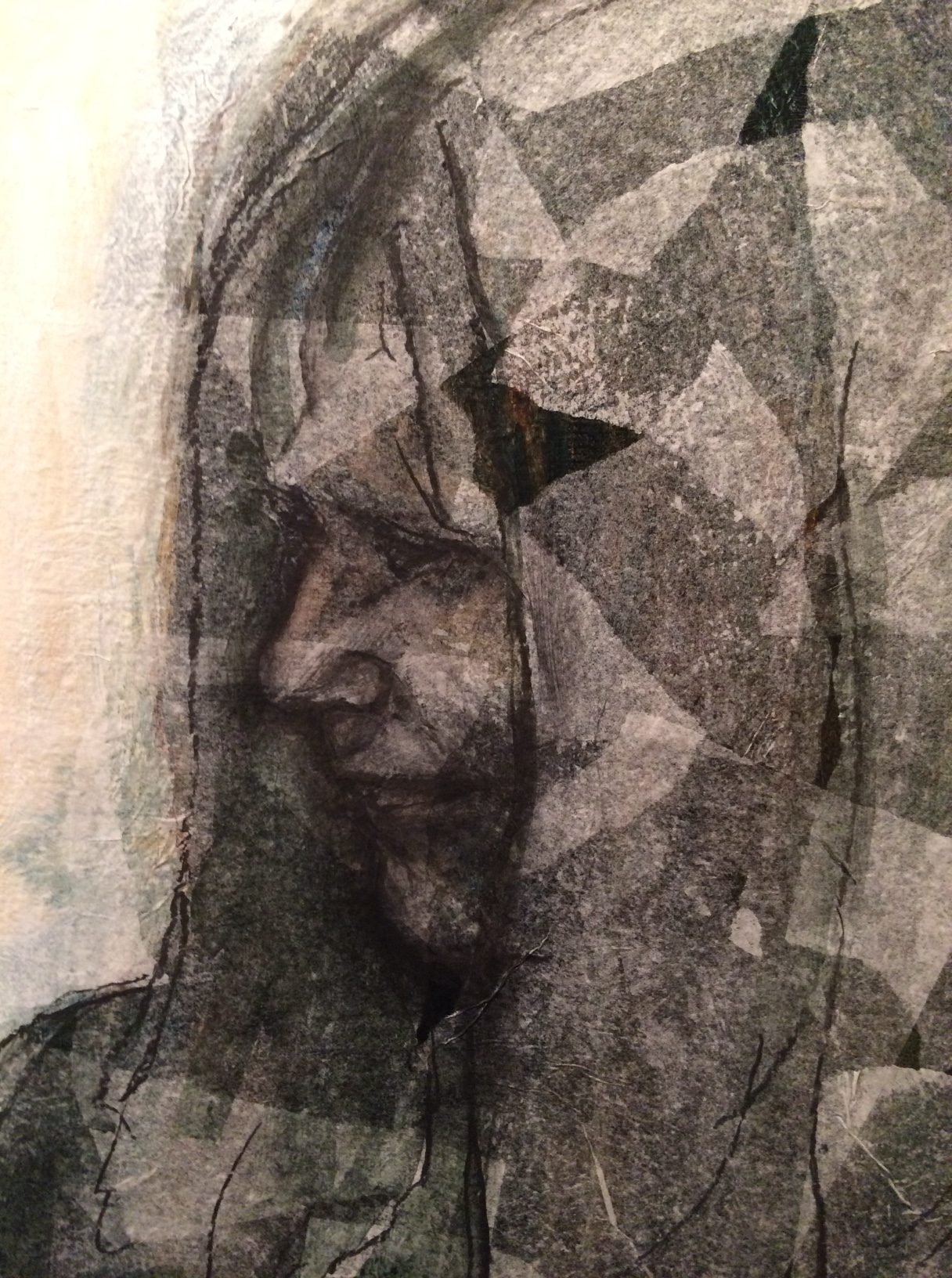
Sometimes, when I was too much in my head or I could no longer ‘see’ my painting, I’d walk the streets. I’d wander to clear my mind or refresh my vision. I’d walk slowly, people rushing, rushing by. People trying to get somewhere. Trying-to-get-out-of-a-too-active-mind requires a much different pace than trying-to-get-somewhere. They are opposite actions. In my slow walk I’d feel the wind of impatience as people dodged around me. I was an irritant. I was a slow moving rock in a rushing river of humanity.

The wind of impatience.

I’ve always understood the artist’s role to be a witness, to live on the edges looking in. Master Marsh recently sent Wendell Castle’s “My 10 Adopted Rules of Thumb.” Rule # 2 is “It’s difficult to see the whole picture when you are inside the frame.” An artist’s job is to sit on the frame, to see and share what those inside the frame cannot see. Pattern. Movement. Illusion.

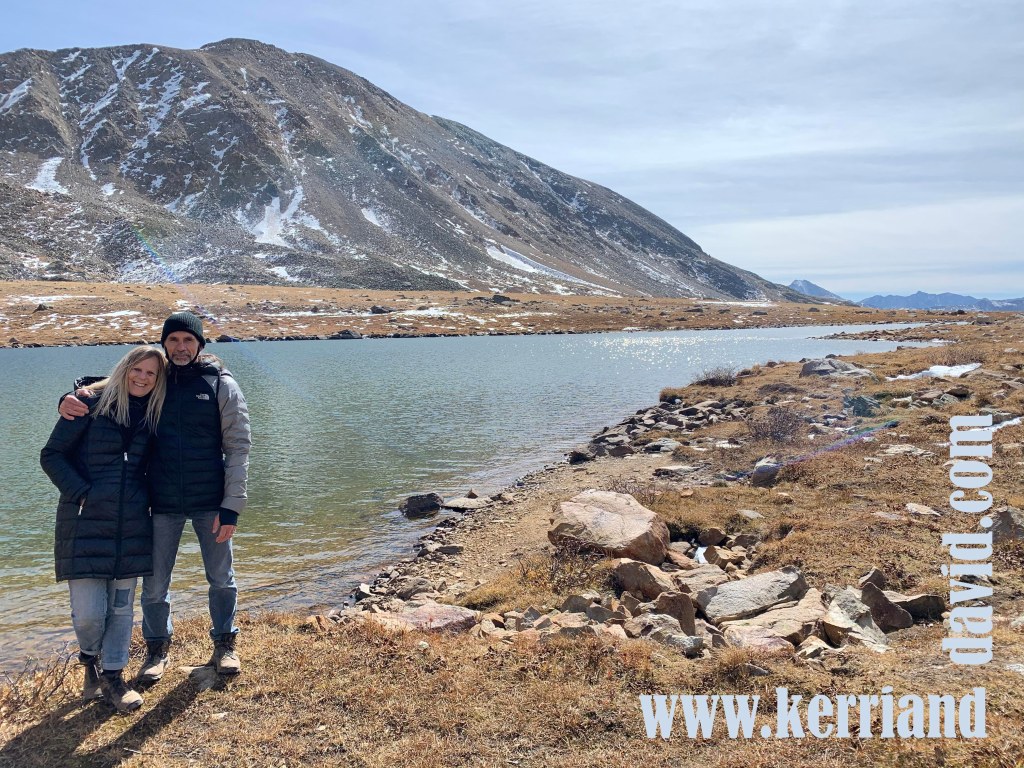
One of the first things I noted the day I met Kerri is that we had exactly the same stride. We were walking and our steps were weirdly identical. We strolled in sync. It made us laugh.

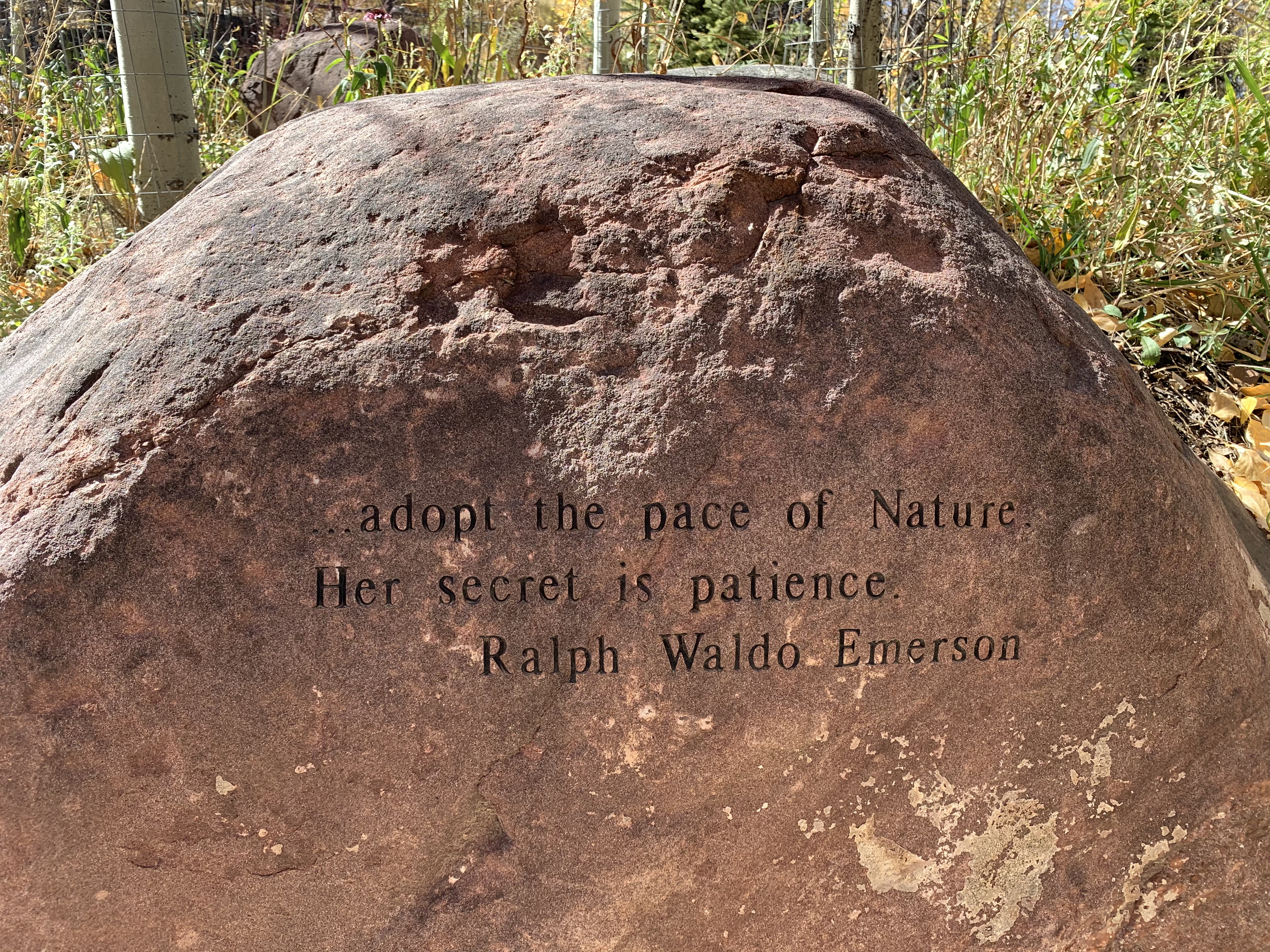
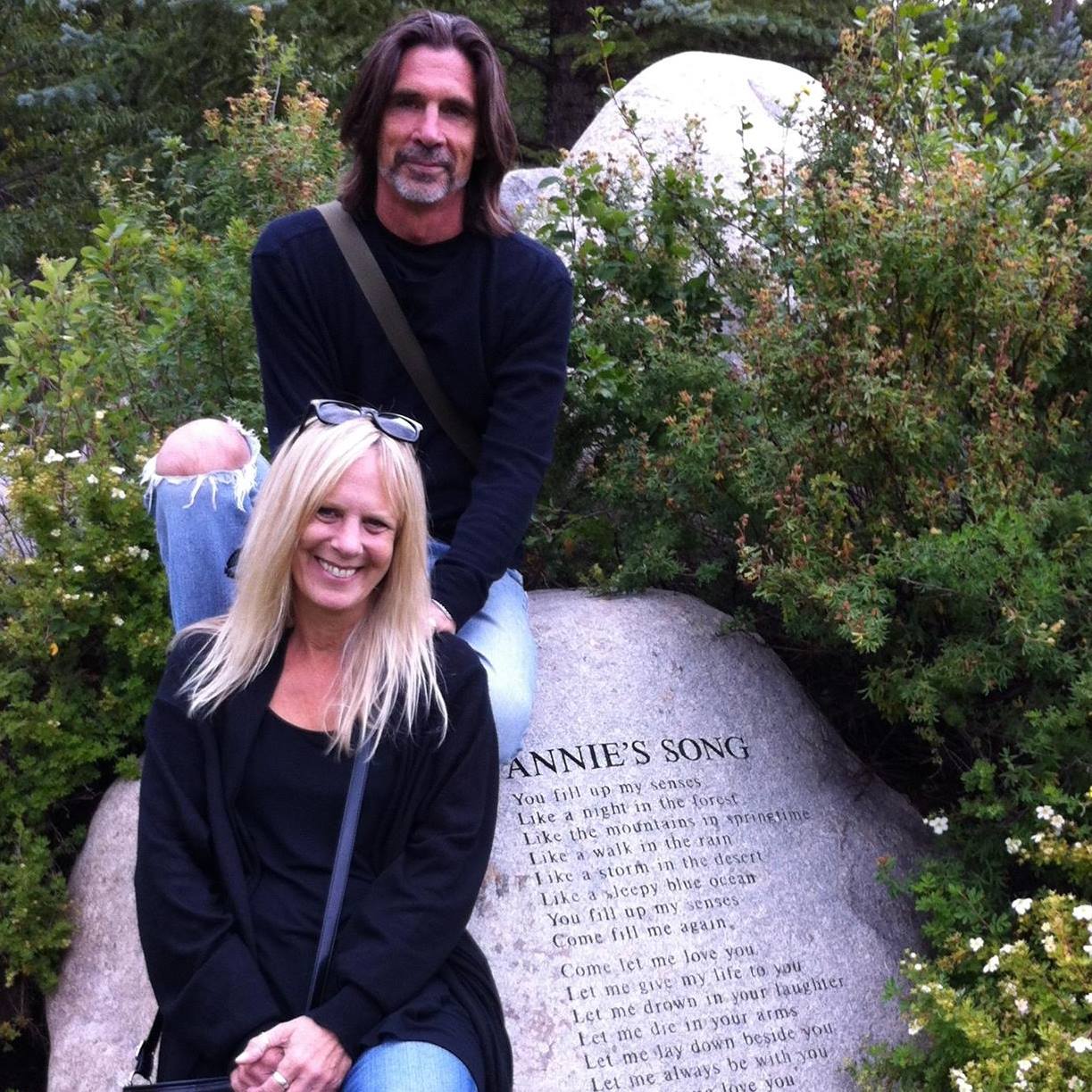
There is a special place in Aspen, Colorado. The John Denver Sanctuary. We make a pilgrimage to the Sanctuary when we travel to visit Kirsten. It is a place designed to make people slow down. Babbling brooks. Aspen leaves. Monolithic stones carved with the lyrics of John Denver’s songs, stones that carry the words of writers and artists and thinkers who appeal to the heart. It asks the visitor to sit for a spell. To listen. To breathe and see. To be, as nature teaches, no where other than here. It offers the gift of the artist: to fill-up with quiet before jumping back into the life-of-hurry-up-and-get-it-done. To remember what is natural and walk with exactly the same stride as nature.

read Kerri’s blog post about PATIENCE
Open [on KS Friday]

“…nothing really worthwhile can be owned. There is life. There is love. There is grace. But we can neither create nor possess a state of any of these. These visitors breathe through us, with us and in us the more we keep ourselves open.” ~ Declan Donnellan

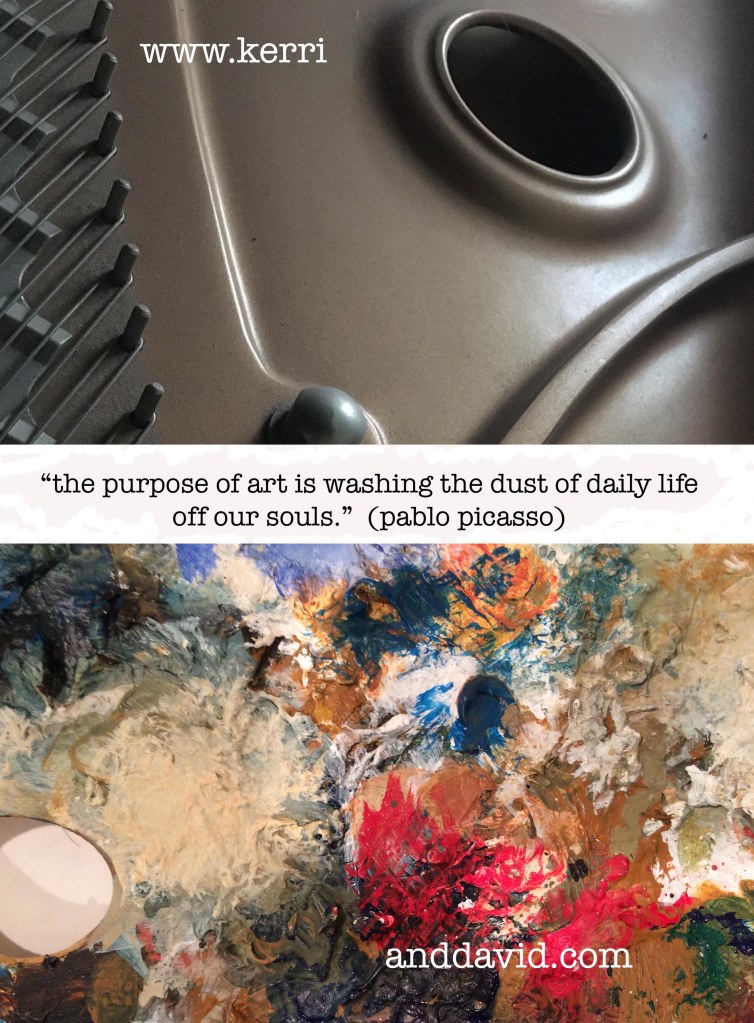
Barney, the piano, was set to go to the junkyard. His soundboard was broken after years of being stored in a basement in a boiler room. We convinced the junkyard man to bring Barney to our house. We set up a stone foundation so he wouldn’t sink into the garden. In a move worthy of the Three Stooges, we rolled him across the grass until he came to rest in his new home, our backyard.

Over the years we’ve watched Barney age into gorgeousness. His veneer blistered and rolled. Pieces fell off. The superficial white covering on his keys mostly flaked away. His truth exposed by the sun and the rain and the snow, is more lovely than the facade he once maintained. His wood bleaches and cracks, the grain swirls like a rip tide. His nails and screws rust, the color pops in elegant contrast to his otherwise grey and green-moss tones.

Over time, the flowers and grasses have grown around and through his pedals. Each summer the green tendrils reach for his keys. He has become home and haven to chipmunks and squirrels. The birds sit on his lid and rest or sing. Dogga investigates the community living in and around Barney at least once every day. He is, in his slow march toward dust, a welcome sanctuary to all living things.

Unlike many of the human examples in my life, Barney has opened with age. He is akin to our dear H, who died not so long ago, a man who opened and opened and opened the older he became. Like Barney, a gorgeous spirit grown more gorgeous with age. Curious about life and engaged with its mystery to the very end. H was a study of opening to his experiences rather than resisting the changes.

This year I have wrestled with staying open. My veneer wrinkles, my truth is revealed by the circles I have made around the sun. I have, many days, felt like my soundboard was cracked, the purpose that I was built for ruined by life next to the boiler. And then I listen to the absurdity of my words. The purpose. Singular. Ridiculous. I am reminded of what H knew and Barney trumpets to me each and every day: in an open heart, purpose is never fixed. It is a fluid thing. It is a moving target, not a possession or plaque to be hung on my wall of respect. It is a home to chipmunks, a resting spot for birds. It is how I address myself to the world of mysteries, how I avail myself to the experiences that wash through me and over me each and every day. It is how I make breakfast for Kerri. It is how I sit with DogDog when he searches the house for his missing BabyCat. It is in my choice to say Yes or No to the wonders of this world.

read Kerri’s blog post about BARNEY

kerri’s albums are available on iTunes

Try [on DR Thursday]

The operative word in this Chicken Nugget is “try.”

To try is a verb, an action. It’s also a noun but the synonyms used in either variation are mostly the same: attempt, endeavor, make an effort.

Try. It’s such a small word but its impact is unfathomable. It is the defining line between intolerance and empathy. Empathy begins with trying to see what others see. Intolerance begins with refusing to try to see what others see.

Try. It is the epicenter of advise that every parent offers to their children. Take a crack at it. Why not put it out there. Give it your best shot. You can’t win if you don’t run the race. You’ll never know unless you try.

A verb. An action. Try. A noun. A way of being.

Try is the foundation stone of curiosity. Wanting to know, wanting to experience what is “just over there.” To see not only what others see, but why they see it.

I sometimes try to see the unbridled enthusiasm that Dogga sees in each and every moment. I try to see the world of unlimited possibilities that Dawson sees every time he touches a crayon or paint brush. I do not delude myself. My eyes are not so pure. But I try.

Imagine what we might do in this world if we only gave it a try.

read Kerri’s blog post about TRY

Look To 3 [on Not So Flawed Wednesday]

My long-ago-business-partner used to tell groups that every human being wears an umbrella hat called “normal.” That is, we try to maintain and make sense of the world according to our personal (and cultural) criteria. We carry the criteria around with us – it does not exist beyond us. We are comfortable when wearing our umbrella hats. We get really uncomfortable when something comes along that knocks our hats off of our heads.

When we lose our hats, we’ll do anything to regain our comfortable “normal.” The fear of losing our hats is what makes change – personal and cultural – so difficult. Despite what they say, no one wants to lose their hat. Organizations have a nifty phrase, change-management, to shield against the reality that change – real change- requires discomfort. How to prevent discomfort? Manage it! No worries! Everything is under control!

The other strategy – also not very effective in the long run – is to pretend that the hat is still on your head. No worries! It’s all made-up! Everything is normal!

The pandemic blew our collective hats off of our heads. We’ve had a front row seat to the realities and responses of a disrupted normal. The recent photos from Miami Beach, the aggressive non-mask-wearers, the absurd and deadly politicization of a pandemic…all in the name of hat retention and recovery.

In our circle of life, we’ve had the ubiquitous conversation about the return of normal. “When can we get together again?” Prior to the pandemic, our week was patterned on, our lives were grounded in, our Sunday and Thursday night dinners with 20. In a fluid artistic life, dinner with 20 was the shape-giver to our otherwise formless weeks. One day last March, we tossed our hats to the wind. It wasn’t safe to gather.

Over the year we left groceries at his door. He dropped goodies at our door. We waved from the car. We had regular phone calls. A few times, when the weather was nice, we sat in the back yard at great distance and discussed how weird life had become.

We looked for our new-normal-hats but they were nowhere to be found. It’s what happens when change cannot be denied: the management of discomfort is the best that you can do. Keep stepping. Chop wood/carry water. One day at a time. A new normal will surface sometime. A new pattern will be established. Pattern making is what we homo sapiens do.

In the past few months we three were vaccinated. We waited for a few weeks. We diligently read our CDC guidelines. And then, as if a year had not passed in the interim, we gathered to share a meal and drink a bottle of wine. Nothing had changed and everything had changed.

2 at the table is once again 3. We are slowly reestablishing what we once knew as normal. Our laughter is easy as it has always been. But the nation we inhabit, the community we see and experience, is transformed. There are stores we will never again support. There are relationships that will always be superficial. There is a bald ugliness exposed as never before in the nation. Ruthlessness. So many dead amidst such fatuous games of denial. The hot wind that blew our normal-hats away exposed the geography – the actual geography – beneath our nation that espouses equality but has deep division and favoritism woven into its DNA. Control by division. It is a mechanism: black gain is seen as white loss. White gain is built upon black loss. It is a seesaw, an angel/devil game. It’s a system doing – brutally – what it was designed to do.

Disruption is an opportunity for change. With so many lost hats, with so much ugliness exposed, a good look in the national mirror is possible. As we struggle to find our new normal hats, it occurs to me that angel/devil games, deep divisions, are never “solved” in twos. Movement is created by two points. Insight is a three-legged stool. Complexity is addressed through triangles, through a focus on relationship. Opposition-in-twos will keep us forever on the systemic seesaw.

Laughter is restored, possibility uncovered, through the lens of three.

read Kerri’s blog post about 3

Take The Time [on Two Artists Tuesday]

“Nobody sees a flower – really – it is so small it takes time – we haven’t time – and to see takes time, like to have a friend takes time.” ~ Georgia O’Keeffe

To see takes time.

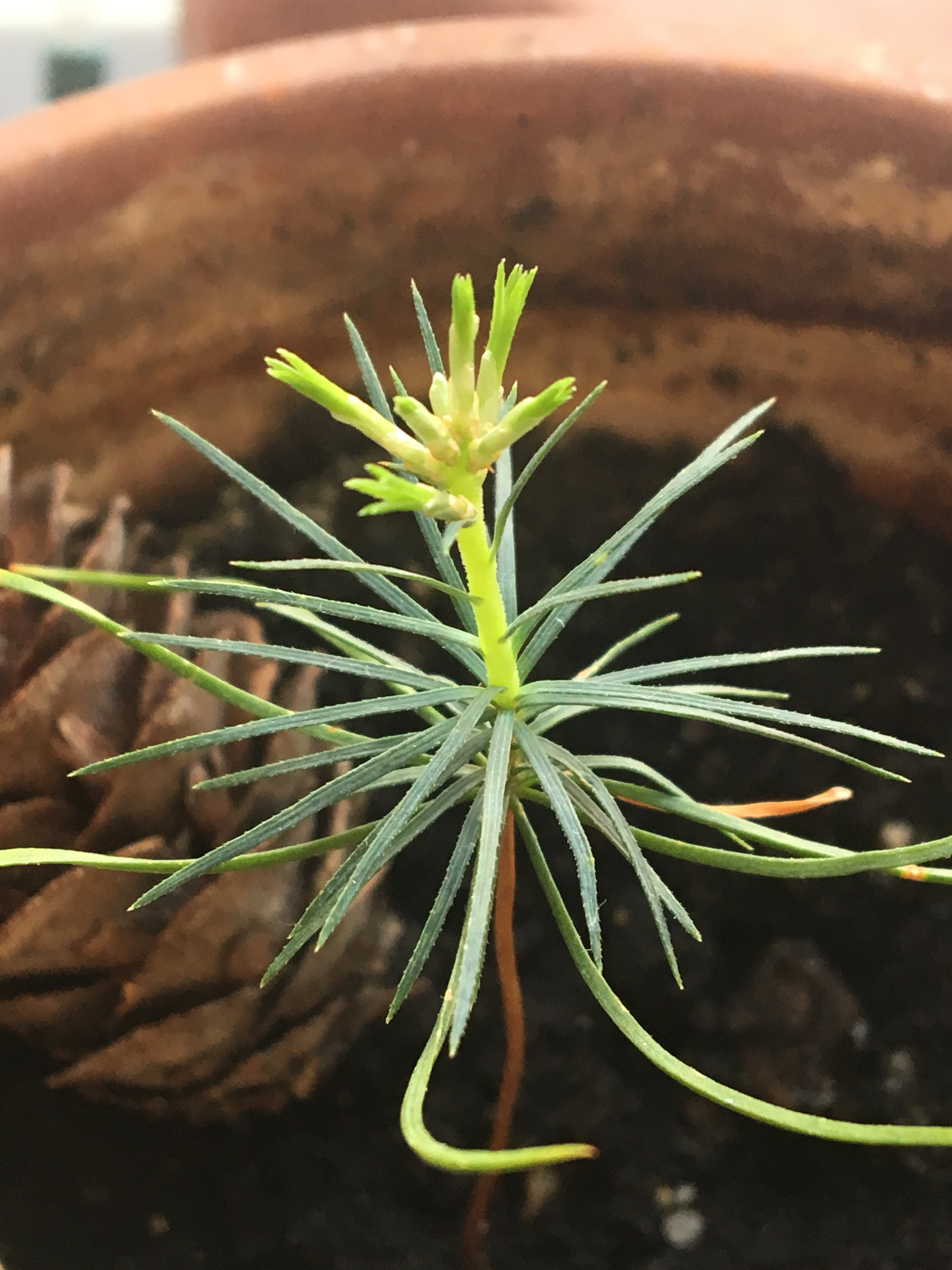
Desi has been teaching us to see. She sits on the table in a clay pot. We join her at the table every evening to sip a glass of wine, watch the light wane, the robins and cardinals dart across the yard, debrief the day. We’ve been watching Desi all winter, spending time with her. Watching.

Truth be told, I did not expect Desi to live long in her pot. She’s seemingly so fragile, her “trunk” no wider than a sewing needle. And yet, throughout the winter, her robust green needles never yellowed. She thrived, verdant in her unlikely home.

Kerri talks to Desi more than I do. I’m the silent male but I regularly send her my good thoughts. She regularly reciprocates. Kerri and Desi can carry on for quite awhile about nothing in particular. Soil. Water. Warm days. Pine-tree-talk. Hope.

Hope. A few weeks ago, Desi stood taller. New tender sprouts pressed from nowhere , tiny arms reaching for the sun. We celebrated Desi’s new heights. We encourage her to keep going – and she does! Now, each evening, first thing when we sit at the table, we spend time ‘seeing’ Desi.

In a hard pandemic time she lightens our spirits. She cares nothing for the news cycle or the ridiculous foibles of bipeds and we find that refreshing. Most of all, if, for a moment, we forget that we are surrounded by hope – it’s everywhere – we take a moment or two and have a sit-down-visit with Desi. We take the time to see what is always right in front of our eyes.

read Kerri’s blog post about DESI

Evolve And Laugh Heartily [on Merely A Thought Monday]

I find the notion of evolution to be hopeful. Evolution of species. Evolution of consciousness. I assume in my wild idealism that the evolution is toward betterment. Reading Ken Wilber’s thoughts on our chaotic and troubled post-truth times, we are, he suggests, in the throes of an evolutionary step. Evolution is not a smooth stepping dance. It’s more a stumbling forward drunkard.

Last week I posted about the lake in my studio and how the clean up facilitated a life-work review. I was surprised by how many notes I received from life-long friends asking me not to burn my paintings this time. I’d forgotten that, after my move to Seattle, I took most of my paintings and drawings to a fire pit on a beach and burned them. I had so much work that it took three days to complete the purge. That life-work-review ended in fire. This latest life-work-review began with water. I actually loved, post flood, going through my paintings. The paintings that went to the fire felt like a burden, a weight. From heavy burden to love; not a bad progression in my personal stutter-stepping evolution.

We drove to Colorado last October to see my parents. In his dementia, my dad cast me in the role of his college roommate and took me on a tour of the basement. We stopped in front of a large photograph taken at his parents 50th wedding anniversary celebration, a photo of the whole clan. He pointed to my twenty year old face in the photograph and said, “Now, I don’t believe you ever met this one.” It was true. As I listened to his description, I had the overwhelming feeling that he was right. Later, I returned to the photograph and visited that version of myself. I thought, “I think dad’s right. I don’t believe I ever met this one.”

The months that followed set the stage for my flood-inspired-work-review. I’ve discovered that I am more apt to be kind, more given to the positives, than I was a decade ago. Evolution has softened me. Or, opened me.

I’m not alone in reaching back, in sifting through the evolutionary drunken stumble to the present. This pandemic era serves as a marker-in-time as well as a great disrupter of pattern and path. It has inspired many a life review among those in my circle. Together, we ask the questions that have no answers, Quinn’s big three: Who am I? Where am I going? What is mine to do?

There are no answers but from time-to-time it’s necessary to ask.

There’s a fourth question that kept Quinn in stitches every time I asked it. What’s it all about? He’d howl and snicker and snort whenever the question came up. I am now the age he was when that younger version of me sat in his study and wrinkled my brow, disconcerted at his hearty laugh. Now, I know without doubt what’s so funny. I find myself laughing to tears when I hear the un-answerable-fourth-question. It’s about what you make of it as your illusion drops away in the course of your own personal evolution.

What else?

read Kerri’s blog post about EVER EVOLVING

Live By Increments [on KS Friday]

In this case, healing is incremental. One degree at a time. Her doctor told to be patient. “Expect no more than 5 degrees a month,” he said.

After her fall, the second fall, the one on a newly-mopped-but-unmarked-wet-floor, she had a mere 6 degrees of movement in her right wrist. She showed me her range of motion and the movement was so minuscule that I had to ask, “Did you move yet?” Her stare told me that I probably could have asked a better question.

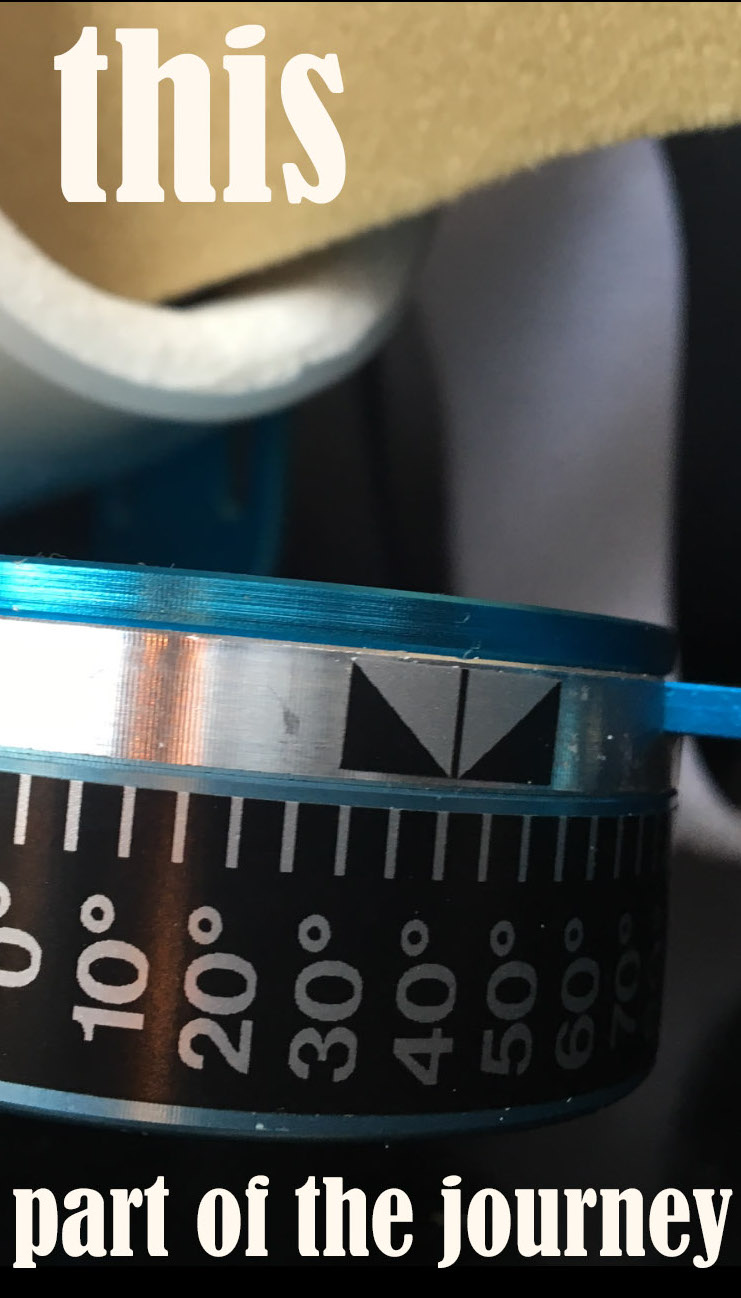
Years ago, preparing to direct a play, I did research on medieval torture devices. You’d be surprised at human ingenuity when it comes to inflicting pain. The device that Kerri uses between occupational therapy sessions to aid in the recovery of her increments looks a lot like the machines I researched so long ago. It has cranks and dials. Straps. It finds the edge of possible movement and then, with one teeny-tiny turn of the dial, stretches a fraction beyond the previous possible. Increments of possibility achieved through increments of pain. Human ingenuity cuts both ways, to the creation of promise as well as pain.

In this part of our journey, we have learned to live by increments. Our journey of a thousand miles truly begins, each and every day, with a single step. The torture device, as we lovingly call it, serves as a mechanical reminder that the greatest triumphs are often the smallest. 5 degrees a month. It’s a reminder that it is best not to rush. One tiny turn of the dial at a time. Each new increment is cause for celebration. My composer wife, in these hard-recovered-increments, steps toward her piano, toward her promise, each day, one step closer.

kerri’s albums, including THIS PART OF THE JOURNEY, are available on iTunes

read Kerri’s blog post about INCREMENTS

this part of the journey ©️ 1997, 2000 kerri sherwood

Prepare For The Jump [on DR Thursday]

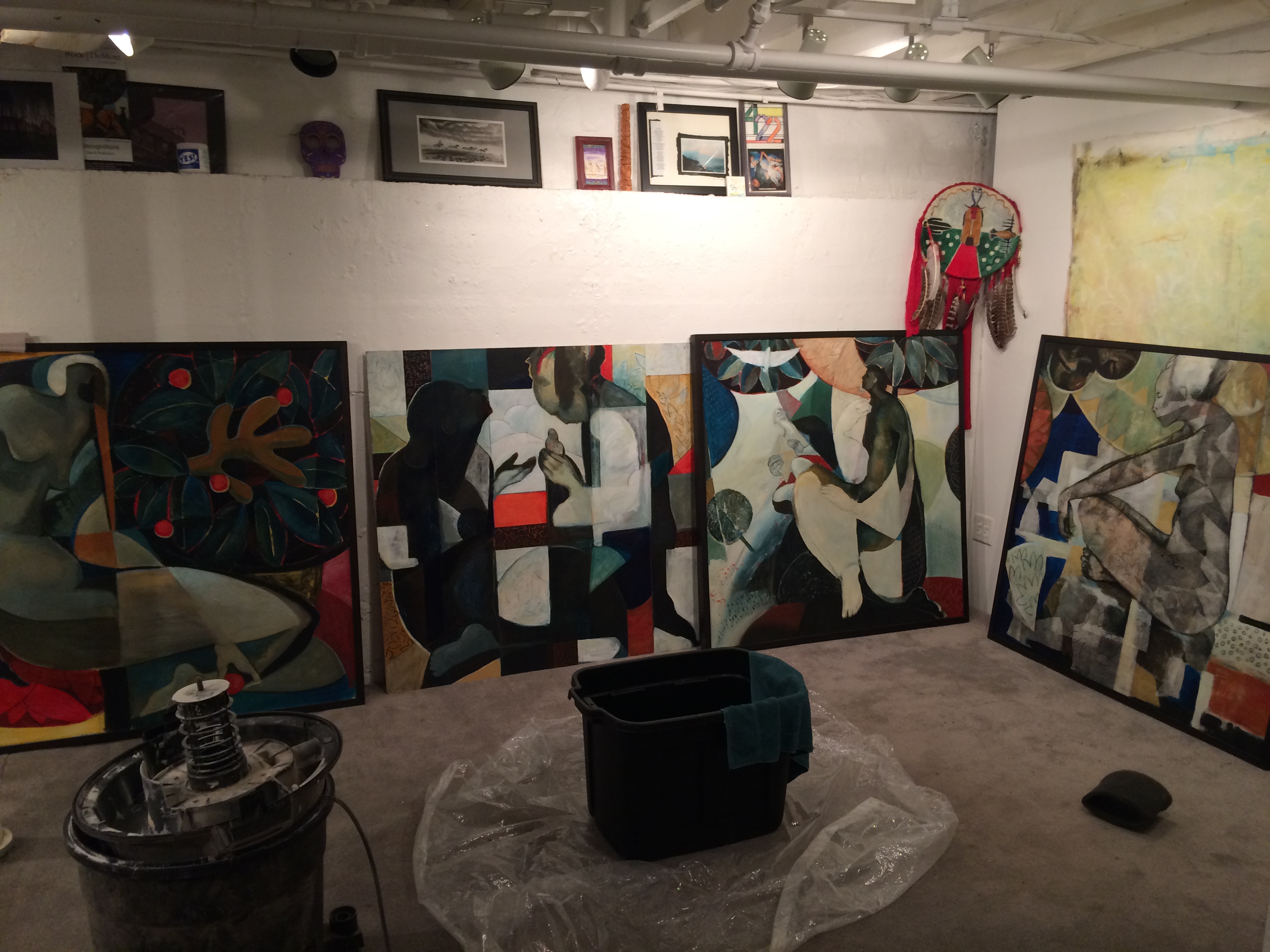
On the upside, an in-studio-waterfall, after the shop-vac-a-go-go, the sodden-carpet-padding-removal, the baking-soda-ballet, amidst the-we-are-still-hunting-for-the-proper-gasket-to-stop-all-leaks-quest, an opportunity arises. It’s been awhile since I sat with my life’s work. It’s been awhile since I made time to stare at my paintings, each and every single one.

I confess that this year has been rife with artistic mourning. I have barely picked up a brush. I have sat in my studio like a visitor at a wake. I feel the emptiness as a loss and have asked myself the fear-question again and again, “Where did it go?”

One of my favorite books is Art & Fear. Recently, I flipped it open and read, “Your reach as a viewer is vastly greater than your reach as a maker. The art you experience may have originated a thousand miles away or a thousand years ago, but the art you can make is irrevocably bound to the times and places of your life. Limited by the very ground on which you stand.”

A second flip brought me to this passage about change: “Yet it’s demonstrably true that all of us do (from time to time) experience such conceptual jumps, and while ours may not affect the orbits of the planets, they markedly affect the way we engage with the world around us.”

The times of our life. The world, for us, stopped when Kerri broke her wrists. She was in casts when the pandemic washed over all of us. Our jobs disappeared. Our community fragmented. Our city burned with civil unrest, a young militia-boy murdered two people a few blocks from our home. My father took rapid steps toward the abyss. Kerri took a second fall, tore ligaments in an already injured wrist. Our BabyCat left us. We talk about 2019 as if it was decades ago. “Doesn’t it seem like years since we…”

I know this death I feel will find its springtime. There was a “me” before this time. There will be another “me” after. Sitting on the stairs, looking at my paintings, I know for the first time in a-year-that-feels-like-a-century, that a conceptual jump is bubbling. I remember the man who painted these paintings. I look forward to meeting the man who will one day pick up his brushes and dance with the muse again.

In the meantime, I sit with my paintings. I stand in the ground of my times. I will find the right gasket so water no longer rains into my studio. I will prepare for my jump by putting all of my pieces back together again.

read Kerri’s blog post about THE WATER STUDIO REVIEW

See The Verb [on Not So Flawed Wednesday]

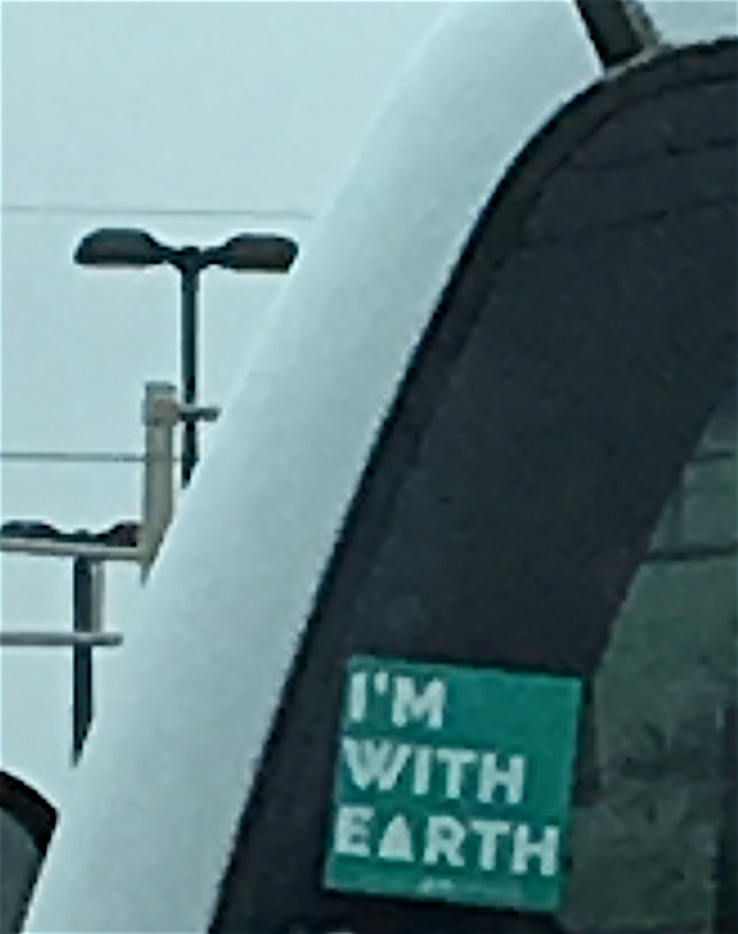
Random fact of the day: my waking thought this morning was about The Geography of Thought. No kidding. It’s a terrific book by Richard Nisbett. The subtitle is “How Asians and Westerners Think Differently…And Why.” Somewhere in the recesses of my brain I must have been pondering the bumper sticker we recently saw: I’m With Earth.*

One of the points made in the book, the one that permeated my dream state, is that different languages place different emphasis on different parts of speech. For instance, many Asian languages place emphasis on the verb. English speakers place the emphasis on the noun. In listening to mothers talk to their infant children, an English speaker will say, “Look at the red truck! Do you see the red truck?” An Asian mother will say, “Look at the red truck go!” Do you see the red truck go?”

Why does it matter where the emphasis lands in a language structure? Noun or verb?

The language we use shapes our thinking and seeing. It shapes basic worldviews. Earth as a noun or earth as a verb. Earth as a stand-alone-thing or earth as a moving interrelationship. These are vastly different worldviews.

This was my thought/image coming out of sleep: earth and sky. In a noun world, earth and sky are two distinctly different things. In a verb world, earth and sky are not separate things, they are verbs, actions, interplay of a dynamic relationship. In a noun world, I am also a distinctly different thing. In a verb world, earth, sky and I are not separate things, we are a dynamic inseparable relationship. We.

The bumper sticker is a declaration: I am with earth. It makes perfect sense in a noun world because it is also possible, in a perceptual world of separate things, to be against earth. Nature needs to be conquered, tamed. In a noun world, earth, once tamed, is a resource and resources are meant to be used. In a noun world, we are capable of believing that our actions have no impact on our environment. Action and environment are nouns, separate things.

In a verb world, what you do to the earth is what you do to yourself. No separation. In a perceptual world of relationship, of verbs, it is understood that your actions not only have impacts, your actions are impacts.

We woke to the news of yet another mass shooting. This one in Colorado. As usual, we know that our community and leadership will offer thoughts and prayers but nothing really – not really- will be done to address it. In a noun world, we protect the rights of the individual, the separate thing. In a verb world, there are no mass shootings. None. Violence done to one is violence done to all. In fact, more people are gunned down in the United States in a day than are killed by gun violence in Japan in a decade. The differing linguistic emphasis extends to differing understanding of rights and responsibilities.

Language matters. Where we focus matters. What we emphasize matters. The story we tell is determined by the language we use to tell it. I am with earth. Or, I am earth. I go to worship. I am worship. I seek purpose. I am purpose. Separation. Relationship. A whole philosophy of living reduced to a simple bumper sticker.

So, when we ask complex questions like, “Why can’t we do anything about gun violence?” or, “How is it possible that people in a pandemic refuse to wear masks to protect each other,” our answer is really very simple: our language makes it so.

Perhaps in a world of nouns a declaration is the best we can do. It is a step toward the middle way, a declaration of responsibility to the commons. Black Lives Matter. #MeToo. Stop Asian Hate. I’m With Earth.

*The “I’m with Earth” sticker is from the very cool company Gurus

read Kerri’s blog post about I’M WITH EARTH

Fear The Babbling Brook [on Two Artists Tuesday]

I find the sound of a babbling brook soothing unless, of course, it is coming from our basement. Knowing with certainty that we did not install a brook in the basement, I knew the soothing sound bubbling up the stairwell was problematic.

It was more waterfall than brook. A steady stream of water cascaded down a pipe from the ceiling, a large pond was already forming in the carpet.

I’m confessing here and now that I am not a handyman. My first response to most home emergencies is to stare, to flood myself with utter disbelief and brainless-white-noise. So, I did that. And then, a miracle: from somewhere completely unknown to me, a voice of reason, a whisper from deep within, said, “Turn off the water.” So, I did that, too.

The waterfall stopped immediately.

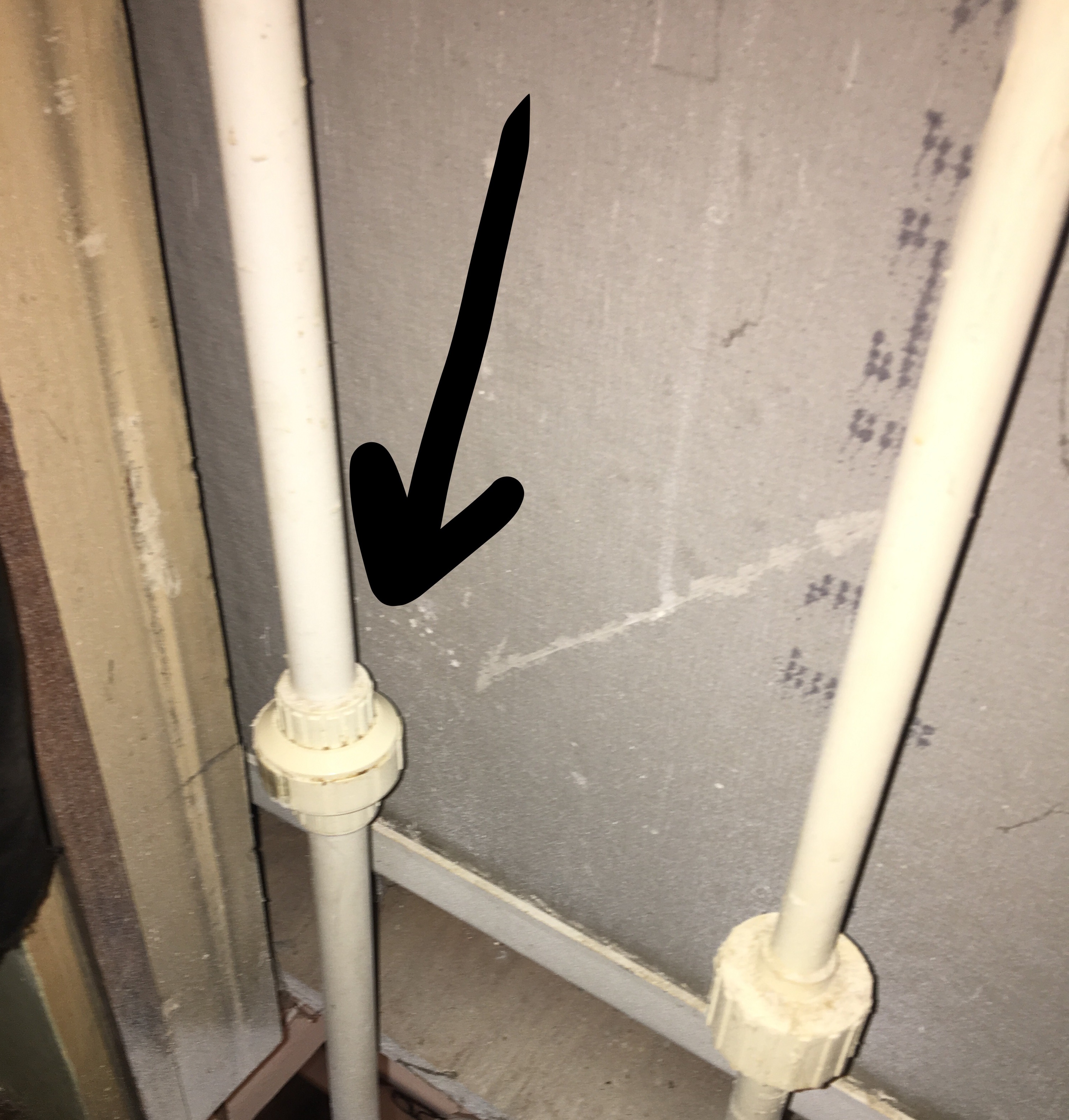
We found the source of our problem in the wall. Some farsighted human-from-the-past installed a Hobbit door in the upstairs closet, knowing that there might be a future plumbing problem and a Hobbit door would make the fix possible without having to also experience demo-day. Kerri and I both stared at the offending plumbing knob. She took photos. She sent texts.

And, although I may not be able to appreciate basement babbling brooks, I very much appreciate friends from all over the country who immediately sprang into action to help us. The digital world met the ultimate analog problem. The advice from Portland and Texas and across town was unanimous: you can fix this. Don’t call a plumber. Our waterfall was the result of a simple gasket failure, a washer gone bad. Unscrew the offending knob, remove the wasted gasket, go to the hardware store, find someone with know-how, buy a replacement, insert the new gasket, tighten the offending knob. Va-Wah-La! Well. Almost.

Our basement now looks like a conceptual art piece in the museum of modern art. The carpet raised, the sodden padding removed, plastic Adirondack chairs, plastic crates, plastic bins stuffed beneath have turned the carpet into a 3-D topographic map, fans blow under and over, baking soda swirls like micro-tornadoes across the mini-mountain range. The waterfall was right smack in the middle of my studio, so surrounding the mountain range, are willy-nilly un-art-ful stacks of old school paintings, lifted above the waterline. An art history statement: the conceptual art explosion forcing the canvas-and-paint-crowd to the margins.

And, so, we do what all good artists do in times like this: we sip wine and wait for things to dry. We spin our experience into tell-able and re-tell-able tales (our generous friends listen whether they want to or not). We send heaps of gratitude to the folks with real practical knowledge who led us by the nose through our watercourse way.

read Kerri’s blog post about WATER