Cut A New Path

ComfortNow

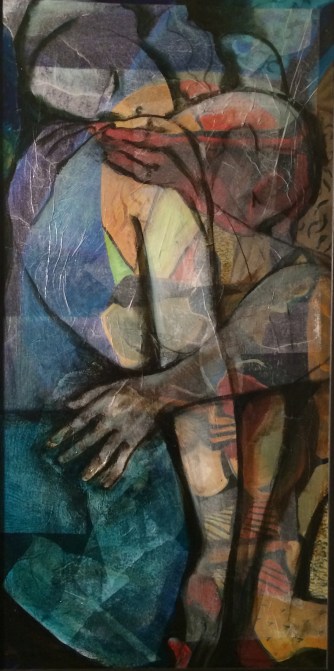
The latest in my Held In Grace series. This is Comfort Now

It seems to me that most of our days on this earth are spent moving through patterns, conscious or unconscious. These patterns are the rituals of our lives. Some of the rituals are easy to see. For instance, what is the sequence of actions you perform before going to bed each night? What about your ritual of rising each day? The care and feeding of Tripper Dog-Dog-Dog and Babycat are central to my rising and retreating rituals each day. We move through the same actions every morning and evening and I delight in the warmth of the ritual.

Some of the rituals are not so easy to see. Researchers tell us that most of the thoughts we think every day are the same thoughts we had yesterday. We mostly think in patterns (it makes sense once you recognize that language is constructed of category and pattern). We talk to ourselves, cutting paths through the forest of our minds and, once we’ve established a trail, we like to stay on it. Easy is often unconscious. There’s nothing wrong with staying on the easy trail if the path you’ve cut, your repetitious thought-ritual, is self-loving. The rub: ritual paths of self-loathing and self-limitation are also easy, well-worn paths and that makes them both unconscious and hard to leave.

Cutting a new path through the mind forest begins with recognizing that new paths are always available. They just aren’t easy to establish. They require new practices. They require surrender and the first bit of surrender necessary for cutting a new path is the ritual giving-over of needing-to-know-anything; new paths, by definition are unknown.

New paths are not comfortable precisely because they require attention, consciousness.

My teachers taught me that all stories worth telling are stories of transformation. The main character or characters will know something at the end of the story that they did not know at the beginning and the new knowledge will be hard-won. That’s what makes the story worth engaging. Hamlet is a much different character in Act 5 than he was in Act 1. His peace was difficult to come by. He had to learn to surrender. To cut a new path he had to make a practice of peace.

The same ideal applies to the stories we live off the stage.


Answer The Question With A Question

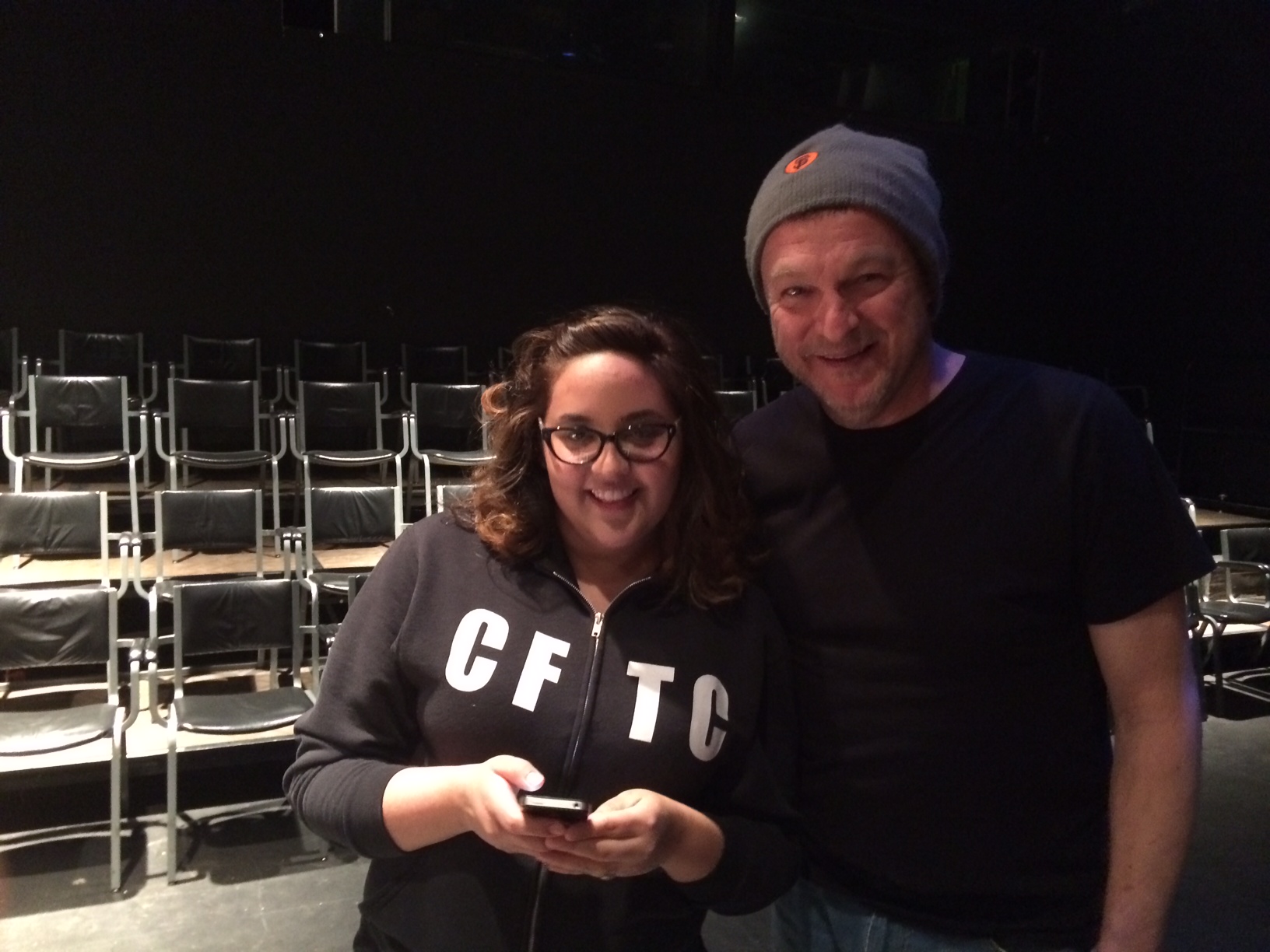
carrying on the tradition (and my heroes): mike and sabrina bartram

carrying on the tradition (and my heroes): mike and sabrina bartram at Changing Faces Theatre Company

Many years ago at the start of my career I bumbled into running a summer theatre company. It would become one of the great gifts of my life. At the time I decided that it would be my laboratory. I’d be able to experiment with directing processes and actor training techniques. What I didn’t realize until much later was that I would also be running an experiment in business and, more importantly, how to create a community mindset of support and empowerment (and, therefore, achievement). I was free to succeed because I gave myself permission to focus on the quality of the process instead of worrying about hard and abstract words like ‘achievement.’ My bottom line was the inner growth of everyone in the company, the inner growth of the community that we served.

When the company was up and running, when it was mature, company members swept the parking lot because they knew it would make the play better (improving the audience experience always impacts the performance). The people running the box office prided themselves on their kind service and efficiency because they knew that it would make the play better. The actors understood that they were in service to the play and not themselves. In fact, everyone in the company was in service to something bigger than themselves. That was the culture of the company. When pushed to articulate the success of what we created together, I’d say, “We’re focusing on the important stuff.”

Yesterday with great intention I sent that phrase (focus on the important stuff) out into the e-stratosphere. I lobbed it in association with the company that Kerri and I are in the process of creating to see what would come back at me. Like the summer theatre company, this new venture is our laboratory. What came back was the question, “What’s the important stuff?”

Sometimes the only way to answer a question is with another question. Take a look around your world. Take a moment to look at the difference between what you say and what you do. What do you see? What do you want to see? Big power comes to people when, like my company members (students) of so long ago, they realize that their “seeing” isn’t passive. The greatest single power any human being has is to choose where they place their focus. The greatest single revelation any human being has is to recognize that what they see impacts everyone around them. No one does this walk alone.

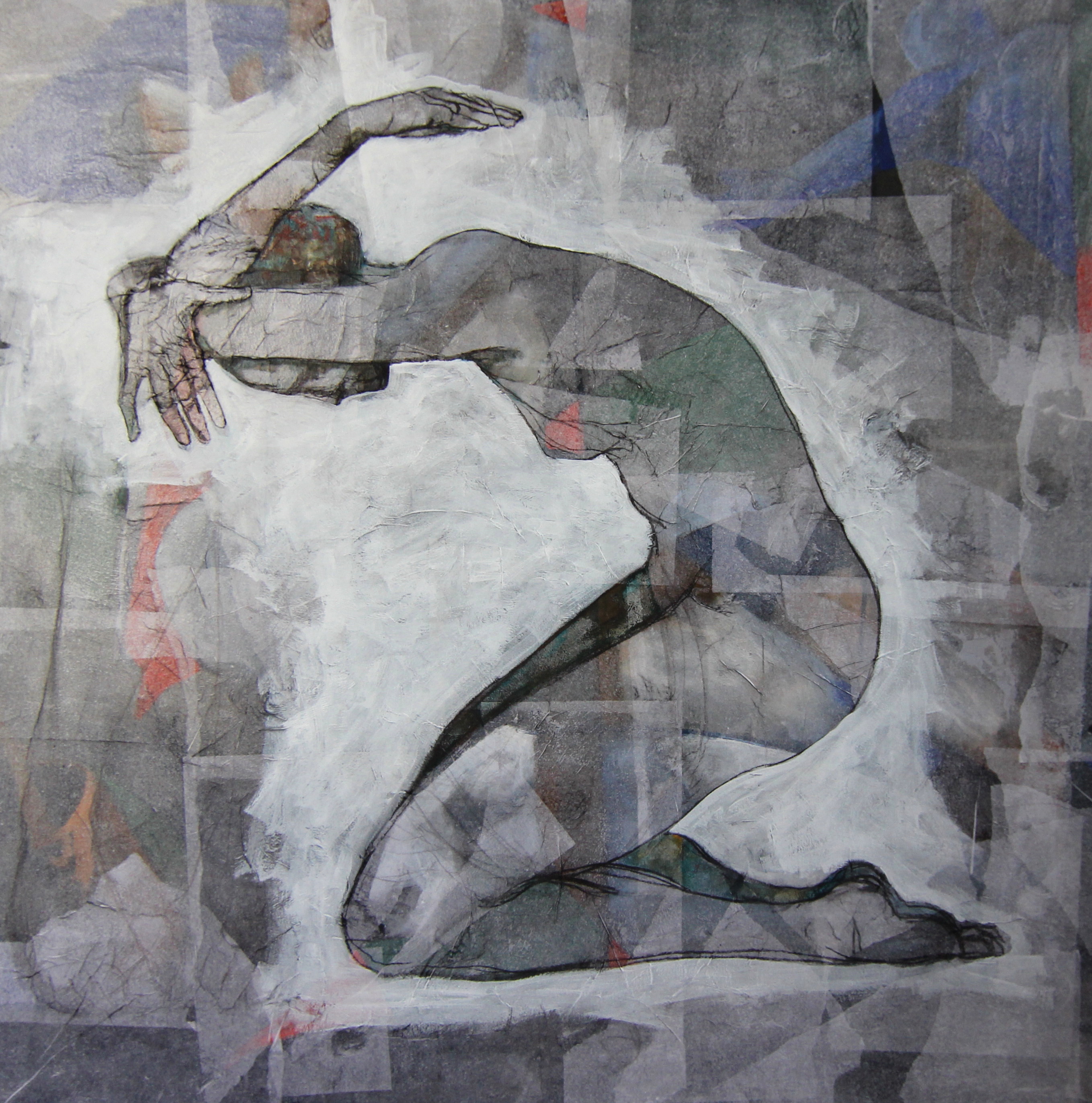
the very first painting in the Yoga series. It was an experiment, a walk of discovery. It's also about being alone

the very first painting in the Yoga series. It was an experiment, a walk of discovery. It’s also about being alone.

It’s easy to place a focus on an obstacle. It’s very easy to fix a gaze on the problems. It’s easy because, left alone, believing we are alone, that’s where most people default. Place yourself in a community that knows there is something bigger, something more important to see and serve, and the field of possibilities becomes easy. My company members of so long ago didn’t know what they couldn’t do so they did everything they imagined. That was only possible because they imagined it together. So, answering a question with a question, to you, what’s the important stuff?


The Way You Frame The Question

TODAY’S FEATURED REMINDER FOR HUMANS

The way you frame the possibilities

There is a vast difference between the questions, “Why is this happening to me?” and, “What’s the opportunity in this?” Both questions are frames that we place on our experiences. Both questions determine the range of possibilities and choices we see in our lives. Why not place a frame that opens a vast range of possibilities instead of placing a frame that closes most of the doors?

Screen Shot 2015-08-22 at 2.41.31 PM

FOR TODAY’S FEATURED REMINDER FOR HUMANS, GO HERE.

Say More With Less

TODAY’S FEATURED THOUGHT FOR HUMANS

say more with less

One of my favorite humans is Master Jim Marsh. He told me a story of a dilemma. Something in his world was bugging him. He complained about it a lot. One day he realized that complaining was not helping. He said, “I decided I had 3 choices: to stop complaining, to move, or to do something about it.” He stopped complaining and began acting to change on what was bugging him. Sometimes talking about something makes us feel like we’re doing something. It’s a deflection. Actions, as we are told, speak louder than words. 

TO GET TODAY’S FEATURED THOUGHT FOR HUMANS, GO HERE.

Screen Shot Say More

Stop Your Rant In Its Track

TODAY’S FEATURED THOUGHT FOR HUMANS

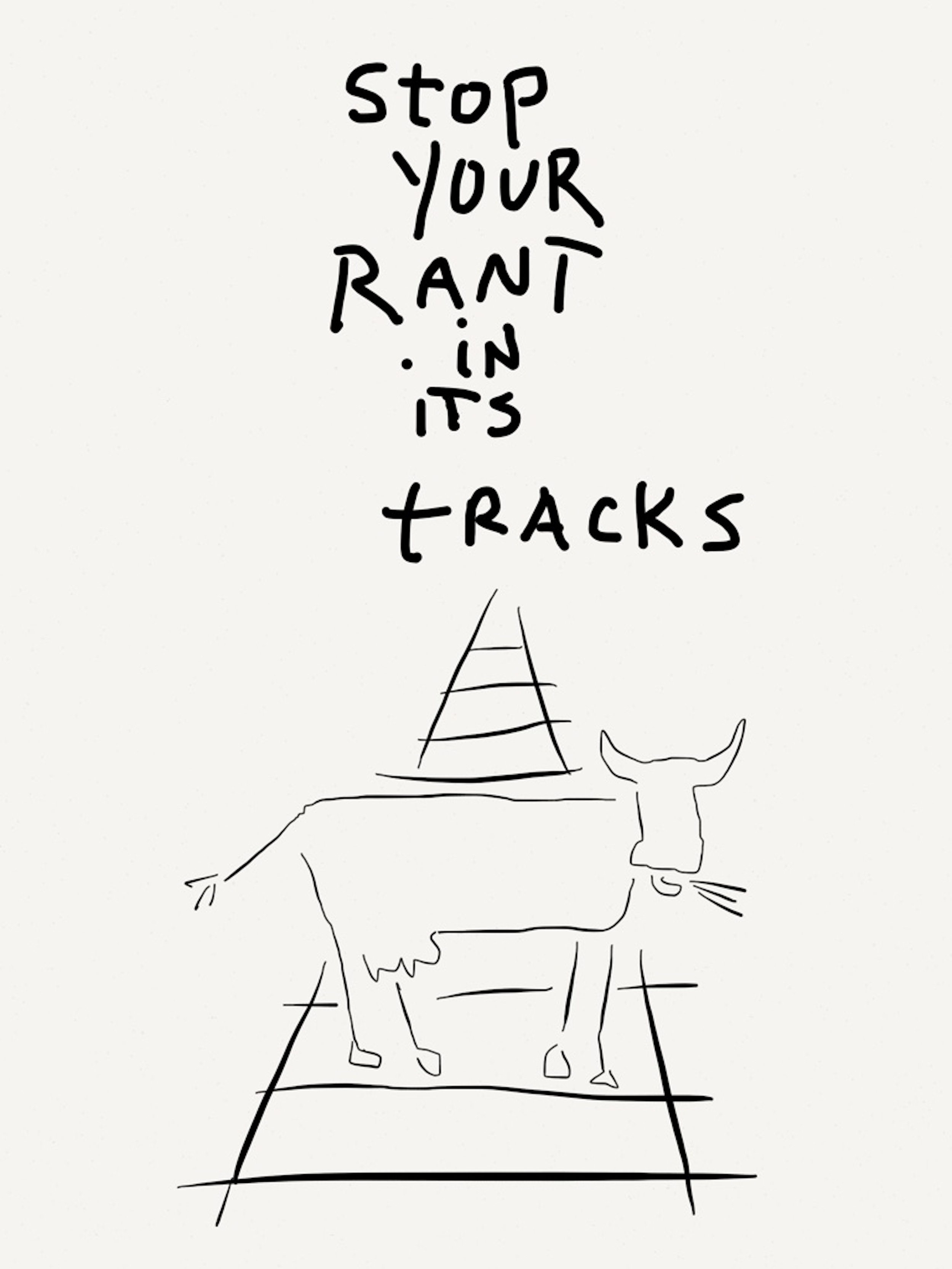
Stop your rant in its track

I come from a long line of ranters and am famous for ranting. Through a life of ranting I’ve learned that rants are mostly a useless exercise. They serve as a pressure release, which is say, energy that is misdirected. Miracles happen when misdirected energy is focused and released toward an intention. Rants are essentially an admission of helplessness, a scream of, “Why is this happening to me?” Redirected, the energy becomes a focused stream of, “I am going to make this happen.”

FOR TODAY’S FEATURED ENCOURAGEMENT FOR HUMANS, GO HERE.

Reach To The Light

TODAY’S FEATURED IDEA FOR HUMANS

Reach To The Light

FOR TODAY’S FEATURED PRINT FOR HUMANS, GO HERE.

Breathe Out. Breathe In

...if beakybeaky was a band, this would be the album cover...

…if beakybeaky was a band, this would be the album cover…

The most important thing in life is to learn how to give out love, and to let it come in. Mitch Albom, Tuesdays With Morrie.

Somewhere in the 22nd hour of our drive, the sun rose. Even through our exhaustion and bad fast food coffee, it took our breath away. It replaced, or, rather, swallowed, a brilliant sliver-crescent moon.

We’d stayed longer in Tampa than we expected. The day after Beaky’s book reading and signing, Sunday, we were exhausted so we delayed our return trip home for a day. The following day, Monday, was bad for Beaky – she was in tremendous pain and we were overwhelmed with the need to stay. So, we stayed, knowing the result would be a 24 hour dash home for rehearsals.

His voice dropped to a whisper. Let it come in. We think we dont deserve love, we think if we let it in well become too soft. But a wise man named Levine said it right. He said, Love is the only rational act.’” Mitch Albom, Tuesdays With Morrie

...and the truth of beakybeaky....

…and the truth of beakybeaky….

This year is unusual. I’ve done too many plays, paintings, and projects to count and each had its rewards and regrets. Twice since the turning of the New Year I’ve completed a project that was so fulfilling, so right, that I would not change a thing. Both have this in common: the intention was pure. I did them for the right reason: someone else. The first, The Lost Boy, was a message from Tom to his nephew, Seth, and I was the messenger. The second, Beaky’s first book, Shayne, was to make a dream happen. Every dream needs assistance to be born: the manuscripts existed. Beaky’s desire to share (publish) existed. They lacked an illustrator and designer. I did the illustration. Kerri did the layout and design; a dream fulfilled itself. For me, both are lessons in breathing out love so that I might also breathe it in.

Just prior to Beaky’s reading, we took a series of selfies with her. I told her that, if Beakybeaky was a rock band, the selfies would make excellent album covers. After our photo opp, we wheeled her to a standing-room-only crowd, many people that she knew and many more that she didn’t, people who’d gathered to hear an almost-94 year old author read and sign her very first book.

a dream fulfilled

a dream fulfilled

Breathe out. Breathe in. It turns out that an exhale is necessary for the inhale.


Revisit And Revise

Pidgeon Pier (Alan and David on the Sound) by David Robinson

I used this painting as the cover image for The Ground Truth. I call this painting Pigeon Pier.

With the success of my book, The Seer, I’ve been revisiting some previous manuscripts and ebooks. I have a lot of them, mostly unpublished and unseen. One of my favorites, and one that I am considering revising and releasing, is called the Ground Truth. The ground truth is a military term and denotes the difference between the truth as seen by the generals in the war room (an abstraction) and those actually doing the fighting on the ground (actuality). I gave the book the subtitle: Six Dynamic Relationships That Will Change Your Life. Marketing claims are usually brazen. The book is really about how to orient to personal truth.

As I’ve been revisiting the book, I’ve also been revisiting several of the concepts in it. One concept that has been much on my mind lately is the Hero and the Anti Hero. Here’s an excerpt from The Ground Truth defining the concept:

In a small notebook with a red cover I found a drawing. The image is horizontal on the page. On the far left I wrote the word “Hero” and scribbled a circle around it. On the far right I wrote, “Anti-Hero” and also scribbled a circle around it. The circle with the Hero and the other with the Anti-Hero are connected with a line. The drawing looks like a cartoon barbell. I must have been explaining this to someone; I can tell by how emphatically I scribbled the circles.

The Hero and The Anti Hero was a revelation that Harald shared with me a few years ago. Harald’s first language is German so he used the term Anti-Hero instead of villain or devil or “big dog yapping in my brain.” I like Anti-Hero because it is actually more appropriate than any term I might have used.

He told me that he’d spent much of his life trying to rid himself of his inner Anti-Hero. It had consumed much of his life, this powerful inner voice of self-criticism and judgment. It plagued him and the more he resisted the Anti-Hero the stronger it became. One day, exhausted by his inner turmoil he had an epiphany. He realized that the way to rid himself of this Anti-Hero was to stop expecting to be a Hero. In fact, his expectation of being a savior, being perfect, being everything to everybody was the very thing that fueled the Anti-Hero. Letting go of the Hero dissipated the power of the Anti-Hero and what was left was…human. Beautiful, flawed, funny and messy, Harald was a human no longer at war with himself.

Internal warfare causes split intentions, split intentions create internal warfare. It’s a feedback loop. As Harald discovered, trying to be the Hero in the eyes of everyone else split him into two pieces: the unreal expectation (Hero) and an ever-vigilant judge (Anti-Hero). Harald was attempting to control what he could not control: the expectations and responses of other people. His happiness was contingent upon the responses of others so he was constantly measuring his worth against others responses: The actor (Hero) and the measurer (Anti-Hero). The internal warfare was inevitable.

In the next few days I’ll write more on The Hero and the Anti Hero, and what a few years and new eyes have brought.

title_pageGo here for my latest book

Yoga Series 7Go here for fine art prints of my paintings

Rap With B-Cat

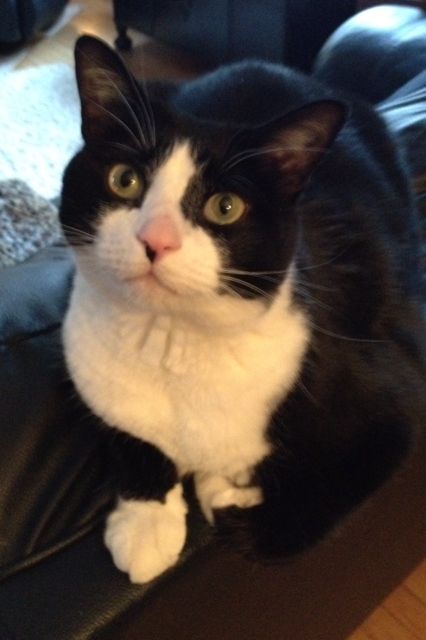
Baby Cat daydreaming

Baby Cat daydreaming

It occurs to me, as I sit in the studio on this cool spring morning, that there is a fourth member of my household that has yet to be introduced. We have a cat, an elder statesman, a worthy companion and sparring partner for Tripper-Dog-Dog-Dog. He has a name that no one uses because, early in his life, he became a rap star and dumped his given name. He is now known to all the world as Baby Cat.

When I first met Baby Cat I called him Sumo. He is a very large cat, a formidable kitty. Late at night I have more than once thought there was a burly intruder in the house but it was only Baby Cat pacing as he worked out his latest rap. It is an understatement to say that he is heavy on his feet. Sometimes the room bounces when he leaps from a windowsill.

photoBaby Cat is teaching me about clarity of intention. He leaves no doubt about what he wants (food or pets) and is relentless until he gets it. Truly, he is relentless. He does not know the word “try.” Baby Cat gets. He meets me every morning and guides me to his bowl. If I deviate, he wraps his hulk around my feet or herds me like a shepherd. If physical action is not enough to direct me to his bowl, he begins a verbal assault that would make his mother blush. He wants what he wants and he wants it now. Black and white. In addition to Sumo, I also call him Terrorist Kitty because he resorts to biting ankles as a last resort. Yoda would be proud of Baby Cats force of will. Were he not a rap star I’m certain that he’d be a Jedi. Actors would be well served to study with Master Baby Cat.

Baby Cat is teaching me about simple contentment (yes, like all things true, it is a paradox: intention and contentment are bedfellows). He shows me how to linger in sunny spots or stare out the window for hours, just because. He has reintroduced me to the fine art of daydreaming. He joins me every morning as I stretch and do a bit of yoga, shamelessly positioning himself in the optimal petting zone close to my feet and gives himself over to my affections. And, because he is so capable of presence and pleasure, I’ve found that my morning yoga has transformed. It is no longer a discipline, something I do that is good for me; it has become a practice of simple attention and loving. I am more capable of presence and pleasure. I rest in it. Like Baby Cat, my body tells me what it needs, and I breathe.

Go here to get my latest book, The Seer: The Mind of the Entrepreneur, Artist, Visionary, title_pageSeeker, Learner, Leader, Creator…You.

Or, go here for hard copies.


Intend And Forget

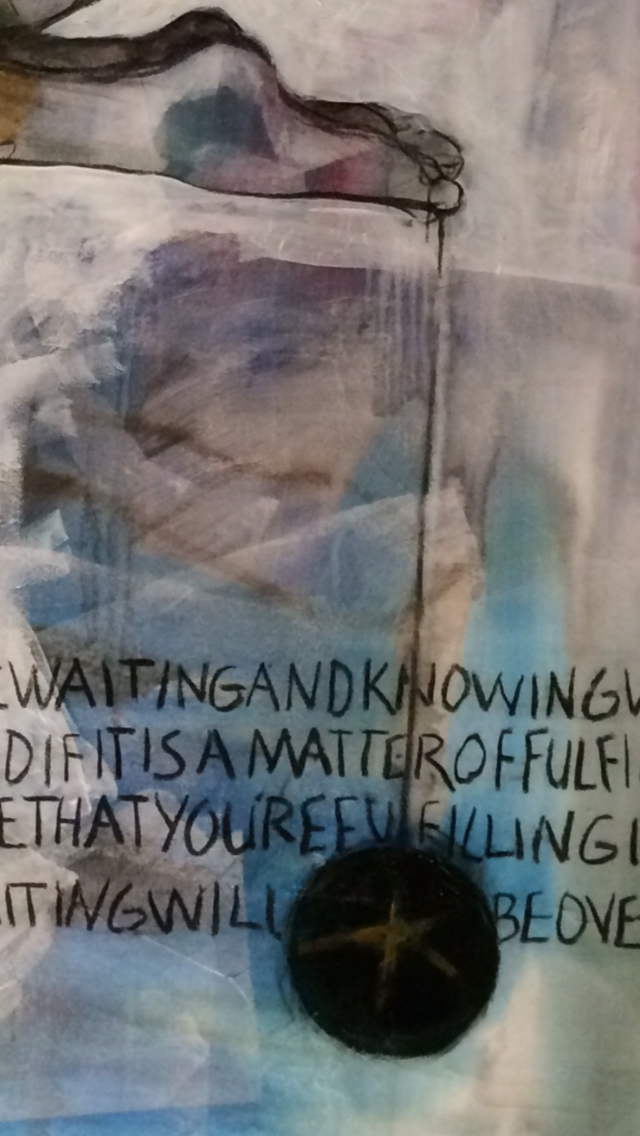
I have many titles for this painting and have used it a few times for posts. It is ultimately about intention and inner guidance.

I have many titles for this painting and have used it more than a few times for posts. It popped up for me again today. It is ultimately about intention and inner guidance.

I just finished writing this post and realized that, in many ways, this is the continuation of yesterday’s thought: clear the mental static and the channel to full expression opens. So, here is part two of my meditation on inner static:

John and I were having a conversation about the passage of time. He told me that he’d recently found some old lists that he’d written of life goals and intentions. The interesting thing about discovering the lists was 1) that he’d forgotten writing them and, 2) that he’d achieved most of what he’d written. He said, “The form of what I created was different than what I’d originally imagined but I was surprised to see that I’d actually created what I intended.” It was as if he had to write the intention in order to activate it. Forgetting the intention was necessary to give it space to manifest and grow. Write and forget.

When I was first training as an actor, late in every rehearsal process, my teachers consistently advised that we let go of everything we’d rehearsed and just show up. “You’ve done your work,” they’d say. “Now, let it go and trust.” Many years later when I was directing plays and teaching actors I gave the same advice. “Let go and trust. You’ve done your work. All that remains is to be present.” From the teacher/director seat, the moment of letting go is palpable; you can literally see and feel the phase in the process when an actor needs to let go of their work to come alive. They need to get out of their own way. They need to get out of their head and give all of their focus to the relationships on the stage. The work moves from the head to the body. It is this last step that transforms their study to a living pursuit. Forgetting the work creates spaciousness and allows the art to happen. Art is always about relationship and great art happens when the relationship is clear and expansive enough for all comers.

One of the most profound lessons I gained from my time in Bali concerned this dynamic connection between setting an intention and letting it go. While I was on the island my internal monologue disappeared; one day I realized that I was completely quiet. Thought was a choice and not a plague or chattering background noise. Silence was simple when no story was necessary, when no interpretation was needed. In the middle of that silence I could set an intention (“This is what I want to do/find today”) and then forget it. Before the day was over I would have found what I intended. The steps came to me; I did not have to seek the steps. Sometimes the intention was simple and sometimes seemed complex but that didn’t matter. If I clearly stated what I wanted and returned to silence the necessary coincidence always found me. I felt as if I could see the pieces on the game board moving on my behalf. There was no internal noise to compromise my intention so there was no external discord confusing my choices. I was conscious of my connection.

Alan calls this co-creating. Work with the energy and cease trying to force things to happen. John told me of his lists and I wondered how many people have had the same experience. We make lists, we try to make the list happen, life gets in the way and we forget. And, in the moment of forgetting, we relax our grip on how we think things need to happen. We forget the form and inadvertently open to possibility. In the forgetting we create the steps necessary for fulfillment: spaciousness, trust, and quiet participation.

Go here to get my latest book, The Seer: The Mind of the Entrepreneur, Artist, Visionary, title_pageSeeker, Learner, Leader, Creator…You.

Go here for hard copies.