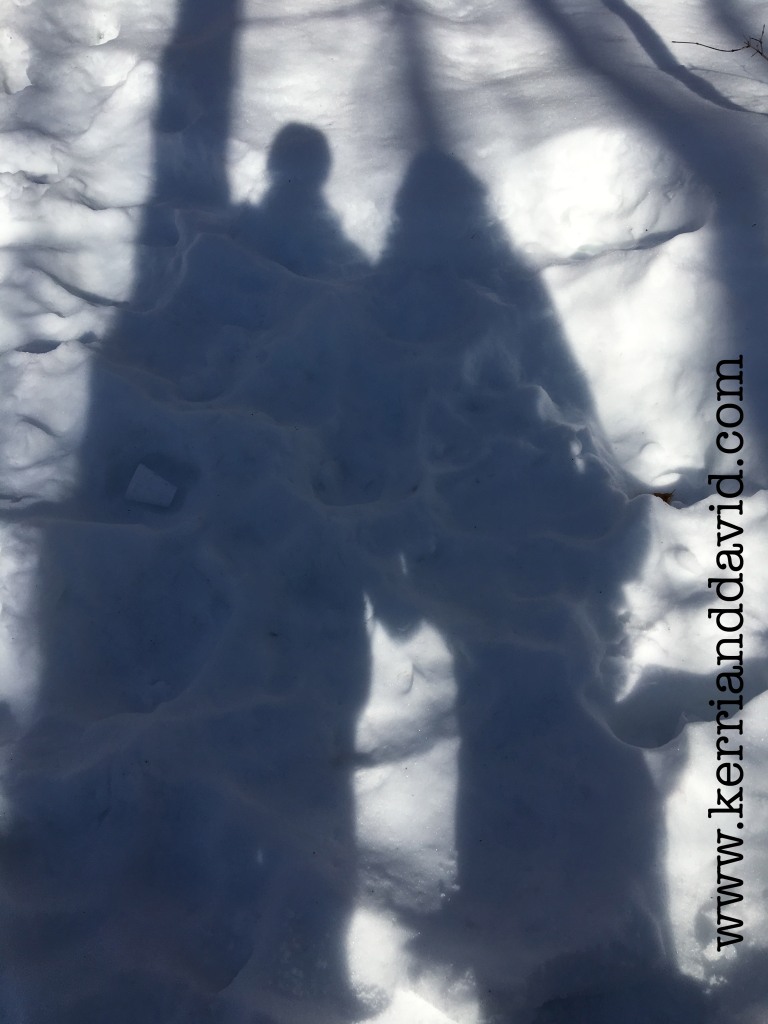
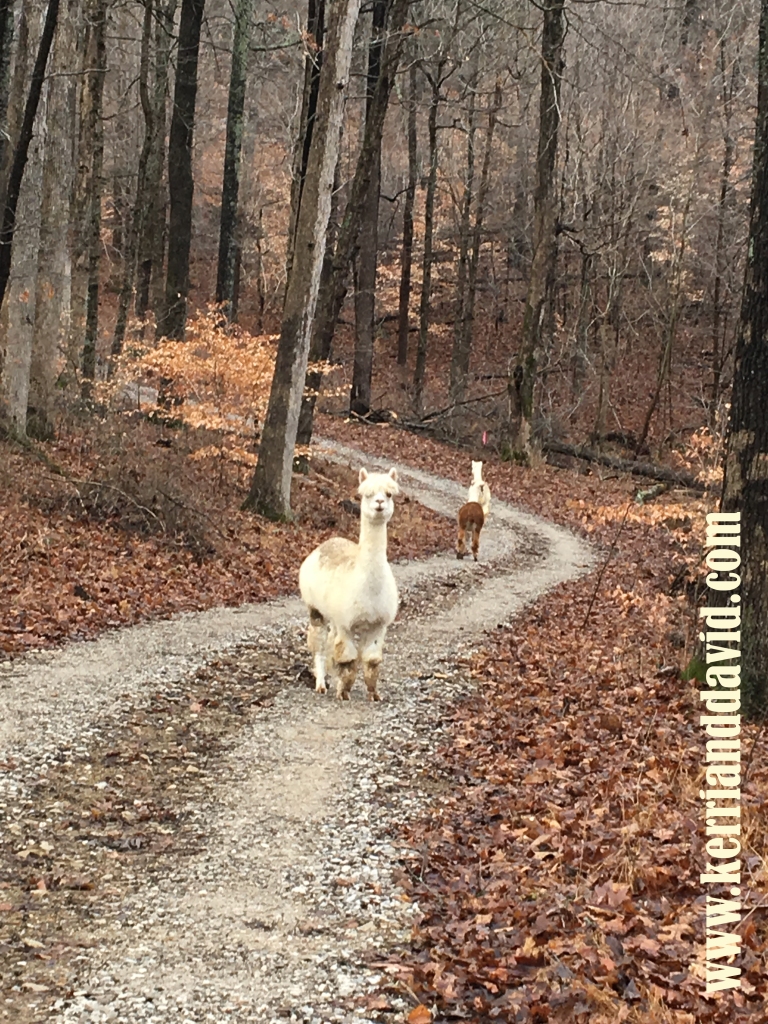
Sun Dry [on DR Thursday]

“…people find what they are looking for. If you’re looking for beauty, you’ll find beauty. If you’re looking for conspiracies, you’ll find conspiracies. It’s all a matter of setting your mental channel.” ~ Roger von Oech, A Whack On The Side Of The Head

Our time on Washington Island was multi-layered. Half of the people on the island saw us as invaders. The other half saw us as welcome progress. We were hired to manage the performing arts center which, out of the chute, served as a divisive symbol for the local community. We were the first “non-islanders” to manage the TPAC. Division upon division. And, although we were the focal point of the contention, none of it had to do with us, not really. Our status as invader or progress originated in the eye of the beholder.

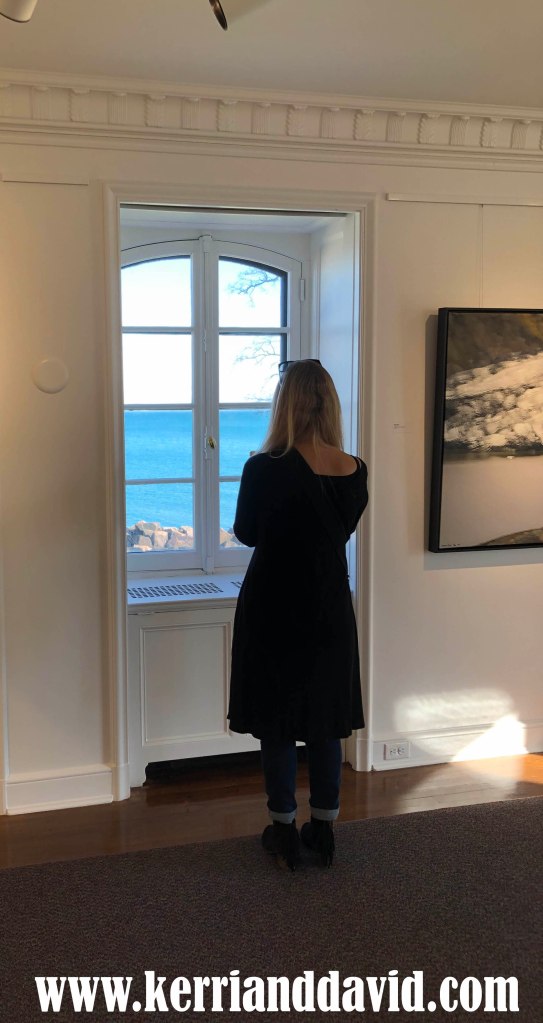
Because the actual job was a festival of landmines, I especially appreciated the simplicity – and sanctuary -of our little house, a home provided to us for the summer-on-island-months. Our refuge sat on the shore of Lake Michigan. It was as peaceful as the job was contentious.

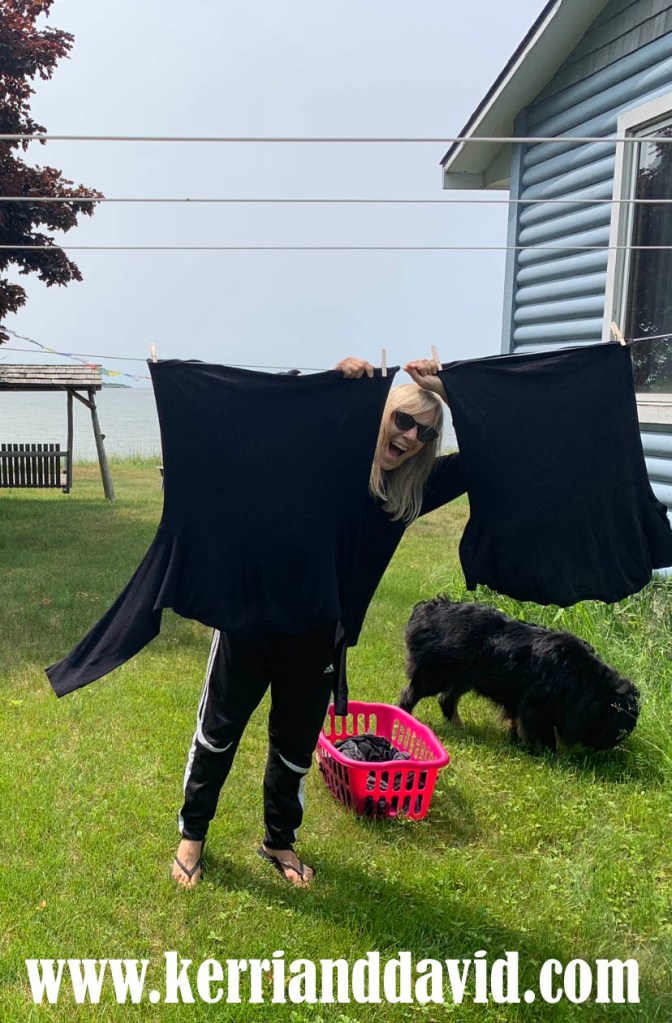
My favorite symbolic act at the little house was hanging the clothes to dry. When we arrived the clothesline was in disrepair. We re-strung the poles with new line purchased at the local hardware store. We quickly grew accustomed to carrying the wet clothes outside. We learned that the wind off the lake sometimes required strategy to what-is-pinned-in-front-of-what. Double clothespins on sheets and shirts was always a good idea. Mostly, I appreciated how the clothesline slowed our pace. It brought us into the sun and in relationship with the wind. The real stuff.

It helped set our mental channel. Hands on, tactile, slow-paced, generous, the power and presence of the lake filled us with awe. So, to our work, we brought awe. Literally. We were in awe of these people that cared so much for their community. Like most communities, they had more than one idea of how to protect it. Progress or conservation.

We understood that these two paths-to-the-same-goal need not be oppositional.

We learned that our job was to build bridges where they had fallen. We understood that, in this divided community, we had to pay attention to what-is-pinned-in-front-of-what. We learned that double pins on big ideas was sometimes a good idea because ideas often generated big wind. Listening was the best idea of all. We understood that if we brought our awe to both sides of the coin, we might one day build a single bridge that could not be burned.

We learned that there was no rushing the process, just as there is no way to rush the clothes drying on the line.

a day at the beach, mixed media, 38x52IN © 2017

my site. yes. as yet incomplete. a testament of continued indecision of my purpose and intention.

read Kerri’s blogpost about the CLOTHESLINE

like. share. comment. support. many thanks for all.

Choose A Better Story [on Two Artists Tuesday]

Watching an early episode of the Millennial Farmer I was astounded to learn how computerized farming has become. Driving the tractor was far more digital-than-donkey. Even the word “driving” is mostly misplaced, just as the word “telephone” is loosely applied to the magic box in our pockets that searches the internet, takes photographs, measures our step, our heart rate, acts as a calendar, a compass, a flashlight, a newspaper…

Farmers can do more, faster, with greater precision. The seeds are planted to exact depths and meticulously spaced. The temperature of the earth and the minerals in the soil are collected and measured as data points. The farmer monitors the technology and engages the steering only when making a turn. Keeping the machinery in good running order requires an entirely different set of skills than it did twenty – even ten years ago. I wonder what farming will mean to the grandchildren of the people I watched mowing their fields. Like a modern car mechanic, in addition to wrenches and oil, farming demands computer diagnostic skills and a continuous upgrade of software. While the process is different, the basics remain the same. Plant. Nurture. Grow. Harvest. Feed.

To feed. Hands in the soil. Eyes to the horizon gauging the weather. Eyes on the advanced weather forecast technology. Praying for rain. But not too much.

There’s an old black-and-white photograph on the wall of the farmhouse we rented for our family gathering. People assembled on the porch, wearing high collars and long prairie dresses. Horses and wagons populate the foreground. I marveled, standing on the same porch in the old photograph, how close-in-time I am to the people in that picture. Two headstones away. Tom once told a story, when he was a boy, of sitting in the lap of an elderly woman who, as a small child, sat in the lap of Abraham Lincoln. That makes me a mere three headstones from the 16th President. “He smelled of saddle soap and lavender,” she reported.

I hear abundant chatter about rural America being all red and urban America mostly blue. Both colors have to eat. Both are made better by technology. The food is grown in the red while the computers are imagined and made manifest in the blue. A single step back from the chatter reveals how truly interdependent we really are. I am grateful for the easy availability of food at my local grocery store. I imagine the farmer is grateful for the advanced technology that takes some of the guesswork and toil from their lives.

We are, all of us, a single headstone away from passing on a better or lesser world. Both are possible. The choice is ours. Where do we desire to place our focus? What world do we desire to create?

Farmer’s take great pride in feeding the world. Entrepreneurs and software engineers take great pride in making tasks easier for others. Generally, gratitude is not only a much better story than division, it’s also more productive. It’s also more honest. I find that people are highly motivated when helping others. The question is, “Why can’t we see how we are helping and being helped?” Our interdependence is right in front of our faces.

The noisy trappings of our time may seem complicated but the basics remain the same: Plant. Nurture. Grow. Harvest. Feed. We eat what we sow. We choose the thought-seed that we plant. Technology can help us be more effective and efficient. It cannot help us gain wisdom or sort what we lose in our dedicated color-crayon-divide. It cannot help us choose or pass on a better story. Only we can do that.

read Kerri’s blogpost about HAY RAKES IN THE SKY

like it. share it. online tip jar (link or qr). talk to us. all are appreciated.

Lean Into The Questions [on Merely A Thought Monday]

A theme that surfaces in my conversations with Rebecca is how unsafe people feel – especially women – to ask questions. At work. At school. Asking a question is too often misunderstood as a challenge to authority. It’s dangerous. Smile. Be silent.

I suppose authority has always been thin-skinned though the idealist in me wants to believe that we’re all in this together. I know without doubt – as we all know – that the way forward is through the field of questions. The best answers open doors to better and better questions. Anyone afraid to be questioned and insisting that their answers are absolute – full stop – should inspire dread.

After eight years on the job, Kerri was handed a contract with the mandate to sign it. She asked a few questions. The description in the contract didn’t align with the reality of the job she was performing or the previous agreements made with her supervisors. Authority did not respond well to her questions. The ensuing assault was incessant. Bullying. Dangerous. For awhile she tried to comply with the only advice offered her: smile sweetly. I wondered, if a man was being similarly pummeled, would he be offered the same advice? When Kerri finally stopped smiling and stood solidly with her questions, she was branded “belligerent” and “uncooperative.”

I doubt a man would be similarly pummeled. To this day, I wonder at all the men and women in the community who watched the pummeling and said nothing. As witnesses to the danger in asking a question, they held-their-tongues. I suppose they learned their lesson. Ask no questions. See no evil. Hear no evil. Look away. Speak no truth.

And, while they weren’t looking, their community fractured and fell apart. All were diminished. Thugs count on division; it’s their secret sauce for establishing control. They engender silence. It’s how they maintain their authority.

And, isn’t that the true danger. We don’t want to bring the the wrath of the gorilla upon ourselves so we “get on board” or “toe the party line.” Smile sweetly. Pretend the bully isn’t beating the woman into submission. Make the assault her fault. She brought it on herself.

Kerri’s experience is a microcosm. The bullies have the microphone. World-wide, authoritarianism is on the rise.

If ever there was a time to lean into the questions, it is now. If ever there was a time to ask aloud, “What are we doing?” and “Why are we doing it?”, it is now. Together, asking questions capable of leading to answers that open doors to better and better questions. We have no shortage of persecutors beating down questioners while screaming that they have all the answers and their answers are absolute.

Perhaps the questions we need to ask together are simple: Is this who we are? Is this who we want to be?

read Kerri’s blogpost about SMILING

See The Frame [on DR Thursday]

The lake was angry. Had you dropped me in from outer space I’d have sworn I was standing on a beach of the stormy Atlantic Ocean. “I just can’t capture it,” she said, after snapping several photographs. The roiling waves hit the shore with thunderous power and intensity. I felt it in my chest. Distilling the energy within the frame of a photo sublimated the dramatic waves to an everyday image. The frame successfully abolished the fear and eliminated the awe.

On the trail this past Sunday, he quipped that the world as we knew it began its decline when CNN invented the 24 hour news cycle. It’s a lot of time to fill and, to keep people hooked (ratings), the importance has to be exaggerated. When everything becomes ‘Breaking News,’ the really important stories are lost amidst the manufactured dross. Scrolling through our news app this morning I felt as I once did while waiting in line at the grocery store check-out surrounded by the screaming headlines from The National Enquirer. Sorting to the grotesque. Manufactured awe has successfully amped up our fear. A very strange frame, indeed.

The real power of a frame-of-reference is that it is mostly invisible yet it determines the potency of the composition. Focus is largely a function of frame. I’m in the habit of taking “snippet” shots of my paintings. Altering the frame of what I see helps me…see. It promotes inquiry.

A fluid frame is like an open question. It facilitates engagement. A fixed frame does the opposite. It closes the question options: yes or no. A 24 hour news cycle necessarily defaults to a fixed frame. It pretends to be inquiry while promoting dogma. If you wonder why we are at each other’s throats, why we’ve reduced ourselves so severely to a community defined by two primary colors instead of the full palette available in our color-full nation, do an experiment: pay attention to the story-frame you are being fed.

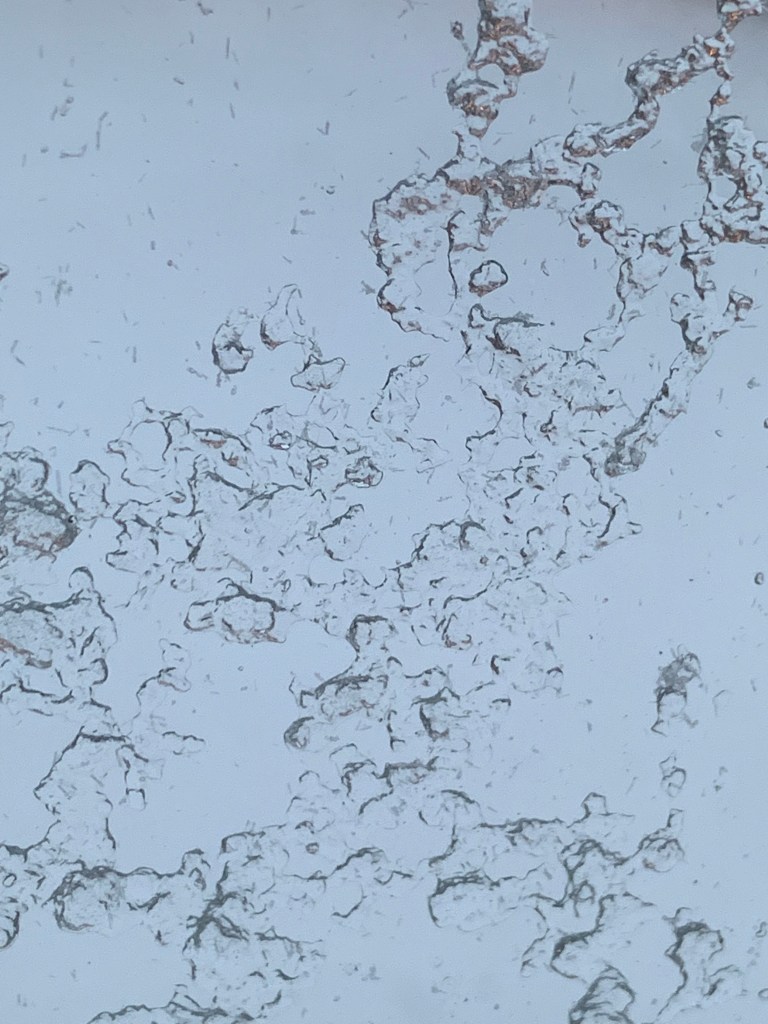
Ice crystals formed on our kitchen window during the latest storm. Kerri rarely takes a single close-up. She takes many shots of the same subject. In a digital age, she is also able to pull a single photo into several different focuses and takes screenshots of the possibilities. A fluid focus. She composes. She questions. She asks. It’s a pure artist’s action. Turning to me she never asks, “Which is better?” Instead, knowing the power of a frame and with full respect for the difference that I might perceive, she asks, “Which do you like and why?”

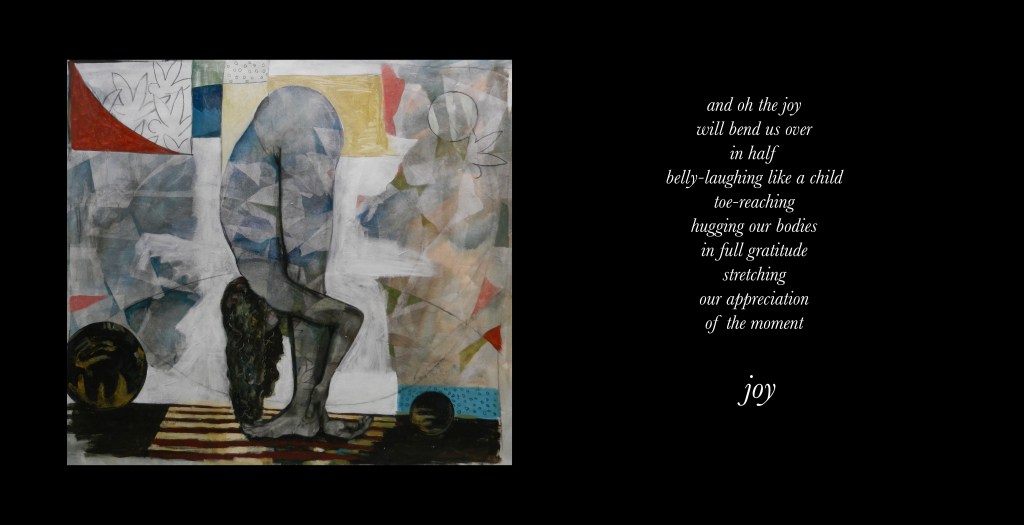
joy. 50x56IN mixed media

Two frames. Can you see them? [the new site is like a good wine…taking its time to mature]

read Kerri’s blogpost about ICE

joy © 2014 david robinson

Touch The Liminal [on KS Friday]

I did not know the word columbarium: a room or building with niches for funeral urns to be stored. Each niche, a life. Or two.

Bruce just sent an article from The Atlantic, The Eerie Comfort of Liminal Spaces. The article helped me put my finger on the feeling I had the day we interred Beaky’s ashes. Row after row after row of niches. I was oddly comforted standing in the Florida sun between the rows at the columbarium. I felt ancient and that feeling surprised me.

Liminal spaces are threshold places. I turned my face to the sun and appreciated how, in this liminal space, all the trials and tribulations of life fell away. The divisions dissipate. Sisyphus sits in the boat in the underworld and watches all the souls wander on the beach, believing that they are all alone, until they play out all the worries in their minds. Once their stories are “told”, they see each other, gravitate toward each other, and join together, becoming a single bank of mist. From one form into an other.

In this resting place, I felt the essence of the threshold. The comfort of a liminal space. The rows and columns are for those of us on this side of the veil. On the other side, the need to seek or tell or feel is suspended.

I reached and wrapped my fingers in Kerri’s hand. It was glorious, this capacity to feel, so under-appreciated every day. Here, I knew without doubt that touch is the ultimate liminal experience. Thich Nhat Hahn offered a meditation I appreciate (I can’t recall the book) that begins, “Darling, I am here with you.”

That sums it up.

Kerri’s albums are available on iTunes and streaming on Pandora

read Kerri’s blogpost about COLUMBARIUM

legacy/released from the heart © 1995 kerri sherwood

Cross The County Line [on Not So Flawed Wednesday]

Drive west from our house near the lake for a few miles and you’ll come to the interstate freeway that runs north to Milwaukee and south to Chicago. Cross under the freeway, continuing west and you enter what we call “the county.” Rich farmland. The freeway serves as a dividing line from urban to rural.

Sometimes it feels like crossing the line into another culture. Blue to red. The county redness puzzles me but that’s a topic for another post. We drive into the foreign culture with the same curiosity we might bring to Tunisia or India. “I wonder what they see…” is a common refrain.

Sometimes crossing the freeway line feels like an escape into open space and a breath of fresh air. Once upon a time we took Sunday drives; the point was to go get lost in the county. “Left or right?” Kerri would ask. Both choices leading to the unknown.

We are avid freeway avoiders. It doesn’t bother us to take extra time traveling to Chicago or Milwaukee on the backroads. Less aggression. We relax and enjoy the ride. Often, especially during rush hour, our backroads travel proves faster than the traffic jam.

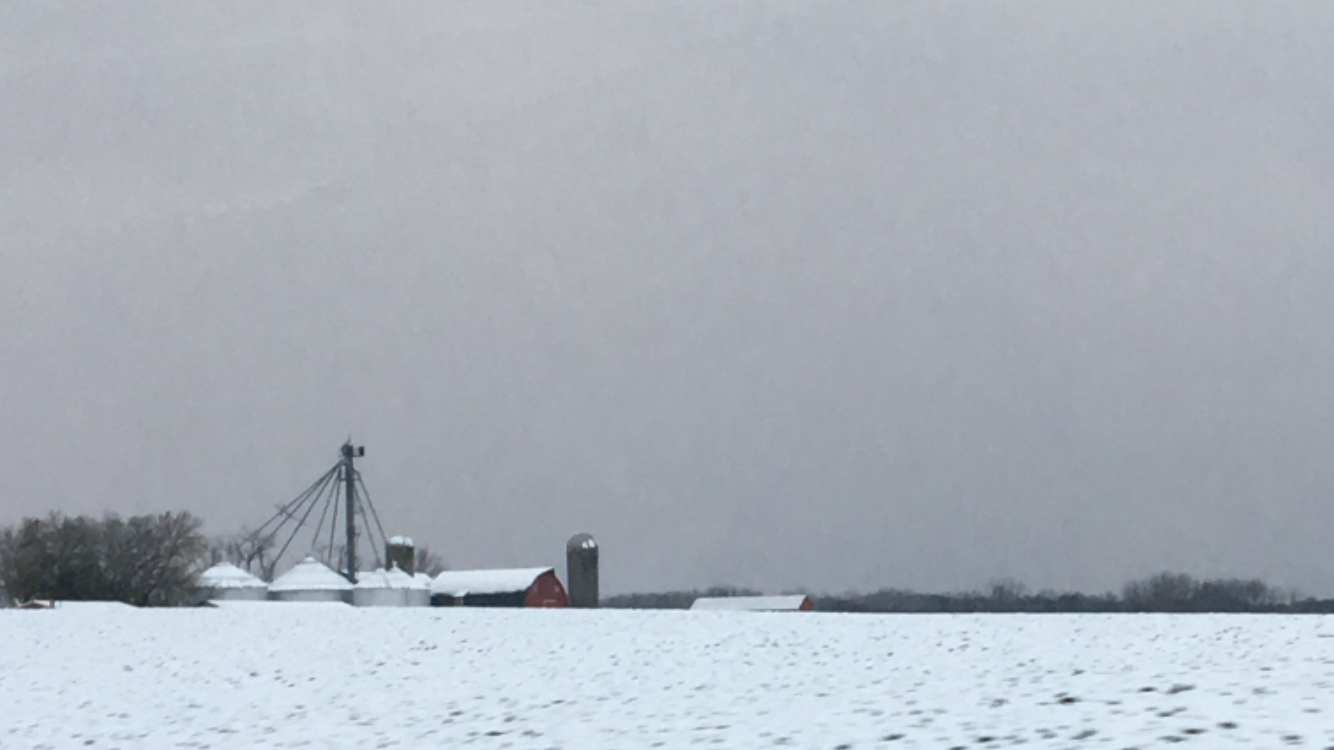
Last week, en route to the hand specialist in Milwaukee, we traveled our usual backroad path, winding through the county. There was no snow at our house when we left. We crossed the freeway into another landscape, blanketed with white. It was as if we crossed the line into another season. We entered an alternate reality.

“That’s so odd,” I said.

“No,” Kerri replied. “That’s the county.”

read Kerri’s blogpost about THE COUNTY

Recover The Reins [on Two Artists Tuesday]

“Things are not always what they seem; the first appearance deceives many; the intelligence of a few perceives what has been carefully hidden.”Phaedrus

My first question: is this the Phaedrus from Plato’s book or a quote from the guy who hung out with Socrates? Historically, they are one and the same person but one is a character and the other the person upon which the character is based. I suppose it doesn’t really matter since either way the words are sifted through time and translation.

And, either way, they are as relevant today as when they were spoken/written. They are especially relevant on this day since today we vote.

Phaedrus, the character-in-Plato’s-book, offers an analogy of the soul as a charioteer holding the reins of two horses. One horse is good and pulls toward the sacred. The other horse is bad and pulls toward material gain. The charioteer steers them to a common center. The middle way.

Things are not always what they seem. A wild teasel. A strawberry in a skeleton costume. It was my first thought when she showed me this photo. It’s appropriate to the Halloween season-just-passed and the election-day-present.

One thing is as it seems: this nation’s soul has lost the reins of the chariot, if it ever had them. The wild teasels are run amok, their pundits loudly claiming to be strawberries. Many are deceived and deceiving. Conspiracies. Angry thorns in their mouths.

The horses pull this way and that. They are quite capable of ripping the chariot in half.

Today we vote. Perhaps it is possible to see through the seeming. Perhaps we can recover the reins and bring our divided team toward a common center? A middle way?

read Kerri’s blog post about SEEMING

See Beyond [on DR Thursday]

I am amazed by nature. We learned in our visit to the botanical gardens that plants in tropical climates are a study in waterproofing. Waxy leaves prevent excess water from accumulating. Holes allow water and sunlight to pass through. It’s a masterclass in protection from algae. Adaptation, not resistance. Working with rather than fighting against.

My adult life has been a meditation on whole systems – which is quite simply a study of perception. It takes a human mind to separate the leaf from the branch from the trunk from the root. Separation and categorization is how we make sense of things. Analysis requires breaking-it-down. It’s easy to forget that those distinctions are in our minds and not in the world we observe. There is no separation of leaf from rain, not really. There is movement. Concert. Equilibrium.

Understanding requires reassembly.

To live creatively is to discover rather than invent. Thank goodness for the scientists teasing apart, deconstructing, uncovering, analyzing. I would not be alive today without their passionate pursuit.

And, while the scientist dissects, the artist reassembles. The reach for wholeness, the pull toward universal experience that cuts across division…I thank goodness each day for eyes that see beyond the separations, the capacity for utter delight and awe – standing in a garden – staring at a leaf made colander over eons of time.

read Kerri’s blogpost about HOLES IN LEAVES

eve © 2006 david robinson

Make [on Two Artists Tuesday]

“The origami crane has become a symbol of peace.”

Fold 1,000 cranes and your heart’s desire will come true. Legend will have it so. In Japan, the crane is a symbol of good luck and long life.

Making something into something else. Folding paper into cranes. It is, perhaps, the quality that defines us, makes us human. We turn the flow of water into the force driving the mill. We study patterns in stars and translate it into navigation. We smelt ore and hammer the elements again at the forge to make iron. We use the iron to make trains.

We make.

We look at flowers and see cranes. We look at clouds and see wild horses. We look at blank canvas and see possibility.

We make stories.

Our storymaking cuts both ways. We look at others and see friends; we look at others and see enemies. Either way, our looking is not passive. We make stories. We make connections. We make divisions.

We make wishes. Fold 1,000 cranes and your heart’s desire will come true.

Reach your hand to help. Slap a hand away. Either way, it depends on what story you see. What you want to make.

The story we create.

Folded paper. A symbol of peace.

read Kerri’s blogpost about CRANES

Live Like. Reach For. [on Merely A Thought Monday]

These messages are everywhere! Marketing tags, song and book titles, posters and billboards. memes. A sentiment also found in poetry, plays, and religious texts. Live like…

Live like you were dying (title of a studio album by Tim McGraw)

Live like a monk (title of a book by Daniele Cybulskie)

Live like there’s no tomorrow (A ubiquitous quote and set up for follow-up sentiments like, “Tomorrow may never come!”)

Live like.

Live. No guarantees. Dance like no one is watching. Be here now. If I was the rain.

It’s the message human beings like to deliver to other human beings. Don’t waste your one precious life. Realize it. Consider the lilies.

So the story goes, the Buddha was asked, “What’s the biggest mistake we make in life,” His reply: “The biggest mistake is to think you have time.”

It’s as if we were trying to wake each other up. Or, wake up to each other. It’s as if we need to say, “Don’t miss it!” It’s as if we are asking, “Will you help me see it?”

These days there’s plenty of fear-mongering spinning around the word “woke.” I wonder at this collision of universal message and partisan agenda. After all, what is the opposite of “woke”? Why would anyone want to walk through life dulled or asleep? Why would anyone want to walk through life with their eyes closed, uneducated, filled with answers but empty of questions? Why would anyone want you to close your eyes and mind and heart to the fullness of life?

An amazing thing happens when near death kisses open the eyes: all the perceived divisions drop away. People throw themselves on bombs to save other people, people give up their seat on the life boat and, in those moments, skin color, sexual orientation, or politics matter not at all. In Highland Park, while the bullets were flying, decisions made in helping others to safety and the promise of one-more-day-of-life had nothing to do with division.

In the real moments, the awake moments, people reach for other people.

Perhaps that is why we are appealing to each other in beer commercials and bibles, lyrics and legislation, to wake up.

read Kerri’s blogpost about LIVE LIKE