Bring Your Boon

This painting is called Icarus.

This painting is called Icarus.

During my call with Skip I used the word, “boon.” He scribbled a note saying, “You’ve not used that word before.” The word came up because he’s been overrun by well meaning advice-givers that think he needs to know about the hero’s cycle. Skip said, (and it’s true) that he’s forgotten more about the hero’s cycle than most people will ever know. “I’m a business guy so they think I can’t possibly know about it!” he exclaimed. “If another person tells me about the hero’s cycle I’m going to explode.”

My thought for him was to pay attention to why so many people are coming up with the same response when they hear about his work. What’s evoking the common response: have you heard about the hero’s cycle? I always pay attention when a book title repeatedly drops into my world (I get the book) or when a place or a metaphor seems to pop up everywhere. What’s there that I may be overlooking? What is hammering Skip that he may not see? That’s what sparked the word, “boon.”

When the hero (and we are all heroes in our personal story) emerges from the ordeal of change, when they escape the belly of the whale, they are transformed. They know something that they didn’t before understand. This is the boon. They have a new gift or insight that will, in turn transform the community. Personal change is communal change. They are one and the same thing.

There is a small catch when dealing with boons: communities (like individuals) talk a lot about the need for change but mostly resist it. When you are the bringer of the gift, the carrier of the insight, often you are not welcome when you share it. New insights are dangerous to the status quo. History is resplendent with visionaries banished for sharing the boon of their transformation or bringing to the community the gold that they need but are incapable of recognizing.

Skip has arrived back to the world with a boon. He sailed to the edge and has returned with strange knowledge and a unique perspective. His insight contradicts common models of business. His boon describes motion, a flow, which is hard to see when the landscape is dominated by bottom lines and outcomes. His community mistakenly thinks he needs to go on a hero’s journey when, in fact, he is just returning. His hands are full of gold that they cannot see.

The best we can do is share what we hold. How it is received is out of our hands. If it is received at all is not in our control. Vincent Van Gogh died having sold one single painting – and that to his brother. The glory of his life – and the lives of all visionaries – is that he kept painting regardless of whether the world might someday see the boon, or not. It didn’t (and doesn’t) matter. Bringing the boon home is all that is required.

title_pageGo here for my latest book, The Seer

Go here for Fine Art prints of my paintingsYoga.Meditation
Welcome The Bump

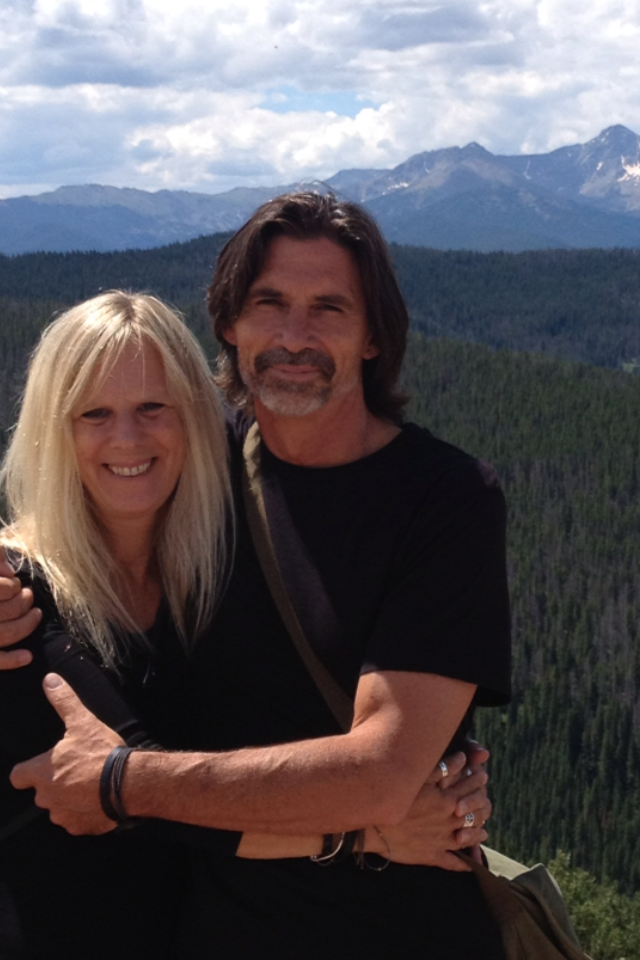
With Kerri on the top of a mountain

With Kerri on the top of a mountain in Colorado.

Just beyond Vail, Colorado there is a tiny two street town called Minturn. It began as a mining town when people were rushing for gold but these days it survives as a place for tourists. It is radically different than its founding fathers intended. We stayed there for a few days of rest and recuperation after our two-week double loop through Middle America.

The double loop through America was nowhere in the plan a month ago. Things just seemed to pop up. A death. Kerri’s daughter stumbled into a new job that necessitated an immediate move. Plans changed. Our intentions for the month went out the window. All of the artistry went on hold. We quickly packed the car and hit the road.

Just as plans change it is also true that change is rarely planned. I’ve yet to meet a person who doesn’t resist change (despite their rhetoric). Change requires a step into the unknown and that’s precisely the point: real change comes when we simply don’t know. Most of us like to know where we are going before we step. Change finds its way through the cracks that happen when patterns are disrupted, when things just seem to pop up, when we have no idea what the next step is. Change happens when we are making it up as we go. Change is a creative act, a tap dance on the event horizon.

Last week we drove to Colorado from Wisconsin through Iowa and Nebraska to attend my grandfather’s funeral. After the service we drove to Columbia, Missouri, crossing the full expanse of Kansas, to deliver some treasures from Beaky (Kerri’s mom) to Wendy (Kerri’s niece). Since we were driving to Denver, why not go home via Missouri? We returned home long enough to wash our clothes, pet the dog, and repack the car and head to Minneapolis. We packed up Kerri’s daughter and moved her to Vail via South Dakota with a sharp turn through Nebraska before arriving again in Colorado. After a rest in Minturn, a few hikes, some time with wine sitting on a porch, and a few precious nights with my parents, yesterday we returned to Wisconsin through Wyoming, South Dakota, and Minnesota.

It was a tap dance. Change found its way in as our patterns disappeared in the spontaneity of the double loop. We arrived home exhausted and exhilarated, with renewed eyes, a riches of profound and varied experiences, and much clearer intentions. What seemed initially like an interruption in our path was, in fact, a crack in the pattern, a necessary bump into the unknown.

title_pageGo here for my latest book

Embrace The Mess

circa 2011

circa 2011

I did not intend for this post to be a continuation of yesterday’s but when Amy climbed the stairs into the choir loft and said, “I don’t do change very well,” I laughed. It was word-for-word the same phrase that Kerri had just spoken.

For some reason, we’ve come to expect change to be comfortable and breezy. We expect ourselves to be paragons of reason in the face of imbalance. I find this ridiculous expectation of centered-off-centeredness to be suspiciously corporate. Apparently all change needs management and if it is not managed smoothly and without feeling or emotion then it is not well done.

Emotion is messy. Change is hard. The seed cracks before the tender shoot finds its way to the sun. The seed needs to crack in order for the new form to emerge. Hearts are broken, like seeds, to allow new forms to emerge. Even the “right” relationship is dynamic, messy, surprising, joyful, disappointing, filled with fear, the heights of elation, tenderness, quiet, and at the core is this volatile thing called love. Love burns hot during transformation; love is snuffed when excessively managed. Love is transformative when not unduly controlled.

Everyone does change well because change is the nature of our existence. Energy is always in motion. If humans are expert at anything it is change. We do change well because we can’t avoid it. What we do not do well is afford ourselves the grace of feeling the grief, the insecurity, the frustration, the anger, the joy, the exhilaration, and the dizziness that comes with change. We limit our emotional color palate when we confuse change with control. We do not allow ourselves the mess, the unpredictability, and the loss of balance that necessarily comes with this rolling vibrant transformation called life.

Amy would have been more accurate had she said, “I don’t do control very well.” I didn’t tell her the secret: no one who experiences the fullness of life does control well. In the face of her messy, volatile, change process, she wouldn’t have appreciated my counterpoint. When someone is standing in the middle of the muck it is cold comfort to tell them that they are in the right spot. So, I simply laughed, nodded my head, and said, ‘I know….”

Go here to get my latest book, The Seer: The Mind of the Entrepreneur, Artist, Visionary, title_pageSeeker, Learner, Leader, Creator…You.


Go here for fine art prints of my paintings.


State The Obvious

Sometimes it is necessary to state the obvious (to myself). Sometimes, for me, the potency of life is found in stating the obvious: children are born and children grow up. They leave home. They become parents. Parents become grandparents. Grandparents grow old and pass away. At no point do things stand still.

Or, the obvious can be stated another way: children have dreams. They pursue their dreams or run away from them. Either way, they pass through the stages of becoming – and, at some point, believe that they have actually grown into something (doctor, clerk, lawyer, teacher, vagabond, parent, athlete, etc.). They learn that their dreams are infinitely more complex than they realized. All dreams come with challenges, regrets, and discomfort. Regardless of the path, at no point do things stand still.

We want to “get there.” We desire to arrive. Usually, the misperception of arrival leads to crisis when things change. And things always change. This river of life never stands still. It is never static. It is never fixed. The moment of birth begins the progression to dying. And, depending upon what you believe, a new form always arises when old forms fall away. The new form, the new leaf, turns brilliant colors, withers, falls to the earth, becomes soil and mineral, feeds the root, and reemerges as the grape that ripens, is picked, and becomes wine.

Where is the arrival?

Even inner stillness is fluid. Try to hang on to it; grasping always disturbs the pond. Stillness is more akin to surfing than to stasis. Chaos and order are not opposite sides of a polarity; they are essential phases in a single cycle. Ripples are necessary to experience stillness. Fulfillment and emptiness are necessary to each other. One does not gain without losing. One does not live without dying.

There is no arrival. There are fluid moments of recognition, moments of presence (a word that is often mistaken for an arrival). Presence, otherwise known as consciousness, might be defined as the awareness and appreciation of each moment amidst the realization that things always change. To try and stop the river, to hold on to the moment, to try and stop time will always bring frustration. Presence describes your relationship with change.

This is the obvious thing: nothing is certain. Nothing is still. We always step into uncertainty. We always step. We are never still. Our steps are always into the unknown because no one has ever lived their moments prior to the living of them- despite what the to-do list and cubicle illusion might lead us to believe. Realize it and life is rich and mysterious. Resist it and life is rigid and rich with hardship.

Go here to get my latest book, The Seer: The Mind of the Entrepreneur, Artist, Visionary, title_pageSeeker, Learner, Leader, Creator…You.

Or, go here for a hard copy.


See The Force

from my children's book, Peri Winkle Rabbit Was Lost

from my children’s book, Peri Winkle Rabbit Was Lost

Bill is a board member for non-profit education organization and is forming a case for changing the curriculum. He’s asked me to help him shape his argument. The students going to the organization’s classes did not fare well in the public schools. As Bill wrote, most of the students are interested in the arts and there are no arts available. He wrote that the curriculum is mostly “traditional.”

Many years ago, my mentor, Tom, told me that the alternative schools were filled with artists, so Bill’s observation is not surprising. Anyone familiar with Howard Gardner’s work will recognize the notion that people learn in different ways. Desks are torture chambers to kids who need to move or manipulate things in order to process information. I was one of those kids and I can tell you that the word “torture” is not an overstatement. Even today, sitting is unproductive time for me. I do my best thinking while I walk or while painting. Staring out a window is also highly productive: after all, the imagination is a fancy dancer.

Bill is making the same wrong assumption made by all people interested in educational reform when they first wade into the swamps of change: he’s focusing on the teaching and the teachers. If only the teachers could see the value of working experientially, engaging the students in a real pursuit instead of an abstraction, all things would be better. On the surface, that might be true. What he’s not considering are the forces in place that require teachers to default to rote exercises, compartmentalization, and standardization. In his case (and all cases), the teachers are not being reinforced (paid) to engage the students on a learning journey; they are being reinforced to raise test scores. The change he seeks is not in the teachers or the teaching. He must address the forces of compliance that teachers, just like their students, must obey. He must address the systemic assumptions that define the expectations.

This is the same conundrum that organizations face when they desire their employees to work in teams but are structured to reward individual achievement. The desire for team is in direct conflict with the systemic foundations.

As Arnie recently reminded me, 1) our system of education was not created by educators, so 2) the aim was never to educate but to standardize. These two aspects, the structure and the intention, are powerful forces to change. They now define our assumptions of what education should be. Systems are living things, and, as I learned in school, will fight to the death just like all other living things.

Bill has his work cut out for him. Changing the focus of the teachers is the easy part and can only happen when the focus of the system supports the deep human desire to learn.

Go here to get my latest book, The Seer: The Mind of the Entrepreneur, Artist, Visionary, title_pageSeeker, Learner, Leader, Creator…You.

Go here for hard copies.

Let Owl Guide You

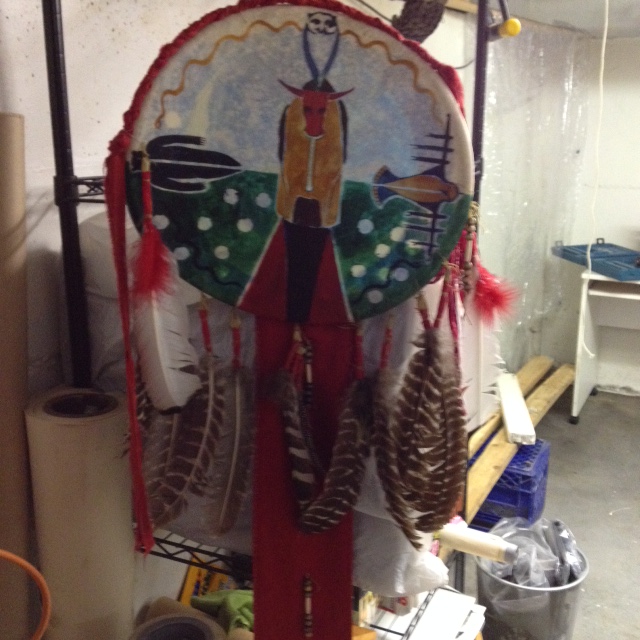
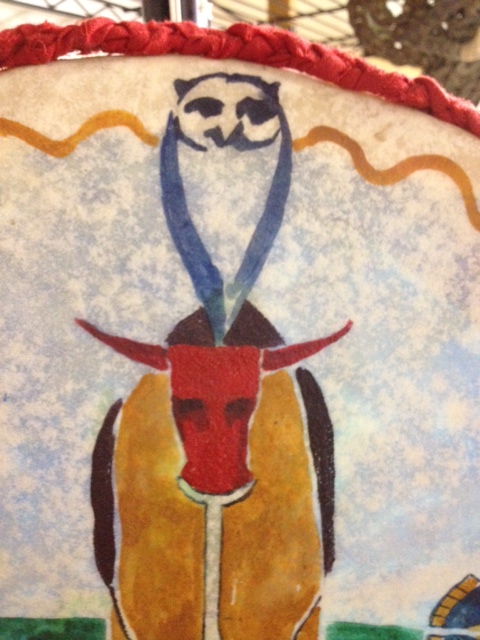
With the guidance of an elder, I made this medicine shield years ago.

With the guidance of an elder, I made this medicine shield years ago.

“Your vision will become clear only when you can look into your own heart. . . . Who looks outside, dreams; who looks inside, awakes.” Carl Jung

For a few disconcerting moments, I thought the crows had followed me across the country. You will remember that while living in Seattle, I was plagued by crows. They swooped me on a daily basis, picking me out of crowds for a sneak attack. I came to the conclusion that they were trying to wake me up. According to Crow Medicine, crows are an omen of change. When crows are around, something special is about to happen, consciousness is about to change and dis-ease will be dispelled. Since we can only connect the dots backward I can now say with great confidence that I took the medicine and it worked. They hammered me on the head for months before I stepped into the void and allowed new forms to emerge. Needless to say, I have a love-hate relationship with crows.

Yesterday afternoon our backyard was a festival of crows frantically barking. It brought back visceral memories and I went on high alert. As it turns out, the crows were focused on our owl and not me. I haven’t heard the owl since autumn and had forgotten that we have an owl in the backyard. I was happy that the owl was back. The crows were not happy as owls are great nest robbers and also, if hassled excessively, will make a dinner of an adult crow.

A detail from my shield. Owls have been with me for a long time. The owl is the top symbol.

A detail from my shield. Owls have been with me for a long time. The owl is the top symbol.

Last fall I googled Owl Medicine when the owl hooted above my head almost every night. I learned that, as a totem, Owls have great intuition. They follow their instincts. They see clearly (meaning they cannot be deceived). Owls see what others cannot. For instance, Owls see into the inner life of others; generally, they know more about a person’s inner life than that person knows about him or her self. This is why people do not sit next to me at parties! Also, owls are fierce warriors if something dear to it is threatened.

What a fantastic collision of bird archetypes for the crows and the owl to return to my world at the same moment. The owl was mostly indifferent to the incessant crow barking and attacks. There was no contest. In the evening the owl flew away to hunt and I wondered if there might be one less crow barking in the morning.

Both owl and crow are harbingers of change. They both speak to a comfortable relationship with the unknown and an attraction to the mysteries of life. I laughed when I re-read the symbols as I’ve lately been preaching through my book, The Seer (owls and crows are both seers) to cultivate “not knowing” as a necessary step on the path to health and creative vibrancy. In the practice of “not knowing,” one learns to see.

Later in the night, while driving back from Chicago, Kerri and I were talking about the extraordinary and meteoric changes in our lives this past year. She encapsulated my crow and owl commentary when she said, “We make plans according to what we know. It’s what we don’t know that changes us.” Her thought reminded me of another Carl Jung quote. He famously wrote that, “Religion is a defense against a religious experience.” Just so, a life plan is often a defense against a vital life. Adventure and discovery are never in the direction of the known. When you pay attention to the symbolic crow hitting you on the head you can also rest assured that when you step into the void there will always be an owl waiting to guide you.

title_pageGo here to get my latest book, The Seer: The Mind of the Entrepreneur, Artist, Visionary, Seeker, Learner, Leader, Creator…You.

Or, go here for hard copies (Amazon…Kindle version available here, too)


Stalk The Story

title_pageLast year I wrote a book and only recently got around to publishing it. One of the many benefits of waiting several months to publish is that I forgot what I wrote so, in preparing to publish, I got to read my book as if someone else wrote it. I got to discover my own book!

Now that the book is out in the world I’m receiving lots of requests to talk about it or coach to it. The requests are driving me to read it again and again – only through a different set of eyes each time. The question I’m asking myself is this: What is teachable beyond the obvious? I end each chapter with exercises and ideas but the real teachable moments happen within the story (just like life!). Here’s a “for instance” tidbit from the book:

When a story stalks you through your lifetime you inevitably learn some things about stories; you unwittingly stalk them, too. One of the first things I learned was that the word “beginning” is arbitrary. An end is always a beginning. A beginning is always an end. What we call a beginning or the middle or an end is really a simple matter of our point of view. It depends on what we see.

We rarely recognize the teachable moments in our lives. They seem so distant or have become so wrapped in justification that we don’t recognize them as opportunities for learning. A teachable moment is often embedded in the story that stalks you. In the book I weave the story of Parcival through the main narrative because Parcival gives his voice away. The main character of my book gives his voice away. He invests in the idea of what he should be and, so, loses sight of who he really is. He betrays himself. I’ve yet to meet a person who hasn’t given their voice away or lived from an image (a “should-do”) instead of honoring their “I-want-to-do.”  A moment of self-betrayal is a story that will stalk you all of your life. It will follow you until you reclaim your voice. And, the capacity to reclaim voice comes from a lifetime spent stalking the moment of self-betrayal. It’s a life story loop.

What are the stories that stalk you? The answer to this might not seem immediately apparent but if you take a moment and reflect you’ll likely come up with a moment (or several) that has shaped or continues to shape your life.

A moment of betrayal and a moment of reclamation might make a tight little beginning-middle-end story or might represent two beginnings or two ends, depending on how you decide to see it. Wounds are often opportunities for growth. Triumphs are often the beginning of a new chapter. We grow. We learn. We story and re-story ourselves. We give pieces away and reclaim them later. What’s important is that we learn to see our dance, capture the moment, and grow.

Go here to get my latest book, The Seer: The Mind of the Entrepreneur, Artist, Visionary, title_pageSeeker, Learner, Leader, Creator…You.
Go here to get hard copies


Wake Up

770. Join me in inspiring truly powerful people. Each day I will add a new thought, story or idea to support your quest and mine.

Last night I had dinner with a dear friend. We had not seen each other for months and had lots of ground to cover, lots of stories to tell, and lots of changes to report. We talked of our losses and our discoveries. We waded into our fears and confusions. We challenged each other to reframe certain parts of the story. We laughed.

I can’t remember another six month period in my life that has been this dramatic in terms of change and growth. Certainly there have been other periods of change – relationships ending or beginning, career pivots, moving to other parts of the country – but nothing that compares to the most recent period. And it continues. It is as if I am standing in a still center and watching the universe weave a new web around me. The old fibers are falling. Space is cleared. The new web fills the emptiness almost immediately.

A few days ago I began class by leading a meditation. It was a seed meditation. It began with a focus on the breath, the breath cleansing and clearing space for a seed, the space cradling the seed (each person was the seed), there was warmth and rest and protection. Finally there was impulse, a new form, a tender shoot cracked from the seed, pressed through the soil, broke through the crust and found air and the sun. And as the tender shoot drank the rays of the sun and grew toward the warmth, the seed sent roots in the opposite direction. There was growth in two directions, root fingers reaching deeper into the earth, plant tendrils reaching higher toward the sun, both drinking from life to come alive.

In talking with my friend I realized that the meditation perfectly described this period of change. The seed, asleep for so long, has cracked open and there is growth in all directions, deep roots reaching for warmth and stability while new vibrant stems lift and reveal leaves capable of absorbing more and more light, producing more and more growth. Life feeding life. Our discussion at dinner was not really about rapid change. It was about waking up. It was about refusing to sleep through another day of this lifetime. It was about drinking from life in order to return nutrients to life. It was about following the deep natural impulse to crack open and grow.

Call Your Name

697. Join me in inspiring truly powerful people. Each day I will add a new thought, story or idea to support your quest and mine.

It is not lost on me that I’m unable to get back to Seattle. The initial flight delay set off a ripple of stand-by lists with actual guaranteed seats on planes 2 to 3 days from now. I waved the white flag, let go of what I thought was so important, and decided not to spend 3 days in airports. Instead, I went on a road trip. I made a run for Omaha, renting a car and driving seven hours, into and through a white-out-snow-blowing-so-that-I-followed-the-tail-lights of the car ahead of me because I literally could not see the road. I talked with friends on the phone while I drove. I had hours of silence and quiet. I saw a part of America that I don’t often see because I fly over it instead of drive through it.

When I looked at the ticket agent and said, “I’d rather not wait in the airport,” she thought I was nuts. How could I make the decision to walk away? She said, “But, we can’t change and itinerary, we can’t transfer your flight to another city. You’ll have to buy another ticket.”

“That’s exactly right,” I thought. I would rather go off the reservation and drive, not knowing when or where I will find a portal into Seattle. Spending 3 days of my life sitting in an airport waiting for the smallest possibility of a seat on a plane seemed crazier than walking out of the airport and asking, “Well, what’s next?” I’ve spent too much of my life waiting for something to happen. I no longer have it in me. The ticket agent had a rule to follow and I realized that I did not. Rather, I have one rule and my rule is: don’t wait.

I have a mantra new to this year. It wasn’t a resolution; it just seemed to find its way in: Act. Try. Aim. In other words, practice what I preach: step into the unknown as a way of being, not as a once in a while activity. Act. I don’t need to know where I am going before I take a step. If something seems to take life from me, walk the other way. Try. See what happens. And then aim.

I now have a seat on a plane out of Denver on Wednesday. I will have driven or trained halfway to Seattle before getting on a plane. I’m having adventures, spending time with people I love, and not knowing what tomorrow holds. And, I am certainly more alive now than I would have been had I decided to sit and wait for my name to be called. “Isn’t it time.” I thought as I left the airport in my rental car, “that I started calling my own name.”

Die To The Past

683. Join me in inspiring truly powerful people. Each day I will add a new thought, story or idea to support your quest and mine.

Today, Diane and I talked at length about dying to our pasts. She shared a potent meditation image – looking from her grave and in death no longer being invested in the limitations and attachments that previously confined her life. Her fears no longer mattered. She let go of her past and in so doing opened the way for growth and a new relationship with her future.

In story cycles, a character must leave behind all that they know in order to step into unknown territories. It is the movement away from the known, the comfortable, and the safe that is the metaphoric threshold to adventure and transformation. Leaving behind what you know is “story language” for dying to your past. Frodo will always return to the Shire but he will be a greatly changed. The Frodo that leaves on the adventure is not the same Frodo that returns. He knows too much about middle earth and himself to resume his former identity.

The caterpillar’s body does heroic battle resisting the cell replication that will eventually bring re-formation to a new way of being called butterfly. The caterpillar’s body reads the sweeping tide of change as cancer and fights back. This classic struggle within the caterpillar’s body of change meeting the conservative impulse ends when the resistance ends; the caterpillar can fight no more and surrenders the struggle. The imperative for change overwhelms the old identity; the caterpillar’s body releases the known and collapses into mush. Only then can the new form materialize and the new form is beyond the caterpillars capacity to imagine.

Diane’s meditation, Frodo’s journey, and the caterpillar’s process of transformation are the same metaphoric image. Each had to die to the past to step into the possible. The lesson over and over again, whether in story cycles, nature or human transformation, is that the new identity will always be greater than our wildest dreams. The only requirement is that we surrender the struggle, leave behind all that we know, experience the little death, and take a step.