Ask, “Now What?”

photo-1On one of the many Post-It notes that line our idea wall is written, “Say ‘I Don’t Know.” It is especially relevant today as a few days ago, in a fit of spontaneous remodeling, we tore the five-decade-old laminate off the countertops. After the moment of deconstruction we looked at each other, shrugged our shoulders, and asked “Now what?”

I delight in moments like this for two reasons: 1) the first action (tearing off the laminate) always comes from years of wanting change but seeing only obstacles. In what feels like a spontaneous moment, the focus shifts from the obstacle to the action. 2) When the focus shifts only a single step is visible and that step is always some variation of, “I don’t know but I’m going for it anyway!” Second steps are generally invisible until there is a committed action, until there is a first step taken.

These two steps together are a good working definition for the creative process. Shift your focus from the obstacle to the only action you can see. Take the action. Repeat until the action takes hold of you.

The first step generally feels like deconstruction. It feels like breaking things or breaking out of things (like a focus on obstacles). A committed step into, “I don’t know” creates motion and motion begets motion. Rip off the old laminate without a plan and a plan will emerge. Or a mess will emerge followed by a new plan.

title_pageGo here to buy hard copies (and Kindle) of my latest book: The Seer: The Mind of the Entrepreneur, Artist, Visionary, Innovator, Seeker, Learner, Leader, Creator,…You.

Go here for all digital forms of The Seer.

Or, go here for fine art prints of my paintings (and other stuff, too)

Eve, by David Robinson

Eve, by David Robinson

Aim For The Field

An illustration from my children's book, Play To Play

An illustration from my children’s book, Play To Play

Lately, Saul the Tai Chi master has been much in my thoughts. It is now September and it has been a year since he taught me a lesson that has become the new mantra of my life: orient to your own concern. Actually, he said that I should look beyond my opponent into the field of possibilities and orient to my own concern. “In this way,” he instructed, “you will no longer have an opponent.” He used the word “opponent” loosely. Any limitation or form of internal resistance is the opponent.

Beyond the opponent is a wide-open field of possibilities.

In the intervening year I have learned that I have been both my greatest opponent and the one who can look into the field of possibilities. Isn’t this true of all people? All stories worth telling (and hearing) are ultimately tales of transcending the inner opponent. If you need help identifying your personal mythic journey simply listen to the areas in life in which you say to yourself, “I can’t.” In that place you will find your opponent. You will also be surprised to find that your inner opponent is most often an orientation to other people’s concern; the fear of what others might think is a mighty inner-monster creator.

I’ve also learned that Saul’s lesson has come to me in many forms throughout the course of my life. For instance, many years ago I directed plays and, because I am also a visual artist, I was often in the position of designing the sets as well. With great love and humor, another terrific mentor watched as I struggled with my dual role. He gently showed me that I was orienting my designs according to the budget and construction limitations I perceived. I was working in the wrong order, asking “how” before lingering in the potential.   He told me that I needed to “Live first in the possibilities.” Design/orient according to the potential and not the limitations.

To live first in the possibilities is to walk the imagination without a leash. It is to let the imagination run wild. What is beyond your capacity to imagine? What is possible beyond the boundaries of belief? At one point in my life cell phones were science fiction. Today, they are ordinary.

Look beyond the opponent. Orient to your own concern. Imagine how life might change if instead of asking, “Can we do this?” we began by asking, “What’s possible?” And then aim for the field.

title_pageGo here to buy hard copies (and Kindle) of my latest book: The Seer: The Mind of the Entrepreneur, Artist, Visionary, Innovator, Seeker, Learner, Leader, Creator,…You.

Go here for all digital forms of The Seer.

Yoga Series 7Go here for fine art prints of my paintings

End And Begin

Sand SpiralSome fragments of thought on common story phrases (and life):

Once upon a time. It started. The Big Bang! Movement from a single point, a center. Adventure requires a movement from center, a venture away from the known to the question. Moving from center implies imbalance and opens the possibility for a more expansive center. Here’s the paradox of moving from center: balance is everywhere and nowhere all at the same time. Every person is the center of their unique story. That will always be true: who else could star in your personal movie? Yet stories, in order to move, require imbalance. You know who you are, you lose who you are, you find who you are. Cells divide and divide again. The division is necessary for new forms to take shape. The encoding is already in there somewhere. The same is true of stories.

This is like that. Comparison. Simile. Metaphor. Analogy. It is why stories work. We compare ourselves to the protagonist. We are like him or her. Why do we tell the same stories again and again? Because we recognize ourselves in the story. Stories are like glue that binds a community. It’s why marketing works. To be more complete, you must buy this or wear that. Be like…. It’s all a story and in that way it is all made up, every category, every interpretation (see Once Upon a Time, The Big Bang, etc.).

And so the story goes. Chaos to order, order to chaos, generation to generation, winter, spring, summer, fall, winter, spring,…. This morning on our walk we watched parents take photos of their children as they returned to school. Backpacks, new clothes, and packed lunches; it’s the first day back. “Do you remember doing that for your kids?” I asked Kerri. She said, “It seems like yesterday.” It seems like yesterday when I was wearing new clothes and walking to school.

The End? An End? “The End” is definitive, singular. The Big Bang was a beginning but was it also an end? The end of one form is usually the beginning of another. Endings always lead to Once Upon A Time, don’t they? It depends upon where you stand or who’s telling the story or how you define yourself.

title_pageGo here to buy hard copies (and Kindle) of my latest book: The Seer: The Mind of the Entrepreneur, Artist, Visionary, Innovator, Seeker, Learner, Leader, Creator,…You.

Go here for all digital forms of The Seer.

Eve, by David Robinson

Eve, by David Robinson

Go here for fine art prints (and other cool stuff) of my paintings.

Greet The Day

photo-1Behind Beaky’s house is a retention pond. There is an alligator that occasionally breaks the surface and when it does I say, “Looking for poodles…” Kerri punches my arm and smiles.

The house is nearly empty; Beaky moved into assisted living almost 2 years ago and slowly her possessions have been packed or passed on to family members. It has been a quiet attrition, a gradual acknowledgment of the step into the next phase of life.

We stay in the house when we visit. We sip our coffee, sit in camping chairs, and watch the waters of the pond change with the progress of the morning sun. A cormorant comes each morning. It stands at the pond’s edge, spreads it’s wings, and drinks the sun. “It’s as if it is opening its heart to greet the new day,” Kerri says.

She tells me that the cormorant comes to the exact spot where, a year ago, her family gathered to spread her father’s ashes. A single cormorant came that day, too. In the middle of the rite, the bird landed, stepped into the setting sun, and spread it’s wings. Her father loved the pond. It was as if the spirit of her father came as the cormorant. It opened its heart. It greeted the sunset.

The news with Beaky is not good. I watched Beaky’s face as Kerri wheeled her from the doctor’s office. Beaky is no longer living, as she says, “indefinitely.” Her path is now definite (as I suppose all of our paths are truly definite even though we rarely consider it so). She looked relieved. She looked easy and quiet. Beaky said, “I’ve lived a good life! I’m ready.”

Now, as is true with abundant life, there is metaphor upon metaphor. There is the house. There is the alligator breaking the surface. There is the cormorant spreading its wings. There are cycles of life, passing moments, possessions never really possessed. There are stories made and stories lost. There is a family with an open heart, watching the progress of the sun, ready to greet the day.

title_pageGo here to buy hard copies (and Kindle) of my latest book: The Seer: The Mind of the Entrepreneur, Artist, Visionary, Innovator, Seeker, Learner, Leader, Creator,…You.

Or, go here for all digital forms of The Seer


OR! Go here for fine art prints of my paintings

I call this painting, "Canopy"

I call this painting, “Canopy”


Simply Listen

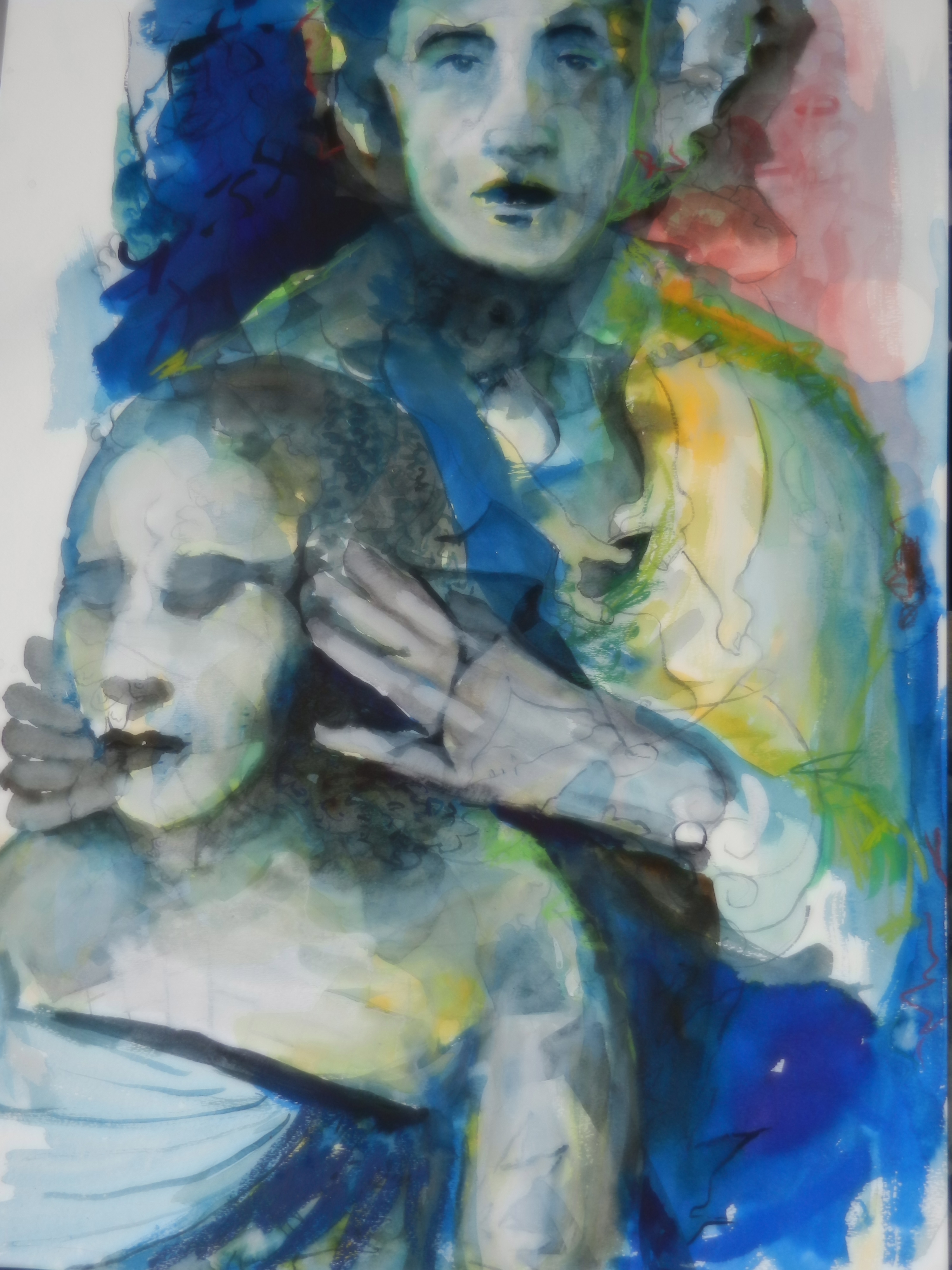
Pieta with Paparazzi

I call this one Pieta with Paparazzi

I am standing in a lobby listening to people compare their tragedies. It is more than comparison; it is a festival of one-ups-manship. “If you think that’s bad, my niece was just diagnosed with a terrible cancer….” The first speaker, now crestfallen, reaches into her story-bag of pain as another member of the group competes, “That happened to my brother just after his daughter was hit broadside by an enormous truck!” The group coos in sympathy, each in a hurry to make their personal story of hurt the center of the conversation. I wonder at their need to outdo each other in tragedy.

I suppose it is human, this feeding frenzy of drama. I want to reject my supposition outright. Suppose it is not human? I wonder if this dis-ease is cultural, an expression of the fragmentation that comes from the too-busy, the clan that avoids internal quiet at all costs, filling every moment with television, gaming, texting, emailing, gossip-news. As Anne Morrow Lindbergh wrote in Gifts From The Sea, it is impossible to know who you are without dedicated inner spaciousness and quiet. To listen to your self is the only way to really know your self. Filling the quiet space with incessant noise withers the root.

Maybe.

All stories require conflict to move forward but it is also true that the point of all storytelling is transformation. Through the conflict we are transformed. Perhaps that is what bothers me as I listen to this pain frenzy: the emphasis is on the suffering. The investment, the identity, is in the wound, not the transformation.

There is a simple Buddhist prayer that I like:

May I dwell in my heart. May I be free from suffering. May I be healed. May I be at peace.

The prayer is like a musical round that progresses from the “I” to the “You” to the “We.” The emphasis is on the transformation. It begins with dwelling in the heart.

Maybe.

What bothers me most is the absence of the capacity to listen. The first speaker needed to be heard, not outdone. I wonder what might have happened if the group had simply said, “Tell us.” I wonder what might have happened if they had been able to be present with another’s pain. To listen, simply to listen, must be a route to free each other from suffering, to heal, to create peace.

title_pageGo here to buy hard copies (and Kindle) of my latest book: The Seer: The Mind of the Entrepreneur, Artist, Visionary, Innovator, Seeker, Learner, Leader, Creator,…You.

Or, you can go here for all forms of digital options


And, you can go here for fine art prints of my paintingsYoga.Meditation


Choose Your Label

title_pageThe second recognition in The Seer is that your language matters. It is a curiosity to me that of the nine recognitions in the book, this recognition is the one that causes the most conversation and generates the most questions. My latest theory is the notion that the moment we tack a word onto an experience we are defining the experience; we are making a choice. Owning that we have the power to define our experiences through the way we think and talk about them means taking responsibility for our lives. Ownership of your happiness and power and thought might seem overwhelming or, as someone once said to me, “That’s pie in the sky!”

As the storyteller of your life, the language you use to tell your story matters. Try this exercise for a single day: express gratitude for everything – even if you don’t feel gratitude. Tell yourself in the middle of the traffic jam that you are grateful for the jam. And, if you are really bold and brave, take the next step and assign a reason for your gratitude: the traffic is slowing you down so you can breathe a bit amidst an otherwise hectic day. Express gratitude for everything: the meeting you will attend, waiting in the doctors office, the dishes you wash. By the end of the day, if you have been diligent in telling the story of gratitude, you might just feel it. You will certainly have no more doubt that you live life labeling your experiences. It is only a short hop from knowing you have the power to label your life to choosing the label.

Go here to buy hard copies (and Kindle) of my latest book: The Seer: The Mind of the Entrepreneur, Artist, Visionary, Innovator, Seeker, Learner, Leader, Creator,…You.

Go here for all digital forms of The Seer.

And, for fine art prints of my paintings, go hereYoga.Meditation

What’s The Story

This is a very old watercolor that I called The Inner Monologue

This is a very old watercolor that I called The Inner Monologue

All the ladies were talking about how their bodies have changed with age. My body has changed, too! You’d never know it now but I used to be less than two feet tall with really pudgy knees. Kerri punched me when I offered my perspective on my body change. Apparently there is a statute of limitation for how far back in time you can go on the my-body-has-changed conversation.

When I was studying acting we were taught to write backstories for our characters. The play script was filled with clues but we learned that a character is not 3 dimensional until it has an articulated history. This was always problematic for me. I had no problem creating a backstory – that was easy – and I could justify my imagined story happenings in the script – but I couldn’t see how my imagined story led to more specific actions in the performance. If anything, the backstory got in my way. Like all young actors I got lost in the backstory, trying to “tell” it rather than pursue my clear action. Acting, like life, is about the pursuit of desire. My backstory muddied my ability to act. Acting is an art form of the present moment.

When I was teaching acting I came across the same problem. The young actors would spend hours telling me the details of their backstory which only served to diffuse their present action. They’d try to perform their history instead of pursue their current target.

The backstory was interesting but functionally useless in the present moment.

I’m finding the same challenge off the stage as I found on it. In one form or another I’ve coached a lot of people. I hear a lot of backstories. Our backstories are interesting. They do what they are meant to do: they give us identity. We spend hours and hours telling each other about our past adventures and abuses. People are storytellers, telling the story of their lives all day, everyday. Most of the storytelling concerns the past. What we did or did not do, what was done to us or justifying what we did to others. Most backstories are about limitation. Most backstories have a root in fear that show up as “reasons why I can’t” stories. Do you remember the famous Richard Bach quote? Argue for your limitations and sure enough they are yours. As interesting and informing as it is, very little of the backstory is functionally useful in the present moment. I don’t want the person I was a decade ago defining the choices I make today.

It’s become something of a mantra for me, something I find myself writing or saying a lot: The actions we need to take are usually very simple. The story we wrap around them make them difficult. What’s the story?

title_pageGo here to buy hard copies (and Kindle) of my latest book: The Seer: The Mind of the Entrepreneur, Artist, Visionary, Innovator, Seeker, Learner, Leader, Creator,…You.

Go here for fine art prints of my paintings:

This painting is called Icarus.

This painting is called Icarus.

Love The Game

Dog-Dog-Dog in the joy of the pursuit

Dog-Dog-Dog in the joy of the pursuit

Tripper Dog-Dog-Dog likes to chase bumblebees. He snaps at them in an attempt to catch them. He never catches them but that does not deter his endless attempts or the glee of his pursuit. He loves the chase. He loves it.

Tripper Dog-Dog-Dog also loves to be chased. He only requires something to carry, something to claim that makes the chase necessary. Any stick will do. I walk to the center of the yard, pick up the most available stick, he takes it from my hand and races away. My job is to give chase (as I pursue the Dog-Dog, I say again and again, “Give me my stick!” as if the stick was mine. Such is the power and grace of the human imagination!) Wild-eyed and joyful, he races around the yard at Mach speed, a bumblebee to my snapping dog. I never catch him but that does not deter the glee of my pursuit.

Dog-Dog is teaching me the secret to a joyful life. It is simple: love the chase. It is the glee of the pursuit. As James Carse wrote in Finite and Infinite Games, the point of the game is not to win but to continue the play. The point is to become a better and better player. In an infinite game, winning is not an outcome, it is a way of being. The point is to love playing.

I am grateful that Tripper Dog-Dog-Dog leaps for bees that are nearly impossible to catch. I am grateful that Tripper Dog-Dog-Dog runs from me even though he knows I will never catch him. When I am too tired to continue the chase, he drops the stick and circles back to where I stand huffing and puffing, ready to give him a few pets. His entire body wags with delight. His eyes shine with the thrill of the game and I laugh at his unbridled enthusiasm. He teaches me without using a single word. When I’ve caught my breath, I’ve learned to say, “Hey! Where’s my stick!” Picking any twig from the ground, he snatches it from my hand and we are off and running.

title_pageGo here to buy hard copies (and Kindle) of my latest book: The Seer: The Mind of the Entrepreneur, Artist, Visionary, Innovator, Seeker, Learner, Leader, Creator,…You.

Yoga.ForwardFoldGo here for Fine Art prints of my paintings

Tap Your Wellspring

photoThe winning phrase of the week is “Wellspring of jubilation.” It came as a wish, “May you always drink from the wellspring of jubilation.” What a great image!

A wellspring is no ordinary spring. It is a source, a beginning point. The phrase made me ask more than a few good questions. For instance, how would I live my life if I was sourced from a wellspring of jubilation? Or, a more useful question: what is my wellspring? Where do I draw inspiration?

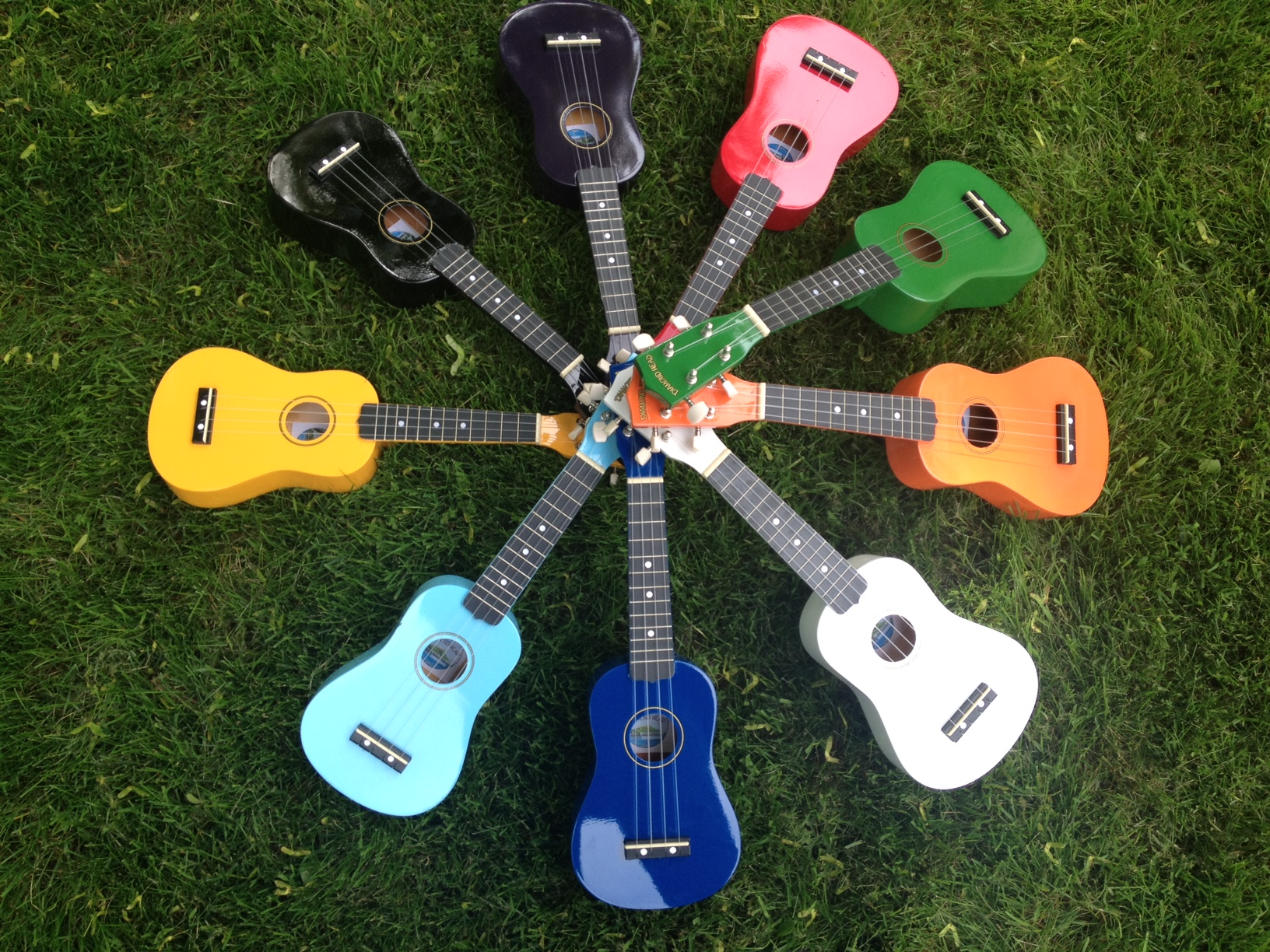
Last night on our back deck we held ukulele band practice. We are rank beginners but we played our notes with gusto whether they were right or wrong. We laughed. We sang so loud that a neighbor down the street got on her bike to seek the source of the music. What is the source of the music?

Jay brought a travel guitar to the ukulele practice to lend to Helen. Helen is petite and wants to play the guitar but is having a hard time finding one small enough for her hands. After the ukulele practice, Kerri held the guitar and played a few chords for Helen and the chords morphed into an old John Denver song. All the women began to sing. The sun was setting, the women were softly singing, and Helen’s face was beaming. She’d found a guitar that she could play. The moment was pure and stopped me in my tracks. It is a gorgeous moment when desire meets potential and possibility is born. This moment was a drink from the wellspring of jubilation. It filled me.

Jubilation is rejoicing. It is celebration and sometimes celebration is quiet. Sometimes rejoicing is a song whispered with friends as the light of day passes from pastel to gray. As I listened to their song, as I watched the faces of the singers, I decided that the wellspring of jubilation is everywhere. I am capable of being in my wellspring all the time. It is not location specific. The source of all things that inspire me is not a place: it is an orientation to my life. It is the simple act of paying attention; seeing the moment, participating in the ordinary that is extraordinary and knowing beyond doubt that the extraordinary is everywhere.

The extraordinary is happening all of the time. The question is not, “Where is it?” The question is, “Can you see it?”

title_pageGo here to buy hard copies (and Kindle) of my latest book: The Seer: The Mind of the Entrepreneur, Artist, Visionary, Innovator, Seeker, Learner, Leader, Creator,…You.

Go here to get fine art prints of my paintingsEmbrace

Speak Your Truth

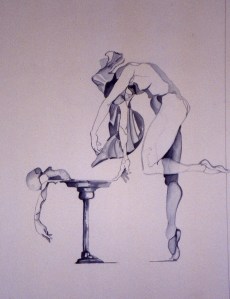
old photo of an old watercolor. I did this painting sometime in the 1980's

old photo of an old watercolor. I did this painting sometime in the 1980’s

Words hook me and lately I’ve been paying attention to the difference in the phrases:

  • Speak the truth, and
  • Speak your truth

One word makes a world of difference! Literally, an entire world of differentiation is made in one little word. “The” truth or “your” truth?

Outside of every courthouse in America is Lady Truth wearing a blindfold and holding a tipping scale. The idea is that truth is objective and fact based. Truth, so the symbol implies, is blind to any personal consideration and justice is equal to all who enter the marble courthouse. It’s a concept that was firmly ensconced in the age of reason with roots running back to the Greeks: truth is something neutral, measurable, concrete, fixed, and external. In such a construct, inner truth is suspect because it is subjective and, at best, fluid.

I’ve sat on a few juries and was reinforced in the notion that the lawyer who told the better story always wins. Truth in the courthouse was as malleable as truth outside the courthouse. The point of the whole exercise, a prosecution and a defense telling opposing stories to a captive group of citizens, is an exercise in subjectivity. Whose version of truth do the captive citizens embrace? Truth, in the courthouse, is an agreement.

Also, there are a myriad of forces at play in the epicenter of the symbol and few are fixed, blind, or measurable. For instance, a public defender with a mountain of cases does not stand a good chance against a modestly prepared prosecution. The story is already tipped when the circumstance of the play is “someone stands accused….” If truth were fixed and measurable, millions of Americans would not be glued to their televisions each night watching Law & Order. Truth makes for good drama because it is a matter of perception. Truth is perception.

We live in the age of news as entertainment (I’d make an argument that we’ve digressed into the age of news as marketing ideology – but that is a post for another day). For instance, listen to the news as told by MSNBC and then flip your dial to FOX NEWS and you’ll see what I mean. Then, for grins, listen to the same series of stories as reported by the BBC. We regularly apply two words when debating our news-of-the-day that make me shake my head with despair: slant and spin. Truth is what we want to believe – or, more to the point, what others want us to believe.

And therein lies the hook. Because we hold dear the notion that truth is neutral, external, and objective, despite overwhelming evidence to the contrary, we are willing to abdicate personal truth. We blunt the inner guides for what we are told to think, feel, and believe. We become passive. If truth is fixed and external then the inner voice is all but meaningless. Self-doubt is the blossom. The symbol of blindfolded Truth is accurate but it is a different kind of blindness. Seeing is as much internal as external. Experiences are interpreted; there will always be conflicting points of view. That means there will be multiple truths. Always. Isn’t that the definition of subjective?

The only real measure that matters is inner truth. At the end of the day, in the dark of your private space, there is no one other than yourself to ask (and answer) the question, “Did I speak truth or did I spin things.” Words matter. Words create. Truth is the name we give things.

title_pageGo here to buy hard copies (and Kindle) of my latest book: The Seer: The Mind of the Entrepreneur, Artist, Visionary, Innovator, Seeker, Learner, Leader, Creator,…You.

Go here for all forms of digital copies

Go here for fine art prints of my paintings
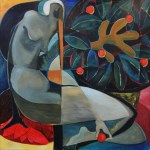
Eve, by David Robinson

Eve, by David Robinson