Look To Each Other

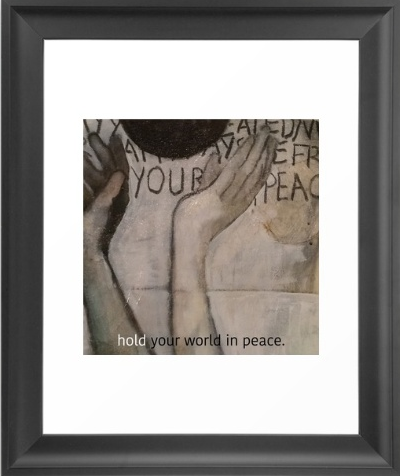
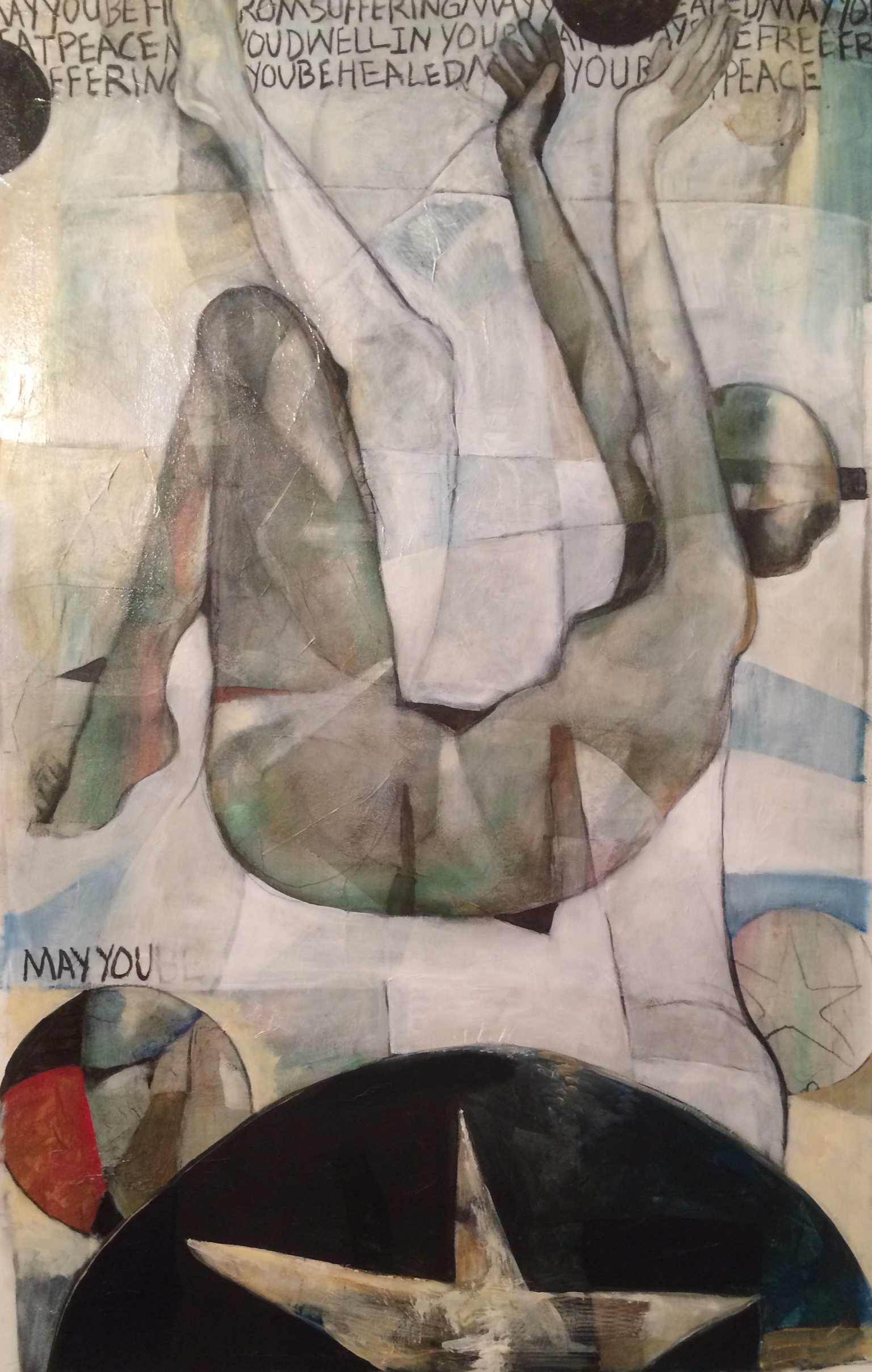
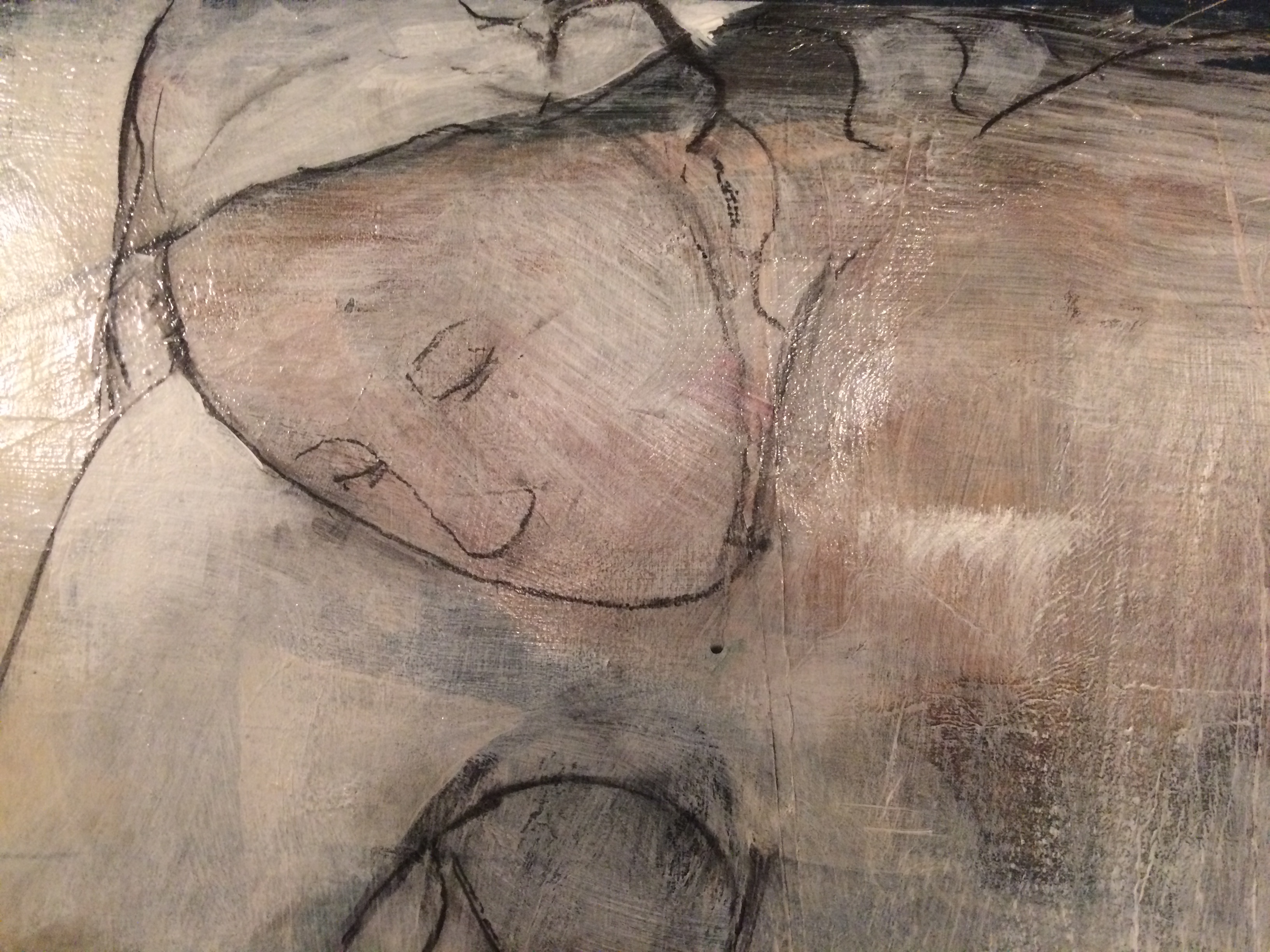
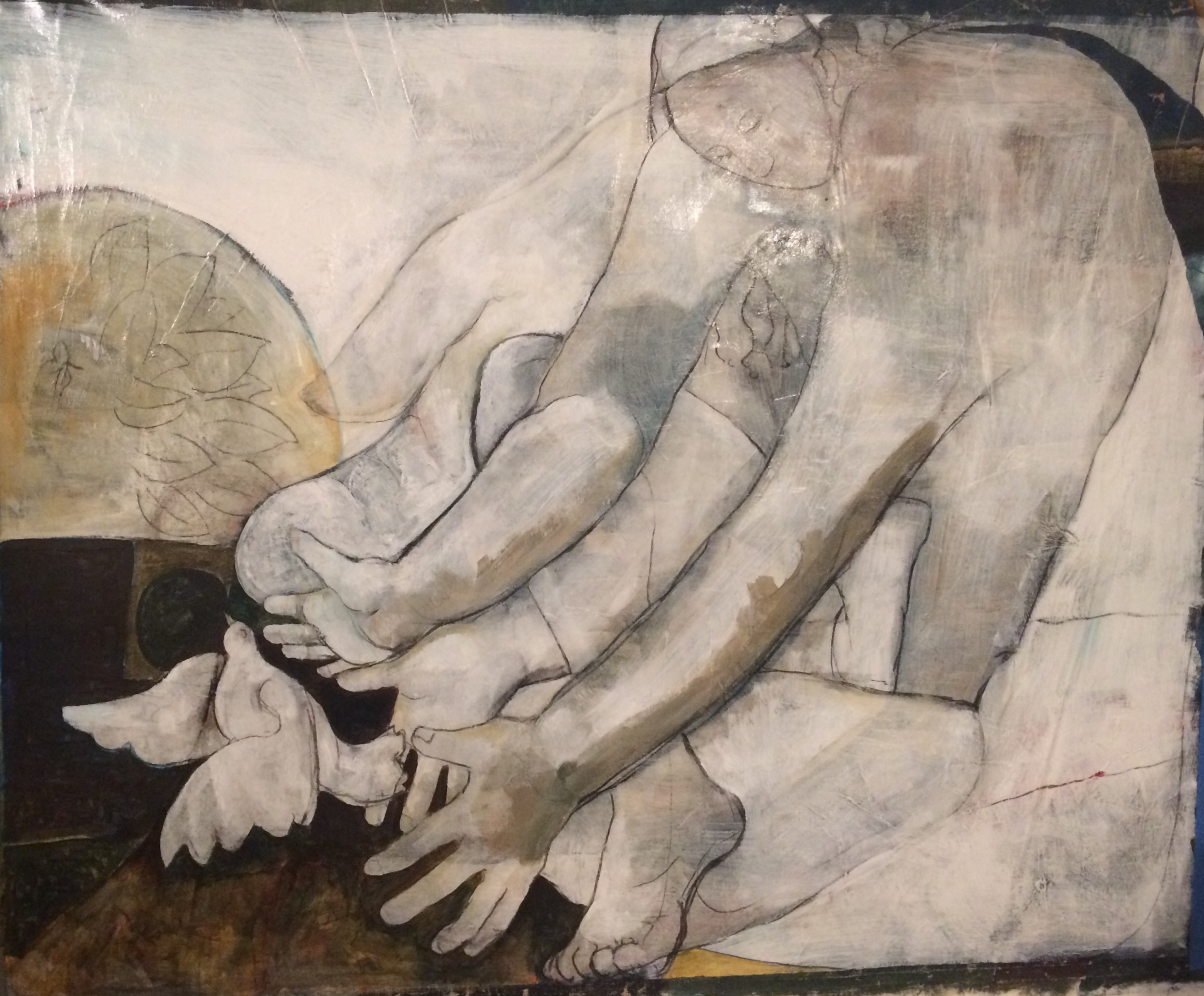
my latest work-in-progress

my latest work-in-progress

Josh laughed from the back seat of the car. He read aloud the text that made him laugh: I’m in MoMA (the museum of modern art) and someone dropped a glove. Now, people are walking around it because they don’t know whether it is art or not!

I’ve spent a goodly amount of my time on the planet in museums of contemporary art and know that most folks passing through the museum have the same confusion about the pieces on the walls. What makes something art and something else not-art?

Almost a century ago Marcel Duchamp entered a urinal in an exhibition and gave it the title, “Fountain.” At the time it was scandalous and now represents a major milestone in art history. Today, a urinal in a museum exhibition would get the same treatment as the glove on the floor: confused consideration. Is it or is it not art? The beauty of the glove moment, the thing that binds it to the urinal moment, is that, in both cases, the gallery goers looked to others, perfect strangers, to ascertain a proper response: it is art if they say it is. Art, in this case, is an agreement.

This agreement, looking for approval about how to behave when confronted with the art-or-not-art question may seem superficial until you consider that recently people in Paris lost their lives over a disagreement of what was art and what was not. In recent history (2001), the Taliban destroyed centuries old giant statues of the Buddha in the Bamiyan Valley. They considered the statues idols (not art) and dynamited them off of the face of the earth (I will leave you to discover and ponder the irony between my Paris and Bamiyan Valley examples).

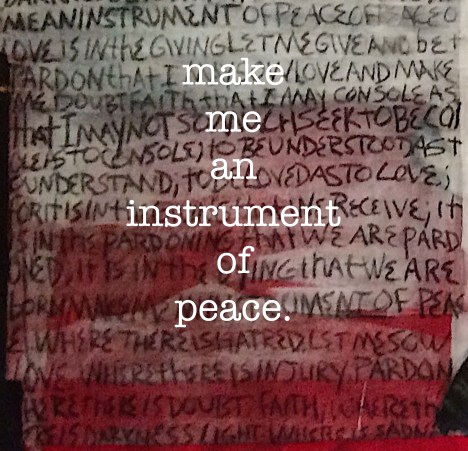
the words written into my work-in-progress

a close-up: the words written into my work-in-progress

Art is meant to open our perspective, to make us question, to help us see. A society that is capable of seeing is also a society that is capable of questioning; they go hand-in-hand. Questioning is always present when people are growing – so is art. Questioning also begets tolerance – it requires us to doubt our perspective and consider the view from someone else’s shoes. In these times when I hear someone bemoan the end of civility and the horrors in the world, I wonder if they’ve argued to cut art from the schools or  recently attended a concert to hear music to move their soul. Art is dangerous to leaders who like their people blind. Art is offensive to people who want their community thought-less. I delighted that somewhere in the world, in a museum of modern art, a group of people walked around a lost glove and looked to each other for guidance.

title_pageGo here to buy hard copies (and Kindle) of my latest book: The Seer: The Mind of the Entrepreneur, Artist, Visionary, Innovator, Seeker, Learner, Leader, Creator,…You.

For all manner of digital SEER copies, go here

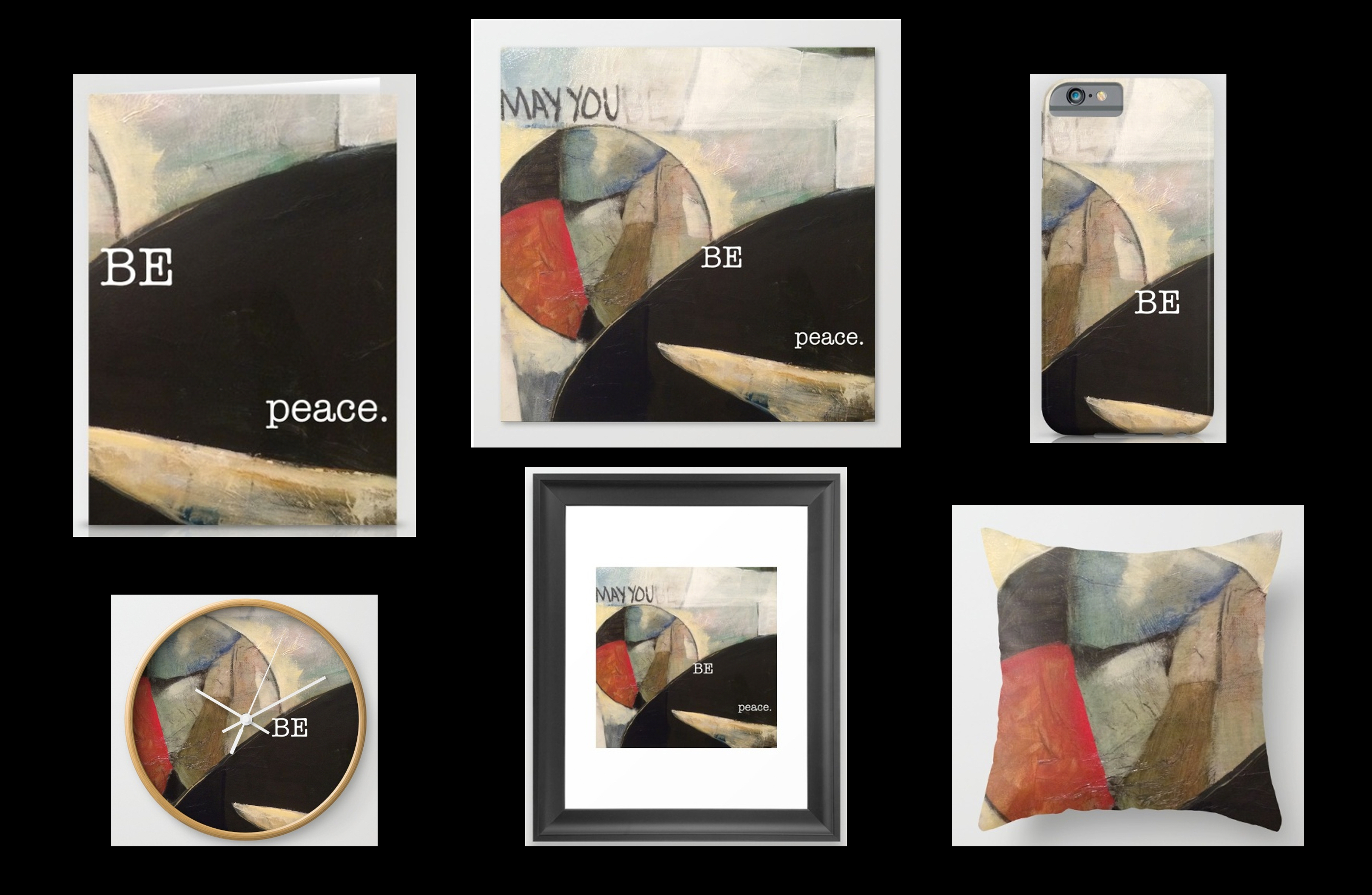
Yoga.ForwardFoldFor posters and prints of my paintings, go here.

Do What Is Most Natural

IMG_0817The snows have come. The temperatures are grindingly low. Sitting at my desk, staring out the window at the world’s hibernation, I had a few thoughts about transformation. Actually, just before coming to the desk I flipped open the Bibles of Mankind for my random-thought-of-the-day. Today I landed on the Tao and specifically, this line: “By a transformation they live. By another transformation they die.”

In our births and our deaths we are all experts at transformation. In fact, in our progression through the many bodies we will in habit, the many phases we will navigate during the span of our singular life, we need not think about transformation or try to achieve it. Transformation is what we do. It happens. Track the progression of any life from infant to old age and you will witness a remarkable transformation.

I’ve just completed the first full cycle of seasons in my new home. Because it is all new to me, I’ve had the eyes to see the nuances, the profound changes in the trees, the lake, the rhythms of life including the migrations of geese. Nothing is normal (yet) so everything is special and alive. The cycle of the seasons, like the continual movement through the long body of life, is an ever-present transformation. The seasons do not try to transform; they are transformation.

People think they need to intend transformation. We seem to think we need to work at it to achieve it and somehow do not transform if we don’t marshal the process. Consciousness, like the body and the cycles of the seasons, transforms whether we intend it our not. That is the nature of consciousness. That is the natural movement of awareness.

title_pageGo here to buy hard copies (and Kindle) of my latest book: The Seer: The Mind of the Entrepreneur, Artist, Visionary, Innovator, Seeker, Learner, Leader, Creator,…You.

'Dancing In The Front Yard' by David Robinson

‘Dancing In The Front Yard’ by David Robinson

Go here to get posters and prints of my paintings.

Begin Here

photo-6

Begin Anywhere

In our house, hanging on the wall like a painting, is an old window frame. In the top pane is a card that reads, “Begin Anywhere.”

Earlier this week I had a great conversation with Diane. She laughed and said, “In my meditations I was whining to God because I wanted to see the plan of my life. I got the clear message that I was never going to see the plan but I could always see the next step. The next step is always right in front of me.” Dancing with what’s right in front of you is sometimes called faith. Sometimes it is called play. Sometimes it is called art.

Diane and I are good reflectors for each other; we are usually on parallel paths. For both of us, the past year or two has been a process of letting things go and stripping things back: paths, patterns, and presuppositions. It has been the mother of all house-cleanings (she had a literal flood!) and, like all good house cleaning it took some elbow grease and few hard decisions about what to keep and what to throw. After the job is done, nothing feels better than a clean house and along with the good feeling, new space, and wide-open possibilities, comes the question, “What’s next?”

Diane told me her story because my next step is so clear that I can focus on nothing else. With such a myopic focus I can see nothing else and that’s why I called her. I must do this play. I must. I cannot see beyond this dance. It is my first thought in the morning. It is my last thought falling into sleep. This step, my dance with The Lost Boy, makes no sense and Diane’s point was well taken: the next step rarely makes sense. Sense-making requires context. Sense-making is a skill of relativity – and since we can never know the plan (if, indeed, there is one), we can only make sense based on old information. That is good news for plumbers but is dubious at best for leaders, explorers, seekers, and artists.

After our call I realized that dancing with what’s right in front of me is how I paint. It’s also the key to a good conversation – and painting, for me, is a good conversation. After my good conversation with Diane, she sent me an email of affirmation and concluded her thoughts with this: “Stay focused on what is before you now and let the creations show you how and when they are ready to play.”

title_pageGo here to buy hard copies (and Kindle) of my latest book: The Seer: The Mind of the Entrepreneur, Artist, Visionary, Innovator, Seeker, Learner, Leader, Creator,…You.

For all digital forms of The Seer, go here

Yoga.ForwardFoldFor posters and prints of my paintings, go here


Hear The Voices

photo-2This is the most unusual rehearsal process I’ve ever navigated.

First, I wrote the play and in preparing to perform it, I’m discovering it anew as if someone else wrote it. There have been brilliant and funny moments when I ask myself, I wonder why he wrote that? The good news is that I remember whom to ask.

Second, the play was originally meant for Tom to perform and since the story is Tom’s family narrative, I wanted the language and syntax to be Tom’s. In development, I recorded hours of conversation with him. Much of the first draft was a transcription so that I might capture word-for-word his language choices and speech patterns. Those structures survived the several rewrites that happened after Tom’s death. In preparing to perform the play I’m wrestling with the language. I’m wrestling with his language. It is almost as if I am discovering my own speech patterns and syntax – in telling Tom’s story I’m finding it necessary to tell it my way, not his. Essentially, as is true in all good storytelling, I am finding myself, my voice, through his story.

Tom and me a long time ago.

Tom and me a long time ago.

Finally, the music is a character in the play and the musicians, Mom’s Chili Boys, are madly rehearsing in California while the actors (Kerri and I) are rehearsing in Wisconsin. The internet is a beautiful thing as, each day, we pass notes, record voices, email questions; we will only be together in the same room 3 days before the first performance. We’re essentially workshopping the play from two locations. It is akin to rehearsing a symphony in parts and the parts only come together in the final day. They get to experience the whole symphony, the fullness of their music as played through all of the voices, only in the final hour. And that will be true of this play.

Each day I rehearse and I hear Tom’s voice in my head, telling me the stories that comprise the play. I am reminded that, whether artist or audience, art is a living thing. It is a relationship and ultimately that relationship is with your self.

title_pageGo here to buy hard copies (and Kindle) of my latest book: The Seer: The Mind of the Entrepreneur, Artist, Visionary, Innovator, Seeker, Learner, Leader, Creator,…You.

For all digital versions, go here (Leanpub)

Untitled by David Robinson

Untitled by David Robinson

Go here for fine art prints of my paintings.

Look Up

Eve, by David Robinson

Eve, by David Robinson

The nights have been bitter cold and clear. The cold always seems to make the stars sharp like crystals. Standing on the back deck, looking at the stars, I remembered a conversation I had years ago. I was working with students and we strayed into a discussion of human beings connection to the stars. It was cosmology in a nutshell.

Here was the gist of the conversation: something happened to human consciousness when they (we) understood that our patterns of life on earth were (are) oriented to happenings in the sky. For instance, our impulse to worship is intimately connected to the solstice and equinox: the disappearance and return of the light. Our migration habits, planting habits, daily rising-and-shining habits are relative to the movement of the sun. The tides in the ocean and the waters in our body are responsive to the pull of the moon. With the awareness, we crossed a line from chaos to order, from unconsciousness to consciousness. There was a relationship, a pattern, a belonging, a participation. There was something bigger.

During that same period in my life I also worked with a group of inner city students who had never seen the stars. It was a revelation for me. For them, there was no sense of relationship, there was no “something bigger.” There was a load of anger and existential separation.

This holiday season, I was struck by two things: 1) how many times I had conversations with people, glued to their televisions, who are frightened and feeling helpless by the happenings in the world, and 2) how many casual family photos crossed my path featuring a gathering of individuals, alone together, faces to smart phones. Everyone was looking down.

Standing on the back deck on a dark and starry night, wrapped against the cold, I wonder what some distant teacher in the future will tell his or her students about what happened to human consciousness when they (we) ceased looking up.

title_pageGo here to buy hard copies (and Kindle) of my latest book: The Seer: The Mind of the Entrepreneur, Artist, Visionary, Innovator, Seeker, Learner, Leader, Creator,…You.

Yoga Series 7Go here for prints of my paintings

Make No Sense

Untiltled Narrative by David Robinson

Untiltled Narrative by David Robinson

The cliché: life is a cycle. Order begets chaos and chaos begets order. Both are necessary. Just as spring is not possible without winter, order without chaos makes for only half a life. Safety without uncertainty makes for only half a life and a very boring life story.

Ann passed away last night. Her battle with cancer was long and nothing short of heroic. Kerri said, “She was such a bright light! Damn cancer. This makes no sense.” Too true.

Last night, John came back into our lives. We sat for hours talking of the events and changes of the lost years. He told us of the necessity to finally stop trying “to make things work” and how he stepped into the discomfort of uncertainty. Now, standing solidly in his uncertainty, he feels both lost and found. That is a great description of how change feels. We got the news of Ann’s death while John was visiting. We had a glass of wine and made a toast to her life. And then we made a toast to appreciating life in all of its textures. John said, “At the end of the day, all that really matters is a bottle of wine to share with friends.” Too true.

More clichés: rejuvenation necessarily begins in the province of disorder and the unknown. The journey back to self winds through miles and miles of uncharted territory.

Each journey is made beautiful by the monsters and masters we meet along the way. Both are teachers. Both bring gifts and force changes of direction. The Cyclops is as necessary as the sage and both serve new sight and the refocusing of the eye. Both are necessary to strip away our resistance to the cycles, to peel away the protective layers we pile on to life that obscures what truly matters.

title_pageGo here to buy hard copies (and Kindle) of my latest book: The Seer: The Mind of the Entrepreneur, Artist, Visionary, Innovator, Seeker, Learner, Leader, Creator,…You.

Yoga.MeditationGo here for Fine Art Prints of my paintings

Return To Center

Screen Shot 2014-12-26 at 5.16.04 PMMy sister posted some photos and a video of our father dressed as Santa Claus. He was playing the role for her grandchildren, his great-grandchildren. The photo made me smile and the moving images took my breath away. When he came in dressed as Santa he was mostly silent; his voice would have betrayed his true identity. His Santa was gentle and kind. Like every good Santa Claus, he took his cues from the children.

I did not have children, though, recently, there came into my life two amazing twenty-something adults, Kerri’s children, and I am learning the ins-and-outs of the role of parent. It is a complex and rich affair! On Christmas Eve, Kerri and I were up until 5am wrapping packages and hiding gifts for a treasure hunt (the wrapped boxes held clues and the gifts were hidden around the house). It was a riot of fun and gave me some small taste of what being a father must feel like. All night as I wrapped and concocted clues I thought of my dad: what must he feel in a room with his children’s children’s children? If my excitement for the giving of gifts on Christmas morning – also a new experience for me – is any measure, his heart must have been near to exploding as he pulled gifts from a red bag and handed them to his daughter’s daughter’s daughter.

During this season I’ve participated in many conversations about the loss of meaning in this holiday. As P-Tom said, this is the season that everyone seems to be telling us what we need and where we can go and buy it. And, there’s no denying that the commercial has generally overtaken the communal. Yet, when I watched the video of my dad, I knew that his great-grandchildren would someday tell the story of how once, long ago, their great-grandpa played Santa for them. On that day they would not remember what was in the presents he brought, only that he brought them. As I watched the video of my dad, I knew the essential thing was intact, the commerce had not touched the center: family.

title_pageGo here to buy hard copies (and Kindle) of my latest book: The Seer: The Mind of the Entrepreneur, Artist, Visionary, Innovator, Seeker, Learner, Leader, Creator,…You.

Yoga Series 7Go here to get Fine Art prints of my paintings.

Train Your Eyes To See

an illustration from my unpublished children's book, Play 2 Play

an illustration from my unpublished children’s book, Play 2 Play

Laundromats are liminal places. Enter a laundromat and you leave behind the known world. You step into the great  “in-between,” the land of “not here, not there.” I am in the land of “not here, not there” because Tripper Dog-Dog-Dog came in from the yard with muddy paws and blew past our usual clean up stop. As Tripper was coming in, our neighbor let out his dogs and, apparently, the perimeter needed immediate protection, which required a Dog-Dog mad dash through the house, a leap onto the bed, and loud, raucous barking. So, muddy paws met white bedspread and although the paw prints were beautifully applied, smeared, and reprinted (a perfect composition), the bedspread needed washing.

As I wait for the cycle to finish I’ve been watching people. The proprietor is wearing a Santa cap and sits at the counter scoping the patrons; he is looking for anyone who might need assistance. He jumps at every opportunity to help patrons having problems with a machine. This is his kingdom and I have the illusion that he’s created it so that he might help others. He laughs a lot. He likes his kingdom.

A young man, clearly a regular patron, is quick to help the older clients lift heavy loads (the proprietor is at the ready but recognizes this unique circumstance). They are all regulars and lifting laundry is the organizing principle of their relationship. They ask the young man how he is doing. He is humble yet delights in their attention as they delight in his assistance.

This liminal space is filled with generosity and acts of kindness. It reminds me of the game I played not so long ago during my walk about. Each day, as I walked, I counted the obvious acts of kindness. There were always more than I could count. Always. The game was not so much about tallying goodness as it was about training my eyes to see what was right in front of me. It is too easy to see the road rage, the aggression, and the selfishness. It is too easy to believe in the monsters. That stuff is there. But, when you take the time to see it all –really see it – the generosity always far outweighs the miserliness.

title_pageGo here to buy hard copies (and Kindle) of my latest book: The Seer: The Mind of the Entrepreneur, Artist, Visionary, Innovator, Seeker, Learner, Leader, Creator,…You.

Canopy by David Robinson

Canopy by David Robinson

Go here for fine art prints of my paintings.


Play For The Light

Photo by Wes Morrissey. See more at rocknfish.com

Photo by Wes Morrissey. See more at rocknfish.com

I’m hanging out listening to the handbell choir practice. I meant to bring my ipad so I could write while hanging out but I forgot it so I had to go old school and find a pen and some paper. The pen was easy but the only paper I could find was the back of an old church bulletin. I opened the bulletin and found the language for the communion celebration, “…he took bread, gave thanks, and broke it saying, ‘Take this and eat. This is my body, given for you….”

In reading the words I was thrown back in time (a meditative handbell soundtrack is very useful when being cast backwards in time). Many years ago, just after I moved to Seattle, the Makah tribe attempted to revive their traditional whale hunt. The entirety of their traditional ritual life stems from the hunt – the whale is their central god much as the buffalo is central to the worship of the plains tribes. In the early 20th century the Makah voluntarily suspended the hunt because European whaling techniques had devastated the whale population. Consequently, with no central ritual, their community fell into disarray. The revival of the hunt brought intense opposition and a media circus of epic proportions.

At the time, I was taking a masters degree in systems theory with a focus on Cultural Mythology and Transformational Art and, so, was enrapt by the collision of cultural perspectives. Through one lens, the hunt was an unnecessary slaughter of a whale. Through another lens it was a communion meal; the hunter is deemed worthy and chosen by the god (the whale), the god gives his life to nourish the people (spiritually and literally), and the people, in turn, perform the rituals of rebirth that bring the god back to life. It is a cycle of death and rebirth, the god nourishing the people and the people revivifying the god through their rituals and attention to life.

The central word is “communion;” to commune with the divine – regardless of faith tradition. And, in the end of the day, when the shopping is all done, isn’t that what this season is about? Does it matter how we mark the return of the light, the winter solstice, the return of the god to eventually bring life to a barren winter landscape (I’m writing metaphorically, too), the fulfillment of a prophecy, as long as we truly experience communion with something bigger than ourselves? It is an awesome responsibility to revivify the god – especially when the return depends upon how we live our lives and perform our rituals.

The handbell choir is working extra hard. Although they play each month, this preparation is for something special. They play with a sense of stress and excitement and desire a perfection that they usually do not entertain. This performance matters more than the others because they know, just like this time last year, they are playing for the return of the light.

title_pageGo here to buy hard copies (and Kindle) of my latest book: The Seer: The Mind of the Entrepreneur, Artist, Visionary, Innovator, Seeker, Learner, Leader, Creator,…You.

Or, try Leanpub for all forms of digital copies.


Yoga.ForwardFoldAnd, for fine art prints of my paintings, go here.

Visit With Your Guardian

My Threshold Guardian at the Jelly Belly store.

My Threshold Guardian at the Jelly Belly store.

In addition to being a dear friend, Arnie is my personal threshold guardian. His appearances in my life always signal that change is a’comin’. The last time that I saw Arnie I left behind everything that I knew (literally and metaphorically). I began a long pilgrimage to the church of my self. It felt as if I stepped into my big wooden sailing ship and set a course for the edge of the known world and then, with great intention, sailed over the edge.

Two years have passed since our last meeting. In the interim, I have experienced Sirens and Cyclops, I lost my metaphoric ship and crew to the great whirling Charybdis, I was held captive on an island, I paid an extraordinary visit to the underworld and, at last, returned to the light with new knowledge. And, this week, as is his custom when I am ready to pass through the next portal, Arnie came to visit.

Saul’s voice roared in my head as Arnie and I debriefed my two-year journey: address your self to the field of possibility, not to the opponent. Possibility, I learned, becomes visible when we are vulnerable and available to it. It appears when we place our focus on it, when we seek it. Pushing and protecting and fighting and resisting obscures the field of possibility because our focus is on the opponent, not on the possibility.

And, of course, the greatest opponent is our self.

In the language of story, for great personal transformation to occur, we must leave behind everything we know and go on a journey into the unknown. That includes leaving behind who we know ourselves to be. In other words, we are required to let go of all the things we believe that we can control – but in truth cannot; we are required to release our insistence on keeping things “as they are.” In the end, we are required to face and then release the things that we are trying “to make work” but cannot – and let go of all the things we want to force into existence but cannot. That is the moment the opponent in our self disappears and we are at last able to turn our eyes outward and see the field of possibility that has been available for us all along.

title_pageGo here to buy hard copies (and Kindle) of my latest book: The Seer: The Mind of the Entrepreneur, Artist, Visionary, Innovator, Seeker, Learner, Leader, Creator,…You.

Eve, by David Robinson

Eve, by David Robinson

Go here to buy fine art prints of my paintings.