Delight In The Question

a new canvas, stretched and ready for gesso.

a new canvas, stretched and ready for gesso.

So what is next?

There is a sweet void that follows in the wake of every project and this particular void is vaster than most (don’t you love the phrase, “particular void?”). This project, The Lost Boy, was and continues to be more layered than any other. It pulls on emotional and spiritual roots that have not been available in other performances and so the post-show disorientation is mighty.

I’ve come to appreciate my time in the void. It is the time of reflection. It is the time of rest. It is the time of long walks. It is the time of questions finally answered that invite bigger questions. I’ve learned that disorientation is necessary for reorientation and reorientation never comes as an answer but always comes in the form of a question: so, what’s next?

Yesterday I tacked a large canvas to the wall. It is now covered with layers of Gesso and is ready for paint. I delight in this phase of preparation. It is akin to the anticipation of meeting with an old friend; the conversation will be rich and far reaching. I also bought a new sketchbook and have set myself the task of filling it within the month. Many years ago, while sitting in another void, I was staying with my pals Duncan and Liz while directing a play. Liz, familiar with voids, insisted that, after rehearsals, I do a hundred paintings before I sleep. Each night, tired from a long day of rehearsal, Liz sat with me as I did one hundred paintings, quick gestures with brush and ink, paper fluttering to the floor. We laughed and I felt renewed. After ten paintings en route to a hundred, the notion of judgment and too-much-thinking goes out the window. The joy of the action takes precedence over the illusion of a finished product.

I’ve written often of the lessons Saul-the-tai-chi master taught me. Focus on the field of possibility and not on the opponent. In other words, offer no resistance to those things that appear as obstacles. Sit with gratitude in the void. Paint a hundred paintings before you sleep. Delight in the question.

Mix Beautiful Color

photo-6This magnet-sentiment was on Jim’s refrigerator:

It’s never too late to become what you might have been.

It is particularly poignant because both Jim and I are surprised, dare I admit, disoriented, after finally producing The Lost Boy. It was over a decade in coming. I’d stopped believing that it would ever find a path to the stage and, instead, would remain a good story for dinner conversation. Now that it’s out of the box and rolling around in the world of possible-next-productions, I hear Tom’s voice ringing in my ears, “Readiness is all.” It couldn’t happen until it was ready, until I was ready.

For the past decade, coincident with the development of The Lost Boy, I have been telling stories at conferences, with symphonies, during organizational trainings, and other random stage performances. I have inadvertently learned to tell a good story (or better stated while slaughtering all grammar: to tell a story good). 5 years ago I couldn’t have performed the play as I did last week. I didn’t have the chops for it. I do now.

Years ago, after being wowed by Jim Edmondson’s performance of King Lear, I asked him what he’d learned from doing the role. He replied, “I don’t have enough colors in my paint box to do it justice. Not yet.” This giant of American theatre blew my socks off with his performance, but felt that he fell short. He couldn’t yet fulfill the demands of the role. He knew there was more to grasp and his artistic arms were not long enough. He knew he was not yet ready. No amount of accolade or sock-less fans would change what he knew: there was more to the role than he could reach. More age, more life, more skill was needed. He taught me in that moment what it meant to be an artist. The compass is internal. The capacity is ever expanding if you work at it.

I now believe that, to produce The Lost Boy, I also needed to find the right reason before readiness was available. For years I thought I had an obligation to Tom. I thought I had to finish it for him and tell his story. That was only partially true. The real obligation was to myself. I had to finish it for me – and it took a good deal of readiness for me to see that. It had to become my play. And, in becoming my play, I can now see that I have a world of color in my paint box – and a world of color that I still need to develop. That is the name of this game of mastery. There is never an end. There are just more and more beautiful colors to find and mix and share.


Step Into The Field

photo-5[continued from “Jump!]

I wrote this phrase: “The one facilitates the journey for the many.” And, today, I would add: the one facilitates the journey for the many so that the many can experience the one. This little phrase is the point and the purpose of the theatre.

I’ve come to believe, at this stage in my artist life, that all processes of art-making are actually exercises in presence. And, presence, for me, has come to mean transcending any experience of separation. For instance, when I am fully engaged with painting a painting, “I” am nowhere to be found. Time disappears. There is only rolling creation. To use a cliché: something comes through me. Language is incapable of grasping what really happens and all we are left with is “something comes through” – a statement of separation.

A week ago today we were preparing to perform the closing of The Lost Boy. This play is unique in my experience for many reasons (it would require a book or two to explain the many layers of this cake), one of which was that we only had two performances: an opening and a closing. We hit our stride on the closing – and by that I mean we let go of thinking, preparing, adjusting…, and entered presence. We stepped onto the stage with no thought of “what’s first” and “what’s next.” The play happened with no effort. The Chili Boys played like never before. We were, to use another cliché, in the flow. I have never felt more alive, more connected, more present. It was fun!

50 minutes before stepping onto the stage

50 minutes before stepping onto the stage

Years ago, I had the opportunity to assist Jim Edmondson in a series of plays and I riddled him with questions. He introduced me to the notion that the art of acting was the art of presence (though he used a different language). He taught me that words like “focus” and “intention” are merely tools for cultivating the capacity to be present. Presence is the portal and the actors’ (artists’) job is to step into presence so the audience can join them. Literally, join with them in the field of the present, the place of common story. To be. Together, in a single story. And, although he did not say it this way, he taught me that “to be” is infinitely more powerful than “to become.” “To be” is not an arrival platform; it is an experience of the many recognizing itself as the one [could you ask for a better definition of art!].

Mike, our stage manager extraordinaire, came down from the booth and told us that our performances were different than the first night. We were more potent; we found nuance and greater depth. He was right. We were finally able to surrender to the work, get out of our own way, and step into the field of shared story.

Jump!

photo

The set for The Lost Boy

Once, I stood on a ledge. I wanted to jump into a river several feet below but I was afraid. I’d watched kids do it all day. They told me in excited tones that it was only a 70-foot drop. I’m a bit afraid of heights – okay, I’m a lot afraid of heights – and from the ledge it looked to me more like 1000 feet. I jumped but have no memory of it. After investing in my fear for many minutes, I remember making a decision, standing and walking toward the edge. I remember bobbing to the surface and laughing aloud.

I learned a great lesson that day: if I put my focus on my fear I will be paralyzed. Before taking the big step off the ledge I sat on a rock, and told myself that I was afraid. I was stuck. I couldn’t move. My mind was atwitter with all the reasons I couldn’t do it. When, finally, I realized that, if I put the same amount of focus and energy into jumping as I was investing into being afraid, the jump would be easy. It would be inevitable. It would be a decision, a choice. And, it was easy. The jump was as intentional as the fear was irrational. It was enlivening.

The Chili Boys in rehearsal

The Chili Boys in rehearsal

Last week we performed my play, The Lost Boy and through the process I revisited my ledge of so many years ago. The opening night served as a touchstone of growth. A play is made complete with the addition of an audience. Boil a play down to its essence and there is an actor and an audience. One is exposed and vulnerable, the other is safe within a group. That’s what makes it work: the one facilitates the journey for the many.

The actor gives and the audience receives – and, if the actor is doing his or her job, the audience gives and the actor receives. It’s a loop. It is a relationship. For the actor, this dance of giving and receiving can be either a terrifying proposition or an exhilarating experience. It all depends upon where the actor places his or her focus. If the focus is on pleasing the audience, the play will be a miserable affair to perform. The audience will play the role of judge or worse, the enemy. It will be a ledge alive with irrational fear. If, instead, the focus is on the action of the play, the simplicity of doing, the experience will be alive and invigorating for everyone involved. The audience will be allies on a single journey with the actor. The actor will be present so that the audience can also experience presence.

When Kerri and I stepped onto the stage last Friday, there was no ledge; it was all jump…

[to be continued]

End And Begin

photo-2My fascination with this play grows every day. It has had a hold on me for over a decade. I’ve told the story of The Lost Boy to everyone I know. And now, as we approach opening night, the story of the production, the timing of the production, the people coming out of the woodwork for the production, Tom’s relatives appearing with additions to the narrative that Tom originally relayed to me – is equal to or exceeding the marvel of the play itself. The story around the story is, in some ways better than the story itself. Or, perhaps it is an extension to the story, the next chapter. Roger once told me that he believed the most interesting aspect of the story was not the discovery of a trunk plastered into the walls, not the story Tom felt an imperative to pass on to me, but the story of my time with Tom. “I want you to tell that story,” he said.

I have a file of recordings that I made of some of my conversations with Tom. They were in a format that made them inaccessible to me. I kept them but have been unable to listen to them for several years. A few nights ago, on a whim, I searched for conversion programs and in less than an hour, I was listening to one of the recordings. It was like opening the trunk that had been plastered into the wall. I listened to one of our conversations. I listened to our laughter. I listened to the questions I asked and his thoughtful and generous responses. I listened as I told him that I believed the real story was not Johnny’s or Isabelle’s, but his. He considered it but could not see himself as anything other than a messenger. My suggestion to him was prophetic.

On a lovely August evening in 2013 I was on a pier in Wisconsin when I received the call that Tom had passed. I sat on a bench and talked with Marcia, Tom’s widow, for over an hour. After the call I walked with Kerri and as we watched the sun set I told her stories of Tom.

My attempts to produce the play while Tom was alive (though too ill to perform the piece) hit walls of brick and stone. If I wanted disaster to strike I only needed to attempt to mount a production of The Lost Boy. I’d all but shelved it and, although I’d rewritten it so I could perform the story, the script seemed incomplete, somehow awkward. When Tom passed, the end of the play became apparent – I saw the flaw. Tom needed to join the story, not tell it. I did a final rewrite and the play was ready.

I’ve been amused because, after so many obstacles, this attempt is almost producing itself. It is as if we couldn’t stop the transmission of the story if we tried. Jim said, “I think Tom is working his magic from the other side.” The other night, in rehearsal, just as I worked the section about Isabelle (Tom’s great grandmother) reaching through time, ringing a cow bell to summon Tom, the bells from the neighboring church began to toll.

It made me laugh and I recalled a question he often asked: where does a story end? Where does it begin?

title_pageGo here to buy hard copies (and Kindle) of my latest book: The Seer: The Mind of the Entrepreneur, Artist, Visionary, Innovator, Seeker, Learner, Leader, Creator,…You.

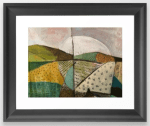
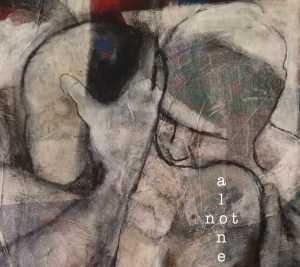
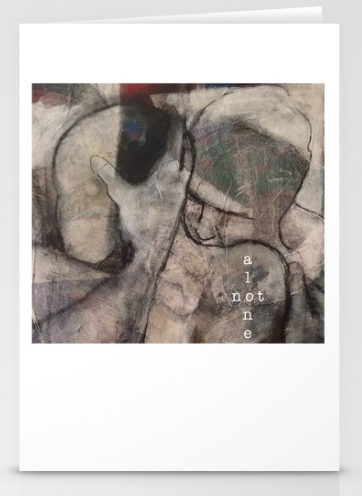
The PoetGo here for fine art prints of my paintings.


Forgive

lightghostWe’re already snowed in and the word is that the blizzard – the real blizzard – won’t start for another hour. Looking out the window Kerri said, “This storm is angry.” It is. This is not a gentle snowstorm. The flakes are not fluffy or big; they are enraged bees that sting. We watched cardinals, brilliant red amidst the flurry of white, hunker down, bobbing in branches of the pine tree. Tripper Dog-Dog-Dog slid off the deck into a drift and emerged with a beard of snow and a look of confusion. He ran outside, felt the bite of the wind, and almost knocked me over running back into the house.

We sat in the living room and watched the snow swirl and howl. We talked quietly until the light waned and we noticed that we were sitting in the dark. It was as if the ferocity outside the house required hushed tones inside. Life is like that – inner turmoil often looks like a quiet exterior just as violent storms require us to talk in gentle voices. Balance is always present although not always recognized.

Lately I’ve been meditating much on the word “trespass.” Once, I had an experience with the word “trespass” that was nothing short of mystical. It altered the course of my life. According to the prayer, one must trespass to be forgiven. Life is nothing if not full of trespasses and those who trespass against us. Crossing boundaries and holding boundaries are both learned skills that require a good deal of trespassing.

Forgiveness feels good. Whether you are the giver of the forgiveness or the receiver (or both, when, for instance, forgiving yourself), it just feels good. Those violent outer storms will always lead to inner peace if you follow them far enough. It is the natural order of things. All that is required is a recognition that stories change like people change; that stories change when people let go of old stories. Miracles happens when, in hushed tones, the story of a trespass is retold as a story of forgiveness.

title_pageGo here to buy hard copies (and Kindle) of my latest book: The Seer: The Mind of the Entrepreneur, Artist, Visionary, Innovator, Seeker, Learner, Leader, Creator,…You.

A detail from my painting, An Instrument of Peace

Go here for fine art prints of my paintings, bags and other cool things!

Light The Way

A detail from my painting, An Instrument of Peace

A detail from my painting, An Instrument of Peace

Yesterday was Ann’s funeral. She died too young but by all accounts lived out loud – she packed a lot of life into her short time. One of the speakers said that she was neither a glass-half-empty nor a glass-half-full kind of person; her glass was always overflowing. I sat in the choir loft and listened to the stories, the grief and the laughter, the music that a community makes when it says good-bye. I only know her through their stories, through their eyes, and I was overwhelmed with the beauty that they saw in her. She was rooted in a community and the community was rooted in her. I was moved by the story she inspired.

Just before the service I was working on my play, The Lost Boy. We open in a few short weeks. I was memorizing the last two pages. The language of the play, the moment in the script that I worked, is about Tom’s ancestors answering his call. He worried about what to do with the ranch and the legacy that he guarded. He didn’t know what to do. There was no one to receive what he had to tell. He summoned the ancestors and, when he needed them most, they came. They didn’t answer his question. Instead, they took his hand and helped him join the story.

Jean Houston called us – the living – the burning point of the ancestral ship. Each of us carry forward the story, we add a chapter to a longer epic whether we realize it or not. Once, many years ago, John was directing one of Shakespeare’s plays for my company. While talking with the young actors about the play, he was moved to tears telling them how he realized that he was a link in a long chain that led all the way back to a first production in the 17th century. This play did not exist isolated in time. It was a burning point. Their work mattered because they were the guardians of a tradition. They were the burning point. The play was remarkable because the actors understood their root; even the smallest action mattered because if fed something bigger.

A few weeks ago we watched the film, The Descendants, with Brad and Jen’s movie group. It is a story of legacy and mattering – a story of what happens to descendants when everything looks like a commodity. The root withers. The story dissipates. As Yeats wrote, “The center cannot hold.” Joseph Campbell said that our mythology was dead and all the proof we needed was in the news. It took me years to fully understand his statement. And, the question he asked was this: once lost can a community revive its mythology? Can it reconnect with the root? Can it look beyond the immediate and see the rich soil of the greater story? As the burning point, can we light the way forward or is our dilemma the same as Tom’s: what do you do when you carry a root-story and no one is interested or capable of hearing it?

title_pageGo here to buy hard copies (and Kindle) of my latest book: The Seer: The Mind of the Entrepreneur, Artist, Visionary, Innovator, Seeker, Learner, Leader, Creator,…You.

from my Yoga series

from my Yoga series

Go here to buy art prints, posters and such – of my paintings


Walk With Me

Tom and me a long time ago.

Tom and me a long time ago.

Sometimes it is the smallest thing that smacks you.

Recently I reread one of my favorite books, A Prayer For Owen Meany by John Irving. In the book, the narrator of the story suffers a loss. He tells us that we lose people in pieces, not all at once. During holidays, birth dates, passing a favorite place, and the loss happens all over again, again and again.

Today I was editing The Lost Boy script. Originally, the script was a transcript from interviews with Tom intended for Tom to perform. It was filled with quotation marks – he quoted lots of people. His story is populated with some fantastic characters. After his death I rewrote the play for two actors so that I might tell the story but I didn’t clean up the punctuation. I translated the transcription. I shaped scenes within the stories he told. As I worked on the edits today, I was suddenly struck dumb by the quotation marks. They were Tom’s. They were his exact quotes; they were no longer appropriate to the rewrites. As I erased the quotations I lost him all over again. Each erasure took a little bit more of him away.

And…it’s a paradox. The erasure also brought him closer to me. Tom used to say that the stories of his kin where more than just stories, they were alive. He could not walk the ranch land without his ancestors walking with him. He told me that he knew who he was because he knew who they were. As I removed the quotes from the script the stories were no longer Tom’s, they became mine to tell. His story and mine became one, single tale. I realized that I cannot tell this story without Tom telling it with me. Like him, I know who I am because I know who he was. I couldn’t ask for better company to walk this story with me.

title_pageGo here to buy hard copies (and Kindle) of my latest book: The Seer: The Mind of the Entrepreneur, Artist, Visionary, Innovator, Seeker, Learner, Leader, Creator,…You.

The PoetFor posters, prints, bags, stuff with images of my paintings, go here.


Delight In Delight

Dog-Dog throwing down the gauntlet!

Dog-Dog throwing down the gauntlet!

Tripper Dog-Dog-Dog has taught me a game. The rules are simple: I pick up a stick. He rushes me and snatches the stick from my hands. I exclaim, “Hey, that’s my stick!” (saying my line was the hardest part for him to teach me). And then I give chase. We have a small pond in our back yard and it makes a perfect track for running in circles. The game becomes more fun when I reverse directions and force Dog-Dog evasive maneuvers. Sometimes he drops the stick so that I will pick it up so that he will be able to snatch it from my hands so that I will exclaim, “Hey! That’s my stick,” and the game begins anew. The game ends when I can no longer breathe.

I’m not sure which of us loves it more. I find myself laughing uncontrollably at the look he gets in his eyes, the combination of intensity and glee. He delights in the pure pleasure of the chase. I delight in his delight.

During these bitter cold days, when I am dedicated to warmth and staying inside, he has a specific bounce and shirt nip technique that is the equivalent of throwing down a gauntlet. I know he wants to play THE GAME – not some namby-pamby indoor game, but the real thing. He is insistent and persistent – which has become another game: I pretend that I don’t understand to escalate his insistence. When he is near to outrage at the dull wit of his master, I feign a revelation. His relief is palpable. His excitement is unbridled, bouncing at the back door as I slowly (another game) pull on my coat and gloves.

Dog-Dog is helping me see life simply. Many things that used to seem so complicated now look to me like infinite games (see James Carse’s terrific book, Finite and Infinite Games). There is abundant joy everywhere if the game is recognized as a game, if playing the game well is more important than winning. If the game is not recognized, if winning is all that matters (a finite game), there will be serious faces, an existential tug-of-war, loads of stress, and dis-ease. “Hey, that’s my stick!” but with deep investments in stick ownership and control.

Each day that Dog-Dog tugs my sleeve, throws down the gauntlet, and bounds outside, I find myself bounding outside, too. I find that I am laughing before we start, before the stick is snatched from my hands. If the mark of a good life is the capacity to run for the love of running, the sheer joy of the pursuit, then I am blessed with a master teacher who believes that the best way, the only way to learn is in the doing: play to play.


title_pageGo here to buy hard copies (and Kindle) of my latest book: The Seer: The Mind of the Entrepreneur, Artist, Visionary, Innovator, Seeker, Learner, Leader, Creator,…You.

Or, go here for all digital forms of The Seer.

The PoetGo here for posters and prints of my paintings.

See Again and Again

A detail from my painting, An Instrument of Peace

A detail from my painting, An Instrument of Peace

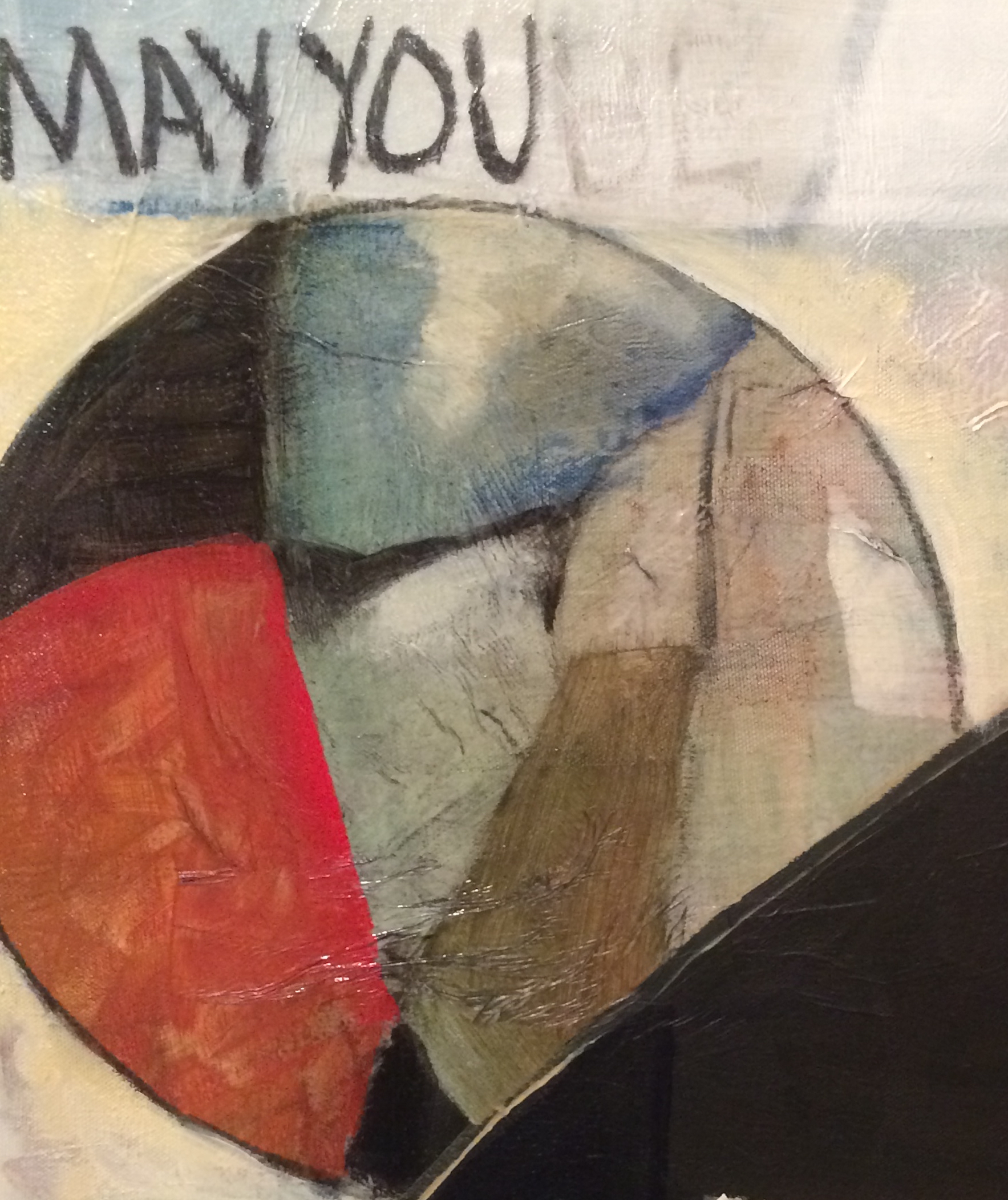
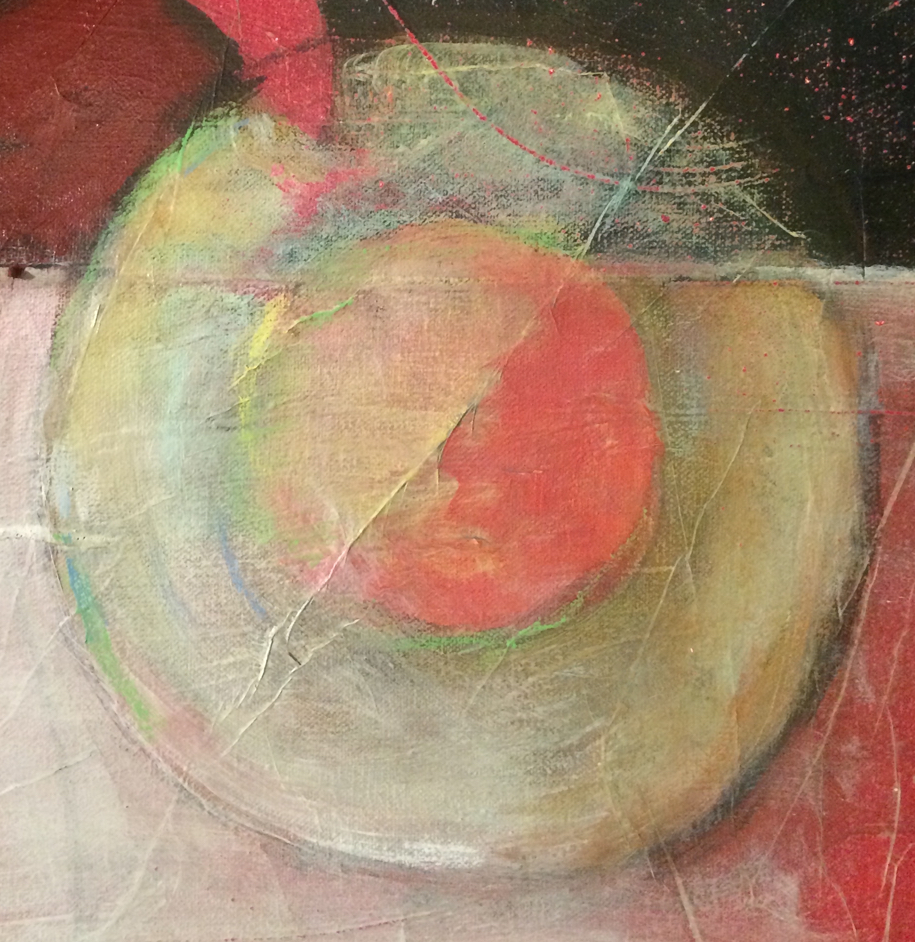
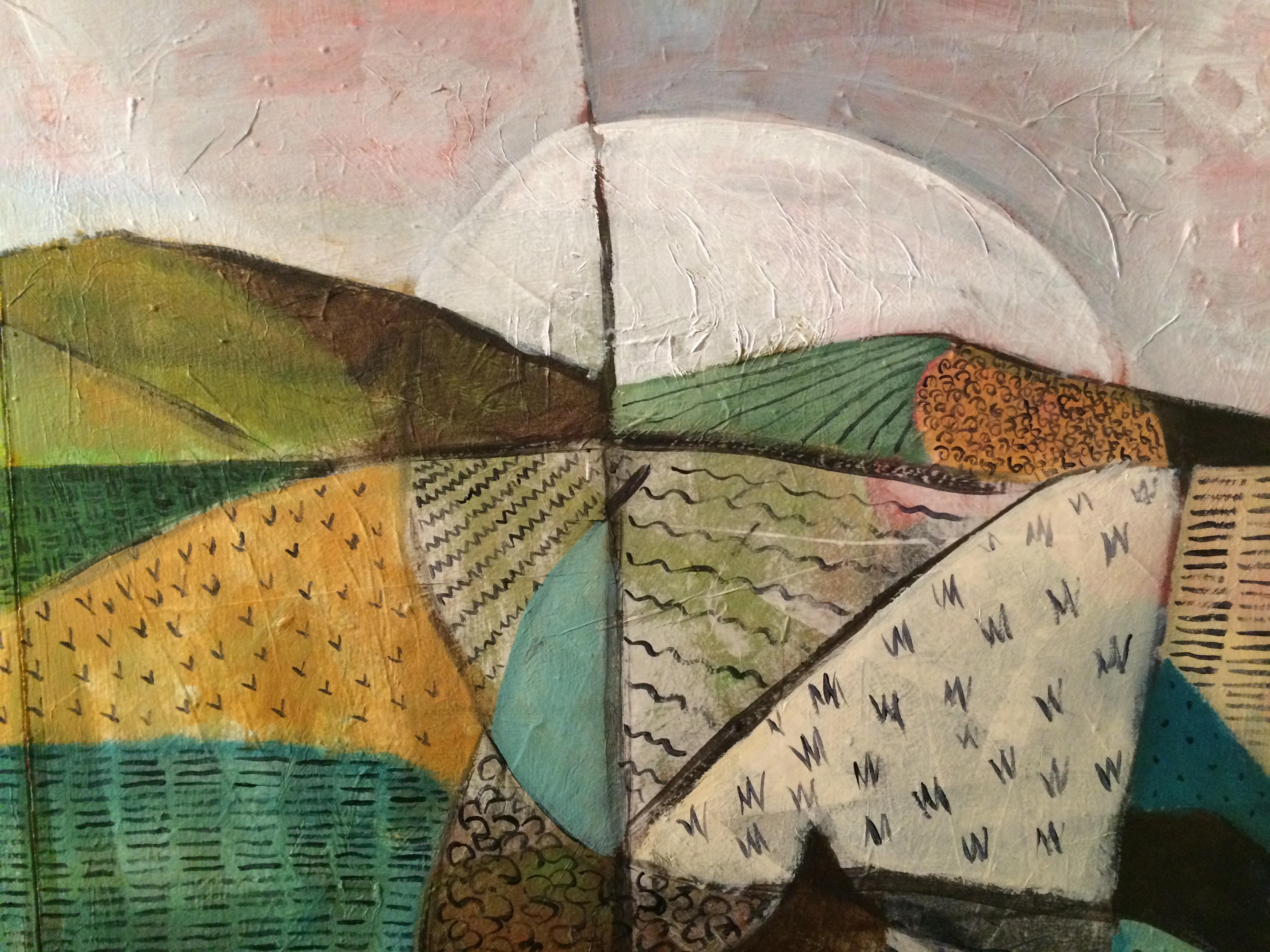
It has become my habit, when I finish a painting, to take photographs of sections of the piece. It helps me see it again. Often, I like these detail photographs as well or better than the painting. There are always discoveries in the details.

My paintings always surprise me. Years ago, I was showing my paintings to Jim Edmondson and he asked why all of my pieces had three spheres in the composition. I didn’t know what he was talking about. He laughed, our roles reversed, and he began showing me my paintings; each piece included three distinct spheres. I literally did not see them. They were apparent only after he made me look at sections of the paintings. I was both shocked and delighted. Perception is not universal.

Another detail from An Instrument of Peace

Another detail from An Instrument of Peace

The mastery of art (the mastery of life – same thing) is to transcend the notion that you “know” and that what you know is “right.” Krishnamurti wrote that, the moment you judge something, you cease to experience it. The fullness of life is in the experience and not the translation of the experience. All of us assume that we see the whole picture. We assume that we see is reality (truth) – and that reality (truth) for me must be reality for you. It is not. To have an “open mind” and “clear vision” is to release the notion that there is one truth, one way of seeing.

Once, I directed a production of God’s County by Steven Dietz and I knew it was a good production because half of the audience left angry and the other half left inspired. One play, many interpretations and the interpretations were, like all things we name as reality, rooted in each individual’s personal experience. What matters is not that our interpretations need to be the same, but a recognition that what you see is just as valid as what I see. As my friend Joe once said, “We come to know ourselves through other people’s eyes.”


An Instrument of Peace

A rough shot on the studio wall of An Instrument of Peace

title_pageGo here to buy hard copies (and Kindle) of my latest book: The Seer: The Mind of the Entrepreneur, Artist, Visionary, Innovator, Seeker, Learner, Leader, Creator,…You.

For all digital forms, go here (Leanpub)