Find The Way Home

holdtheworldinpeace-lowerfontcopy-jpeg“Our search for truth must be wide open, even when it takes us in directions we preferred not to go. This is the difference between propaganda and truth. Propaganda has a certain end in mind, and so it marshals and manipulates the ‘facts’ to support its conclusion. Truth weighs evidence, seeks proof, is appropriately skeptical of authoritarian claims, welcomes questions, and doesn’t fear dissent.” Philip Gulley, The Quaker Way of Living*

Kerri and I often read books aloud to each other. On cold winter days we sit beneath a blanket, Dog-Dog at our feet, BabyCat snoring by our side, sip coffee, and read. We like to discuss and compare perceptions, ask questions, and re-read passages for clarity or the simple poetry of the language. Sometimes we savor a book, moving through it slowly. Sometimes we devour a book and go back to reread especially potent sections.

Propaganda resists close inspection and must continually be defended. Truth welcomes doubt and skepticism; indeed it is best served by questions, suggestions, and corrections.”

I am guilty of burying my head in the sand. My move to Wisconsin came with an intentional unplugging from the news. I was tired of pundits shouting each other down. I was weary and wary of conversations with family and friends that seemed to be territory-guarding regurgitations of our news-channel-of-choice. I was using the language given to me by my news sources and rolled my eyes at the predictable language leveled by the “other” side. One day as I raged at family members to pay attention to how they were being manipulated by their news source, I thought that it was probably a good idea for me to do the same. At the time, unplugging, stepping out of the toxic stream, seemed the only option to clear my mind.

The search for truth begins within the seeker, for if we are not honest with and about ourselves, we will find it impossible to be honest with and about others.”

On a recent trip to Indiana, Bill and Linda suggested a book for us, The Quaker Way Of Living by Philip Gulley. They read it with their church group and found it compelling, especially given our corrosive political climate and collapse of civil discourse. We bought it when we returned home and a few days ago started reading it together. We couldn’t put it down. It asks some powerful questions. It doesn’t pretend to have answers [that, I’ve learned, would be the antithesis of the Quaker Way] but it does speak directly to the quandaries of personal and communal integrity in a climate of self-righteousness, blame, and distrust. It is hopeful and funny and places the onus of creating a better world squarely on the shoulders of each and every one of us. It reminded me that burying my head in the sand is not very useful while also affirming that their are options beyond planting a flag in the sand.

“To say a person has integrity means several things. Most commonly, we mean the person is honest, that his or her word can be trusted…. But there is another level of meaning that has to do with the integration of our values and lifestyle. In that sense, to say we have integrity is to say the separate parts of our lives combine to form a unified whole. What we believe is consistent with how we live. Our beliefs influence the work we choose, the way we use our time and spend our money, the relationships we form and the goals to which we aspire. This integration is critical for inward peace.”

While reading, I’ve been thinking a lot about a conversation I had a few years ago with Jim Marsh, one of the people I most admire in this world precisely because he walks his talk. He told me of an issue in his community that had deeply concerned him and that he’d been grousing about for long time. One day he’d had enough and to move forward he recognized that he had three options: First, to stop complaining (he said, “to just shut up.”). Second, to move away. Leave. Get away from the source of his irritation. That didn’t seem like a healthy option. The third was to strap on his boots and do something about it. To act instead of complain. But, (and here’s the reason why I adore him) not to act against, but to work to create what he wanted. His responsibility was not to fight or resist. It was to create.

“We preserve our integrity and wholeness when we are aware of what threatens it and then choose to act deliberately and prudently when tempted. When we fail to do this, we disintegrate, creating a chasm between who we are and who we wish to be.”

I practice tai chi and had the good fortune to have, for a few years, a master teacher, Saul, whose teaching transcended the specifics of tai chi. He was teaching me how better to live. One day, while I was in a fit of resistance, he quietly showed me the power of looking beyond my “opponent” and placing my focus, instead, in the field of possibility. I understood (intellectually) that the opponent was always of my own making and my dedication to having an opponent (inside or out) would always pull me off balance. In other words, as long as I invested in resistance I would always pull myself off balance.

“Integrity isn’t conditional…There is a seamless nature to integrity that transcends situations and relationships. Integrity does not present one face in public and another in private. It delights in transparency, having nothing to hide.”

Now, with my head freshly out of the sand, I understand Saul’s teaching beyond my thinking (I’ve had a lot of time to meditate on things with my head in the sand) and, taking my cue from Jim, I recognize that I have three options but only option-number-three holds the promise of integrity. The best news: no one creates alone…

*all quotes in this post are from the chapter on Integrity from The Quaker Way of Living by Philip Gulley
screen-shot-2017-01-13-at-4-42-11-pmprints/bags/mugs/cool stuff

kerrisherwood.com

THE WAY HOME on itunes – Kerri Sherwood-Track 13 on THIS PART OF THE JOURNEY
Save

Save

See The Basic Layer

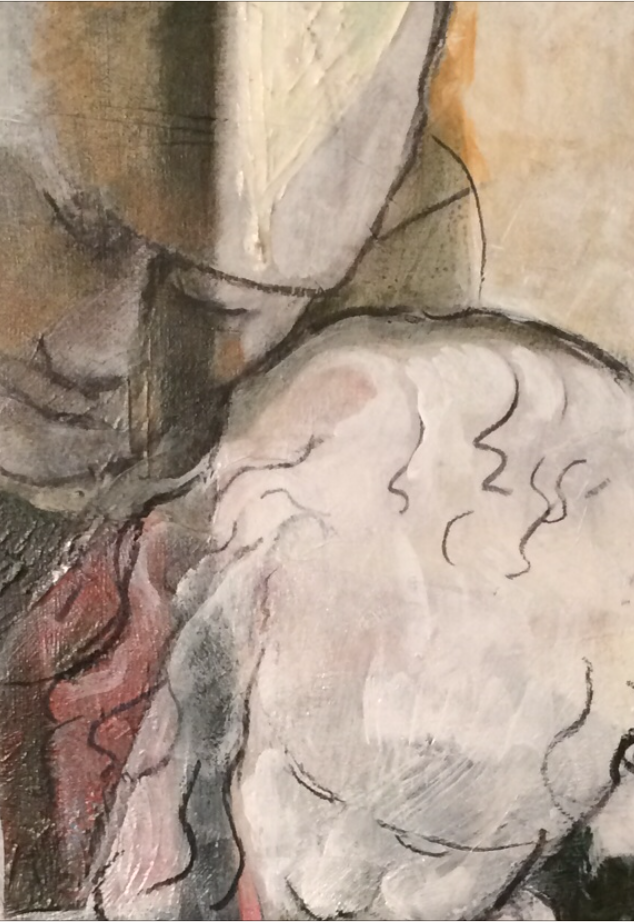
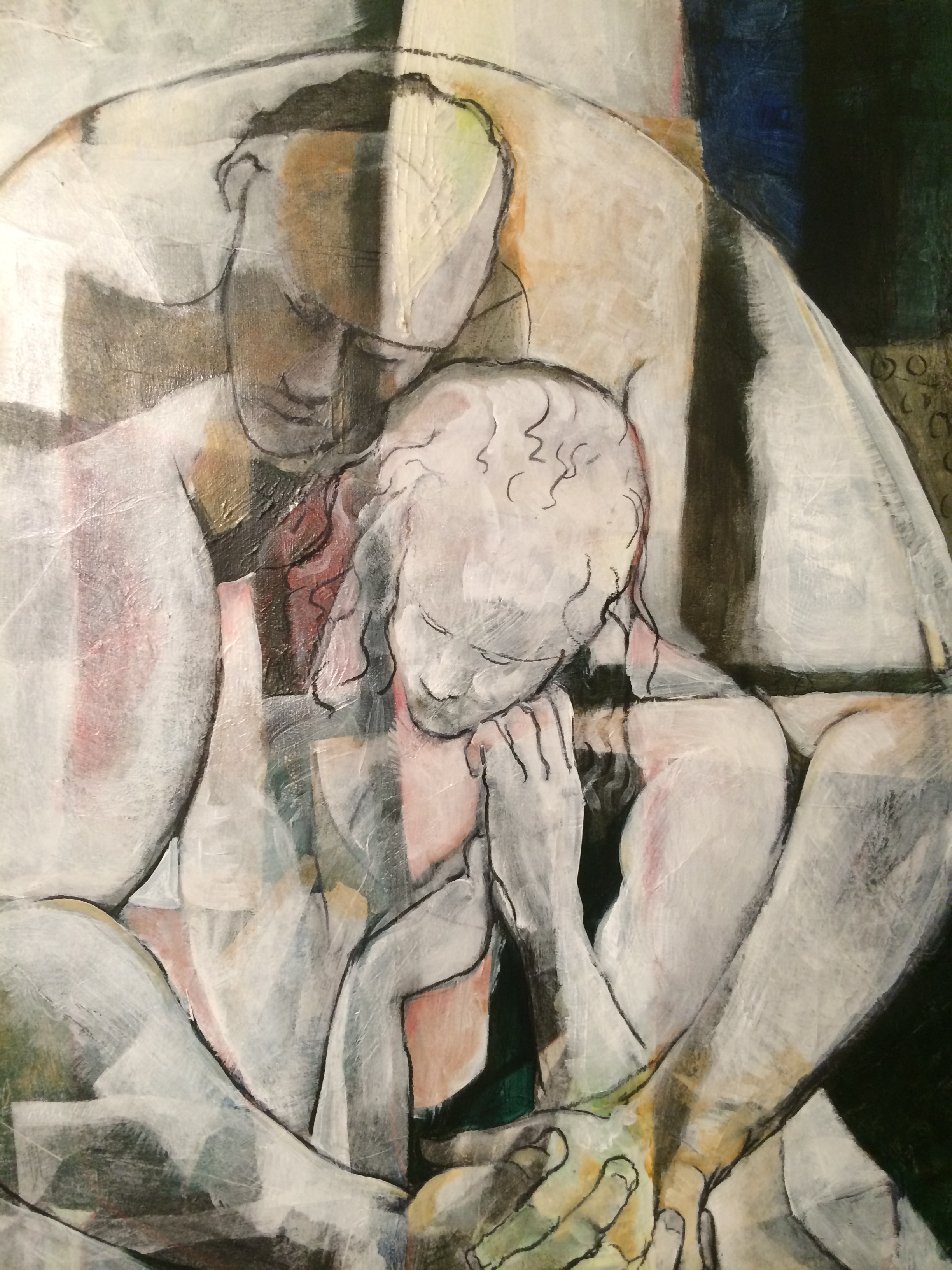
a detail of my latest painting

a detail of my latest painting

We’ve decided that we cannot use the word “vacation” to describe our most recent trip. Odyssey, perhaps, is more appropriate. A dog bite, projectile vomiting, 3 trips to the emergency room (yes – 3), crippling shin splints, witnessing the death of a dog, a freeway car breakdown, towing, an enormous bird flew directly into and broke the bumper just minutes after we got back on the road… For those of you with a voodoo doll with my name on it, rest assured that your spells are working.

This is also true: we saw the milky way, were serenaded by coyotes, watched a herd of elk cross a field at sunset, walked by a stream that magically silenced all thoughts, saw a double rainbow, spent precious time with family, experienced titanic kindness, were awed in the John Denver Sanctuary, received a well-timed dose of life-wisdom from an 83 year-old man sitting next to us at the bar. Oh, and learned the virtues and real-time value of an espresso martini.

This is also true: there was an emergency room close by when we needed it. The car broke down just as we came upon a rest area exit ramp (the day before we’d crossed 180 miles with no services). Kerri sang Sugar, Sugar with the tow truck driver, our AIR B&B hostess made it possible for us to stay an extra night when the emergency made it impossible for us to leave. Friends from home immediately offered help when they knew we were in trouble. They would have driven the 9 hours to fetch us if we’d have needed them.

photo-1Like all things, what we see depends upon where we decide to focus. Was our odyssey a disaster, a rich and varied adventure, a story of good fortune? Yes.

It was a reminder that things happen, circumstances change rapidly and we have little or no control over that. We can, however, choose how to live within the circumstances. As Kerri said this morning, “If the basic layer, the foundation, is happiness, you can build anything on top of it. Life can (and will) blow away what you build, but the basic layer remains.

Save

Save

Save

Curate With Us

blogblast1unframed jpeg

david robinson at zatista.com

Save

Save

Ask Why

photo

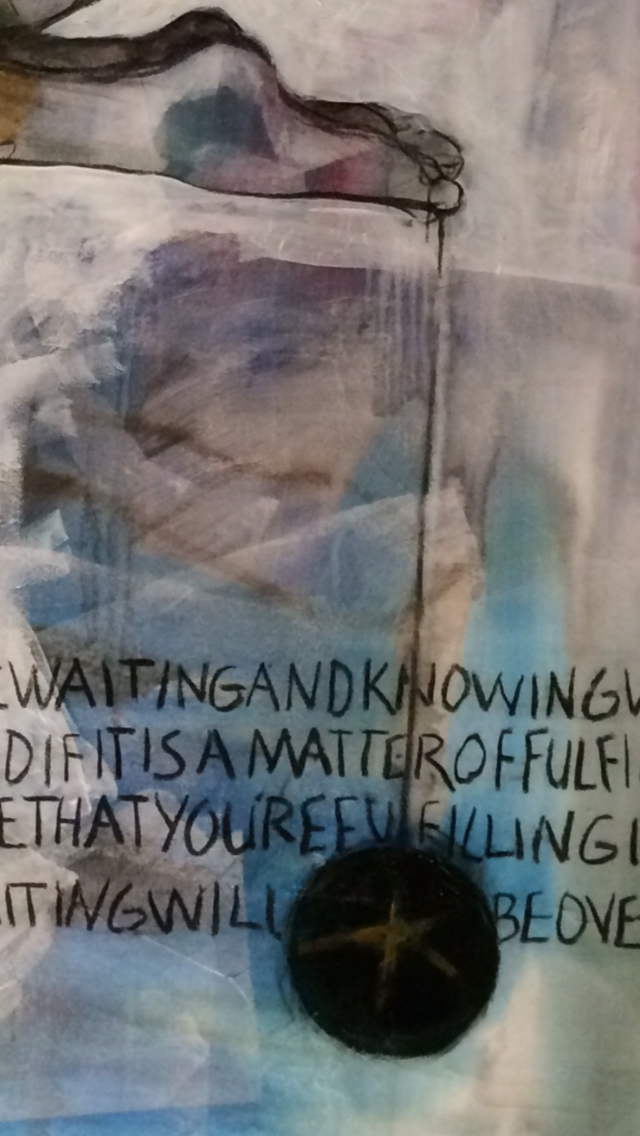
a detail of my painting, Know That You Are Waiting.

Marilyn told me that she spent the day with her 3 year-old granddaughter. The little girl, like most children her age, peppered Marilyn with the question, “Why?” In her reenactment, after trying to answer the multitude of “Why?” questions, she laughed and said, “I don’t know! That’s the way it’s always been done!” It’s a perfect loop! Sometimes there is no answer to the question, “Why?”

Many years ago Peter Block wrote a great little book called The Answer To How Is Yes. A lifetime of corporate consulting left him perplexed by the pervasive leading question, “How should we do it?” None of his clients ever asked, “Why should we do it?” “Why” was nowhere in the equation.

Asking “Why?” takes time. It slows things down and often requires some soul searching. It lives on the vertical axis of experience, the axis that reaches into the depths and knows no black and white answer. Also, asking “Why?” sometimes leads to the scary profit-challenging twin question, “Why shouldn’t we do it?” The question, “Why?” moves a business and the people that populate it out of reactionary practices and into intentionality. With intentionality comes ownership of action, responsibility. The legal department is dedicated to keeping the conversation away from “Why?” Responsibility can be costly.

People are no different than the organizations they create. We avoid the same questions for much the same reason.

In my life I’ve sat through countless meetings while boards-of-directors asking, “How do we get more people to buy/attend/support our art/business/cause?” I finally made it a practice to stop asking the troubling questions, “Why should people buy/attend/support you?” and “Why are you doing what you are doing?” Usually those questions invoked embarrassed silence or worse, a regurgitation of the company’s value statement. We are valuable because we say we are.

Skip used to tell me that a company isn’t valuable until it serves the customer’s customer. I liked that sentiment a lot: value is service as expressed through two degrees of separation. It is also an orientation according to what is given, not what is received. Serve. It’s a loop with a natural answer to the question, “Why?”

Artists of all stripes, churches, politicians, etc. might find a different understanding of value if they (we) applied Skip’s rule to their (our) plays/symphonies/paintings/dances/businesses. Why? To Serve.

photo

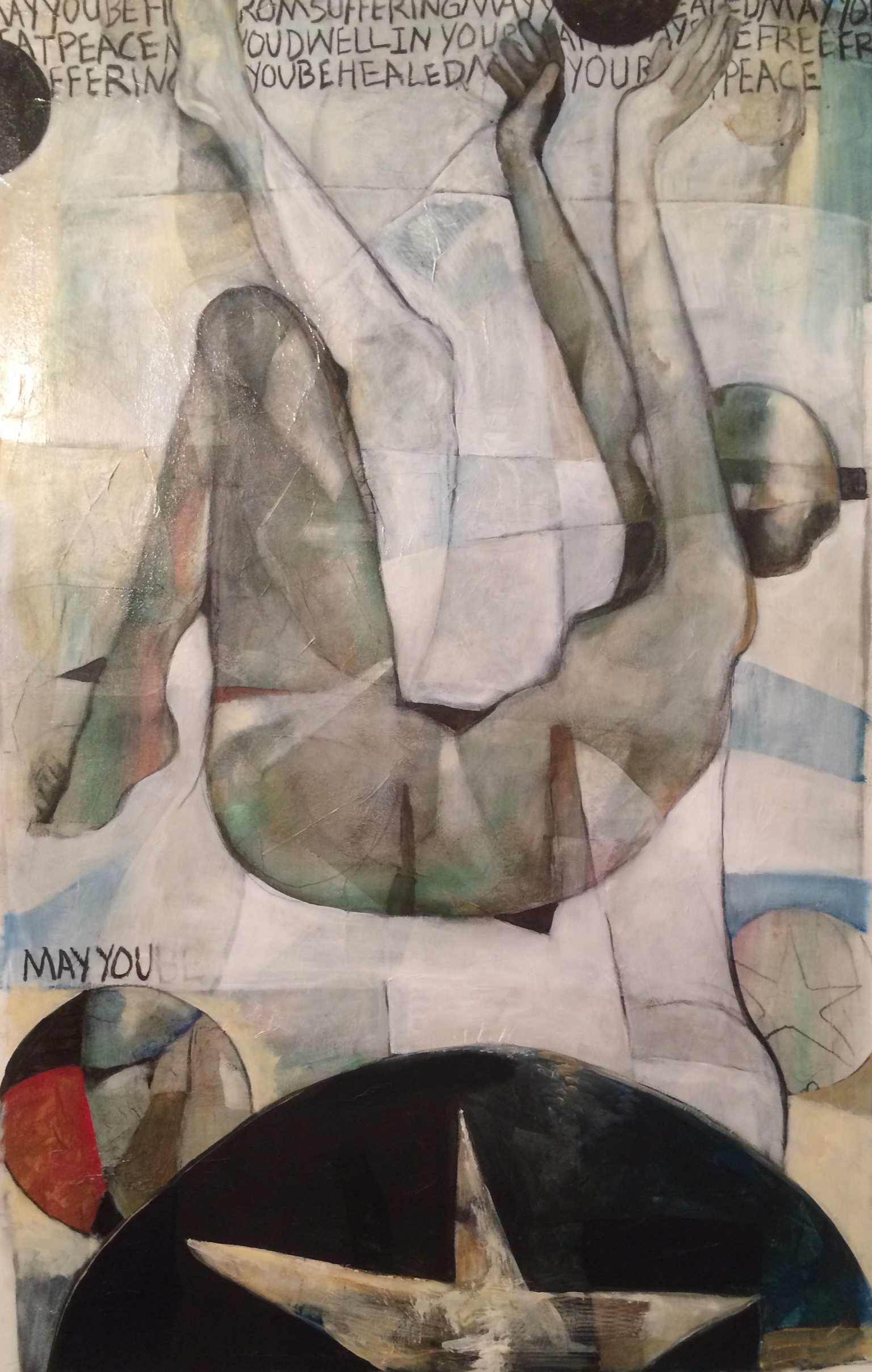
a detail from my painting May You

Maybe we all just need to be three-year-olds and ask “why?” more often. Maybe the best questions, the ones that make the most sense, are the ones that can’t be easily answered but require us to slow down and challenge doing what we’ve always done.

Save

Save

Save

Cut A New Path

ComfortNow

The latest in my Held In Grace series. This is Comfort Now

It seems to me that most of our days on this earth are spent moving through patterns, conscious or unconscious. These patterns are the rituals of our lives. Some of the rituals are easy to see. For instance, what is the sequence of actions you perform before going to bed each night? What about your ritual of rising each day? The care and feeding of Tripper Dog-Dog-Dog and Babycat are central to my rising and retreating rituals each day. We move through the same actions every morning and evening and I delight in the warmth of the ritual.

Some of the rituals are not so easy to see. Researchers tell us that most of the thoughts we think every day are the same thoughts we had yesterday. We mostly think in patterns (it makes sense once you recognize that language is constructed of category and pattern). We talk to ourselves, cutting paths through the forest of our minds and, once we’ve established a trail, we like to stay on it. Easy is often unconscious. There’s nothing wrong with staying on the easy trail if the path you’ve cut, your repetitious thought-ritual, is self-loving. The rub: ritual paths of self-loathing and self-limitation are also easy, well-worn paths and that makes them both unconscious and hard to leave.

Cutting a new path through the mind forest begins with recognizing that new paths are always available. They just aren’t easy to establish. They require new practices. They require surrender and the first bit of surrender necessary for cutting a new path is the ritual giving-over of needing-to-know-anything; new paths, by definition are unknown.

New paths are not comfortable precisely because they require attention, consciousness.

My teachers taught me that all stories worth telling are stories of transformation. The main character or characters will know something at the end of the story that they did not know at the beginning and the new knowledge will be hard-won. That’s what makes the story worth engaging. Hamlet is a much different character in Act 5 than he was in Act 1. His peace was difficult to come by. He had to learn to surrender. To cut a new path he had to make a practice of peace.

The same ideal applies to the stories we live off the stage.


Go Slow

Our feet at Montauk

Our feet not rushing at Montauk


Years ago Quinn gave me a book by George Leonard called Mastery. I revisit it from time to time when I feel, as I do now, that I know nothing. In truth, the older I get, the more experiences I have, the more certain I become that I know nothing at all. If George Leonard was still living I imagine he would approve of my not knowing. “Finally, we are getting somewhere!” he might declare.

Here’s a bit from the book’s introduction:

“The many comments and inquiries that I continue to receive have convinced me more than ever that the quick-fix, fast-temporary-relief, bottom-line mentality doesn’t work in the long run, and is eventually destructive to the individual and the society. If there is any sure route to success and fulfillment in life, it is to be found in the long-term, essentially goalless process of mastery.”

Although in the quarter of a century since Mastery was published the pace of life has, if anything, shifted into hyper-drive, the truth of George Leonard’s assertion remains constant. Fulfillment is found in the long-term. It is found in the goalless processes like friendship or love or a walk in the woods. Fulfillment is a relationship and not an achievement. Learning is a relationship and not an achievement. Spirituality is a relationship and not an achievement. Artistry is a relationship and not an achievement.

All the things we think we know, the things we argue for or against, the righteous territories we claim, the belief flags we plant in the sand, the battle lines we draw, the hills we die on, the idea-wars we wage,.., make muddy the life crackling right before our eyes. After all, what do we really know?

On Sunday I witnessed a baptism. The next day I attended a funeral. These two back-to-back rituals left me with a question: What’s the rush?

I have absolutely no idea.

Cross The Boundary Of Elements

TODAY’S FEATURED IDEA FOR HUMANS

Cross The Boundary

In a world of right and wrong, yours and mine, red states and blue, crossing the elements means relinquishing the idea that “I know,” or that “I’m right.” My “normal” may not be your “normal;” it’s a good bet that my perspective is not your perspective. Cross the boundary of elements and stand for a moment in other people’s shoes; swim in their element.  Reach across the known to see what they see. Find the middle way.

 FOR TODAY’S FEATURED PRINT FOR HUMANS, GO HERE.

Bring Your Boon

This painting is called Icarus.

This painting is called Icarus.

During my call with Skip I used the word, “boon.” He scribbled a note saying, “You’ve not used that word before.” The word came up because he’s been overrun by well meaning advice-givers that think he needs to know about the hero’s cycle. Skip said, (and it’s true) that he’s forgotten more about the hero’s cycle than most people will ever know. “I’m a business guy so they think I can’t possibly know about it!” he exclaimed. “If another person tells me about the hero’s cycle I’m going to explode.”

My thought for him was to pay attention to why so many people are coming up with the same response when they hear about his work. What’s evoking the common response: have you heard about the hero’s cycle? I always pay attention when a book title repeatedly drops into my world (I get the book) or when a place or a metaphor seems to pop up everywhere. What’s there that I may be overlooking? What is hammering Skip that he may not see? That’s what sparked the word, “boon.”

When the hero (and we are all heroes in our personal story) emerges from the ordeal of change, when they escape the belly of the whale, they are transformed. They know something that they didn’t before understand. This is the boon. They have a new gift or insight that will, in turn transform the community. Personal change is communal change. They are one and the same thing.

There is a small catch when dealing with boons: communities (like individuals) talk a lot about the need for change but mostly resist it. When you are the bringer of the gift, the carrier of the insight, often you are not welcome when you share it. New insights are dangerous to the status quo. History is resplendent with visionaries banished for sharing the boon of their transformation or bringing to the community the gold that they need but are incapable of recognizing.

Skip has arrived back to the world with a boon. He sailed to the edge and has returned with strange knowledge and a unique perspective. His insight contradicts common models of business. His boon describes motion, a flow, which is hard to see when the landscape is dominated by bottom lines and outcomes. His community mistakenly thinks he needs to go on a hero’s journey when, in fact, he is just returning. His hands are full of gold that they cannot see.

The best we can do is share what we hold. How it is received is out of our hands. If it is received at all is not in our control. Vincent Van Gogh died having sold one single painting – and that to his brother. The glory of his life – and the lives of all visionaries – is that he kept painting regardless of whether the world might someday see the boon, or not. It didn’t (and doesn’t) matter. Bringing the boon home is all that is required.

title_pageGo here for my latest book, The Seer

Go here for Fine Art prints of my paintingsYoga.Meditation

Thank Your Champions

Bob and me.

Bob and me.

In August, after my dad’s 80th birthday party had wound down, as he slowly bent his aging achy body into his car, Bob Carl said, “I suspect this will be the last time you ever see me.” I told him to stop being silly but as it turns out, he was right. Bob died last night. Although the news was not totally unexpected it nevertheless stopped me in my tracks.

During my years of becoming I had three champions. They stood up for me, showed up for me, slapped me into focus, and encouraged me when I needed the support of an elder. They protected me when I felt unsafe in the world. They pushed me off the edge when I needed a shove to get moving. They were Tom McKenzie, my aunt Kathy Metcalf, and Bob Carl. In the past nine months all three left this earth.

Bob’s passing has, of course, made me reflective. I remember how much I feared him when I first met him. I was a boy and he was a retired military man, a former Drill Sergeant. He did not suffer fools and the force of his nature intimidated the boy version of me. He helped me find my force. He gave me lessons in fire.

His second career was as the mechanic of a research airplane that flew into storms. He spent his retirement flying into hurricanes. I love the metaphor. It is, in fact, what he taught me to do: fly into the storm; find the calm center. A storm always has a calm center.

As luck would have it, I had a call with Alan this afternoon after I heard the news of Bob’s passing. We talked about the uncanny alignment of these three deaths and what it means to me. As Quinn might say, a man without champions must be his own champion and that is pretty much what Alan reflected to me.

One of my stalking stories is Parcival (it is central to my book and continues to unfold for me). From the story, I’ve learned that a man becomes his own champion when he strips off his armor, relinquishes his quest (stops seeking), and gives his life over to the present moment. He chops wood. He carries water. As Bill shared with me, “After illumination, there is laundry.” In the present moment we have everything we need: no separation. It is in the present moment, unprotected (without armor) that the Grail Castle always reappears. Parcival (we) returns to the place where he initially got lost (didn’t speak his truth) and without the armor of social expectation, speaks without filter or editor. He is no longer invested in how he appears to others or what they might think of him – and so finds himself (the Grail).

As for speaking my unfiltered truth, I could not have had a better mentor than Bob. What scared the boy version of me – a man who spoke his truth without filter and with great force – has become in his passing, among his greatest gifts of guidance to me.

Go here to get my latest book, The Seer: The Mind of the Entrepreneur, Artist, Visionary,title_page Seeker, Learner, Leader, Creator…You.

Go here for hard copies.


Take Note

from The  Yoga series.

from The Yoga series.

Things I love about life and the past 24 hours:

We ended our vigil and buried Kermit (our pond frog didn’t survive the winter. We hoped for hibernation but he was doing something other than sleeping). He didn’t make it so we took great pains to find the right spot to bury him. As we put him in his pond side grave, Kerri said, “We have to sing something.” So, we sang Kermit a farewell song. The neighbor stopped raking and held silence during the song.

I lost my voice on Palm Sunday so joked that, instead of singing, I wanted to do interpretive dance with the palm fronds. Suzi told me not to laugh because she once participated in a Liturgical Dance Team.

The owl.

Kerri misread a quote and instead of reading “life extends” she read “Life Ecstatic!” It’s become our mantra for the week.

Mike the Moose ate a stone. Pastor Tom said Mike would leave the stone behind one way or another.

The sun.

I learned that I could successfully eat skinny pop popcorn while reclining in a hammock.

Judy and I were talking about mistakes. She told me that if you weren’t making mistakes, you weren’t alive. On the same morning, Mary wrote and reminded me of a comment I made on our recent group call. I said: “Being ‘lost’ is an experience of living!” In other words, get lost. Appreciate the unique human experience of not knowing where you are.

Go here to get my latest book, The Seer: The Mind of the Entrepreneur, Artist, Visionary, title_pageSeeker, Learner, Leader, Creator…You.

Go here for hard copies.