Light The Way

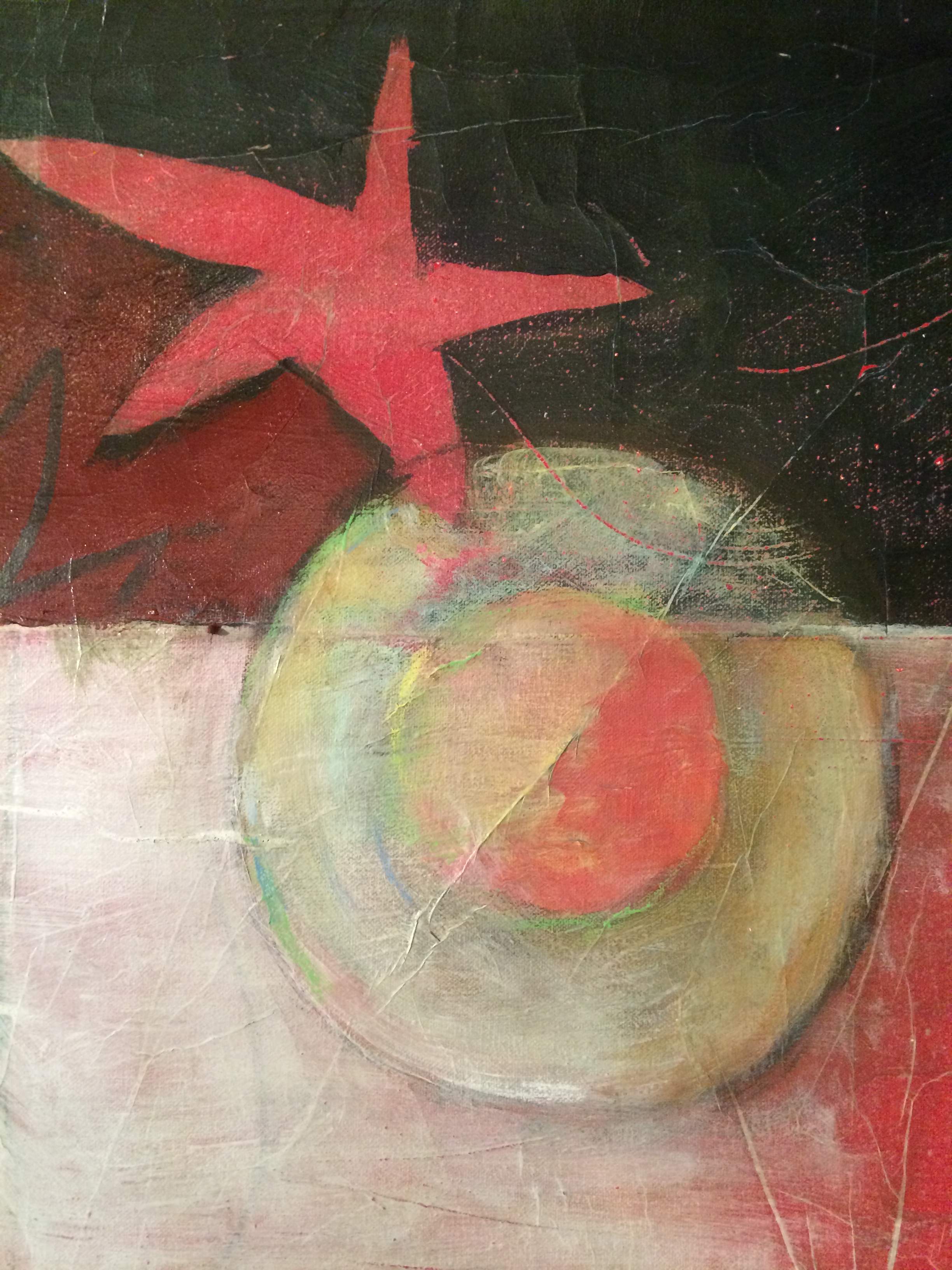
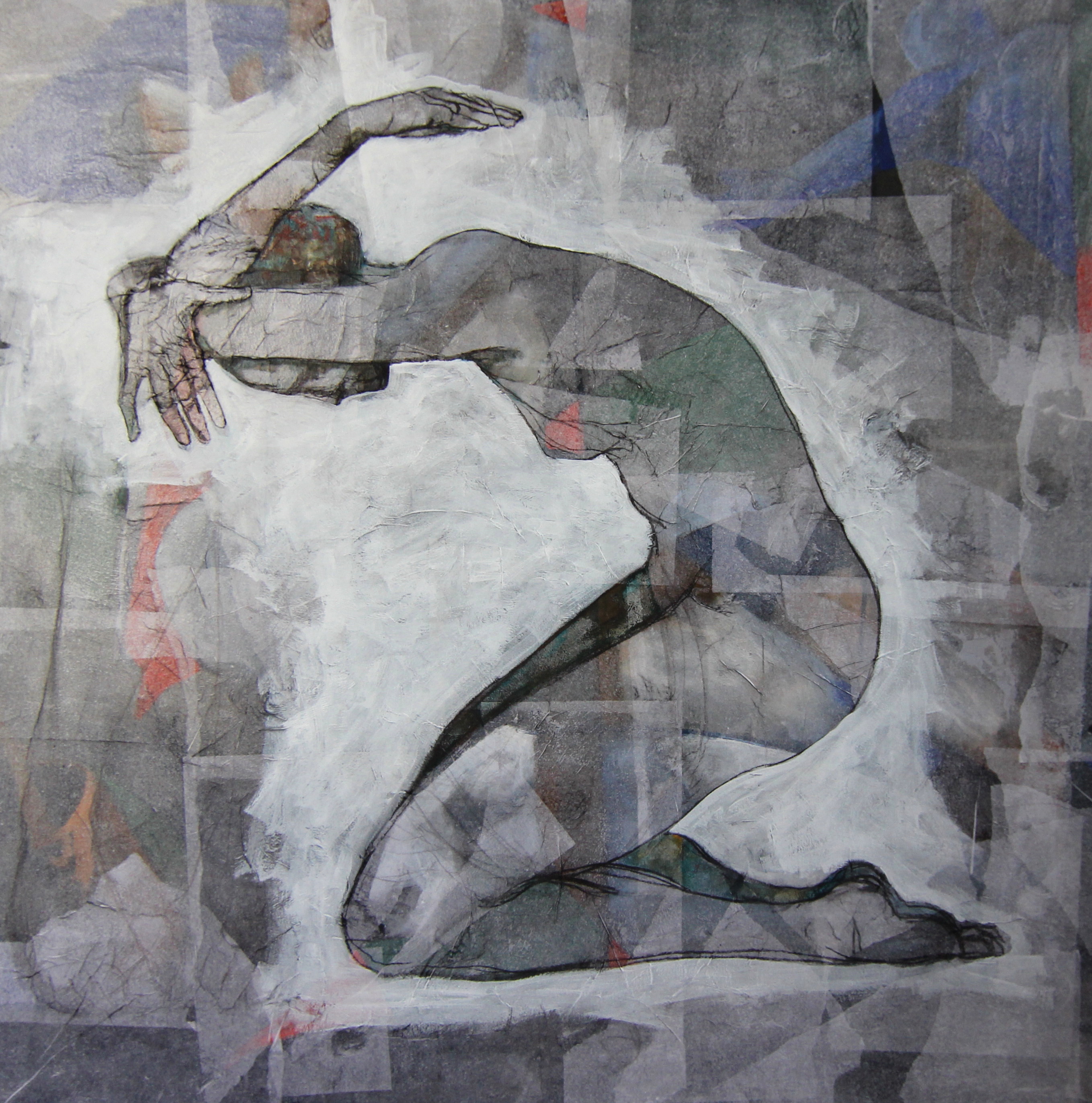
A detail from my painting, An Instrument of Peace

A detail from my painting, An Instrument of Peace

Yesterday was Ann’s funeral. She died too young but by all accounts lived out loud – she packed a lot of life into her short time. One of the speakers said that she was neither a glass-half-empty nor a glass-half-full kind of person; her glass was always overflowing. I sat in the choir loft and listened to the stories, the grief and the laughter, the music that a community makes when it says good-bye. I only know her through their stories, through their eyes, and I was overwhelmed with the beauty that they saw in her. She was rooted in a community and the community was rooted in her. I was moved by the story she inspired.

Just before the service I was working on my play, The Lost Boy. We open in a few short weeks. I was memorizing the last two pages. The language of the play, the moment in the script that I worked, is about Tom’s ancestors answering his call. He worried about what to do with the ranch and the legacy that he guarded. He didn’t know what to do. There was no one to receive what he had to tell. He summoned the ancestors and, when he needed them most, they came. They didn’t answer his question. Instead, they took his hand and helped him join the story.

Jean Houston called us – the living – the burning point of the ancestral ship. Each of us carry forward the story, we add a chapter to a longer epic whether we realize it or not. Once, many years ago, John was directing one of Shakespeare’s plays for my company. While talking with the young actors about the play, he was moved to tears telling them how he realized that he was a link in a long chain that led all the way back to a first production in the 17th century. This play did not exist isolated in time. It was a burning point. Their work mattered because they were the guardians of a tradition. They were the burning point. The play was remarkable because the actors understood their root; even the smallest action mattered because if fed something bigger.

A few weeks ago we watched the film, The Descendants, with Brad and Jen’s movie group. It is a story of legacy and mattering – a story of what happens to descendants when everything looks like a commodity. The root withers. The story dissipates. As Yeats wrote, “The center cannot hold.” Joseph Campbell said that our mythology was dead and all the proof we needed was in the news. It took me years to fully understand his statement. And, the question he asked was this: once lost can a community revive its mythology? Can it reconnect with the root? Can it look beyond the immediate and see the rich soil of the greater story? As the burning point, can we light the way forward or is our dilemma the same as Tom’s: what do you do when you carry a root-story and no one is interested or capable of hearing it?

title_pageGo here to buy hard copies (and Kindle) of my latest book: The Seer: The Mind of the Entrepreneur, Artist, Visionary, Innovator, Seeker, Learner, Leader, Creator,…You.

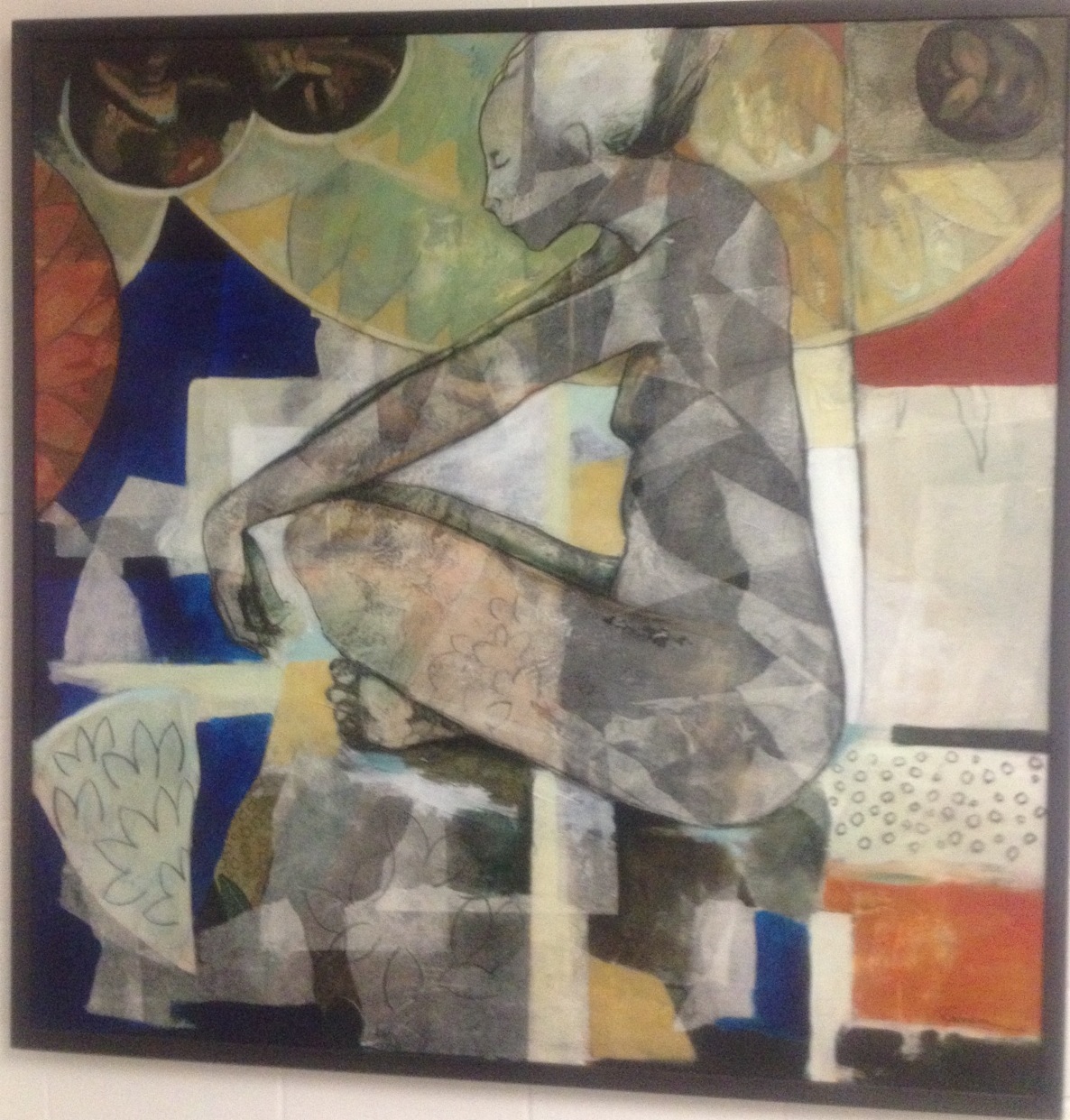
from my Yoga series

from my Yoga series

Go here to buy art prints, posters and such – of my paintings


Walk With Me

Tom and me a long time ago.

Tom and me a long time ago.

Sometimes it is the smallest thing that smacks you.

Recently I reread one of my favorite books, A Prayer For Owen Meany by John Irving. In the book, the narrator of the story suffers a loss. He tells us that we lose people in pieces, not all at once. During holidays, birth dates, passing a favorite place, and the loss happens all over again, again and again.

Today I was editing The Lost Boy script. Originally, the script was a transcript from interviews with Tom intended for Tom to perform. It was filled with quotation marks – he quoted lots of people. His story is populated with some fantastic characters. After his death I rewrote the play for two actors so that I might tell the story but I didn’t clean up the punctuation. I translated the transcription. I shaped scenes within the stories he told. As I worked on the edits today, I was suddenly struck dumb by the quotation marks. They were Tom’s. They were his exact quotes; they were no longer appropriate to the rewrites. As I erased the quotations I lost him all over again. Each erasure took a little bit more of him away.

And…it’s a paradox. The erasure also brought him closer to me. Tom used to say that the stories of his kin where more than just stories, they were alive. He could not walk the ranch land without his ancestors walking with him. He told me that he knew who he was because he knew who they were. As I removed the quotes from the script the stories were no longer Tom’s, they became mine to tell. His story and mine became one, single tale. I realized that I cannot tell this story without Tom telling it with me. Like him, I know who I am because I know who he was. I couldn’t ask for better company to walk this story with me.

title_pageGo here to buy hard copies (and Kindle) of my latest book: The Seer: The Mind of the Entrepreneur, Artist, Visionary, Innovator, Seeker, Learner, Leader, Creator,…You.

The PoetFor posters, prints, bags, stuff with images of my paintings, go here.


Hear The Voices

photo-2This is the most unusual rehearsal process I’ve ever navigated.

First, I wrote the play and in preparing to perform it, I’m discovering it anew as if someone else wrote it. There have been brilliant and funny moments when I ask myself, I wonder why he wrote that? The good news is that I remember whom to ask.

Second, the play was originally meant for Tom to perform and since the story is Tom’s family narrative, I wanted the language and syntax to be Tom’s. In development, I recorded hours of conversation with him. Much of the first draft was a transcription so that I might capture word-for-word his language choices and speech patterns. Those structures survived the several rewrites that happened after Tom’s death. In preparing to perform the play I’m wrestling with the language. I’m wrestling with his language. It is almost as if I am discovering my own speech patterns and syntax – in telling Tom’s story I’m finding it necessary to tell it my way, not his. Essentially, as is true in all good storytelling, I am finding myself, my voice, through his story.

Tom and me a long time ago.

Tom and me a long time ago.

Finally, the music is a character in the play and the musicians, Mom’s Chili Boys, are madly rehearsing in California while the actors (Kerri and I) are rehearsing in Wisconsin. The internet is a beautiful thing as, each day, we pass notes, record voices, email questions; we will only be together in the same room 3 days before the first performance. We’re essentially workshopping the play from two locations. It is akin to rehearsing a symphony in parts and the parts only come together in the final day. They get to experience the whole symphony, the fullness of their music as played through all of the voices, only in the final hour. And that will be true of this play.

Each day I rehearse and I hear Tom’s voice in my head, telling me the stories that comprise the play. I am reminded that, whether artist or audience, art is a living thing. It is a relationship and ultimately that relationship is with your self.

title_pageGo here to buy hard copies (and Kindle) of my latest book: The Seer: The Mind of the Entrepreneur, Artist, Visionary, Innovator, Seeker, Learner, Leader, Creator,…You.

For all digital versions, go here (Leanpub)

Untitled by David Robinson

Untitled by David Robinson

Go here for fine art prints of my paintings.

Visit With Your Guardian

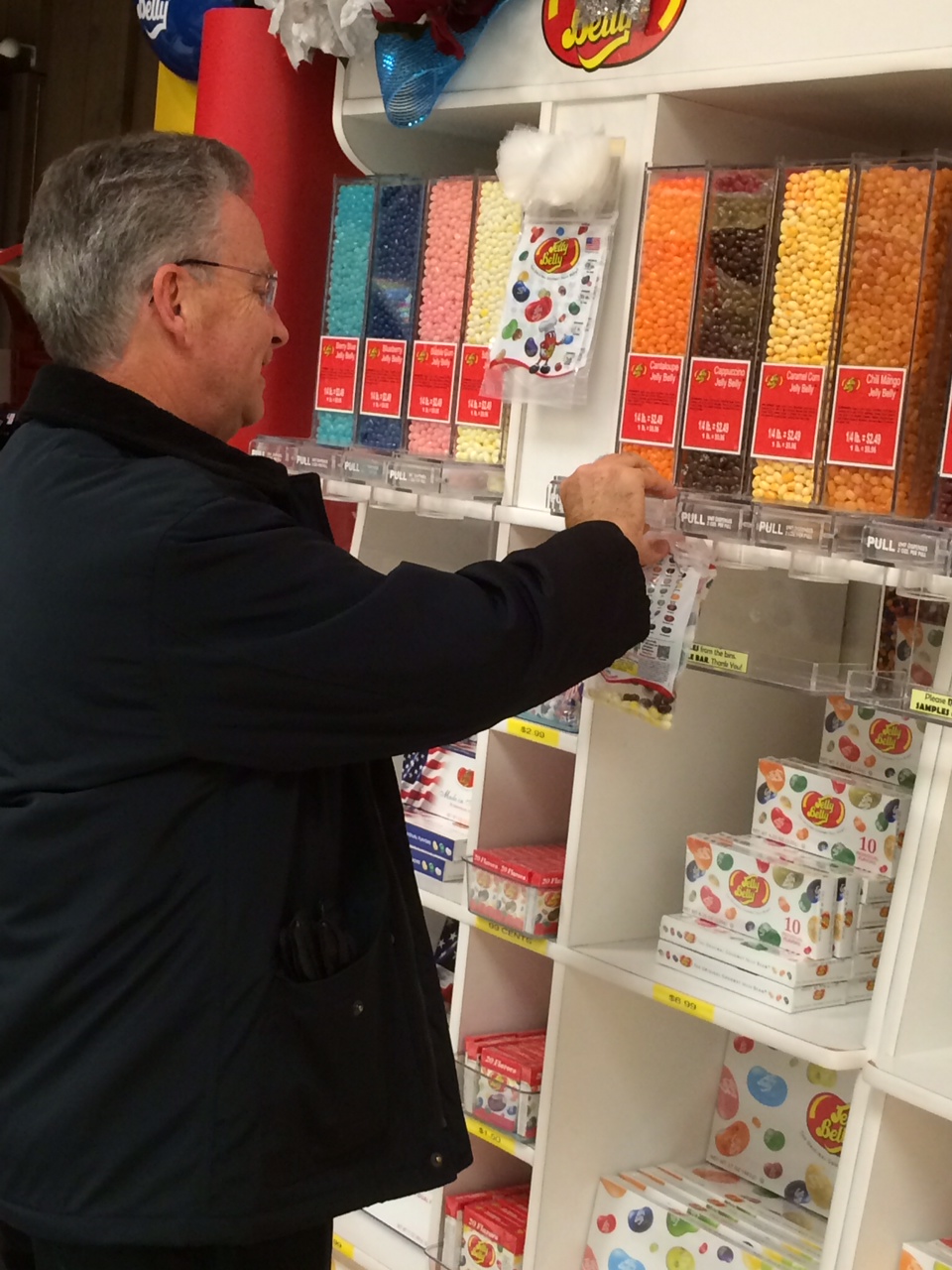
My Threshold Guardian at the Jelly Belly store.

My Threshold Guardian at the Jelly Belly store.

In addition to being a dear friend, Arnie is my personal threshold guardian. His appearances in my life always signal that change is a’comin’. The last time that I saw Arnie I left behind everything that I knew (literally and metaphorically). I began a long pilgrimage to the church of my self. It felt as if I stepped into my big wooden sailing ship and set a course for the edge of the known world and then, with great intention, sailed over the edge.

Two years have passed since our last meeting. In the interim, I have experienced Sirens and Cyclops, I lost my metaphoric ship and crew to the great whirling Charybdis, I was held captive on an island, I paid an extraordinary visit to the underworld and, at last, returned to the light with new knowledge. And, this week, as is his custom when I am ready to pass through the next portal, Arnie came to visit.

Saul’s voice roared in my head as Arnie and I debriefed my two-year journey: address your self to the field of possibility, not to the opponent. Possibility, I learned, becomes visible when we are vulnerable and available to it. It appears when we place our focus on it, when we seek it. Pushing and protecting and fighting and resisting obscures the field of possibility because our focus is on the opponent, not on the possibility.

And, of course, the greatest opponent is our self.

In the language of story, for great personal transformation to occur, we must leave behind everything we know and go on a journey into the unknown. That includes leaving behind who we know ourselves to be. In other words, we are required to let go of all the things we believe that we can control – but in truth cannot; we are required to release our insistence on keeping things “as they are.” In the end, we are required to face and then release the things that we are trying “to make work” but cannot – and let go of all the things we want to force into existence but cannot. That is the moment the opponent in our self disappears and we are at last able to turn our eyes outward and see the field of possibility that has been available for us all along.

title_pageGo here to buy hard copies (and Kindle) of my latest book: The Seer: The Mind of the Entrepreneur, Artist, Visionary, Innovator, Seeker, Learner, Leader, Creator,…You.

Eve, by David Robinson

Eve, by David Robinson

Go here to buy fine art prints of my paintings.


Move Your Words

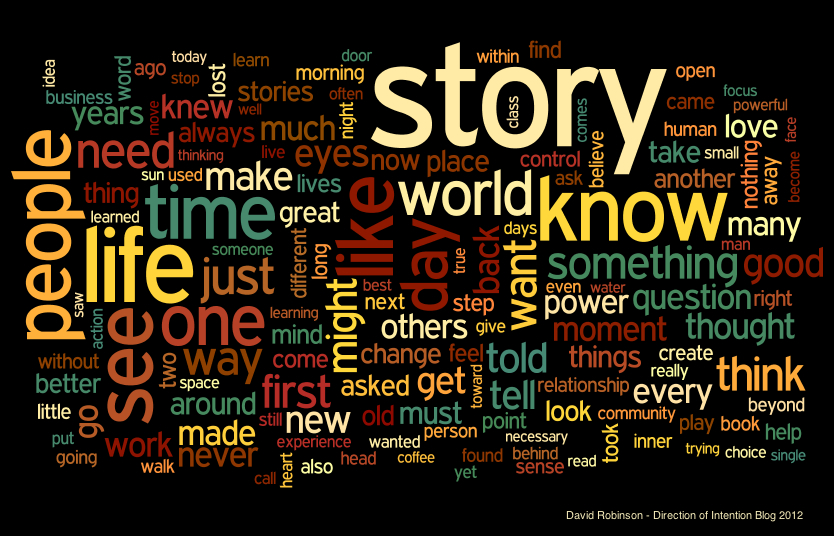
My friend, Mark, made this Wordle of my blog

My friend, Mark, made this Wordle of my blog

I am working with words again today but in another aspect entirely. Now that The Lost Boy has the minimum funding necessary for a production I am working on the play in earnest. Tripper Dog-Dog-Dog cocks his head and wrinkles his brow in wonderment as I talk to myself or dance the words. Sometimes he confuses my work method as an invitation to play and he leaps, catching the cuff of my shirt and pulls me to the ground. “Not now!” I cry out as Dog-Dog stretches my sleeve so that it might fit a giant (a side note: Dog-Dog has altered all of my shirts – he regularly mistakes my work for play. If I do not roll them, my shirt sleeves look as if I am small child wearing an adult extra-large).

I am a kinesthetic learner and realized years ago that working on a script was easier and more productive if I moved or danced the words as I worked with them. To borrow a phrase from a lost friend, my years at school were “fresh hell” because sitting in a desk was painful, it hampered my learning. If I want to have an insight or gain an understanding of something, the best thing for me to do is take a walk. If I move it, I can break down a script in no time. I can memorize anything if I can physicalize the intentions. For me, language, word use, and sense-making are a physical affair.

It is a physical affair for everyone. Try to speak without breathing (an impossibility); breath is movement. Speech is physical. For a real laugh, try to communicate without gesturing. Limit your movements and you will inhibit your capacity to communicate. For more fun, Google the latest statistic about how much of our communication is really non-verbal (we primarily read body language; listening to what is being said is a distant second). The deep mastery of a storyteller is found, not in the words, but the punctuation of a moment: the turn of the head, the intake of breath, the smallest of gesture, the connection made through the eyes; the fire of imagination is fanned when the storyteller, no matter how subtle, dances the story.

Last night I was reminded again of the power of language – the real kinesthetic of it. B is disturbed by the violence and darkness she sees in the world and asked, “How do we push back on it.” I challenged her verb. When we choose our language we also choose a “metaphor path”. Language choices come with images and images are not passive. They define what we see. They define the available options. They are a root for movement. To push back is a verb of resistance. It is counter force, a choice of aggression. “Why push against what you don’t want?” I asked. “Why not put your energy, effort, and imagination into creating what you actually want?”

To push. To create. Which verb will move you?

title_pageGo here to buy hard copies (and Kindle) of my latest book: The Seer: The Mind of the Entrepreneur, Artist, Visionary, Innovator, Seeker, Learner, Leader, Creator,…You.

The PoetFor fine art prints of my paintings, go here.

Recognize The Gift

Kerri with her mom, Beaky

Kerri with her mom, Beaky

Late night thoughts from the ER.

Earlier in the day Beaky told me that she had no special talents and I protested! She is one of the best storytellers I’ve ever known. She’s a natural. She can’t help herself. Sit with Beaky and you’ll hear some great stories. Beaky is like the rest of us: she doesn’t recognize her greatest gift because she thinks it is ordinary. She overlooks her gift because she thinks everyone can do what she does easily. That is the way with gifts: it is in the ordinary that we ultimately recognize our extraordinary-ness.

Beaky fell and we spent the night with her in the emergency room. As we sat by her bed, waiting for the pain medication to kick in, she said, “Did I ever tell you about the time…?” We heard stories about stags leaping over the car and the late-in-life marriage of her brother.

Another gift, related to her gift of story or, perhaps, an extension of her story-gift: people smile when they hang out with Beaky, even under extreme circumstances. For instance, writhing in pain, she looked into the eyes of a nurse and said, “I wish I had some of what you have! You have such a lovely smile.” And a new story begins; the nurse moved into the hall to tell the night staff about the kind woman in room 28.

After a sleepless night, Kerri and I sat in the hospital café and talked about the lessons of life, the lessons in generosity of spirit, the instruction in Grace and the rich stories we are receiving. From this seat, not much else seems important.

title_pageGo here to buy hard copies (and Kindle) of my latest book: The Seer: The Mind of the Entrepreneur, Artist, Visionary, Innovator, Seeker, Learner, Leader, Creator,…You.

Johnny crop copySupport the Kickstarter campaign for my play, The Lost Boy

Touch The Past

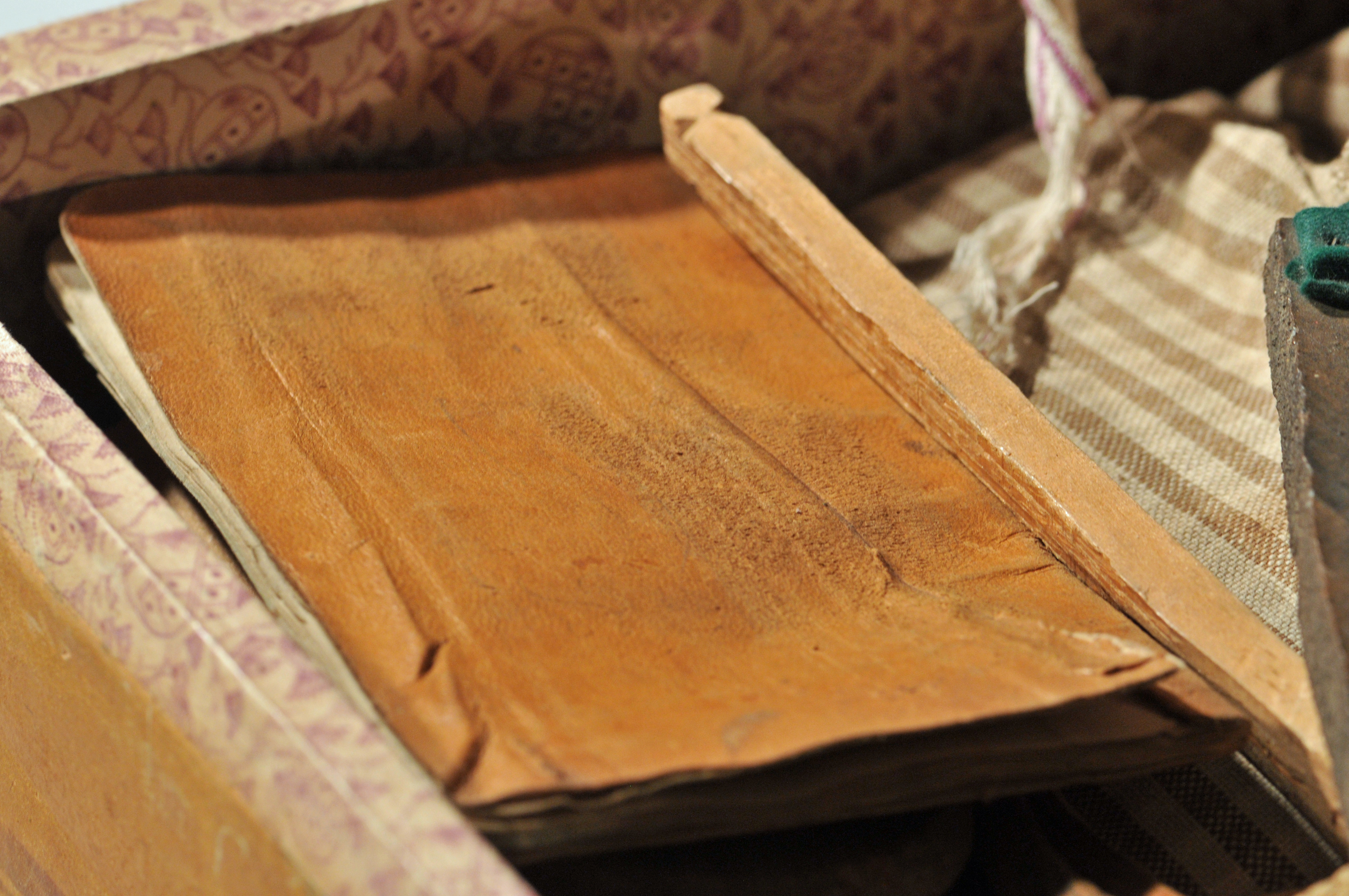
The journal/record Isabelle kept of the fever that killed Johnny.

The journal/record Isabelle kept of the fever that killed Johnny.

I’ve been posting updates to pledgers for my play, The Lost Boy, through the Kickstarter campaign. I’ve been using images of the artifacts – Johnny Quiggle’s possessions – found in the trunk. Jim, the chief Chili Boy, has been doing archival and art shots of the artifacts. The images have served to make a vital point about the play: this story happened. This little boy died. The story that unfolded for me moved both forward and backwards in time. And, while receiving it from Tom, I realized that it was also my story, and your story. It’s universal and, therefore, worthy to tell. My latest update generated much feedback so I’m sharing it here, too:

Jim has completed shooting archive and detail photos of the contents of Johnny’s trunk. This journal was the last thing Isabelle put in the trunk before she closed it in 1885 and secretly sealed it into the walls. Tom told me that this journal told him more about Isabelle than any other object in the trunk. In her record of the fever, he could read her worry, her despair, her fears, a few days of hope, and then the devastation at losing her son. This play is more than a good story well told; it is one of the ways Isabelle reached through time, through Tom, and into me to tell a story that is relevant to all of us.

Thank you for everything you have done to bring this play to life. It is your encouragement and support (financially and otherwise) that will open the trunk to larger audience and extend Isabelle’s intention beyond the walls of the ranch, beyond the Quiggle/McKenzie families, and into the greater conversation.

Johnny crop copySupport the kickstarter campaign for The Lost Boy


title_pageGo here to buy hard copies (and Kindle) of my latest book: The Seer: The Mind of the Entrepreneur, Artist, Visionary, Innovator, Seeker, Learner, Leader, Creator,…You.


Doubt

Pidgeon Pier - acrylic on canvas

Pigeon Pier – acrylic on canvas

It’s been months since I had a good chat with the stained glass window. I hadn’t realized that the conversations had stopped. The summer was a blur of unplanned travel and I suspect during the chaos of coming and going that I simply stopped asking questions.

This morning we awoke to snow, the first of the season. Snow arrives silently and inspires inner silence. Steeped in the snow’s quiet I heard the window’s greeting. “Ah, Welcome back.” And so began our conversation about doubt.

Doubt is a double-edged sword, it has two distinct faces. The first face, unlike the snow, is noisy. Doubt does not arrive in silence. It demands to be heard. In the middle of my conversation with the window I heard P-Tom say, “Fear makes us doubt our belief and believe our doubts.” This face of doubt is a crazy maker. It makes muddy the inner waters. It makes all fears come true.

There is another face of doubt, not born of fear but arising from love. The 5th Agreement of Don Miguel Ruiz is this: doubt everything that you think. To doubt what you think makes little sense without the preceding agreements, the most powerful (to me) is this – Be impeccable to your word: speak your truth and nothing else; do not blame or accuse or make others responsible for your pain (your thoughts and actions); own your thoughts; own your actions. Or, better said, love yourself enough to express your love and nothing else. Don Miguel writes that impeccability to your word requires self-love. In this context, this other face of doubt is a step forward. Coming from love, to doubt what you think is akin to cleaning up the dirty dishes. It is to not take anything too seriously. Thought is nothing more than storytelling and to doubt the story births detachment from investment in the story. Detaching from the story-investment brings quiet, like the snow.

title_pageGo here to buy hard copies (and Kindle) of my latest book: The Seer: The Mind of the Entrepreneur, Artist, Visionary, Innovator, Seeker, Learner, Leader, Creator,…You.

Yoga Series 7Go here for fine art prints of my paintings

Laugh For Warmth

'The Wind' by David Robinson

‘The Wind’ by David Robinson

Someone threw a switch and it’s winter. There was no gentle drop in temperature, no ease into the cold. Monday was balmy. Tuesday was bitter. Today, the pond is frozen and I am watching the front edge of the snowy season dip its toes into the world. Last night we cut short our usual walk; we were shy a few layers of clothing and feeling was leaving all fingers and toes. We laughed for warmth and walked faster.

Life changes fast. We are reminded of that when tragedy strikes. When death comes to the too young or the fire consumes the neighbor’s house and all their treasures, we say, “Remember how precious this life is! Remember to be more grateful for what we have!”

Sometimes that seems to be the single salient point of tragedy: to make the rest of us stop, remember and appreciate what has real value. And, the moment of appreciation, like all moments, is passing. We get caught again in the dull pull of routine and stop seeing the miracle.

I just entered an art competition (note: isn’t it strange that “art” and “competition” can exist in the same sentence?); the theme is peace (note: isn’t it strange that the theme of a competition could be peace?). In my artist statement I wrote that peace is a practice, not an outcome. It is something people bring to the table, not something negotiated at the table. Conflict is at the core of every story and, therefore, is the engine of movement in every story. That is also true in every life story. We tell stories of enmity and we tell stories of amends and, if we are paying attention, we realize that both are a single story told from a different point of view. The story we tell, like peace, is something we bring to the table, not something we find there.

Flip the switch, stand in the others’ shoes, laugh for warmth and walk faster or simply slow down and feel the cold. Life not only changes fast, it passes fast, too. It seems impossible that I moved here a year ago. It seems like last week. Today, looking out the window as big snowflakes float to the ground, watching the Dog-Dog chase them with great delight and snap them out of the sky, I made a conscious decision to see the miracle and forgo the necessity of a thump to wake me from dullness. This winter is like no other.

title_pageGo here to buy hard copies (and Kindle) of my latest book: The Seer: The Mind of the Entrepreneur, Artist, Visionary, Innovator, Seeker, Learner, Leader, Creator,…You.

Change Your Mind

I used this quote by Friedrich Nietzche in The SEER:

“The snake which cannot cast its skin has to die. As well as the minds which are prevented from changing their opinions; they cease to be a mind.”

A few days ago I asked myself this question: What if I never painted another painting or wrote another word? What would happen? Who would I be?

title_pageThe first question, what would happen, is much less interesting to me than the second question: who would I be if I simply put down my brushes forever? When I was younger, I felt driven, as if I had to paint. I needed it. In asking the question I recognize that now I choose it. I don’t have to paint; I want to and consequently I am a much better artist. It’s a paradox: I am a better artist because I don’t need to be an artist. In other words, I don’t need to be, I am.

I’ve been revisiting The SEER. My initial team of wise-eyes unanimously voted the first draft to be “too much.” The book that I published is comprised of the first three chapters of the original draft. I deconstructed them and broke the steps into smaller bites. There were six more chapters outlined and, in my latest revisit, I recognize that I have a trilogy if I want it. So, book two is in process. I’m going to release the first draft in daily snippets as I write it. Everyone gets to be my wise-eyes this time around.

Here’s the launching pad section for book two from The SEER. It’s from the second cycle (story):

You can change your story. That is the sixth recognition. Doesn’t it sound simple? Say it this way: changing your story is the equivalent of changing who you know yourself to be. Changing your story often requires the loss of your illusion, a lot less armor and nothing left to lose. Who are you when you don’t know who you are or where you are going? This was the heart of Virgil’s question to me. Who are you distinct from your circumstance? Who are you when the mask comes off? More importantly, what are you capable of seeing when you are not looking through a [knight’s] visor? No one is immune to the stuff of life. Everyone lives a unique version of the story cycle. It too is a pattern, a natural process.

Go here to buy hard copies (and Kindle) of my latest book: The Seer: The Mind of the Entrepreneur, Artist, Visionary, Innovator, Seeker, Learner, Leader, Creator,…You.

Go here (to Leanpub) for all digital forms of The SEER

Canopy by David Robinson

Canopy by David Robinson

And, for fine art prints of my paintings, go here.