Walk With Dorothy [on Merely A Thought Monday]

I am fond of falling into rabbit holes. For instance, I just wrote the phrase, “racking my brain” and then doubted my spelling and wrote, “wracking my brain.” Was I wracking my brain or racking my brain as I tried to figure out who Lily Tomlin reminded me of? We’ve been binge watching episodes of Grace & Frankie.

This is what the oracle in the temple of google revealed to me: To rack one’s brain is to torture it or to stretch it by thinking very hard. To wrack one’s brain would be to wreck it. This might sort of make sense in some figurative uses, but rack is the standard spelling where the phrase means to think very hard.

After sufficiently stretching my brain on the rack, somewhere in the early episodes of season 2, I realized that Lily Tomlin’s character reminded me of my great aunt Dorothy. Not so much in specific action – but in orientation to life and in appearance. I admired her greatly.

Dorothy lived on the side of a mountain in a small house that may or may not have ever been level. It was a down hill stroll when walking from the kitchen to the living area. She cooked on a cast iron wood burning stove. Her tiny yard, also clinging to the side of the mountain, was a miracle of blue bottles glittering in the sun and brilliant red hummingbird feeders. Poncho, a dog older than god herself, sat in the yard and watched the day go by. My great uncle Del rolled cigarettes and kept his world war 2 army jeep in usable shape.

Dorothy and Del were more interested in living life simply rather than gathering possessions or stacking achievements. The promise of a week with them was a promise of adventure. Catching pollywogs in old coffee cans, building rafts so we could Huck Finn our way across high mountain lakes, bumping in the jeep over ancient gold mining trails, discovering cabins and shelters slowly being reclaimed by the land. There were old graveyards and the hillside that the mountain town considered its dump. Dorothy was famous (to me) for finding treasure there. She had the eyes to see possibilities and potential in the community’s discards.

I often wonder if my love of walking was a gift from Dorothy. I adored walking with her. She was, at the same time, a free spirit and completely grounded. She was dedicated to the appreciation of the moment. No frills. No illusions. The sun on her face was cause for celebration. She never traded simple present joy for some imagined future gain.

When I think of her, I smile. When I think of the many people who have influenced me, Quinn and Tom, Doug, MM, Mark, Judy…they all have a bit of Dorothy in their characters. Outliers. See-ers. Lots of laughter and ideas. The ability to find treasure – or make treasure – in the people and the possessions that society routinely throws away. Appreciators of the moment. Sharers of the riches they find there. Walkers-through-life that pay attention. Each and every one evokes a smile when they wander through my thoughts.

Ask me what makes a good life, what it is I hope to emulate, and leave behind, I will not need to rack or wrack my brain. I will point you to the long river of inspiration and smiles whose headwaters come from a tiny scrappy woman who lived in a tippy house on the side of a mountain surrounded by hummingbirds, colored glass, bacon and wood smoke.

read Kerri’s blog post about SMILE
Draw A Chalk Circle [on Merely A Thought Monday]

There are charts for everything. Definitions and distinctions of value meant to clarify but, in the end, make life seem more and more farcical. For instance, we recently were directed to a worker’s compensation website and learned that losing your hand in an accident is worth 400 weeks of [minimal] compensation. The dominant hand is worth more than the non-dominant hand. Fingers have less value-in-weeks than a thumb. Just imagine the guys-and-gals-in-suits sitting around a conference table discussing the value of a human hand as expressed in weeks. Sometimes I’m certain that we live inside the mind of Gary Larson.

Is it no wonder that we are confused about the value of a human life? We have actuaries calculating human-life-value and making smart looking tables with support graphs to answer this most fundamental question. I’m certain that those guys-and-gals-in-suits sitting around the conference table would come up with a different answer if it was their hand or fingers or toes or life on the chopping block. If it was their child’s eye or foot. Charts, like all data points, are not personal.

We awoke this morning to the news that the latest mass shooting (if 4 or more people are shot it is, according to the FBI, considered “mass”) was in our town. We are number 47 since March 16. March 16 is the date of the mass shooting in Atlanta; 8 people were killed. Here are some nifty and comprehensive charts on gun violence in America.

When I was in elementary school we did safety drills, crawling under our desks, in the event of an atomic bomb drop. Although I was certain that my desk was not going to protect me in the event of an atomic explosion, I was comforted by the knowledge that the enemy was far away, external. Now, our children in elementary school do active shooter drills and they, too, know that their desks offer little protection. But their predicament is dire: the enemy they face is right here. It is everywhere, internal. Sitting under my desk I knew there was an entire military machine between me and the potential dropper of atom bombs. Sitting under their desks, our children know with certainty that there is nothing, not even legislative will, standing between them and the ubiquitous shooter.

I once listened to an author speak about the difficulty of writing a farce about the USA. He said, “Before you can a publish the book, the fictional farce that you’d written will have actually happened.” Our scary farce: the only answer we can muster to daily mass killing in schools, grocery stores, work places, concerts, houses of worship…the only idea that the markets will support in an out-of-control gun culture, is more guns. Sales charts and political donation data drive policy to dedicated inaction. [For some lightheartedness in the midst of this dark-and-dismal post, go here. I laughed aloud when I heard comic Steve Hofstetter riff on gun control.]

What is the value of a human life?

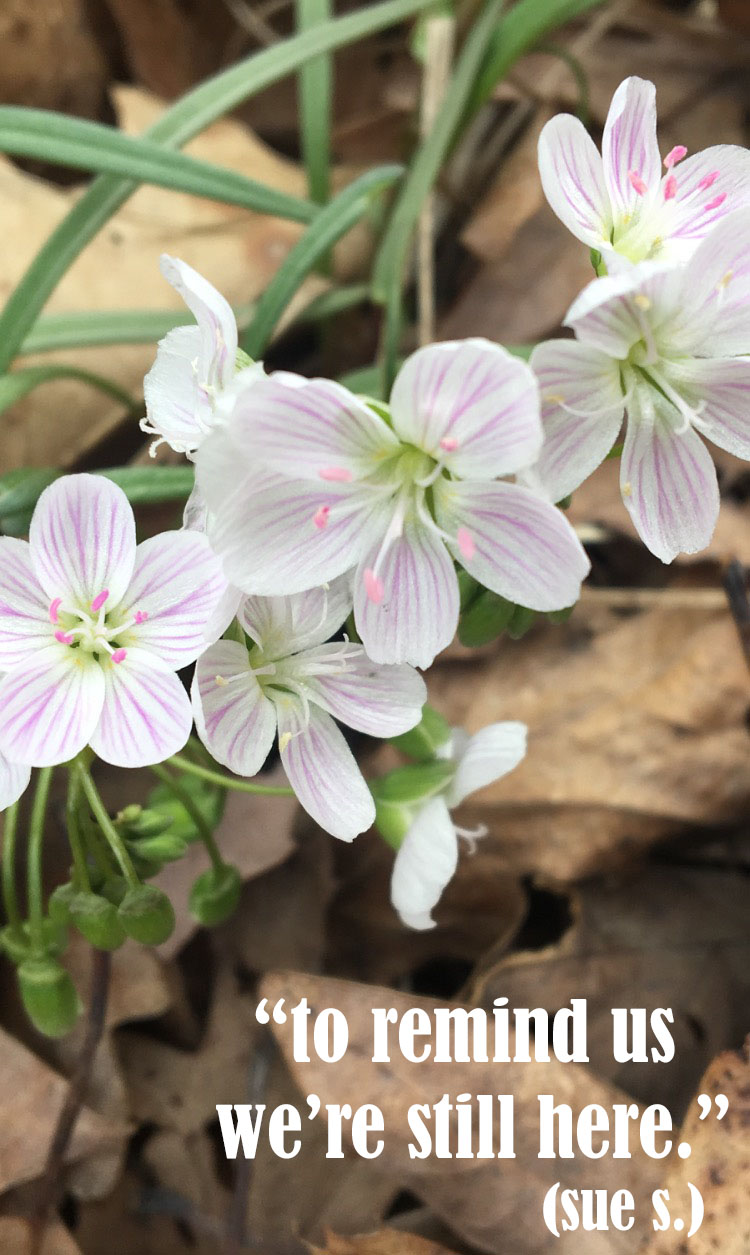
We had a lovely conversation in the grocery store. An accidental path crossing with friends. Sue remarked, as we compared life experiences, that our personal challenges are meant to remind us that we are still here.

What is the value of a human life as determined by those of us who are still here?

Bertold Brecht wrote a play called The Caucasian Chalk Circle. Two women claim to be the mother of a small child. A judge has to settle the case. He has a small circle drawn on the ground. The child is placed in the circle. The judge instructs the women to stand on opposite sides of the circle, each taking one of the child’s hands. The woman that successfully pulls the child from the circle will be declared the mother. One woman quickly yanks the child from the circle. The other will not pull. She refuses. She cannot do harm to her child. She proves herself to be the true mother.

I wonder what we might value if we could put down our charts and data points and amendments-as-seen-in-isolation-from-all-the-other-amendments, step beyond our abstractions, and draw a simple circle in the dirt. What might we discuss if we placed a small child in the circle, and considered the value of that one precious life? My bet is that none of us would yank that child out of the circle of life. We’d do everything imaginable to protect the child from harm. To keep it safe. Sales graphs and actuary tables and every other dehumanizing analytic would drop away. We would, in considering the beating heart of our public dangers, make the safety of the child, of every child, our personal challenge. It would slap us awake and remind us that we are still here. Alive. And, as custodians of the circle of each and every actual life, we are responsible to and for each other.

read Kerri’s blog post about STILL HERE

Turn To See [on Merely A Thought Monday]

Joseph Campbell said, “None of us lives the life that he/she imagined.” We have an idea, perhaps a plan, a good map, and then, well, life happens. As anyone who’s ever done home repair knows, things rarely go according to the plan. A good life, a life well lived, allows for both the well-laid-plan and the home-repair-rule. Things happen. Plans change. Visions grow. Pipes burst. Pieces don’t fit. Good angels arrive.

Dreams are fluid things. Despite expectations, very few life paths are straight lines.

One of the tenets we taught in The Circle Project was to plan for surprise. Expect the unexpected. There is nothing worse than an inflexible plan. There’s nothing better than a happy accident that alters the course of an idea, the direction of a life.

That we have penicillin in our world is the result of a famous happy accident. Intention met mishap met serendipity. A surprise discovery in a Petri dish in 1928 took years, many more Petri dishes, publications and happy discovery by other scientists who held a similar intention, followed by additional happy accidents to at last become a useful antibiotic available to the public in 1942.

Though I rarely include it in my list of gratitude, I would not be alive today were it not for that accidental mold in the dish and the subsequent scientists who included in their plan time to read journals and follow up on the research they found there. I’ve never come across a life plan that included a bout with life-threatening infection but I’ve heard countless tales of relief when the antibiotic – no longer a surprise – arrived. Surprise meets plan. Plan meets surprise. They are dance partners, not adversaries.

A team can practice, practice, practice, but they cannot know or predict the outcome of the game. It must first be played. And, as any athlete will tell you, the game is only worth playing – or watching – because the outcome is unknown.

Plan for the unknown. Welcome the surprise.

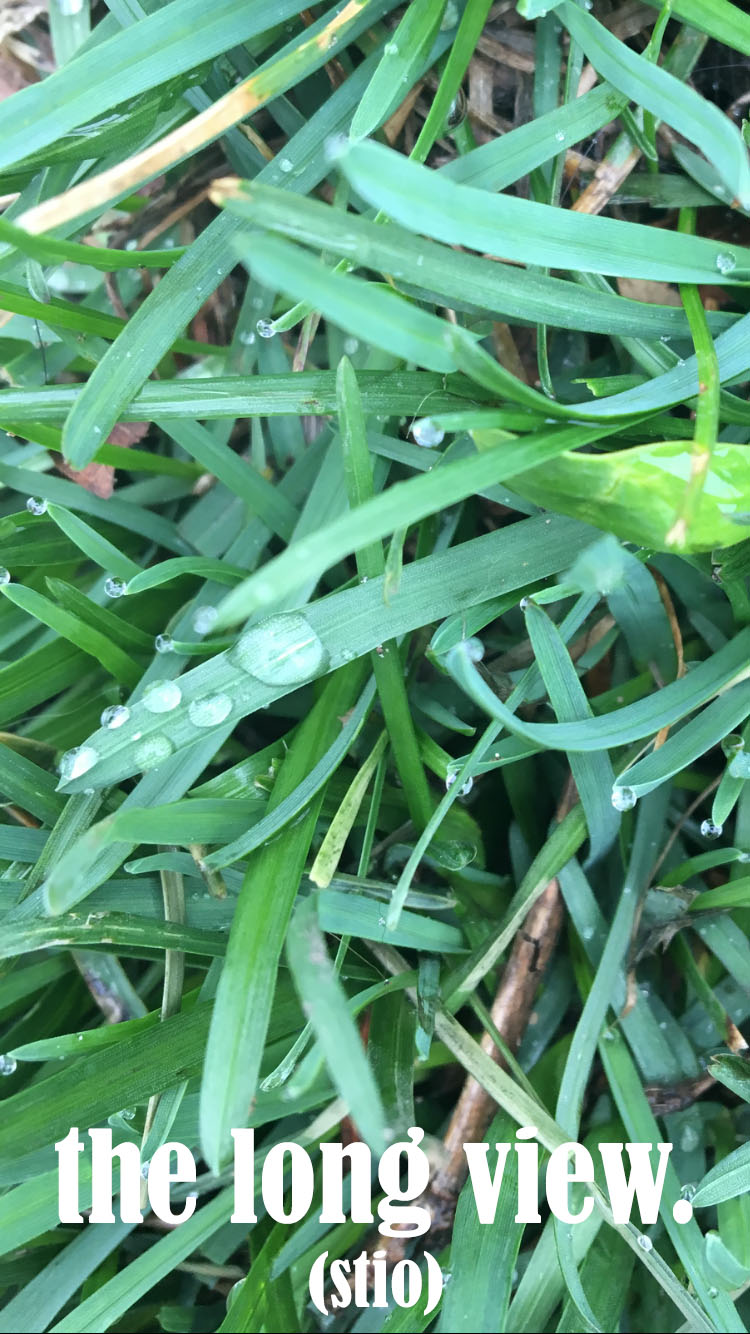
The long view is what we desire before life is lived. Pick a point on the horizon and walk that way.

The long view is something we can only truly see after the fact, when we arrive at a point, and turn to see the surprising path we have traveled.

read Kerri’s blog post about THE LONG VIEW

See The Invisible [on Merely A Thought Monday]

“Oh my gosh!” She whispered. “These remind me of my mother!” She quickly pulled her camera from her purse and, to the amazement and amused curiosity of our fellow grocery shoppers, we had a straw-plate-holder photo shoot at the end cap of aisle 9.

It is, of course, among my favorite aspects of going through life with an artist wife. Everything is a story-thread. Everything is a possible composition, an opportunity for beauty. Everything is immediate. It is utterly unpredictable when the muse will strike. And, the immediacy of capturing the moment usually draws a crowd and she is blissfully unaware of the ruckus her immediate-story-composition creates. She is a rolling storm of performance art. I am the lucky one who gets to watch both the artist and the audience.

Augusto Boal, one of the developers of the Invisible Theatre, would be most proud of the unintentional performances Kerri creates. In an everyday setting, everyday life, a performance snaps an audience into awareness, shocks them out of their dulled sensibility, an audience that has no idea that it is functioning as an audience. Many stop to watch the crazed lady snap photos of straw-plate-holders as she tells sweet stories of her mother. Many scurry for the safety of anonymity. Either way, either response, a pure theatrical event takes place.

The performer scrutinizes her many photos, completely unaware of her performance. As she places her camera back in her purse, the audience immediately disperses, hopeful not to catch the attention of the performer and somehow be called into the play. They fold themselves back into the normalcy of their day.

But, something has changed. They have a story to tell, an unusual event happened in their day. The performer has touched back to her deep story and through her photographs, plucked her heart-threads.

And I have been the happy witness to art and artistry. All are fed by these lovely, oh so common, straw plate holders displayed at the end cap of aisle 9.

read Kerri’s blog post about STRAW PLATE HOLDERS

Walk In Sync [on Merely A Thought Monday]

My Seattle studio was on the 4th floor. It was a corner space so I had windows on two sides. On one side, across the railroad tracks, were the stadiums. Out of the other set of windows I could see the streets that bordered the International district. People scurrying to and fro.

Many afternoons, working on a painting, I’d hear the roar of the crowds, touchdowns or home runs. The light rail pulling into the station. The Amtrak train pulling out of the station heading north. Sirens, car horns honking. I loved my studio because, although I was surrounded by the hustle and bustle of city life, I felt somehow removed from it, a witness.

Sometimes, when I was too much in my head or I could no longer ‘see’ my painting, I’d walk the streets. I’d wander to clear my mind or refresh my vision. I’d walk slowly, people rushing, rushing by. People trying to get somewhere. Trying-to-get-out-of-a-too-active-mind requires a much different pace than trying-to-get-somewhere. They are opposite actions. In my slow walk I’d feel the wind of impatience as people dodged around me. I was an irritant. I was a slow moving rock in a rushing river of humanity.

The wind of impatience.

I’ve always understood the artist’s role to be a witness, to live on the edges looking in. Master Marsh recently sent Wendell Castle’s “My 10 Adopted Rules of Thumb.” Rule # 2 is “It’s difficult to see the whole picture when you are inside the frame.” An artist’s job is to sit on the frame, to see and share what those inside the frame cannot see. Pattern. Movement. Illusion.

One of the first things I noted the day I met Kerri is that we had exactly the same stride. We were walking and our steps were weirdly identical. We strolled in sync. It made us laugh.

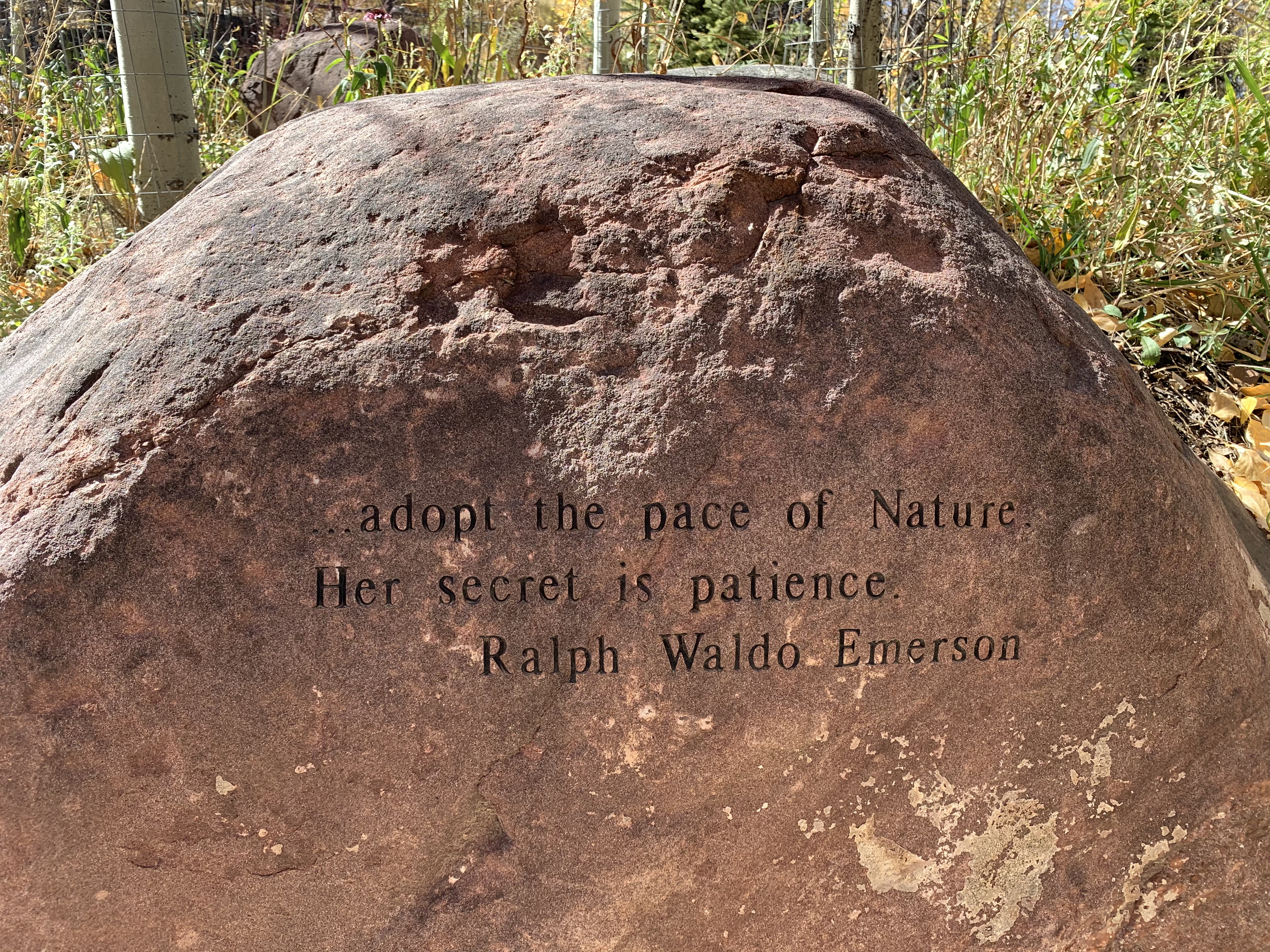
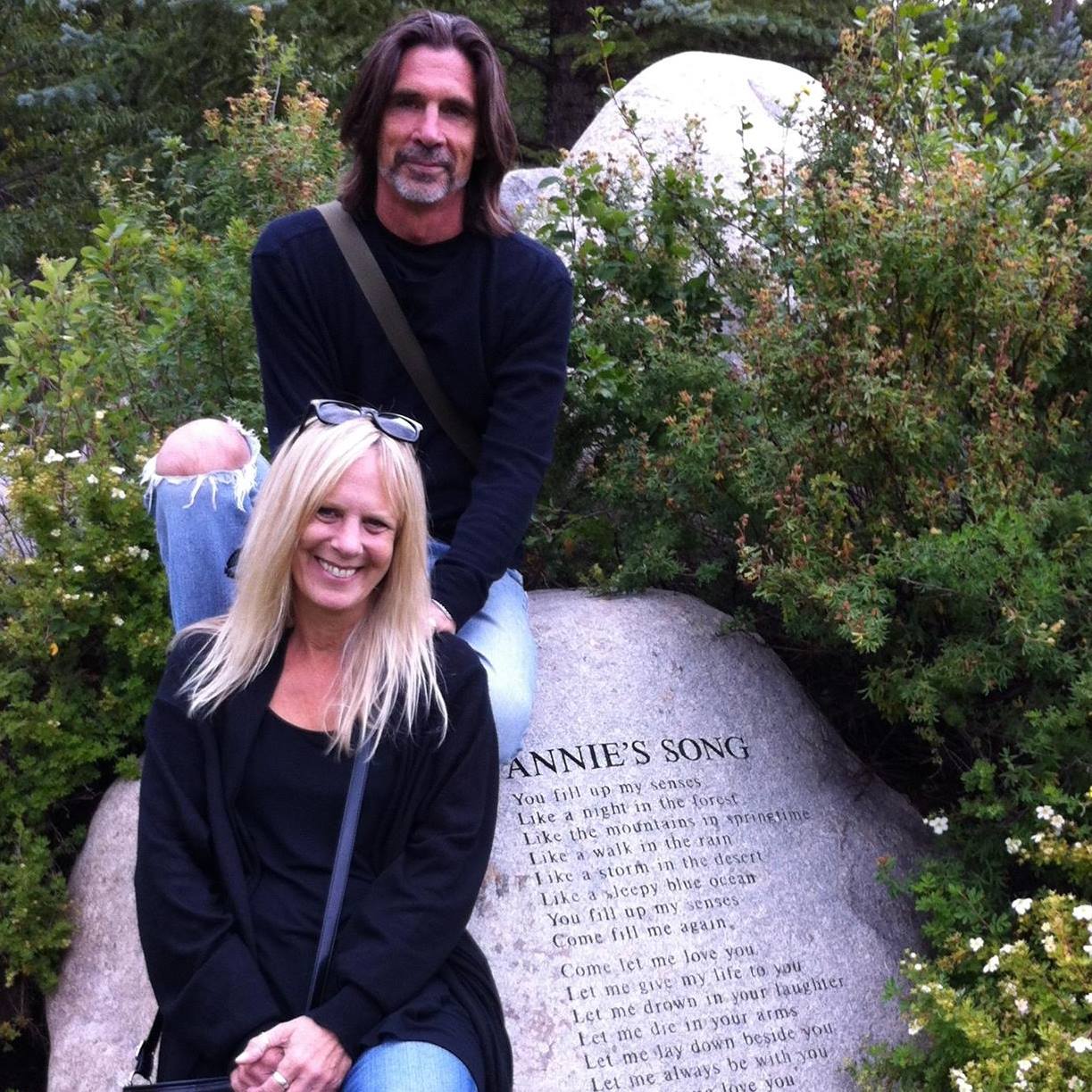
There is a special place in Aspen, Colorado. The John Denver Sanctuary. We make a pilgrimage to the Sanctuary when we travel to visit Kirsten. It is a place designed to make people slow down. Babbling brooks. Aspen leaves. Monolithic stones carved with the lyrics of John Denver’s songs, stones that carry the words of writers and artists and thinkers who appeal to the heart. It asks the visitor to sit for a spell. To listen. To breathe and see. To be, as nature teaches, no where other than here. It offers the gift of the artist: to fill-up with quiet before jumping back into the life-of-hurry-up-and-get-it-done. To remember what is natural and walk with exactly the same stride as nature.

read Kerri’s blog post about PATIENCE

Evolve And Laugh Heartily [on Merely A Thought Monday]

I find the notion of evolution to be hopeful. Evolution of species. Evolution of consciousness. I assume in my wild idealism that the evolution is toward betterment. Reading Ken Wilber’s thoughts on our chaotic and troubled post-truth times, we are, he suggests, in the throes of an evolutionary step. Evolution is not a smooth stepping dance. It’s more a stumbling forward drunkard.

Last week I posted about the lake in my studio and how the clean up facilitated a life-work review. I was surprised by how many notes I received from life-long friends asking me not to burn my paintings this time. I’d forgotten that, after my move to Seattle, I took most of my paintings and drawings to a fire pit on a beach and burned them. I had so much work that it took three days to complete the purge. That life-work-review ended in fire. This latest life-work-review began with water. I actually loved, post flood, going through my paintings. The paintings that went to the fire felt like a burden, a weight. From heavy burden to love; not a bad progression in my personal stutter-stepping evolution.

We drove to Colorado last October to see my parents. In his dementia, my dad cast me in the role of his college roommate and took me on a tour of the basement. We stopped in front of a large photograph taken at his parents 50th wedding anniversary celebration, a photo of the whole clan. He pointed to my twenty year old face in the photograph and said, “Now, I don’t believe you ever met this one.” It was true. As I listened to his description, I had the overwhelming feeling that he was right. Later, I returned to the photograph and visited that version of myself. I thought, “I think dad’s right. I don’t believe I ever met this one.”

The months that followed set the stage for my flood-inspired-work-review. I’ve discovered that I am more apt to be kind, more given to the positives, than I was a decade ago. Evolution has softened me. Or, opened me.

I’m not alone in reaching back, in sifting through the evolutionary drunken stumble to the present. This pandemic era serves as a marker-in-time as well as a great disrupter of pattern and path. It has inspired many a life review among those in my circle. Together, we ask the questions that have no answers, Quinn’s big three: Who am I? Where am I going? What is mine to do?

There are no answers but from time-to-time it’s necessary to ask.

There’s a fourth question that kept Quinn in stitches every time I asked it. What’s it all about? He’d howl and snicker and snort whenever the question came up. I am now the age he was when that younger version of me sat in his study and wrinkled my brow, disconcerted at his hearty laugh. Now, I know without doubt what’s so funny. I find myself laughing to tears when I hear the un-answerable-fourth-question. It’s about what you make of it as your illusion drops away in the course of your own personal evolution.

What else?

read Kerri’s blog post about EVER EVOLVING

Borrow A Cup Of Belief [on Merely A Thought Monday]

The sun is streaming through the windows. It is an immediate spirit lift. We sip coffee and our conversation wanders in no particular direction.

We inevitably discuss of the absence of normal, our rolling wave of disruption. “I wonder what will happen this week?” We laugh, “Knock on wood!” For a moment we sit in silence. We’ve stopped asking, “What else can happen?” We keep the question to ourselves. We’ve grown superstitious.

For us, this pandemic time will always be known as the era of disruption. All recognizable patterns are shattered. New patterns have yet to find a foothold. Each day a tumbling unknown.

I often write about “not knowing.” It is the land where learning becomes possible. The first caveat: Have the experience first and make meaning second. The second caveat: Suspend your judgements and learn. Both are rooted in the intentional suspension of knowing. Open to life.

We are definitely having experiences. We are careful not to arrive too soon at meaning.

Yesterday I read that, when life tosses us the uncontrollable, we default to imaginary controls. We do the dishes, we vacuum the rug, rather than face what is out of our control. There is great comfort in the imaginary.

Sometimes belief in yourself is hard to come by. “Knowing” that you can do it. “Knowing” that you can stand firmly in the “not knowing” is never a given. Especially in times of continuous disruption. It is only after the fact that you “know” with certainty that you can do it. “One step at a time,” we chant.

It is, in these times of disruption, that we borrow belief from each other. You tell me that I can do it. I tell you that you’ve got this. Others “know” what we do not. They see our fortitude. We see theirs. It is why human beings are a herd animal; we come to know ourselves through the eyes of the other. We go next door to borrow a cup of belief.

Beaky’s note now sits on Kerri’s bed stand. A treasure newly found in a long forgotten purse. One of our imaginary controls, cleaning out the closets, produced this gem. Beaky, no stranger to disruption, reaches across time and the threshold to offer timely encouragement, “I know you can do it.”

“Momma says we got this,” Kerri says. If I’ve learned anything, it’s to never argue with Beaky.

read Kerri’s blog post about KNOWING

Be The Miracle [on Merely A Thought Monday]

“The infinity in the microscope is as dazzling as that of the cosmos.” ~ John O’Donohue

After my surgery, the doctor said, “You my friend are now a modern medical miracle.” It’s true. Had I been born in another century I would not have survived. In fact, had I been born in another century, I would have met the average life expectancy of 30-40 years. Each and every one of us, walking the streets with an expectation to live beyond our thirties, are modern medical miracles and indebted to the brave explorers of the microscopic cosmos.

Early in this pandemic, before it hit the shores of these divided-united-states, we watched the movie Contagion. So much of the world painted in the film was spot on. Pandemic deniers decrying the virus as a made-up assault on their freedom. Charlatans selling miracle cures and misinformation. Conspiracy theories run amok. The initial panic emptied shelves at the grocery store. Quarantine. An economy in tatters. A weary and anxious populace awaiting a vaccine that would stop the micro-assault. A microscopic threat vanquished by a microscopic man-made-miracle.

When we pulled into the abandoned-drive-through-bank to receive our vaccines, I felt that I was in the movie. We’d placed our names on a list to receive vaccines that would otherwise need to be discarded. The call came on a Friday afternoon, “Come now!” We jumped into the truck as the sun was setting on a frigid snowy day and raced to the given address: an abandoned bank turned into public health center. We were directed to stop at cone number 1. Nurses in snow pants, knit caps and mufflers came out to the truck. It was so cold that we had to open the door to communicate, the windows were frozen and would not roll down. A bit of paperwork, coats shed and arms exposed, and the vaccines were administered. Coats and gloves and hats were quickly donned again. We were asked to wait at cone number 1 for 15 minutes. They gave us a flag to wave if we needed help.

As we waited, engine running to beat back the bitter cold, we admired those amazing women who gave us our shots. They were absolutely delightful, upbeat, and incredibly kind. Pandemic. A blisteringly frigid day. They’d been giving vaccines since early in the morning, repeatedly taking off their gloves in frostbite conditions. We were the last two of the day. And there wasn’t a hint of exhaustion or suffering or complaining from the cold. “People can be amazing,” Kerri said. “It’s good to remember that sometimes.”

It was good to remember. Dedicated people selflessly serving others in the face of a deadly virus, enduring extreme cold, extreme misinformation, tip-toeing across ice and politics to bring big-heart-comfort and a bit of modern miracle to the dazzling cosmos called my body and yours. My health is your health. Intimately linked as we pass in the grocery store or on the street or trail, across the nation and the world. The microscopic world does not know us as individuals and cares not about our investments or beliefs or freedoms, imagined or not. All that I know is that I am, once again, a modern medical miracle, and owe a deep debt of gratitude to the men and women at the microscope and those that stand for hours in the cold.

read Kerri’s blog post about VACCINES

Embrace Orbisculate [on Merely A Thought Monday]

A family is trying to get ‘orbisculate‘ into the dictionary to honor their dad who died of Covid-19

Compromise. Accuse. Jaded. Dishearten. Tranquil. Swagger. Mimic. These are just a few of the over 1,700 words that William Shakespeare invented or adapted. Making up words, playing with sounds and meanings and clever twists of usage was appreciated in his lifetime. Audiences went to hear plays like we go to hear concerts. The sound of the word was more important than the visual on the stage.

During Shakespeare’s lifetime, Robert Cawdrey toyed with a thing that would someday be called The Dictionary though it wasn’t something Will had to consider. Spelling was phonetic. Teachers did not think to circle his words with red pencil. That bit of standardization was still a few centuries away. Spend time within the unedited-for-our-eyes First Folio and you’ll find yourself sounding out words just as the poet did. Tasting the sounds. Shaping meaning in your mouth en route to making meaning in the world.

Language is fluid. Each year new words come into being and others drop from sight. For instance, our word “google” is a “creative spelling of the word googol, which implies an unfathomable number. It was coined in the 1930’s. Our version is in the dictionary as a verb: to search for information. And, you’ve probably already heard that it’s also a company that facilitates the search for information. Which came first, the verb or the company? Some words, over time, come to mean the opposite of what they originally meant. The archaic meaning of the word “egregious” is “remarkably good.” From remarkably good to outstandingly bad is quite a journey!

Definitions are discoveries and agreements made according to how we use the tasty sounds we call “words.” Each word comes into being from necessity.

Orbisculate is a tasty word that William Shakespeare might have created and enjoyed. But, he didn’t. Neil Krieger did. It is a word for juice squirting in your eye. Neil died of COVID and, to honor this good man and his good life, his family is attempting to get Neil’s good word into common parlance and, ultimately, to the dictionary. They are appealing to poets and pedestrians alike to embrace their necessity and use Neil’s word. If you visit their site, check out their 50 Goals. Never was a single word so lovingly brought into the lexicon. Help them if you will. Will would have. He’d have used orbisculate in one of his comedies. Or many of his comedies.

I have a sneaking suspicion, if they are successful in their quest, that, over time, orbisculate will come to have another meaning: an act of familial love.

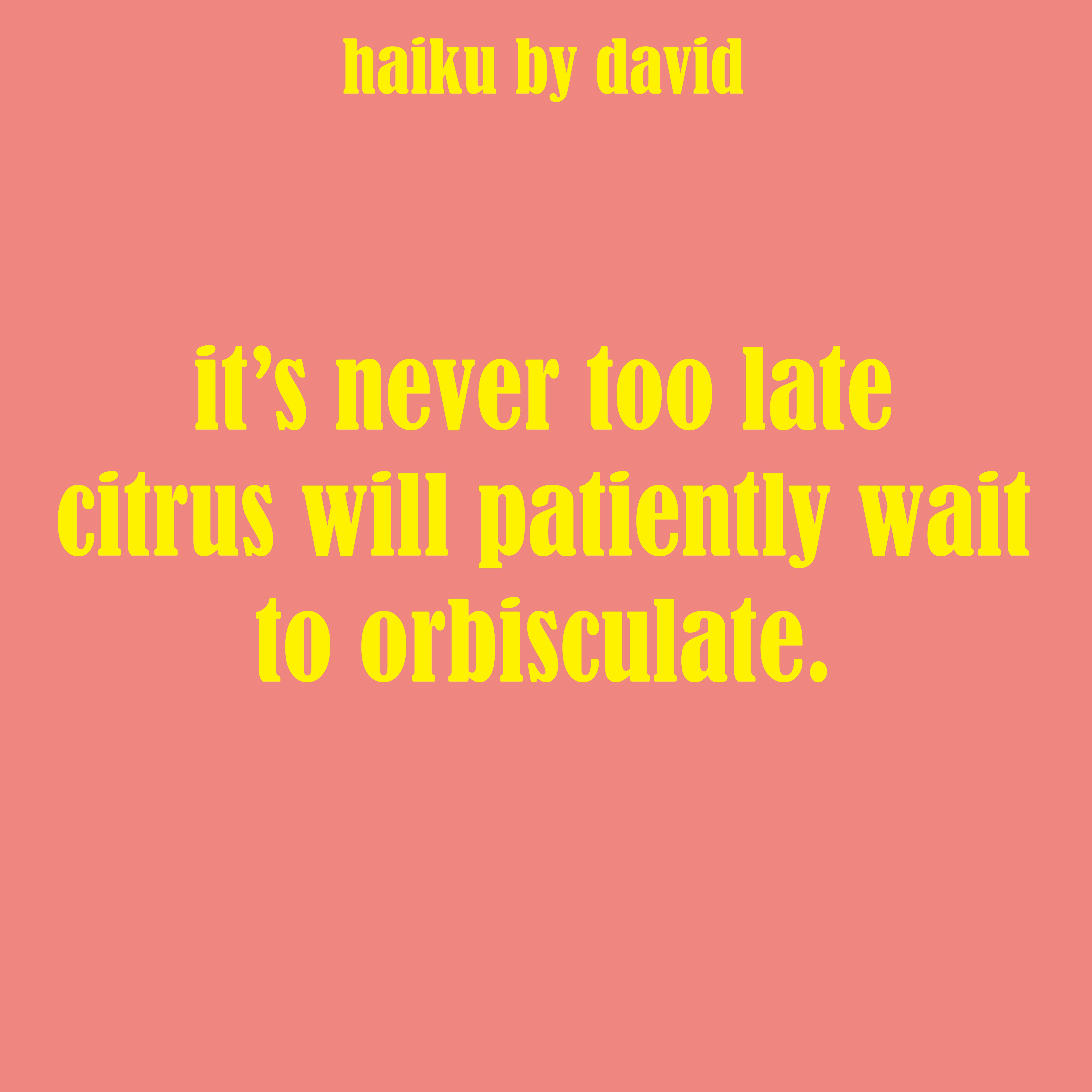
The Orbisculate haiku challenge! Here’s mine:

Now, it’s your turn. Make sure you let the family know.

read Kerri’s blog post about ORBISCULATE

Understand That Little Is More Than Enough [on Merely A Thought Monday]

I think that maybe\ I will be surer\ of being a little nearer.\ That’s all. Eternity\ is in the understanding\ that that little is more than enough.” ~ R.S. Thomas [via Anam Cara by John O’Donohue]

And so our dear H is gone. I have written about him before, about how I learned from him how to age well. To “have a wonderful urgency to live life to the full” [John O’Donohue]. H was a study in wonderful urgency. He did not grow cranky as he grew old. He did not darken his sight with what he could no longer do. He gently pushed the edges of what he could do. He was a master of focus-placement.

I have known many people who proclaim a spiritual life. They are quick to advertise their illumination. They live to stand on the mountain top and call attention to their heights. H was not one of those. He simply lived his faith as he lived his life – without need for acknowledgment or recognition. No trumpet necessary. I suspect that his why I was drawn to him. He was simon-pure. Genuine.

“We’re afraid you’re going to take her from us,” H said to me, more warning than salutation, when I sat next to him in choir. It was my first rehearsal in my first choir and, as an avowed non-singer, I was intimidated. Kerri was the director. She’d recently asked H, at 87 years old, to rap Via Dolorosa. He’d jumped at the challenge and, as I heard the story, performed brilliantly, complete with costume and bling. He and Kerri were thick as thieves.

He guided me through that first rehearsal, laughed when I honked a bad note – which was often, and, by sweet example over time, steered me through my confusion until I found more joy than fear in singing. At the end, as he was moving into his 94th year, just before the pandemic made rehearsals impossible, it was my joy to help him find his place in the music. A perfect circle.

This morning, just before we received the news of his passing, I spent some time in the final pages of Anam Cara. The last words are a Blessing for Death and this phrase struck me: May you live compassionately and creatively and transfigure\ everything that is negative within you and about you. When the news came of his passing, I was certain it was H who’d tapped me on the shoulder and whispered, “Pay attention to this phrase.” It describes him perfectly. It encapsulates what I believe, H, without words, was trying to teach me. Through compassion and creativity, transfigure everything that is negative within you and about you. That is how to live well and age with wonderful urgency. No trumpet necessary.

read Kerri’s blog post about H