Clepe Incredible [David’s blog on KS Friday]

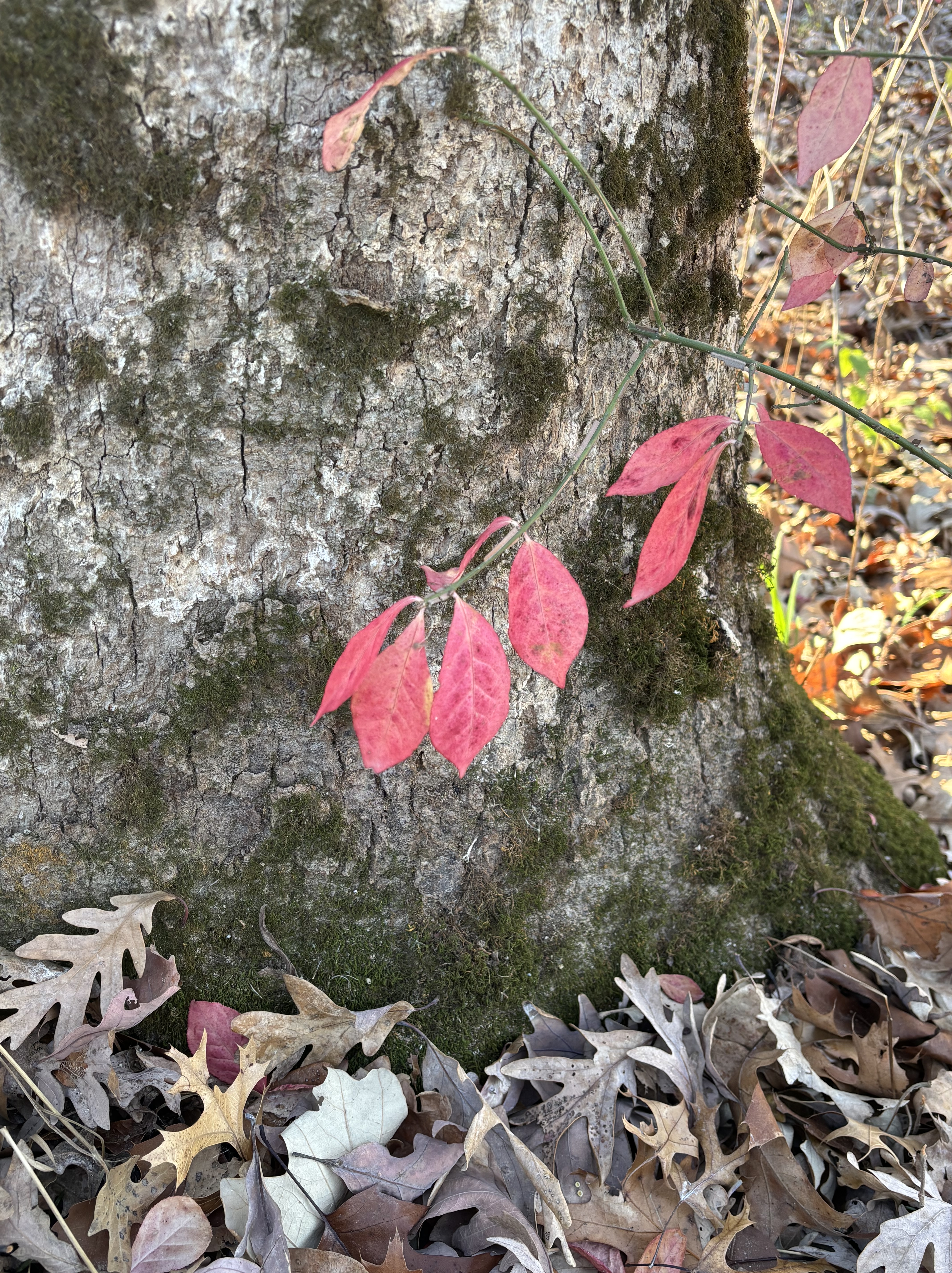
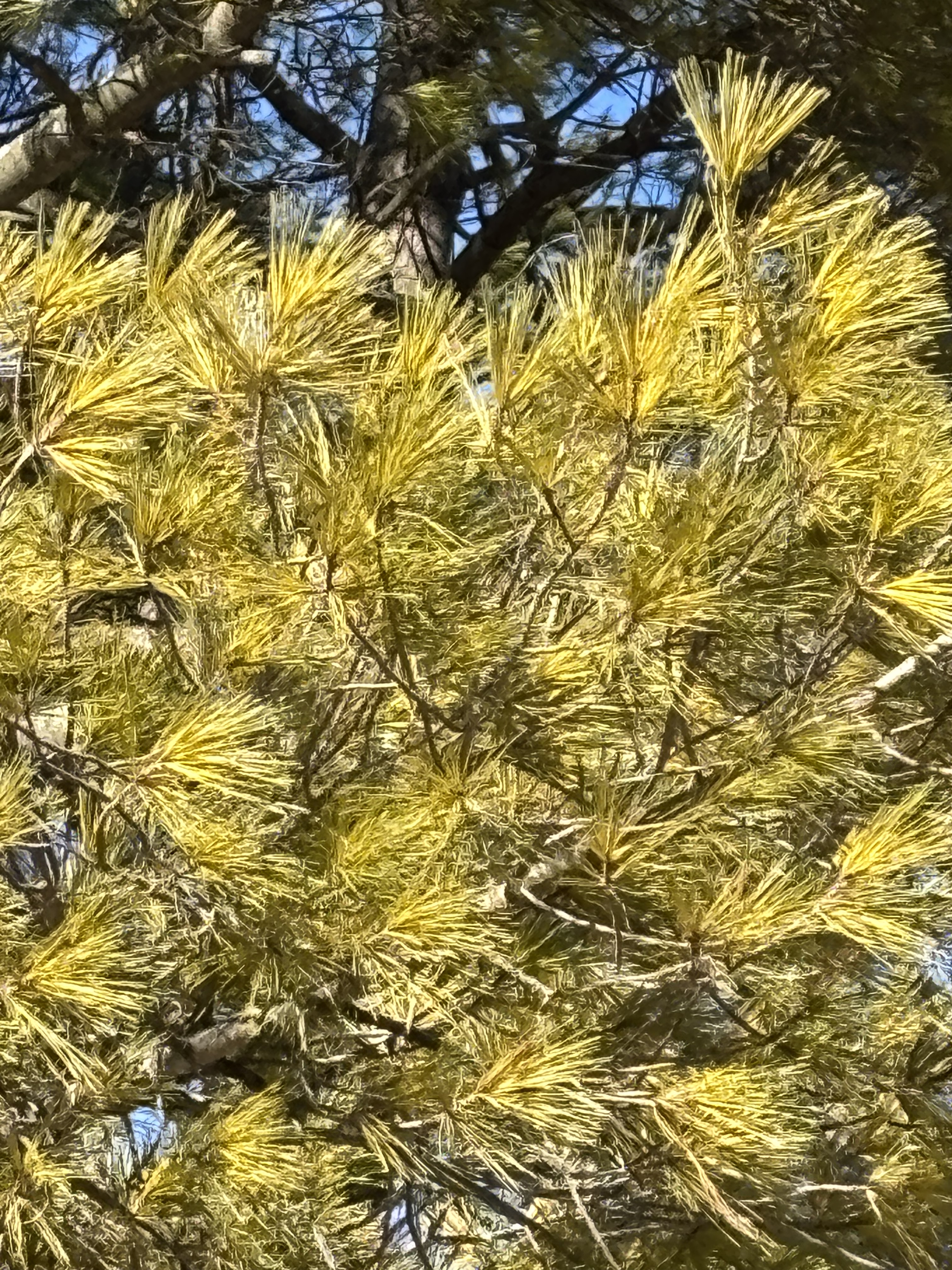
This is the time of year that color in nature becomes shocking. It is the consequence of nature’s contrast principle: the greys and browns of oncoming winter meet the vibrant yellow, orange and red of the leaves-last-stand. Last week, while walking Dogga, I stood for several minutes beneath a tree made electric by the morning light. I felt as if I had entered another reality.

Contrast principle is really about how comparison shapes perception. I only know that I’m having a bad day because I believe that I’ve had good days. Last night I watched Anderson Cooper interview Tig Nataro for his series exploring grief. Tig Nataro recently lost her friend, poet Andrea Gibson. The love of life comes clear in the moment of the loss of life. The appreciation of life sharpens when the end rolls into view. Contrast principle.

I bumbled into an archaic word that is new to me: clepe. It means to give someone or something a specified name. To name. I was cleped David. As my end rolls into view I am more and more resisting the impulse to clepe my days. Why should my days be labeled either good or bad? On my last day, what will I be willing to give to have one more moment of this life? Why not clepe incredible each and every moment that I am fortunate enough to experience?

LAST I SAW YOU on the album THIS PART OF THE JOURNEY © 1997 Kerri Sherwood

Kerri’s heart is available for sharing on iTunes and streaming on Pandora

read Kerri’s blogpost about THE VIBRANT LEAVES

sharelikesupportthankyou

The More Difficult Path [David’s blog on DR Thursday]

“Tenderness and kindness are not signs of weakness and despair, but manifestations of strength and resolution.” ~ Kahlil Gibran

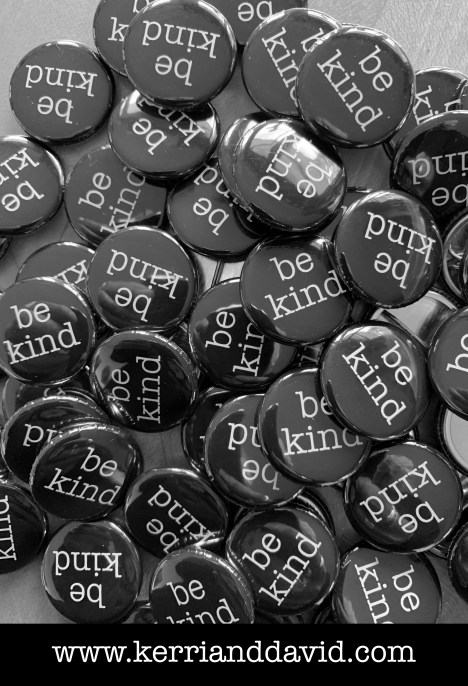
As her parting words when it was time for us to go, Beaky always said, “Be kind to each other.” She said it more as a wish or a prayer than as wise counsel.

In this latest era, we’re hearing a lot about hate speech. I believe Beaky’s farewell sentiment came from the experience of a long life: she knew that hostility and indifference are easy. Meanness is low hanging fruit, easily picked. Kindness, on the other hand, requires dedicated intentionality. It is a mandate to relinquish senseless power games.

Her parting words might as well have been, “Be conscious. Give your attention to each other.”

In the school of “Your Words Matter,” there is a clear distinction between the language of violence and the language of benevolence: hate speech rejects personal responsibility. Kindness requires an embrace of personal responsibility.

It is easy to point a finger and spew word-bile. It is satisfying to score a point and walk away. Demolition is elementary. It requires no special talent or skill.

Decency, kindness, generosity…considering the impact of words and actions on others – is certainly the more difficult path. To be aware of the impact of words and actions takes…well…awareness. Awareness and concern for others takes courage, strength and resolution – and is nothing less than the blossom of respect for your self.

With some corrections, it is finished: 66&19, 31.5″x36″ mixed media

read Kerri’s blogpost about the DAISY BUTTON

likesharesupportsubscribethankyou

The Very Least [David’s blog on DR Thursday]

“Positive cultural change today (as it has always been) is about leveraging your life where you are: by doing small, possible, measurable daily acts of decency, of protest, of advocacy, of collaboration.” ~ John Pavlovitz, The Beautiful Mess, 2.27.25

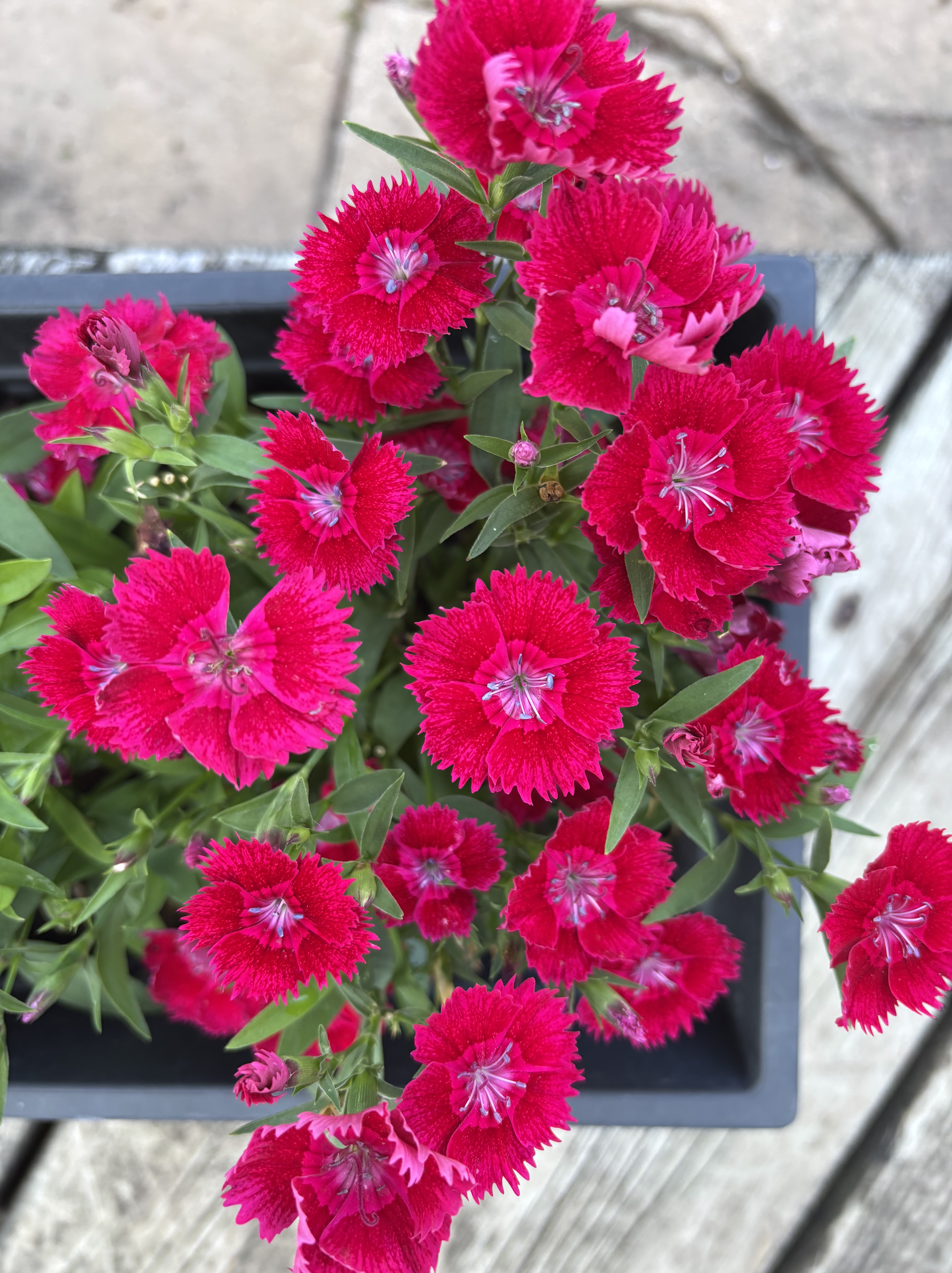
Red dianthus symbolizes deep love and affection. We’ve ringed our deck with pots of dianthus. It seems like such a small thing yet every time we step onto the deck, we smile. They invoke our affection. They magnify our deep love.

Symbols might seem like a small thing but they reach to the very core of our being. Who in the USA can see a bald eagle and not be taken by the majesty of the symbol? Who in the world can see a swastika and not be horrified by what it represents?

Language is constructed of symbols. We line our streets with universal symbols: stop, walk, yield, green-means-go. We think in symbols. We dream in symbols. We are naive to ignore or underestimate the power of symbols.

The Texas Democrats breaking quorum was a symbolic act. They understand that single-party-rule, as is now being legislated in Texas, is authoritarianism. Their symbolic act has sent a ripple of courage through an otherwise paralyzed Democratic party.

Yesterday I wrote that in the midst of our national horror, each and every day, we ask ourselves, “What can we do?” If I could I would go to the Texas legislature and stand with the Democrats who are now essentially being held hostage. I wish every lover of democracy could show up this morning on the floor of the Texas legislature and say with their presence, “We will not stand for this.” I wish every lover of democracy could show up on the floor of the nation’s legislature with the same message. Enough.

Protests are symbolic acts. So is delivering donations to a food pantry. John Pavlovitz reminded us this morning that the answer to our question, “What can we do?” need not be grand. In fact, we need only look around our community and, as Ann used to tell me, “Find a need and fill it.” Offering a helping hand is a symbolic act.

Calling out the national guard without reason is a symbolic act. Signing meaningless executive orders to do away with mail-in-voting is a symbolic act. Both are in direct opposition to these symbols: The Declaration of Independence, The Constitution of the United States, The Statue of Liberty, The Liberty Bell, The Boston Tea Party…the vote in free and fair elections.

Our vote is now all that stands between us and the loss of our democracy. By-the-way, that has always been true.

Our vote is under assault by a president and republican congress. They are rigging the system to eliminate democracy in favor of one party rule. They assault nothing less than our foundational symbolic action. The Right to Vote.

Our vote, until now, has been the sacred central symbol – the single symbolic act – of our experiment in democracy: rule of, by, and for the people. According to our symbol, our leaders serve at our pleasure. We choose them. If we do not like their actions, we vote them out.

Until now.

Voting seems like such a small thing. Yet, it is everything.

What can we do? Protect your right and mine, protect the right of every citizen without regard of color or gender, to vote in free and fair elections. It is no small act of decency to protect the single, central action, the primary symbol of our democracy, the one thing that you can DO that actually makes the whole country great: protect your right to vote. And then, when the day comes, exercise your right, perform your symbolic act. Vote. It is the very least – and the utmost – you can do.

detail of a work in progress

read Kerri’s blogpost on DIANTHUS

likesharecommentsupportsubscribethankyou

The Imaginary Top [David’s blog on Two Artists Tuesday]

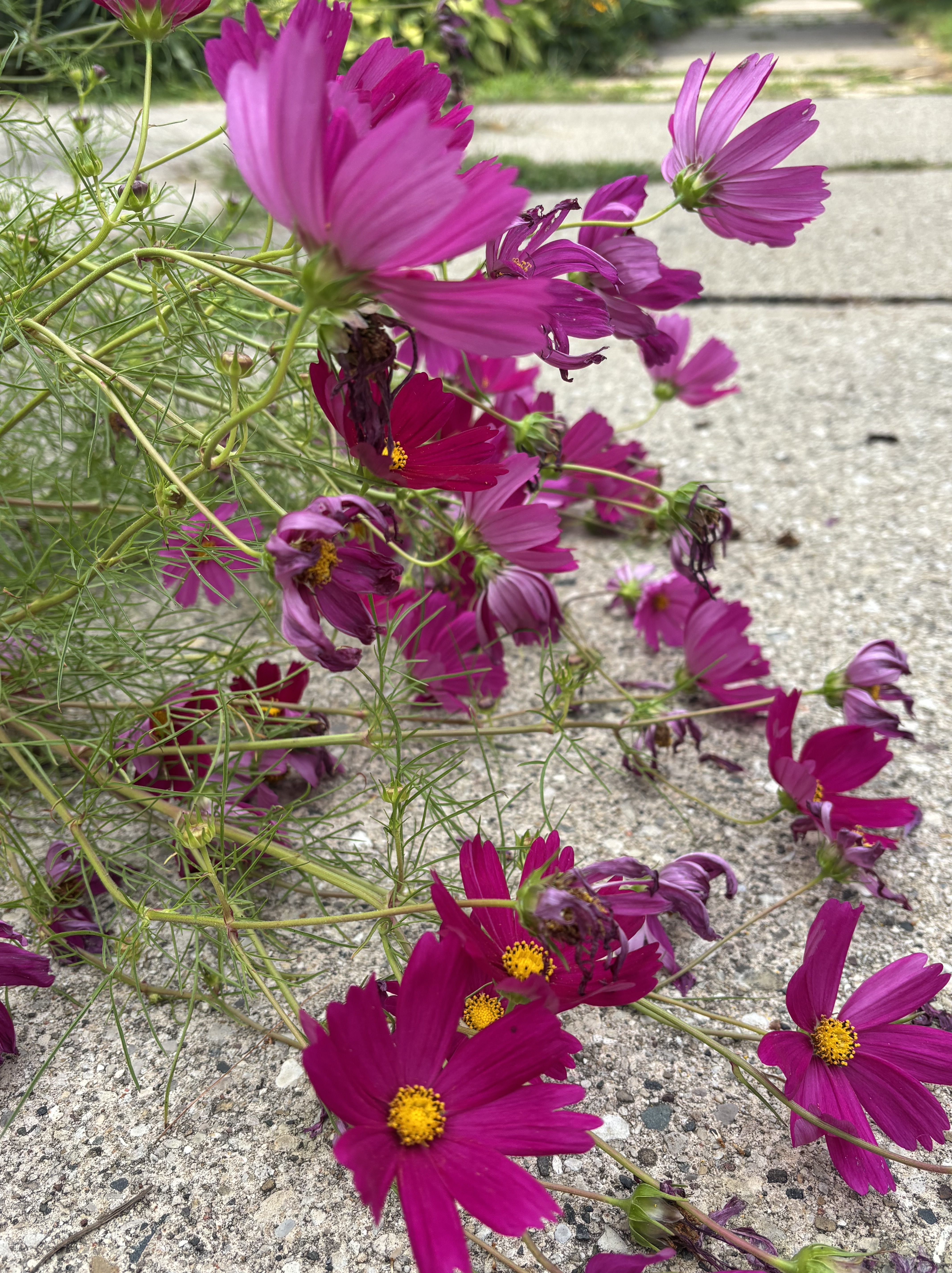
This gorgeous flower that derives its name from the Greek kosmos was lying on the sidewalk. The recent incessant heat and rain and humidity had wrestled it to the ground. It was down but not defeated.

Cosmos. Another name for the vast universe and its intrinsic order. Lately on our little planet the order of the universe seems to have lost its mooring. Actually, the flora and fauna seem to still be hitched to natural cycles and patterns, it’s we-the-human-beings that have slipped away from the dock of reason.

She knelt on the ground to take the picture. “They are beautiful,” she said. From a distance it must have looked like she was bowing to the cosmos. The image and word play tickled me. I thought, “We human-beings would do ourselves a favor if we were humble and occasionally bowed to the Cosmos.” We definitely occupy a place in the order, but rather than seeing ourselves as interconnected, we invent hierarchies and place ourselves at the pinnacle of importance. We give ourselves the blue ribbon. A few more years of thousand-year storms might wake us up but I doubt it. We like believing we are at the top. We like believing that there actually is a top to be occupied – and therein lies our dis-ease. Believing that we are at the top permits the delusion that we are somehow disconnected from the rest of the Cosmos. It gives us permission to believe that everything is a resource for our use and pleasure.

That, and, as they say, hierarchies beget hierarchies. We imagine an order to the vast Cosmos in which there are winners and losers. We turn our hierarchies on each other.

Of course, we are capable of imagining a different type of order. It’s why we have stories of messiahs and buddhas. They are meant to point the way out of our delusion and toward the actual order of the Cosmos. No hierarchy. Non-separation. Illumination and brother’s keeper. A return to the garden to discover the Tree of Everlasting Life otherwise known as unity. Those wacky sages are meant to help us see beyond our illusion, beyond our bloody scramble for the imaginary top.

After the flower photo op, we were careful to step over the cosmos-on-the-sidewalk. The cosmos were a good reminder in this time of madness run amok: reason, ethic, moral compass, compassion, service, kindness…may be down, but they are certainly not defeated. In the end, they are what give order to our cosmos

read Kerri’s blogpost about COSMOS

likesharesupportcommentthankyou

Definitions [David’s blog on Merely A Thought Monday]

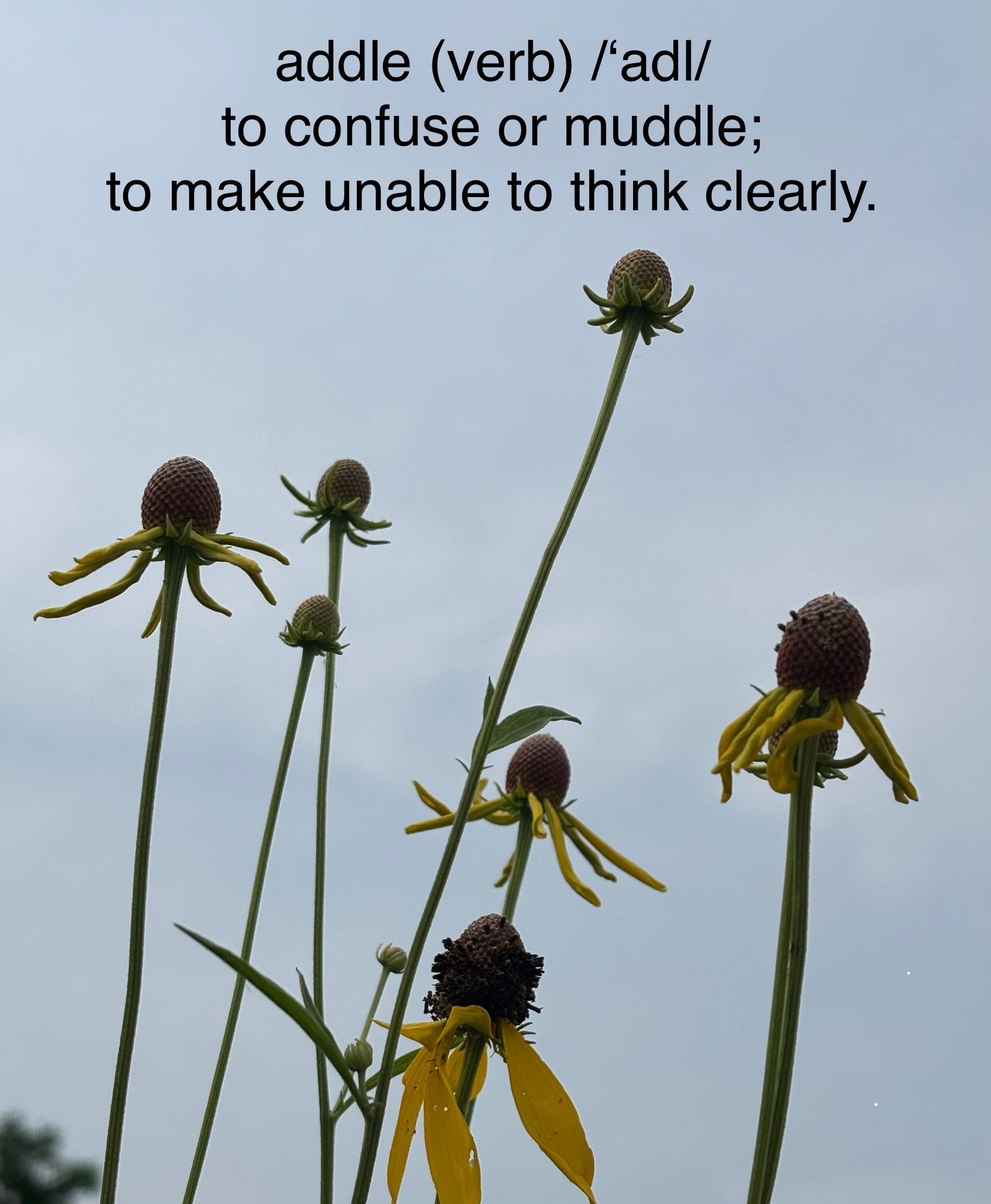
I’m a big fan of secondary definitions. Not only does the word addle mean to confuse, it also means to make an egg rotten. In my mind the two definitions are connected: addle a brain too long and it will rot.

A case in point: while forwarding our smack-dab cartoon on Saturday I happened upon a disturbing comment thread. Members of the maga-cult were abusing a woman who dared to defend the plight of immigrants.

2. Abuse (verb): treat (a person) with cruelty or violence.

The harangue included demands that the woman “get her facts” straight, which I found particularly obscene since the maga-abusers were astonishingly-fact-free while the woman was rooted in reality. The maga-big sticks included two easily debunked claims: 1) The Biden administration paid millions of social security dollars to “illegals*”, and 2) the “illegals” were bleeding the system without paying into the system.

This took less than a minute to fact check: Can undocumented immigrants collect social security? No.

Are undocumented immigrants eligible for Medicaid? No. (bonus fact: Is misinformation rampant? Yes).

And, here’s the kicker for anyone who cares to live in a world of easily checked facts: Undocumented immigrants paid more in taxes than Amazon, GM, IBM, and Netflix combined.

I recognize – as I believe we are all coming to recognize – that the maga-mind is particularly resistant to any bit of data or fact that contradicts their fever-fantasy. Their adamant defense of the indefensible has little to do with truth or fact or historical accuracy or hard science – they hold fast to their absolute right to muddled minds because it gives them license to abuse. They mimic their dear leader. The bully-impulse is the bond that unites them.

*Take, for instance, the fox-generated-and-now-widely-maga-touted-term “illegals”:

Illegals (plural noun. derogatory. north american): a person present in a country without official authorization.

In the fascist handbook it is a hard and fast rule to first dehumanize a group of people before subjecting them to inhumane abuse. For instance, making people wear yellow stars before herding them into train cars and disappearing them into concentration camps or – as is currently happening – calling people illegals en route to suspending their (and our) constitutionally protected right to due process – so that masked agents of the government can pluck people off the streets and disappear them into…concentration camps.

inhumane (adjective): without compassion for misery or suffering; cruel.

I hope we can all agree that the sadistic treatment of other people is barbaric. Well…if you are maga, your mind is so addled that your moral compass no longer functions, as is evidenced in daily celebrating ruthless savagery – like ICE – while claiming to be ethical, christian, and upstanding.

Addle a brain too long and more than the mind will rot.

read Kerri’s blogpost about ADDLE

likesharesupportcommentsubscribethankyou

Each Other’s Destiny [David’s blog on Not So Flawed Wednesday]

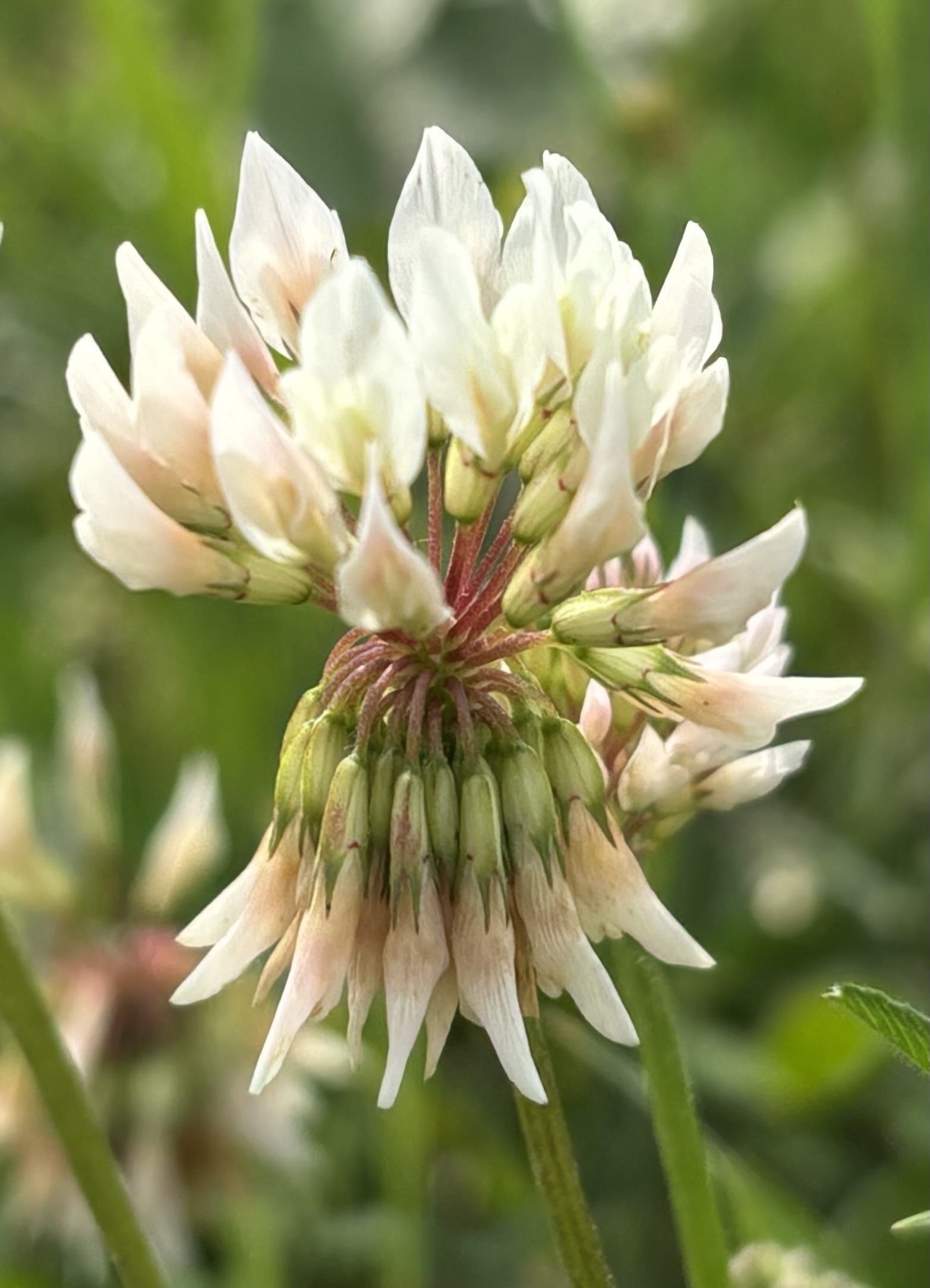
This tiny white clover flower, no bigger than my fingernail, is an entire universe unto itself. It is a miracle of pattern, designed to attract pollinators. Although I am certain is doesn’t waste a moment of its existence pondering its purpose, it serves as a nutrient to soil and through its vast root system it prevents erosion.

When I write that it is an entire universe unto itself what I really mean is that it is intimately connected to everything. Although we have given it a name and dissected it to the last atom, it does not know itself as separate from the sun that feeds it or the bees and mammals that feed on it. It serves and is served. Both/And. That is the nature of the entire universe. We have words for it: interconnection, flow, movement, relationship.

Words separate this from that. That’s the whole point of a word: to make distinct. To make distinct for us and for our purposes. And, because we think our thoughts in words we can’t help but think of ourselves as separate, distinct. In our word-infused minds we lose contact with the connection. Is it no wonder that we spend much of our time pondering our purpose? Having blunted the experience of interconnection is it no wonder that we story ourselves above it all?

That we name things has given us the illusion that we are higher beings, better than the white clover flower. Hubris is most often the cause of civilization’s collapse. Our capacity to name things comes with a matching capacity to deny – that is to lie and lie until we lie to ourselves. We are both the spider and the fly entangled in the web.

Leave it to a poet to capture in two sentences what I have not captured in paragraphs:

“The farthest star and the mud at our feet are a family; and there is no decency or sense in honoring one thing, or a few things, and then closing the list. The pine tree, the leopard, the Platte River, and ourselves – we are at risk together, or we are on our way to a sustainable world together. We are each other’s destiny.” ~ Mary Oliver, Upstream, Selected Essays.

***

we are trying to regroup, rethink and refocus our melange blogpost writing a bit. we – like you – know what is really happening in our world and do not need one more person – including ourselves – telling us the details of this saddest of descents destroying democracy and humanity. though we know our effort will not be 100% – for there is sooo much to bemoan in these everydays – we have decided to try and lean into another way – to instead write about WHAT ELSE IS REAL. this will not negate negativity, but we hope that it will help prescribe presence as antidote and balm for our collective weariness. ~ xoxo kerri & david

read Kerri’s blogpost about WHITE CLOVER

likesharesupportcomment…thankyou

Don’t We? [David’s blog on DR Thursday]

In Japan the clematis is a symbol of moral beauty. Consider it.

There are very few adequate synonyms for the word ‘beauty’ yet we know without doubt what it means. It’s a word of the senses. It is felt in the heart. It is a cup overflowing with awe and appreciation.

On the other hand, the word ‘moral’ has many, many synonyms. Virtue. Doing the right thing. Honest. Decent. Truthful. Upright. Right-minded. Just plain good. And from these adjectives – descriptions of a quality of being – we experience the undefinable: beauty.

Moral beauty. The clematis climbs. It aspires to reach new heights. Things that climb are often associated with gaining broader perspective and, therefore, wisdom attained from the experience of climbing, of overcoming obstacles, of persevering. From the heights – and the journey to get there – we see the landscape and our inner landscape more clearly. We are more capable of discerning between what is important and what is not, what has value and what does not, what is honest and what is not.

The clematis blossoms. Our blossom is called moral beauty.

It is why many of us shudder watching the ugly amorality goosestepping across this nation. It is a descent into darkness. Indecent. Dishonest. Wrong-minded. Synonyms of ‘ugly’ include perilous, dangerous, hostile, menacing, ominous. Are these not perfect descriptors of ICE?

The clematis climbs.

The nation falls.

Rather than beauty our nation reveres an alligator infested swamp. It champions a liar. Narrow minds threaten and erase greater perspectives. This nation, once a beacon of hope is now afraid of the light. Rather than overcome real obstacles, our leaders manufacture them to fuel outrage and circumvent and/or undermine the Constitution. Ignorance bellows over wisdom. History is whitewashed. The truth is hidden away in the files.

I return to the question, “What do we do?” The clematis climbs. It overcomes. It perseveres. We need not fall into the muddy pit.

It occurs to me that we have in our tradition a Golden Rule. It begins with the word “do”. It provides guidance for what we might do as a first step: Do unto others as you would have them do unto you.

It is a wisdom that comes from standing upon the heights after a difficult climb. That is why it is so simple. Do Empathy. Do Reciprocity. Do Consideration. Do Generosity. Do Kindness. Isn’t that what we want done unto us?

We know what to do, don’t we? We know where to start, don’t we?

Surrender Now, 24″x24″ mixed media

read Kerri’s blogpost about CLEMATIS

likesharesupportsubscribethankyou.

The Language of Flowers [David’s blog on Two Artists Tuesday]

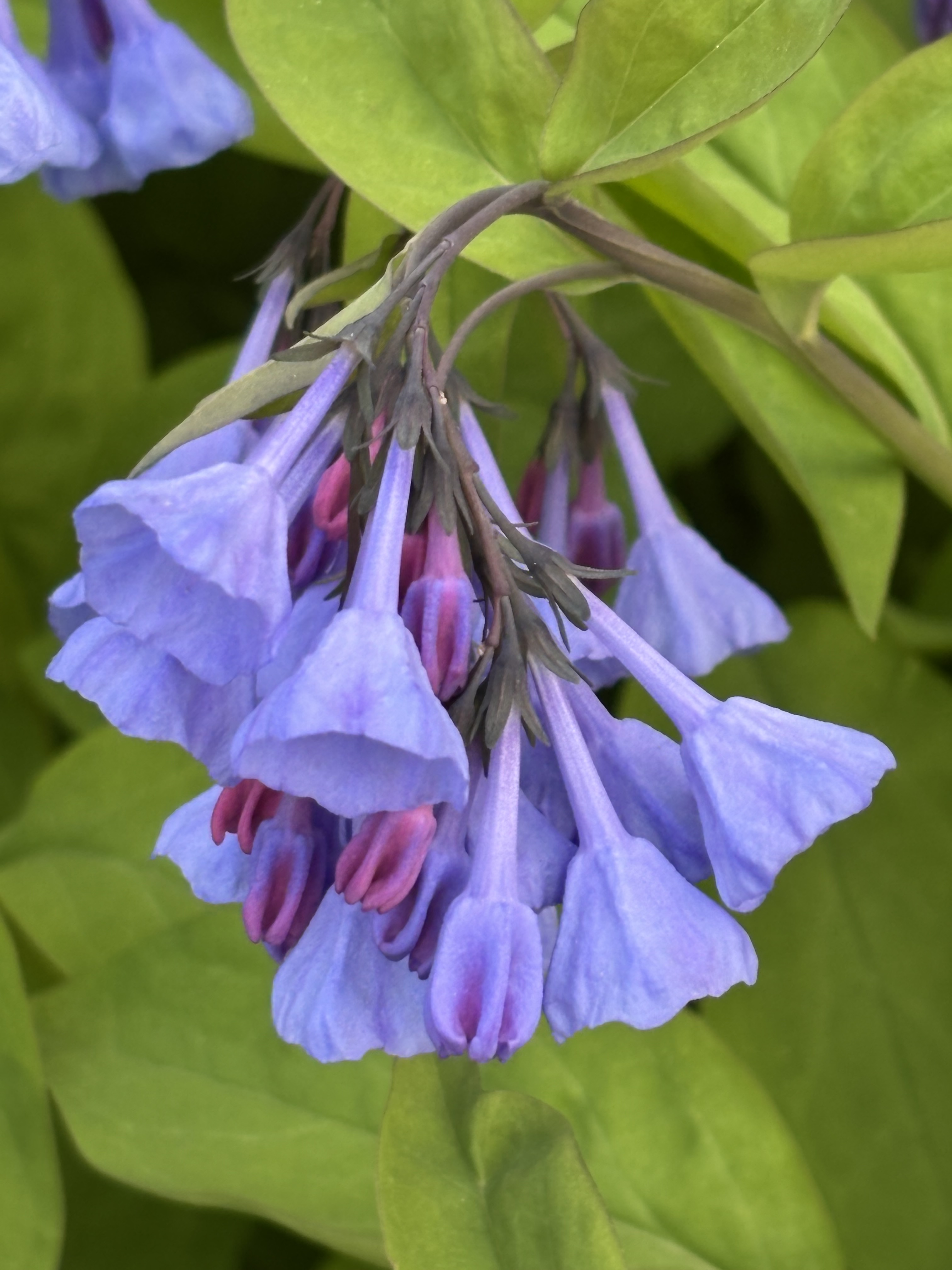
“In the language of flowers, the bluebell is a symbol of humility, constancy, gratitude and everlasting love. It is said that if you turn a bluebell flower inside-out without tearing it, you will win the one you love, and if you wear a wreath of bluebells you will only be able to speak the truth.” ~ Woodland Trust

Recently I much prefer the language of flowers to the language of people.

Flowers call to Kerri. “Stop! Take my picture!” So she does. I do not hear the voice of the flower but I do hear Kerri’s, “Ohhhhhh!”

When we walk the neighborhood en route to the lake we pass a house that at first glance seems overrun with flora. It is a butterfly garden. Intentionally cultivated, aesthetically chaotic and beautiful. It also encourages bees. It’s the place where Kerri heard the bluebells beckon and I heard, “Ohhhhh! Bluebells!” We stopped for an extended photo shoot. The posing bluebells wanted to make sure that Kerri captured their best side.

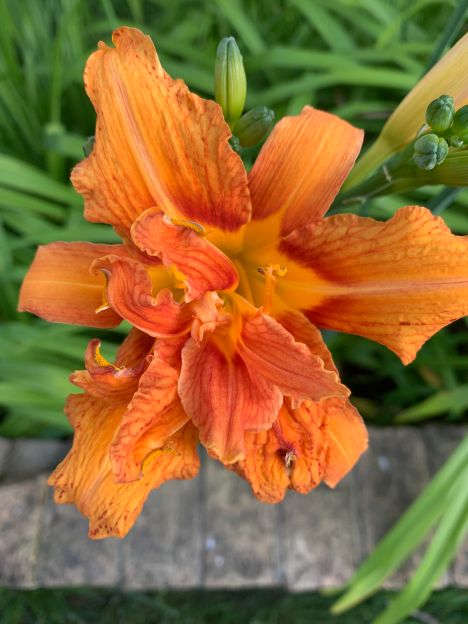
This morning she asked me to read something that she found disturbing. “If I have it in my mind then you have to have it in your mind, too.” It was layer upon layer of maga conspiracy theory; fearmongering deep state paranoia. At the center of it all was a dedicated victimhood. “THEY are out to get US.” The libs, the woke, the dems, blah, blah, blah, fido, fact-free, dark-mind, nonsense. The language of sad-angry-deluded-people swirled around in my mind so I walked out the backdoor to visit the day lilies. They are beginning to bloom and I love them. Vibrant orange. A few are the color of red wine. I said, “Talk to me.”

They must have said, “Go get Kerri,” because at that moment she came out the backdoor.

“Will you ask the day lilies if I should send bluebells to Washington, DC?” I asked. “They won’t talk to me.”

“What?” she wrinkled her brow.

I quoted: “…wear a wreath of bluebells you will only be able to speak the truth.”

“Ohhhh!” she said, looking over my shoulder, no longer listening to me. “I have to get my camera!” She disappeared into the house. She must have heard the day lilies because they began to primp for their photo shoot. Beauty unabashedly celebrating itself.

“Yes,” I thought, as the photo shoot commenced, “I very much prefer the language of flowers”.

read Kerri’s blogpost about BLUEBELLS

likesharesupportcommentthankyou!

Active Gratitude [David’s blog on Merely A Thought Monday]

I think we have it all wrong and that’s why we are now in trouble. Even in the dictionary this word, “community” gets an antiseptic scrubbing. Community is so much more than “people living in the same place,” or “people having a particular characteristic in common”. It is so much more than “a feeling of fellowship,” or “sharing common interests, attitudes, and goals.” All of those aspects are certainly important but they are superficial.

These definitions omit the soul of the communal body.

I found a startlingly simple yet profound definition of community in Martíin Prechtel’s book, Long Life, Honey In The Heart. I discovered my definition of community in his definition of “adulthood”. In his village, adulthood is not something that just happens. Adulthood is not simply a product of aging. It is not a legal definition. It is something that is learned and earned. One is not considered an adult until they embody and live each day from a real-to-the-bone understanding of mutual indebtedness.

Mutual indebtedness. People who are accountable to and for each other. People who are responsible for the well-being of their neighbors. People who know without doubt that their neighbors are accountable to them and responsible for their well-being. Reciprocal generosity.

No one walks this path alone. No one is truly independent. Everyone is reliant upon the gifts, skills and labor of others. Take a walk through a grocery store and try to try to grok how many people, how much labor and love it took to get the potatoes to the shelf. Or, if that’s too abstract, consider how many people were involved in the making of the screen you are presently using; how many generations of thought and imagination, how many hours and hours of someone else’s labor did it take for you to scroll and click? How many people all over the world did it take to mine the minerals and make the chips and manufacture and assemble the components and ship the unit across seas and over roads before you powered on and individualized your device?

Are we or are we not denying responsibility for the well-being of the people who each and everyday serve our needs? Or, as I fear, as is apparent in our current hubris, are we so deluded that we think we can exploit the lives and labor of others without the inevitable blow-back and ultimate societal collapse that “every man for himself” necessitates?

Bullies occupy playgrounds and make deals using big sticks – evidence of a childish mind. Adolescence is self-serving and simplistic.

Our current republican government’s dedicated enemy-creation and fact-free-demonization of others is the antithesis of community. It is, in fact, the intentional destruction of community.

Adulthood comes with the dawning recognition of interdependence. Mutual indebtedness. Responsibility to and for others. Labor as service. Governance as service. Artistry as service. Life as service. As the Beatles sang it, “The love you take is equal to the love you make.”

Community is an action, a verb and not a noun. It is a practice rooted in service to others. It is the adult recognition that a better world for me is only possible when I dedicate myself to the betterment of others. Well-being is a shared intention, something we owe to each other. I eat the food you grow and pick. You use the technology that I develop. We enjoy the fruits of each other’s labor. We survive and thrive because of the efforts of others. We are indebted to each other.

The soul of community is active gratitude.

“Indeed, I don’t believe you can practice love and be in community with folks without an incorporation of accountability as an ethic and a practice.” ~ Tarana Burke, Unbound

read Kerri’s blogpost about ACCOUNTABILITY

likesharesupportthankyou.

Be-Longing [David’s blog on Two Artists Tuesday]

“Be yourself; everyone else is already taken.” ~ Oscar Wilde

I am spiraling down a rabbit hole of thought. This morning I read that many Indigenous languages have no verb form of “to be”.

It might seem like a small thing but it is not. We make sense of our world – and ourselves – through the language we use.

“To be” is a verb of separation. It is a verb of identity, placing primary emphasis on the individual, emphasizing difference rather than similarity. It places the identity-accent on “I”. A present tense of “to be” is “I am”. To be is to be alone.

“To be” fosters “be-longing“; the longing to find and express the unique self, and then “to be” accepted, paradoxically through differentiation. Our “to be” imperative requires us “to be” removed, above it all, accenting the ego, so that the highest achievement, the most celebrated “being” is the one who rises above the crowd. The one who successfully separates.

Is it no wonder that the three “great” western religions place humans atop a hierarchy, high above and removed from nature? Our notion of original sin stories us as born bad to the bone; we kick ourselves out of the garden of our own nature so we might strive “to be” better than we are.

Our language, rooted in “I am”, is incapable of storying us as belonging to nature, being a part or expression of nature. We must strive to return to the garden in order to find the tree of everlasting life.

Our language requires us to story a god living remotely in the sky. The god promises an exclusive resort called heaven if-and-only-if we elevate ourselves above our original nature. Separate to belong.

To this day I ponder a conversation I heard again and again in graduate school: people, living in a city of 1.8 million, yearning for community, discussing over and over the need to create community. How is it possible for nearly two million people to live together in a city without feeling a sense of community? It was not community they yearned for, it was belonging. Connection. An identity of inclusion.

Recently Kerri asked me, “I wonder what it would feel like if…?” I carried her question into our hike. I wonder what it would feel like if I did not story myself as separate? What would it feel like if I knew belonging as a given? Not just belonging to a community of people but intrinsically belonging to all of creation.

“Lookit,” she said, showing me the photograph that she’d just taken of the dandelion. “Isn’t it perfect?”

Perfect (adjective): flawless. ideal. magnificent. A word of unity. Belonging.

“Yes,” I said, aware of the story-limits of my language. I wondered what it might take for us “to be-ers” to see ourselves as perfect – as a given- to be as perfect as the dandelion.

read Kerri’s blogpost about THE DANDELION

likesharesupportcommentsubscribe…thankyou.