My mom tells me that my dad is becoming a little bird. His body shrinks as dementia takes his mind. He is continually packing for a trip, his clothes wrapped in tight balls or stuffed in odd places. He waits at the door.
Listen to Kerri’s Fistful Of Dandelions. It tells the story of a life cycle. A mother and her small child. The child grows. The roles reverse. The son becomes the giver of care. It is nature’s cycle and, with each passing phase of the cycle, comes the appreciation of the true riches in this transient life: moments together. Holding hands. Picking dandelions. Titanic love. “…all the riches I will need today…” Simple presence chocked full of simple appreciation.
I interviewed for a job last week. The questions they asked were questions designed for a younger person, someone at the beginning of their career. I laughed and replied that their question had nothing to do with me. I no longer climb the achievement ladder. I am at the other end, the son holding tender space for the shrinking bird.
The illusions drop away as the sand runs out. The wall of respect might hold plaques and certificates but they grow more empty over time. Paper in a frame. The car in the garage never really provided the status it promised.
What remains is the real stuff. Holding hands. A fistful of dandelions. Shared time. Beer-thirty on the back porch. A pocket full of memories. Warm days fishing together at the lake. Listening to records deep into the night. Packing boxes and helping with the move. Making sure this tiny bird is safe as he waits with his bundle at the door. Just as he did for me.
I have on my studio altar Demarcus’ paint box. Sitting atop the box is the nutcracker my grandfather used. He kept it next to the pool table. The nutcracker rests on a batik that Judy gave me. There is a laughing Buddha, a dancing Shiva, a sturdy White Buffalo. There is a woven braid of palm from Bali. Special rocks.
Dots that connect me to my heritage, to the people that inspire me. To ideas that open me and remind me to see the universal, the metaphoric.
I wrote a post this morning about history as events and history as interpretation. I tossed it because I lost my way, I lost what I really wanted to say in a forest of complexity. What I wanted to say is simple and that is why I lost it. What I wanted to say was this: I weave my history through the dots I connect, as do you. My history is not pre-wrapped. I crawl into bed each night and assign a story to the events of my day. Was it a good day or bad? Meaningful or insignificant?
There are events. DeMarcus and my grandfather have been gone a very long time. Yet, they are with me everyday. Encouraging me to play and discover. Crack nuts. Open my paint box. Feed the connection. Judy’s batik, a reminder to see the beauty. It’s all around if we care to see it. Connect the dots. Laugh. Dance. Stand sturdy. Weave the story. Weave with intention. Connected.
One of the strangest rituals in directing plays comes in the closing hours of tech rehearsal. It is the final button, the cherry on the sundae; the last detail before the addition of the audience: choreographing the bow. The mechanics of gratitude. The curtain falls. The audience claps. The actors return to the stage to accept the appreciation. It’s important, in that moment, to know what to do and where to go. It’s important to know when to bow and when to vacate the stage.
It’s a mechanical moment made generous – made real – when the audience arrives. After having been led through a story or gifted with a performance, the curtain falls, the audience claps in appreciation. The actors, relieved and filled with gratitude, return to the stage and bow in thanks. Appreciation meets appreciation. The strange ritual of the previous day becomes the point of the whole exercise. Without the other, audience and performer, the storytelling is empty. We complete each other. We acknowledge in appreciation this absolute truth. My story is nothing without your witness. Your story is incomplete without my story. You applaud for me. I bow to you.
A major purpose of the artist is to remind the community of this truth. We are nothing without each other. We are capable of walking into impossible questions, when, together, we gather to share and complete a story.
Artistry is a service industry. It is humbling. It is meant to be humbling.
I sit staring at the screen. I am rewriting a script, a piece I performed with a symphony in 2008. I was terrified until the conductor lifted his baton. I remember very little after the first note was played. I came back into my body the moment the music concluded, my story told. The applause. I’ve never felt so small. I’ve never felt so full. Both.
The conductor wants to perform the piece again in 2022, only he asked that I revise the story, something that will speak directly to the issues of our times. The mechanics of writing. A strange ritual, this staring at the screen. I know the story I want to write. I wonder if I am up to this task. And then, I remind myself that this question, “Am I up for it?,” is the wrong question. It leads me to believe that I am alone in this creation. Of course I am not up for it! But, together, with the musicians, the conductor, the audience… Someday, after the mechanics, the rehearsal, the revision, the final button of preparation, we will gather and together, we will walk into impossible places, ask questions too big to be answered. Together, we will join hands and share the experience of a story. The curtain will fall. The audience will clap. The performers will bow. We will remind ourselves, as this strange ritual completes itself, that we are nothing without each other.
[I love this sculpture. Kerri keeps it close by her piano. The Bow by Duke Kruse.]
“…nothing really worthwhile can be owned. There is life. There is love. There is grace. But we can neither create nor possess a state of any of these. These visitors breathe through us, with us and in us the more we keep ourselves open.” ~ Declan Donnellan
Barney, the piano, was set to go to the junkyard. His soundboard was broken after years of being stored in a basement in a boiler room. We convinced the junkyard man to bring Barney to our house. We set up a stone foundation so he wouldn’t sink into the garden. In a move worthy of the Three Stooges, we rolled him across the grass until he came to rest in his new home, our backyard.
Over the years we’ve watched Barney age into gorgeousness. His veneer blistered and rolled. Pieces fell off. The superficial white covering on his keys mostly flaked away. His truth exposed by the sun and the rain and the snow, is more lovely than the facade he once maintained. His wood bleaches and cracks, the grain swirls like a rip tide. His nails and screws rust, the color pops in elegant contrast to his otherwise grey and green-moss tones.
Over time, the flowers and grasses have grown around and through his pedals. Each summer the green tendrils reach for his keys. He has become home and haven to chipmunks and squirrels. The birds sit on his lid and rest or sing. Dogga investigates the community living in and around Barney at least once every day. He is, in his slow march toward dust, a welcome sanctuary to all living things.
Unlike many of the human examples in my life, Barney has opened with age. He is akin to our dear H, who died not so long ago, a man who opened and opened and opened the older he became. Like Barney, a gorgeous spirit grown more gorgeous with age. Curious about life and engaged with its mystery to the very end. H was a study of opening to his experiences rather than resisting the changes.
This year I have wrestled with staying open. My veneer wrinkles, my truth is revealed by the circles I have made around the sun. I have, many days, felt like my soundboard was cracked, the purpose that I was built for ruined by life next to the boiler. And then I listen to the absurdity of my words. The purpose. Singular. Ridiculous. I am reminded of what H knew and Barney trumpets to me each and every day: in an open heart, purpose is never fixed. It is a fluid thing. It is a moving target, not a possession or plaque to be hung on my wall of respect. It is a home to chipmunks, a resting spot for birds. It is how I address myself to the world of mysteries, how I avail myself to the experiences that wash through me and over me each and every day. It is how I make breakfast for Kerri. It is how I sit with DogDog when he searches the house for his missing BabyCat. It is in my choice to say Yes or No to the wonders of this world.
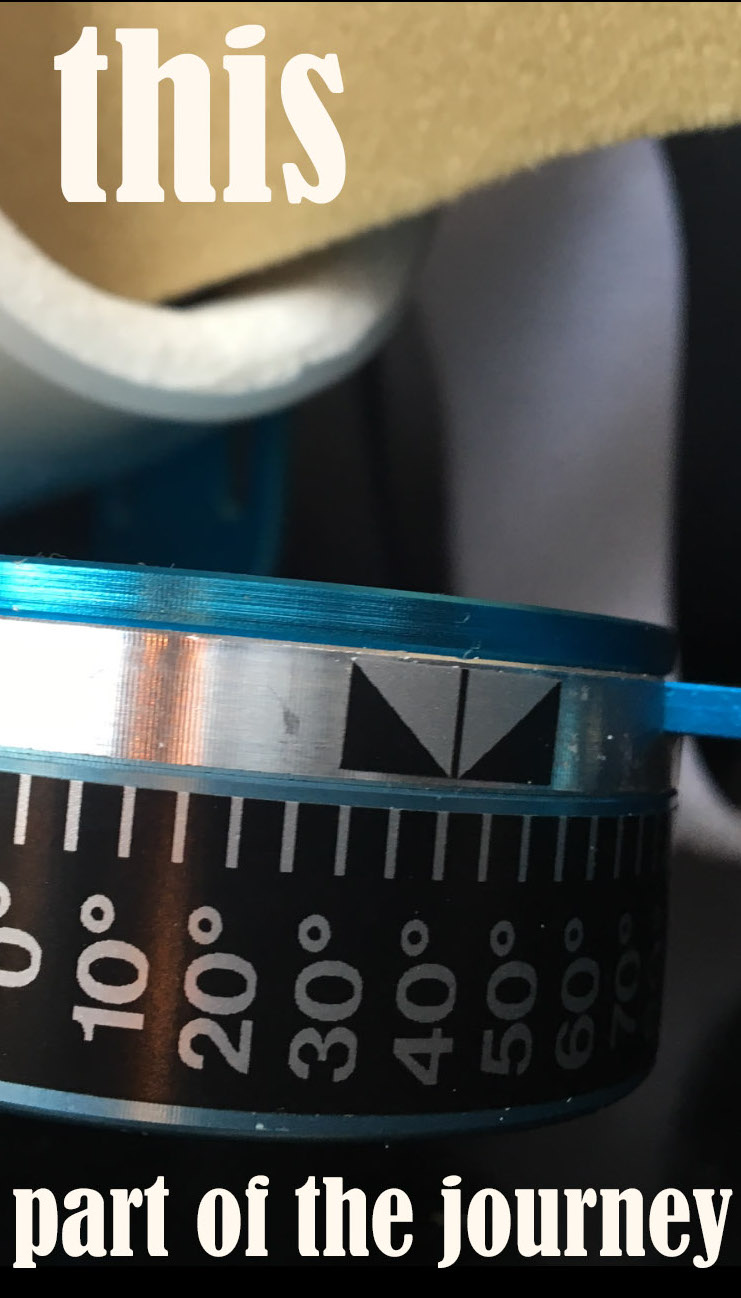
In this case, healing is incremental. One degree at a time. Her doctor told to be patient. “Expect no more than 5 degrees a month,” he said.
After her fall, the second fall, the one on a newly-mopped-but-unmarked-wet-floor, she had a mere 6 degrees of movement in her right wrist. She showed me her range of motion and the movement was so minuscule that I had to ask, “Did you move yet?” Her stare told me that I probably could have asked a better question.
Years ago, preparing to direct a play, I did research on medieval torture devices. You’d be surprised at human ingenuity when it comes to inflicting pain. The device that Kerri uses between occupational therapy sessions to aid in the recovery of her increments looks a lot like the machines I researched so long ago. It has cranks and dials. Straps. It finds the edge of possible movement and then, with one teeny-tiny turn of the dial, stretches a fraction beyond the previous possible. Increments of possibility achieved through increments of pain. Human ingenuity cuts both ways, to the creation of promise as well as pain.
In this part of our journey, we have learned to live by increments. Our journey of a thousand miles truly begins, each and every day, with a single step. The torture device, as we lovingly call it, serves as a mechanical reminder that the greatest triumphs are often the smallest. 5 degrees a month. It’s a reminder that it is best not to rush. One tiny turn of the dial at a time. Each new increment is cause for celebration. My composer wife, in these hard-recovered-increments, steps toward her piano, toward her promise, each day, one step closer.
kerri’s albums, including THIS PART OF THE JOURNEY, are available on iTunes
The loss of BabyCat will be forever linked with my father’s disappearance into dementia. I was away from home, helping my mother move my father into memory care, when Kerri called about BabyCat. One loss was sudden. The other loss is glacially slow.
The pace of loss.
I read once that we don’t lose our beloveds all at once. No matter what, sudden or slow, it happens in stages, the heartbreak comes in pieces. Missing daily rituals. Holidays. Last night, as has been my practice these many years, I peeked over the couch to see if BabyCat was going to “check into the hotel” (sleep on the couch) or spend the night with us. And then I remembered.
When I saw him in Colorado, I thought I had grown accustomed to my dad not being able to recognize me. I wasn’t. The tidal wave of loss nearly knocked me off of my feet. Empty eyes.
It’s been several weeks since Kerri chose a piece of her music for our melange. Both of us have, for reasons we cannot articulate, lately eschewed using our artistry in the melange – my paintings, her compositions. I’ve sorely missed diving into her chosen piece of music when preparing our KS Friday posts. When she decided this morning to use her piece, MISSING, I was strangely relieved. A bit of normalcy returned. As I listened, I found myself lingering in the comfort of her composition, the warm yearning of her solo piano, sun through shades, the promise of spring. I closed my eyes and breathed deeply. The comforting refuge of memory evoked in Kerri’s MISSING. A sweet-bitter pathway through this forest of loss.
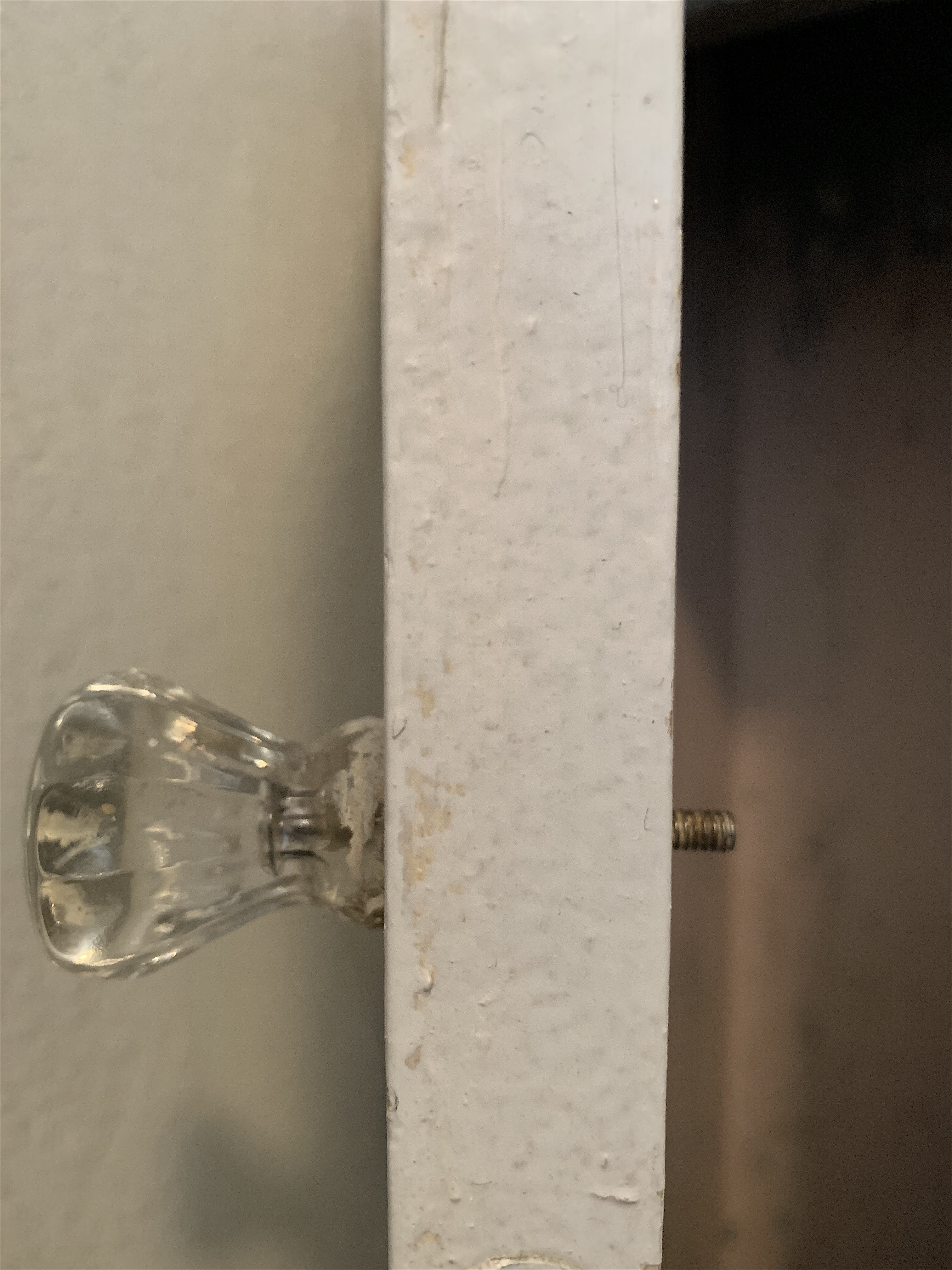
20 watches the house, the dog and our very large cat when we are away. To keep us in touch with what’s going on at home, he sends us mystery photos: common things around our house made mysterious through an extreme close up or unusual angle. Our job is to solve the photo-riddle. I love the game because, no matter where we are, it instantly makes me look at the world in a different way. Or, better said, it makes me look. Really look.
I also appreciate the game because, upon returning home, I run around the house looking at the objects he transformed into enigmas. All that I have grown dull to seeing re-emerges as rich in color and shape and texture and story.
Kerri has the visual sensibility of a contemporary artist. She went down a path of music but might just as well aimed her artistry at the visual. Hers is a natural sense of design. Her camera might as well be an accessory or visual-opportunity-attachment since she moves through the day capturing photographs of passing detail. I’ve known her to be paying bills and jump up suddenly to catch the light on the wall or the texture of the door. Her eye is never passive. She and 20 are alike in that. They are visual twins with unique sensibilities and both serve to keep my eyes open and looking-beyond-what-I-think.
Yesterday, in mid-sentence, she stopped and said, “Oh! I want to show you something!” turned and ran down the hall. When I started to follow she said over her shoulder, “You can’t look! Stay there!” A minute later she returned, sheepish, and showed me the photo she’d just taken. “Do you know what this is?” she beamed. Too excited to wait for my answer she announced, “It’s the laundry chute! Isn’t it cool!” She walked away studying her photograph, muttering, “It’s so coooool.” I ran to the laundry chute to have a look. To really look as if for the very first time.
Posted on February 26, 2021 by davidrobinsoncreative
The sun poured in the window this morning. We sat in it. No, we basked in it, ate breakfast, sipped coffee. Simple pleasures. Endless appreciation. We reminisced about our childhood homes. Kerri recalled the layout of the den. I described the kitchen in my growing-up house. We remembered cooking smells and Formica table tops.
Our story zones expanded to include the many chapters of our lives. Multiple eras. Times that seemed as if they would never end. Times that passed too quickly. We imagined a day when we would reminisce about these times, pandemic times, both the hardships and the appreciations. For instance, in our isolation, we’ve created an end-of-the-work-day-ritual called ‘snack time.’ A glass of wine, french fries hot from the oven or a pear and cheese. Olives. We sit at the table we placed by the window, watch the day wane, and savor. I suspect snack time, borne of the pandemic, will be with us for the rest of our lives.
When in my old age I tell the story of the pandemic times, when the hardships fade in importance (as they always do), I will tell the tale of life slowed down. I will remember how limits made movement less frenetic and much more mindful. Rather than doing more, we pared down. We did less and experienced more. We placed increased importance on the simple things. In fact, we placed importance on the important things. Connecting with friends and family, not out of obligation or unconscious pattern, but out of necessity and intention.
I will talk about our walks, already central to our daily happiness, how they took on a wholly new significance. Getting out and walking became an exercise in paying attention, in absolute appreciation of the simple miracles. Affirmations of life. The magic appearance of the robins on a frigid day. The sunset bringing fire to the ice in the harbor.
I will tell the story of the day we were stopped in our tracks by the song of the ice on the lake. It sounded like whale song. I will tell the story of standing still in blistering cold, listening in utter amazement until ours eyes watered and our fingertips burned, until we looked at each other and in unison said, “Snack time!”














 The Direction of Intention