Yes. It’s Like That [David’s blog on Two Artists Tuesday]

I used to wonder how Emily Dickinson, living most of her life in the isolation of her family home, could write poetry so soul-expansive. Her world of experience was impossibly narrow yet her view into the human heart so broad and deep. I am no longer confused about the limitlessness available in a tiny garden. There is more life teeming in our small backyard than I can possibly comprehend.

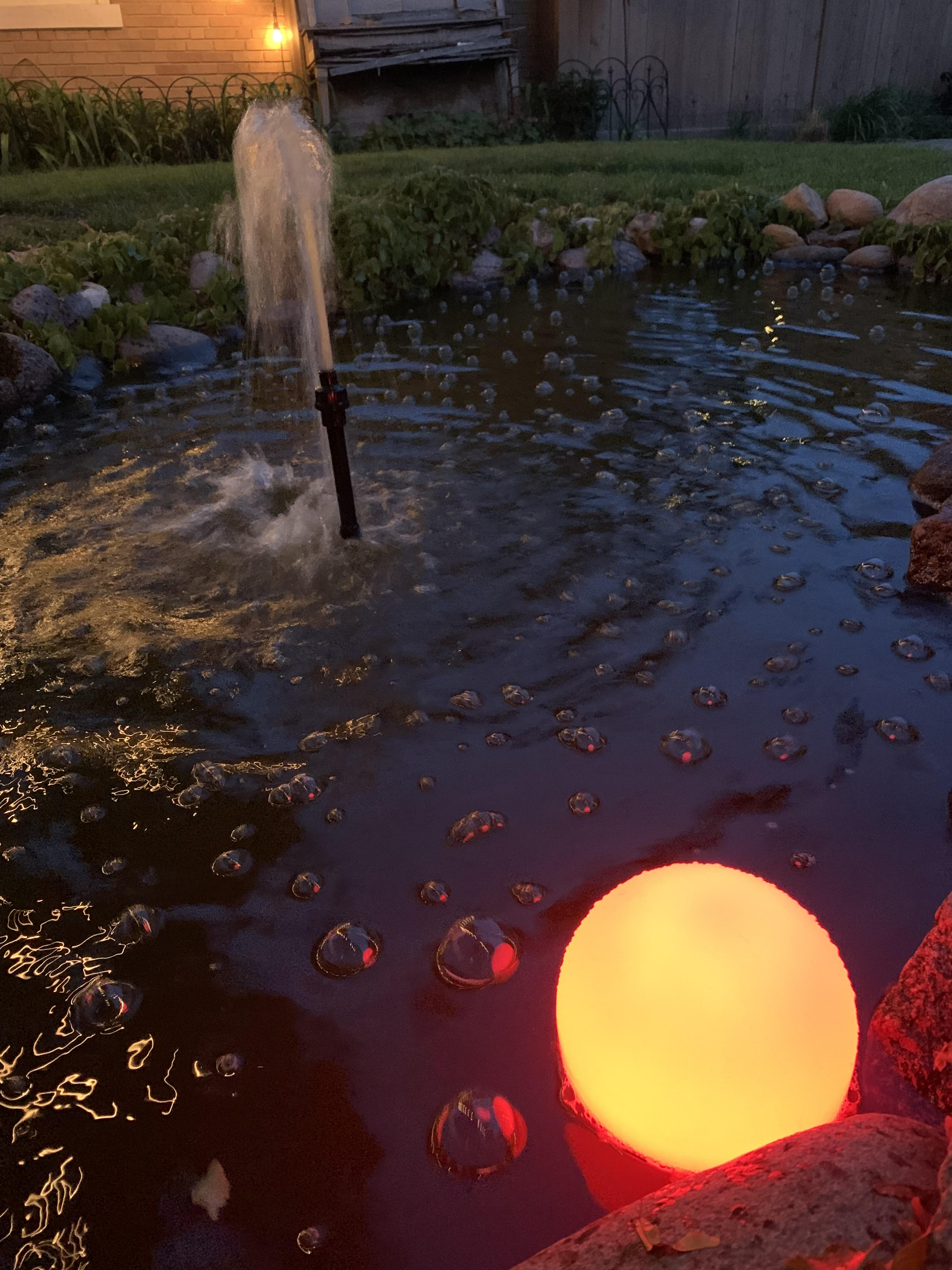
It had been years since we gathered with the Up-North gang in our home. They commented that our yard was “zen”. It’s true. We’ve come to think of it as our sanctuary. A creation borne of Covid isolation, of necessity during the pandemic, we brought our full attention to the only place in the world that seemed safe. Our yard. Over long winter months, sitting at the black table in our sunroom, we stared into the backyard. We watched the patterns of the birds and discovered the nests of bunnies and chipmunks. We watched with awe the subtle changes of seasons and the play of light. We wondered how we could make our safe space more comfortable for us and amenable to the plants and animals. We dreamed. And slowly, throughout our isolation and beyond, we carefully attended to our peace-of-heart. Is it no wonder that we now adore sitting in our yard, daily trying to comprehend the abounding life within our eyesight?

Emily Dickinson wrote her poems from just such an expansive place. Lately I feel an affinity with her. More than once, lost in wonder, I have thought, “How can I possibly describe what I’m seeing and feeling?” I understand, like Emily, it’s not possible to capture, but isn’t that the artist’s job, the poet’s errand, to somehow express that which is beyond our capacity to grasp? To bring hearts and minds together through a poem or play or a composition, so we might together whisper, “Yes. It’s like that.”

read Kerri’s blogpost about THE ORB

share. support. like. comment. subscribe. we appreciate it.

Cast A Shadow [on DR Thursday]

“The soul has no limits.” ~ Heraclitus

It was a hot summer night, humid and sticky, and the community was gathered in the outer ring of the temple. The Wayang Kulit master, shadow puppet master, was performing a play. Part ritual, part entertainment, the Balinese have not yet banished their arts from their worship. Laughter is welcome in the temple. Although the puppets are beautiful, ornate, the audience can only see the shadows they cast on the screen. It is a metaphor for life: in consciousness, we see only the shadows. We are the shadows. Our life-stories are illusion.

We walked in silence. Watching our shadows on the snow I thought of that hot night in Bali, of my astonishment of the skill of the master, manipulating all of the puppets, voicing all of the parts, a lamp of hot oil burning on his head – the light source to create the shadows. If that were not enough, he conducted the orchestra, seated behind him, by tapping the ground with a piece of wood wedged between his toes. He was a priest. A storyteller, not a preacher. Words and laughter swirl in the outer ring. As you progress to the inner ring, the most sacred place, language falls away, no words are spoken. No words are necessary. Kerri and I, while we walk, often occupy the inner ring. We hold hands. We listen to the sounds in the forest. We cast shadows.

Sometimes I feel far away from that hot summer night. Sometimes I sit right next to it. Our walks bring me closer to it.

It was a revelation to me to sit with people that experience no division between what is sacred and what is not. They do not worship on the weekend and then leave their holy place. To the people watching the shadow puppets, it is all sacred. It is all temple, even themselves. They know themselves as sacred. It is all holy, even to the forks and spoons in their drawer.

The separation they experience in this life – as individuals – is the shadow. Separation is the illusion. Fears and foibles are without lasting substance. The puppet master plays his rowdy tale to remind the people seated on the ground in the temple, that the truth of their existence is beyond the projection on the screen of their minds. Forms are fluid, not fixed. Souls have no limits.

read Kerri’s blog post about SHADOWS

i.magine

680. Join me in inspiring truly powerful people. Each day I will add a new thought, story or idea to support your quest and mine.

Skip told me that the innovation of the app store changed the world. We can design our access to information, we can design how we locate and inform ourselves in our daily travels, we can customize how we organize, shop, play and how we connect with our friends. We can design our products before we purchase them. Our options have options.

We look more at our screens than at each other.

In the age of the app the user is not necessarily the customer, the seller is not necessarily the producer. Our buying habits and travel patterns and preferences and impulses are tracked and sold and re-tracked and resold. Advertising is personalized to our computer-generated preferences. The impersonal identifies the personal.

Any 12 year-old with a modicum of computer savvy can construct an app and enter the marketplace. Access to information, to communication, the modes of creation and sharing have never been this limitless, varied or non-local.

Above all, it is fluid, ever changing in form, always expanding. The single most important skill in this geography is how to tell the gold from the dross. What has merit and what does not? Often, the answer to that question is personal.

Design. Options. Personal. Access. Limitless. Fluid. Ever Changing. Ambiguous. Shape shifting. Self-Organizing. Self-Directed. It is an infinite space. It is a way of being.

This is the world that exists right now. I just had a conversation with Sylvia about organizational culture change and the pressures all systems are experiencing to adapt to this changed world. It is a culture change, a perspective shift. Imagine what our education system might look like if it understood the world that existed today – not to mention the world that our students will live in and navigate tomorrow! Can you imagine it?

