This Drivel [David’s blog on Flawed Wednesday]

Straw man (noun) 1. an intentionally misrepresented proposition that is set up because it is easier to defeat than an opponent’s real argument. 2. a person regarded as having no substance or integrity.

“…Americans use 500 million drinking straws every day.”

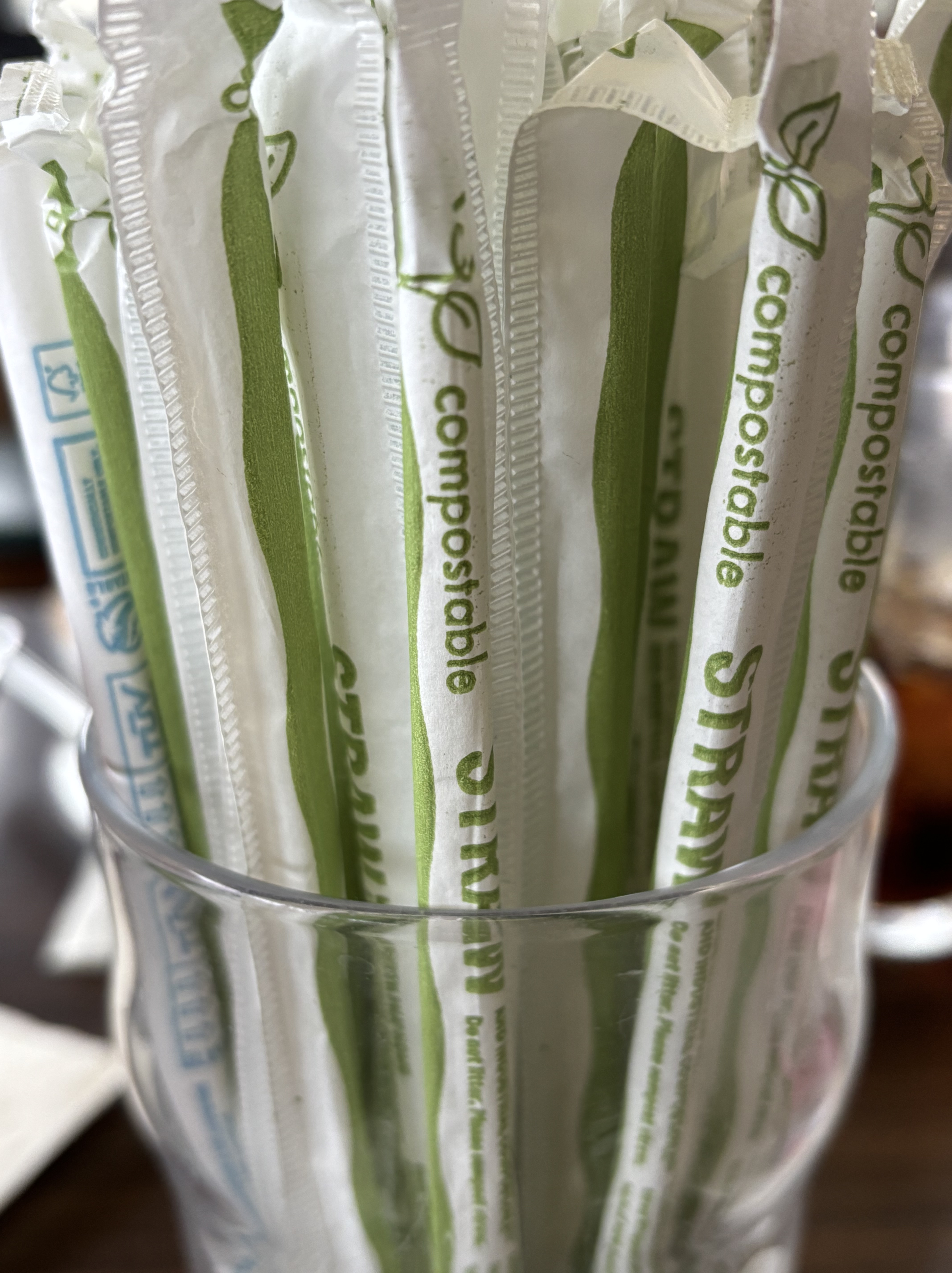
Actually, there is some debate about the actual number of straws used each day in these un-United States. The number falls somewhere between 175 million and 500 million. In any case, that is a ton of straws. Literally. I know this is a scintillating topic and you cannot wait to read on but keep in mind that among the mountain of executive orders pouring from the pen of the rapist-in-chief was a “an end to the procurement and forced use of paper straws.”

Some actions are symbolic. Language matters. Within the phrase “forced use of paper straws” is found the symbolic epicenter of the red-hat movement against “woke”. Apparently children and executives across the nation have been tackled, strapped into chairs, and forced to drink through compostable straws. Of course, as reported by the fox, after the horror of their involuntary straw encounter, they were bustled down the hall for an inescapable sex change operation. Now, legislators across the land are moving to slash the rights and liberties of the masses of straw-traumatized-unwilling-newly-transgendered. Trauma heaped upon trauma all due to the brutal mandates forced on the good-righteous-christian-red-hat citizens, simply trying to save their wives and daughters from the evil woke.

It’s a stinky victim tale.

Forced use of straws. “They’re eating the dogs!” Windmills are killing whales. Even as I write this I think to myself, “No one could possibly believe this drivel.” And yet…

Dedicated victim stories need enemies. Enemy creation is the oldest motivational tool in the authoritarian handbook. The enemy need not be real. It is equally powerful if actual or imagined. History is rife with fake-enemy-creation as motivation for a gullible populace to embrace. As victims, it is a small step to inflicting righteous pain on behalf of the tyrant. And feeling good about it.

That’s the point.

The entire narrative of the current administration is an imaginary battle waged on the evil woke who are busily deconstructing the American way of life, forcing horrid paper straw use and whisking away children for sex change operations without prior parental consent. It is ironic. “Woke” is a straw man used by the authoritarian-wanna-be (a straw man, definition #2), so weak and incapable of legislating his unpopular Project 2025 agenda that he must issue mountains of executive orders – all meant to consolidate power in the executive branch while also appointing loyal doormats to the justice department and military. In the meantime the gleeful DOGE, in the name of waste, fraud and abuse (yet another straw man) hastily dismantles – well, neuters – the powers of congress. It’s the textbook creation of a fascist state.

A note to victims: please keep your eyes on the evil-woke-left as the great leader saves you from forced use of paper straws. In that way, you won’t see – until it’s too late – the conservative right hand magically dismantling democracy, stripping away your rights and torching your liberties. Any good autocrat, like a good magician, knows the power of misdirecting focus.

It’s beyond ironic: a straw man using straws as a straw man. No one could possibly believe this drivel. And yet…
read Kerri’s blog on STRAWS

likesharecommentsupportsubscribespeakouthelpothers…thankyou.

Open The Tiny Measure [David’s blog on KS Friday]

My first question: when did UFO (unidentified flying object) become UAP (unidentified anomalous phenomenon)? I know I am late to the party on this one. Like you, I’ve been reading the UAP headlines for a few years and, each time, ask myself the same question: Why the moniker change?

I did a little research this morning and came upon this phrase from Bill Nelson at NASA: “We want to shift the conversation about UAP’s from sentimentalism to science.” Apparently, George Lucas and Steven Spielberg have our space-alien-sentimentalism dialed to an all-time high. Human imagination runs amok with unidentified flying objects and not so much with unidentified anomalous phenomenon.

Language matters. Since our reference point is…us…a flying object, like an airplane or a spaceship implies a pilot, a “being” at the controls. An anomalous phenomenon? It’s another way of saying unusual occurrence and what, exactly, is an occurrence? If it’s unusually amorphous, there is nothing to hang your hat on. The only thing to do is call a scientist or artist since the imagination needs a few parameters to light its fire.

There was another sad-ancient-yet-contemporary-cautionary-tale that popped up in my reading: “NASA recently appointed a director for UFO research, but is not divulging the identity to protect them from the kind of threats and harassment faced by the panel members during the study.” Science and art are -and always have been – dangerous business. Galileo spent his last years on earth under house arrest for publishing his science; it contradicted the firmly-held belief of the day. He was forced to recant his findings or face the fate of heretics.

Belief does not appreciate being contradicted, especially when there is evidence involved – or as is true in the current example – no evidence at all. Belief has a wonky relationship with evidence. We are witness to that all-too-human phenomenon in our times, just as was Galileo. Protecting poll workers and UAP scientists from the violence of those who are unshakable in their faith and/or “news” source (their reference point).

We do not need science (or maybe we do) to see our absurdity.

We have the capacity to exercise our imaginations in this vast universe of possibilities. We have the ability to question if we desire to use it. We have the gift of unbridled curiosity and need not go off the rails into rootless belief if we allow that, “There are more things in heaven and earth than are dreamt of in [our] philosophy”. We can be afraid of ideas, run from progress, or threaten the artists and scientists that force us to open our smallish belief and tiny measure of “normal”. Growth is always preceded by an uncomfortable step into the unknown. A challenge to what we think we “know”.

And then, after the upset, we need to find language to describe the new world that we discover there.

Time Together/This Part of the Journey © 1997 & 2000 Kerri Sherwood

Kerri’s albums are available on iTunes and streaming on Pandora and iHeart Radio

read Kerri’s blogpost about UFO and UAP

like. share. support. subscribe. comment. thank you.

Babble [David’s blog on KS Friday]

This could be a Jackson Pollack splash painting or an x-ray of arteries, veins and capillaries. A winter sun attempting to reach through the cover of clouds and trees.

If I believe the forecast, as hard as it tries, the winter sun will not reach us today.

I’m paying attention to language a bit more than usual. Looking up through the veins and arteries of the tree, I ask myself: What could it be? What could be? What is “it”? I shiver and am reminded of a quote I used in my book. It is appropriate for our times:

“One must be leery of words because words turn into cages.” ~ Viola Spolin

Language Matters. A double entendre. One of my favorite. It’s right up there with my favorite double entendre title of a book: The End of Education. Classic Neil Postman.

The question is, in our day-and-age, amidst the torrent of words and the easy belief-systems that words construct, how to stay out of the cage?

It’s a question with roots back to The Tower of Babel. A human race united by a single language builds a tower that reaches into the heavens. It is a threat to Yahweh. To protect his status, he confounds their speech and scatters them around the world. Language is the barrier against unity.

A bramble of branches to a Pollock painting to the inner working of life-blood to a weather report and landing at last in the Tower. An epic journey in just a few words, reaching through metaphor and pattern.

Language can be a cage. It can also set us free. Language Matters. A double entendre.

Nurture Me/Released From the Heart © 1995 Kerri Sherwood

Kerri’s albums are available on iTunes and streaming on Pandora and iHeart Radio

read Kerri’s blogpost about WINTER SUN

like. support. share. comment. all words that describe actions that we appreciate.

buymeacoffee is. nothing more. nothing less.

See The Verb [on Not So Flawed Wednesday]

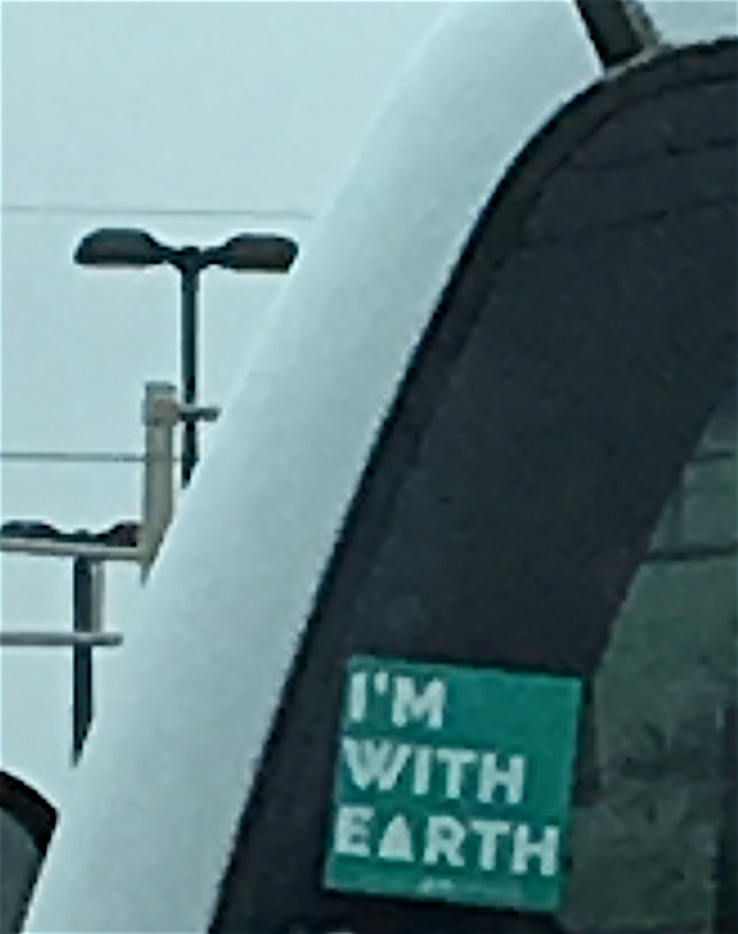
Random fact of the day: my waking thought this morning was about The Geography of Thought. No kidding. It’s a terrific book by Richard Nisbett. The subtitle is “How Asians and Westerners Think Differently…And Why.” Somewhere in the recesses of my brain I must have been pondering the bumper sticker we recently saw: I’m With Earth.*

One of the points made in the book, the one that permeated my dream state, is that different languages place different emphasis on different parts of speech. For instance, many Asian languages place emphasis on the verb. English speakers place the emphasis on the noun. In listening to mothers talk to their infant children, an English speaker will say, “Look at the red truck! Do you see the red truck?” An Asian mother will say, “Look at the red truck go!” Do you see the red truck go?”

Why does it matter where the emphasis lands in a language structure? Noun or verb?

The language we use shapes our thinking and seeing. It shapes basic worldviews. Earth as a noun or earth as a verb. Earth as a stand-alone-thing or earth as a moving interrelationship. These are vastly different worldviews.

This was my thought/image coming out of sleep: earth and sky. In a noun world, earth and sky are two distinctly different things. In a verb world, earth and sky are not separate things, they are verbs, actions, interplay of a dynamic relationship. In a noun world, I am also a distinctly different thing. In a verb world, earth, sky and I are not separate things, we are a dynamic inseparable relationship. We.

The bumper sticker is a declaration: I am with earth. It makes perfect sense in a noun world because it is also possible, in a perceptual world of separate things, to be against earth. Nature needs to be conquered, tamed. In a noun world, earth, once tamed, is a resource and resources are meant to be used. In a noun world, we are capable of believing that our actions have no impact on our environment. Action and environment are nouns, separate things.

In a verb world, what you do to the earth is what you do to yourself. No separation. In a perceptual world of relationship, of verbs, it is understood that your actions not only have impacts, your actions are impacts.

We woke to the news of yet another mass shooting. This one in Colorado. As usual, we know that our community and leadership will offer thoughts and prayers but nothing really – not really- will be done to address it. In a noun world, we protect the rights of the individual, the separate thing. In a verb world, there are no mass shootings. None. Violence done to one is violence done to all. In fact, more people are gunned down in the United States in a day than are killed by gun violence in Japan in a decade. The differing linguistic emphasis extends to differing understanding of rights and responsibilities.

Language matters. Where we focus matters. What we emphasize matters. The story we tell is determined by the language we use to tell it. I am with earth. Or, I am earth. I go to worship. I am worship. I seek purpose. I am purpose. Separation. Relationship. A whole philosophy of living reduced to a simple bumper sticker.

So, when we ask complex questions like, “Why can’t we do anything about gun violence?” or, “How is it possible that people in a pandemic refuse to wear masks to protect each other,” our answer is really very simple: our language makes it so.

Perhaps in a world of nouns a declaration is the best we can do. It is a step toward the middle way, a declaration of responsibility to the commons. Black Lives Matter. #MeToo. Stop Asian Hate. I’m With Earth.

*The “I’m with Earth” sticker is from the very cool company Gurus

read Kerri’s blog post about I’M WITH EARTH

Click-To-The-Loo [on Merely A Thought Monday]

Language is fluid and ever changing. For instance, twenty years ago the words “hide,” “snooze,” and “unfollow,” had little or nothing to do with social interactions. You might snooze an alarm-clock but never another person. In 2020, in the alternate reality known as social media, people snooze, hide, unfriend, and unfollow people on a daily basis.

Language is powerful. We both define and reveal ourselves by the words we choose. It’s as easy as the click of a button to eliminate people from view. Click. Gone! Magic. The power to insulate. “Unfriend” and “unfollow” ensure that our engagements are only with like-minded people. Is it any wonder that we no longer need to find common ground? It’s a simple equation: you bug me/I snooze you. “Hide,” “snooze,” and “unfollow” are the words of bubble creators. Fortress makers.

Closing the gates might lock others out but it also locks us in. Either way, click. Gone! A smaller world. Raise the gates for agreement.

Closing the gates is not a function of disagreement. I heard this said the other day, “People say things on Facebook that they’d never say in person.” True. It is corrosive and ugly. There is rarely space for civil disagreement. Ideas are attacked as a first action. Responses are salvos. In other words, no one is snoozed for being kind. Courtesy and consideration rarely result in unfollowing or the ultimate nuke: unfriending. There is no space for civil discourse. We snooze, hide, unfollow because we are assaulted or we assault. Social media is startlingly anti-social.

Many years ago, I had the good fortune to listen to Stephen Hawking give a lecture on the possibility of multiverses, a string of multiple universes. His theory involved bubbles that occasionally bumped together. The bumping opened small windows of communication between the bubbles. The great miracle of two universes brushing together is that they, even for a short time, can communicate. They can share experiences.

Our great miracle is the opposite. We construct bubbles against each other. When our universes bump together, windows are slammed closed. We believe ourselves all powerful when, with the click of a button, we can extract a voice from our “stream.” So powerful is our illusion of the button, we’ve happily become the buttons. No courtesy, no kindness, no listening, no consideration necessary or expected.

Click: assault. Click: be gone.

read Kerri’s blog post about UNFOLLOWING

Search [on Flawed Wednesday]

explicitly divisive copy

I’m a broken record: words matter. They are rarely accidental. For instance, the division between “black” and “white” was created. Our racial legacy is not happenstance. It is by design.

Power does not like to be challenged or threatened and strategies of division are great mechanisms of control. Taking pride-in-ignorance is another – it is a terrific support strategy if discord is the goal. An ignorant people are easily misled.

We enact and reenact Bacon’s rebellion again and again. It is a vicious cycle, a whirlpool that is hard to escape without a clear view of the full story. History, like language, is never passive, it comes with a dedicated point of view – and so we are witness once again to the great narrative tug-of-war.  We could drop the rope if we decided to look at our history, ask a few questions, and perhaps see the narrative slop that the fox and friends are force feeding to white fear as just the latest iteration of an old, old scare tactic.

Misinformation is nothing new. Propaganda is as old as human history. It is the downfall of a critter unique in its need for an identifying narrative to believe almost anything if it provides a sense of belonging. People who refuse to take a step back and ask, “Is this true?” will buy almost any line. Fear is a narrative with an agenda so what-on-earth prevents otherwise thinking people from considering that the daily dose of fear they are being fed might be cooked up intentionally? Trading brains for belonging never works out well in the end.

Black and white. Red and blue. We have a pattern, not a problem.

A people united are an unstoppable force and the worst nightmare of identity politicians.  People unite when their ideals – things like freedom and truth and justice and equality – transcend their small identity bubbles.  Ideals are unattainable – that is what gives them their special uniting capacity. We strive. It’s an active verb with an inclusive pronoun.

Hate and fear – all things divisive – are easily attained. That’s what makes them so useful to despots and control-mongers. Keep the thinking small and encapsulated within the tiny bubble. It will keep the people warring among themselves with no questions asked.

How do we move beyond this pattern and rise above the incessant division that plagues us? Well, we must first desire to see the pattern. We must choose to see. Then, we might be capable of revisiting the words we placed as central to our national ideal and choose to live them. Our words matter. That might require a few challenging questions.

It will definitely require a good deal of soul searching and that’s not such a bad thing. Nations, like people, grow and become better when they grow weary of their dysfunction and go looking for their soul.


read Kerri’s blog post about Explicitly Divisive


? website box copy


surrender now ©️ 2016 david robinson

Love Your Language [on Not So Flawed Wednesday]

love greater than fear copy

You know the old joke: two priests are having an argument so they take their debate to the Pope. The first priest writes to the Pope and asks if it is okay to smoke while praying and the Pope answers “No!” The second priest writes and asks the question this way: is it okay to pray while smoking? The Pope responds, “Of course!”

Language matters. In our current world, inundated as we are with marketers and media – language packed with agenda – it seems we are especially dulled to the power of a few words [or the exclusion of a few details] to shape our actions and opinions. We are easily led. Easily divided. Easily provoked to Facebook frenzy.

The way we frame questions determines the possibilities we see or the possibilities we do not see. That is why it is a mistake for us to frame the questions of our troubled times as either/or questions. To defund the police or not defund the police?  Fear or faith? Us or them? Liberal or conservative? Which is it?

None of the questions we face are simplistic. None can be addressed – or should be approached – with black and white thinking. We’ll only see the poles and miss the million shades of gray in-between.

Leaders that divide-to-rule are especially fond of a rhetoric featuring only two options. They play angel/devil games: there are angels and there are devils and since everyone thinks they are the angel, it is an automatic role assignment to anyone with an opposing point of view. It doesn’t matter what side you are on, the agenda is division so mission accomplished! Language matters.

I’ve heard it said that the opposite of love is not hate. It is fear. Fear splits even the greatest hearts and minds like so much kindling. It creates enmity within and, therefore, enmity without. It reduces and makes the complex things – like listening to others – impossible. It demands that meaning be made before the experience is had – and so it is a rally of made-up monsters.

So,  the opposite of fear? It creates goodwill. Within and, therefore, without. It unites. It embraces and expands and includes. It makes no assumptions. It listens. It ultimately surrounds fear and makes meaning after having the experience and, in that way, relieves the troubled mind of its monsters. It has the capacity to hold a full spectrum of color and options (sometimes known as possibilities). It knows that there is more to this universe than angels and devils can allow. And so, just to be clear in my use of language: the opposite of fear has no opposites. That’s precisely what makes it much harder to grasp than fear. Fear is easy to achieve. Love is an ongoing relationship and has no end.

Language matters. The genius of our system, as it was once imagined, was to allow for opposing points of view to come together in an action called “compromise.” It was designed with complexity in mind. It was intended to pull all perspectives toward a common center, a middle way. An idealist might call that – a common center – something akin to love.


read Kerri’s blog post about LOVE>Fear


southport sand heart website box psd copy


Escape The Freak Show

Very is the most useless word in the English language and can always come out. More than useless, it is treacherous because it invariably weakens what it is intended to strengthen. – Florence King

Tom used to say that watching television reminded him of going to the circus as a kid to see the freak show. He’d pay his nickel and step into a dark tent filled with oddities meant to repel and repulse. The attraction was the revulsion. I feel that way every day reading the news of the latest antics of the current occupant of the White House. We now open our news apps several times a day and routinely exclaim, “You aren’t going to believe this one!” It’s either a freak show or the latest installment of Game of Thrones. Though, the real horror of our current national predicament is that we can’t exit the tent.

I do not need the news to interpret for me what is actually taking place in our nation. I only need listen to what is said. Language matters. How we ask questions matters. How we frame our arguments matters. The labels we use to define our experiences matters. In today’s Washington Post op-ed piece, E.J. Dionne Jr. wrote: As George Orwell taught us, how people talk offers a clue about how they think and what they value. Our language, he wrote, “becomes ugly and inaccurate because our thoughts are foolish, but the slovenliness of our language makes it easier for us to have foolish thoughts.” He added, “If thought corrupts language, language can also corrupt thought.”

A president whose language band width is limited to doubling his adverbs (for emphasis, I assume), i.e. very, very, or can find no other adjectives beyond the simple polarities of bad or great is not only troubling, it, as Orwell taught, reveals a lazy mind. Very, very lazy. We should not be surprised that his preferred mode of communication is Twitter and that he’s confused governance with signing executive orders. A bully knows no other way.

Today Michael Gerson, the conservative voice in Washington Post, wrote in his op-ed piece: “Stepping back, cooling off a bit, displaying some strategic patience, taking the long view: The first two weeks of the Trump administration have been the most abso-friggin-lutely frightening of the modern presidency.”

Abso-friggin-lutely! Now, there’s an adverb! And, frightening is an apt adjective.

Building a wall that is already a boondoggle, spending millions to investigate corruption where none exists, picking fights with allies, obsessing over crowd size, vote counts, and television ratings, issuing an ill-conceived travel ban directed at Muslims, abusing a judge for doing his job,…. Frightening. And, like any good freak show, it is drama for the sake of drama. It is governance by threat.

But above all, this: language matters. It is how together we define our reality. Debate (a complex use of language to clarify points of view, make law, challenge laws, express values,…) is the crux and crucible of our system. Our lazy-mind-in-chief routinely defines his own reality and then expects others to conform to his delusion. Bad. Refuse to conform or challenge the sentiment and risk a nasty tweet. Right now, all the other children on the playground are afraid of the sting of the tweet-stick but soon, as happens to all bullies, the kids, red coats and blue alike, will start talking and realize that together, they are more powerful than the angry boy with the simple solution.

It would be comical if only we could escape the freak show tent.

Substitute damn every time youre inclined to write very; your editor will delete it and the writing will be just as it should be. – Mark Twain