Step Out Of Time [on DR Thursday]

The color was other-worldly. The morning was cool. Low clouds hung in the valley. We walked on a deep carpet of leaves through a white oak forest. We chatted. Periodically, Linda and Bill stooped to move branches off the path. I couldn’t take my eyes off the beech trees. The leaves of the beech were paradoxically soft yet electric, quietly luminous. I felt as if they were guardian spirits. Forest creatures. I could have watched them all day.

The path led to a tiny cemetery. Bill told stories of the man who owned the forest, now the newest resident in the grave yard. There were stones so weather-worn that the names and dates had vanished into time. The 19th century. We wandered. “Look at this one,” and we’d gather. Speculate on a life lived before electric light and power tools. The beech trees holding vigil. Another paradox: time made timeless.

I will paint my entire life and never be capable of capturing the color of the beech leaves. I have no name for the hue. Not to worry: the camera could not capture it, either. It was like attempting to photograph a specter. The life of the spirit dodged the lens.

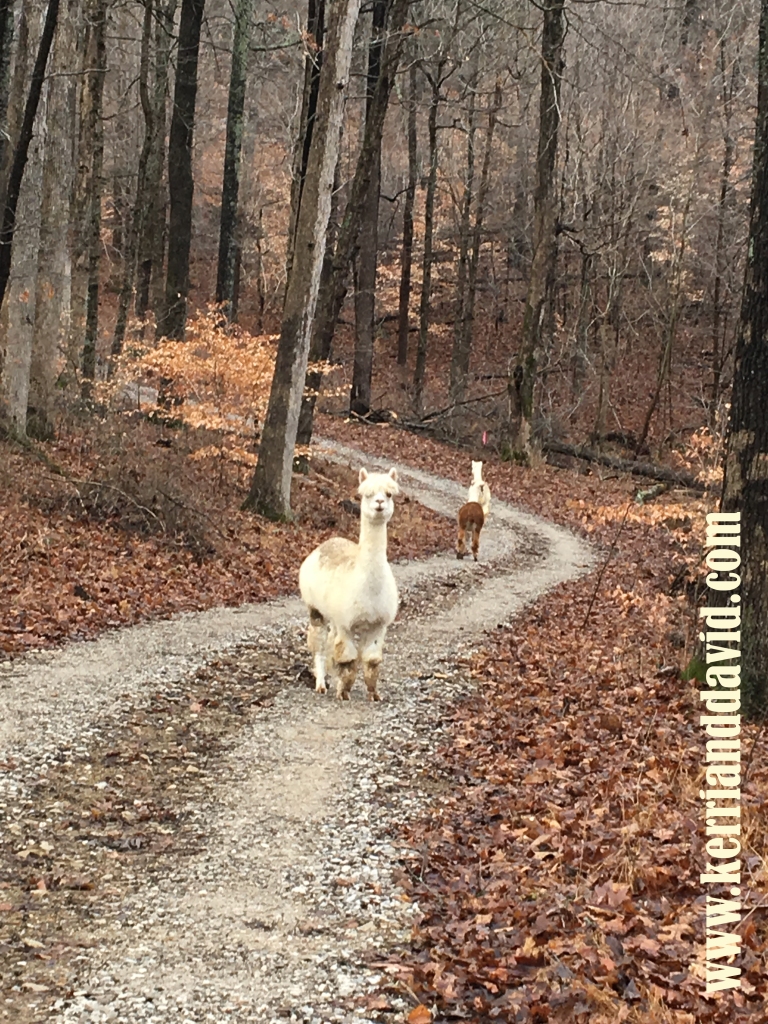
The path led back to the road. The alpaca led the way. Stepping onto the asphalt felt like waking up after a long quiet sleep; blinking into time. Rip Van Winkle. I stood for a moment and wondered about the world we’d find, now that we were re-entering time. I was disoriented.

“Are you okay?’ Kerri asked, taking my hand.

“Yeah,” I said, “I just can’t stop thinking about those leaves.”

read Kerri’s blog post about THE LEAVES

Three Graces © 2012 david robinson

Share Appreciation [on Not So Flawed Wednesday]

“I’ve got an old mule and her name is Sal
Fifteen miles on the Erie Canal”

~Low Bridge, Everybody Down, music and lyrics by Thomas Allen, 1913

She’s a donkey, not a mule, yet I couldn’t help but appreciate the collision of power sources present in this photograph. From donkey to solar.

I’ve read that the innovations of the industrial age were meant to spare humans of muscle-toil. If an engine could power it, a human didn’t have to. The innovations of the information age are meant to spare us mental and sense toil: why stress to parallel park your car if the car can do it all by itself? Why add the numbers if the spreadsheet does it for you? Why look up information if Siri or Alexa can bring it to you? What does it now mean to stay in touch? Text and facebook and tweet and email and zoom and facetime and slack and chat and…call.

Oil, coal and gas are the energy systems of the past. They are donkeys and mules standing next to renewable energy sources like wind and power. It takes time for an infrastructure to be built. It takes time for people to wrap their imaginations around a different way. Do you remember the loud resistance in the early days of the credit card proclaiming that plastic would never replace paper money? That was not so long ago. There were similar angry voices declaring the auto-mobile was a flash-in-the-pan. “Nothing will replace the horse!” Our local supermarket just installed banks of electric car charging stations. Energy systems are slowly moving away from grids: the power source and the property will (mostly) be one and the same.

Industries, like people, either adapt or die. Most retail chains that came late to online shopping are going or already gone. Many have said that they didn’t see the change coming. Or that they couldn’t imagine a world in which people bought stuff without first touching it. Cars are in vending machines. Isaac Asimov would have loved it!

Did I mention that the solar panel in the photograph senses and moves with the sun? As it turns out, the donkey does, too. Much for the same reason. Only, for the donkey, the heat of the sun feels good and I doubt the solar panel cares or feels anything. Sensing and feeling are still on opposite sides of the change-line. At least so far. There may come a day in the not-so-distant-future that the donkey and the solar panel share appreciation for the heat of the sun. The donkey will wag its tail. The solar panel will stretch and sigh. The stuff of children’s books or sci-fi. At least for now.

read Kerri’s blog post about DONKEY & SOLAR PANEL

Find A Way [on Two Artists Tuesday]

In the age of Covid, the rules are different. We keep our distance from friends and loved ones. We make rules for engagement. Vaccinations, boosters and negative tests are the requirement for a visit. What was once connective tissue – like an airplane – is now a barrier. A cost/benefit analysis is required before stepping into a terminal. And then, spin the world of rules and boundaries on its axis and this is also true: we find a way. It’s what I appreciate most about people. Will finds way.

A species ends when it can no longer adapt to changes in circumstance.

For weeks we searched for a way to see Craig. To give him his xmas presents. A restaurant that required masks, proof of vaccination, and had a protected outdoor patio provided the necessary ingredients. On a January night, with temperatures dipping into the low 20’s we sat at a table nested between heaters and shared a meal. We exchanged gifts. And, we weren’t the only guests dining on the patio. Other patrons also searched for and found a way.

We loved our meal and our time together. We laughed at the absurdity of the situation. We acknowledged and embraced the necessity of outdoor dining in sub-zero temperatures. We made a story that we’ll tell in years to come. Do you remember when…?

Zoom has become a way. To a point. We’ve learned in this time of pandemic that seeing someone on a screen doesn’t replace seeing them in person. At work we’ve learned that many things can be done through a screen but many generative experiences are slower or inhibited without presence.

Presence.

Energy begets energy; the fire of enthusiastic idea generation is dampened through an app. As Skip said at our end of year meeting, “Nothing replaces breaking bread together. Someday we’ll share a meal.” I look forward to that time, to meeting the incredible people that I see each day through my screen.

We are racking up stories as we adapt to an ever-changing circumstance. To drive rather than fly takes time so we’re learning to take more time. To not rush to arrive. We feel the limits on the distance of our reach. We’re learning the depth of yearning to be-with as opposed to merely-look-at. We’re learning the necessity of boundaries and the health-considerations that come with saying “No.” Mostly, we’re learning the hard line between what’s do-able through a screen, and when we need to consider the ridiculous – and find a way.

read Kerri’s blog post about HEATERS

Disagree [on Merely A Thought Monday]

Months later, she* is still angry with me. I asked her to “stop blowing me off.”

Some things need to be discussed and necessarily require entertaining differing points of view. Finding middle ground or considering alternate possibilities requires hearing what others have to say – and giving others the courtesy of hearing what you have to say. Her standard phrase of choice, when faced with an opinion or idea not her own, is this: “I guess we’ll have to agree to disagree.”

No. I don’t agree to disagree. Especially at the onset of a dialogue. I want to talk about it. I want to hear what you have to say and more importantly why you hold your point of view. I won’t agree to not hearing or being heard.

Opposing points of view, differing opinions, need not be conflicting. They can be highly generative. Mind opening. Thought provoking. “I’ve never thought of that,” is an expression that results when considering a different point of view. In ideal, our nation is based on the notion of two opposing points-of-view extending to each other the courtesy of listening and considering possibilities not yet seen. Yep. And, we are witness to what happens when one side (or the other) rejects the basic premise. Dismissiveness is the strategy of an empty suit.

Why assume conflict?

She followed “I guess we’ll have to agree to disagree,” with the real statement, her actual aim: “You do what you want. I’m going to do what I’ve always done and follow my plan.” In other words, she had no intention of hearing anything that did not support her plan. Why, then, I wondered, did she invite conversation?

When the only tool you have is a hammer, then everything looks like a nail. When the only door you have is a closed door, then every knock sounds like an intruder.

I laughed aloud when I read Bill Murphy’s article in Inc. Magazine about his pet-peeve phrase: “Look, I get it.” He writes, ‘”Look, I get it,'” is almost always inherently untrue…Even worse for our purposes, it’s woefully ineffective.”

It’s dismissive. Just as is “I guess we’ll have to agree to disagree.” The agreement she wanted was for me to agree to be dismissed. An agreement of silence. Why would I – or anyone – agree to that?

[* “She” is not Kerri. We hold each other in high esteem. It’s why the sign in our kitchen reads, “You are my favorite pain-in-the-ass.” We welcome our differing perspectives. Neither one of us dismisses the other nor tolerates being dismissed.]

read Kerri’s blog post about “LOOK, I GET IT.”

Color The Language [on saturday morning smack-dab.]

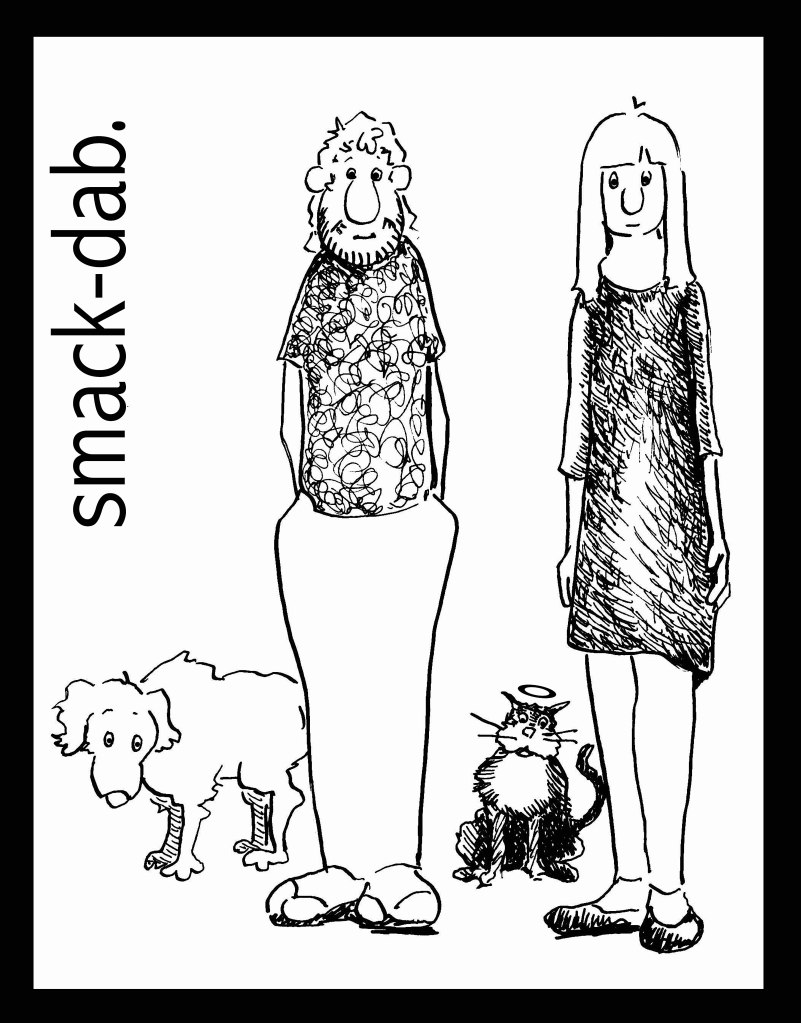
In the cartoon version of our life, Kerri cleans up my language. I never use the word “beeswax” when there are more colorful options available. I’m an artist. Color is my thing.

It’s hard to explain the inner imperative that drives an artist to spend their precious life composing or painting or dancing, even amidst the knowledge that heeding their inner call might never pay the bills. I know many, many people who’ve snuffed their artistry because it simply doesn’t make financial sense. They are now like boiled fish. The ‘”good living” that they make doesn’t replace the vitality-in-life that they ignore. Source is source.

I also understand that the answer, “Because I have to…” must sound childish to someone who has never operated out of an inner necessity or something more meaningful than making-money. I actually understand their eye-roll and less-than-subtle-but-always-predictable response about the need to “take responsibility…” They’re really saying, “Grow up.”

What I’ll never understand is the gap. For instance, Kerri’s music is all over the world. She is regularly stopped on the street or contacted by people who reach to tell her that her music moves them, touches their souls, makes their day, opens their hearts, calms their fears… And, then, she’s asked what’s she’s really going to do (for a living). Or, better, if she’ll play for free. Or why it bugs her that Pandora or Spotify make money – lots of money – on her music – and that is the reason why she is not. The gap between those two poles is…mind boggling. And, into the gap, the question is always dropped: What are you really going to do?

So, I paint the question with vivid colorful language because it makes my love laugh but definitely needs scrubbing before publication.

read Kerri’s blog post about BEAUTY

smack-dab. © 2021-2 kerrianddavid.com

Porch Sit [on KS Friday]

Quinn used to say that two things ruined western civilization: salad bars (serve yourself) and attached garages. “It all went south when we started inviting our cars into our homes,” he mused. To his list I might add air conditioners. Porch-sitting and the neighborhood evening promenade, with accompanying neighbor conversations, went away with the invention of cool indoor air. Imagine what we might be able to solve if we actually talked to each other on a regular basis. Imagine what nonsense might dissipate if we pulled our heads out of the television and, instead, strolled the neighborhood to see what was going on.

We look for porches. And, when we don’t have one, we create it. I knew I would be with Kerri forever because (among other things) she had two Adirondack chairs sitting in the grass outside the front door of her house. Early in out time together, we sat out front, sipped wine, and waved and chatted with people walking by. She’s dedicated to greater things than cold-air comfort.

When we travel, our airbnb’s almost always have porches. A porch is on the list of requirements. It never fails. The porches in our travels are always sources of good stories, special moments, new friendships. They are not magic. They were invented for peace and polite conversation. They are liminal spaces, both public and private. People wave and greet each other. People stop and chat – even for a moment. You can learn a lot about a new place by sitting on the porch and asking a local carrying a pizza where the good food is to be found (a true story). People like to share what they know.

As Skip reminded us yesterday, people write things on Facebook or other social media that they’d never say otherwise. I think there’s a lot of that going around these days. Forums for ugliness. I’m certain it’s nothing that a good porch and an evening constitutional couldn’t cure.

time together/this part of the journey is available on iTunes or streaming on Pandora

read Kerri’s blog post about PORCHES

time together/this part of the journey © 1997 kerri sherwood

Look Down [on DR Thursday]

To all the rugged individualists out there living under the grand illusion that you are blazing a new trail, I have only one thing to say: look down. Someone has been there before you. It’s why there’s a path. And, more to the point, someone – a crew of someones – worked very hard to make and maintain the trail you now tread. It’s true in the forest. It’s true in the big-bad city. Every time we flick a switch and the lights come on it might not be a bad idea to recognize how many people were – and are – involved in the maintenance of our comfort and our self-reliance-fantasies.

On the Pink Bed trail there’s a boardwalk that elevates hikers over the swampy sections. I stopped in utter admiration at the section that took a hard left. Someone – a crew of someones – spent a long time making my corner not only easy to walk but beautiful. Certainly there are more efficient ways to build a turn in a boardwalk and they could have chosen any number of simpler solutions but they didn’t. They took the time to make their work functional, sturdy, AND aesthetic.

Daniel was building a house on the lake. He only builds one a year these days, mostly for fun. He invited us in. Far from being finished, the craftsmanship was exposed. The joints were meticulous. The lumber he chose was solid. The materials mattered. There was beauty in the structure and he was proud to point out the love taken in every step, even the roughest stage of the build. The eventual buyers would never see or know the care alive behind the drywall. They might never fathom the depth of effort and design involved in making their comfort – their triumphant lake home – a possibility.

Horatio and I talk often of the deep philosophical divide in these un-united-united-states. The every-man/woman-for-him/herself camp is at odds with the I-am-my-brother/sisters-keeper folks. I understand the appeal of the self-made-man/woman story but I also recognize it to be mostly a fantasy. Sir Edmund Hillary understood that standing atop Everest, celebrated as the first, was only made possible by the efforts of hundreds of Sherpa, months of expedition planning by John Hunt and team, financing, travel arrangements, government officials, 8 previous unsuccessful expeditions, and the good graces and guidance of Tensing Norgay.

We’d be better off if periodically we stopped and simply looked down.

read Kerri’s blog post about the BOARDWALK

prayer of opposites © 2003-4 david robinson

Choose How [on Not So Flawed Wednesday]

My friend’s children are having children. The top-of-the-list advice my friends offer their children, now parents themselves, is this: it goes so fast. Appreciate every single moment. Love every phase. You will blink your eye and they will be grown and gone.

I lost my dad in September. I have, like most people who’ve lost a loved one, spent much of the time since his passing remembering and reflecting. It’s a mixed bag of treasuring moments and wondering why I didn’t fully appreciate others. It is true, you don’t know what you have until it’s gone.

What is so hard about appreciating – fully appreciating – the limited moments of your life?

I used to facilitate an exercise. It had four phases. Working in small groups, the first phase was to have a group member identify a problem in their life and then tell a blame-story about the problem. The rest of the group helped by supporting the person in their story of blame. The groups howled with laughter. Blame is fun. It’s addictive, like sugar.

In the second phase, the groups tried to “fix” the problem. The serious, concerned faces puzzled possible fixes but inevitably dissolved into more laughter: there’s nothing like trying fix a problem to create more problems and loop back into a juicy blame story.

Phase three was simple: I asked the original problem-story-teller to retell their story as a story of choice, not blame. I asked the other members of the group to support the teller in their story of choice. Silence ensued. And then, quiet presence as the new narrative – the story of choice – slowly inhabited the room.

Blame stories are like too much candy. They are easy to eat and yet have no real sustenance.
Stories of choice are much harder to tell but they are rich in awareness and appreciation of the moment.

We never arrived at the fourth phase: stories of opportunity. Activating choice. The notion of taking responsibility for choices always stopped the exploration. Our conversations about choice-avoidance usually filled the time.

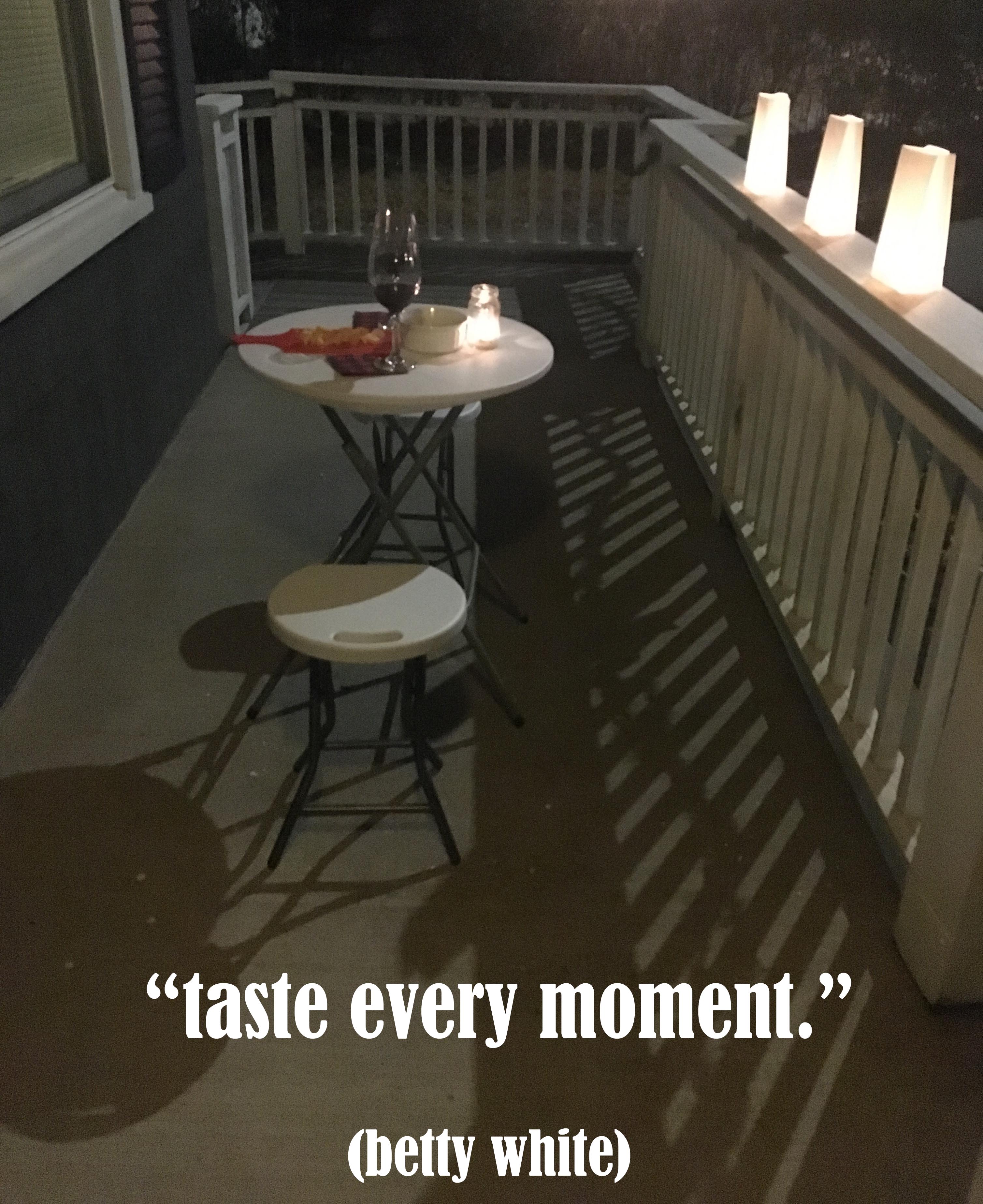
What we gain in blame, we lose in appreciation of our moments. In order to taste the moment, one must first choose to be in it – and then choose how to be in it.

Grief is a phase to be loved, not avoided. As is the celebration of a first birthday. A new life. A lost love. A full spectrum. Taste every moment.

read Kerri’s blog post about MOMENTS

Sing, “EEE-AAAWWW!” [on Two Artists Tuesday]

Drive across the country with Kerri and one thing is certain to happen: the moment she sees a donkey, she bursts into a rousing chorus of “EEE-AAAWW-EEE-AAAWWW!” She loves donkeys. She wants one. Or two. “They’re like big dogs,” she assures me. I have my doubts but I confess to picking up her quirk. Now, if I spot a donkey before she does, I point and launch a festive “EEE-AAAWW!”

Bill and Linda have two donkeys. We arrived after dark so had to wait until morning to go to the barn for a donkey-confab. She wiggled all night with excitement. “Smack-dab material,” I thought. I’ll be drawing cartoon donkeys soon. I can’t wait to figure out how to make the Kerri-cartoon character wiggle in anticipation.

Linda knows of Kerri’s donkey-love so she had donkey treats ready. I stood back and watched. “This is my future,” I thought. “Can I have another?” Kerri asked and Linda smiled, handing over the plastic container of orange donkey-cookies. Those lucky donkeys hit the cookie lotto.

Donkey cookies. Who knew! There’s more amazing wonders in this world than any of us can comprehend. Stand outside of anyone’s world, peer in at their passions, and you’ll have to try hard not to drop your jaw in fascination. From inside their world, the quirk seems boringly normal. I try to remember that when people stand agog at something in my world that seems normal-to-boring. “What’s the big deal,” I think.

People are great at reducing the magic in their lives to seem insignificant. I’m a “people” so, like all people, am guilty of my own diminishment. Beware of the word, “normal.”

Bill and I bumped fists. We are brothers-in-quirk. While Kerri and Linda stuffed the donkeys with cookies, Bill and I talked about the-things-that-come-out-of-our-mouths that get us into trouble. We think they are obvious. Ordinary. But, the response to our commentary indicates otherwise. He just retired from a board position and, his peers, in their farewell speech, described him in two words, both beginning with the letter “o”: outspoken and opinionated. All laughed. “It’s true!” he said, “And I’m proud of that,” and added, “No one wants to be a rubber stamp.”

What a perfect summation. EEE-AAAWWW-EEE-AAAWWW. Donkey cookies! Magic-in-the-ordinary. No one wants to be a rubber stamp.

read Kerri’s blog post about DONKEYS!

Make A Small Choice [on Merely A Thought Monday]

When we saw the sign planted on the side of the road – and then another, and another – we wondered what inspired the message and the movement. We were not surprised to learn that the community had recently experienced a cluster of teen suicides. The signs were a message to their young people, a love letter to their children.

The WHO reports that more than 700,000 people die by suicide every year. That’s more people than die by homicide or war combined. Even as I write this I am startled at how antiseptic a statistic can make hopelessness. The data of despair.

The signs appeared on the roadside because the violence-of-hopelessness had faces and names and addresses. And parents. And teachers. And friends. People moved, they pulled together. The threat transcended the numb data and became personal. They needed to talk. They needed to grieve together. They had no idea what to do so they made signs: you matter.

I thought a lot about those signs during our long drive home. Campaigns for change most often fail. They lose steam. They dissolve into abstraction. Behavior cannot be legislated. The messages we receive in the media are mostly violent. Ask most people about a blow to their self-esteem and you’ll hear a specific story. A moment of bullying, a glancing blow that altered the trajectory of their life one degree but, over time and distance, that small degree of violence made a huge difference.

In the same fashion, tiny acts of kindness, one small gestures of support, can send titanic ripples throughout a lifetime.

On the road, there was a distinct message sent to us by the people that roared up behind us, flashing their lights, riding our bumper. There was an entirely different message sent to us by the people who slowed their speed to let us in the lane of traffic. Small choices. Tiny moments. We are humans and learn to respond in kind.

Each day an opportunity. Each moment a choice. When we truly believe what the signs say, we will make certain that in small ways and large, it will be a priority to instill in each and every heart the message that they are worth more than they know. No one arrives at despair by themselves. No one arrives at hope by themselves.

I believe we actually do know what to do. It might begin with a sign or a curriculum but real hope – the intentional creation of worth – will shine through millions of small choices, communities dedicated to filling each and every day with tiny moments of support.

read Kerri’s blog post about WORTH