

I wanted to write about the day, long ago, that my Canadian friend questioned me about my country’s inability to deal with its black/white problem. His country does not have the history of slavery and Jim Crow that mine has. They have a different history of racial division. I was in Edmonton facilitating a diversity workshop and found that I had the most superficial of answer that amounted to “I don’t understand it either.”
I wish I was having that conversation with him now. I have a more complete grasp on my nation’s history. It’s not that we are incapable; it’s that we don’t want to. Our division is a strand of our national DNA. We’ve never settled the question, “Who do we mean when we say, We The People”? Right now, 26 years into the 21st century, one of our political parties is once again whitewashing our history while actively blaming people of color for our nation’s ills. The propaganda machine is working overtime to breath new life into the mad-mad-19th-century-notion of a master race. It continues to be profitable and manufactures dross easily swallowed for a populace largely ignorant of its history.
I wanted to write about my Canadian friend’s question but I found myself hoping that this latest loop around the racist velodrome would be the last. People who study change reassure me that significant growth follows a clear pattern: people revert before they progress, they step backward into the comfortable known, find it empty or ill-fitting, before stepping into the new. My nation is way overdo for a step forward.
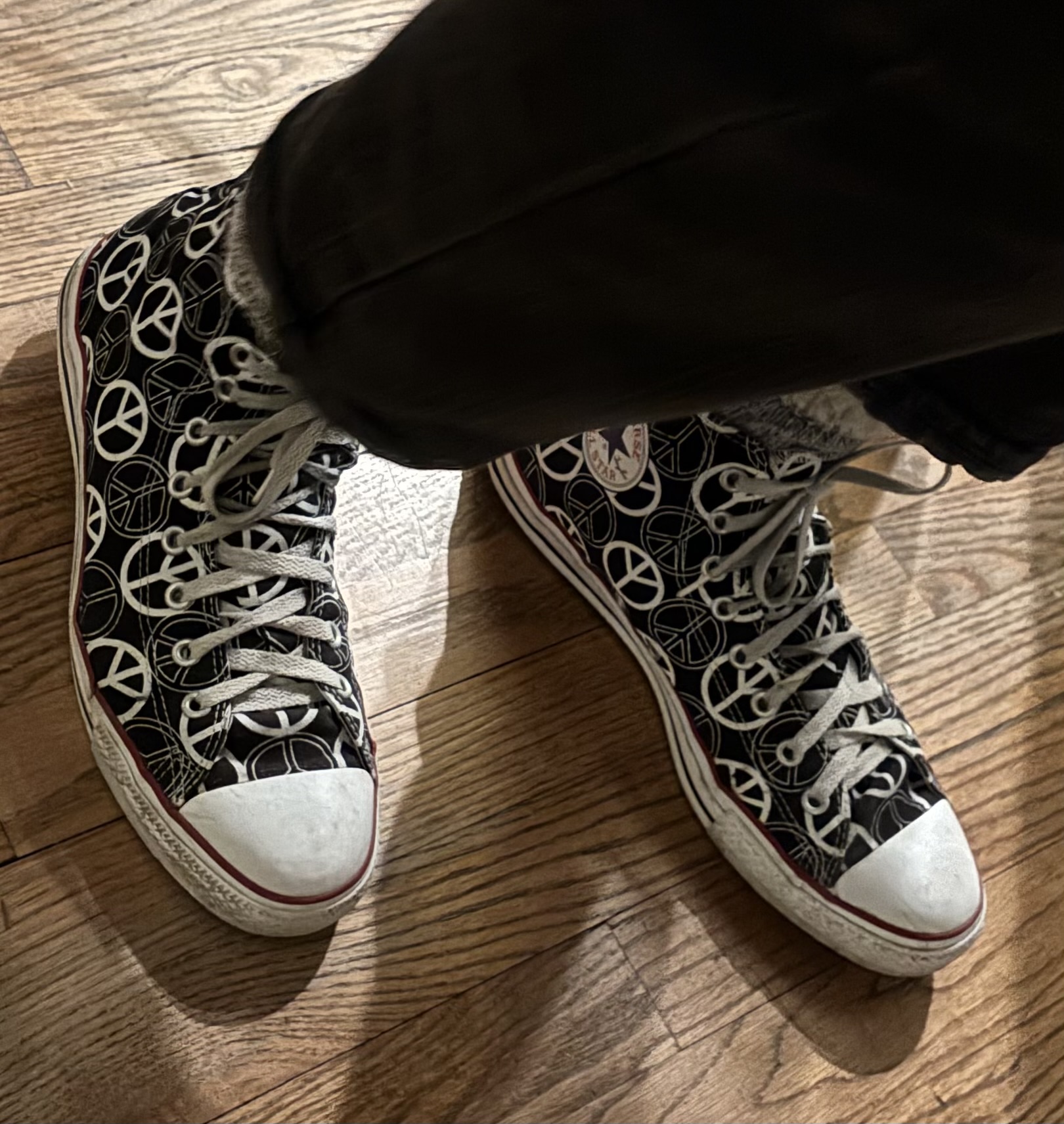
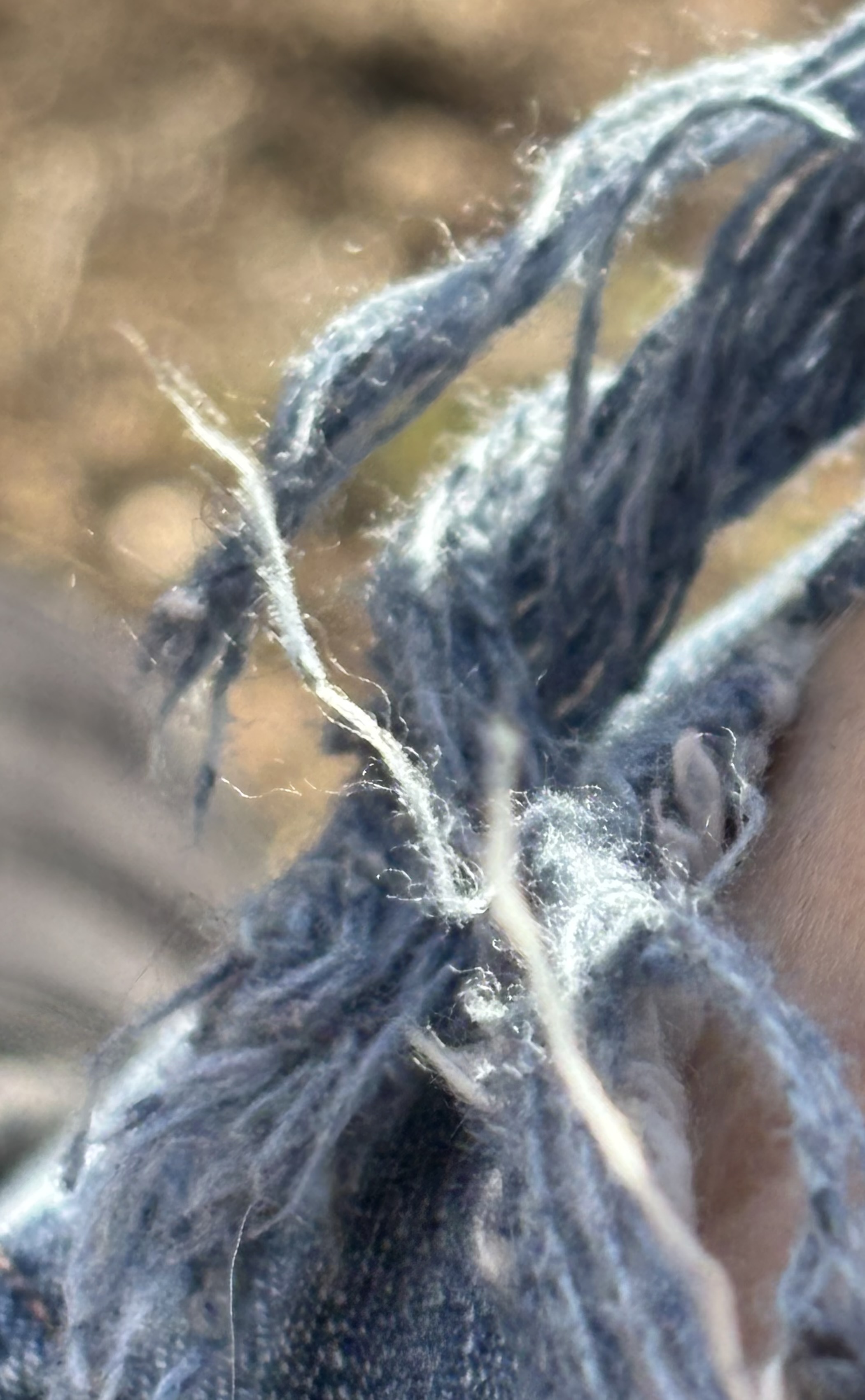
I found myself staring at 20’s shoes. Converse Peace Signs. They were Kerri’s dad’s shoes and she gave them to 20 after her dad passed. Walking in peace. What would it take for us to embrace our diversity and flip our racism on its head? Diversity is, after all, in every situation in nature, a strength. Prosperity in all its forms is dependent upon rich diversity. Mono culture is death.
Photographer Angélica Dass believes our troubles stems from our “binary” color palette.* We’ve reduced each other to black and white. It inspired her to create a color wheel of humanity. Her project Humanae matches the full palette of beautiful human skin tones to their Pantone color. Her point (among many): race is a social construct. “Kids don’t describe themselves as black and white – we teach them black and white.”
We need not reduce each other. We need not exclude. We are capable of celebrating and supporting and appreciating. We are capable of embracing the science: there is no genetic or scientific basis for race. “It’s largely a made-up label, used to define and separate us.”*
I wanted to write about my Canadian friend’s question. I found myself staring at 20’s shoes. A symbol in black and white, an ideal beautiful and available to all the rich hues comprising humanity’s color wheel. A factual story capable of defining and uniting us.
*National Geographic, Special Issue: Black and White, April 2018
read Kerri’s blogpost about PEACE SHOES

likesharecommentsupportthankyou

Filed under: Identity, Merely A Thought Monday | Tagged: artistry, change, color, david robinson, davidrobinsoncreative.com, Diversity, history, inclusion, Kerri Sherwood, kerri sherwood itunes, kerrianddavid.com, kerrisherwood.com, peace, progress, race, racism, story, studio melange, symbol, the melange, unity | Leave a comment »






 The Direction of Intention