Plant The Seed [David’s blog on Not So Flawed Wednesday]

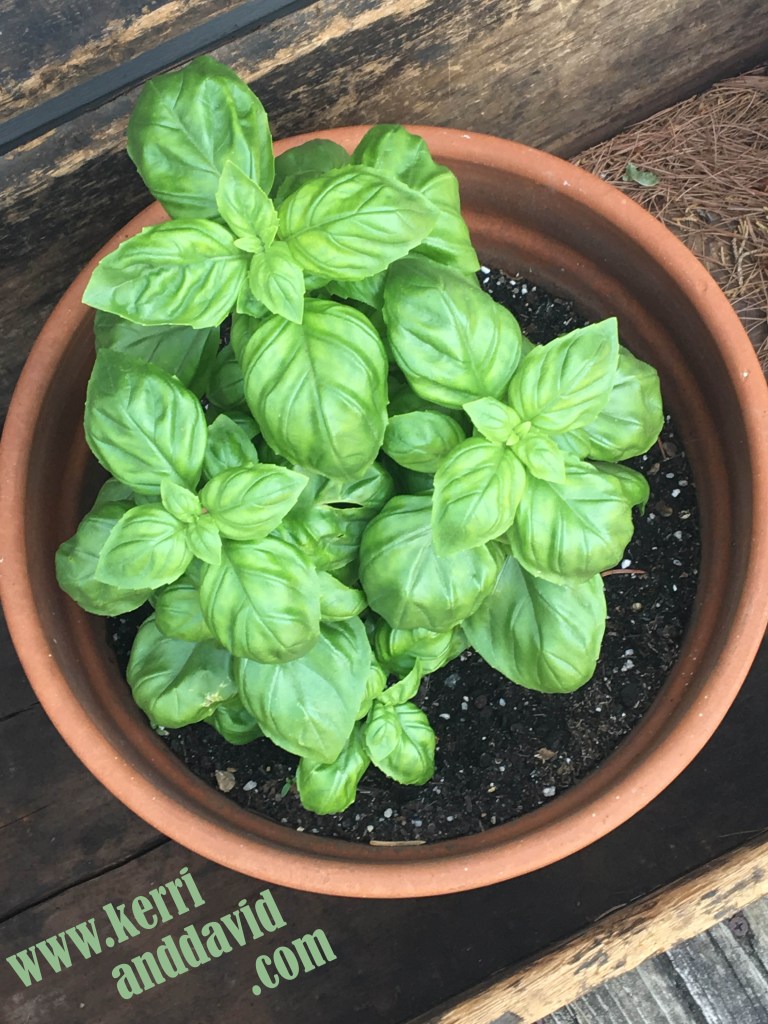
And just like that, fall is in the air. The harvest is happening and jalapeno poppers are on the menu. We have a bumper crop of tomatoes and are making an extra batch of pesto since the basil is outdoing itself. In the middle of nature’s man-made erratica, our garden thrives and reminds us to appreciate abundance where she shows her face.

Over the Labor Day weekend, a woman, an elder on the block, decided to host a neighborhood gathering. People came out of their houses with platters of food to share. Kerri has lived here for 36 years and has a long history with many of the people who sat in a circle and chatted. I’ve lived here for 13 years and although I’d seen many of the faces before, I’ve waved to many of the faces as we walked by, but I’d never actually had a conversation with most of my neighbors. They are delightful and quirky, each with an interesting story to share.

I decided that the people of this nation need one-big-block party with one rule: no talk of politics. Bring food to share. Shake hands. Ask, “How are you?” Talk about the real stuff, the plumbing problem or share photos of grandchildren. Talk about the zealous garden that the hot and humid summer weather ignited.

Kerri and I used to host many, many gatherings: slow dance parties, midnight X-mas eve bonfires, ukulele band rehearsals and choir potlucks. Since COVID and with the rise of ugly-maga-madness, we’ve “pulled up the drawbridge”. We keep and guard a tight circle of friends. We cultivate a sanctuary in our backyard.

This morning I read a quote by Noam Chomsky:

Neoliberal democracy. Instead of citizens, it produces consumers. Instead of communities, it produces shopping malls. The net result is an atomized society of disengaged individuals who feel demoralized and socially powerless. In sum, neoliberalism is the immediate and foremost enemy of genuine participatory democracy, not just in the United States but across the planet, and will be for the foreseeable future.

Maga is neoliberal. Project 2025 is neoliberal: it promotes “liberalizing” markets, meaning the removal of all regulation and oversight, while eliminating anything that smacks of service or a social program. Neoliberalism has been a disaster in the past; it promotes oligarchy and fosters dictatorship. Our Civil War and our Great Depression were in large part produced by a neoliberalist agenda. It worships business, undermines service, and fosters division. It is the toxic philosophy creating the national disaster we currently endure. Neoliberalism is a Roman orgy for the wealthiest few. It is an economic speeding car with no brakes and cares not-a-whit for who or what it runs over. It always ends in a nasty crash.

The phrase in Chomsky’s quote that struck a chord was “The net result is an atomized society…” Here we are. Atomized. It is undeniable. It is antagonistic.

On my growing list of responses to the question, “What can we do?” I am adding, “Host a neighborhood gathering.” Breaking bread together is an ancient tradition, perhaps as old as humanity itself. At the very least it is a step toward connection. Social power is a group sport and begins when neighbors gather and talk. A neighborhood gathering plants the seed for participation and active community, a someday-place-of-appreciation, a mighty harvest, where abundance will gladly show her face.

read Kerri’s blogpost about HARVEST

likesharesupportcommentsubscribethankyou

Weeding Revelations [David’s blog on KS Friday]

“We are exploring together. We are cultivating a garden together, backs to the sun. The question is a hoe in our hands and we are digging beneath the hard and crusty surface to the rich humus of our lives.” ~ Parker J. Palmer, Let Your Life Speak: Listening for the Voice of Vocation

I can’t believe I am writing this. The truth is that I enjoy weeding. While Kerri tends to the herbs on the potting bench, I pull weeds from the cracks between the patio stones. I am sometimes shocked at the satisfaction I feel when the deep root emerges with the stem. “Nice!” I exclaim to myself, dropping it into my plastic bucket.

It has not always been true that I enjoy weeding. Initially, it used to feel like a fool’s errand, an unwinnable war. Each new day would reveal new weeds – more weeds – overtaking my gains from the day before. Redoubling my weed-pulling-efforts seemed to produce the opposite of my intention: more and more weeds.

In retrospect I realize that I came to home ownership later in life and my weed wars were waged when I was relatively new to the job. I wanted to impress my new wife with my manly yard maintenance prowess. I’d mowed thousands of lawns in my life and all of them belonged to other people. This yard, our yard, did not yet feel like mine. I was in denial that I actually had a yard to tend.

I also had an Aussie dog whose sole mission in his young life was to carve multiple velodromes through the grass in his gleeful running of circles. And, as it turns out, Aussie pups, when overheated by running circles, dig deep holes in the earth to reach cool soil that they can lay on it. The backyard destruction was total and provided every gleeful weed known to humanity a perfect opportunity to sprout with unbridled enthusiasm. So they did.

I do not know when the crossover happened. I do not know when I surrendered the fight. I don’t imagine it happened all at once. There was no grand epiphany, no lightning bolt of illumination. Over time the war turned into a game and then the game turned into a meditation. One day, I walked into the backyard to quiet my mind and began to weed – and realized what I was doing. “Good for the heart. Good for the soul.” Brother Patrick’s words of so long ago came to mind. Never in my life did I think I would have a yard. Never in a thousand years did I imagine I’d love to quiet my mind by weeding. My wandering soul giggled at the revelation.

It’s been that way ever since.

“I don’t like weeding as much as you do,” she said, pruning the mint and tending the peppers. The potting bench is her happy place.

“I know,” I said, pulling a clump of crabgrass. It came out, roots and all “Nice,” I said aloud. Our old Aussie left his cool soil perch and came to investigate.

“What?” she asked.

“Our yard,” I said. “It’s so nice.”

PULLING WEEDS on the album RIGHT NOW © 2010 Kerri Sherwood

Kerri’s albums are available on iTunes and streaming on Pandora.

read Kerri’s blogpost about THE POTTING BENCH

www.kerrianddavid.com

likesharesupportthankyou!

No Faith Necessary [David’s blog on DR Thursday]

“And don’t think the garden loses its ecstasy in winter. It’s quiet, but the roots are down there riotous.” ~ Rumi

The fog is dense this morning. It feels otherworldly. Quiet.

I am delighted for the fog. The quiet is welcome.

When I opened the door this morning to let Dogga out, I expected to hear the mournful call of the foghorn. Instead I was met with a sweet bird song. A single singer. A lover of fog. I listened for a few moments, closed my eyes.

What a surprise to expect the distant dour call of the foghorn and instead be greeted by genuinely lighthearted chirping!

A day ago – one single day – the coneflower sculpture was covered in snow. We marveled at it as the snow transformed it, a fancy white umbrella. It has reemerged as a coneflower and, on this foggy, foggy morning, seemed to be listening. I imagined it was holding a vigil. Perhaps it was keeping watch for the spring. “Keep the faith,” I whispered.

“No faith necessary,” replied the coneflower. Or so I imagined. Saucy flower!

I remembered my first experience scuba diving. There was an entire world of color and vital life not visible on the surface. I was giddy with my discovery. Had I never learned to dive I would not know of the vibrant universe that existed beneath the waves, just out of my sight.

“No faith necessary,” I repeated as I closed the backdoor. Turning my attention to making coffee, I pondered what other wonders were bubbling all around me that I simply cannot see.

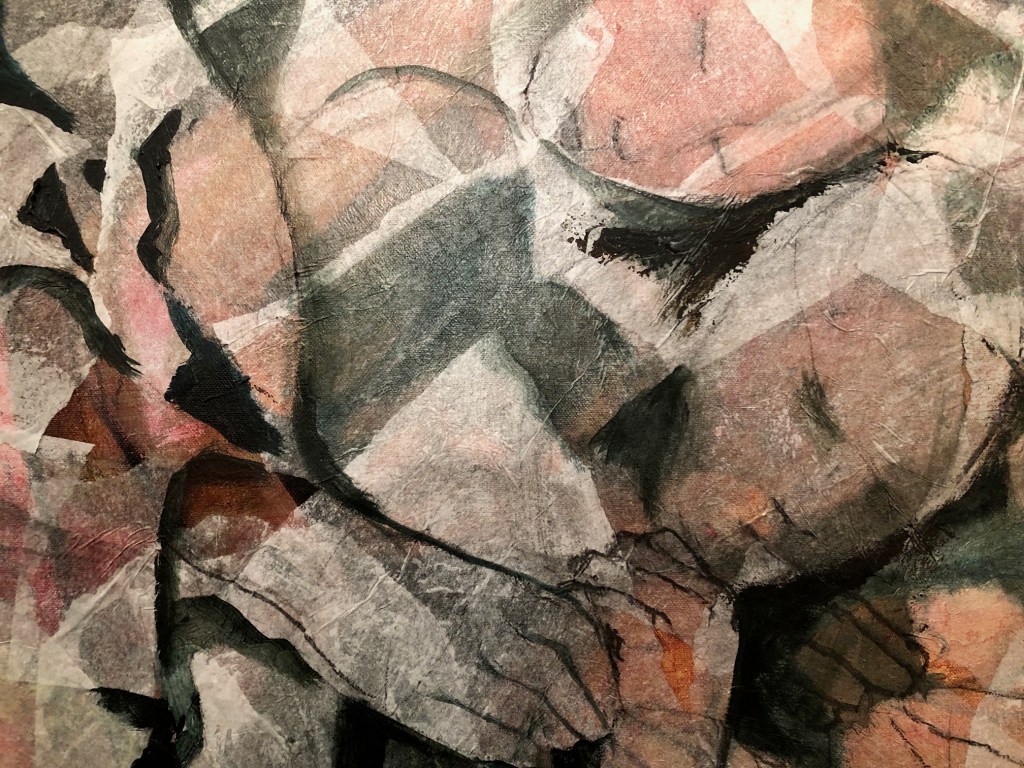
detail of a work in progress

read Kerri’s blogpost about FOG

likesharecommentsupportsubscribe…thankyou.

Responsible Opposition [David’s blog on KS Friday]

Among the many things our city does well is the design and maintenance of the gardens in the parks. Colorful and well-tended, carefully planned beds of flowers. My favorite plots juxtapose vibrant, tender petals that surround sturdy broad red banana trees. The beauty found in opposition. Contrast.

Horatio said that he was worried for the democrats. “They have no responsible opposition,” he said. The operative word in his sentiment is “responsible.” As we all know, there is no lack of opposition yet the former GOP has lapsed into a low-bar, name-calling, opposition-for-opposition-sake; it stunts the growth for all involved. It’s the Achilles Heel of the red-hat-cult. When opposition is the end-goal there is no need for ideas or solutions, no service to a greater good, no vision for the future. There is no ethic. There is no lie-too-far to resurrect some made-up-past-glory-fantasy. Opposition-for-opposition sake has only one aim: to attain and keep power.

And then what?

Maintaining power-for-the-sake-of-power is a well-known path worn into history by the likes of Stalin and Hitler. Pol Pot. Mussolini. Putin. Kim Jung Un. The path ultimately – and always – leads to the killing fields. Absolute power is never a worthy or sustainable reason-for-governing and always, in the end, eats its own people. Opposition-for-the-sake-of-opposition, once in power, eliminates by any means all other points-of-view. It silences any voice of responsible opposition. Read Project 2025 for a step-by-step blueprint on how to reduce a two-party democratic republic into a single party authoritarian state.

A healthy two-party system – democracy – is designed to bring opposing ideas to the table for debate and discussion. The point is not opposition. The point is agreement. Compromise in service to the greater good. Checks and balances. The point, at its best, is like the gardens I so appreciate, vibrant juxtaposition, carefully planned and respectfully maintained.

Democracy is made beautiful through responsible opposition. It’s a two-party system. Democracy disappears without it.

Our garden needs tending, a task for which we are all responsible. Our garden already has a great plan. It’s called The Constitution. Opposition-for-the-sake-of-opposition is like an invasive weed. This red-hat-weed will not just go away. It’s our job – all of us – to act, to call it out, to vote, to make certain the weed is pulled for good (pulled for the public good) and that the two party system, with an ethical GOP, dedicated to the rigorous and worthy task of finding agreement through responsible opposition, is restored to the service of our greater garden.

Figure It Out on the album Right Now © 2010 Kerri Sherwood

Kerri’s albums are available on iTunes and streaming on Pandora and iHeart Radio

read Kerri’s blog about RED BANANA TREES

Share. Like. Support. Subscribe. Comment. Thank you!

Clear Your Mind [David’s blog on Merely A Thought Monday]

There’s nothing like a walk in a garden to clear your mind. It was the end of the week – or was it the beginning? In any case, our brains were overloaded. We sought a garden.

So the story goes, Adam and Eve lost their spot in the garden. They ate from the tree of knowledge and started to think about things. They became self-aware, a by-product of apple-eating, they had to tell stories of where they’d come from. They had to tell aspirational stories of where they wanted to go. They made rules. Look back. Imagine forward. Neither direction is true in the absolute sense of the word. Memory and imagination are not fixed. They are fluid, changing, like a stream.

Listening to our stories it’s easy to conclude that this good earth couldn’t possibly manage without us. As global weirding progresses, it’s likely that we’ll learn the opposite of our control-story is the case: we can’t possibly manage without the good earth. We may have to adapt our narrative! We may have to consider that the garden and its many inhabitants didn’t really need names; we invented knowledge-management to suit our purposes. We might need to recognize that we invented all forms of management to suit our narrative.

We like to tell stories of being in control, of being at the top of the pyramid. We especially like narratives placing us at the center of the universe – and the micro level variety: being the chosen ones. Believing that it all spins around us is, well, comforting. Or hubris. Or both.

Of course, our story is pocked with kill-joys like Galileo. Though, to be fair, even though his telescope proved beyond a shadow of a doubt that humanity is NOT at the center, it’s had very little impact on our dedication to being all important. Above it all. We are a tenacious bunch when our story of primacy is threatened.

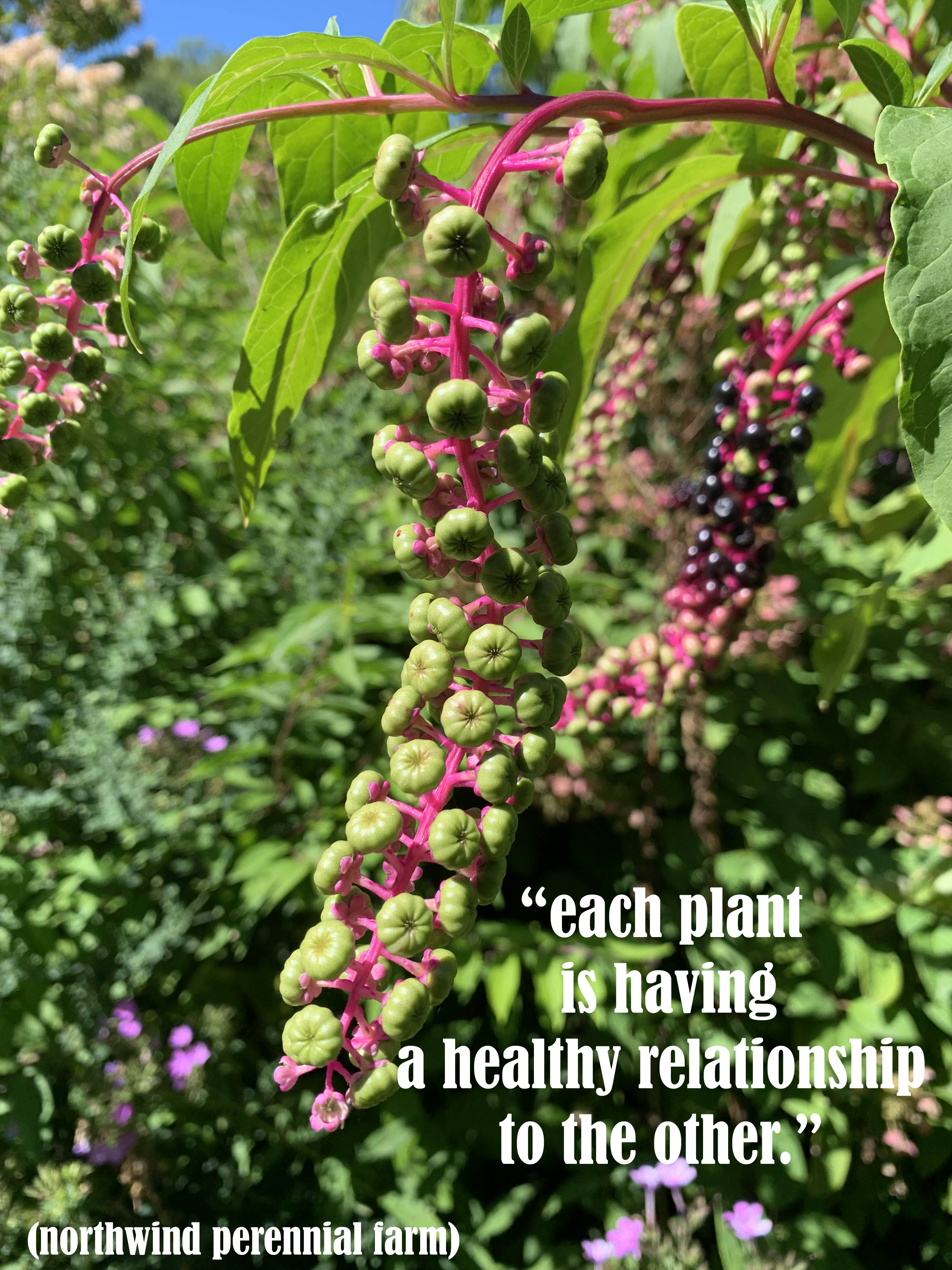
I was especially moved by the sign in the garden and wondered what it would take for us to turn the tables and imagine ourselves as part of the spinning universe rather than above-it-all. There are plenty of examples to draw from, humans in symbiotic relationship with their garden. Listening rather than instructing. Spinning with.

I think that is why, when our brains are overloaded, we head to the garden. A return to our senses. We breathe. We listen. We feel. We clear our minds and, even for a moment, re-enter a naturally healthy relationship.

read Kerri’s blogpost about HEALTHY RELATIONSHIPS

like. share. support. comment. thank you.

Say “Good Morning” [on DR Thursday]

My dad always kept a garden. He grew up in a farm community. I watched as he attended to his fruits and vegetables and it seemed innate, second nature. Without thought, he knew what to do. His garden knowledge did not find its way to me so I am grateful that Kerri’s thumb is green. Her potting bench is alive with tomatoes and basil.

This is the first summer of my life without my dad and I am finding in the tomatoes a deep sense of reassurance. Connectivity to my dad that transcends time. He loved his garden as Kerri loves hers. In her garden, he stands.

Kerri’s mom and dad watched birds and cardinals were special to them. In the past few years, cardinals have taken up residence in our neighborhood. Brilliant red, salmon, antique pink…Gorgeous. When one stops to visit, I say, “Beaky’s saying ‘hello.'”

I suspect connectivity is what we experience when we slow down. It’s hard not to realize how deeply interconnected we are when stopping all motion to watch the sunset. It’s impossible not to realize how small and passing we are when taking the time to gaze through a telescope at the night sky.

I am taken by surprise by the tomatoes, though I should have seen it coming. I love that each day, I take a break and go to Kerri’s bench. I stop all motion, feel the sun, look for the new growth, and whisper, “Good morning, Columbus.”

read Kerri’s blogpost about NEW GROWTH

Sing Red! [on Not So Flawed Wednesday]

We were awake much of the night so we ate bananas and talked. Our conversation rambled over miles and covered acres of territory. In the wee-hours, Kerri explained to me the compositional elements of a symphony, the placement of a solo in a piece, and the foundational support offered by the other instruments. In other words, it takes a village to raise a solo.

There’s a famous story of Leonardo Da Vinci, paintbrush in hand, staring all day at his mural-in-progress. Finally, after hours of staring, he approached the wall and added to his composition a single brushstroke. If you are a painter you understand that the story is not about the single brushstroke but where it was placed. Color lives or dies relative to other color. Leonardo spent his day assessing relationships.

We are new gardeners. It may seem silly to expert growers, those who’ve been around the farm a time or two, that through the fall, we jumped out of bed every morning, ran to the kitchen, to see our cherry tomatoes. When we pulled the plants at the frost, the vines were laden with green tomatoes. Not to worry, Kerri told me; put the little green orbs together in a sack (ours landed in Tupperware and never left because we delighted in watching them) and they will make the journey to red. They’d help each other to ripen. And so it was. Each day the palette changed until, one day, the entire tomato choir sang red. I am filled with wonder.

It is a cliche’ that every great journey begins with a single step. A single step and lots of encouragement. A single step and a team of support. Explorers need financing. Too often we place the accent on the single player and ignore the symphony. We get a big kick out of the crowds of individuals standing in line to stand atop of Mt. Everest, thrusting their hands like Rocky Balboa in the very-thin-air, playing conquerer of the mountain, forgetting that a Sherpa carried their gear, set up their tent, cooked their food, set their ropes, tended their wounds, warmed their tea, hauled away their waste and sometimes carried their bodies back down when they couldn’t make the round trip.

No one walks this walk alone. Individualism is like Leonardo’s brushstroke: it only works if it furthers community, when it makes life better for all. How’s that for a paradox!

We are tomatoes, all. Green and small by ourselves. But when brought together in our little Tupperware crossroads, red, red, red, red, red!

read Kerri’s blog post about TOMATOES!

Find A Horizon [on Not So Flawed Wednesday]

“Be not afraid of growing slowly, be only afraid of standing still.” ~ Chinese Proverb

Each morning, Kerri wanders outside to check her tomatoes. It is one of my favorite new rituals. I watch from the window as she steps out beyond the deck to the potting table, hands on hips, and scrutinizes the plants for newcomers. After a careful count she hurries back into the house to tell me the results of her count. Each day yields a new arrival. “There are ten!” she proclaimed this morning. Then, she took out her phone to show me the photos she’d taken. A family portrait of tomatoes. Miracles in the making.

Seasoned gardeners might not experience the same level of enthusiasm, but we newbies are wide-eyed at the little green orbs that show up overnight, at the basil plants spilling out of their pots.

It has already inspired new recipes. I blubbered on Sunday evening when I tasted the basil-and-tomato-saute over pasta. Food-that-makes-you-close-your-eyes-and-slow-down-so-that-you-can-savor-every-last-bit-of-it is high on my list of pleasures-to-be-cultivated.

We are learning. We are trying new things. We are setting up new spaces, rearranging furniture. At the same time, we are cleaning out, pulling bins from the basement. Sorting. Making space. The energy is moving.

In the past few years, our growth and learning has looked and felt like loss. Job losses, dear ones passing, broken wrists. Armor falling to the ground. Layers peeled. There’s nothing like time spent in the wilderness to put a fire beneath curiosity. When the questions are basic, “What do we do now?,” the available options are at the same time infinite and absent. There’s only one thing to be done and that is to keep moving. Find a horizon and walk toward it.

The tomatoes are harbingers. The season of losing layers may, at last, be done. There is now plenty of space for curiosity, for growing things. “What do we do now?” is still a question floating in the air. But, from our point of view, with the wasteland just behind us, we see the yellow buds and tiny green orbs as signaling a harvest to come. Hope. The energy is moving. A daily visit to the potting bench, rubbing basil leaves to enjoy the scent, seems like just the right amount of forward movement.

read Kerri’s blog post about TOMATOES

Make Another Choice

757. Join me in inspiring truly powerful people. Each day I will add a new thought, story or idea to support your quest and mine.

Today I drew cartoons. I had coaching calls. I turned soil and helped plant a garden. I’ve never planted a garden before. I read a recipe and made naan bread and turmeric chicken. I’ve never before made naan or turmeric chicken. I will do all of the above again and again. As I turned the soil and later as I kneaded dough I remembered a moment in class earlier in the week. We had a conversation about the absence of resistance.

The conversation went something like this: The absence of resistance in your life is a sure sign that you are living fully in choice. If you are pushing against what you don’t want, chances are you’re invested in the notion that you have no choice. Flip it over and say it another way: resistance is a signal that you are invested in a drama. Pushing against what you don’t want is a signal that your inner victim has come for a visit.

If you pay attention, resistance can also be a guide. Resistance shows you where you’ve invested in the idea that things happen to you. Resistance exposes the places in your life that you’ve abdicated your responsibility for your choices.

The great thing about planting gardens for the first time or making new recipes, is that presence is not a problem. Doing things for the first time invites presence. Not knowing brings us to this moment. We pay attention. It is the magic secret to learning. Another side benefit to stepping into unknown activities is that you have a choice. You can have the experience first and then make meaning out of it (note: this is how your brain works. Or, you can resist the not knowing, pretend that you should know, resist the moment, and miss the learning. It’s a choice. Experience is always determined in that tiny moment when you choose to walk toward something, or push against what you don’t want. It sounds simple because it is simple. Listen to what you resist and make another choice.