Breathe Out. Breathe In

...if beakybeaky was a band, this would be the album cover...

…if beakybeaky was a band, this would be the album cover…

The most important thing in life is to learn how to give out love, and to let it come in. Mitch Albom, Tuesdays With Morrie.

Somewhere in the 22nd hour of our drive, the sun rose. Even through our exhaustion and bad fast food coffee, it took our breath away. It replaced, or, rather, swallowed, a brilliant sliver-crescent moon.

We’d stayed longer in Tampa than we expected. The day after Beaky’s book reading and signing, Sunday, we were exhausted so we delayed our return trip home for a day. The following day, Monday, was bad for Beaky – she was in tremendous pain and we were overwhelmed with the need to stay. So, we stayed, knowing the result would be a 24 hour dash home for rehearsals.

His voice dropped to a whisper. Let it come in. We think we dont deserve love, we think if we let it in well become too soft. But a wise man named Levine said it right. He said, Love is the only rational act.’” Mitch Albom, Tuesdays With Morrie

...and the truth of beakybeaky....

…and the truth of beakybeaky….

This year is unusual. I’ve done too many plays, paintings, and projects to count and each had its rewards and regrets. Twice since the turning of the New Year I’ve completed a project that was so fulfilling, so right, that I would not change a thing. Both have this in common: the intention was pure. I did them for the right reason: someone else. The first, The Lost Boy, was a message from Tom to his nephew, Seth, and I was the messenger. The second, Beaky’s first book, Shayne, was to make a dream happen. Every dream needs assistance to be born: the manuscripts existed. Beaky’s desire to share (publish) existed. They lacked an illustrator and designer. I did the illustration. Kerri did the layout and design; a dream fulfilled itself. For me, both are lessons in breathing out love so that I might also breathe it in.

Just prior to Beaky’s reading, we took a series of selfies with her. I told her that, if Beakybeaky was a rock band, the selfies would make excellent album covers. After our photo opp, we wheeled her to a standing-room-only crowd, many people that she knew and many more that she didn’t, people who’d gathered to hear an almost-94 year old author read and sign her very first book.

a dream fulfilled

a dream fulfilled

Breathe out. Breathe in. It turns out that an exhale is necessary for the inhale.


Make Quiet

A sanctuary

A sanctuary

It is Thursday night. Kerri is attending a meeting at the church and I have tagged along so I might sit alone in the sanctuary. I’ve always loved entering the quiet spaces. Once, a lifetime ago in Sedona, John called me “guru dude” because I sat for hours nestled in the quiet of a vortex. It felt like minutes to me. I think it unsettled him that I was so completely settled. I know it unsettled him that I would rather seek quiet than make noise.

Sanctuaries, I’ve learned, are everywhere.

My task, my mantra, and my delight of a few years ago was to realize that all the world is my studio. I had some amazing help and more than one universal dope slap before that realization sank in. I used to believe that in order to create I had to escape the world to find the refuge and quiet of my studio. I felt like I had to go to my studio to find my creative place just like I felt like I needed to go to a vortex to experience deep quiet. I had it upside-down. A studio, like a meditation practice, is meant to bring us into communion-with, not reinforce our isolation-from. It is not a place of escape. It is a place of joining. Quiet is not something we find as much as something we allow.

To me, the word “studio” and the word “sanctuary” are now equivalents. They are the places that creating happens and creation is a quiet process: the inner chatter stops, channels open, and something comes through. A few weeks ago, in the second performance of The Lost Boy, we stepped onto the stage and everything was quiet inside. There was no past and no future; there was only the moment – and it joined us, audience and performers, in a single, shared story. Something came through us; together we created. There was no effort, there was no striving; there was, as Jim Edmondson used to say, “a dance of giving and receiving.”

This “joining” is the dirty little secret and great power of the arts. It is something that school boards will never understand but something that dictators across the ages have feared. Artists are the vortex of joining, of shared identity, of explosive quiet, of laughter that crosses lifetimes. The arts do not separate; when at their most potent they unite. They clarify. They delineate substance from chatter en route to a powerful common center that is as holy, as quiet, as it is creative.

Step Into Your Sanctuary

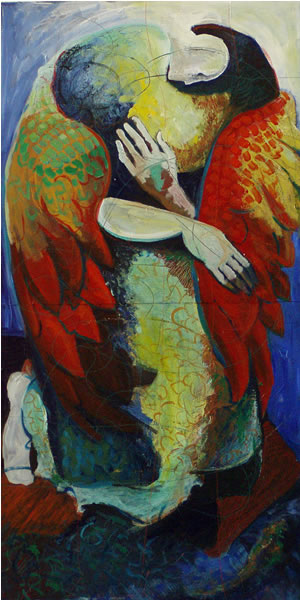
An oldie simply called ANGEL

An oldie simply called ANGEL

It is night and I am hanging out in the sanctuary while Kerri attends a meeting. I never in my life thought I’d hang out in a sanctuary but I quite like it. It is quiet and I am by myself. It is a good place to meditate or just get still. I am sitting with my stain glass window wondering if there is a conversation in the offing. I’ve spent many nights in my life sitting alone in dark empty theatres and always felt the same sense of peace that I feel at this moment.

I like the word “sanctuary.” It implies a safe place, a resting place. If all the world is my studio then it is also my aspiration to live as if all the world is my sanctuary. I’ve always understood my studio to be a holy place, a place of creation and presence. Going to my studio has always been a step into a safe space. It is where I rejuvenate. Tonight, sitting here, it occurs to me that “studio” and “sanctuary” are very similar words. They are very similar places just as “theatre” and “church” have, for me, been mostly interchangeable: where we go to affirm the stories that identify and transform us; where we go to find our community. My sister finds her community in a church. I have, until lately, found mine in the theatre.

This rambling path begs the question, “What is sacred and what is not?” Yesterday Diane told me that she is a spiritual teacher and I believe that is true. This morning while walking I remembered her words and wondered if we are all spiritual teachers to each other. Some of my greatest teachers had no idea that they were teaching me.They had no intention of teaching me. One great teacher was sweeping a floor and had no idea that I was watching him. He was one of the happiest people I have ever seen. He was shining. He was doing a job that most people would deplore. Everyone who saw him smiled, myself included. He was not his job. He was not his body. He was…connected and alive in his moment. He was living in his sanctuary and helped me know that all the world can be a holy place. He helped crack my understanding of what is possible.

These lines we draw between the sacred and profane are mostly imagined. They are convenient and sometimes useful but they are illusions that I am beginning to understand as destructive. Us and them. A divided house begins in a belief of divisions – a need for division. I’ve often told the story of the executive, red in the face, pounding the table with his fist, shouting, “I know how to compartmentalize my reason from my emotions!” I remember thinking, why would any one want to cut off their emotions from their reason? A better question might have been, who, in their right mind, willingly cleaves themselves into pieces? What delusion is necessary to entertain the notion that reason and emotions are distinct and separate? Separations are generally an indication of not-right-mindedness and a dedication to controlling the uncontrollable.

The angry executive was also a great spiritual teacher for me, too. He taught me to check my assumptions and step over the lines of false distinction that I draw. I can connect the dots directly from his table pounding exclamation to my desire to define my studio as all the world; to live consciously in my sanctuary all of my days.

title_pageGo here to buy hard copies (and Kindle) of my latest book: The Seer: The Mind of the Entrepreneur, Artist, Visionary, Innovator, Seeker, Learner, Leader, Creator,…You.

Or, go here for all digital forms of The Seer.

Go here for fine art prints of my paintingsEmbrace

Ask, “Now What?”

photo-1On one of the many Post-It notes that line our idea wall is written, “Say ‘I Don’t Know.” It is especially relevant today as a few days ago, in a fit of spontaneous remodeling, we tore the five-decade-old laminate off the countertops. After the moment of deconstruction we looked at each other, shrugged our shoulders, and asked “Now what?”

I delight in moments like this for two reasons: 1) the first action (tearing off the laminate) always comes from years of wanting change but seeing only obstacles. In what feels like a spontaneous moment, the focus shifts from the obstacle to the action. 2) When the focus shifts only a single step is visible and that step is always some variation of, “I don’t know but I’m going for it anyway!” Second steps are generally invisible until there is a committed action, until there is a first step taken.

These two steps together are a good working definition for the creative process. Shift your focus from the obstacle to the only action you can see. Take the action. Repeat until the action takes hold of you.

The first step generally feels like deconstruction. It feels like breaking things or breaking out of things (like a focus on obstacles). A committed step into, “I don’t know” creates motion and motion begets motion. Rip off the old laminate without a plan and a plan will emerge. Or a mess will emerge followed by a new plan.

title_pageGo here to buy hard copies (and Kindle) of my latest book: The Seer: The Mind of the Entrepreneur, Artist, Visionary, Innovator, Seeker, Learner, Leader, Creator,…You.

Go here for all digital forms of The Seer.

Or, go here for fine art prints of my paintings (and other stuff, too)

Eve, by David Robinson

Eve, by David Robinson

Welcome The Bump

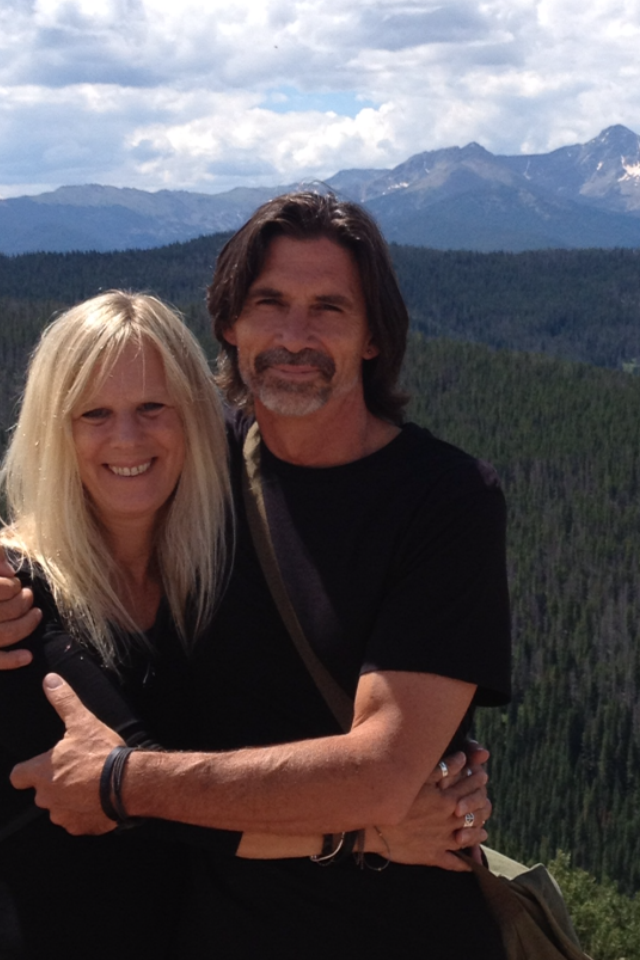
With Kerri on the top of a mountain

With Kerri on the top of a mountain in Colorado.

Just beyond Vail, Colorado there is a tiny two street town called Minturn. It began as a mining town when people were rushing for gold but these days it survives as a place for tourists. It is radically different than its founding fathers intended. We stayed there for a few days of rest and recuperation after our two-week double loop through Middle America.

The double loop through America was nowhere in the plan a month ago. Things just seemed to pop up. A death. Kerri’s daughter stumbled into a new job that necessitated an immediate move. Plans changed. Our intentions for the month went out the window. All of the artistry went on hold. We quickly packed the car and hit the road.

Just as plans change it is also true that change is rarely planned. I’ve yet to meet a person who doesn’t resist change (despite their rhetoric). Change requires a step into the unknown and that’s precisely the point: real change comes when we simply don’t know. Most of us like to know where we are going before we step. Change finds its way through the cracks that happen when patterns are disrupted, when things just seem to pop up, when we have no idea what the next step is. Change happens when we are making it up as we go. Change is a creative act, a tap dance on the event horizon.

Last week we drove to Colorado from Wisconsin through Iowa and Nebraska to attend my grandfather’s funeral. After the service we drove to Columbia, Missouri, crossing the full expanse of Kansas, to deliver some treasures from Beaky (Kerri’s mom) to Wendy (Kerri’s niece). Since we were driving to Denver, why not go home via Missouri? We returned home long enough to wash our clothes, pet the dog, and repack the car and head to Minneapolis. We packed up Kerri’s daughter and moved her to Vail via South Dakota with a sharp turn through Nebraska before arriving again in Colorado. After a rest in Minturn, a few hikes, some time with wine sitting on a porch, and a few precious nights with my parents, yesterday we returned to Wisconsin through Wyoming, South Dakota, and Minnesota.

It was a tap dance. Change found its way in as our patterns disappeared in the spontaneity of the double loop. We arrived home exhausted and exhilarated, with renewed eyes, a riches of profound and varied experiences, and much clearer intentions. What seemed initially like an interruption in our path was, in fact, a crack in the pattern, a necessary bump into the unknown.

title_pageGo here for my latest book

Say Yes To How

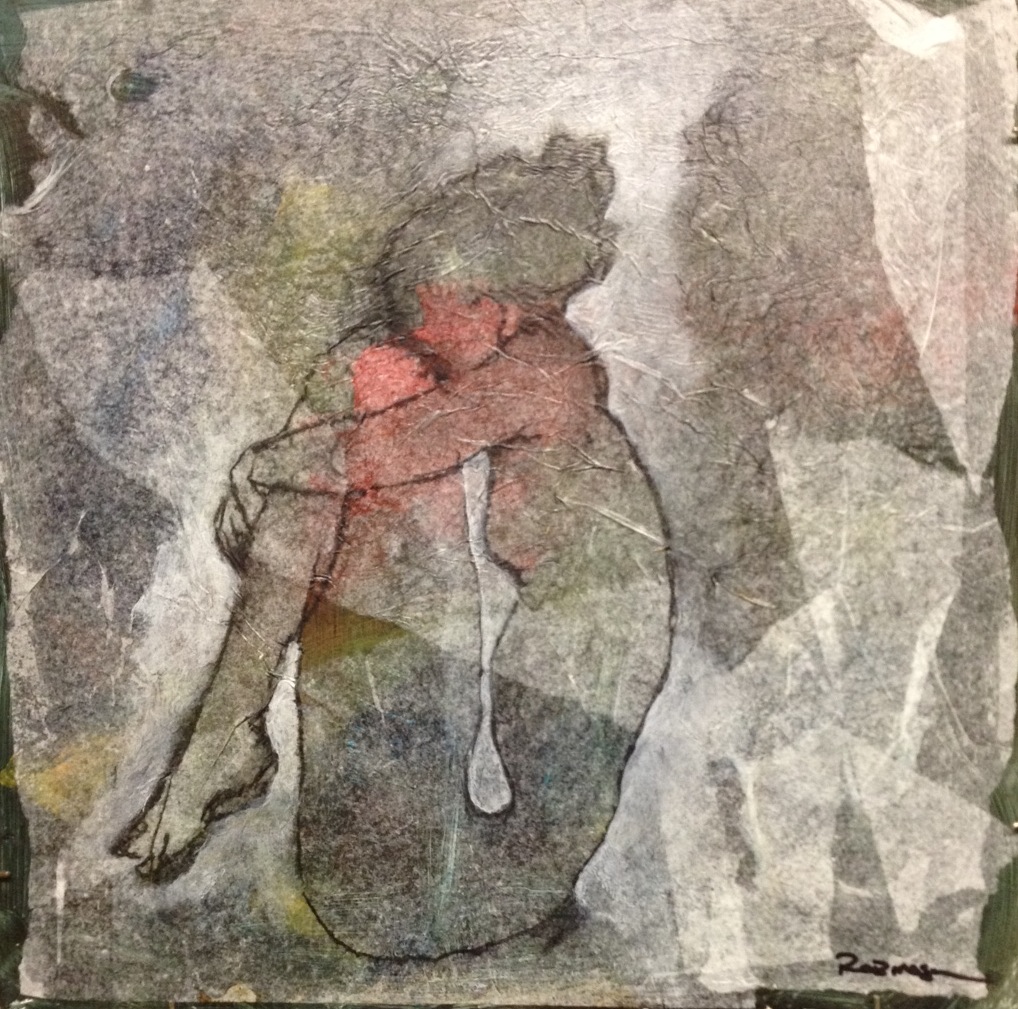
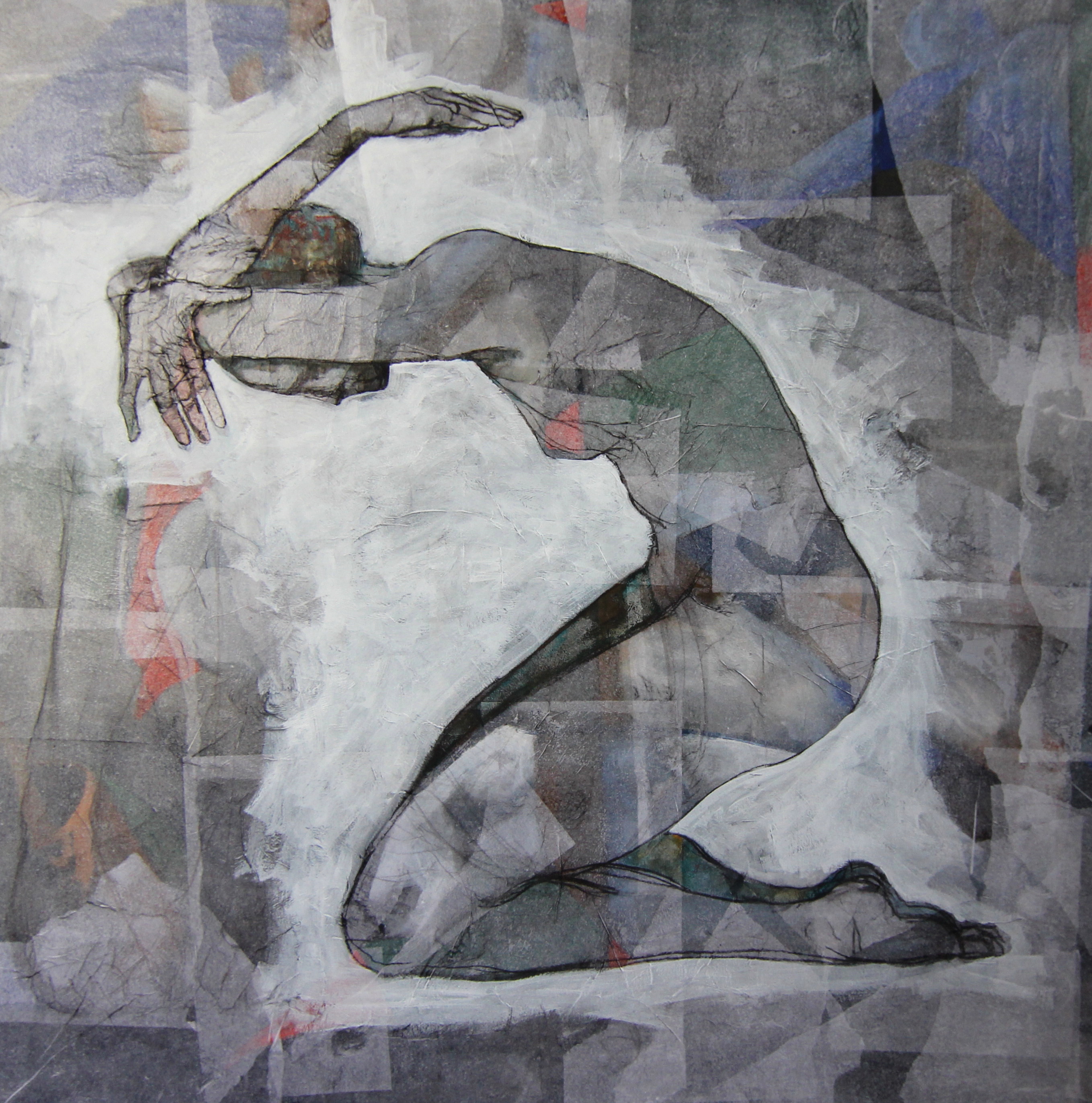
This is one of my first test paintings for the yoga series. It's small, maybe 10inches square.

This is one of my first test paintings for the yoga series. It’s small, maybe 10inches square.

I’ve spent much of the past week shooting and cropping photos of my paintings. I’m cataloguing. I’m gearing up to show again.

I took an extended hiatus from showing when I went on my walk-about. Actually, in the few years prior to walking about, I stopped showing except for open studio nights and the few opportunities that found me. I continued to paint. I drew a comic strip. I wrote a book. There was lots and lots of energy output but very little energy to calling attention to my work.

The process of shooting the photographs has been a process of rediscovery: I painted paintings and stored them. More than once, now, I’ve unrolled a canvas and exclaimed, “Ah! I forgot all about you!” It’s a paradox: it’s as if I stumbled upon the work stash of some long ago artist; each roll holds a surprise. Each roll also holds a homecoming.

Early sample from the Yoga series. 18" x 24"

Early sample from the Yoga series. 18″ x 24″

Because I’ve been painting but not showing, I’ve inadvertently created an opportunity! I have an intact series: my yoga paintings. This series is a great gift because I can track my growth, I can trace the development of a technique and a visual stream of consciousness. I can see the seed. I can see the the seed cracking open, the green tendrils that grew from the seed. I can see the blossom. And, there is more to come that remains yet unknown.

When I started the series I had no idea that I was actually starting a series. At the time I was bored with my work. A friend, an acupuncturist, asked me to create some paintings for his office. Bodies in motion. I was messing around with different surfaces so I took the opportunity to play. I thought few people would see the paintings so there was no pressure to produce. I actually practiced what I preach: I played. I loved the mess. The point was the process and not the product. No single painting was an end in itself. There was no thought to being good or investing in any of the games that make art a labored mental exercise. It was fun. It was a discovery path.

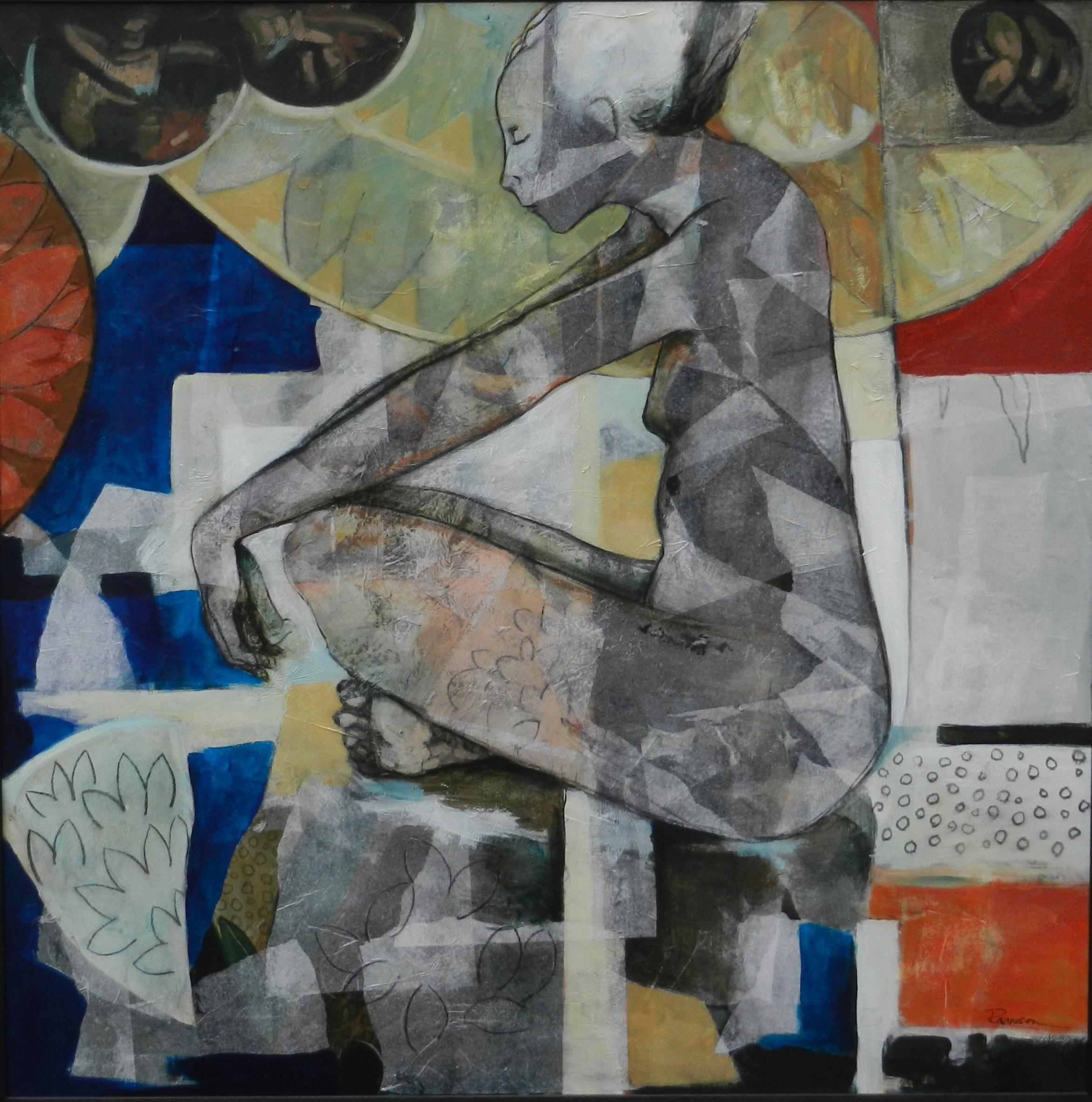
The Yoga series all grown up. This piece is  4' x 4'

The Yoga series all grown up. This piece is
4′ x 4′

It continues to be fun. It continues to be a path of discovery. The pieces are becoming more complex; the figures at first were suspended in space. Now, they exist in environments. The pieces started small. Now, they are quite large (and getting bigger).

I’ve been writing these past few weeks about the question “How?” I realized yesterday, as I shot the latest painting in the series, that over the past few years I’ve often asked myself, “How am I going to paint that?” The answer has always been a rich and vital, “I don’t have the vaguest idea! Let’s find out.”

The latest in the series. This piece is almost 5ft x 5ft

The latest in the series. This piece is almost
5ft x 5ft

Peter Block wrote a great little book entitled, The Answer To How is Yes. As it turns out, these paintings are my visual record of how I said and continue to say Yes to How.

Go here for art prints of my yoga series. The newest pieces will be available soon!


title_pageGo here for my latest book

Let Yourself Go

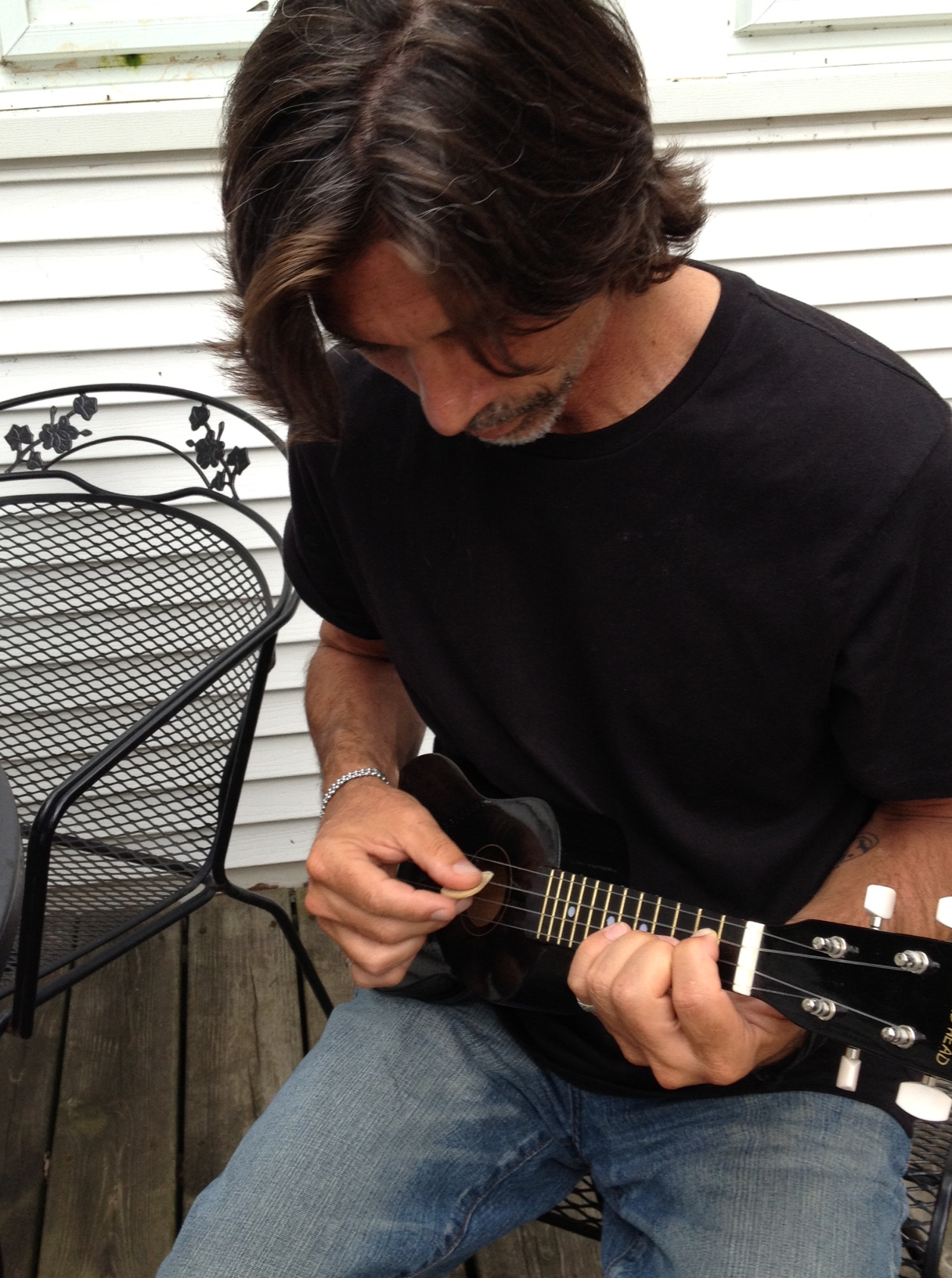
I have no idea how, but I'm making a mess of sound and will one day play the ukulele.

I have no idea how, but I’m making a mess of sound and will one day play the ukulele. Kerri says that I already am…

My meditation on the word “how” continues.

At our recent Summit in Holland, Alan and I asked the question, “What would you do if you didn’t have to know how?” It is a great question. The short answer is this: you’d figure it out. You’d try things. And if your first attempts led nowhere you’d try something else.

In this musing I have often written that “how” is something that is known at the end of the journey. We can’t answer “how” with any honesty until the story is played. Today I recognize that there are two distinctly different “hows:” 1) the explanation, “This is how I did it. This is how you do it. This is the “how” that presumes a path or a prescription. When dealing with this version of “how” I ask groups or clients to consider their life story and tell me how they got to this day in this place doing this job, etc.. The answer is mostly, “A clear path with a lot of happy accidents,” or something like, “I have no idea. I didn’t try.” Yes. Ask me how to paint a painting and I will tell you that I have no idea. I’ve painted a thousand of them and I can teach color theory or composition but I cannot tell you how to open to the muse, how to become a channel for something greater to come through. To paint a painting, to act in the play, to write the book, there is something akin to letting go. There is a divine surrender. So, how did you get to this place in your life? Divine surrender. Happy accident. Unstoppable forces.

If the first form of “how” is an explanation, the second is akin to giving permission. I have worked with a legion of blocked artists who set up studios, buy musical instruments, sign up for improv class,…, and then sit in their studio, stare at their musical instrument, and forget to go to class. When they call me, they tell me their story and always finish the telling with, “I don’t know how….” For my fee, I could say a single, simple word: start. Instead, what we usually do in our work together is find their internal permission. When they realize that their block has nothing to do with “how” and everything to do with the fear of being judged (“how” is an internal braking system meant to prevent starting), when they are ready to, as Saul would say, “Orient to their own concern,” they allow that their opinion of their work trumps all others, they give themselves permission. They start. They play.

Recently, a brilliant woman, an attendee of the Summit, a maker of incredible mandalas, sent me an email with a photo of the start of a painting. She asked for my advice. I wrote: make a mess. Paint on top of the mess. Then repeat. Today in my inbox I received her beautiful mess with a note that their would be more messes to follow. She started. She picked up a brush. She splashed some paint. She splashed some more paint in response to her first splashes. That is how art is made. That is how light bulbs were invented.

This morning I laughed when I realized the double definition of the phrase, “Let yourself go.” In common parlance, it is used as a negative, when people give up, when they stop trying to maintain their health or their appearance, “He really let himself go.” The second possible meaning is to start. To go. The next time someone is sitting in their studio and asks me the question “how,” I will respond like this: let yourself go.

Go here for my latest book. title_page

Yoga Series 7Go here for fine art prints of my yoga series (and more).

Pick Up Your Ordinary

From Kerri and my travels: a photo essay about what our feet have seen

From Kerri and my travels: a photo essay about what our feet have seen

I continue to process all of the amazing events and experiences from the past few weeks working abroad. They have jiggled loose an old thought-bubble and I’ve been pondering it since it bobbed to the surface.

The old thought-bubble is a tenet that comes from improvisational theatre: put down your clever and pick up your ordinary. I’ve used this tenet in any number of facilitations and coaching relationships. The basic idea is this: any attempt at being clever actually diminishes personal power and inhibits the capacity to be present. Trying to be clever focuses the eye inside and robs a performer or presenter of the only thing that really matters: relationship in the moment.

Dig a bit deeper and the real wealth of the tenet shows itself. We rarely recognize our true gift because we think everyone possesses it. We miss our unique gift because we think it’s ordinary. We mistake our gift for something common and therefore not of great value. In truth, what we brand as ordinary (how we see the world) is our most unique, most potent and powerful gift. So, to put down your clever and pick up your ordinary is to value your unique point of view. It is to honor yourself and how you see the world and also affords you the capacity to be seen as you are, not as you think you need to be seen. To pick up your ordinary is to become accessible.

Trying to be clever is actually an attempt at trying to be something we are not – or someone we are not. It is to hide, put on a mask, or pretend.

Ordinary reveals; clever obscures. Ordinary facilitates flow. Clever needs to control. Attempts at being clever are manufactured moments. Experts need to be clever, they need to whip up a straw man and call it substance. Clever is always an ego need – in fact, clever is nothing more than a plea for approval. It is a thirst for adulation. Clever needs center stage. Ordinary shares the stage. Clever needs to claim territory. Ordinary expands horizons. Ordinary is accessible. Clever is protected, aloof, and closed.

All of this is old news. It was in the old thought-bubble. Just behind it came a few new little trailer bubbles. Clever is oriented on what it gets (adoration, attention, acclamation). Ordinary is oriented according to what it brings: a unique point of view in service to a relationship. Ordinary is a form of potlatch: give what you have; give away your wealth as the road to increase. Clever comes from a universe of lack. Ordinary comes from an abundant life. It is a paradox. Unique is found in the ordinary. New vision comes when we cease trying to say something new and simply offer our unique, one-of-a-kind perspective. The beauty is in what we see.

title_pageGo here to get my latest book, The Seer: The Mind of the Entrepreneur, Artist, Visionary, Seeker, Learner, Leader, Creator…You.

Or, go here for hard copies and Kindle.

Give Time.

Here's a watercolor study for a larger painting that has yet to happen.

Here’s a watercolor study for a larger painting that has yet to happen.

She said, “I can’t do it because it takes too much time.” I didn’t respond. I didn’t validate her inability to do what she said she desired to do. I waited. “There’s only so much time in a day!” she exclaimed.

“That true. That will always be true,” I responded. I didn’t say it but I’ve noticed that it is usually the things we say that we desire to do that get short shrift. Spaciousness takes time. So does relationship. So does physical health, mental health and a spiritual practice. It all takes time. I’ve coached a legion of people who’ve set up art spaces in their homes and then avoided them like the plague. Their excuse for establishing the physical location but fleeing from what they might do in it: it takes too much time.

She was silent and I could tell that she was caught in her web of justifications. She was swirling in a reasoning-eddy called, “I have no choice.”

“Listen to the language you use,” I said, seeing her distress. She wrinkled her brow.

“Everything takes your time. It’s like life is a pickpocket stealing your precious time and you never have enough. You are divided against yourself. Who decides where your time goes if not you? You lack because you pretend that you have no control over your time. Choose to do it or choose not to do it. It’s in your language.”

She was quiet for a moment and then said, “It seems too easy to just change the way I talk about things.”

I smiled. “I know but imagine who you might be if, instead of life taking all your time, you started talking about where you choose to give your time. If life takes your time, then you are a victim. If you own where you give your time, then you are a creator. The actions of your day might look the same but who you are within them will be radically different. A whole world of possibilities would become visible if you realized that no one else is in control of your time. Where do you choose to give your time?”

Go here to get my latest book, The Seer: The Mind of the Entrepreneur, Artist, Visionary, title_pageSeeker, Learner, Leader, Creator…You.

Or, go here for hard copies and Kindle.


Give Yourself Some Advice (3)

A younger version of myself rehearsing for The Creatures of Prometheus. The tats are fake!

A younger version of me rehearsing for The Creatures of Prometheus with The Portland Chamber Orchestra. The tattoos are fake!

[continued from GIVE YOURSELF SOME ADVICE (2)]

Here’s the third and final section of Horatio’s Advice To Myself. He sent it to me in an email last week. Horatio is one of my dear companions in art and artistry and I was so moved by his words that I asked him if I might post his thoughts. Were I still teaching young artists, this would be required reading:

Do not make work that attempts to control others. That is only advertising or propaganda and sustains no one. Make work that connects to others. That is sustaining. 

Do not make work that exalts yourself alone. That separates you from others.

Walking is good for you. Eating and sleeping are good for you. Loving is good for you. All those things sustain and heal you. Make your work like those other things. That kind of work is good for you, and for everyone.

Bragging is not good for you, or for anyone.

Never work in order to be famous or get rich. Never confuse your work with either one of those false goals, even though either or both may come your way.

Fame and riches are burdens and require a whole set of tools and abilities not at all related to the work that may have brought you fame and riches. No one but a very small minority of the rich and famous and a few visionary souls who are not rich or famous understand this. It may be the greatest false idol of human self-fulfillment of all time.

Time is the only asset that really matters. Value and prioritize it. You also need enough food and shelter, which usually means money. But enough is enough. That’s all that matters.

Having enough money for food and shelter is a necessity of doing good work. You have no choice but to figure something out. There are many paths. 

You will make bad choices. Learn from them. Forgive yourself so you can make other choices. Keep pursuing the real work.

You will waste effort and time. You will do work you don’t like. Everyone does. Try again.

All good work contains a discovery, something necessary for human life, even if it’s only that you need to drink water. 

All good work shows how we are all human, both you and your audience, that you connect, that you are the same.

All good work shows that it matters that we are all the same.

[to learn more about Horatio’s films or to read the complete Advice, visit www.Fidalgofilms.com]

Go here to get my latest book, The Seer: The Mind of the Entrepreneur, Artist, Visionary, title_pageSeeker, Learner, Leader, Creator…You.

Go here for hard copies.