Play For The Light

Photo by Wes Morrissey. See more at rocknfish.com

Photo by Wes Morrissey. See more at rocknfish.com

I’m hanging out listening to the handbell choir practice. I meant to bring my ipad so I could write while hanging out but I forgot it so I had to go old school and find a pen and some paper. The pen was easy but the only paper I could find was the back of an old church bulletin. I opened the bulletin and found the language for the communion celebration, “…he took bread, gave thanks, and broke it saying, ‘Take this and eat. This is my body, given for you….”

In reading the words I was thrown back in time (a meditative handbell soundtrack is very useful when being cast backwards in time). Many years ago, just after I moved to Seattle, the Makah tribe attempted to revive their traditional whale hunt. The entirety of their traditional ritual life stems from the hunt – the whale is their central god much as the buffalo is central to the worship of the plains tribes. In the early 20th century the Makah voluntarily suspended the hunt because European whaling techniques had devastated the whale population. Consequently, with no central ritual, their community fell into disarray. The revival of the hunt brought intense opposition and a media circus of epic proportions.

At the time, I was taking a masters degree in systems theory with a focus on Cultural Mythology and Transformational Art and, so, was enrapt by the collision of cultural perspectives. Through one lens, the hunt was an unnecessary slaughter of a whale. Through another lens it was a communion meal; the hunter is deemed worthy and chosen by the god (the whale), the god gives his life to nourish the people (spiritually and literally), and the people, in turn, perform the rituals of rebirth that bring the god back to life. It is a cycle of death and rebirth, the god nourishing the people and the people revivifying the god through their rituals and attention to life.

The central word is “communion;” to commune with the divine – regardless of faith tradition. And, in the end of the day, when the shopping is all done, isn’t that what this season is about? Does it matter how we mark the return of the light, the winter solstice, the return of the god to eventually bring life to a barren winter landscape (I’m writing metaphorically, too), the fulfillment of a prophecy, as long as we truly experience communion with something bigger than ourselves? It is an awesome responsibility to revivify the god – especially when the return depends upon how we live our lives and perform our rituals.

The handbell choir is working extra hard. Although they play each month, this preparation is for something special. They play with a sense of stress and excitement and desire a perfection that they usually do not entertain. This performance matters more than the others because they know, just like this time last year, they are playing for the return of the light.

title_pageGo here to buy hard copies (and Kindle) of my latest book: The Seer: The Mind of the Entrepreneur, Artist, Visionary, Innovator, Seeker, Learner, Leader, Creator,…You.

Or, try Leanpub for all forms of digital copies.
 

Yoga.ForwardFoldAnd, for fine art prints of my paintings, go here.

Move Your Words

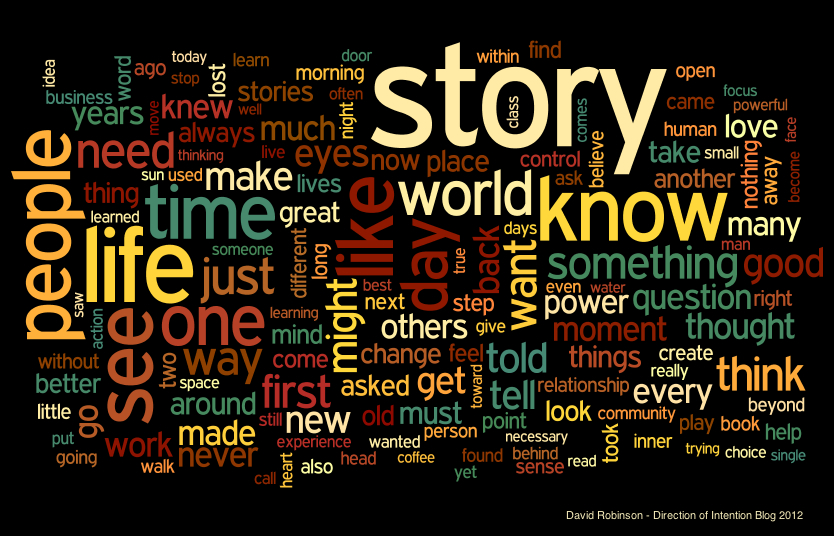
My friend, Mark, made this Wordle of my blog

My friend, Mark, made this Wordle of my blog

I am working with words again today but in another aspect entirely. Now that The Lost Boy has the minimum funding necessary for a production I am working on the play in earnest. Tripper Dog-Dog-Dog cocks his head and wrinkles his brow in wonderment as I talk to myself or dance the words. Sometimes he confuses my work method as an invitation to play and he leaps, catching the cuff of my shirt and pulls me to the ground. “Not now!” I cry out as Dog-Dog stretches my sleeve so that it might fit a giant (a side note: Dog-Dog has altered all of my shirts – he regularly mistakes my work for play. If I do not roll them, my shirt sleeves look as if I am small child wearing an adult extra-large).

I am a kinesthetic learner and realized years ago that working on a script was easier and more productive if I moved or danced the words as I worked with them. To borrow a phrase from a lost friend, my years at school were “fresh hell” because sitting in a desk was painful, it hampered my learning. If I want to have an insight or gain an understanding of something, the best thing for me to do is take a walk. If I move it, I can break down a script in no time. I can memorize anything if I can physicalize the intentions. For me, language, word use, and sense-making are a physical affair.

It is a physical affair for everyone. Try to speak without breathing (an impossibility); breath is movement. Speech is physical. For a real laugh, try to communicate without gesturing. Limit your movements and you will inhibit your capacity to communicate. For more fun, Google the latest statistic about how much of our communication is really non-verbal (we primarily read body language; listening to what is being said is a distant second). The deep mastery of a storyteller is found, not in the words, but the punctuation of a moment: the turn of the head, the intake of breath, the smallest of gesture, the connection made through the eyes; the fire of imagination is fanned when the storyteller, no matter how subtle, dances the story.

Last night I was reminded again of the power of language – the real kinesthetic of it. B is disturbed by the violence and darkness she sees in the world and asked, “How do we push back on it.” I challenged her verb. When we choose our language we also choose a “metaphor path”. Language choices come with images and images are not passive. They define what we see. They define the available options. They are a root for movement. To push back is a verb of resistance. It is counter force, a choice of aggression. “Why push against what you don’t want?” I asked. “Why not put your energy, effort, and imagination into creating what you actually want?”

To push. To create. Which verb will move you?

title_pageGo here to buy hard copies (and Kindle) of my latest book: The Seer: The Mind of the Entrepreneur, Artist, Visionary, Innovator, Seeker, Learner, Leader, Creator,…You.

The PoetFor fine art prints of my paintings, go here.

Follow The Thread

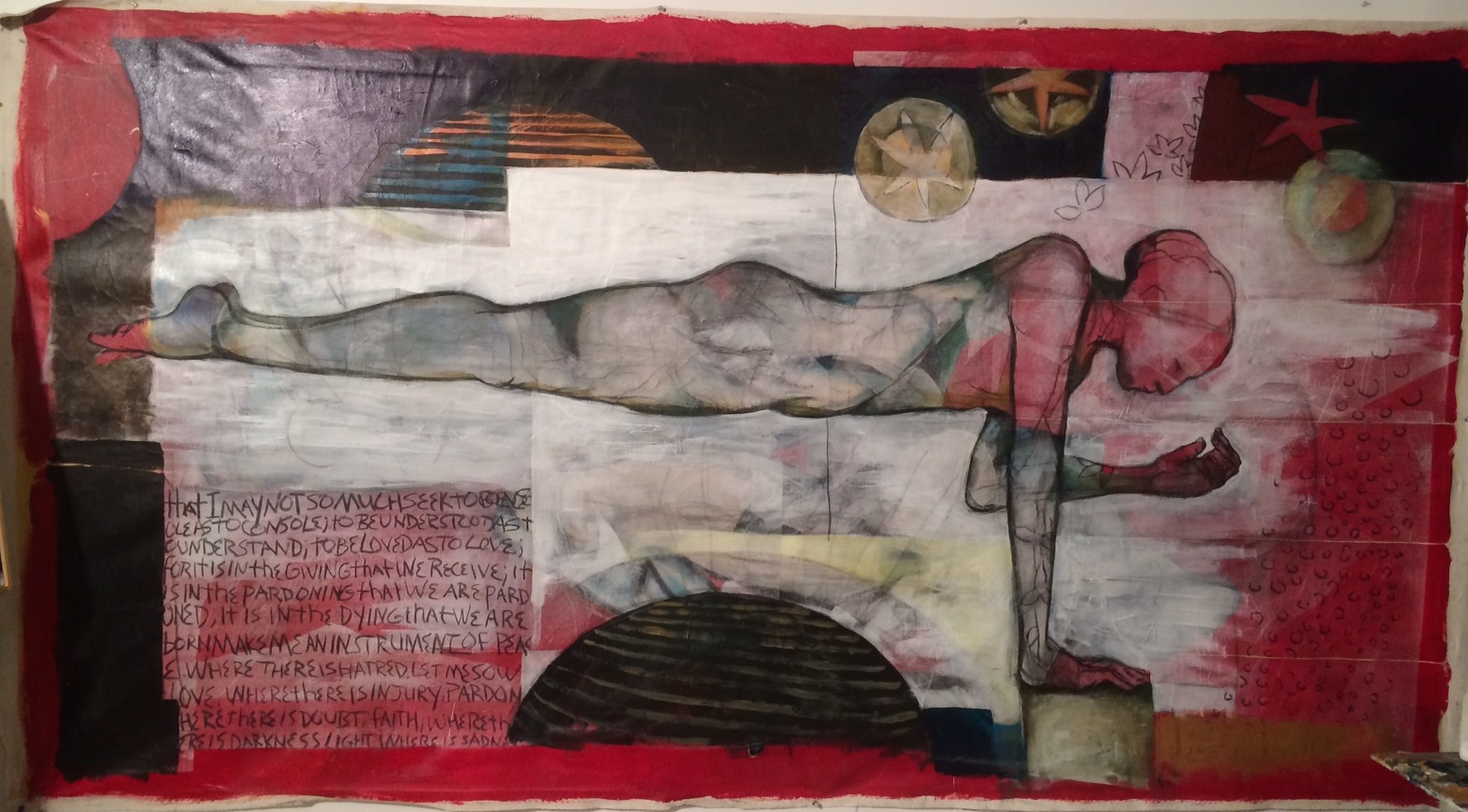
My work in progress.

My work in progress.

I spent the morning in the studio fanning the flame of a painting I started weeks ago. It’s hard for me to leave a painting once I start it. Once started, there is a thread that I must follow through the maze of developing imagery that will eventually bring me to completion. If I drop the thread, I lose my way. When I find myself thinking too much I know I’ve lost the thread and it is best to do nothing. It is best to sit in the maze and be lost. Moving from the intellect alone will always create mud or worse, it will kill the painting. The thread, to be useful, is intuitive, a guide of feeling. I’ve learned that sitting still is a necessary and useful skill.

To return to the painting requires finding a wholly new thread. It requires sitting with the existing image until the new thread appears. Sometimes the new thread presents itself when I stare at the painting. Sometimes the new thread jumps me in an alley or while having coffee with a friend. That’s what happened with this painting.

The new thread mugged me. I was miles from the studio and heard someone recite a portion of The Prayer of Saint Francis; the painting was suddenly smacking my inner eye. I knew exactly what I needed to do. It felt right. It felt vital. It would not leave me alone – and that’s how I know I’ve found the thread again. The prayer wanted to be in the painting. This thread would not lead to the same outcome. This thread would lead to a completely different painting.

More and more, words are showing up in my paintings. As I walk deeper into specific symbolism, I’m discovering the word as image. Using words as design elements, shaping a word as I shape a drawing, letters as visual symbol (they are symbols referential to sound). These words that do so much to shape our perception and either put locks on our experiences or set us free – they are calling to me as pure visual forms. Letters are simple lines and shapes sequenced and given meaning as words. Just so, words are lovely shapes sequenced and given meaning as sentences. The meaning is not carried in the words (the symbols) but in the reader. The shapes are visual statements before they are infused with symbolic meaning. Open a book written in a language that you do not read and you’ll see what I mean. You can’t make meaning of the symbols but you can appreciate the visual – in fact, once your brain ceases attempting to assign meaning to the symbols you can actually see the pure form (this is a good rule of thumb for cultivating presence, too).

Here’s the prayer in its symbol form for you to interpret and an image of how it currently exists in the painting:

Lord, make me an instrument of Your peace. Where there is hatred, let me sow love; where there is injury, pardon; where there is doubt, faith; where there is despair, hope; where there is darkness, light; where there is sadness, joy.

A detail of the prayer.

A detail of the prayer.

O’ Divine Master, grant that I may not so much seek to be consoled as to console; to be understood as to understand; to be loved as to love. For it is in giving that we receive; it is in pardoning that we are pardoned; it is in dying that we are born again to eternal life.


title_pageGo here to buy hard copies (and Kindle) of my latest book: The Seer: The Mind of the Entrepreneur, Artist, Visionary, Innovator, Seeker, Learner, Leader, Creator,…You.


Laugh For Warmth

'The Wind' by David Robinson

‘The Wind’ by David Robinson

Someone threw a switch and it’s winter. There was no gentle drop in temperature, no ease into the cold. Monday was balmy. Tuesday was bitter. Today, the pond is frozen and I am watching the front edge of the snowy season dip its toes into the world. Last night we cut short our usual walk; we were shy a few layers of clothing and feeling was leaving all fingers and toes. We laughed for warmth and walked faster.

Life changes fast. We are reminded of that when tragedy strikes. When death comes to the too young or the fire consumes the neighbor’s house and all their treasures, we say, “Remember how precious this life is! Remember to be more grateful for what we have!”

Sometimes that seems to be the single salient point of tragedy: to make the rest of us stop, remember and appreciate what has real value. And, the moment of appreciation, like all moments, is passing. We get caught again in the dull pull of routine and stop seeing the miracle.

I just entered an art competition (note: isn’t it strange that “art” and “competition” can exist in the same sentence?); the theme is peace (note: isn’t it strange that the theme of a competition could be peace?). In my artist statement I wrote that peace is a practice, not an outcome. It is something people bring to the table, not something negotiated at the table. Conflict is at the core of every story and, therefore, is the engine of movement in every story. That is also true in every life story. We tell stories of enmity and we tell stories of amends and, if we are paying attention, we realize that both are a single story told from a different point of view. The story we tell, like peace, is something we bring to the table, not something we find there.

Flip the switch, stand in the others’ shoes, laugh for warmth and walk faster or simply slow down and feel the cold. Life not only changes fast, it passes fast, too. It seems impossible that I moved here a year ago. It seems like last week. Today, looking out the window as big snowflakes float to the ground, watching the Dog-Dog chase them with great delight and snap them out of the sky, I made a conscious decision to see the miracle and forgo the necessity of a thump to wake me from dullness. This winter is like no other.

title_pageGo here to buy hard copies (and Kindle) of my latest book: The Seer: The Mind of the Entrepreneur, Artist, Visionary, Innovator, Seeker, Learner, Leader, Creator,…You.

Mix Better Color

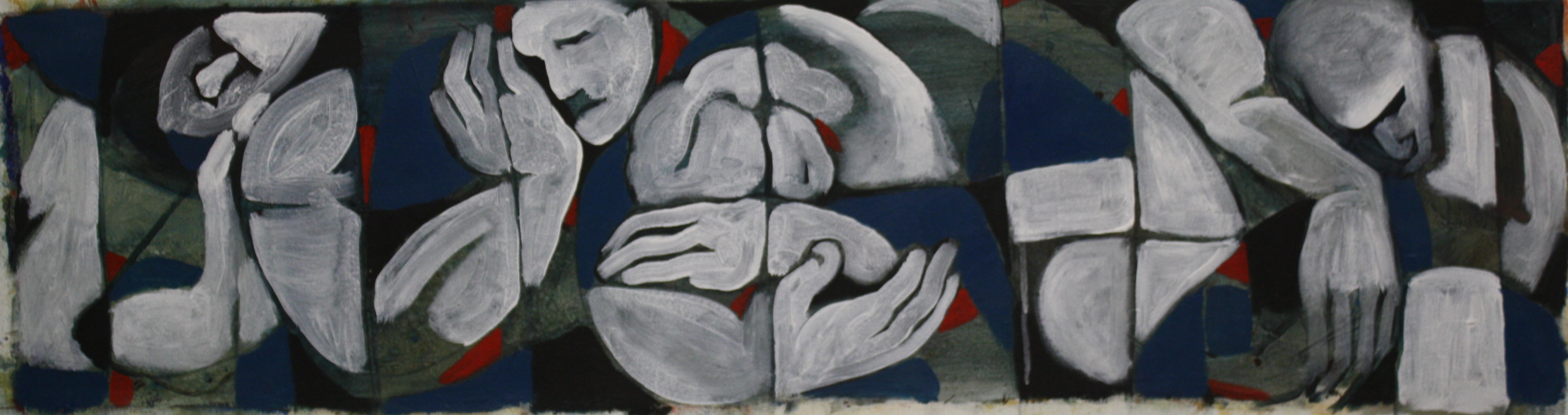
A painting from another time - and also from as as-yet-unfinished exloration

A painting called ‘Sleepers’  from another time – and also from as as-yet-unfinished exploration

The lake was angry. Because it is the fifth largest lake in the world, it packs a punch when enraged. The local news reported that the waves were 14ft high. The force of the waves smacking the shore hurled huge stones from the wall constructed on the banks to protect the land. Although it is an easy walk from our house, the wind was so powerful and cold that we drove the few blocks to see it.

There are days that the lake is glassy smooth and quiet with barely a noticeable ripple. This day the lake was muddy brown and dangerous. Parts of the bank collapsed. A tree close to the shore was consumed. Many years ago I was in a small boat protected by the islands from the force of the ocean’s wrath; for a few moments we had to round a point, exposed to the fury, to get into a bay. The captain pointed the boat directly into waves that towered over us. I’ve rarely felt like such a bug on the arm of an angry world. Had it decided to, the ocean would have smashed us with little or no notice. The lake was like that this day. I was grateful to be on shore. Sometimes awe for the power of nature requires a respectful distance.

Sometimes appreciating the fullness of life also requires a respectful distance. I recently took Bill and Linda down stairs into my current studio. They are elders and I have enormous respect for them. They’d asked to see my paintings. We spent several moments looking at my current work and then began stepping backwards in time. My paintings ring like songs from the past; each represents a specific era of my life and is capable of sparking intense remembering. It was fun to pull pieces for them, answer questions (or not answer them), and to open the doors of time. Like the lake, the doors were varied and unpredictable: some of the doors flooded me with peace, other doors overwhelmed me with grief, and still others brought intense joy. I loved it all because with time, with distance, life ceases to be about good times and bad times, hard times or ease, it’s all one long rich varied walk, all necessary and useful like color on a palette. Some of it goes to mud and that is the only way to learn to mix better color. Just as every forest fire causes renewal and every storm heaves stones and creates a new shoreline, sometimes distance and respect for this powerful messy life reveals the face of continual renewal and necessitates vast, quiet awe.

title_pageGo here to buy hard copies (and Kindle) of my latest book: The Seer: The Mind of the Entrepreneur, Artist, Visionary, Innovator, Seeker, Learner, Leader, Creator,…You.


Expose The Value

photo-3We debated our costumes for Brad and Jen’s Halloween extravaganza for months prior to the party. The letter for this year’s costume theme was “T” (with extra credit for using a “Q”). During the long hours of our summer road trips, our conversation sounded something like this:

“We could be Trollops.”

“Trollop is good. We could be Tin men.”

“I like that. What about Tootsie Pops!”

“Someone will come as a Tootsie Pop. How about Tramps.”

“No. I did that when I was twelve. What about tsunami! We could be a tsunami!”

And on and on we’d go. We finally settled on this bit of whimsy: Too-many-ideas & Too-many-questions. Kerri was going to be Too-many-ideas and I was intended to be Too-many-questions – but we changed our minds in the final hours.

At the party you might have asked, as many people asked us, “What is a Tarving Artist?” We wore paint-spattered clothes and artist aprons filled with paint and brushes. On the aprons we wrote: Dying Of Exposure. Between us we carried a donation bucket with a sign that read: Our “S” was repossessed. Please help us buy it back.

In the week prior to the party, Kerri was asked to play for an event. Every artist in the nation is used to hearing the words she hears weekly: “We have no money to pay you but it will be great exposure for you.” She is a consummate, career musician with 15 albums, (going on 16) and needs no help with her exposure. I loved her response: “Let me call my accountant and ask if she accepts exposure for payment.” Her latest encounter with empty exposure started a long hysterical conversation and note-comparison session of all the amazing ways people have asked us to work for anything and everything but money (Yes, it is true. When artists make art they are working as surely as a plumber who plumbs or a doctor who diagnoses. When was the last time you asked your dentist to work for exposure?).

The common mistake at the center of every work-for-exposure offer: it will be good for the artist. It’s never good for the artist. For two reasons it’s a notion that is good for everyone but the artist. First, no artist wants the kind of exposure that reinforces that their work is without real value. Second, no creative artist wants to be defined as a player of background music or drawer of dog portraits (unless, of course, their dream in life is to draw dog portraits). The act of drawing or playing a musical instrument is not what defines the artist or their art. It is a mistake to assume that because I can draw and paint that the act of drawing and painting is what constitutes the art. A carpenter uses a hammer but the hammer does not define their work. It is a tool. The keyboard, the paint and brushes are tools.

People who pay artists with exposure see the tool but not the artist. That is why Kerri and I opted to change our costume. Certainly dressing as a Tarving Artist was a statement but more than that, we realized that only a starving artist would agree to play for exposure; only a starving artist would agree to hammer incessantly to get the attention of people who can’t see them to begin with. It’s never good for the artist and is always a costume or role they assume for the empty promise of exposure. The cost for the artist is always greater than the exposure and at the end of the day, after trading a bit of their integrity, they still aren’t able to pay the bills.

title_pageGo here to buy hard copies (and Kindle) of my latest book: The Seer: The Mind of the Entrepreneur, Artist, Visionary, Innovator, Seeker, Learner, Leader, Creator,…You.

Yoga.ForwardFoldGo here for fine art prints of my paintings


Be The Detail

I took photo and used this image in The Seer.

I took photo and used this image in The Seer.

When I shared the early chapters of The Seer with friends, their feedback was universal: I was trying to say too much. They asked me to break it down into smaller bites. At first I resisted because I couldn’t see the path to smaller bites! In time I was able to step back and see what they were telling me. All of the necessary connective tissue was in my mind; I was filling in the thought-gaps. My wise-eyed readers had no access to my mental filler and saw a story riddled with gaps.

It was a valuable lesson for me. What I see is never what others see. Even when we share an experience, it is false to suppose that we had the same experience. We share. That is a much different thing than assuming sameness. When I think I am being clear, when I think that my point of view is right, I remember the gaps. I am projecting content and context filler onto every experience and so are all the other people in the room.

Perception is at best a moving target. This simple principle is what makes art so necessary and science so exciting. Newton thought he was dealing in absolutes. He was describing a universe based on uncontestable fixed principles. And then came Einstein. We see from and through a context that we like to call “truth” but, it is at best relative. Is it a particle or a wave? Well, it depends…

I used to facilitate an exercise called Mask Mingle. It is a powerful way to open eyes and hearts to the grace that we grant ourselves but rarely grant to others: specificity of story. We cannot walk through our days without carrying the specificity of our experiences and the rolling, roiling interpretations and re-interpretations of those experiences that we call ‘memory.’ No one can see what we’ve done and where we’ve been. No one sees the joy, the hurt, the dreams, the losses, the fears, the perseverance. They cannot see the detail. The best they can do is interpret us through their lens. We will always be a generality in the eyes of others.

I find that central to much of what I write about and coach about is the surrender of what other people might think. It is a fallacy to think that you can determine what others think of you. You will never see through their eyes. You will never know their lens. It is a powerful moment when an artist (or anyone) realizes that they have no control over the perception of others. The best they can do is offer their gift from their unique, unknowable, rich, point of view. That moment is called artistic freedom.

title_pageGo here to buy hard copies (and Kindle) of my latest book: The Seer: The Mind of the Entrepreneur, Artist, Visionary, Innovator, Seeker, Learner, Leader, Creator,…You.


Determine The Value

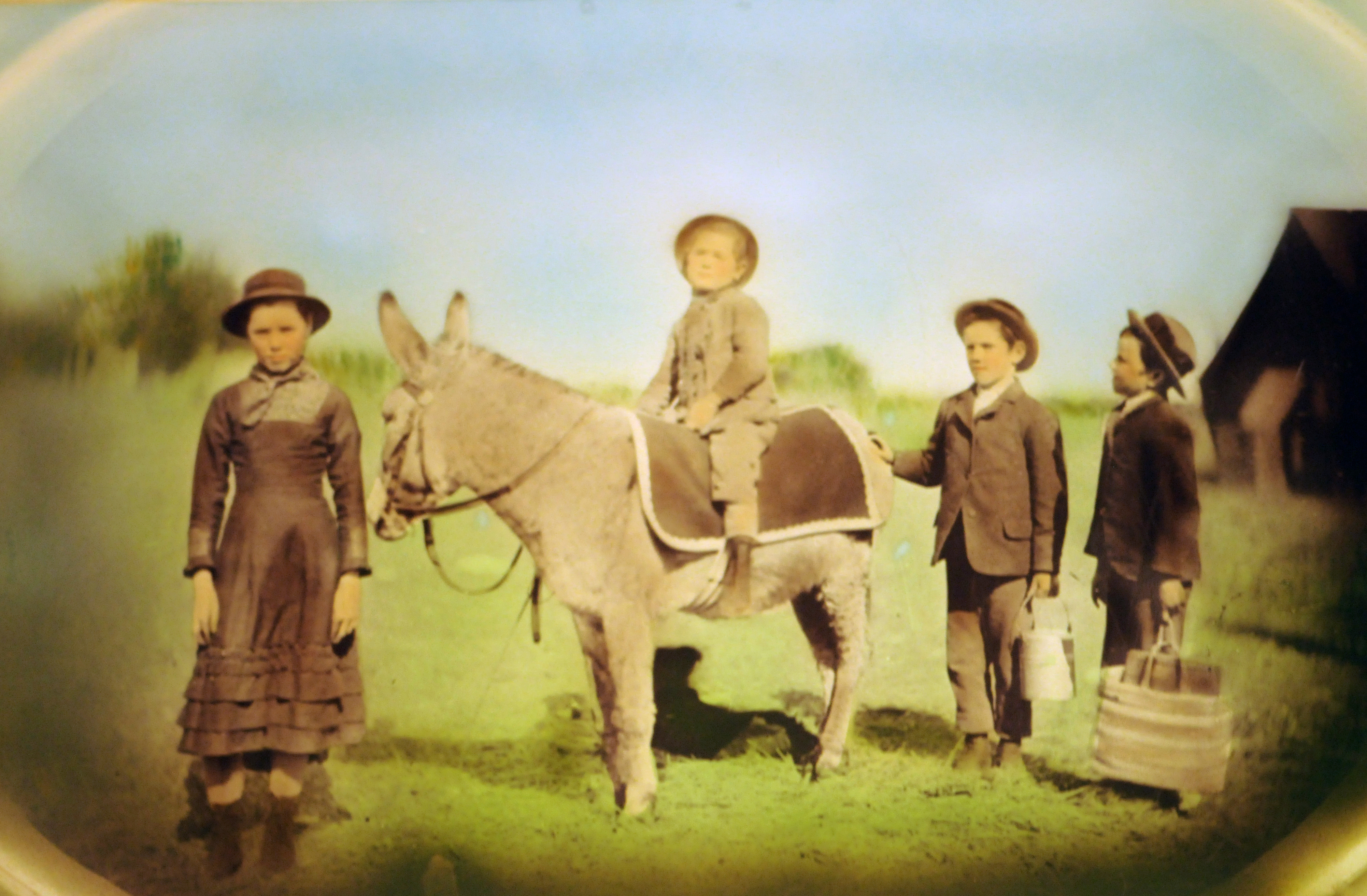
The Lost Boy (one of many) sitting on a mule.

The Lost Boy (one of many) sitting on a mule.

Last year Skip taught me that crowd sourcing sites like Kickstarter or Indiegogo were great ways to test the viability of a project or product. If an idea is valuable, people will invest in it. If not, not. If an idea is viable it will attract support.

As an artist I’ve had a wonky relationship with the valuation equation. Generally, the economics of art live outside the norms of the marketplace. For instance, I’ve run or consulted with many theatre companies; it is virtually impossible for the product of a theatre company – the live performance of a play – to pay for itself through ticket sales. Unlike other products, things like cars or bananas, arts organizations and the products they produce are made possible through grants, donations, patrons and this weird mechanism called “non-profit” status. The costs of producing the play (the art) usually outstrip the capacity of the “product” to generate a profit.

When I first met Skip he asked me a question for which I had no capacity to answer: “How can you scale up?” His question brought me to the concept confusion that lives at the very heart of the economics of art: bananas, cars, and iphones can be mass-produced. They are meant to be consumed on a grand scale. They are built to break down, to be replaced by the newest, latest, and greatest. The arts, to be living, to be vital, are rarely capable of mass consumption.

The arts serve personal (and, therefore, communal) transformation. They are not meant to break down, to be replaced by the new; they are meant to sustain, to renew from a deep irreplaceable wellspring. If the iphone, banana, or car is the fruit of the vine, the arts are the root system, that which brings nutrient to the fruit, that which holds the identity of the culture. Pluck the fruit and the vine will replace it. There will always be more. Pluck the root and you kill the plant. There is only one root. The fruit is meant for consuming. The root serves a different purpose.

Places of worship and education face the same value confusion. The sacred stuff, like art, is not consumable so how does a consumer culture determine its value? Learning is an ongoing personal process, an irreplaceable relationship with the world. Both education and worship, like a living art, are experiences rather than products. They are meant to be valued differently than a new countertop or a pair of shoes.

Some forms of art are capable, through the miracle of technology, of mass consumption: movies, music recordings, art posters and prints. Technology can do many things but it cannot replace presence. It allows us to see. It cannot replace touch. It allows us on a mass scale to see a reproduction of a painting by, let’s say, Van Gogh. We can appreciate the painting through the print. However, we cannot experience it. Nothing can replace direct experience, the personal moment of standing with the painting. A live performance is…live. It is alive, inclusive, and meant to transform through presence and participation in a shared moment. The economics of valuation confuse the greater valuation.

I am testing Skip’s notion with the viability of a project. I’ve launched a Kickstarter – my first – to fund a play. It is a heart project, personal to me and I think relevant to my community. Take a look. If it looks like it has value, you’ll know what to do.

Go here to check out my kickstarter for THE LOST BOYDSC_1196 copy


title_pageGo here to buy hard copies (and Kindle) of my latest book: The Seer: The Mind of the Entrepreneur, Artist, Visionary, Innovator, Seeker, Learner, Leader, Creator,…You.


Step Into Your Sanctuary

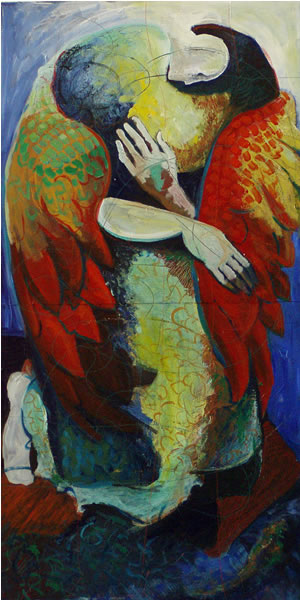
An oldie simply called ANGEL

An oldie simply called ANGEL

It is night and I am hanging out in the sanctuary while Kerri attends a meeting. I never in my life thought I’d hang out in a sanctuary but I quite like it. It is quiet and I am by myself. It is a good place to meditate or just get still. I am sitting with my stain glass window wondering if there is a conversation in the offing. I’ve spent many nights in my life sitting alone in dark empty theatres and always felt the same sense of peace that I feel at this moment.

I like the word “sanctuary.” It implies a safe place, a resting place. If all the world is my studio then it is also my aspiration to live as if all the world is my sanctuary. I’ve always understood my studio to be a holy place, a place of creation and presence. Going to my studio has always been a step into a safe space. It is where I rejuvenate. Tonight, sitting here, it occurs to me that “studio” and “sanctuary” are very similar words. They are very similar places just as “theatre” and “church” have, for me, been mostly interchangeable: where we go to affirm the stories that identify and transform us; where we go to find our community. My sister finds her community in a church. I have, until lately, found mine in the theatre.

This rambling path begs the question, “What is sacred and what is not?” Yesterday Diane told me that she is a spiritual teacher and I believe that is true. This morning while walking I remembered her words and wondered if we are all spiritual teachers to each other. Some of my greatest teachers had no idea that they were teaching me.They had no intention of teaching me. One great teacher was sweeping a floor and had no idea that I was watching him. He was one of the happiest people I have ever seen. He was shining. He was doing a job that most people would deplore. Everyone who saw him smiled, myself included. He was not his job. He was not his body. He was…connected and alive in his moment. He was living in his sanctuary and helped me know that all the world can be a holy place. He helped crack my understanding of what is possible.

These lines we draw between the sacred and profane are mostly imagined. They are convenient and sometimes useful but they are illusions that I am beginning to understand as destructive. Us and them. A divided house begins in a belief of divisions – a need for division. I’ve often told the story of the executive, red in the face, pounding the table with his fist, shouting, “I know how to compartmentalize my reason from my emotions!” I remember thinking, why would any one want to cut off their emotions from their reason? A better question might have been, who, in their right mind, willingly cleaves themselves into pieces? What delusion is necessary to entertain the notion that reason and emotions are distinct and separate? Separations are generally an indication of not-right-mindedness and a dedication to controlling the uncontrollable.

The angry executive was also a great spiritual teacher for me, too. He taught me to check my assumptions and step over the lines of false distinction that I draw. I can connect the dots directly from his table pounding exclamation to my desire to define my studio as all the world; to live consciously in my sanctuary all of my days.

title_pageGo here to buy hard copies (and Kindle) of my latest book: The Seer: The Mind of the Entrepreneur, Artist, Visionary, Innovator, Seeker, Learner, Leader, Creator,…You.

Or, go here for all digital forms of The Seer.

Go here for fine art prints of my paintingsEmbrace

Ask, “Now What?”

photo-1On one of the many Post-It notes that line our idea wall is written, “Say ‘I Don’t Know.” It is especially relevant today as a few days ago, in a fit of spontaneous remodeling, we tore the five-decade-old laminate off the countertops. After the moment of deconstruction we looked at each other, shrugged our shoulders, and asked “Now what?”

I delight in moments like this for two reasons: 1) the first action (tearing off the laminate) always comes from years of wanting change but seeing only obstacles. In what feels like a spontaneous moment, the focus shifts from the obstacle to the action. 2) When the focus shifts only a single step is visible and that step is always some variation of, “I don’t know but I’m going for it anyway!” Second steps are generally invisible until there is a committed action, until there is a first step taken.

These two steps together are a good working definition for the creative process. Shift your focus from the obstacle to the only action you can see. Take the action. Repeat until the action takes hold of you.

The first step generally feels like deconstruction. It feels like breaking things or breaking out of things (like a focus on obstacles). A committed step into, “I don’t know” creates motion and motion begets motion. Rip off the old laminate without a plan and a plan will emerge. Or a mess will emerge followed by a new plan.

title_pageGo here to buy hard copies (and Kindle) of my latest book: The Seer: The Mind of the Entrepreneur, Artist, Visionary, Innovator, Seeker, Learner, Leader, Creator,…You.

Go here for all digital forms of The Seer.

Or, go here for fine art prints of my paintings (and other stuff, too)

Eve, by David Robinson

Eve, by David Robinson