Step Back

On the desk there is a wire and wood sculpture of a crow, a flour sifter stuffed with colored pencils, a little tiny picnic basket containing the sisu phone, a plant from Jen, a hanging jar holding rocks and crystals, stacks of paper and notebooks – each representing a project that is in motion, pens and pencils galore, three pink post-it notes with “right,” “left,” and “a gift from me to 2 U! Pass it on!” written on them. There is also a weathered orange post-it note by the computer with this much treasured-phrase: “I Love You, My D.Dot.” If I had to surrender all of my worldly possessions except for one, I would choose to keep the orange post-it note.photo
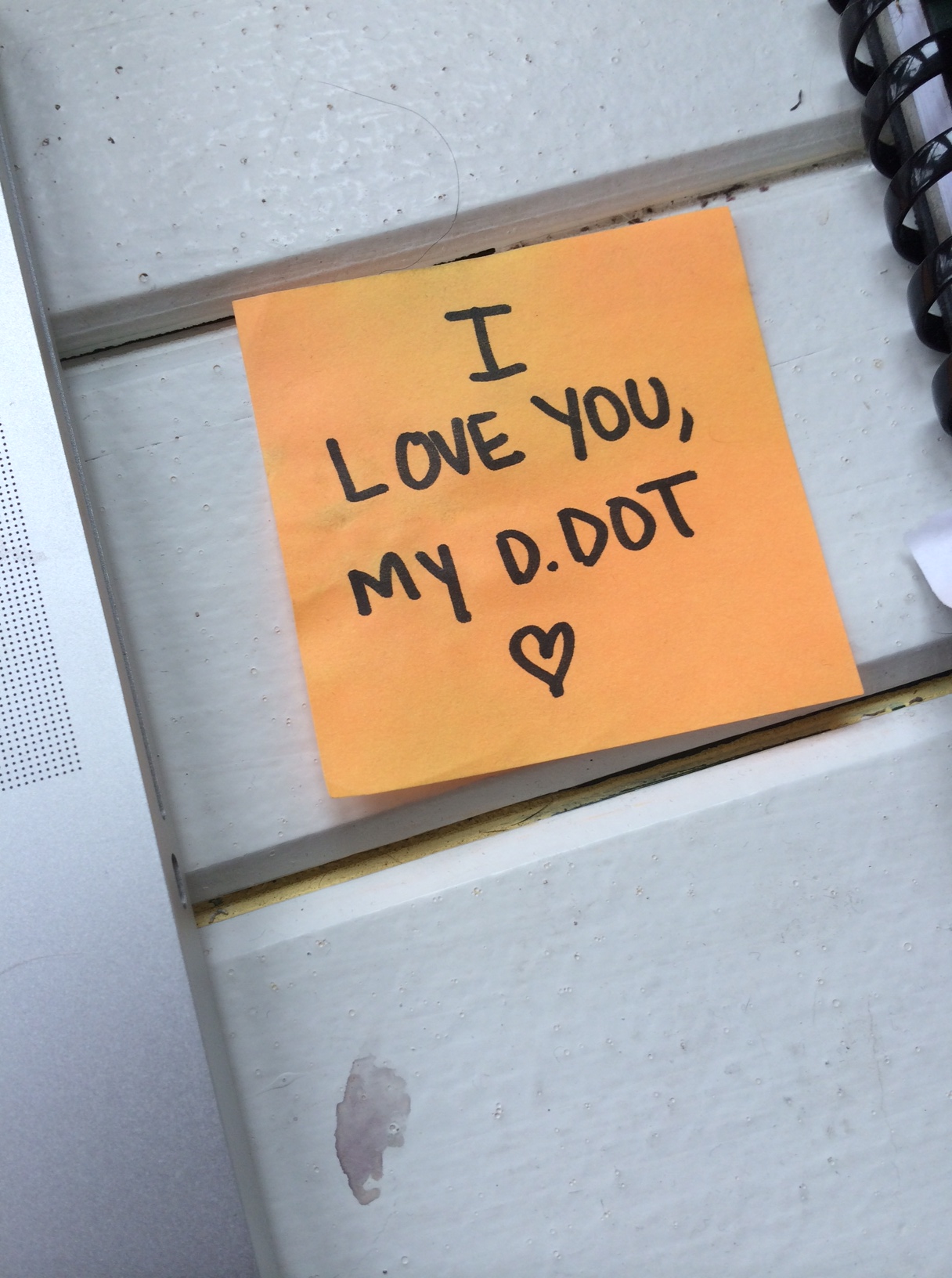
On Friday afternoon we will help John hang a memorial art show of his father’s paintings. It is how his dad wanted his life to be celebrated. As I was in the studio painting this morning I thought that, someday, someone might do the same for me. I wondered who might think to celebrate my life with a show of my paintings. Who might read some of what I have written? And, what if all that matters in this world can be expressed on a single orange post-it note? What if it is not the paintings or the books or plays – the things I produced? What if all that really matters is if I paid attention and loved mightily during the time allotted me? What more do I need than to have lived a life that warranted an orange post-it note?

Last night we had a band rehearsal in the sanctuary. I stepped away from Kerri, Jim, and John (the real musicians) and walked to the back of the sanctuary so I could listen to the song. It was gorgeous and they were unaware of how gorgeous it was – of how gorgeous they were. They were simply working. I was captured by the moment. I literally ached with how full and rich was the moment. I simply could not believe the depth of my good fortune. Kerri sang, Jim and John played, and I cried with the power of it all.

The moment was ordinary for them, extraordinary for me – and isn’t that always the way? The extraordinary is always waiting in the ordinary, in the post-it note, in the rehearsal, in the person passing you on the street, in the hard choice, making a meal, the sigh of the Dog-Dog in the middle of the night? Isn’t this very notion – opening the extraordinary hiding in the ordinary – the reason we live and make art? Isn’t the real practice of the artist simply a matter of stepping back so we might see it – and then share what we see?

Drop Beneath The Noise

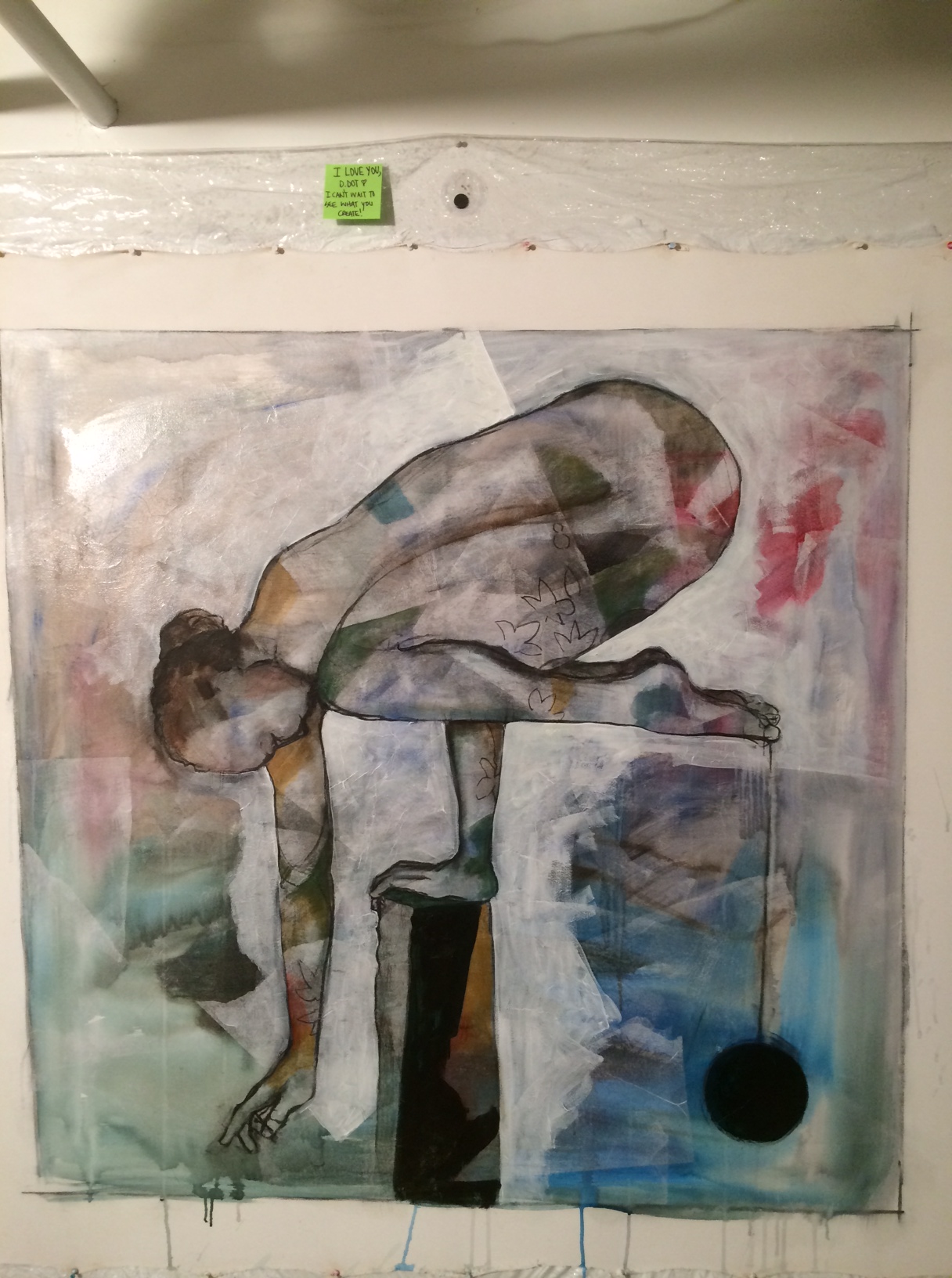
my latest work in progress

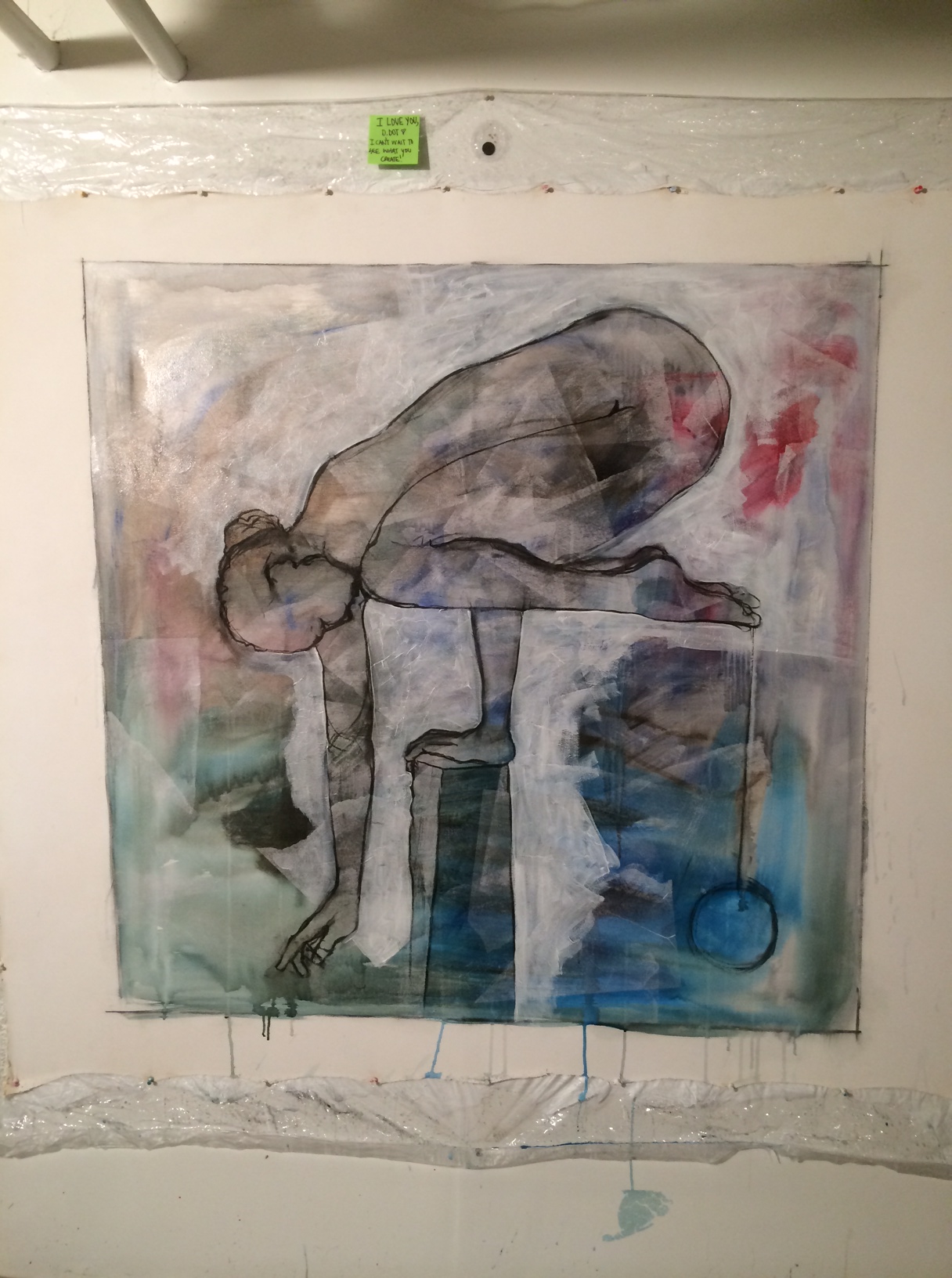
a detail of my latest work in progress

“Oppressors and oppressed meet at the end, and the only thing that prevails is that life was altogether too short for both.” Carlos Castaneda, A Separate Reality

A year and a half ago, when I moved to Wisconsin, I made the very conscious decision to unplug from the daily news cycle. I stopped watching it, listening to it, and reading it. My theory was that, if there was something truly newsworthy, I would hear about it. My intention was not to stick my head in the sand but the opposite. I wanted to drop the noise level so I might hear the stories with real value that were being obscured by the hype.

I was feeling more and more assaulted at the way the news was coming at me. I felt that it was literally coming AT me. I was disturbed that friends, family, and acquaintances oriented their truth (their opinions) according to their news source of choice. Events were not being reported as much as created for attention and spun for political leaning. It was feeding us a yummy addictive soap opera as context for our lives. Danger and deception were everywhere. “Us and Them” replayed at the top of the hour. One day, riding a bus through downtown Seattle, listening to the conversations around me, I realized that we were not consuming the media, it was consuming us. Division and drama sell.

Many years ago, Neil Postman in his brilliant book, Technopoly, like a prophet warned of the coming days when everything under the sun would be “breaking news.” What would serve as the touchstone of value (and values) when the monumental and the minimal were granted equal import, when news sources waved the flag of surrender and served the gods of entertainment? How might we hold a healthy center when we’ve so thoroughly blurred the line between ratings and reality?

So, I decided to live at the metaphoric edge of the village. An amazing thing happens when you drop beneath the chatter: with quiet comes the capacity to see how much of the chaos is concocted. Beauty becomes infinitely more accessible. The divisions drop away.

Get Lost

Kerri in Avalon

Kerri in Avalon

I lost Kerri. She is deep in a world of imagination and creative glee and hasn’t heard a word I’ve said in hours.

A few years ago I went to a figure drawing class. It was the first I’d attended for several years. Not only was I unprepared for what I experienced that night but it was and still is my favorite example of generation gap (and I am on the far side of the gap!). That night, those of us that were 40 years old and older drew with charcoal, pencil, and crayon on paper. We had drawing boards and dusty tackle boxes with supplies. We came to the class expecting to get dirty. The younger set, those below 40, drew on a screen with a stylus. They walked in, flipped open their computers, pulled out their stylus and began adjusting their settings. Dirt was nowhere in their equation. I laughed at the brilliance of the moment.

I am mostly old school. Photoshop is still unexplored territory. I am not anti-technology; I often wish I was more tech-savvy and had the range of motion that comes with technology. Time in the studio is precious and when I have it, when I have the choice of learning a program or getting messy, I go straight to the paint. I like the drag of the paper. I like getting my fingers and clothes messy. There are smells and textures and a ritual walk to and from the canvas or paper to gain perspective that I adore. My paintings are often very large and the act of painting is kinesthetic, a dance, a full-body sweep of arm and brush. A mantra from a teacher of many years ago echoes in my bear-brain, “You paint with your whole body, not your wrist.”

Many months ago Div introduced me to Paper, the cool drawing app. We were waiting to film an evening of entrepreneur pitches and he asked why I was such a dinosaur (not his words, mine). He showed me Paper and I played with it on his ipad. I got lost in the possibilities and giggled at what I could do in a matter of seconds. I downloaded it on my ipad and then forgot about it. Until today. I just completed some watercolor illustrations for a children’s book and have run into a familiar wall: scanning watercolor images is remarkably difficult. A successful moonshot is more possible than a decent scan of a watercolor painting. As I sat with Kerri on the couch and pondered what to do, I remembered Div and Paper. What if I could avoid scans altogether? I pulled out the ipad, opened the app, and started to experiment. That’s when Kerri asked, “What’s that?” I handed her the ipad for a short test drive. I am like the  car salesman, standing at the edge of the lot, wondering why I didn’t get into the car with the customer.

image-1The sun has set. We missed a movie date. Every so often I walk back into the living room to check in and see if she has come back from Avalon. I ask to no avail if she is hungry. She sits on the couch, in the blue-green the glow of the ipad, whispering things like, “Cool,” or, “No way,” or, “Who knew?”

Appreciate It

#5

#5 in the process shots

Spring came fast. At this time last week there was a four-foot drift of snow on the back patio; it was Tripper Dog-Dog-Dog’s favorite plaything, leaping in and out of the snow monster. Today, a mere seven days later, the monster is gone, the back yard is snow free. Dog-Dog has already found a new favorite game: plucking leaves floating in the pond and then racing the circumference of the yard as if the newly plucked leaf was valuable treasure.

John’s dad passed yesterday. His passing was both sudden and not a surprise. His dad was an artist, a brilliant painter, and the celebration of his life will include much of his life’s work. “That’s what he would have wanted,” John said. After the call with John, Kerri looked at me and said, “There’s no time to waste.” Life happens so fast.


#6

#6

I went down to the studio and worked (yes, Skip, these are the next two process shots and the sketch;-). While I worked I listened to Kerri’s album, This Part Of The Journey. She came down to see how the painting was progressing and heard her music. She asked me to listen to a moment, a swelling of the strings, and told me of the day she and her producer mixed the track. It is a moment of music that can break your heart or make you yearn for home. “This is a piece I wrote for Wayne,” she said. Wayne was her brother; cancer took him many years ago. We listened in silence, appreciating the fullness of the moment, appreciating the power of her music, appreciating the painting that was emerging; appreciating life happening.

photo-4

from the sketchbook.


Make Quiet

A sanctuary

A sanctuary

It is Thursday night. Kerri is attending a meeting at the church and I have tagged along so I might sit alone in the sanctuary. I’ve always loved entering the quiet spaces. Once, a lifetime ago in Sedona, John called me “guru dude” because I sat for hours nestled in the quiet of a vortex. It felt like minutes to me. I think it unsettled him that I was so completely settled. I know it unsettled him that I would rather seek quiet than make noise.

Sanctuaries, I’ve learned, are everywhere.

My task, my mantra, and my delight of a few years ago was to realize that all the world is my studio. I had some amazing help and more than one universal dope slap before that realization sank in. I used to believe that in order to create I had to escape the world to find the refuge and quiet of my studio. I felt like I had to go to my studio to find my creative place just like I felt like I needed to go to a vortex to experience deep quiet. I had it upside-down. A studio, like a meditation practice, is meant to bring us into communion-with, not reinforce our isolation-from. It is not a place of escape. It is a place of joining. Quiet is not something we find as much as something we allow.

To me, the word “studio” and the word “sanctuary” are now equivalents. They are the places that creating happens and creation is a quiet process: the inner chatter stops, channels open, and something comes through. A few weeks ago, in the second performance of The Lost Boy, we stepped onto the stage and everything was quiet inside. There was no past and no future; there was only the moment – and it joined us, audience and performers, in a single, shared story. Something came through us; together we created. There was no effort, there was no striving; there was, as Jim Edmondson used to say, “a dance of giving and receiving.”

This “joining” is the dirty little secret and great power of the arts. It is something that school boards will never understand but something that dictators across the ages have feared. Artists are the vortex of joining, of shared identity, of explosive quiet, of laughter that crosses lifetimes. The arts do not separate; when at their most potent they unite. They clarify. They delineate substance from chatter en route to a powerful common center that is as holy, as quiet, as it is creative.

Study Your Practice

During his recent visit, Skip wanted to see my latest paintings so we went down to the studio. He is a great studier of people and processes and while flipping through my work he asked if I’d ever taken process shots or filmed my process of painting. Occasionally I take photographs of a painting in process – not to record the stages of development but so I can see what’s there. I’ve learned that a photograph can sometimes help me see what I’ve grown blind to seeing. I agreed to take and share some process shots. Yesterday, I started a new piece and here is the day’s progress:

#1

#1


#2

#2

This is the next in my “Yoga series” of paintings. A “yoga” is a practice and I started this series because I was curious about my practices: I was meditating on this question:what is the difference between what I actually do and what I think I do? For most of us the gap is vast between those two points. This series is my ongoing meditation/inquiry into the gap.

#3

#3

A study of your practices will surprise you. What you do and think each day is a practice – it is your yoga; your actions and thoughts constitute the rituals of your life. So, for instance, when I was younger (lots younger) I believed my paintings were “not good enough.” Each day I’d approach the easel and practice “not good enough.” It’s amazing the transformation that becomes possible when you simply change your practice. Practice dropping the judge from your menu. Why not?

Last night I had a conversation with someone who asked, “Why don’t people care?” I suggested that people do care but you have to practice seeing it. It’s all around us if we refocus our eyes. And, in cultivating the practice of seeing the acts of kindness and caring, we become kind and caring (because that is the object of our focus).

photo-5

#4

My yoga series has brought me to this (so far): The world does not need changing; we need, as Doug used to say, to close the gap between what we think we do and what we actually practice doing.

Capture The Essence

Dog-Dog and treasure

Dog-Dog and treasure

Tripper Dog-Dog-Dog gathers his stuff around him. He has two stinky blankets that he pulls from his crate each morning, a red Kong, a blue chew bone with a handy looped rope pull, another blue toy that once looked like a jack but has been chewed beyond recognition, a once-stuffed moose from Josh that is now an unrecognizable shredded mess though he carries it around as if it was precious cargo. There is also a muddy tennis ball, a raw hide bone and usually a sock pilfered from my sock basket. If Kerri and I shift locations within the house, move from the living room to the sun room, Dog-Dog’s worldly possessions will slowly migrate with us. He is subtle and I rarely see the migration in progress; I suddenly realize that I am sitting within a nest of Dog-Dog treasure.

My favorite section in The Lost Boy is a series of questions that Tom asked: 1) if you were given a cardboard box and it was all that was going to be allowed to provide proof that you walked on this earth, what would you put in your box? 2) Beyond proof, what would you put in the box that captured the essence of who you were, that distinguished you from all the others? 3)What are the collections, the things you gather around you that are somehow supposed to tell others who you are? These questions might seem simple but are surprisingly complex. How does your stuff tell the story of who you are? Or, a better question: does your stuff define you? Can your stuff – your car, your house, your granite counter tops, your clothes, your jewelry,…, – capture your essence?

Tom asked two other related and relevant questions: In packing your box, would you be tempted to scrub your life of its messiness? Would you try to eliminate the mundane, the everyday? Would you throw away your rough drafts? Would you ignore the relationships that didn’t work out? Would you explain away the ugliness, the ruthless choices? Would you burn your personal journals so that the future might never glimpse your doubt, your struggles, your frailty?

I would add these questions: What if your essence was only available to you once you value the messiness? What if, in throwing away the mundane, you actually eliminate what is truly special about you? I’ve often taught and touted a tenet from improvisational theatre: drop your clever and pick up your ordinary – most of us diminish/neglect our greatest gifts because we label them as ordinary. They come naturally to us so we don’t always recognize them. In trying so hard to be clever, to be right, to be flawless,…to be other, we regularly overlook the real treasure and relegate ourselves to that most shameful pile labeled ‘ordinary.’

Scrubbing life to a sterile, conflict-less blandness is a recipe for….boredom and, at the end of the day, a very uninteresting box. Of this I am certain: if Dog-Dog had to pack his box today, I would be proud to sit amidst the stinky blankets, blue bones and remnants of moose toy. Dog-Dog hides none of his messiness.


Shovel Snow And Survive

...and that's only half of it;-)

…and that’s only half of it;-)

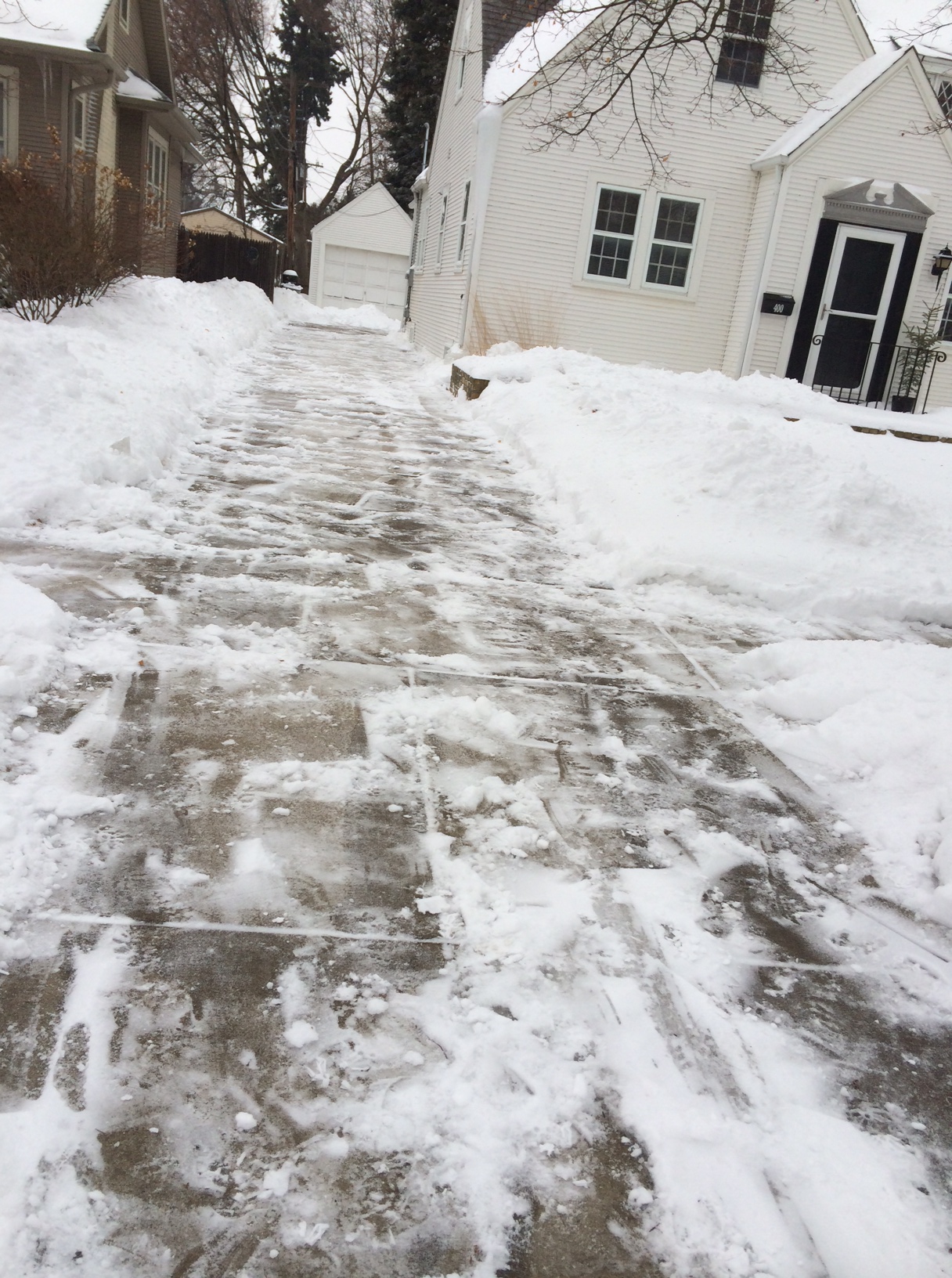
We have a freakishly long driveway or so it seems to me every time it snows. During the summer months I never think about the length of the driveway. In fact, when it is not snow covered, I appreciate its ability to accommodate several cars. Valet services everywhere might lust after our snow-free driveway. Our neighbors routinely mistake our driveway for the approach to a country club.

Last night Skip took the train up from Chicago. It was his first visit to our house. His first question to me upon seeing the house was, “Are you the snow blower?” He immediately recognized the freakish length of the driveway due to the massive piles of snow that currently define it. Skip also knows I have an excessive amount of hot air (so I am capable of literally blowing snow when on a good rant) that interrupts any sense that I might actually possess. Point-in-fact, we have a snow blower that sits comfortably in the garage. It requires a goodly amount of maintenance or perhaps a single bullet to the engine. I’ve considered mounting it on a pedestal for my yard maintenance sculpture series. Had I confessed possession of a snow blower Skip would certainly have asked, “Does it blow snow?” What an absurd question! Of course not!

There’s something in me that likes a challenge. Last night it snowed and I couldn’t wait to step into my big Wisconsin boots, grab my new green shovel (I broke the old orange shovel in the last heavy snow), and get to it! Kerri shook her head and reminded me that people “my age” routinely expire from excessive snow shoveling and, since we have a freakishly long driveway, there is excessive snow to shovel. She made it sound like my demise was not only possible but imminent. She said it was simple logic: if A) excessive snow shoveling causes early dirt napping and B) there is excessive snow to shovel, then, C) my shoveling excessive amounts of snow excessively would likely lead to early dirt napping.

I reminded her that we are both artists and logic rarely interferes with our decision-making. “Then take your time,” she admonished. “Go slow.” Ah! In the rebuke of logic, a little bit of Zen is always welcome. I shoveled snow slowly and survived. I paused often to breathe-in the cold and listen to the wind.


Mix Beautiful Color

photo-6This magnet-sentiment was on Jim’s refrigerator:

It’s never too late to become what you might have been.

It is particularly poignant because both Jim and I are surprised, dare I admit, disoriented, after finally producing The Lost Boy. It was over a decade in coming. I’d stopped believing that it would ever find a path to the stage and, instead, would remain a good story for dinner conversation. Now that it’s out of the box and rolling around in the world of possible-next-productions, I hear Tom’s voice ringing in my ears, “Readiness is all.” It couldn’t happen until it was ready, until I was ready.

For the past decade, coincident with the development of The Lost Boy, I have been telling stories at conferences, with symphonies, during organizational trainings, and other random stage performances. I have inadvertently learned to tell a good story (or better stated while slaughtering all grammar: to tell a story good). 5 years ago I couldn’t have performed the play as I did last week. I didn’t have the chops for it. I do now.

Years ago, after being wowed by Jim Edmondson’s performance of King Lear, I asked him what he’d learned from doing the role. He replied, “I don’t have enough colors in my paint box to do it justice. Not yet.” This giant of American theatre blew my socks off with his performance, but felt that he fell short. He couldn’t yet fulfill the demands of the role. He knew there was more to grasp and his artistic arms were not long enough. He knew he was not yet ready. No amount of accolade or sock-less fans would change what he knew: there was more to the role than he could reach. More age, more life, more skill was needed. He taught me in that moment what it meant to be an artist. The compass is internal. The capacity is ever expanding if you work at it.

I now believe that, to produce The Lost Boy, I also needed to find the right reason before readiness was available. For years I thought I had an obligation to Tom. I thought I had to finish it for him and tell his story. That was only partially true. The real obligation was to myself. I had to finish it for me – and it took a good deal of readiness for me to see that. It had to become my play. And, in becoming my play, I can now see that I have a world of color in my paint box – and a world of color that I still need to develop. That is the name of this game of mastery. There is never an end. There are just more and more beautiful colors to find and mix and share.


Step Into The Field

photo-5[continued from “Jump!]

I wrote this phrase: “The one facilitates the journey for the many.” And, today, I would add: the one facilitates the journey for the many so that the many can experience the one. This little phrase is the point and the purpose of the theatre.

I’ve come to believe, at this stage in my artist life, that all processes of art-making are actually exercises in presence. And, presence, for me, has come to mean transcending any experience of separation. For instance, when I am fully engaged with painting a painting, “I” am nowhere to be found. Time disappears. There is only rolling creation. To use a cliché: something comes through me. Language is incapable of grasping what really happens and all we are left with is “something comes through” – a statement of separation.

A week ago today we were preparing to perform the closing of The Lost Boy. This play is unique in my experience for many reasons (it would require a book or two to explain the many layers of this cake), one of which was that we only had two performances: an opening and a closing. We hit our stride on the closing – and by that I mean we let go of thinking, preparing, adjusting…, and entered presence. We stepped onto the stage with no thought of “what’s first” and “what’s next.” The play happened with no effort. The Chili Boys played like never before. We were, to use another cliché, in the flow. I have never felt more alive, more connected, more present. It was fun!

50 minutes before stepping onto the stage

50 minutes before stepping onto the stage

Years ago, I had the opportunity to assist Jim Edmondson in a series of plays and I riddled him with questions. He introduced me to the notion that the art of acting was the art of presence (though he used a different language). He taught me that words like “focus” and “intention” are merely tools for cultivating the capacity to be present. Presence is the portal and the actors’ (artists’) job is to step into presence so the audience can join them. Literally, join with them in the field of the present, the place of common story. To be. Together, in a single story. And, although he did not say it this way, he taught me that “to be” is infinitely more powerful than “to become.” “To be” is not an arrival platform; it is an experience of the many recognizing itself as the one [could you ask for a better definition of art!].

Mike, our stage manager extraordinaire, came down from the booth and told us that our performances were different than the first night. We were more potent; we found nuance and greater depth. He was right. We were finally able to surrender to the work, get out of our own way, and step into the field of shared story.