Focus On The Important Stuff

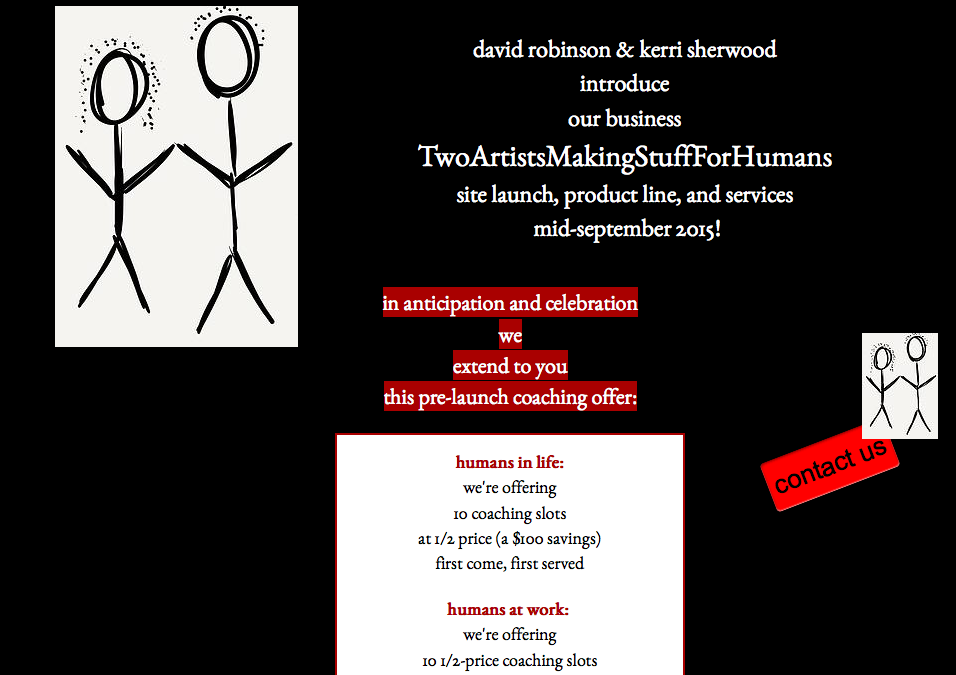
an offer from TwoArtistMakingStuffForHumans

an offer from TwoArtistMakingStuffForHumans

A note from the temporary site of TwoArtistsMakingStuffForHumans:

The waxing moon was muted with fog. It made the air shimmer. Avalon was near. Although it seemed too soon, there was a hint of autumn in the air. We sat next to a chiminea talking to friends. Monica told us of her daughter working in villages in South America. She told Monica that, by our standards, the people there have nothing. They are possession poor. But, they were happy, genuinely happy. They didn’t have much money or stuff but they had the essential thing that many of us lack: peace of mind. They focus on different, more important stuff.

It brought to mind my experiences in Bali. When I arrived all I could see was the poverty. By the time I left several weeks later, I’d have given everything I own or will ever own to have what they have: presence. Ease of mind. They weren’t looking for fulfillment, status, or living for retirement. They were living. Life was fulfillment. In a world where all things are sacred, status is gained by the quality of your giving and not by the size of your piece of the limited pie. It is a different focus.

There is a hidden cost to what dominates our focus, the things that take our attention…as opposed to the things we pay attention to.

As artists, both Kerri and I believe the work of our lives has been, one way or another, to help people focus on the important stuff, to see the extraordinary in the ordinary moment, to find inside what people seek outside. We’ve both worked across the boundaries of business, art, and the fine art of living everyday, there is no lack of necessity to refocus the eye, mind, and heart.

In a few weeks we will be launching our business (details to follow). All the many aspects of our work – if you can call art a product and performing a service – are intended to support, exercise and pay forward a focus on the important stuff, the important moments…sometimes the teeniest things that in the chaos pass unnoticed.

We want to do for others what we do for each other. Check out our pre-launch coaching offer. Take us up on it! Or, if you know someone who might benefit from working with us, pass it on, pay it forward.

Change They to We

photo-2

the next step in my painting, The Weeping Man. He’s nearly complete

The word that’s captured my recent attention is the word “they.” I’m captivated by language choices that might at first seem insignificant but, once unpacked, are profound. “They” is one of those words.

“They” caught my attention when 20 was making us dinner. His recipe included fennel and, until we googled it, we thought anise and fennel were the same thing. While we Googled for truth, Kerri asked, “Why would they name something twice?”

“Good question!” I replied and then asked, “Who are ‘they?'”

“Good question!” she echoed as the Google oracle brought us clarity about our fennel/anise confusion (as it turns out they are two different plants). Google was not very useful in clarifying who “they” were.

So, this week I listened for samples. Some of what I heard: “Why would they do that?” (a conversation about women in another culture). “They don’t care about us.” (what else, politics). “Don’t you think they cause their own problems?” (referring to a situation in a local minority community).

“They” can be a word of distancing, a word of exclusion. If you want to mess with the meaning, simply change the pronoun. For instance: why would we do that? We don’t we care about us. Don’t you thing we cause our own problems? “We” is inclusive. “We” makes us participants. “We” makes us culpable.

a detail of Weeping Man.

a detail of Weeping Man.

What if, in our current state of mis-education for instance, we stopped asking about our policy makers, “What are they doing?” And, instead, asked, “What are we doing?” What kind of action or meaningful discussion might ensue if we simply refused to use the word “they?” What if, as artists, we stopped asking, “Why don’t they get it?” and instead asked, “What don’t we get?” Artists do not create in a vacuum. Our expression might be individual and unique but without a community to receive, debate, appreciate, revile and otherwise engage it, has little purpose. After all, “they” are “we” if our language will allow us to see it.

the previous photo/stage I posted

the previous photo/stage I posted

Be An Avid Catcher Of Your Thoughts

TODAY’S FEATURED IDEA FOR HUMANS

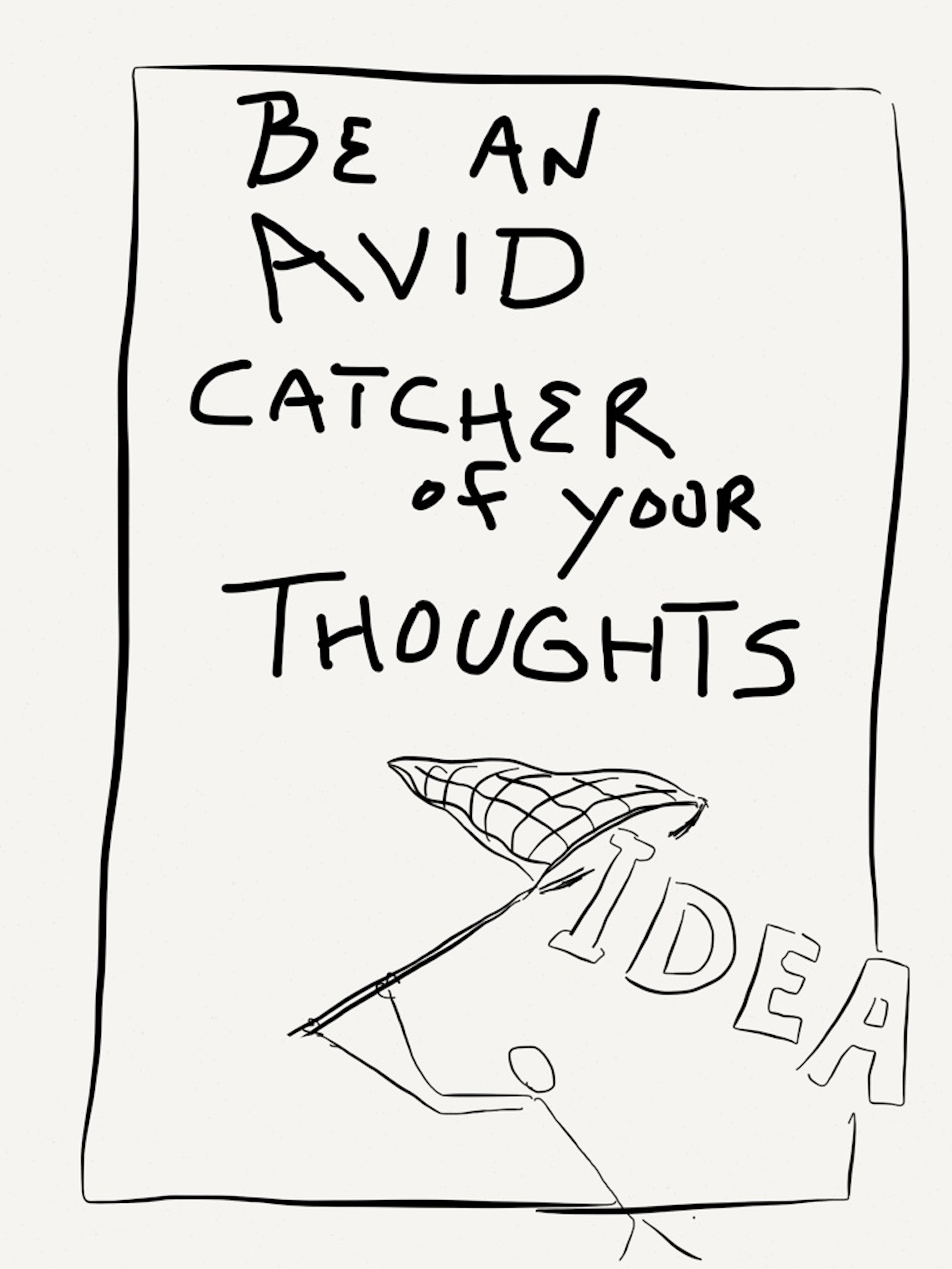
Be an avid catcher of your thoughts

This notion is the heart of change. It is the practice of self-awareness. Listen to the story you tell yourself about your self.  It is ripe with ideas, dreams, and yearnings. It is also ripe with fears, doubts, and comparisons. Capture the ideas. Listen to the dreams. Follow the yearnings. It’s a muscle. Develop a focus for the creative. Capture what’s useful and let the other jabber go.

Screen Shot Avid Catcher

TO GET TODAY’S FEATURED IDEA FOR HUMANS, GO HERE

Unroll The Generosity Perspective

from the archives: EmbraceI’m eavesdropping. Kerri and Pastor Tom are in the next room having a planning session. I just heard P-Tom say, “The generosity perspective fell down. Woody rolled it up and put it under the table.” I laughed out loud. They are talking about a banner but, taken out of context, it is a terrific and ominous phrase!

If you take a gander at the daily news, follow the political circus, count the people trampled in the crush to buy stuff the day after Thanksgiving, you would be hard-pressed to find a better phrase for our times. The generosity perspective fell down. And, to add icing on the metaphoric cake: Woody easily rolled it up. He put under a table.

This land is your land. This land is my land. This land was made for you and me.

I’m convinced that there is another side of the coin. There is no denying that meanness exists in our world. Humiliation is a game played everyday through social media and beyond. Yet, I still believe that there is a disconnection between the rhetoric and the lived experience. I see and experience terrific acts of generosity every day. Some are small acts, some are vast – unfathomable, some are spontaneous, some are planned but all are generous. In fact, when I really pay attention, I find that the incidences of generosity far outpace the acts of cruelty.

Cruelty makes for good gossip and good gossip is cruel. And so, meanness sells. It is good for advertisers so those are the stories we broadcast. Generosity, on the other hand, erases victim stories and so is rarely yummy-fun to talk about. Acts of generosity are less potent as a selling tool.

Cruelty is easy to see. Generosity requires an intentional focus.

This morning I bumbled into a TED talk by Patti Dobrowolski. I learned that the odds are 9-to-1 against making change even if the change needed is life saving. Her message is great: draw the story you want to tell. Literally, draw it. And then tell it. If we want a different story we have to imagine a different story. If we want a different story we need to tell a different story. If we want a different story we need to act a different story.

If Woody easily rolled up and stashed the generosity perspective under the table it should be equally as easy for Woody to reach under the table, unroll the generosity perspective and hang it for all to see.


Cross The Boundary Of Elements

TODAY’S FEATURED IDEA FOR HUMANS

Cross The Boundary

In a world of right and wrong, yours and mine, red states and blue, crossing the elements means relinquishing the idea that “I know,” or that “I’m right.” My “normal” may not be your “normal;” it’s a good bet that my perspective is not your perspective. Cross the boundary of elements and stand for a moment in other people’s shoes; swim in their element.  Reach across the known to see what they see. Find the middle way.

 FOR TODAY’S FEATURED PRINT FOR HUMANS, GO HERE.

Reverse The Direction Of The Pull

TODAY’S FEATURED IDEA FOR HUMANS

Reverse The Direction

FOR TODAY’S FEATURED IDEA FOR HUMANS, GO HERE.

Reach Through Time

TODAY’S FEATURED PRINT FOR HUMANS

Reach Through Time

FOR TODAY’S FEATURED PRINT FOR HUMANS, GO HERE.

Reach

photo-6In these few weeks post Lost Boy I’ve been writing thank you letters and sending Kickstarter rewards to the many people who donated to the campaign. I am humbled by the number of people who stepped forward to lend a hand, offer resources (financial and otherwise), and/or heap us with the moral support necessary to produce the play.

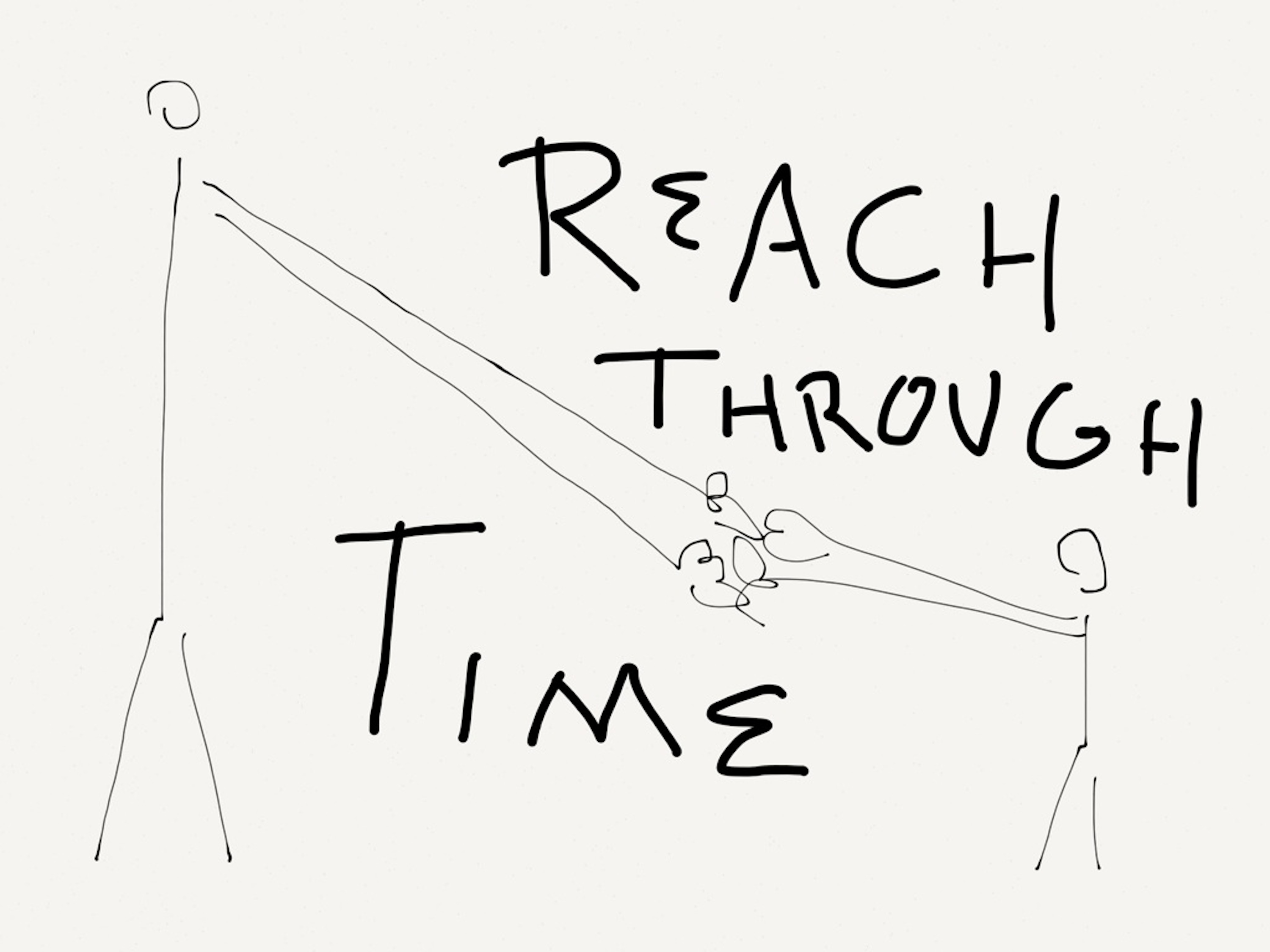
The Reminder: no one does anything alone. All creative acts, all things that are useful in this world, all triumphs that seem on the surface to be an individual achievement, are, in truth, a group effort. Life is a team sport. Quarterbacks are nothing without a front line, a coaching staff, a back office, a marketing machine spinning the tale. They also had mothers that for years drove them to practice, families that stood in the cold to watch them play little league, and a host of friends who told them that they could do it if the only kept going. Artists are no different. Even the loneliest painter has a rolling lifetime team whether they recognize it or not. Consider this simple basic: a painting is never complete until someone other than the artist engages with it. A play is never complete until an audience arrives. The whole point is to make or accept an offer to/from an other.

We, the people of these United States, place the accent of our existence on the achievement of the individual and that sometimes makes us blind to the obvious truth of our existence. We do nothing of worth on this earth without the support and participation of others; relationship is at the core of anything worth doing.

from the 2015 Racine snow carving contest. I'm sorry I did not capture the artists names!

from the 2015 Racine snow carving contest. I’m sorry I did not capture the artists names!

Once, many years ago, I lived in Los Angeles. I did not know my neighbors. I had no idea or desire to know who was living in the houses next to me. One night the earthquake came and our illusion of independence was stripped bare. With no power, no water, no heat, and compromised housing, the first thing we did was to reach to each other. When the illusions of comfort and security are stripped, our real need (each other) becomes glaringly apparent.

I wrote this play, The Lost Boy, because someone dear to me, over a decade ago, asked me for help. I was grateful that he asked – it meant I got to spend time with him and return some of the attention and love that he had invested in me. When the metaphoric earthquake hit – when Tom died – I had no recourse but to reach out to others; I produced this play when I realized that I was not alone and all I need do was ask for help. Legacy, like story or life, is an infinite loop of relationships.

Delight In The Question

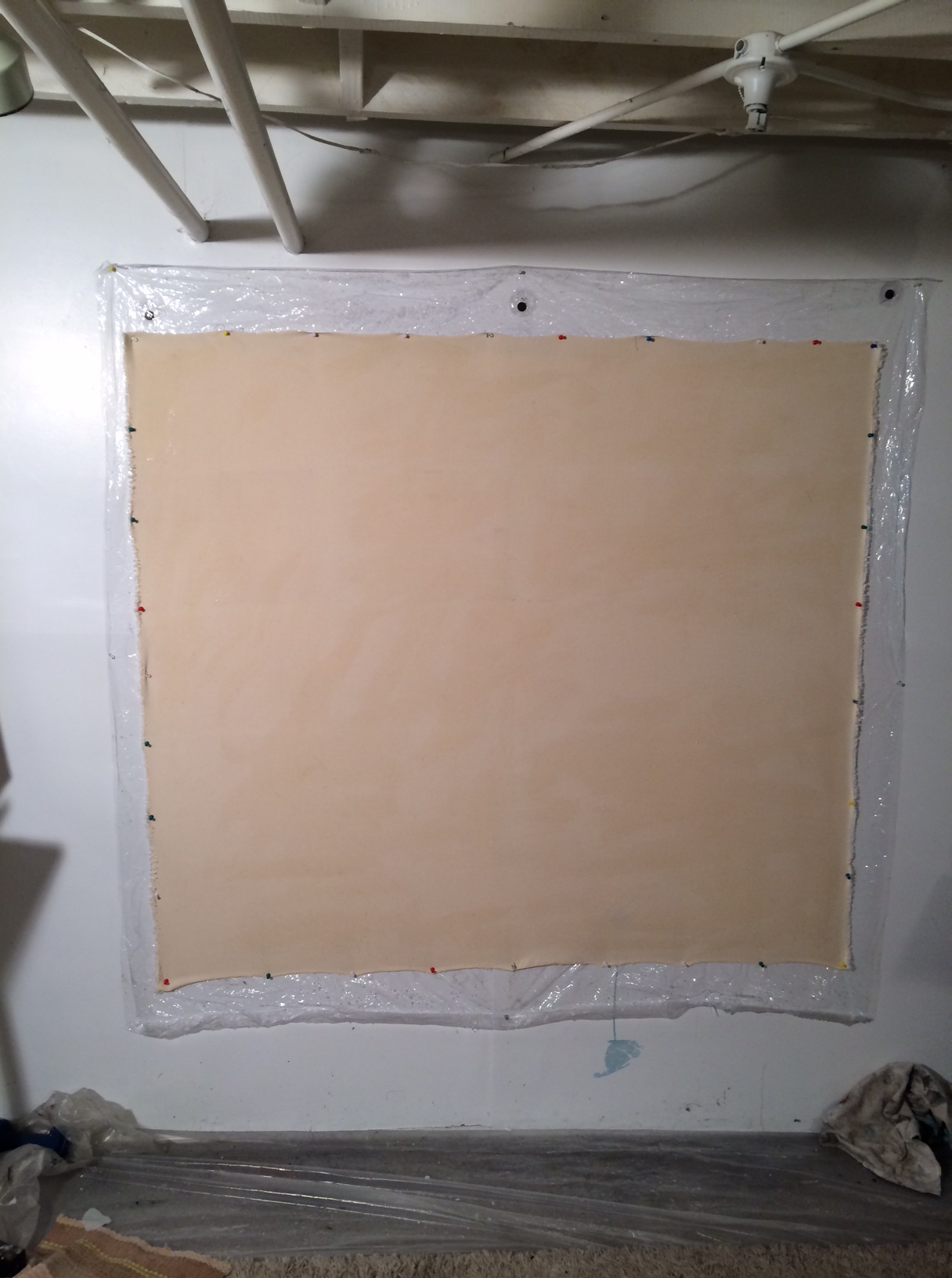
a new canvas, stretched and ready for gesso.

a new canvas, stretched and ready for gesso.

So what is next?

There is a sweet void that follows in the wake of every project and this particular void is vaster than most (don’t you love the phrase, “particular void?”). This project, The Lost Boy, was and continues to be more layered than any other. It pulls on emotional and spiritual roots that have not been available in other performances and so the post-show disorientation is mighty.

I’ve come to appreciate my time in the void. It is the time of reflection. It is the time of rest. It is the time of long walks. It is the time of questions finally answered that invite bigger questions. I’ve learned that disorientation is necessary for reorientation and reorientation never comes as an answer but always comes in the form of a question: so, what’s next?

Yesterday I tacked a large canvas to the wall. It is now covered with layers of Gesso and is ready for paint. I delight in this phase of preparation. It is akin to the anticipation of meeting with an old friend; the conversation will be rich and far reaching. I also bought a new sketchbook and have set myself the task of filling it within the month. Many years ago, while sitting in another void, I was staying with my pals Duncan and Liz while directing a play. Liz, familiar with voids, insisted that, after rehearsals, I do a hundred paintings before I sleep. Each night, tired from a long day of rehearsal, Liz sat with me as I did one hundred paintings, quick gestures with brush and ink, paper fluttering to the floor. We laughed and I felt renewed. After ten paintings en route to a hundred, the notion of judgment and too-much-thinking goes out the window. The joy of the action takes precedence over the illusion of a finished product.

I’ve written often of the lessons Saul-the-tai-chi master taught me. Focus on the field of possibility and not on the opponent. In other words, offer no resistance to those things that appear as obstacles. Sit with gratitude in the void. Paint a hundred paintings before you sleep. Delight in the question.

Peel Off The Laminate

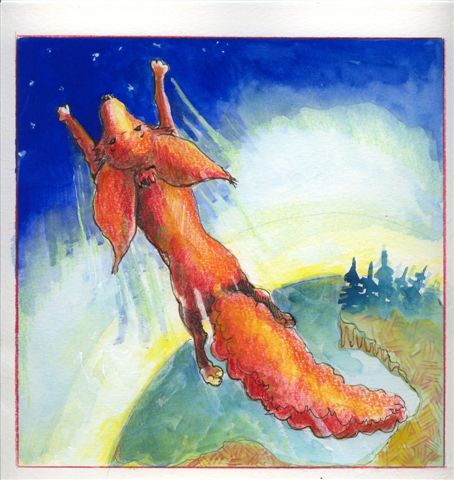
An illustration from my children's book, LUCY AND THE WATERFOX

An illustration from my children’s book, LUCY AND THE WATERFOX

Last week in a fit of frustration I climbed a ladder and scraped the damaged paint off the kitchen ceiling. The paint was compromised a few years ago and needed repair. The peeling paint was on my summer list of things to fix but we were traveling most of the summer. Autumn arrived and the to-do list remained. Scraping and sanding always leads to the necessity of new paint and Kerri said, “If you paint the ceiling it will make the walls look dingy. We better paint the walls, too.”

So, standing in the kitchen, fists filled with paint chips, discussing color possibilities, we realized that all of our color choices were defined by the fading yellow of the ancient kitchen countertop. The counter was at least 50 years old, laminate, and held in place by some well-placed packing tape. We’ve talked often of the day in some distant future when we could afford to replace it and that day seemed very far away.

In that moment, hands filled with paint chip possibilities, we realized that the countertop had became a metaphor. We were defining our choices based on a limitation. Or, said another way, we were limiting our possibilities based on our belief in an obstacle; what we could or could not do.

How often is that the case? What self-imposed limit defines the choices we see? How often do we unwittingly shrink our field of possibility? How often do we allow the things we don’t want to define our actions?

It took less than 30 minutes to pull off the old laminate, break it into pieces, bag it, and get it out of the house. As I wrote in an earlier post, the spontaneous kitchen remodel began when we realized we had the power to remove the limit. We had the capacity to make choices based upon a different set of criteria. Before the spontaneous remodel we believed we couldn’t afford to change the kitchen countertops. The moment of paint-chip revelation made us understand that we couldn’t afford not to change them.

Life is great at applying belief-laminate to us: what we think we can and cannot do. Something profound happens when, in a moment, we understand that we are capable of challenging the limit, of pulling off the laminate, of being forced to step into a greater field of possibility (known from henceforth as the “Now What?”)

It is worth noting that our new countertop, the old plywood support and made exceptionally beautiful with chalk paint and wax, has transformed our kitchen and our actions. We hang out in the kitchen. The colors we are considering using for paint are now based on what we want to create and not on what needs to go with the old yellow laminate.

title_pageGo here to buy hard copies (and Kindle) of my latest book: The Seer: The Mind of the Entrepreneur, Artist, Visionary, Innovator, Seeker, Learner, Leader, Creator,…You.

Go here (Leanpub) for all digital forms of The Seer.

Yoga.ForwardFoldOr, for kicks, go here for Fine Art Prints (and other stuff) of my paintings.